My Soul is a Witness

Annndd here she is!

My next collection of poetry releases this year and I have decided on the title, “My Soul is a Witness.” I want to thank the members of my email list for helping me to choose the perfect image (we had a contest featuring several images. If you are not subscribed for exclusive first-looks and sneak peeks, you may click here).

This book releases in the fall and will be available for preorder soon. Exact date to be announced.

Haven’t read I am Soul yet? Get it here.


One of my favorite movies (I have lots of favorites lol) is The Great Debaters. I love the use of language, history, and education, and it also feels like to me they are doing performance poetry, not just debating. When the movie comes on, the Negro Spiritual song, “Witness,” is being sung as the people dance.

Just as with I am Soul, My Soul is a Witness jumped out at me and I felt it in my spirit that this was the appropriate title for the book. The soulful, sacred, and riveting Negro Spiritual songs taught of freedom, of hope, of redemption, and biblical justice and righteousness. I hope these poems do the same for you. I hope that they are liberating, restoring, and reinvigorating. “My Soul is a Witness,” is poetry that reminds us that in our darkest moments, there is still hope. It reminds us that our scars do not cripple us but prepare us for a work, and that our greatest weaknesses make us strong. Here, I give you my ache and my praise. This is a love letter to our overcoming, of yours and mine. My Soul is a Witness.


What the Losses Taught Me

Top of the World, Observation Level, World Trade Center, MD, Copyright © Yecheilyah 12.31.2019
I couldn’t help but think about “Vision” on the Top Floor of the World Trade Center in Baltimore. The view is a beautiful layout of the city and the binoculars let you see everything up close. That’s what 20/20 is about for me, seeing clearly.

20/20 = Perfect Vision

At this time of the year, most people are talking about their wins but I believe it is my losses that have caused the most growth and given me the most lessons. It was the letdowns, betrayals, and disappointments that have cultivated in me the strength I’ve had to endure last year and all the other years before it.

Keep Yourself Full didn’t do as well as I had thought and while it bothered me at first, I can honestly say that as of today I’m okay with it. I’ve been Self-Publishing my books for a while now and what I’ve learned is that experience brings clarity.

Hindsight is 20/20 and what I see now are the mistakes I made with this particular book, the audience I thought would be there but wasn’t, and the solace in knowing that my poetry is inspiring enough.

A ‘Snellen chart’ is an eye chart that’s used to help you determine the clarity of your distance vision. Somebody with 20/20 vision has normal acuity (sharpness or keenness of thought, vision, or hearing) meaning if they were to stand at a distance of 20 feet from the eye chart, then they would be able to clearly see each row of letters. This person has good eyesight.

What’s being said is that if you look back at situations that went poorly, you can clearly see (20/20) what you could have done better.

This entire year is 20/20 which means a time of looking back and reflecting on all I’ve done. I know the word “reflection,” is being used a lot this time of the year so it may not hit you as hard but I caution you not to let its repetitiveness water down its powerful meaning.

Reflection is serious thought or consideration but it also shows, expresses, or is a sign of something and an image of something in the mirror. To reflect is to give serious thought and consideration to ourselves, the image in the mirror. It is to look at ourselves. What do we see? What are we showing or expressing?

My philosophy (for lack of a better term) is “do you but do you intelligently.”

I believed, and still, believe, we should not just decide, but that we should make informed decisions. From this point forward it’s not just about making decisions but knowing why I am making those decisions. It’s about being intentional in every way. From this point forward, everything I do has a reason. Everything is a strategic move. From publishing a book to publishing a post.

There are projects I will retire this year and projects I will relaunch. Looking back, I can see clearly what works and what doesn’t work for my writing business.

I am flawed and imperfect. I will mess up but I am striving every day, learning, and correcting as I go along (with all the failures and pitfalls that come with it). I know these losses can do nothing but make me stronger, and wiser so that when I look back, there is nothing to regret.

The losses taught me to focus the first time around and to trust my discernment so I can see things for what they are, not for what I want them to be. The losses are a reminder to see things clearly.


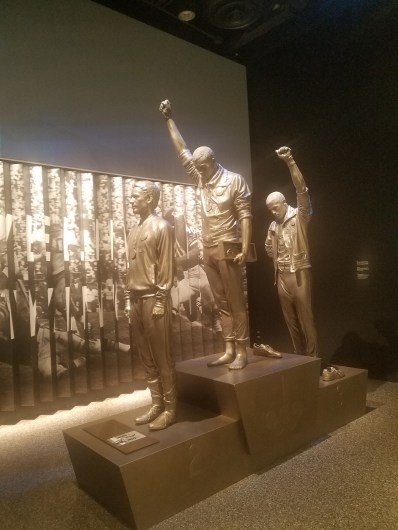
Go to my IG page here to check out more vacation pics at some awesome museums including The Smithsonian Museum of African American History and Culture. Visit me on the web at yecheilyahysrayl.com and subscribe to this blog for notification of more posts.

Black History Fun Fact Friday: “In Africa they Didn’t Teach about the Period of Enslavement of Our People.”


I thought this quote was an interesting and thought provoking one to share considering the crisis going on today.

What Crisis?

The one where schools are trying to remove Black History Courses from their Curriculum.

The one where today’s kids only know about Slavery and the Civil Rights Movement.

The one where the only Historical Black people most people can name are Harriet Tubman, Rosa Parks, and Martin Luther King Dr.

What about Toussaint Louverture, general and leader of the Haitian Revolution?

Or Florence Mills, nicknamed “Queen of Happiness,” and one of the most successful entertainers of the 1920s Harlem Renaissance Movement? You know Zora Neale Hurston and Langston Hughes, but what of the people mainstream society doesn’t speak of?

THAT Crisis

To the quote…

“In Africa, they didn’t teach about the period of enslavement of our people. They forbade us from speaking about it. They would kill people for speaking about that history. So we were not allowed for hundreds of years to speak about what was happening and to teach what was happening.”

– Queen Diambi: The Queen of Congo

My people across the water, is this true? Not hard to believe with the history they restrict here in America.

Now, for our first atrocity of the week…

My raggedy To Kill a Mockingbird

A public school in Biloxi Mississippi is trying to pull To Kill a Mockingbird from the eighth grade curriculum because the language is “uncomfortable.”

If the language in To Kill a Mockingbird makes thirteen-year-olds “uncomfortable,” then I assume the school district is also insisting they stay off Twitter and never listen to rap music. – Julia Dent

“The book is about life in the South during the Great Depression, specifically the life of a black man named Tom Robinson who had been framed for raping a white woman. Local lawyer Atticus Finch agrees to defend the innocent man, angering the racist white community who subject him and his children to abuse. Despite proving Robinson’s innocence, the jury still convicts him because of the color of his skin. I won’t spoil the ending for you if you haven’t read it, but it is even more violent and sad (but with a bit of a happy ending).”

And if you haven’t read the book yet, do that (and I do not mean watch the movie. Read the book).

>>Click Here to Keep Reading<<

Next up is the Winston-Salem School Board who voted SEVEN to ONE AGAINST a Black History Course

“Black American children need to know their history “not later, but now,” Winston-Salem City Council Member D.D. Adams said after a mandatory African-American history course for the district was rejected by the school board.

>>Click here to Keep Reading<<

and this one goes in depth


I shared these same articles with my email list and I am sharing them with you too because I am seeing more and more instances of Black history removed. This is one of several reasons why I write Black Historical Fiction. Who will restore what was lost? No greater person can do it than writers. Someone has to write it down even if through Fiction and Poetry.

The little crumbs of black history they have allowed to exist is being erased bit by bit. As the so-called Black man, woman, and child is being awakened to the knowledge of their true heritage, even what they thought they knew is being removed. A few weeks ago, I was watching Michael B. Jordan’s Raising Dion series on Netflix. Dion was being singled out by a white teacher during an altercation Dion had with another student, a white boy. His aunt told his mother it was time for her to have “the talk” with him. When she told him, Dion said he thought “Dr. King fixed all of that.”

Huh? Dr. Martin Luther King Jr.?

MLK is recent. The 60s was not that long ago and Black History did not begin with The Civil Rights Movement (The NAACP wasn’t even created by Black people. It was founded by Jewish white men.)

Black people, ask yourself why our children are only being taught about the Civil Rights Movement. Chicago Public Schools have been on strike for about two weeks ending today. Maybe parents should consider teaching their own children. It can’t be any worse than the school system.

Image from the movie, “To Kill a Mockingbird”

February is around the corner but you don’t have to wait a whole year to research your history. Here are a few good articles for you.

For The Origins of Black History Month revisit that fun fact here, which I published to this blog a couple years ago.

Here’s an article I found earlier this week written by William Spivey. He was featured on the blog a few years ago about his upcoming book. He wrote an excellent piece on Breeding Farms during slavery.

This young woman is getting a lot of attention of Social Media for being the first Black Teen Author Ever To Write 3 Books Being Used By School Districts Across The Country. She is an excellent example of how Black writers can change things through writing.


Peace and hair grease!

For more Black History Fun Facts visit the Black History Fun Fact page here. If you are interested in submitting a Black History Fun Fact as a guest post on this blog let me know! That would help me to be more consistent with this if I had help. I am putting together something now to promote that but until then, comment below if you’re interested or email me at yecheilyah (at) yecheilyahysrayl dot com. (The post on Roots has been added to the Black History Fun Fact page.)

Next week we are talking about Nina LittleJohn (Yah Willing) who opened a medical facility to treat Blacks in Spartanburg, South Carolina.

Black History Fun Fact Friday – Mathieu de Costa

Me and Hubby had a wonderful time on our vacation. It’s been a long time since we’ve been out of the country, so it was refreshing to breathe another air. Canada is rich with Black history and many Black Canadians trace their ancestry to the so-called African American in America as the Underground Railroad brought tens of thousands of fugitive slaves to Canada. While many of these returned to the United States after emancipation, a significant population remained, largely in Southern Ontario, widely scattered in the country and the city, including Toronto.

Mathieu Da Costa (Groupe CNW/Postes Canada)

The first recorded (recorded being the key word here…I am sure there were others, but this is the first record. The first known black person to live in Canada is said to have been a slave from Madagascar named Olivier Le Jeune) free Black person in Canada was a Black man named Mathieu de Costa. He was a free man who spoke several languages (among them French, Dutch, Portuguese and a mixture of French-Spanish dialect and First Nations languages) and is remembered as a skilled interpreter and the first man of African heritage to visit and live in Canada. He lived in Port Royal (Nova Scotia) for a short time, and a plaque to honor his life and time spent there has been placed on a monument at the Port-Royal National Historical Site. A school in Toronto, and a street in Montreal and Quebec City have been named after him. Because of his ability to speak several languages, it is said that he helped to bridge the gap between Europeans and Natives living along the Canadian Atlantic Coast to live peacefully.

Hubby and I at an Ethiopian Restaurant in downtown Toronto Canada.

As a group, black people arrived in Canada in several waves. We are planning a return trip this winter to explore Canada’s Black history that we did not have the time to explore this trip such as Uncle Tom’s Cabin Historic Site and Buxton National Historic Site, in Chatham-Kent, Ontario. (It was about 3 hours from where we were so we didn’t have time to visit this round). If you remember, we touched on Josiah Henson in the truth about Uncle Tom post here. In 1842 former fugitive slave Josiah Henson established the Dawn Settlement, a center for education, training, and community planning. With financial backing from American abolitionists, Dawn became a diverse settlement featuring a school, brickyard, sawmill, farmland, and profitable lumber industry. “At its peak, about 500 people lived at the Dawn Settlement. Henson purchased 200 acres of land adjacent to the community, where his family lived.” (Ontario Heritage Trust) The Uncle Tom’s Cabin Historic Site is an open-air museum and African American history center near Dresden, Ontario, Canada, that includes the home of Josiah Henson. While the development of administrative problems and the school closure in 1868 caused many Blacks to abandon the land (some going back to America when slavery ended and some spreading out throughout Toronto), Josiah and his wife Nancy lived on the land the rest of their lives.

Although we didn’t get to visit these sites, we visited Markham, Woodstock, Orville, and Toronto and got some much-needed rest. My goal for this trip was to step outside of my comfort zone and try something new. On this trip I:

  • Got my locs retwisted before leaving (something I don’t usually do. I like my natural do, but this was about being different sooo)


  • Stayed with friends on seven acres of land in a big country house instead of a hotel.


  • Ate largely vegetarian (except for the curry chicken and shawarma. Shawarma is a Middle Eastern dish of sliced meat and vegetables wrapped in a cone-shaped bread and roasted. It is basically like one HUGE burrito. Also Jamaican Porridge is delicious. I’ll replace my oatmeal with it any day).


  • Showered in well water


  • Used Cinnamon, sweet milk and a touch of vanilla in my coffee instead of my usual French Vanilla Creamer


  • Drank no alcohol


  • Splurged on something cute without worrying over it (because I’m cheap). I just paid really fast before I changed my mind. In fact, before leaving the store I went into the dressing room and changed, wearing the pants and earrings home.

Peace and hair grease!

We had an amazing time but it sure does feels good to be back (nothing like being able to boo-boo in your own toilet and sleep in your own bed). Be sure to check out other fun facts on the Black History Fun Fact Friday page here.

Black History Fun Fact Friday – The End of Enslavement and Reconstruction

Founded in 1607, America celebrated her 400th anniversary in 2007. Twelve years from 1607 (1619) she brought to her shores the first 20 persons of “African” descent to begin American slavery. (Learn more about that in a previous post here). Tuesday, August 20, 2019, marked the 400th anniversary of this event. In light of the 400th year, I thought this would be an excellent time to revisit some basics. I hope this insight will help us to understand the many disadvantages Blacks have faced since “freedom,” and why the failure of the U.S. to move on its promises to Blacks set a pattern that will define it until this very day.

During the Civil War (when the Southern States wanted to pull away or secede from the U.S. and create its own Country, The Confederate States of America), the U.S. government realized that it had to destroy anything that could be used by the South to support the Confederacy. Being slave labor was a big part of the South’s economy, Lincoln eventually realized that it had to be abolished, a massive blow to the Confederacy. But he didn’t realize this right away and he didn’t want it right away. It was never part of America’s plan to do away with slavery.

“Many people are completely misinformed about Lincoln and the Negro. That war was about two thieves, the North and the South, fighting over the spoils. The further we get away from the actual incident, the more they are trying to make it sound as though the battle was over the black man. Lincoln said that if he could save the Union without freeing any slaves he would. But after two years of killing and carnage, he found he would have to free the slaves. he wasn’t interested in the slaves, but the union.”

– Malcolm X, Playboy Interview with Alex Haley, p 42-43

Malcolm X spoke nothing but the truth and we will prove it (for those willing to understand the truth) in this post.

The 10% Plan

First, Lincoln decided on what is called the 10% plan or Lincoln’s Plan. The 10% plan meant that a southern state could be readmitted into the Union once ten percent of its voters (from the voter rolls for the election of 1860) swore an oath of allegiance to the Union. In other words, when ten percent of the voting population swears an oath of loyalty to the U.S. (no support of the Confederacy). The problem with this plan:

  • The plan did not plan for African Americans
  • The Plan did not even mention African Americans

Wade Davis Bill

Next, was the Wade-Davis Bill offered by Congress. The Wade-Davis Bill (named after Senator Benjamin F. Wade and Representative Henry Winter Davis), required that 50 percent of a state’s white males take a loyalty oath to be readmitted to the Union, also known as the Iron-Clad Oath. These men had to promise no support of the Confederacy. It also required States to give blacks the right to vote and ensure citizenship rights for African Americans.

What was Lincolns response to this?

Nothing.

Pocket Veto

Lincoln did nothing, also known as a Pocket Veto. He did not sign or veto the bill. He simply did nothing. Webster’s Online Dictionary defines Pocket Veto as:

  1. an indirect veto of a legislative bill by the president or a governor by retaining the bill unsigned until it is too late for it to be dealt with during the legislative session.

Eventually, Lincoln had to save the Union. He said if he could save the Union by not freeing any slaves he would do it but obviously, he couldn’t. Ending slavery was the best way to strike the Confederacy and save the Union.

“My paramount object in this struggle is to save the Union and is not either to save or to destroy slavery. If I could save the Union without freeing any slave I would do it, and if I could save it by freeing all the slaves I would do it, and if I could save it by freeing some and leaving others alone I would also do that. What I do about slavery, and the colored race, I do because I believe it helps to save the Union.”

– Abraham Lincoln, Letter addressed to Horace Greeley, Washington, August 22, 1862. Source: The Collected Works of Abraham Lincoln, edited by Roy P. Basler

The Emancipation Proclamation was issued on January 1, 1863, by Lincoln to end slavery in the States that were in Rebellion. This means not all enslaved people were freed. (Looks like Lincoln was going for the “free some and leave others” tactic. It didn’t work though.) On the passing of the 13th Amendment in January of 1865, slavery was officially deemed illegal in America, freeing all people enslaved.

However, many men, women, and children in Texas were still being held bondage and did not know that slavery was over:

“Since the capture of New Orleans in 1862, slave owners in Mississippi, Louisiana and other points east had been migrating to Texas to escape the Union Army’s reach. In a hurried re-enactment of the original Middle Passage, more than 150,000 slaves had made the trek west, according to historian Leon Litwack in his book Been in the Storm So Long: The Aftermath of SlaveryAs one former slave he quotes recalled, ” ‘It looked like everybody in the world was going to Texas.’”

These men, women, and children were still enslaved until June 1865 when Union soldiers, led by Major General Gordon Granger, landed at Galveston, Texas with news that the war had ended and that the enslaved were now free, two and a half years after President Lincoln’s Emancipation Proclamation. Known as Juneteenth, it is the reason many Black Americans celebrate Juneteenth instead of July 4th as their National Independence Day.

“The people of Texas are informed that in accordance with a Proclamation from the Executive of the United States, all slaves are free. This involves an absolute equality of rights and rights of property between former masters and slaves, and the connection heretofore existing between them becomes that between employer and free laborer.” – https://www.juneteenth.com/history.htm

But economic and cultural forces caused a decline in Juneteenth activities and participation as well as ongoing slavery. Before we go on, let’s continue on with Lincoln for full context.

A Change of Heart?

It is believed that Lincoln may have had a change of heart toward the end of his life after returning from a visit to Richmond, VA in 1865. He received opposition from Richmond’s white citizens but it’s Black freedmen welcomed Lincoln with open arms. They saw him as the man who had “emancipated” them and pushed through the 13th Amendment. When Lincoln got back to D.C. he gave the last speech of his life and this is when it gets murky.

Some suggest this is the speech that showcases his change of heart, where he suggests that now that the war was over the Government needed to think about giving African Americans rights, specifically giving Black men the right to vote. Some 200,000 Black men fought in the War and at the very least they should be given the right to vote. (Lincoln did own slaves so did he free the slaves under him during this “change of heart?”) The speech is said to show he was leaning toward Congress’ idea of Reconstruction. And it is believed this speech is the speech that got him killed by well-known stage actor John Wilkes Booth on April 14, 1865, while attending the play at Ford’s Theater in Washington, D.C.

The Problem

The only problem is that even if Lincoln had a change of heart, his death brought in Andrew Johnson as President and Andrew Johnson decided to go with Lincoln’s original 10% Plan and to do so quickly. By December of 1865, he offered pardons to former white slave-owners which authorized them to create new state governments. Now leading Johnson’s reconstruction are the same people who had led the Confederacy, also former slave-owners, and they set out to create laws that would recreate slavery.

Slavery Continued After Juneteenth

Juneteenth didn’t have much meaning for Black people at the time any more than the Emancipation Proclamation for a few reasons:

  1. Technically, the 250,000 Blacks in Texas were already “Free” they just didn’t know it. The document issued on June 19, 1865 was an announcement to those enslaved in Texas of the Emancipation Proclamation. Not an amendment or law.

“As for the Emancipation Proclamation, sir, it was an empty document. If it freed the slaves, why, a century later, are we still battling for civil rights?” – Malcolm X

  1. The announcement urged slaves to stay with their former owners: “The people of Texas are informed that, in accordance with a proclamation from the Executive of the United States, all slaves are free. This involves an absolute equality of personal rights and rights of property between former masters and slaves, and the connection heretofore existing between them becomes that between employer and hired labor. The freedmen are advised to remain quietly at their present homes and work for wages. They are informed that they will not be allowed to collect at military posts and that they will not be supported in idleness either there or elsewhere.


  1. Not all slaves were freed instantly. Many Blacks were still being enslaved both directly (working on plantations) and indirectly (recreated/renamed slave laws). When legally freed slaves tried to leave they were lynched, beaten or murdered.

“When Texas fell and Granger dispatched his now famous order No. 3, it wasn’t exactly instant magic for most of the Lone Star State’s 250,000 slaves. On plantations, masters had to decide when and how to announce the news — or wait for a government agent to arrive — and it was not uncommon for them to delay until after the harvest. Even in Galveston city, the ex-Confederate mayor flouted the Army by forcing the freed people back to work, as historian Elizabeth Hayes Turner details in her comprehensive essay, “Juneteenth: Emancipation and Memory,” in Lone Star Pasts: Memory and History in Texas.”

“Those who acted on the news did so at their peril. As quoted in Litwack’s book, former slave Susan Merritt recalled, ” ‘You could see lots of niggers hangin’ to trees in Sabine bottom right after freedom, ’cause they cotch ’em swimmin’ ‘cross Sabine River and shoot ’em.’ ” In one extreme case, according to Hayes Turner, a former slave named Katie Darling continued working for her mistress another six years (She ” ‘whip me after the war jist like she did ‘fore,’ ” Darling said).”

“In July 1867 there were two separate reports of slaves being freed, and one report of a Texas horse thief named Alex Simpson whose slaves were only freed after his hanging in 1868.” – Blacks in East Texas History: Selections from the East Texas Historical Journal By Alwyn Barr


Convict Leasing

Immediately after the Blacks in Texas were freed from chattel slavery in June of 1865, they were required (under the new governmental system) to have Labor Contracts. Many Blacks returned to their former slave-owners for this so that they were back to working under their former slave-owners.

There is also a well-known loophole in the 13th Amendment that states:

“Neither slavery nor involuntary servitude, except as a punishment for crime whereof the party shall have been duly convicted, shall exist within the United States, or any place subject to their jurisdiction.”

This allowance of slavery for crimes opened the door for Blacks to be put back into an institution of slavery while imprisoned, giving rise to a system of Convict Leasing.

“After the Civil War, slavery persisted in the form of convict leasing, a system in which Southern states leased prisoners to private railways, mines, and large plantations. While states profited, prisoners earned no pay and faced inhumane, dangerous, and often deadly work conditions. Thousands of black people were forced into what authors have termed “slavery by another name” until the 1930s.”

https://eji.org/history-racial-injustice-convict-leasing

Slave Codes

Black Codes is another system of slavery created by the new government. Black Codes were laws specifically created for African Americans, subjecting them to criminal prosecution for “offenses” such as loitering, breaking curfew, vagrancy, having weapons, and not carrying proof of employment. If you remember, these weren’t new laws.

These were the same “offenses” that would get the enslaved whipped or sold during slavery. For instance, the enslaved couldn’t travel from place to place without a pass signed by their owner. “Those without such a pass could be arrested, jailed, and detained as a runaway. Some owners wrote general passes allowing their slaves to “pass” and “repass.” (http://www.inmotionaame.org/gallery) Under Black Codes, Blacks had to carry proof of employment when very few Blacks were employed. Failure to do so will get them jailed.

Although physically freed, Blacks were held economically, emotionally, psychologically, and spiritually captive in the U.S. for over four hundred years. Captive to almost one hundred years of Jim Crow Laws, over eighty years of lynchings, fourteen years of fighting for Civil Rights (if we count from 1954-1968), and the continued Police Brutality of unarmed Blacks that persists to this day.

The era of Reconstruction was to reconstruct or restore the South’s political relationship with the Federal Government; to reconstruct the Southern States’ representation in the National Government. The promises made to freedmen at the abolition of slavery were never realized because perhaps, as Lincoln put it, the purpose was never to free them in the first place but to save the union. Once they reestablished the union America set out to recreate slavery. Promises such as owning land (“40 Acres and a Mule”) were broken when Johnson ordered nearly all land in the hands of the government to be returned to its prewar owners—slave/plantation owners.

The truth is the Emancipation Proclamation, Reconstruction and Juneteenth did nothing to restore land or citizenship rights to the 40 million newly freed Blacks. Instead, they remained psychologically and economically disadvantaged, forced into a mental and spiritual form of enslavement that lasted for centuries.

The 1619 Anniversary: 5 Things people still get wrong about Slavery

There is much more to be added to this list but these five are good points. Black History Fun Fact Friday returns to the blog this week. We will be revisiting some basics. Specifically, the End of Chattel Slavery and Reconstruction.


“In August 1619, the first ship with “20 and odd” enslaved Africans arrived on the shores of Virginia. Four hundred years later, we look back at this moment as the start of an enduring relationship between the founding of the United States and the unconscionable exploitation of the enslaved.

In a sweeping project published by the New York Times Magazine this month exploring the legacy of slavery, Nikole Hannah-Jones wrote, “[The enslaved] and their descendants transformed the lands to which they’d been brought into some of the most successful colonies in the British Empire. … But it would be historically inaccurate to reduce the contributions of black people to the vast material wealth created by our bondage. Black Americans have also been, and continue to be, foundational to the idea of American freedom.”


>>Keep Reading Here<<

Velvet Voices

Since 2015, The Velvet Note has consistently been named one of the best Jazz Clubs in Georgia, and I have the honor of headlining its first Author/Word event. “Velvet Voices,” is a thought-provoking series of presentations by authors, historians and spoken-word artists and premiers on Wednesday, August 21, 2019, in Alpharetta, Georgia from 7:00-9:30p. The series will run from 8/21 through 9/25, and I am the opener for the first show reading excerpts from my Historical Fiction novel Renaissance: The Nora White Story. Some fantastic poets will bless the mic, and it is also an open mic for attendees.

Enjoy thought provoking discussion in an award-winning, beautifully-appointed listening room. I will have copies of Renaissance, and I am Soul on hand to sign. If this series does well, The Velvet Note will incorporate it into its regular program. Get your tickets NOW and let’s make history!!

>>Get Tickets Here<<

(Be sure to click on the show for 8/21)


Update: This book is now Available!!

>99cents today ONLY<<

>>Free with Kindle Unlimited<<