
When applying Mortar, sometimes it’s just too much and you need to cut the excess. When you get your script back, you’ll need to decide what to keep and what to ignore.
Cutting The Bricks

“A good book needs a good edit: nothing screams ‘amateur’ louder than a glaring spelling mistake or improper punctuation. One criticism leveled at self-published literature is that the quality isn’t up to the standard set by the traditional trade, where editorial services are of precious significance. The constructive input of a skilled editor is certainly valuable; a structural overhaul – or even just a light copy edit – can radically transform a novel, elevating it from the ordinary to the extraordinary. In fact, in a recent poll of publishers and their authors, authors said that the number one thing they wanted their publisher to contribute was ‘discoverability’ i.e.: marketing. The publishers however, all thought that their most important contribution was editorial input.”
Editing, like feedback from critiques and beta reads, is part of the revision process and encourages more rewrites. After the feedback from your readers you’ll need to revise. Then, you’ll need to get your manuscript edited. Finally, you’ll want to take it through another revision, adding the changes suggested by your editor (or some of them).
- First Draft
- Beta Readers / Critique
- Revision Stage One
- Revision Stage Two
- Edit
- Revision Stage Three
- Proofread
You can really have as many revisions as your heart desires. Not all bricks will suffice at their original size. Most walls require smaller bricks at their ends. Before cutting a script, it helps to place it in the hands of someone with the credentials to absorb the shock of the blow. There are many forms of the edit but don’t worry, you may not need them all. Choose the brick chisel you need to cut your brick:
- Line Editor
- Copy Editor
- Developmental Editor
- Proofreader
Let’s get help from The Helpful Writer to define these:
Copy
The copy editor specializes in grammar, punctualization, fact-checking, spelling, and formatting. The Copy Editor is used most often in journalism publications, but utilized by some smaller publishers.
Line
Also known as a Copy/Content Editor, often employed by the small – medium publishers, and self-published authors. They do it all – grammar, fact-checking, spelling, formatting, plot, sentences, characterization, setting, punctualization, and voice. They go through every inch of an MS, word by word, line by line.
(EC: Go into the edit with the mind that you’ll have to utterly destroy your favorite parts. Truth is, your favorite part isn’t necessarily the reader’s favorite and we’ve already established the fact that giving readers what they want is important).
Developmental
Used by big publishing houses, and often ghost writers. You can find a few freelancing DEs. They are best with non-fiction writing, but can be hired by fiction writers. Their primary function is to ensure a book moves in a forward motion, watching plot and characterization. Think writing coach.
Proofreader
Many get a proofreader and an editor confused. A proofreader is the one who goes over your MS after an editor. They look for the glaring mistakes missed, generally in punctuation, spelling, and formatting. They look for the glaring mistakes that may have been missed during edits.
What if I want to Keep Parts?
That’s OK, as long as you keep in mind that you’re writing for more than just yourself and what you find profound may not resonate with your readers if it’s not presented well. For instance, I’m a big advocate for writing with purpose. I believe everyone has a mission, a purpose, a calling if you will and that everyone, as a consequence, has a responsibility to live up to this purpose. That said, when deciding what changes to make for me personally, it’s important that the vision is not lost in the revision. There are some parts of a story I will not sacrifice.
However, this doesn’t mean you shouldn’t heed the call of feedback that makes sense. It doesn’t have to come wrapped in fancy wrapping paper with a bow, some advice just makes sense. Its logical. The wisdom in what to change in your script is to heed logical advice while learning how to incorporate your passion into a story people will enjoy. As stated in Episode One, at the end of the day good stories sell. Period. Market and promote all you want. If its not a good story, it won’t sell. So while living up to your purpose, keep in mind that no one likes to be preached to. By preach I mean anything that may come across as preachy whether it’s of a religious nature or not. Always remember that there’s a way to embed messages into stories. In short, think like a wise man, but communicate in the language of the people.
The final stage of the revision process is the proofread. Once you got your bricks in place, you’ll want to give it a once over. Are the bricks straight or crooked? Is mortar oozing from all sides? Do you need to cut out portions of the brick itself?
Proofreading is done to look for those final errors that slipped through the cracks. Proofreaders examine your script carefully to find and correct typographical errors and mistakes in grammar, style, and spelling missed during the edit. Proofreading should be done after the edit and is the final stage of the revision process. In this way, you can ensure a polished manuscript before moving onto other fun stuff.
All excess mortar is squeezed out, and the joint is removed by scraping it off with the proofread and we’re ready to move on.
*********
Next– Brick Pathway
Next, we’ll talk about moving on from revisions with a manuscript that is ready to be seriously read. Now that you’ve scraped off excess mortar, what’s next in our brick laying process? Create a welcoming entrance to your book by laying a brick pathway. We’ll discover what that is next week. Stay tuned.
Be sure to subscribe to my email newsletter for more tips, updates on my upcoming projects, free excerpt chapters and articles not yet published to this blog, book promotions, and more.
Disclaimer. Everything I share on Self-Publishing is always based on my own experience and research because I believe you can’t advise people on stuff you haven’t really tried. It’s just best if you’ve walked those shoes. So, that said I do not profess to be an expert. There are too many of them out there for you to glean from. Now, should you find information on this blog useful? Whoo hoo! Go for it.
Missed the first two episodes?
Laying Bricks Ep 1: Guide The Bricks
(About Focusing on the Story)
Laying Bricks Ep 2: Mortar
(About the Revision)
Hot PBS Self-Publishing Topics to Date:
Yecheilyah Ysrayl is the YA, Historical Fiction author of The Stella Trilogy. She is currently working on her next book series “The Nora White Story” about a young black woman writer who dreams of taking part in The Harlem Renaissance movement and her parents struggle to accept their traumatic past in the Jim Crow south. “Renaissance: The Nora White Story (Book One)” is due for release spring, 2017. For updates on this project, sneak peek of chapters and the pending book cover release for this project, be sure to follow this blog and to subscribe to Yecheilyah’s email list HERE.


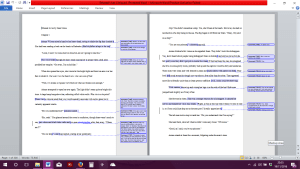 Manuscript with lots of edits.
  Editor’s Letter.



 The PBS Blog