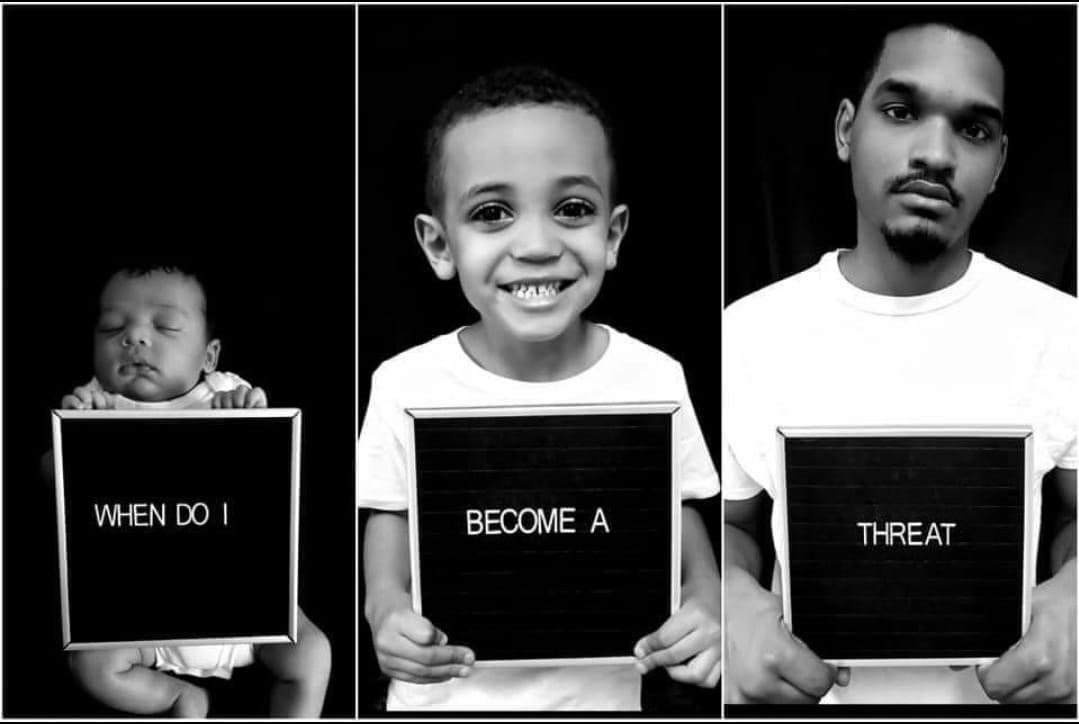
Always There Are the Children

Something devastating is happening, a bone-chilling, frightening thing.

The children are dying.

In this year alone, I have learned of the deaths of four young people, three of them children under 25 years old. All of them were from people I know; they were firstborns, the first fruits of their mother’s wombs.

It has made me reflect deeply on how we foster future generations while remembering old ones. As a history buff, I understand how easy it is to dwell on the past. However, I’ve realized that the past, present, and future are inextricably linked; if we ignore one, we disregard the others.

I had the fortunate opportunity to speak with my husband’s great-aunts this past weekend as we mourned the death of their sister, our grandmother. They are all in their 70s and 80s, so I asked them what advice they have for the next generation. Almost everyone said to listen to the elderly. Essentially, you should obey your mother and father. Today, many may refer to this as honoring the ancestors. Whatever phrase you use, the broad consensus is to listen to those who came before you.

Growing up on a farm, where they grew and raised everything they ate, I got the impression they weren’t just saying this because they were elders but that it was a genuine conviction in which they truly believed.

Growing up, many of us heard the warning: “Honor your mother and father so your days are prolonged on the earth.”

I think about the depth of this as I watch the children perish.

One of my favorite poems from Nikki Giovanni is “Always There Are the Children.”

For me, it is a reminder that we do not live forever in these bodies. We will pass on one day, but there will always be children. What we pour into them while we live determines whether there will be more Nikki Giovannis and Maya Angelous.

Unfortunately, we live in a world obsessed with two things: appreciating people only once they’ve passed and only once they have become great. Rarely do we recognize the process and honor the in-between spaces. Seldom do we honor the becoming.

This robs the children.

And the children are not just minors in small bodies; we are the children, too. We are also daughters and sons, and I hope that we learn to nourish ourselves in the same way that those who came before us were nursed, and that we do so early on, rather than waiting until we are thought to have made it, because we are born worthy.

“We prepare the way with the solid
nourishment of self-actualization
we implore all the young to prepare for the young
because always there will be children.”

-Nikki Giovanni

Our Children

You are fourteen,
and despite the childish laughter—
the one smoother than the fresh coat of love
on a baby’s skin—
your mothers must warn you
that certain skin tones
won’t allow you to flash open innocence.

You are not allowed to purchase candy,
tell jokes,
or ring the wrong doorbell.

Certain histories won’t let you forget the present
or permit childhood to take advantage
of your fingertips.

Responsibilities follow you home
in warm booties, blankets, and prophecies.
If you had known that your existence
would give birth to a movement,
long before your feet hit the ground.
Before your mother’s pelvis
danced against your father’s,
and his kiss brushed upon her skin…

Did they tell you that you were born for this?

Did they tell you about the cries of Israel
when they reached into the heavens like hands
just as heavy as your parent’s hearts,
knocking against the doors of heaven
because too many of their prayers ended in question marks?

Did they tell you that you were destined for this?

That you had the freedom movement
stamped to your backside
like a receipt back to the soil.

Like your fathers had to spit their seed into a melody,
an Amazing Grace and Birmingham Sunday,
carving its lyrics and your names
into the history books of our yet unborn.

And while you rest
they march scripture on the bed
of your misunderstood self.


Listen to this poem on TikTok or YouTube.

Dancing Between Two Truths

Photo by Pixabay

I get emotional when I remember the faces of the children I used to teach, who are now young adults. Their formerly round and babyish faces have thinned out to resemble those of young adults. They provide concrete evidence of the passage of time. My nieces, nephews, and students are now in college, studying a trade, dating, and even starting families.

It serves as a sobering and bittersweet reminder of how fleeting life is. How quickly the years fly by. I see their bodies as proof and imagine all the years tucked inside them. I cry happy and sorrowful tears as I watch them grow. I weep both for the lovely persons they are, and for the perilous and cruel world they must endure as they grow up.

I will be thirty-six next month, and after two ectopic pregnancies, a miscarriage, and the removal of my right Fallopian tube, I may not have any children of my own. I have come to both accept and mourn this. I experience thanksgiving and contentment for my life and everything I’ve accomplished, with no sense of the need for anything more. And also a sense of loss for what never was and possibly, could never be.

But then, I look out into the world, see the children wilding in downtown Chicago (I find it interesting the usage of this term by the media, “wilding.” It is the same term used against the five young black boys on this day in 1989 accused and charged with raping the white woman jogger in New York’s Central Park), and see the protests over the shooting of Ralph Yarl, who though he lives, has become yet another hashtag.

And I ask myself, which is better, giving birth to a son or watching that son heal in the hospital after being shot in the head for ringing the wrong doorbell?

Which is better, knowing what it’s like to give birth or knowing what it’s like to mourn the death of a child?

And I dance between these sentiments as I look into the faces of these little ones. I remember them as children, full of innocence, and now see them as young adults, wide-eyed and excited to live in a cruel world.

Black History Fun Fact Friday – The Short Violent Life of Robert “Yummy” Sandifer: So Young to Kill, So Young to Die.

On Wednesday, August 31, 1994, Yummy “Robert” Sadifier was shot in the back of the head with a .25 caliber pistol at a viaduct at 108th & Dauphin Avenue in Roseland, Chicago, IL. At 12:30 am police found him lying on dirt and bits of broken glass according to newspaper reports. They pronounced him dead at 2:20 am, on Thursday, September 1, 1994. He was the city’s 637th murder victim of the year.

On January 3, 1993, The Chicago Tribune ran a headline, “Killing Our children,” that read: “In 1992, 57 children age 14 or under were murdered in the Chicago area, felled by snipers, sacrificed by gangs, killed by parents. It was a year for burying the young.”

In early ‘94, when I was just in the second grade, and we lived in the Robert Taylor Projects on Chicago’s south side, my uncle came to pick us up from school early because the gangs were at war and there were a lot of shootings. We had to run to our building, shielded by our uncle.

This is the kind of environment Yummy’s growing up in.

Robert “Yummy” Sandifer was born on March 12, 1983, the fourth of ten children born to Lorina Sandifer. His father, Robert Atkins, went to prison three months before he was born, and Lorina was a prostitute who neglected her children, according to news reports. On January 19, 1986, they removed Robert Jr. from his mother’s home when police found him and his older siblings in the house alone. DCFS, the Department of Children and Family Services, intervened in August 1986 and turned Robert and his siblings over to their grandmother, Jannie Fields. 

However, according to Time Magazine, a Cook County Probation Officer said that Field’s home was not a nurturing place for Robert. The young Robert found refuge in the streets among gang members as most young black males who grew up poor, with no family, no friends, no education, and little opportunity. Yummy joined the gang and racked up a record too long for his young age.

  • January, ’92 – Arrested.
  • July ’92 – Prosecuted for robbery, case dropped, witness doesn’t show.
  • January ’93 – Attempted robbery, trying to steal jacket, witness doesn’t show, case dropped.
  • May, ’93 – Attempted Robbery. The key witness doesn’t appear.
  • June, ’93 –  Robbery Charge, sentenced to 2 yrs probation. He is only ten.

Yummy was charged with 23 felonies and 5 misdemeanors in his short life. He was prosecuted on eight felonies and convicted twice; sentenced to probation – the most punitive penalty available under state law, at the time, for children under 13. Even for murder, state law barred jailing children under 13 in an Illinois Department of Corrections youth facility.” – https://newafrikan77.wordpress.com/2014/03/09/the-forgotten-story-of-robert-yummy-sandifer/

Yummy also used guns, allegedly killing Shavon Dean, a 14-year-old girl who lived next door to him two weeks before his own murder.

“Police hunted Yummy, putting descriptions of him in the paper and pounding the streets for the eleven-year-old on the run. By midnight, August 29, 1994, the Chicago Police were working with FBI agents with 20-30 officers involved (Detective Cornelius Spencer). “Dozens of police officers – tactical units, gang crimes officers and detectives –joined by members of the FBI’s Fugitive Task Force fanned out searching for the boy as far away as Milwaukee, nearly two hours away, where Yummy had a relative, Nevels told The Chicago Sun-Times. The case was discussed at roll calls at every police district in the city.” – https://newafrikan77.wordpress.com/2014/03/09/the-forgotten-story-of-robert-yummy-sandifer/

Grandmother Fields also searched for her grandson. She received a call from him asking why the police were looking for him. He was ready to come home. They agreed to meet on 95th Street, but when she got there, Yummy was gone. She waited until 10:00pm. The boy never showed. 
Yummy was murdered at 12am, a sad end to a 77-hour boy hunt that put Chicago on the map for its violence. Robert had no mother, father, or family to nurture him. In fact, he was abused. He was taken to the hospital at 22 months with cigarette burns on his body.

“There were 49 scars,” said Donoghue at the trial of Derrick Hardaway. “I had to use two diagrams.” There were so many scars on Yummy’s body he could not use the one chart typically used by medical examiners.”

He turned to the streets and was said to be an impressionable kid. He looked up to gang members and was a member of the BDs or Black Disciples. Based on the descriptions of the robbery charges and the witnesses “not showing,” it doesn’t take a rocket scientist to discern that the crimes Robert committed were being ordered by older and higher-ranking members of the gang. They had to silence him before the police got to him. “Dead men tell no tales,” said a 37-year-old uncle of Robert. “They put him to sleep.”

How does one judge the criminal life of an eleven-year-old with no stability? I can only imagine how scared he must have been with the FBI and police looking for him.

Robert_sandifer

As a kid, Robert was small for his age. He loved to swim, draw, and loved cars. He loved Gyros, Chocolate Chip, and Oreo cookies. He loved cookies so much that it gave him the nickname Yummy. A neighbor interviewed says he was bad, fought, and broke into people’s houses.

The mayor of Chicago admitted that Yummy had slipped through the cracks. Just what cracks were those? The sharp crevices that trap children and break them into cruel little pieces. Chicago’s authorities had known about Yummy for years. He was born to a teenage addict mother and a father now in jail. As a baby he was burned and beaten. As a student he often missed more days of school than he attended. As a ripening thug he shuttled between homes and detention centers and the safe houses maintained by his gang. The police arrested him again and again and again; but the most they could do under Illinois law was put him on probation. Thirteen local juvenile homes wouldn’t take him because he was too young.

-Nancy Gibbs, Time Magazine

“Nobody didn’t like that boy. Nobody gonna miss him,” said Morris Anderson, 13. Anderson used to get into fistfights with Yummy. “He was a crooked son of a___,” said a local grocer, who had barred him from the store for stealing so much. “Always in trouble. He stood out there on the corner and strong-armed other kids.” (Murder in Miniature, Time Magazine)

“Everyone thinks he was a bad person, but he respected my mom, who’s got cancer,” says Kenyata Jones, 12. Yummy used to come over to Jones’ house several times a month for sleepovers. “We’d bake cookies and brownies and rent movies like the old Little Rascals in black and white,” says Jones. “He was my friend, you know? I just cried and cried at school when I heard about what happened,” he says, plowing both hands into his pants pockets for comfort before returning to his house to take care of his mother. “And I’m gonna cry some more today, and I’m gonna cry some more tomorrow too.”

According to Yummy’s aunt:

“He wasn’t violent and he wasn’t bad. The way they talkin bout now, that’s not true. He was this and he was that and I know that he was not. He was very short to be his age, he was real short. He was very smart he could draw, he could read, he could write.”

Gloria, Robert’s Aunt, Weekend TV, September, 1994

According to news reports, though, Robert was illiterate, and personally, I believe it. I think he was smart (as his friends say, he used to invent stuff, and at 11, he already knew how to drive cars), but I also believe he had no guidance and no one there to nurture him. Coming from a broken home and struggling as he did goes hand in hand with not excelling academically. I wish there was someone there to nurture his intellect. It makes me sad to think he had no one.

Shavon’s aunt, the teen Robert killed by a stray bullet, also says in the same video that she never had a problem with Robert. “He respects me,” she said in the film. She has even taken him on a trip with her. She says, “I can’t say that he killed my niece because I wasn’t there. It was at nighttime, and nighttime has no eyes, and bullets have no direction.”

Was Yummy innocent or guilty? Did his age make him innocent, or did his murders make him guilty? How does one judge the criminal life of an eleven-year-old who was about to turn himself in when he was shot in the head? And what of the two young brothers found guilty of his murder? They were young, too, and ordered to kill Yummy by the same gang in exchange for their own lives. This story is sad because ultimately, four babies lost their lives: Shavon Dean (14), Cragg and Derrick Hardaway (16 and 14, currently spending their lives behind bars for Yummy’s murder), and Robert “Yummy” Sandifer.

Only Yah can judge them.

1101940919_400

On September 2nd, the Chicago Tribune ran an article called Robert: Executed at 11, calling Yummy a Victim and Victimizer. September 19, 1994, Yummy stared out at the country on the front cover of the September edition of Time Magazine with the headline:

“The Short Violent Life of Robert ‘Yummy‘ Sandifer: So Young to Kill So Young to Die.”

Even Salt Looks Like Sugar

We are six days away from the eBook release of my new novella, Even Salt Looks Like Sugar so this is your once in a blue moon shameless self-promotion post. Go get it!!

Okay. Now that I have your attention. What is this about any way?

Wanda wants nothing more than to escape the oppressive upbringing of life with her abusive foster mother. Miss Cassaundra manipulates the system by bringing lost children into her home turned whorehouse and collecting the money. Wanda knows what it’s like to be abandoned and has no doubt Abby is Cassaundra’s next case. When an opportunity arises, that could save them both, Wanda must find a way to get the paperwork that will secure their freedom. But Cassaundra’s got eyes everywhere and no one can be trusted when even salt looks like sugar.

You should read this book if:

  • You are into Young Adult Fiction
  • You are passionate about African American experiences
  • You love women’s fiction
  • You love and care about children
  • You suspect something is wrong with America’s Foster Care system
  • You’ve been in the foster care system
  • You are a mother
  • You didn’t grow up with a mother
  • You are short on reading time (this is a short novel)
  • You are short on finances (this book is just 99cents)

PreOrder this short novel today in eBook at just 99cents on Amazon. CLICK HERE!!

Mark as “Want to Read” on Goodreads if you want to read it. CLICK HERE!!

Remember, setting up a Goodreads account is FREE and only takes a moment!

Thanks so much!!


Share | Reblog | Support

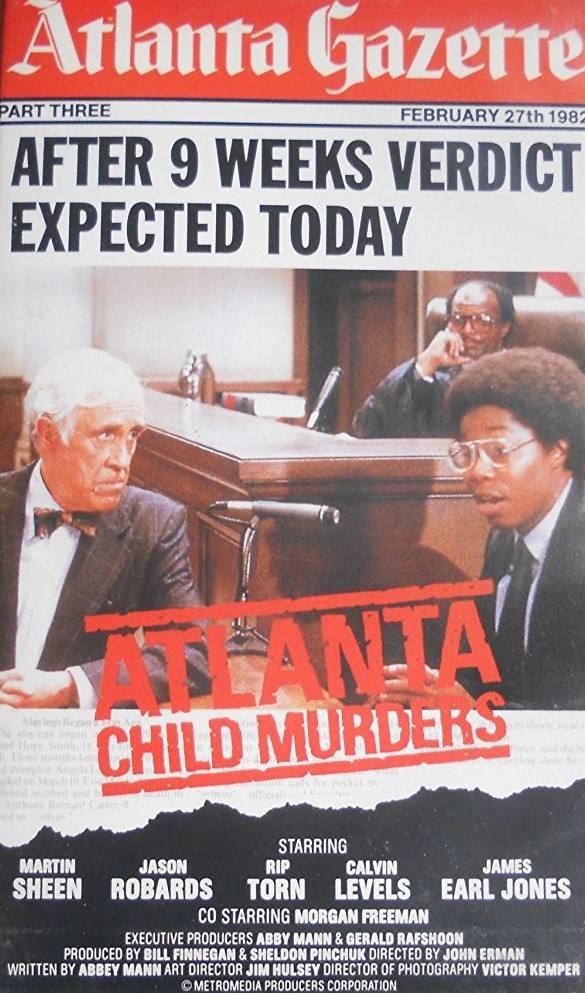
Black History Fun Fact Friday – The Atlanta Child Murders


ACM

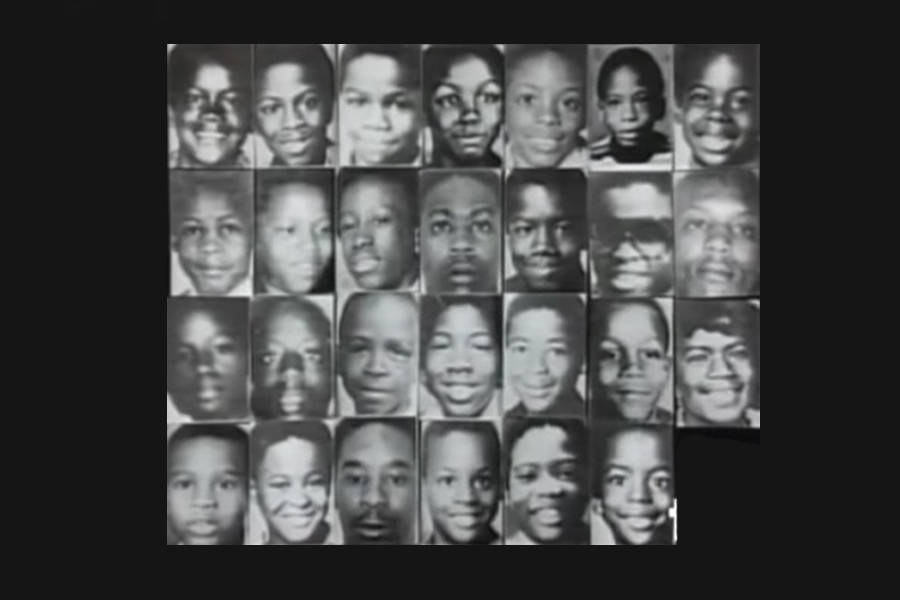
What became known as “The Atlanta Child Murders” happened in Atlanta between 1979 and 1981, when about 29 Black children, teens, and young adults were kidnapped and murdered. A majority of the killings shared common details. In 1979, for instance, Edward Hope Smith, also known as “Teddy,” and Alfred Evans, also known as “Q,” aged 14 and from the same apartments, disappeared four days apart. Their bodies were both found on July 28 in a wooded area, Edward with a .22 caliber gunshot wound in his upper back. They were believed to be the first victims of the “Atlanta Child Killer.”

On September 4, the next victim, 14-year-old Milton Harvey, disappeared while on an errand to a bank for his mother. He was riding a yellow bike, which was found a week later in a remote area of Atlanta. His body was not recovered until November of 1979.

On October 21, 9-year-old Yusuf Bell went to the store. A witness said she saw Yusuf getting into a blue car before he disappeared. His body was found on November 8 in the abandoned E. P. Johnson elementary school by a school janitor who was looking for a place to use the bathroom. Bell’s body was found clothed in the brown cut-off shorts he was last seen wearing, with a piece of masking tape stuck to them. He had been hit over the head twice, and the cause of death was strangulation. Police did not immediately link his disappearance to the previous killings.

On March 4, 1980, the first female victim, 12-year-old Angel Lenair, disappeared. She left her house around 4 pm, wearing a denim outfit, and was last seen at a friend’s house watching Sanford and Son. Lenair’s body was found six days later, in a wooded vacant lot along Campbellton Road, wearing the same clothes she had left home. A pair of white panties that did not belong to Lenair was stuffed in her mouth, and her hands were bound with an electrical cord. The cause of death was strangulation.

atlanta-child-murders-victims

I won’t go on as the accounts get more and more disturbing. The FBI joined the multi-agency investigation in 1980. The investigation was closed following the conviction of Wayne Bertram Williams for two of the murders in 1982. After the trial, law enforcement linked Williams to 20 more of the 29 murders.

Not all of the missing children have been found, and not all the murders were attributed to Williams. Some believe he was falsely accused. Those days, it was hard to know what to believe. Tensions were high and rising with each body found. Hundreds of residents volunteered for a community watch program at schools, playgrounds, and shopping centers. Others took up baseball bats and patrolled the streets.

Children teased each other about getting caught by “The Snatcher” as the assumption was that it was just one killer, but officials at the various local, state, and federal agencies working the cases couldn’t agree.

In the wake of missing children and young people again, this time in Chicago, it’s imperative that we all be careful. These are dangerous times, and it really doesn’t matter where you live. Be careful out there, people, and keep an attentive eye on your children.


Sources:

https://en.wikipedia.org/wiki/Atlanta_murders_of_1979%E2%80%9381

http://allthatsinteresting.com/wayne-williams-atlanta-child-murders

https://www.myajc.com/news/crime–law/why-five-atlanta-child-murder-cases-are-still-unsolved/CdHuMiEvsBelz1TZDZy5oJ/

New Release – Who’s That in the Cat Pajamas (Book One) by Sojourner McConnell

I am honored to have the opportunity to introduce you to a new author. She asked me if I could help her to promote her new release and of course, I am always willing to help. That said, you don’t know Sojourner yet but you will! She will be interviewed on this blog next month. Until then, she has a new release! Whoop!

First, let’s get to know Sojourner a bit:

Born and raised in Birmingham, Alabama. Sojourner McConnell lives in Winchester, Kentucky with one of her daughters and three of her thirteen grandchildren. She has six grandchildren in Alabama and four that live in Michigan. With all those children and grandchildren, she has crafted her storytelling skills. Sojourner’s new book is a children’s chapter book, Who’s That in the Cat Pajamas which is available on Amazon now.

Her next book, Blip, is a Sci-Fi book with humor and intrigue and is due out by December 2017. The Path of the Child, The Power of Forgiveness, and 31 Days of October are also available in paperback and in eBook format on Amazon and other retailers. Sojourner brings a taste of strong personalities with a healthy dose of southern charm to her characters.

“You know what really grinds my gears? When Sojourner is on the computer ALL day.” – Beau

When not writing, she is busy entertaining her Australian Shepherd, Beau. Unfortunately, Beau tends to get jealous when she spends too much time working on the computer.

OK already, that’s enough. We don’t wanna give away too much of the goods before the interview! Now, about the book!

Who’s That in the Cat Pajamas?

(The Dolcey Series Book 1)

About.

When the wind brings the cries of children to her ears, Dolcey is spurred into action. Comforting and aiding children in need are her main focus. Welcome to Dolcey’s world. Welcome to a world of magic and endless possibilities. When Emily has a big problem, her family tries to help, but some problems need something special to make things right. Just when it seemed she was destined to be doomed, she discovers an unexpected savior- a magical cat that will lead her on a spectacular spectacle of an adventure like no other!

You Can Get Your Copy of Who’s That in the Cat Pajamas? Here!

(you know you want to. You’re asking yourself, “Wait, who is that in the cat pajamas? WHY are they wearing cat pajamas??)

…and Sojourner will see you again next month!

Note: I was not paid in the promotion of this book.