The door to the patio is open, and the screen door shields me from the insects that I may enjoy the brisk caress of the wind on my skin. And as I inhale the fresh taste of the evening air, enjoying the end of a peaceful day, I think about the genuine that often come from writing. You’d have to excuse the poetic tone of this post. It’s my thinking voice I suppose. The one I use when I’m writing this down in my journal before typing it, twirling the pen between my fingers and tapping it against my lips while staring out in space. Anyway, back to something genuine. To think back on my own writing or to read someone else’s, I feel often that there’s a realness here. Somewhere between the heart and spilled ink is an authenticity few will express verbally. Something about speaking without moving our lips causes us to speak the truth of our hearts. Something about writing it down instead brings about a depth. Something about the movement of mental messaging brings out the emotional intensity many will not express otherwise. I wonder if this is why writing is often associated with therapy. For what is not spoken is often written. Not that everyone writes for such a purpose, but it is historical that writing is an exercise that has caused many to heal or to reveal or stumble upon truths otherwise unknown or not dealt with. Something about how the subconscious mind is uprooted when we write. It is an interesting thought I sought to share before the memory or moment escaped me. Speaking of escape, it’s time I publish this post and retire this laptop for the night. I’ve got laundry to finish and this breeze sure feels good.
Growing up, my brother was a collector of the latest Nikes. He was the Air Force One version of the Air Jordan lover. He’ll collect all kinds of pairs of “Air Ones” and stack them in his room or in the basement. It was truly a work of art and since he actually is an artist, sometimes he even drew on them! In any event, it’s no secret, black people love shoes! I don’t say that in a discriminatory way, for African Americans are known to set the trend. There’s nothing wrong with our love for fashion which is often mimicked all over the world. It makes sense then, why it was an African American man who helped to revolutionize the shoe making industry. Meet Jan Matzeliger.
Jan Matzeliger was born in Surinam, formerly known as Dutch Guiana, in South America. Of mixed ancestry, Jan’s father was a Dutch engineer and his mother of African ancestry. Naturally, since his dad was an engineer, Jan would accompany his father to work and developed a skill for repairing complicated equipment.
At nineteen, Jan left home to explore the rest of the world, and began work aboard an Indian ship. He found his way to America and settled in Pennsylvania where he became interested in shoe making and worked at a shoe making factory.
The Lasting Machine
Though Jan was interested in improving how shoes were made, two obstacles were in his way: He could barely speak English and at that time shoes in the U.S. all came from the small town of Lynn, Massachusetts where “Hand Lasters” (people who could attach the different parts of the shoe together by hand), could only produce 50 pairs of shoes per ten-hour day. Though paid well, Jan had the discernment to see that what Hand Lasters were doing was not as good as everyone thought. There had to be a better way.
Specifically, there was no machine that could attach the upper part of a shoe to the sole and this is basically what the “Hand Lasters” were doing and they were the experts. According to them, “No matter if the sewing machine is a wonderful machine. No man can build a machine that will last shoes and take away the job of the Laster, unless he can make a machine that has fingers like a Laster – and that is impossible.” Jan Matzeliger thought they were wrong and set out to build a machine that would do just that.
Jan’s Finished Lasting Machine
Jan is a great inspiration for setting out to achieve something that no one thought would work. He worked hard on this machine using whatever he could find – cigar boxes, nails, paper, scrap wire—and after six months had a workable model. Jan however, did not have much money. He also kept his project secret. Still, the “expert” Hand Lasters found out and made fun of him for his project. Someone offered him $50.00 for the machine but Jan wasn’t having it. They tried to play him, but he was smarter than that. He turned down more and more offers and continued perfecting his machine until a better offer came from which he could acquire the tools to perfect the machine even more.
In March of 1883, the United States Patent Office issued a patent for Jan’s machine, which could produce 700 pairs of shoes a day, to the Hand Lasters 50 pair and the rest is history. Jan had officially revolutionized the shoe making industry.
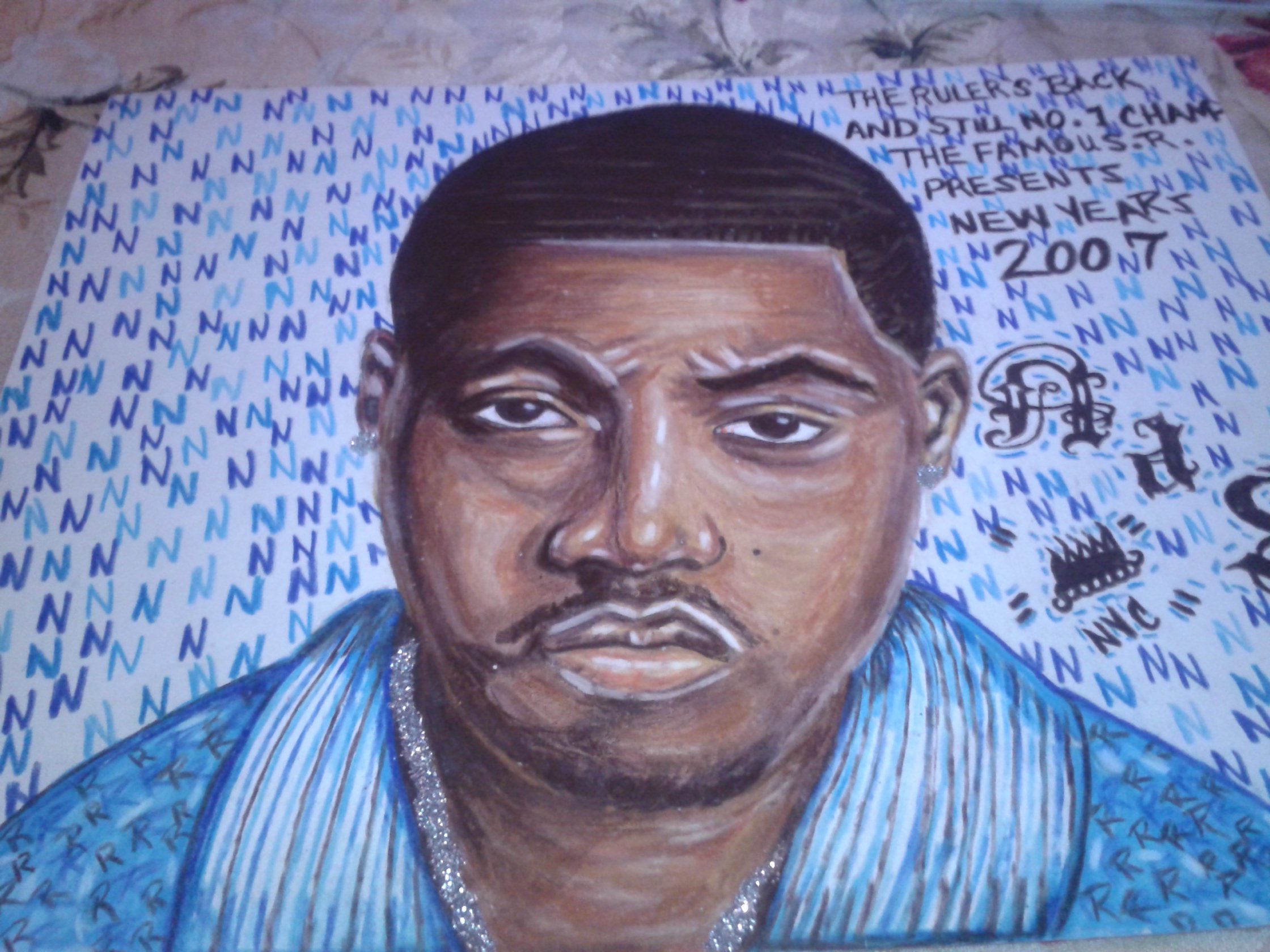
Some of my brother’s art, “The Shoe King”
How does Jan’s invention help us today?
Today, shoe making involves four departments: Clicking or Cutting, Closing or Machining, Lasting & Making, Finishing Department and the Shoe Room. The Lasting and Making part is where Jan’s invention would come in. “In the early days of shoe making, shoes were made mainly by hand. For proper fit, the customer’s feet had to be duplicated in size and form by creating a stone or wooden mold called a “last” from which the shoes were sized and shaped. Since the greatest difficulty in shoe making was the actual assembly of the soles to the upper shoe, it required great skill to tack and sew the two components together. It was thought that such intricate work could only be done by skilled human hands.” (Wikipedia)
That is until Jan’s machine. Today, soles, which were once laboriously hand-stitched on, are now more often machine stitched or simply glued on by shoe making manufacturing.
I took a two-week break from posting on my own blog a few months ago. In that time, I was refueled with post ideas but I also had the opportunity to read most of yours. In that process, I realized something I hadn’t paid much attention to before. I didn’t pay much attention to it because that’s just how ingrained these things are in our lives today. The Cell Phone. During my observation, I realized that I read most of your blog posts (90%) from my phone. In fact, I observed that the only time I read blog posts from my laptop / desktop, is when I am logged in to draft a post that I can’t draft on my phone.
The number of mobile-only users has recently surpassed the number of desktop-only users. According to an article in Marketing Land, “Mobile now represents 65 percent of digital media time…
Like many of you, I experience doubt, fear, and all the other emotions that can bring about stress and negativity. I am no different than you in these feelings. I am human and like you, I have emotions. Sometimes I am broken, undetermined, and lack confidence. However, I soon remember that this is not how I want to live my life. It is not that I am “happy go lucky” all the time, fake, or that I do not have feelings of despair, but that I have made the conscious decision not to give my energy over to such feelings. Of course, there are days when I am not consciously strong enough to make that kind of a decision, and that’s when prayer comes in.
So often I hear writers, bloggers, and friends complain about not being good enough without realizing how they’re speaking this into existence. If you truly don’t believe you have worth or value, then that is how it’s going to be. It’s not about being flawless (for we have all fallen short in some way or another) but what it is about is talking ourselves into achieving our goals instead of talking ourselves out of them.
Like learning, self-examination is not a one-time thing, but it is forever constant in our lives. One of the reasons self-reflection is so important is because we often deceive ourselves. Self-Deception means that you are not consciously aware of your true self. The person in the mirror is not reflective of what really exists. There are often two kinds of ways in which we deceive ourselves:
a. The part of self-deception that makes us look at ourselves and downplay everything about us because we know that we are flawed.
b. The part of self-deception where we know everything.
Both of these views are wrong.
Self-examination is not comparing ourselves to others or being mean to ourselves. It does not make it so dark that nothing new can grow. In this instance of Self-Deception we’re just too busy counting our mistakes and being “down and out” to make any real changes. It’s almost as if we want to be in that low place. Walking around carrying the burden of this dark cloud over our shoulders like its a responsibility, and brushing off any inkling of light that wishes to squeeze itself through.
The other one simply leaves no room for improvement. Self-examination is not self-exaltation.
It is possible that the way we perceive ourselves is flawed. If we think we know everything it is possible, then, that we are self-deceived. Likewise, if we believe that we know nothing, then it is possible that we are self-deceived, for everyone has a little bit of something in them. We all know in part and working together we become whole as we all bring something different to the table. No one knows everything, but everyone knows something.
When we have these low moments, we must talk ourselves into those changes we want to happen in our lives and implement a plan that will help us to reach these goals in a practical way. Again, it’s not about having it “all together”, it’s about changing your perspective on life itself and going from concept to execution. Words have power and they do not come back void. Instead of speaking negativity over your life and having a “woe is me” attitude, try being inspired. Try optimism. Try faith. Try something different, for insanity is repeating the same thing over and over again and expecting a different result. You already stressed yourself out about that today. Try something else.
So, your blog isn’t growing the way you want it to, what are you doing to change that? What practical steps are you taking to change what you don’t like? Or are you just complaining about it? So, you’re not where you want to be with your writing, or business, change it. Sit down and outline a plan. So, you don’t like the way your stomach looks right now, change it. Maybe you can’t run a mile starting out. You don’t have to. Run a block. Walk a block.
Anything you don’t like in your life can be changed but first you must change your perspective. In addition, there must be a willingness to be uncomfortable. Only when we are in that place can we really grow. For as the saying goes, “Comfort zones are beautiful places, but nothing ever grows there.” Yes, it’s going to be hard. Yes, it’s going to take persistence, and yes it’s going to take dedication but it begins first with the self-confirmation that yes, IT IS possible. We have to start using words like, “I can”, “I will” and “I will learn” instead of “I can’t”, and “I will never”. Don’t talk yourself out of achieving your goals. Talk yourself into them.
Feeling doubtful? Read this! Post Quote: “…the impostor syndrome is actually associated with high-achieving people! If you have those feelings, you may actually be more successful than you perceive yourself to be.”
*Comments Disabled. Please comment on the original post*












 The PBS Blog