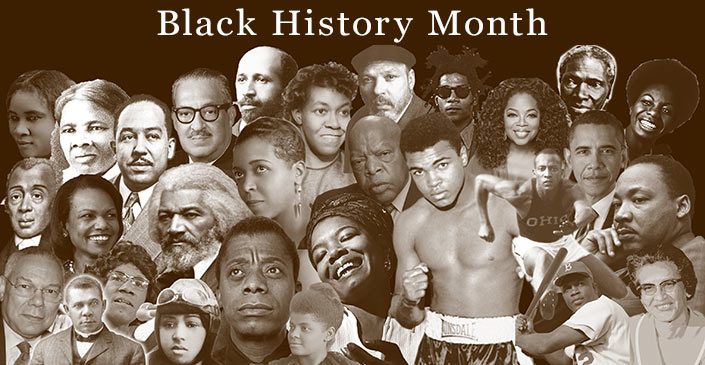
Black History Month UK


September walked out of here like she had somewhere to be, and October is strolling in with hella causes, from Breast Cancer Awareness Month to World Mental Health Day (10/10), to PAIL: Pregnancy and Infant Loss Awareness Month. (We gotta come back to this one!)

Additionally, October is Black History Month in the UK, and since I haven’t seen many people in the US discuss it, let’s do so.

If you didn’t already know, October marks Black History Month in the United Kingdom and was first celebrated in October 1987 to coincide with the 150th anniversary of the abolition of slavery in the Caribbean. (1838-1988)

The observation of October as Black History Month had its beginnings in programs and priorities of the Ethnic Minorities Unit (EMU) of the Greater London Council (GLC), and by the Principal Race Relations Adviser and Head of the Unit, Ansel Wong.

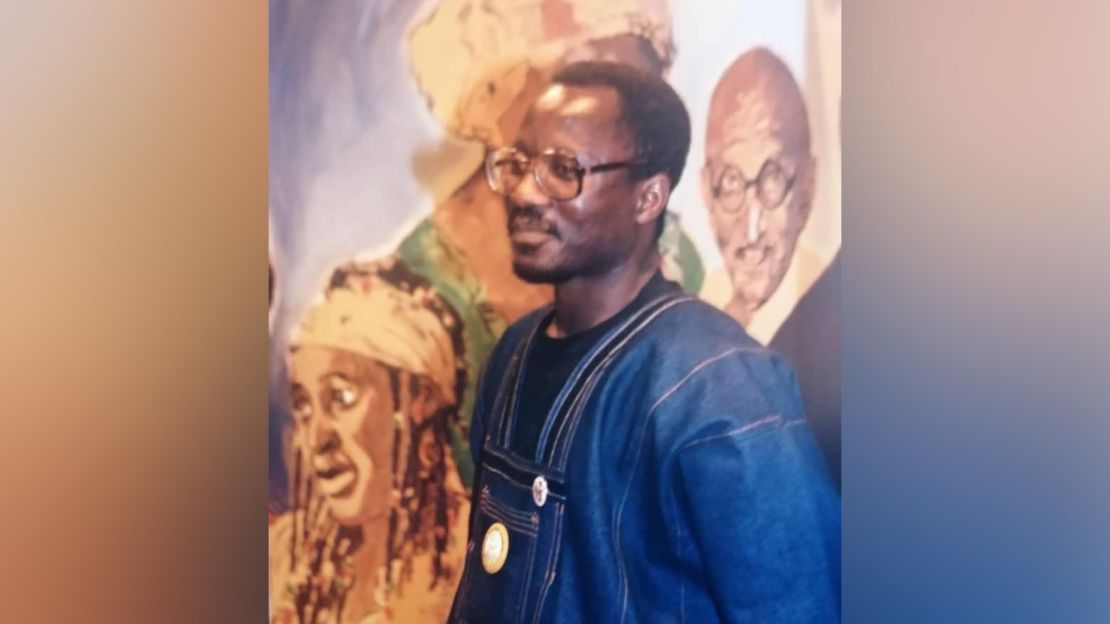
But it was Akyaaba Addai-Sebo who took it to new heights. Addai-Sebo came to the UK from Ghana to seek refuge from political persecution in 1984. Like the founder of Black History Month in America (Dr. Carter G. Woodson), Addai-Sebo wanted to challenge racism and celebrate the history and achievements of his people.

But that’s not all.

Akyaaba’s chief inspiration was young people. He says one of the reasons the celebration is in October is to appeal to children returning to school from summer break. According to one story, Akyaaba encountered a distraught mother who complained that her son (whom she had named after Marcus Garvey) asked her why he couldn’t be white.

“The inspiration for Black History Month came from an incident that happened at the GLC where I worked as the Co-ordinator of Special Projects. A colleague of mine, a woman, came to work one morning, looking very downcast and not herself. I asked her what the matter was, and she confided to me that the previous night, when she was putting her son Marcus to bed, he asked her, ‘Mum, why can’t I be white?’

A young Akyaaba Addai-Sebo

He goes on to say:

“So when this incident with Marcus took place in London, it dawned on me that something had to happen here in Britain. I was very familiar with black history month in America, and thought that something like that had to be done here in the UK, because if this was the fountainhead of colonialism, imperialism and racism, and despite all the institutions of higher learning and research and also the cluster of African embassies, you could still find a six year old boy being confused about his identity even though his mother had tried to correct it at birth.”

– Akyaaba Addai-Sebo, www.crer.org.uk

Why It Matters

Although the overwhelming majority of enslaved Blacks were transported to the Caribbean and South America, not just North America, many Americans are still not familiar with our history in other parts of the world.

For example, the English ship that brought the first recorded enslaved Blacks to the American colonies was called The White Lion and arrived in Jamestown, Virginia, on August 20, 1619. However, we were also already being enslaved by other nations, such as being brought to Puerto Rico by Spanish conquerors as early as 1509.

“People from African and Caribbean backgrounds have been a fundamental part of British history for centuries. However, campaigners believe their value and contribution to society are often overlooked, ignored, and distorted.” (trisha@whatson.uk.com)

Black History Month in the UK + Interview

Did you know that October is Black History Month in the UK?

Yes!

The event began in the 1920s but was not celebrated in the UK until 1987.

In its honor, I am visiting V.M. Sang’s blog today with an interview and presentation of my book, Black History Facts You Didn’t Learn in School, released in February during Black History Month in the U.S. You can read more at the link below!

Things I’m Tired of Hearing During Black History Month

There are a few things I am tired of hearing every February, but let’s call this part one.

I am tired of hearing “Black history is everyday,” or some variation of this every time Black History Month comes around.

Bruh. We KNOW.

While I agree with the sentiment, it is frequently expressed by folks who, for 11 months of the year, never discuss Black history or any campaign they are advocating to educate the masses.

Black History Month wouldn’t have to exist if, instead of regarding it as a footnote, the true history of African Americans was widely taught and not as an elective.

And, perhaps, Black History Month wouldn’t have to exist if we could name other leaders and activists outside of MLK.

Maybe, if we knew about Irene Morgan and the Journey of Reconciliation, we’d better understand Rosa Parks, the Bus Boycott, and the Freedom Riders.

Perhaps, if we understood Nat Turner’s rebellion, we would know why it became unlawful for Blacks to read and write during slavery and use it as a catalyst to promote reading in the African American community.

It is wise for scholars, researchers, and historians dedicated to teaching year-round to use this moment to impress this knowledge on young people who are only thinking about their heritage in February.

As unfortunate as it is (with all of its 28/29 days), most people’s hearts are more open to learning during February than any other month, so let’s use it to our advantage. Perhaps we can spark inspiration where there was none, and people will begin to study Black history outside of this month.

Until then, consider it a doorway by which we can shine some light with almost certainty that people will pay attention, even for a moment.

Imagine you were enslaved on a plantation, and someone approached you with an opportunity to be free. Wouldn’t you take it?

Imagine you were the person to free someone else, but you only have a short window to do it. Wouldn’t you take it?

Just a thought.

Need a resource? Make sure you preorder your copy of Black History Facts coming to you on the 24th!

Black History Book Street Team

Photo by fauxels on Pexel

I am excited to be on the finishing end of this book and start to send out ARC copies.

If you are familiar with the Black History Fun Fact Friday series, this book is that series in book form, only much more polished and with more information.

Beyond that series, what inspired the book?

We are particularly familiar with the names of Dr. Martin Luther King Jr., Rosa Parks, Frederick Douglass, Harriet Tubman, Langston Hughes, and Zora Neale Hurston. These outstanding leaders had a lasting impression on Black Americans’ history.

But two questions stick out:

  1. How much do we really know about them?
  2. What are some names and histories of other leading Black people and events we are unfamiliar with.

I am looking for:

  • Black / African American readers passionate about Black history
  • Readers of any ethnicity who love Black history
  • History buffs in general
  • Readers willing to leave an Amazon review of the book when it releases

What to Do Now

Please email me at yecheilyah@yecheilyahysrayl.com if you are interested in beta reading to receive a copy.

Who’s in??

My National Novel Writing Month Experience

This year, I decided to participate in National Novel Writing Month for the first time. With Black History Month around the corner for many (it’s always black history for me), I am pushing to finish the first draft by February. Because it requires a lot of research, this is one of those books with a source page that will probably be thick enough for its own mini book. The discipline required to get this done made #NaNoWriMo more attractive this year to hold myself accountable.

My goal was to write every day and have 50K words down by the end of the month. Let’s see how I did.

Word Count as of 11/30/2021: 30,168.
Chapters: 23
Pages: 113
Sources Page: 3,747 words, 15 pages

While I did not cross the 50K threshold, I am proud of making it this far because I wanted to get 25K down if I could not do the fifty.

I did not write every day. I spent days traveling, and even on returning, I did not get right back to writing immediately. The interesting thing is that I rested a lot, which helped me do more when I was writing. Taking days off actually helped, not hinder me. To quote the Nap Ministry on Twitter: “This idea that you gotta grind yourself into exhaustion and make work the center of your entire existence is not liberating.”

I found the word count ticker and badges (I won 7) on the website motivating. I would look at it and compete to see if I could beat the previous day’s count.

The most significant thing, though, has been ghosting social media for much of November. I am not a good multitasker. If I am to focus on completing something, I have to give it my full attention, and right now, that’s this black history book. I was not posting as much or blogging. I will probably continue being missing in action, except the remaining book review posts and NWW, until the draft is complete.

I’m not gonna lie; I looked at National Novel Writing Month sideways a couple of times. I didn’t think it was for me. I am not for the whole “write a book in ten or thirty days” kind of thing. And while it’s not something I would do every year, having participated, I can say that I enjoyed the push it has given me.

If there is one thing I would do differently, it would be to set my own word count goal and try to stick to writing a little every day instead of sitting at the computer for hours. That ain’t healthy.

This bitmoji is way more excited than I am about this, lol.

Who else participated in NaNoWriMo? How was your experience?

Black History Fun Fact Friday: Guest Writers Wanted

Updated: 4/27/2020

On January 17, 2015, I started a new Blog Series in honor of Black History Month called Black History Fun Fact Friday. I planned for the series to run from January 2015 through the end of February 2015, but two badges and 70 weeks later we are still going strong.

Black History Fun Fact Friday is not just a Black History Month segment anymore. It has carved out its own space on this blog. I want to get back to publishing Black History articles every Friday and would love to have some help.

I am reaching out for help from individuals who are interested in helping to contribute to this series.

Requirements:


  • Must be at least 18+ to write for The PBS Blog.


  • Must be original work. Do not copy and paste the article from other blogs unless that blog is your own. If you have a Black History article to share that you published to your site, I welcome you to submit it for Black History Fun Facts. I have no problem with that as long as it is your work. You can also link back to it so readers can follow your blog.


  • Because of the nature of this series, interested writers must be Black/African American.


  • Topics must be relatable to the history of Blacks/African Americans, African diaspora, e.g.


  • Articles must be emailed to me for approval at least one week before publishing. If you email your article on 4/28 for example, I will publish it on 5/1 if there are no needed changes.


  • Please send articles as an attachment in a Word Document, 12p Font, Times New Roman text.


  • Please do your best to self-edit your work for basic typos/spelling/grammatical errors before submission. Grammarly and ProWritingAid are good free self-edit software programs to use.


  • Please include at least one image with the post. Canva is a good program to use to make your own images.


  • This is Black History Fun Fact Friday not Black History Opinions so do your best to submit articles covering accurate historical information. I will vet the submissions to make sure they do. If you have links to sources, please include them. If you quote someone else, please cite your source. Articles that plagiarize will not be featured on this blog. (Note: Writers, as a heads up, if you are quoting people in your Social Media graphics without giving proper credit, this is plagiarism. Putting quotation marks around the quote does not make it yours. Don’t leave off the name of the person who said it first!)


  • Please include a photo of yourself, social media handles, website, or links to books you’ve written on the topic. This will be added to the end of the post.

Benefits of Guest Blogging:


  • Increase traffic to your own website/blog
  • Build Relationships/Online Influence
  • Build Domain and Search Engine Authority
  • Capture Wider Audience (go hand-in-hand with the 1st point)
  • Develop Your Authority on a topic
  • Improve Your Writing
  • Opens the doors for paid business opportunities

Email articles to yecheilyah@yecheilyahysrayl.com.

Black History Fun Fact Friday – Benjamin Banneker: Time Well Spent by Keyshawn McMiller

Today’s Black History Fun Fact Friday is from our special guest writer, Keyshawn McMiller. McMiller is a Senior Social Work major at Florida A&M University, and a current two-time published author (Ideals From A Young Black Introvert). Keyshawn aspires to one day, become a licensed counselor and ultimately, open the minds of traditional minority communities to the advantages of professional self-help.


The next time you ponder the great polymaths of the world such as Leonardo da Vinci, Thomas Jefferson, and Abraham Lincoln, be sure to include another prominent Renaissance Man in Benjamin Banneker. A free-status African American raised on a Maryland farm that would eventually be bequeathed to him, Banneker was fortunate enough to attend a Quaker school. Though, he was primarily self-educated, relying on loaned books to learn the bulk of his skills. While in his 20’s, his knack for mathematics was demonstrated as he constructed a working wooden clock based on studying pocket watches. This accomplishment would only be the beginning of Banneker’s successes, as an interest in astronomy brought on by Quaker Astronomer, George Elliott, led him to predict a 1789 solar eclipse accurately.

As he matured, the Black Excellence of Benjamin Banneker was only magnified as he eventually became a prominent abolitionist and land surveyor near the end of his life. During this period, Banneker wrote future U.S. President, Thomas Jefferson, a letter in 1791 asking for improved living conditions for his people. In this same letter, he also sent drafts of various almanacs for the states of Pennsylvania, Delaware, Maryland, and Virginia. Amazingly, this draft would eventually be published thanks in part to Thomas Jefferson’s approval. Perhaps Banneker’s most significant achievement came about as he surveyed the land that would eventually become the current domain for the United States’ capital in Washington, D.C.

Despite Benjamin Banneker passing on in 1806, approximately 57 years before Lincoln’s Emancipation Proclamation, his legacy lives on. His name is included in several institutions, including The Benjamin Banneker buildings housed at Florida A&M University. At the notice of his passing, an obituary was published in the Federal Gazette with the quote, “Mr. Banneker is a prominent instance to prove that a descendant of Africa is susceptible of as great mental improvement and deep knowledge into the mysteries of nature as that of any other nation.”

Sources Cited

https://www.encyclopedia.com/people/science-and-technology/mathematics-          biographies/benjamin-banneker

https://www.britannica.com/biography/Benjamin-Banneker

https://www.biography.com/scientist/benjamin-banneker

https://www.famu.edu/index.cfm?blackhistory&BenjaminBanneker


Copyright © 2020. Keyshawn Miller

Keyshawn McMiller is a Senior Social Work major at Florida A&M University. A current two-time published author with “Ideals From A Young Black Introvert” and “Winnas, Not N*ggas,” Keyshawn is on a mission to use his gifts of writing to inspire the next generation to trade who they are for what they can become.

Instagram: @youngblack_introvert

LinkedIn: Keyshawn McMiller

Other Literary Works

  • Ideals From A Young Black Introvert: A Mini-Guide to a Better Life (available on Amazon)
  • Winnas, Not N*ggas: A Black Male’s Path to a King’s Mentality
  • King’s Mentality (poem)
  • Individual (poem)