Phillis Wheatley

7957995-120875522_3-v1

Alrighty then, let’s get started. Of course, those who know me, even slightly, know that I’m a “365 day a year black history frantic”, but I love black history month because its the time of year where black people’s minds are the most open and willing to be in tuned with back history and that, despite how small it may seem, is worth investing in. Yes, I am saying that you (black people) should invest in your people’s minds. If ever you can capture a moment where they are most in tuned, you should do so. Yayy.

So, without further ado, let’s get started.

PhillisWheatley

First up is Phillis Wheatley, first (recognized) black writer. AND (yes and) she was a poet. So, I don’t know, that’s like extra credit or something write? ( I can spell right, I just didn’t on purpose…duh). OK, my humor is not funny, which is why I’m not a comedian…on to Wheatley…

The First African American Writer

The first African American Writer is a statement I say lightly. I say it lightly because we do not know if she was the first. She is only recorded as the first because her work was published and that makes it legitimate in this society. So, as the first recorded black woman writer, Phillis was the first to make a name for herself while still under the bondage of slavery. Brought from Africa as a child and sold to a Boston merchant, Wheatley spoke no English initially (as didn’t many of her people) but by the time she was sixteen, under the tutorship of her owners, had mastered the language. Her interest in literature led her to write and publish Poems on Various Subjects in 1773.
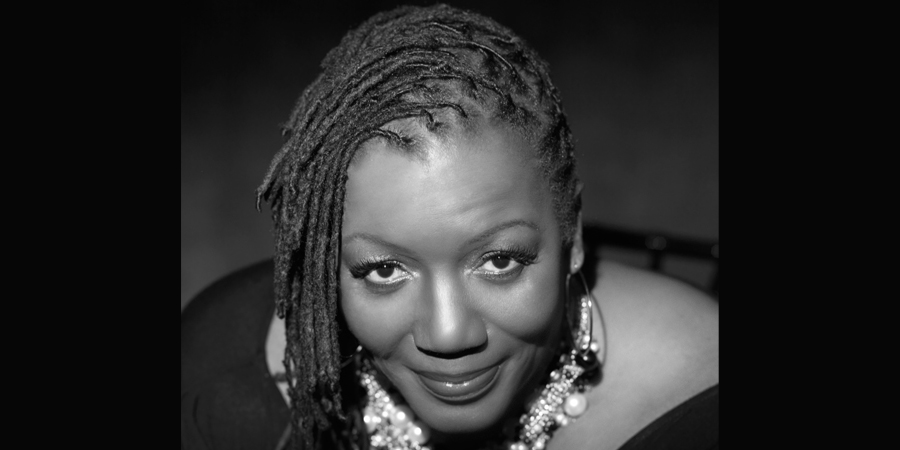
Writer’s Quote Wednesday – Bernice McFadden

Good Morning Lovelies and welcome back to another segment of Writer’s Quote Wednesday as hosted by Colleen of Silver Threading. This week I am quoting from Bernice McFadden:

900x400_BW2“I write to breathe life back into memory and to remind African Americans of our rich and textured history.” – Bernice McFadden

I had to reread this quote a few times. I understood it well. I had to reread it to make sure they were not my own words. Its as if McFadden had found a way into my head. Maybe the ancestral blood that links our DNA pulled from the genetic instruction and spoke our hearts into words. Maybe she just heard it in my bones, but this is one of the many reasons why I write: “To breathe life back into memory and to remind African Americans of our rich and textured history.” The quote suggests there is something not living among us, something not honored, not recognized, not praised. It is my hope that my work can be part of the resurrection

About The Author: From Her Author Website

BERNICE L. McFADDEN is the author of nine critically acclaimed novels including Sugar, Loving Donovan, Nowhere Is a Place, The Warmest December, Gathering of Waters (a New York Times Editors’ Choice and one of the 100 Notable Books of 2012), and Glorious, which was featured in O, The Oprah Magazine and was a finalist for the NAACP Image Award. She is a three-time Hurston/Wright Legacy Award finalist, as well as the recipient of three awards from the Black Caucus of the American Library Association (BCALA). She lives in Brooklyn, New York. The Book of Harlan is her latest novel.

*********************

010516_2129_writersquot1

They Don’t Know Who They Are

There’s a rumor taking place among African Americans in America. A rumor that has always been there but that is now being echoed from the mouths of others. We heard it first from Raven-Symoné and then Whoopi Goldberg, and now Stacey Dash.

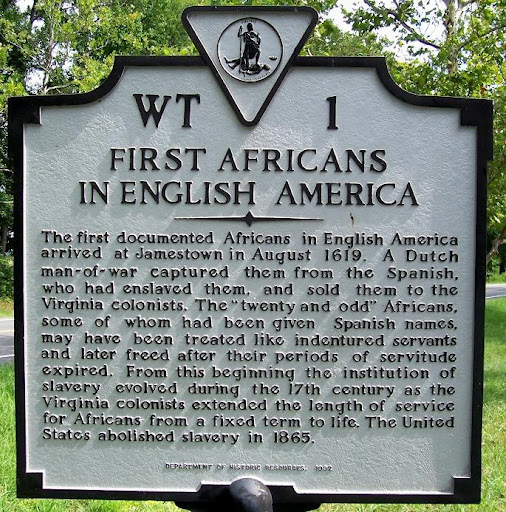
jamestownvasign

Let us start by saying that The United States has been drunk off the blood of the African American for 397 years now–that is from 1619 to the present, when blacks were first brought here in a servitude capacity on the banks of the James River in Jamestown Virginia. Since then blacks have fought in every American war and contributed to every major American architectural structure. Blacks have single handily been the backbone to American wealth and prosperity. Their slave labor is the reason many people are still wealthy today. It is no coincidence that they succeeded in the cotton fields where the Native did not. They were not brought to America by mere chance, but their captors understood their farming history as a people and their capacity to flourish. It is because of this that many African Americans feel that there is no one more American than they. This is when things get weird.

The servant is not invited to the party as a guest. The servant is invited as a servant. His job is not to mingle or even to sit at the masters table. The servant is not prohibited to kick his shoes off, go upstairs and rest. The servant is not there to get comfortable. The servant’s job is to serve. The black man and woman didn’t come to America on a plane. The black man and woman came to America in shackles. We’re not talking about the blacks who arrived here prior to 1619, we’re talking about the blacks who began what is infamously known as The Trans-Atlantic Slave Trade. These blacks, it is clear, have no idea who they are as a people. They have been robbed and spoiled and hidden into prison houses. They have no idea what’s going on around them or in front of them. They are wild bulls in a net and filled with the fury of the Almighty. Mistake it not that they are blessed. Any contribution from them is prosperity. The blood in their veins is still a covenanted one. They sing songs about redemption and have built communities out of nothing.

1619Image

However, at what point has American become synonymous with ethnicity, or rather, nationality? Were not your ancestors considered less than human beings when this country was built? If given the chance do you think the founding fathers would not have signed the constitution in your blood? You cannot align yourself with the Native because he too had you as slaves. Did your rights not have to be amended or added on like a button to a shirt? What to the slave is the 4th of July?

The Mexican American is American. The Canadian American is American. The European American is American. The Irish American is American. All of these people are Americans because they live in America, but when we talk about the nationality, which refers to a country, who are you? Every other people in America can still point in the direction of their natural heritage except the African American in America. This perpetual state of ignorance has caused many of them to settle for being Americans. They don’t know who they are. Just because I help build someone’s house, this does not make it mine.

Brown Skin

Mississippi lips

Lousiana tongue

West African shaped nose

Skin kissed by the sun

Israelite Culture

American Captive

Egyptian Color

russet brown

seal

dark puce

blue black eastern man

blue black woman

symbols of authority over her head

natural beauty no longer dead

hair like sisal rope

braided

coiled

nappy

strong

prayer hands that crack open the sky

from the place of the rising sun

to a land that sought to shackle their tongues

run aways

slave ships

cotton fields

those days

share

croppin

jim crowing

freedom ridin

no more hidin

Mississippi lips

Lousiana tongue

West African shaped nose

Skin kissed by the sun

brown skin

Gabrielle Gorman’s “Dear America”: When You Don’t Love the Skin You’re In

Touching. Thank you Shannon for sharing.

Shannon Luders-Manuel's avatar(not) Mixed (up)

On December 8th, I attended the 2015 My Hero Awards, in order to watch my dear friend Kayla Briet win the Emerging Artist Award for her work in film, music and technology.

While Kayla’s work always mesmerizes me, another award recipient named Gabrielle Gorman brought me and many others to tears with her experimental film “Dear America,” for which she won the title of 2015 Student Honoree.

CTkPzWWVEAEKub8 Photo courtesy of the My Hero Project

I just watched the live stream of Kayla’s film screening at the National Young Arts Foundation in Miami, and Gabrielle’s film screened shortly before hers. Watching it again made me question why this film touched me so personally. After all, Gabrielle’s film is about not loving herself as a dark-skinned black youth. She candidly discusses how she wanted to bleach her skin and lessen her large lips–how she wanted plastic surgery to look more…

View original post 339 more words

:Random 11:

Ja’da posed a great question. I think this is an excellent conversation starter. With her permission I would love to use it as a catalyst for a separate post in which to give my thoughts on the answer to this question. My comment would just be too long.

4everQuixotic's avatarquixoticmuses

As a writer, I have come to understand that in every capacity the term “urban” is synonymous with “Black people.” I don’t want to be an urban fiction writer; I want to be a writer. But I’m Black writing about Black people and not exclusively Black people drama. So I feel like I’m automatically fitted into the urban fiction slot when really, I just want to write fictional stories. Period.

How do I get there?

View original post