One of the MAJOR misconceptions about the poetry industry is that you have to do spoken word to become a prominent figure.
Performance poetry might be the most popular, but there are other ways to be profitable.
Artists like Rudy Francisco, Jasmine Mans, Prentice Powell (who was recently nominated for a Grammy), Obbie West, and others are dynamic spoken word artists I could listen to all day.
But it is not something I am passionate about doing myself.
I enjoy spoken word and have done it, but I don’t want to make a career out of performance poetry.
I am much better at reciting than performing, and I have learned there is a career in them both.
Reciting and performing poetry are two different areas of expertise we can discuss later.
Poets, let me free you today!
You can write and publish poetry books.
You can recite your poetry before an audience instead of performing it. In the same way that spoken word artists get paid to perform, you can get paid to recite!
You can get paid to write poems for others, organizations, and even movies. Think Poetic Justice. Maya Angelou wrote the poems Janet Jackson’s character Justice recited in the movie.
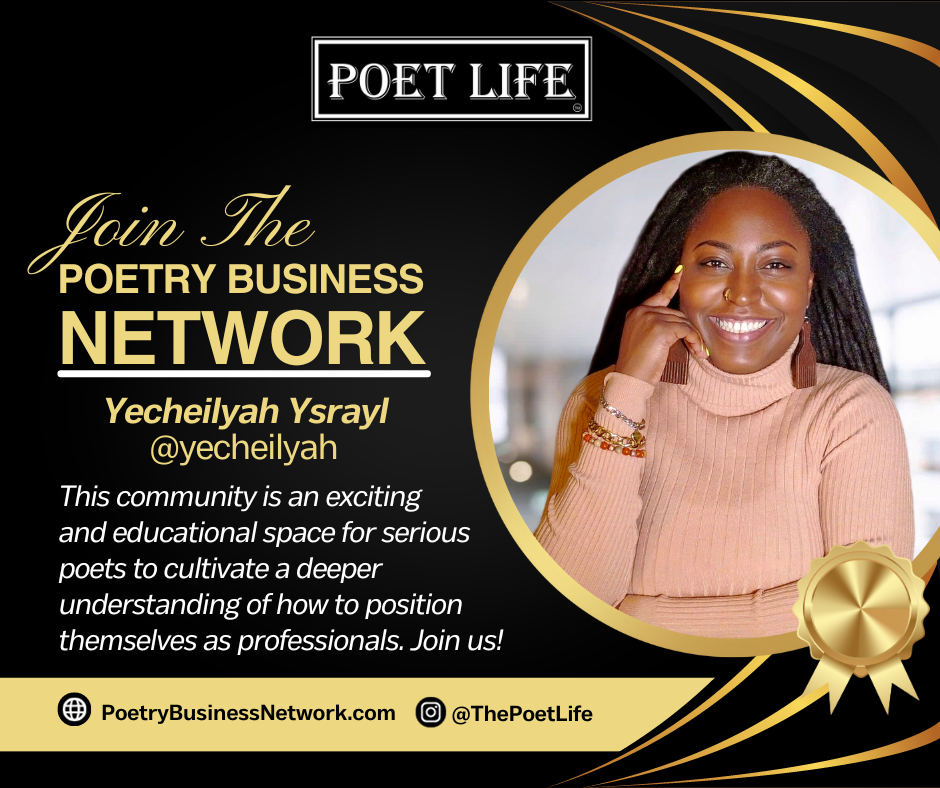
If you are serious about turning your passion for poetry into a profitable business, I invite you to join The Poetry Business Network.
The Poetry Business Network is a global community where poets learn how to do more with their poetry and create a poetry career.
In this community, you will learn…
How to transform yourself from an individual to an entity (business)
How to start your poetry business step-by-step
How to launch your poetry business step-by step
How to audit your poetry business (if you already have a one)
How to build your brand on a national and international scale
How to identify what services to offer
How to create predictable income with your poetry
How to create, offer, and distribute your own merchandise
How to determine what signature experience you will be known for
How to create your own platform people will be attracted to
Join Us!
And the best part? Membership is FREE (for now! Get in before that changes).
When I was a child, I always carried a diary, journal, or notebook, and I would write about what was happening in my life each day, with dates and everything.
When my cousin got jumped so badly that one side of his face was swollen, I wrote about how terrifying it was to see him like that.
When I graduated eighth grade, but my twin sister didn’t, I wrote about the guilt I felt for having to leave her behind and how nervous I was to start High School by myself.
I wrote everything down, from the boys I had a crush on to the ways my mom and aunts pissed me off. (I was an angry kid.)
It is why I can tell you what my thought process was like on Tuesday, September 11, 2001, because I wrote it down.
I can still feel what it was like watching the Twin Towers collapse like a dissolving palace of snow and what 14-year-old me was thinking at that moment.
I can tell you I was dumbfounded and full of nerves. I had never seen anything like this before that was not in a movie. And they were saying now we are going to war.
War? Will large army tanks cover the streets? Will soldiers greet me at the door? Will I ever go back to school? What does war look like on the soil of the United States? The only wars I knew were my own.
“God bless America,” I scribbled.*
*I laugh at that now, but I was so serious back then, lol.
I didn’t know it then, but I was doing something powerful.
It didn’t really sink in until I was an adult, but writing regularly allowed me to develop writing abilities and maintain my goal of being a writer by keeping it at the forefront of my mind. And even if my friends and siblings dabbled with other careers and hobbies as I grew older, my objective remained constant.
I was to be an author.
We can read all the books and blogs…
Follow all the writing tips and advice…
Listen to all the podcasts…
But the only way to improve at writing is through practice, and the only way to practice writing is to write.
In the words of James Baldwin, “If I love you, I have to make you conscious of what you don’t see.”
Here’s the Game:
Once upon a time, when print-on-demand publishing became more popular thanks to companies like Amazon and Lulu, self-published authors discovered a powerful manipulation tactic: they could reach a higher ranking by reducing their ebooks to 99 cents and getting all their friends to buy them, skyrocketing their books to the #1 spot.
And before you knew it, tons of Self-Published books, both excellently written and mediocre alike, hit the Amazon Best Sellers List. Some authors even put the sticker on their covers.
It was an exciting time…
…for a few minutes.
Most of these authors stayed at #1 for a maximum of a few hours.
Over time, their book sales continued to plummet until the next book, where they repeated this strategy: setting the price to 99 cents and telling all their friends to buy it.
The problem with this is it caused many Self-Published authors to lust after that pretty orange tag, even if it only lasted for a few minutes.
They’d refresh their browsers repeatedly to see where the numbers are.
When I first put I am Soul on preorder at 99 cents in 2017, it was #7 on Amazon’s Best Sellers list.
But I had only sold five preorders!
Chile, my bank account was dryer than a Popeye’s biscuit.
It looked good on the outside, though, and I was technically a bestseller on paper, but I wasn’t making any money.
By focusing on more organic ways to sell my book, I became a bestseller on and offline.
It wasn’t until I started to shop my books offline and talked to the owners of bookstores that I truly understood how little being an Amazon Best Seller meant to the outside world. I focused my efforts on getting my name out there and increasing my reviews, and this helped me to become an Amazon Best Seller the organic way.
I was also selling out of brick and mortar bookstores and I didn’t have to beg my family and friends to make it happen.
Back to the Story…
The problem with getting all your friends to buy your book is once they’ve bought their copies, the book stops selling.
And that’s what happened to these authors. Unlike traditionally published authors or Indie Authors who focused on other methods and reached the bestsellers through sales, the self-publishers who used the tactic couldn’t maintain the momentum. In a matter of hours, their orange tags were gone.
It’s exciting and praise-worthy to make it onto the best sellers list, whether it’s Amazon or USA Today. However, it is not something Self-Published authors should stress themselves over or allow to consume their writing career.
If the bestsellers list is a goal, authors should strive to do it more authentically. Instead of trying to manipulate the algorithm, focus on selling the book to your target audience, getting early reviews, offering sneak peeks, running Ads, book signings, book tours (virtual or in-person), speaking, and a host of other creative ways to get the word out about your book.
A pre-order is when you make a book available for purchase before its official release date—typically a week to a year in advance.
Traditionally, publishers have books available for preorder as early as six months to a year in advance. They do it because strong pre-sales tell retailers the book will be in high demand, affecting the number of books stocked at stores and allowing them to make bestseller lists.
Self-published authors can learn from this, not necessarily to make the bestsellers list but to gauge interest in their new book and give them time to market/promote it.
I believe studying the traditional publishing model can help Indie Authors become better self-publishers in some areas, but that’s a conversation for a different day.
By putting my book up for preorder, I have not only made early sales but already have a bookstore interest in stocking it. (I am also aiming for schools. We’ll see how this goes!)
Reasons for setting up preorders depend on your marketing strategy, which could be:
To gauge interest in the book based on preorder sales
To increase sales ranking
To get the proof copy of the book into the hands of early reviewers, bookstores, and organizations
To give you time to market /promote the book (on/offline)
To prepare your audience for the next book in a series
To build excitement and anticipation
Preorders that tend to do well
Authors with several books published and larger audiences tend to do better with preorders because they already have people waiting for their next book.
Even if the author has a small audience, preorders can be good if the book is in high demand. It is one of the reasons I put my black history book up for preorder so early.
I’ve built up enough hype and awareness for the book that people were already looking for it on Amazon and asking where they could buy it. Putting it up for preorder ensures I take advantage of the opportunity to catch interested readers while the book is on their minds.
blkhistorybook.com
Authors writing a series also do well. They might offer the first book at a discount and then have the next book on preorder. People who love the first book in the series will likely buy the next one.
Preorders that don’t do as well
First-time authors who don’t have an audience do not always do well with preorders and might benefit from just releasing the book. As stated, preorders are more useful for experienced authors because they already have an audience.
It is also not a good idea to set up preorders if you’re not able to commit to a publication date in advance.
The most important thing to remember is that you have much more flexibility and creative control as an independent author than if you were traditionally published. You can play around with different strategies and see what works.
Cover Reveals
Cover reveals are fun and all, but they serve no real purpose if people can’t buy the book or preorder it on the spot. I recommend holding off on showing the cover until you are ready or almost ready to accept orders.
Promoting Preorders
Although preorders are a beneficial marketing strategy for some authors, it is also a lot of work. Here are my top tips:
Consider running your preorders for a shorter time than the traditionalmodel. Just because your celebrity authors release books on preorder a year in advance doesn’t mean you have to. We are Indies. We do what we want. (*wink*) Yours can be as short as two weeks to a month before release. Also for Amazon, the preorder only counts on the day of the order. This means that the longer the preorder period, the harder it is to sustain a high ranking on that book. (If your goal is to achieve a high ranking.)
Preserve most of your energy for when the book is out. Too many authors get hung up on the release date and wear themselves out. Remember that your book will sell for weeks, months, and years afterward, so pace yourself. If your preorders are through Amazon, you still receive your royalties per their regular royalty payment schedule after your book is published anyway, not before.
This is my first experience running a lengthy campaign, but I’m saving most of my energy for when the book comes out. Those of you who know me are aware that I rarely do anything without a purpose. Because I anticipated my schedule would be hectic toward the end of the year, I postponed the release until the new year. I’ll put it to the test and, of course, report back!
My husband’s cousins came over to get some Italian Beef meat we brought back from Chicago. We had frozen it for them. They stayed for hours, most of the time comprised of us sitting around the table catching up. Although we have been married for almost 14 years, there are still family members of his I am meeting for the first time.
“So you’re from Chicago too?”
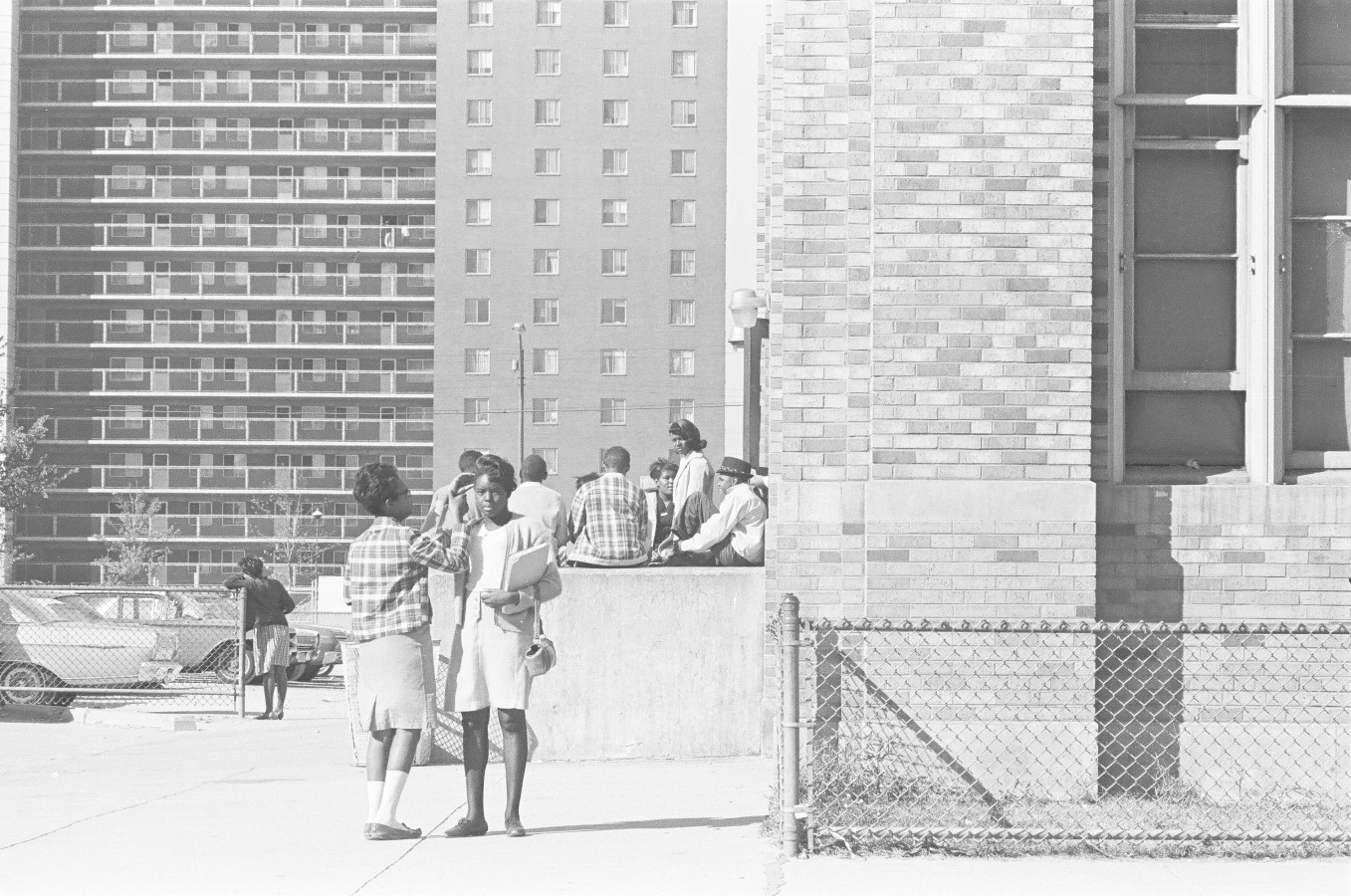
“Yes. I grew up in Robert Taylor…”
His wife, the cousin, tilted her head, her eyes widening, “Really?”
“You know how to fight then huh?” The husband says, shaking up with my husband, “You gotta know how to fight growing up in Robert Taylor!”
I laugh with them, but my spirit settles into uneasiness. I don’t want to talk about me anymore. We changed the subject.
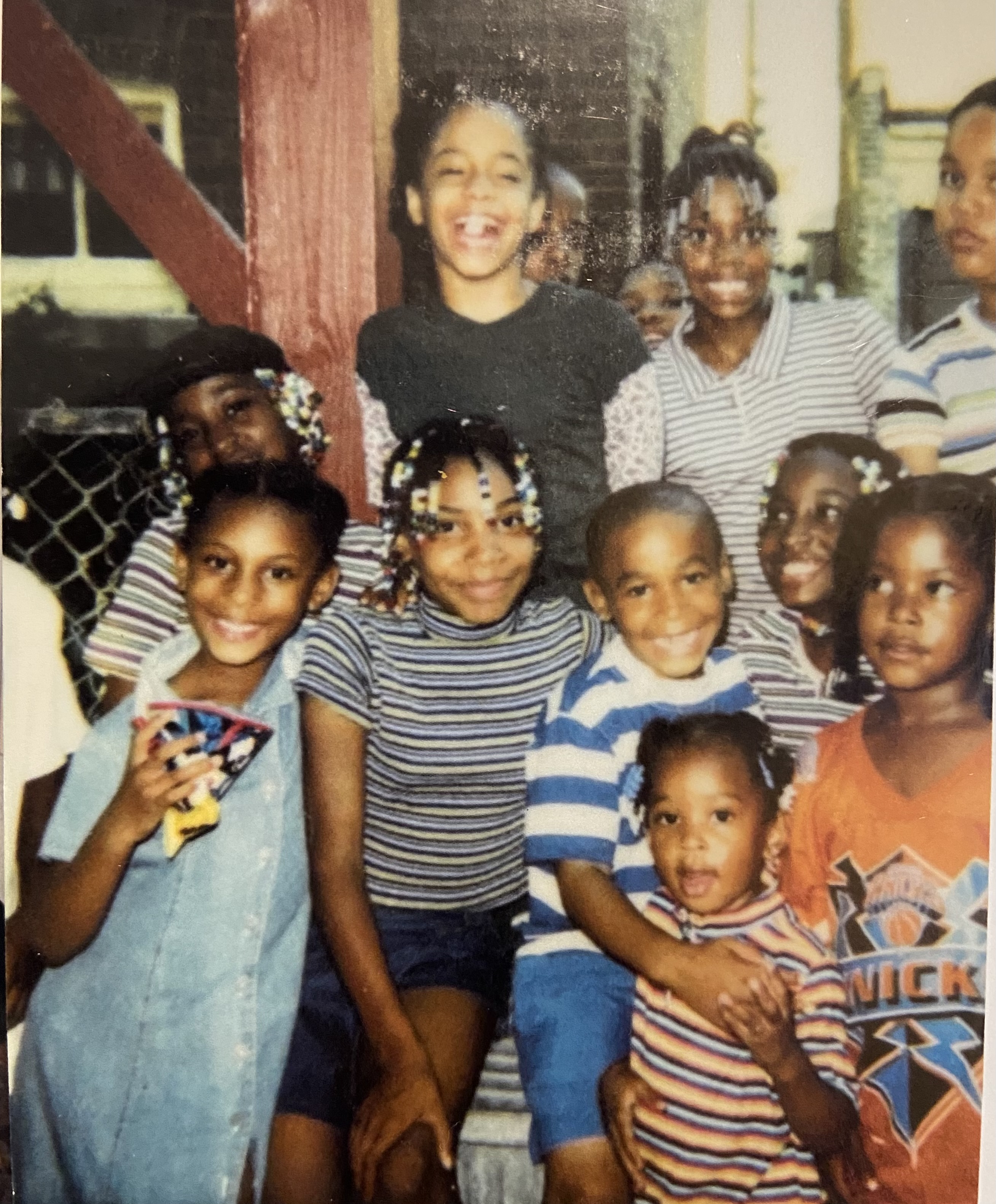
Lil R’s Bday Party. Can you find me in this pic??
People are baffled to discover I grew up in Robert Taylor, and they don’t know what to say. Even those who try to form words still end up saying something that sounds like “sorry.” They look into my eyes as if they can see what I see. They want to know how someone as educated and “put together” as myself grew up in the place their mothers have warned them to stay away from.
But, we were not aliens living on a different planet. We were people, Black people, and where there are Black people, there is joy to be found somewhere. When the first of the month hit, we took advantage of the glints of light that seeped in to offer a reprieve to our distress.
Women sat on the porch laughing and gossiping as their sheets dried on the gates, and children ran back and forth, bellies full of food and hope.
The men and hustlers brought out tables and chairs they carried downstairs to play spades in front of the building. You couldn’t tell them they weren’t sitting on their own front porch instead of in front of a 16-story government building. They talked smack and poured out liquor for the homies they lost.
As for music, it was our salve and savior.
We left our doors and windows open so that the music from the stereo could scream and echo throughout the building. Nobody protested when someone’s entire door was open, and music was blasting. We sang along to Whitney Houston, Mary J Blige, Tupac, Biggie, Queen Latifah, MC Lyte, and many more, grateful for the opportunity to hear these songs while they were young.
Music transformed our pain into power. It didn’t feel like we lived in the ghetto when cousin Rachel blasted The Fugees from her speakers. It simply felt like home.
Where despair tried to rob us of joy, creativity flourished, and we created our own fun, and I think it’s important to talk about this light, too. It wasn’t all gangs, crack addicts, and shootouts.
We’ve received a few questions about if rappers can enter the contest.
The short answer is yes, as rap is a form of poetry.
The longer answer requires a bit of a breakdown.
RAP and POETRY
RAP (often called Rhythm and Poetry*) uses similar forms as poetry, like verses, refrains, rhyming words, rhythm, and meter.
Rap’s origins are said to date as far back as the West African Griots, or village storytellers, and up to early examples of jazz poetry during the Harlem Renaissance Movement.
Rap lyrics that can be poetry:
“Some say the blacker the berry, the sweeter the juice I say the darker the flesh then the deeper the roots I give a holler to my sisters on welfare Tupac cares, if don’t nobody else care And uh, I know they like to beat ya down a lot When you come around the block, brothas clown a lot But please don’t cry, dry your eyes, never let up Forgive but don’t forget, girl, keep your head up.”
-Tupac Shakur, Keep Ya Head Up
Some poetically inclined rappers also used poetry in their raps. Common’s The Corner featuring Kanye West featured The Last Poets:
“Uh, the corner was our magic, our music, our politics Fires raised as tribal dances and war cries Broke out on different corners Power to the people Black power Black is beautiful.”
-Common, The Corner, ft Kanye West and The Last Poets
And Kendrick Lamar’s Poetic Justice infuses poetic lyricism in the song:
“With poetic justice, poetic justice If I told you that a flower bloomed in a dark room, would you trust it? I mean I write poems in these songs dedicated to you When you’re in the mood for empathy, there’s blood in my pen…”
-Kendrick Lamar, Poetic Justice
Rap and poetry share many similarities, so much so that it’s hard to see where one begins and the other ends.
Both Use:
Rhyme —both use rhyming words
Rhythm and meter —both use language that creates rhythm.
Verses —both use verses or stanzas to separate ideas.
Refrains — both use the repetition of lines or entire stanzas/verses.
Subject Matter —both can discuss all possible subjects and commonly speak on the same ones (for example, heartbreak, loss, grief, and death)
Here’s Where it Gets Tricky:
We can best sum up the confusion in the words of Adam Bradley from this article: “…that poetry only exists on the page, and rap only lives in the music, that poetry is refined, and rap is raw, that poetry is art and rap is entertainment…”
But poetry can also live in music, be raw and entertaining, and rap can be refined on the page.
So, how do we know the difference?
Rap is a musical genre in which vocal expression is essential, respecting rhymes and rhythmic diction.
Poetry is literature and more verbal. Rhymes and music are not mandatory, and the message is even more emphasized.
“Poetry … is the revelation of a feeling that the poet believes to be interior and personal which the reader recognizes as his own.”
Bradley writes: “Economy of language remains one of poetry’s hallmarks. By contrast, language in rap is usually abundant, functioning on the rhetorical principle of copia, which Erasmus defined in 1512 as a practice of amplifying expression through variation, adornment, and play.”
“Poetry is the spontaneous overflow of powerful feelings: it takes its origin from emotion recollected in tranquillity.”
— William Wordsworth, from “Preface to Lyrical Ballads.”
“Poetry is a phantom script telling how rainbows are made and why they go away.”
It’s a debate that is sure to be ongoing for some time.
Rap is a form of poetry, but every rapper is not a poet.
A rap is a poem when it:
Deals heavily with emotions
Uses thoughtful language and poetic techniques (alliteration, metaphor, imagery, etc..)
Is composed with depth, storytelling
Shows off the writer’s creativity
Yes, rappers can enter this contest as long as they write a poem.
When submitting your poem, whether as a poet or rapper, be sure that you are following the contest’s theme, which is GRACE. When submitting an audio or video, be careful not to send content that sounds more like rap songs than poems. There is a clear difference that should be expressed.
*Although it sounds nice (and there’s nothing wrong with using it as such), RAP is not an acronym for Rhythm and Poetry. Initially, rap meant to strike or hit. It then transitioned to mean to talk or speak in the African American community. Some older generations still say: “Let me rap to you,” when they want to talk to you. During the heightened political era of the 1960s and 70s, the men who stood on the corners teaching, like Malcolm X, were said to be “rapping.”
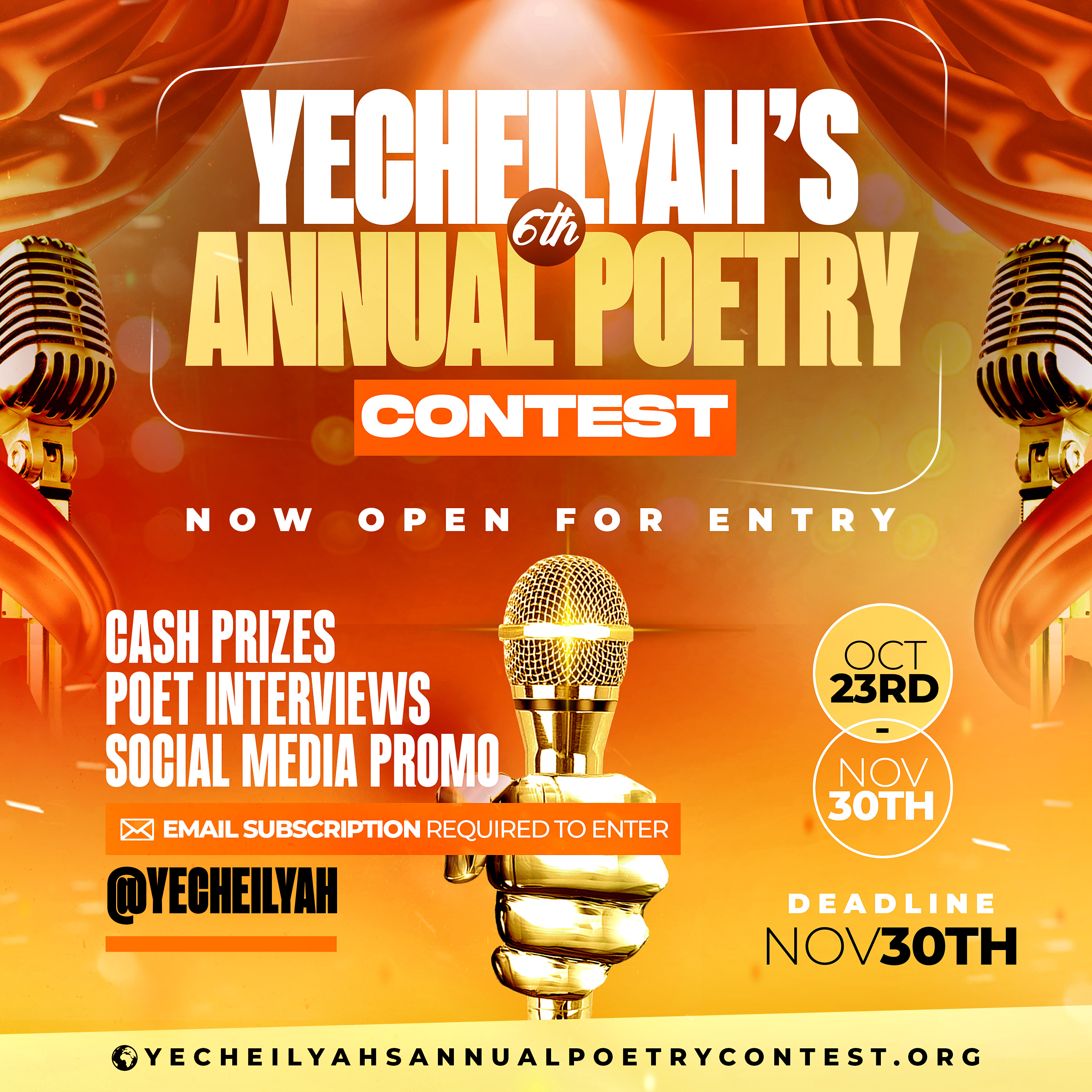
When it comes to the arts, poetry is my first love, and this contest is my way of giving back to the poetry community to shed light on the power of the spoken and written word and the artists who love it.
It is not just a contest but a movement to discover and elevate those who have always desired to pursue their artistic ambitions in poetry but have been either discouraged from doing so or have allowed fear to hold them back.
If you’ve been looking for a sign to get back to your creative writing endeavors, this is it!
Write a poem on this year’s theme: GRACE. You may include an audio or video with your document!
SUBSCRIBE to the Email List if you are not already.
Email your poem to yecheilyah@yecheilyahysrayl.com on or BEFORE the deadline of November 30, 2023.
Winners announced on Thursday, December 28th.
Theme: GRACE
Submissions Accepted:
Monday, October 23, 2023 – Thursday, November 30, 2023
Winners Announced on December, 28, 2023.
Click THIS link to subscribe to the list and then email your poem by the deadline!
Note. Each year, an email subscription is necessary to enter the contest. To avoid a yearly subscription, click the “Poetry Contest Updates Only” box on the form. This will subscribe you to the contest list exclusively, and you will only receive contest updates, rather than having to resubscribe year after year.
If you are already subscribed to the list you may go ahead and submit your poem.