Yecheilyah’s Book Reviews – Eternal Traces by Shonda Brock

Title: Eternal Traces

Author: Shonda Brock

Website: http://www.shondabrock.com/

ISBN 13: 978-0-9904242-0-8(ebk)

ASIN: B00KH8VGT4

Published: May 20, 2014

Publisher: Shonda Brock

Pages: 248

Genre: Romance, Paranormal, Multicultural, Multicultural Paranormal Romance, Fiction

Rating: 4/5


Eternal Traces is a Multicultural Paranormal Romance novel surrounding the life of Veteran and Cardiologist Meryt Brownstone. Brownstone is an African American woman who struggles to lay claim to her personal and mental life despite her professional success. While Meryt dreams of a change of scenery, she prefers to avoid getting too close to people and prefers to fly under the radar. She has not been involved in any serious romantic relationship in some time and frequents daydreams of an ancient world. Hardworking and driven, Brownstone is also an undercover agent for the government and divides her time between work, chatting with her friend Cindy, secret missions, and experimenting with synthetic blood.

Speaking of blood, Meryt’s life changes dramatically when she meets Dr. Fitzgerald and Dr. Rene Daniels, two brothers who start working at the hospital and are very interested in her study on synthetic hemoglobin. Meryt’s sexual trance is immediately sparked with even the slightest glimpse of Rene. She is drawn to him on many levels, and she is unable to keep her eyes off of him. Meryt is guarded with her heart and refuses to let love develop naturally, despite Cindy’s insinuations that she has feelings for the new doctor.

But Dr. Rene’s attraction goes above and beyond her expectations, and the tingling sensation of need makes her crazy. In addition to being hypnotic, Rene avoids her like the plague after first meeting her despite having stunning blue eyes. Meryt’s curiosity about him is further piqued by this as she starts to wonder why. Meryt is a former soldier with military training who occasionally carries out covert operations, but Rene has a secret of his own to be concerned about that, despite his ravenous need, keeps him apart from Meryt.

As the story begins to unfold, I enjoyed the Egyptian and African connection and the parallels between the past and present as expressed by the author. As the story picks up, we see that ancient Egypt is a key figure in Meryt’s visions and an important mission to the Sudan becomes a major turning point in the novel as the lines between dream and reality become blurred. Historically, Egypt is blood brothers to the Nubian and they both descend from Ham whose name means hot, burnt, and black. This means the Egyptians would have looked just like the African American today. In addition, the Kushites (Ethiopians or Nubians), whose name means burnt face, lived south of Egypt in what is called the Sudan today.

Meryt’s mission to the Sudan, therefore, was a nice complement. I also enjoyed the symbolism of which there were many. One example is Meryt’s temper when she’s upset and her career as a cardiologist, paralleled against the details of Rene’s life. It created an interesting bridge of commonality between the two. How so? You’d have to read the book to find out!

As my first ever Multicultural Paranormal Romance novel, I wasn’t sure if I wanted to take a plunge on this one. However, I must say it’s one of those books where, even if you disagree with the concepts, it is hard to put down. You will want to get to the end and see how it all plays out. It also has a unique storyline, so I am glad I took the chance.

While some parts left me anxiously anticipating action, when similarities arose between Meryt’s life and that of Queen Nitocris, I was happy to see that my thirst for answers were quenched as the plot thickened. Between Dr. Daniel’s charm, Meryt’s stubborn ways, and their colliding worlds, Meryt’s carefully composed life will never be the same again. Shonda makes sure to have readers holding onto their seats and holding their breaths for one adventurous ride of Eternal Traces.

Ratings:

Plot Movement / Strength: 4/5

Entertainment Factor: 4/5

Characterization: 4/5

Authenticity / Believable: 4/5

Thought Provoking: 4/5

Recommendation: 4/5

Overall Rating: 4/5

Also check out Part 2 “Eternal Burns”. To learn more about Meryt and Shonda, visit them online: Website: http://www.shondabrock.com/ Twitter: https://twitter.com/shondabrock

coversb

Self-Publishing: Do Your Research!

When a writer sits down to write, he does not fully understand the capacity of that in which he seeks to embark. When he runs his fingers across the keyboard, or scribbles his heart into ink, he does not fully realize the power of his actions. Who would have thought a single chapter could change the world? The life of a Self-Publisher does not fully evolve until after the book is done. He does not see the many hats that must be worn in order writerwalksintothat the world may feel his voice, or sniff out his vision. What Self-Publishers are doing today is very powerful. Just by writing one book we are becoming professionals in fields that people have gone years studying in schools. People have invested in years of schooling in that they may understand how to properly market, promote, and format documents and here you understand this thing just by publishing a book alone. If that is not power, I do not know what is.

writers-block21The first book I published was a collection of essays that none of you would probably read. It started as an assignment from my English Professor in College “Does Racism in America Still Exist?” I wrote so much I could not stop writing. I wrote and read, and wrote and read, until the paper became a book, a 3 part  book to be exact. Then I had a brilliant idea: “I’m going to publish it!” When this thought entered my mental space it wasn’t occupied with much else. I didn’t even see it as Self-Publishing in particular. I did not say to myself, “Self, we’re going to Self-Publish a book.” For me it was simply, “I’m going to publish these papers.” And that was the extent of my brilliant idea. I had no intention of sharing it and no other ambition beyond that. In the end, I gave copies to some family members and college buddies but that was it. I was not interested at the time in Self-Publishing nor did I even know what it was. I always wanted to be a published author, but Self-Publishing in particular was not part of the plan. It would be years later before I actually took the concept  seriously and before I understood what it was in it’s full capacity.

selfpublishingWhen I first started out, The Self-Publishing Industry was not like it is today. In fact, it wasn’t really an industry at all. Of course, in 2007 Self-Publishing existed, but there was not the same amount of information available to Self-Publishers that there is now. We are in the age of information and in just a few short years Self-Publishing ballooned into a plethora of opportunity for authors. Self-Publishing blogs are going viral and men and women alike are making thousands, some millions, of dollars from the expertise they are able to provide on the topic. Regular, ordinary people are making something of themselves by being a part of what they were told only those with Master Degrees and PhD’s could do. But, to aspiring writers who wish to Self-Publish, I beg of you, please, do your research!

relaxed-writer_1I know we do not live in a fair world, but nothing is more unfair to me than a teenager who decides he or she will write a book and publish it and yet have no idea what is necessary to do this. There is nothing more aggravating than for me to hear a young person say that they are publishing a book, and when I ask them what POD company they are going to choose, or if they are going to purchase their own ISBN number, or their marketing plan, they have no idea what I am asking of them. All of this work, and someone’s kid is just going to write a book because its fun. How can you write a book and not understand the basics of print book formatting? Do you even know what that is? Do you even know what POD stands for? Most importantly, do you know there are tons of resources available to help you to find the answers to these questions? I am not talking about places that require hundreds of dollars of investment; I am talking about places that require only pennies. And if you do not have the penny, there are tons of free resources as well. In fact, you need to make sure that Self-Publishing is even a route you want to take. Self-Publishing is hated enough as is because big publishing houses are not making as much money. People are not forced to Self-Publish, people are choosing  to Self-Publish. The problem however, is that people are not researching this industry and making sure they understand what it means to be a part of it. Mediocrity in Self-Published books is not just because of poor editing, book cover design, etc. No, mediocrity is rooted in writers who do not research their field. This is how poor cover design and poor editing is even born.

But times are changing and the industry is not like it was in 2007. No longer can Self-Publishing be stigmatized as a field of nonprofessionals. With the amount of information out today, a nonprofessional product can only be the fault of the author and the author alone, not the industry in general. Being a Self-Publisher alone does not automatically degrade the quality of work, but the lazy work of the Self-Publisher can. I am not saying I have it all together but please research what you want to be apart of. Today, there is a host of information available to help us to get started or to sharpen our skills. So to those who are currently writing books and are seeking to be a part of the Self-Publishing field for the first time, stay encouraged. And please, I cannot stress this enough, do your research. You’ll be thankful for it in the end. You can start off with something as simple as a Google Search. And because blogs are doing so well these days, a lot of the information you’re looking for can be found right here in the blogosphere. One blogger who is always on her game with research for Self-Publishing is my good friend Colleen Chesebro. Colleen is writing her first book and is always on point with her research. She is a great example of what to do as you are writing. You don’t wait until you are about to publish a book to find out how to do it. Ttake some time out of your day and walk around the neighborhood. You’ll be amazed at what you’ll find.

Self-Publishing – DIY Promo Tools

free_resources5With the ever growing sea of Self-Published books, it is easy to throw up one’s hands under the pressure. One of the most challenging aspects of the process is finances. Many Self-Publishers do not have the money to invest. However, with Self-Publishing being the desired avenue for most authors, it has become an industry of itself and as such, there are tons of avenues out there we can follow to ensure a professional product. There’s Fiverr for example, where one can purchase a book cover design for as low as 5-$10. There is low cost editing options and even people willing to do free book reviews. Below are 15 DIY tools to help Self-Publishers to promote their books for next to nothing by Tony Levelle. I don’t believe you’ll have to use them all or that they will all work for you, but I think this is a good start for anyone looking to Self-Publish: I intend on using some of these bullet points myself and so I just thought I’d share them:

****************************

No matter what kind of book you’ve written (or plan to write) there are many ways to reach your audience. Each of the DIY tools listed here is low or no-cost, and each of them works in its own way. One or more may be perfect for you.

1. Start Early
The most powerful and essential steps you can take toward promoting your book begin long before the actual writing of the book. Three years before the book is published–if you can–start building a network of supporters and reviewers. Keep track of everyone you meet as you research and write the book. Pay special attention to, and make notes about, those who demonstrate a genuine enthusiasm for you and your project.

As the project evolves, keep in touch with these people. You might send them an occasional email or keep in touch via a social networking site like LinkedIn or Facebook.

For significant milestones–the signing of your book contract, the completion of the manuscript, the arrival of the galley proofs, and the arrival of the finished books–you might bring key people together for a house party. At the house party, you could read short excerpts from your book and answer questions about the project.

2. Contribute to Web Forums
Every field has at least one or two forums that people interested in your subject know and read. Find and join these forums.

Contribute to them freely. Give advice and reach out. Offer to help others. Put a link to your blog or website in your signature line. When you have a book contract and/or a book title, add the title to your signature line.

3. Start a Blog
Early in the process of researching and thinking about your book, start a blog. Add 120-130 words each day of helpful, inspirational information on issues in your field, which are related to the subjects in your book. Aim to create a genuinely useful body of knowledge over the following 12 months.

4. Write a Remarkable Book
Set out to write a remarkable book. If your book is not remarkable, keep working on it until it is. Give the manuscript to ten friends and ask for honest feedback. Find a brilliant editor (you can find such an editor at EFA) and pay him or her to edit your manuscript. Revise. Repeat. Don’t stop until your reviewers start saying things like: “I loved it! This book is amazing!”

A remarkable book will generate word-of-mouth publicity. One person will read it, and recommend it to his or her friends. They will recommend it to their friends. This is the best publicity you can get.

5. Cultivate a Positive Attitude about Book Promotion
Think of book promotion as storytelling. The story you are telling is why you wrote your book, how it can help others, and how the world will benefit from your book. If you can develop a positive attitude about book promotion, people will pick up on it, and tune in immediately. Some writers resent the chore of marketing. Their attitude seems to be, “I’m a writer. Marketing is the publisher’s job. Promoting my own book shouldn’t be my responsibility.”

Unfortunately–unless you are Stephen King or Malcolm Gladwell–the publisher probably won’t have the budget to market your book. If you don’t promote your book, no one else will.

6. Create a Media Kit
Your media kit should include:
* Professionally printed business cards with the book cover on one side and your contact information on the other side. Do not try to print them on your home printer. This is a time to invest in your product and yourself, not save money.

* A headshot by a professional photographer or a talented amateur. It should be well lit, with a neutral background. Your eyes should sparkle.

* A 100 – 150-word biography. The main purpose of the biography is to tell a reader why you are uniquely qualified to have written this particular book.

* A ‘one-sheet’ for the book: a single piece of paper with a glossy print of the book cover on one side and a one-page description of the book on the other side. Be sure to include a few short blurbs and recommendations from colleagues and friends in the description.

7. Create a Book Pitch
Consider writing at least three sales pitches for your book: 10 seconds, 30 seconds, and 60 seconds. When someone asks what the book is about, give them the 10-second pitch. If the person responds with interest, have a longer pitch ready! Practice your pitches on friends until they tell you the pitches work.

8. Build a Website
As publication day approaches, build a full website. The website should include:

* A book blog, in which you write updates, corrections, errata and respond to reader comments and suggestions. This book blog may become the basis for the second edition of your book.
* Sample chapters from your book
* A link to the Amazon page for your book, so people can buy the book online
* Your media kit (see step 5)
* Book reviews and blurbs.
* Your schedule of appearances, including bookstores, speaking engagements, and conferences
* Contact information.

9. Get Book Reviews from Individuals
Six months (nine if possible) before the book is due to appear in bookstores, start asking people for reviews and blurbs. Send reviewers a printed galley proof of your book. If you don’t yet have printed galley proofs, send a PDF containing the first two chapters, a table of contents and your bio.

Don’t be afraid to approach the ‘biggest names’ in your field. (This is important.) Ask for both reviews and blurbs. Busy people may only have time to write a few sentences. A word about PDFs: check with your publisher about their policies on review copies. Many publishers will NOT allow you to send out a PDF copy of the entire book. They are afraid the book will be stolen.

10. Write Articles
Every field has eZines, websites, and magazines that advocate or deal with the subject of your book. Find them. Once you know where they are, look through them and figure out which ones talk to the audience for your book. Contact those sites or publications and pitch articles that will be of interest to their readers. Schedule articles to appear around the time your book will appear in bookstores and on Amazon. For example, if your book is going to appear in bookstores and on Amazon in mid-June, schedule your articles to appear in July, August, and September. Remember to pitch articles early, because many magazines and eZines have a 3-6 month lead time. Mention your book title somewhere in the article. In online articles, link the book title to its Amazon page so readers can click over and buy the book.

11. Get Book Reviews from eZines and Magazines
Ask websites, eZines and magazines in your field to review your book. Some websites or eZines may offer to trade, to review your book if you write an article for them. For example, earlier this year I contacted Writers Store and offered to write an article about what I learned while promoting my most recent books: Producing With Passion and Digital Video Secrets. This article is the result of that contact.

12. Get 20 Amazon Reviews
Amazon reviews are amazingly effective. Everyone from book buyers to publishers reads them. Your goal is to get at least 20 reviews. Contact everyone you know and ask each of them if they would give your book an honest review. Let them know it can be brief. If they agree, send them either a galley proof, a promotional copy of the book, or a PDF containing a table of contents, two sample chapters, and your bio. Amazon’s Top Customer Reviewers are another source of high-value reviews. Find the reviewers who deal with books in your area. Write to them. Tell them you have written a book they might be interested in, and that you’d appreciate a review. If they respond, send them a galley proof or a promotional copy of your book.


13. Get Mentioned in email Blasts
Look for organizations in your field that send large-volume emails. Try to get your book reviewed in their email or newsletter. When the number of people receiving the emails is 100,000 or more it’s sometimes referred to as an email blast.


14. Speak at Conferences
As a published author, you have the qualifications necessary to speak at conferences. Contact conference organizers at least 6 months in advance. At first, you may have to register and pay a fee to speak. Later, when you become better known, conferences may seek you out, and may even pay you to speak.


You should be prepared to give a 45-minute presentation. A useful way to structure a 45-minute presentation is to speak for 30 minutes, and take questions from the floor for the last 15 minutes. Plan to take a few minutes after your speech to circulate with the audience. Have a table in the back of the room where you or someone on your team sells books.


15. Make and Post Online Videos
Make a few 5 minute videos (or a series of videos) of yourself talking about key issues in your field. Put the book title and URL on the bottom of the video screen and in the credits.

Post your videos on several of the many video sharing sites including sites like blip.tv, jump cut, our media, Vimeo, vSocial and YouTube. Embed the video clips on your website.
Plan on following your promotion plan–perhaps an hour a day–for at least a year. Resolve to do something every day on promotion. Remember – follow-up and persistence are the keys to success.

*****************************

I hope this list has been of help to you. In addition, if you’re a Self-Publisher and you are interested in letting me read a copy of your book in exchange for an honest review, please send me an email and I will give you the details. I will read your book for free and offer my opinion. Why am I doing this? Because as a Self-Publisher I know how tight finances can be and that every little bit helps. I have some time to read and would love to see what you have to offer.

Email: ahouseofpoetry@gmail.com

Self-Publishing: Just Write

46-FE3-Self-Publishing
I’ve heard enough criticism of Indie Authors and self-published books to last a lifetime and for the most part, I agree with them. I believe a lot of self-published books are low in quality. I think the editing and proofreading of some of these books suck, and I think some of the book cover designs are far from eye-catching. But I also believe we are overlooking one major detail:

Untitled-1
Many books that are published by big Publishing Companies have some of these same problems, but no one is going to talk about that because after all, who wants to stand against St. Martin’s Griffin? No one will talk about these poorly written, and sometimes poorly edited books published by some of the most famous Publishing Companies. It is because these books have the reputation of professionalism. They are backed by publishing houses with teams of support systems that Indie Authors simply do not have. Is this an excuse? Of course not. But what I would like to suggest to Indie Authors is this: JUST WRITE.

Self-publishing-300x300Produce a professional product and keep producing. Your content may suck at first but you will never please everyone so just write. Write and invest in the  professional quality material. Identify the readers who like what you write and engage them. Self-Publishing is a slow game. So don’t go into get rich or die trying. I would even suggest you have another career on the side for bills sake and livelihood because it will be awhile before you start making real money from your book sells. This will not only assist you in life outside of writing, but it will help you to invest in your own writing. You should never solely depend on your writing career financially starting out because everybody knows writers do not make much money. Traditional Publishing or Self-Publishing, we are not ballers so don’t set yourself up for disappointment by raising the stakes too high. Ambition is great, but this is a slow process in which Indie Authors need continual improvement by producing plenty of books.


r-INDIE-TRADITIONAL-PUBLISHING-600x275

It is at this point that you will need to identify your writing goals. What is it you want from self-publishing a book? Is it to make the New York Times Bestsellers list? Is it to entertain your circle of friends only? Why are you self-publishing a book? This is a question only you can answer and depend on what that answer is you will have to take it from there. Your motivation, however, will have to be deeper than making money. I’m not talking about finding god and all that extra stuff. This ain’t church. I’m talking about your personal inspiration because whatever that inspiration is it will have to be the driving force behind your will to keep going. There will be frustration after frustration  in an industry to which, despite failure, you must continue to produce. It’s exciting initially because you’ve published a book, which is a huge accomplishment, Yay!! Go You! But what now?

121-h_main-w

You set it up in your mind that the money will start pouring in and it doesn’t happen. That’s because it doesn’t work like that. Not even for writers who traditionally publish. As I’ve stated, a lot of Self-Published books suck for various reasons but don’t let the industry fool you:

Traditionally published books do too.

You think these books are automatic bestsellers? You think they’re striking gold? Nope. That’s the illusion but I’m here to tell you: writers don’t make money. At least not at first. Not Self-Published writers or Traditionally Published writers and you can take that to the bank and cash it.

So what do I propose? Do you throw in the towel? Do you do away with that manuscript? Do you stop here? No. You pass go, collect $200 and use it to keep writing. Whether your aspiration is to publish traditionally or Self-Publish, just write. But dedicate yourself to it. Here are a few tips to help get you started:

– Good Editing / Proofreading

– Nice Book Cover Design (FYI: Most major publishing houses buy multiple stock images from places like Getty images and combine them using Photoshop. Wanna know the secret to that nice book cover? I just told you).

– Formatting

– Easy to Follow Structure

– Jaw dropping opening scene

Keep it simple, keep it professional, and keep it coming. Don’t worry too much about the formalities and all that extra stuff these so called professionals keep telling you because your story probably does suck to them, but that don’t mean it’s not a masterpiece to someone else.

Just keep Writing.

Self-Publishing Book Descriptions

41yvPT7HPdL._BO2,204,203,200_PIsitb-sticker-v3-big,TopRight,0,-55_SX278_SY278_PIkin4,BottomRight,1,22_AA300_SH20_OU01_


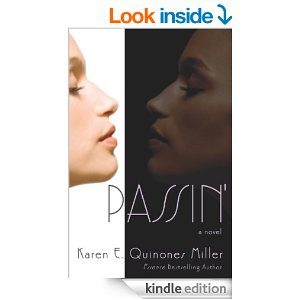
Passin‘ is not a self-published book, but I would like to use it as an example. I actually borrowed it from the library and intend on returning it soon. Not that it wasn’t a good read, but I wouldn’t purchase it. Here’s why: I enjoy a book that makes my mind play it out in my head like a movie. I want to see the characters develop as real breathing people, I want them to have real issues and problems, and I want to see the story in action, and let’s just say this movie’s a little slow. Not that this book didn’t have all of that, it’s just slow getting to the point I perceived to be the main event (the meeting of the man). So it’s an alright read; I wouldn’t give it 5 stars, though. More like 3 stars. I really am enjoying the read, it’s just that I’m a bit disappointed by what the book description told me and how the story is unfolding (yea, still reading it, I’ll probably move up to 4 stars by the time it’s over, who knows lol). The story is an interesting tale of a young woman passing in the new millennium (2007). Racial passing occurs when a person classified as a member of one racial group is also accepted as a member of a different racial group by passing as that different racial group. (Did I confuse anyone?) So a black woman pretending to be white is an example of passing to keep it simple. But what made me check out the book is this excerpt from the description:

“When a successful African-American businessman thinks Shanika is the white woman of his dreams, her world spins out of control. With her future on the line, she’ll have to go beyond skin-deep to discover what’s really worth reaching for–and the person she truly wants to be.”

I know I know, how woman of me, but who doesn’t love, love? Anywho, it’s not a bad story so far, but what’s disappointing is my assumption that the meat of the story would surround this event. But halfway through the book, there’s no mention of this African American man. The story is pretty much just about Shanika’s, I’m sorry Nicole’s, struggles with “racial” (I don’t really believe in a race but for the sake of clarity) identity and her inner conflictions about living a lie (and her hatred of self…my 2 cents). In fact, we don’t meet Mr. Right until close to the end of the book. I’m probably just being picky, but I really did borrow the book to specifically see how this relationship was going to evolve. I’m not finished with the book so I may be doing a part 2 of this same post about how I judged a book by its descriptive cover, but we’ll cross that bridge when we get there.

The point is that this inspired a post about how important book descriptions are to books, especially self-published books. We have talked about book cover designs, a little bit of editing, and even common sense reasons to self-publish. Now let us talk about the content of the book, starting with the description.

When a reader decides to buy a book, one of the first things that strike them is the book cover, the sample, and of course they’ve got to read those reviews. But another important element that plays a role in the buying experience is the book synopsis, summary, or description. If you think this is something I pulled out of my hat, just visit your nearest library or bookstore. You’ll see people scrolling through aisles and turning over the backs of books. Some of them flip through the pages and may even begin to read the first paragraph just to see if it grabs their attention.

The good thing is that if the description of your book has little to nothing to do with what the book is actually about, no one will know until after they buy the book and after they read it. The bad thing is that if they give a bad review, they’ll be your first and only customer. The truth is that book descriptions play a big role in book buying, and as I always say, it’s a good idea to produce your books the way you buy them. If a striking book cover makes you go for the bait then you should also have a book cover design that is also striking. Likewise, if reading the synopsis of a book is what makes you buy, then as an author you want to make sure your book description is also just as fantastic. “If your book description doesn’t grab them and make them feel ‘the need – the need to read’ then you’ve just lost a customer….” (Mark Edwards).

(For the record, Karen’s description was pretty good and achieved the desired effect, it made me pick it up and check it out which means I would have probably picked it up and bought it, so that’s not my complaint since I’m sure her book sells are doing better than mine. My complaint is just about the accuracy of her description of what’s actually in the book, but I digress).

A good summary will give readers just enough information about your book to get them excited about reading the whole thing. For this reason, it should be clear, brief, and simply breathtaking.

Below are 7 ways to improve on book descriptions by Mark Edwards as featured on the blog Catherine Caffeinated

(there are actually 11 but these are the ones I thought worth excerpting far as importance is concerned, 7 is a perfect number after all…isn’t it?):

1. Make it clear. Your potential reader needs to know with a quick skim read what kind of book this is, what it’s about and what the story is. The story is the most important element here – if you’ve written an erotic romance that will give Fifty Shades a run for its money, make sure people know that. Though remember, it’s the relationship at the heart of Fifty Shades that made it such a smash. You need to get that across in a very lucid way.

2. The first line is the most important. If you don’t get the first line right, they won’t read on (this applies to the book itself too). Your first line needs to encapsulate the whole book. It needs to draw people in, hit them where it feels good and make the hairs on the back of their neck stand up. Not easy – but worth spending time on.

3. Don’t be boring. The moment your potential reader feels bored, they’re gone, clicking on to the next book on the also-bought bar. Every line has to be compelling and move the story on. Just like your book, in fact.

4. Make them laugh, cry, cower. It’s all about emotions. How is your book going to make people feel? Is it heartbreaking or hilarious? Chilling or hotter than Angelina Jolie sunbathing in Death Valley? Again, look at the words most used in your genre. They are clichés for a reason. They work.

5. Use testimonials. If you have some quotes from well-known writers or experts, use them. These are generally best in a block rather than scattered through the text. If you’ve got a quote from your Auntie Maureen, you might as well use that too. Just don’t reference her as your auntie.

6. Make your characters live. As well as the story, it’s vital to get a good sense of your characters across – and, most importantly, their big problem. What terrible dilemma do they have to resolve? What personal demon do they need to conquer? You need characters and problems people will identify with – but they have to be big problems. Having a broken dishwasher just isn’t exciting enough.

7. Make the reader desperate to know what happens. You have to end your description with a cliffhanger. You need to lead the reader to the point where they are so curious that, were they a cat, it would kill them. Make sure you don’t give too much away. Be intriguing. Make them feel like Anastasia when Christian tells her he’s about to show her something really new and exciting. Make them go ‘Holy crap!’”

Common Self-Publishing Mistakes

Really? Is she really talking about self-publishing again? Yes, as a matter of fact I am. I already told you I’m in love with writing.

So, we’ve discussed briefly some Common Sense reasons to take advantage of the Self-Publishing Industry, and we’ve even talked about the professionalism (or lack thereof) among the industry. Today however, I would like to feature an article (with my 2 cents in-between) that will shed some light on some of the most common self-publishing mistakes known to Indie Authors. Ready? Alrighty then, let’s go. Excerpts written by Cate Baum:

Book Cover Designs

cover129-500x750“It may seem very easy to take a snap and use it as a cover, slotting it into one of the simple templates available on many of the book publishing platforms such as Createspace at Amazon. However, these templates should be used only as a very last resort. Why? Because these templates are truly only there for the most design illiterate of us all, and for those who don’t much care about how their book looks, for instance, maybe the book is being published for a charity or a niche, local audience who anticipate the book’s availability. There is a completely blank template for adding your own design, which is perfectly sized. I use this one with my own design, forgoing all of the added titles and image holders on the others; because if you wish to sell your book to a new audience out there, you’re going to need to spend some time or some money on a cover. Make sure your cover is eye-catching and clean, and can be seen at a distance because thumbnails on Amazon, Barnes and Noble and most other book sites are going to use a thumbnail to show your book off as a first point of sale.”

Very good advice! I must admit I am guilty of doing this very thing years ago as I embarked on the Self-Publishing path. But as I began to look more deeply into the professional outcome of the product, it became clear to me how important the book cover design was to the book. The content is the most important no doubt, but book cover designs are also just as important. I think authors should sit back and ask themselves (as I ask myself), no matter the audience, and no matter whether or not you’re trying to make Oprah’s book club, “what do I really want from the end product?” Just because you don’t expect to get rich, doesn’t mean your work can’t be the best. Remember, “Be exceptionally good at everything you do because light attracts light.” Check out these “Lousy Book Covers” for an example of what not to do (really, that’s the name of the website, I didn’t make that up): http://lousybookcovers.com/

Not Spending Enough Energy on Editing

edit1

“We say this many times over, and I am constantly surprised by the number of self-publishers who go ahead and publish anyway, even when they know themselves their book contains errors! This is death to your book sales, and will not be ignored by readers, not just for this book but for all your books connected to your name. Editing is fairly expensive and tedious, but if you wish to make sales and give up the day job, it is vital you edit your work. Two-part edits are minimum: a proofread to find spelling and grammar errors, and then a formatting pass, followed by a structural edit to the actual story and characters. This will flag up any parts of the book that do not communicate well and parts where you’ve dragged on or skipped over detail that could become boring or confusing to your readers. In such a tough and competitive market an edit is an essential, professional process for any serious writer, even if you think you can spell, write, format and structure I bet you money an editor will find a bunch of stuff that you had missed, wood-for-the-trees style.”

So true. I know I know, would all of the grammatical geeks please calm down?  Nobody cares that you’ve counted over 50 grammatical errors in this post already, that’s what we have you for. 🙂

But seriously, I notice that one of the hardest stumbling blocks to tackle for some Indie Authors is finances. Often, we don’t put a lot into the editing of the material because we can’t afford it. But, if you want the most professional look possible, I would highly suggest you invest in editing. If nothing else, put some sheckles (yea, I said that), away for a decent editor to be your extra set of eyes, it may just save your novel’s life. Now don’t get me wrong, I’m not as critical a reader as some may be when it comes to grammatical errors but I’m telling you now, if it’s so bad that it becomes hard to read, that’s going to throw me off completely and I’m gonna care more about watching the Walking Dead than reading your book.

Insisting on a Fancy Font

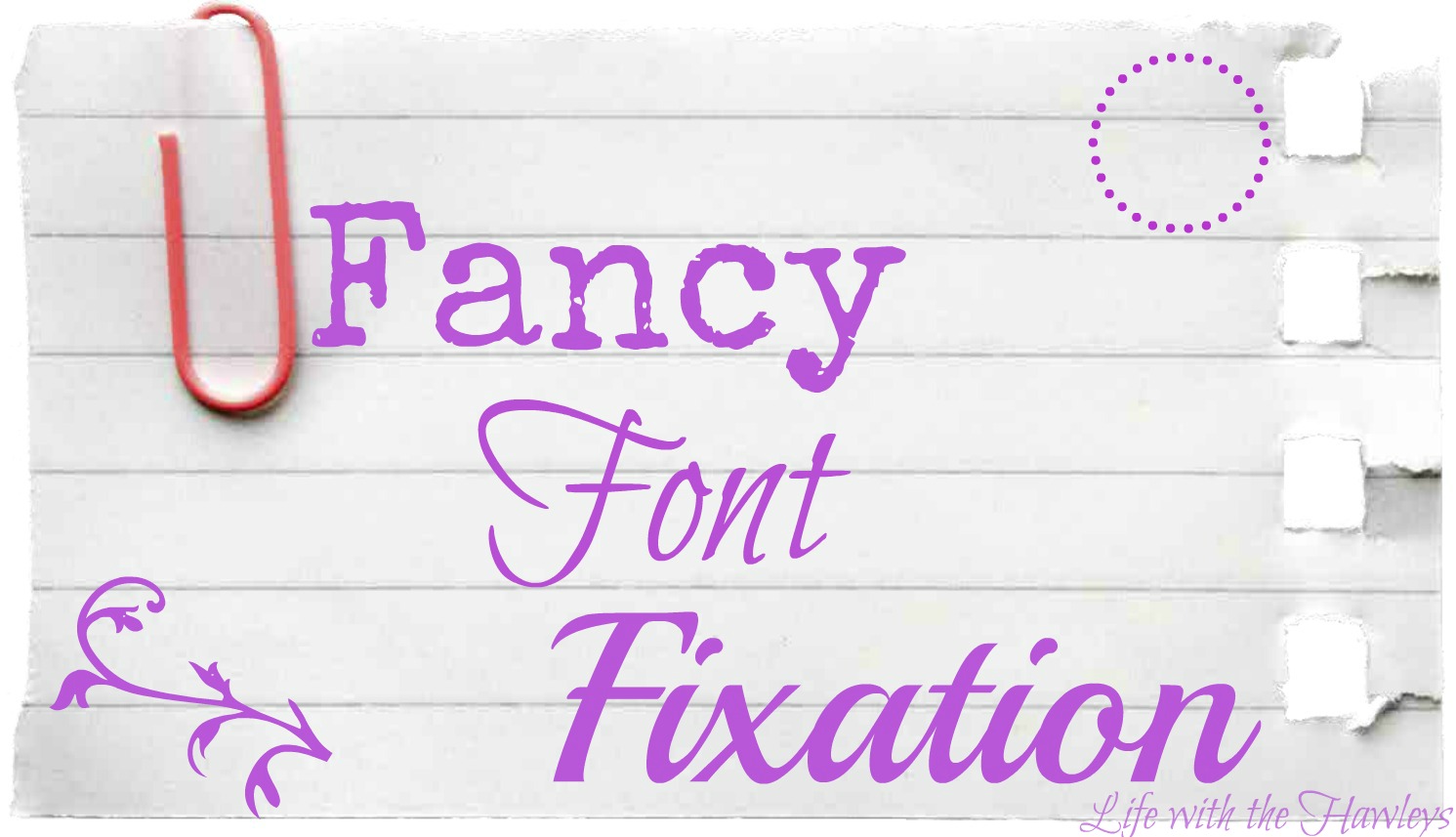
Fancy Font Fixation

Ok, thanks a lot Cate, but I think I’ll take it from here.

Please don’t do this people. Unless your book is some kind of graphic specialty or Children’s Book or something that requires some kind of cursive expertise, please don’t adjust your fonts in fancy writing. Only because you’re not in grade school anymore, the focus here is not how cute it looks, but how professional. Below is a basic list of the kinds of fonts that I would suggest for Chapters and such:

• Times New Roman
• Verdana
• Calibri
• Garamond
• Tahoma

Since I have to go now, I’d have to come back to this topic, but I hope what little information I was able to share may be of assistance to you. The most important obvious investments you can start out with though  is Editing and Book Cover Design.