Author Identity: Urban Fiction

Earlier this week, I had the pleasure of reading a reblog to an original post I had not seen until then. After promptly liking both the reblog, as published by Whitney of Write, Live, and Love and the original as published by Ja’da of quizoticmuses (who I do believe also has a book out on Amazon), I felt compelled to reply in a separate post so that my commentary was not limited to the comments section of her blog. I thought the post served as a great conversation starter, and I do encourage others to tune in if so inclined.

But before throwing in my two cents here’s the original (used with permission):

“As a writer, I have come to understand that in every capacity the term “urban” is synonymous with “Black people.” I don’t want to be an urban fiction writer; I want to be a writer. But I’m Black writing about Black people and not exclusively Black people drama. So I feel like I’m automatically fitted into the urban fiction slot when really, I just want to write fictional stories. Period.

How do I get there?”

There are certain words that, although can be applied to various races of people, pretty much is a reference to black people depending on the context. Words like Urban, and Minority, to name a couple. Specifically, the term “Urban” is no doubt a crafty way of saying “Black” and Urban Fiction then is used to denote black fiction.

What attracted me to the post is that as a person who speaks often concerning the state of Black America, Black history, its ancient origins, slavery, freedom, and as someone who is deeply passionate about writing about Israelites or so-called blacks, for blacks, our history, and culture, I must say my writing has never been deemed Urban Fiction. This revelation caused me to think that maybe the characterization of Urban Fiction is a bit deeper than being a black writer writing about black people in general but that it is also about the style of writing.

Writing Styles

“Style is the way writing is dressed up (or down) to fit the specific context, purpose, or audience. Word choice, sentence fluency, and the writer’s voice — all contribute to the style of a piece of writing.”– Google

As I began to think about my own reading experience with UF, I am hearkened back to books that have a certain tone and feel to it. These books tend to follow a certain writing style. Though they do tend to deal with the internal struggle of the African American experience, it’s the way that these books are written that makes them different. Personally, my characterization of Urban Fiction books is based upon the language, setting, and overall surroundings incorporated into the book.

This led me to consider that, though I do find it is exclusive to the black community, Urban Fiction is a label applied to a certain kind of writing that not everyone can do. Everybody can’t write good Urban Fiction books, especially people who have not lived the life they are creating for their characters. Urban Fiction is a unique genre. While you can research for Historical Fiction and Romance or Thriller, if you write a UF novel, you had better have lived that life or be familiar with the setting in some way or it will fall flat. It will read fake.

Black Lit or Urban Fic?

What makes Toni Morrison’s “The Bluest Eye” Black Literature and Tracy Brown’s “Snapped” Urban Fiction? Just by looking at the covers alone we can see that they are two completely different kinds of works, though they are both written by African American female writers about African Americans.

5337019 thebluesteye

Both books are relevant in black society. Both are truths concerning black family life, struggles, and both contain black central characters. So why is Brown known as an Urban Fiction writer and Morrison a Fiction writer? Both are very talented and though Morrison is most prominent, Brown is no less valid. The classification has to do, I think, with the individual writing styles. The overall message of the book itself and the direction in which it tends to expand conversation.

I often find that black writers who write with a passion that is rooted in that hardcore truth concerning black family life, if its raw, uncut, up close and personal, then it is often labeled Urban Fiction.

Believe it or not, this is a conversation that many are already having. Bernice McFadden, the very talented author of nine critically acclaimed novels including SugarLoving DonovanNowhere Is a PlaceThe Warmest DecemberGathering of Waters (a New York Times Editors’ Choice and one of the 100 Notable Books of 2012), and Glorious, has already coined the term, “seg-book-gation”. She argues that black books are lumped into an “African American Literature” category instead of typical genres like General Fiction.

Personally, I see nothing wrong with the separation and encourage Blacks to embrace being such a set-apart people. Nothing we do is going to be normal or traditional because we are not a normal people. We are unique, creative, soulful, we are the salt of the Earth.

Triangle of Sins; Alibi and Midnight: A Gangster Love Story; Diary of a Street Diva; No Disrespect, A Street Girl Named Desire; The Coldest Winter Ever, these are all titles that represent Urban Fiction or “Street Literature” because they focus on the internal struggle of growing up Black in the Hood. They are books that are written in such a way that it captures the personal truths concerning the life many African American’s live and that’s why we love them so much.

These are books about what I like to call, “The Curses” or the struggles blacks have had to endure for centuries now. It is prophecy fulfilled and the gritty reality is what makes them appealing to the Black community.

In closing, Author Identity is all dependent on the mindset and thought processes of the author and who they are. Because Black people set the trend in a host of areas, Urban Fiction and Street Lit is another spin on the norm that African American’s have contributed to. Black people have always been the creators of what is different, creative, or uniquely separated from tradition. If Black writers of fiction are labeled Urban Fiction I believe its more so because of the uniqueness of the work itself. Urban Fiction is not just a genre, but it’s a different way of writing. So whereas one person can write about Blacks and for Blacks and never be looked at as an Urban Fiction writer, the same may not be true for someone else because their styles are different.

(Also, because reading is a HUGE part of writing, people tend to write how they read, what they experienced (or experience) in everyday life, and what they’re most knowledgeable or passionate about.)

Yecheilyah Book Reviews: A Tale of Three Cities by Alexander McCabe

Title: A Tale of Three Cities
Author: Alexander McCabe
ISBN: 978-0-9940447-1-6
Release Date: November 2, 2015
Advanced Review Copy Edition

 A Tale of Three Cities is a fantastic story involving two women who do not intimately know each other but whose lives become connected in a horrific span of events that will forever change both women. 

While occupying the waiting room of a dental office, bank cashier Melissa Chisholm is reading a magazine when her attention is snagged by a missing persons headline accompanied by a photograph of a woman she is sure she knows. Enticed by the million-dollar reward for any information regarding Kristy Bradley, Melissa sets out to redeem the much-needed cash, being reassured that she does know the woman who changed her name to Lady Penelope Munro. 

According to the article, the two love birds married out of High School. They settled into a financially stable and happy life before Kristy was allegedly kidnapped by Anthony Di Silva, a mob boss masquerading as CEO of a Waste Management Company and currently serving 25 to life after 34 million dollars, and Michael’s wife went missing. Now Melissa is flying from Glasgow, Scotland, to Harrison, New York, to assist Kristy’s poor husband find his long-lost wife.

Sitting in her car outside Michael’s front door, Melissa is unaware of the man behind the smile in the magazine. As she waits nervously for him to read the documents she slipped into his home and to listen to her message on his answering machine, she has no idea of the maniac she has just involved herself with. As she waits, watching Michael faint at the contents of the documents with tears colliding down his face, Melissa doesn’t know about the secret hatred more than love pulsating through his veins. When his true character is revealed, it made me think about the stigmas surrounding a woman’s submission, what it means, and how abusive men take advantage of women who do. Nonetheless, as Melissa waits, it will be a hard lesson for her.

I was pleasantly surprised. I was not too excited when I discovered this book was 500 pages long. However, McCabe has written an adventurous tale that will engage all of your senses. His attention to detail is remarkable, and I found Z’s sense of humor hilarious at times. I also enjoyed how the author displays Michael’s deranged demeanor against Melissa’s sympathy for his loss. Having lost her parents in a car wreck years ago, her loss drives the naivety and compassion she feels for a man who has seemingly, like her, lost everything. I also enjoyed the parallels between Melissa’s life and Kristy’s, and like a single thread that weaves fabric together, the dynamics involving the two women bring it all in.

ATOTC-banner

A Tale of Three Cities releases November 2, 2015. Please visit Alexander at his social networking sites and be sure to pick up this book! It is a must read. Though I read it already, I would love to still purchase the paperback for my collection when it releases.

Website: http://aasmccabe.com/
Twitter: https://twitter.com/aasmccabe
Facebook: https://www.facebook.com/alexandermccabeauthor
Instagram: https://instagram.com/aasmccabe/

Self-Publishing: Target Markets

target-markets

Though it’s a lot of work, one of the many reasons I chose to Self-Publish is the control. One thing that I did not want is to be categorized. If for whatever reason I chose to include biblical text or any spirituality in my writing I did not want my work labeled Christian Fiction or anything unrelated to the kinds of books I represent even if it did contain biblical insight. I use this as an example to show that what I wanted was to produce books according to how I was being led and to not be held back by society’s precepts or interpretations. This does not, however, exclude me from the discipline this field requires, one of which is identifying target markets.

What is a Target Market?

A target market is a specific group of consumers at which a product or service is aimed. This group of people would also be referred to as your target audience. They are the group of people who your work is specifically targeted to. In this way, you can position yourself to be around this group of people off and online more so than any other group because they are the people who are interested in the kinds of books you write or rather, the kind of service you provide.

An example of Target Markets, according to an example given by Google is: “Schools are a key target for apps.” Why is this so? Education and how children learn is evolving just as quickly as technology. The aged old chalkboard is really not as effective in my opinion as interactive whiteboard systems. That said computers and teaching go hand in hand. In this way, schools are one of the major institutions who could support many of the learning apps available to be used in the classrooms. So for app developers, schools are a key target market meaning this is a group that they strive to appeal to in their promotions as the most likely to purchase their product. But to go further, they can break schools down into what kind of schools they are targeting. Public? Private? Magnet? Charter?

The easiest way to break down a Target Market without the confusion is to think about the kinds of readers who are interested in the kinds of books you write and to break these groups down into their smallest group. You can start broad but try to get it down to the most specific group possible: For example:

Women readers between the ages of 18 – 45. To define this further, I may choose to target online fiction readers of African American ancestry who are interested in history and short stories. This market can be broken down into two-three niches: online short story readers, historical fiction readers, and African American women readers. This example can also be broken down even further but I suppose we pretty much get the point. This does not exclude men from having a target market does not leave out everyone else, but it helps you to closely market your books to a group who, more so than others, will support it.

Everyone

Target-Audience-Promotional-Audience

Although technically speaking anyone who desires to make a profit is targeting everyone, everyone is not a Target Market. It is very unlikely, especially as a Self-Publisher, that everyone will buy your books. That said you have to break reader groups down into the most specified group possible and that’s basically what a Target Market is if you strip it of all the technical language. You are pointing to certain consumers and saying “I choose to market my product to you because we share the same interest.”

While I am still striving to understand the business side of publishing myself, I do know that Indie Authors must realize that their goals should be directly related to their purpose, but that this does not exempt any of us from basic business knowledge and implementation. Meaning that despite passion we still have to target a specific group of people because they are going to be the ones to support our work. We have to do this more so than anyone else because of the stigmas that, though fading, still exists for Self-Publishers. To determine your Target Market, ask yourself:

  • Who are my current customers?
  • Why do they buy from me?
  • Which ones bring in most business?
  • What characteristics and interest do they share?

Book Cover Designs – 5 Resources for Self-Publishers

PBS bc front
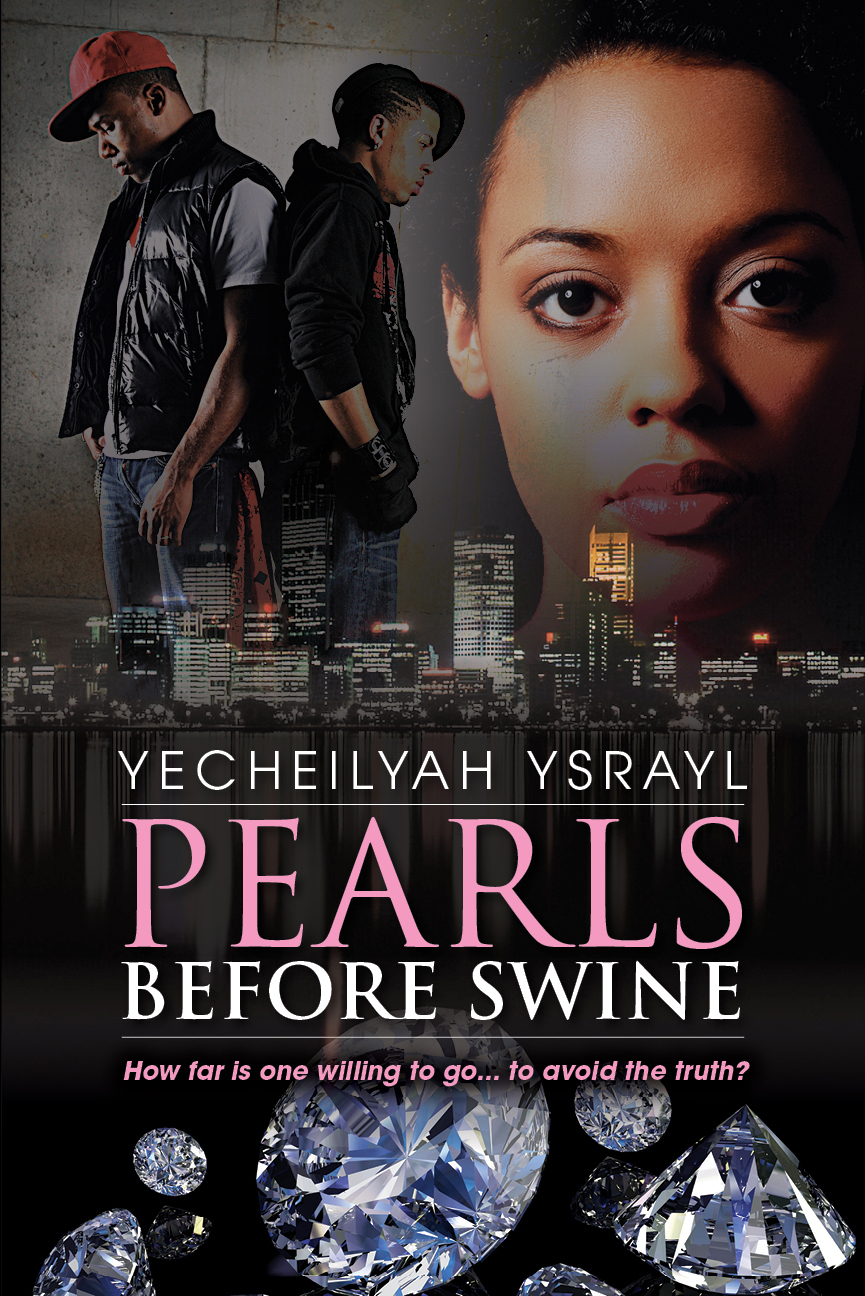
Custom Book Cover for Pearls Before Swine by Andre Hawkings, Kenosis Design Innovations

One of the most exciting things for me as a Self-Publisher is the Book Cover reveal, especially if it’s a really neat one. Personally, I like to get an early start on purchasing book covers. It helps me to get that part of the process out of the way, keeps me excited as I polish off the book, secures the cover so that no one else can get it (if its premade), and helps me to schedule the Book Reveal to build momentum. Nonetheless, custom book covers are expensive. To secure a really great cover will run you at least $300+ dollars if you want it done right. There is an alternative however that can save you money and keep your cover looking fresh.

Pre-Made Book Cover Designs

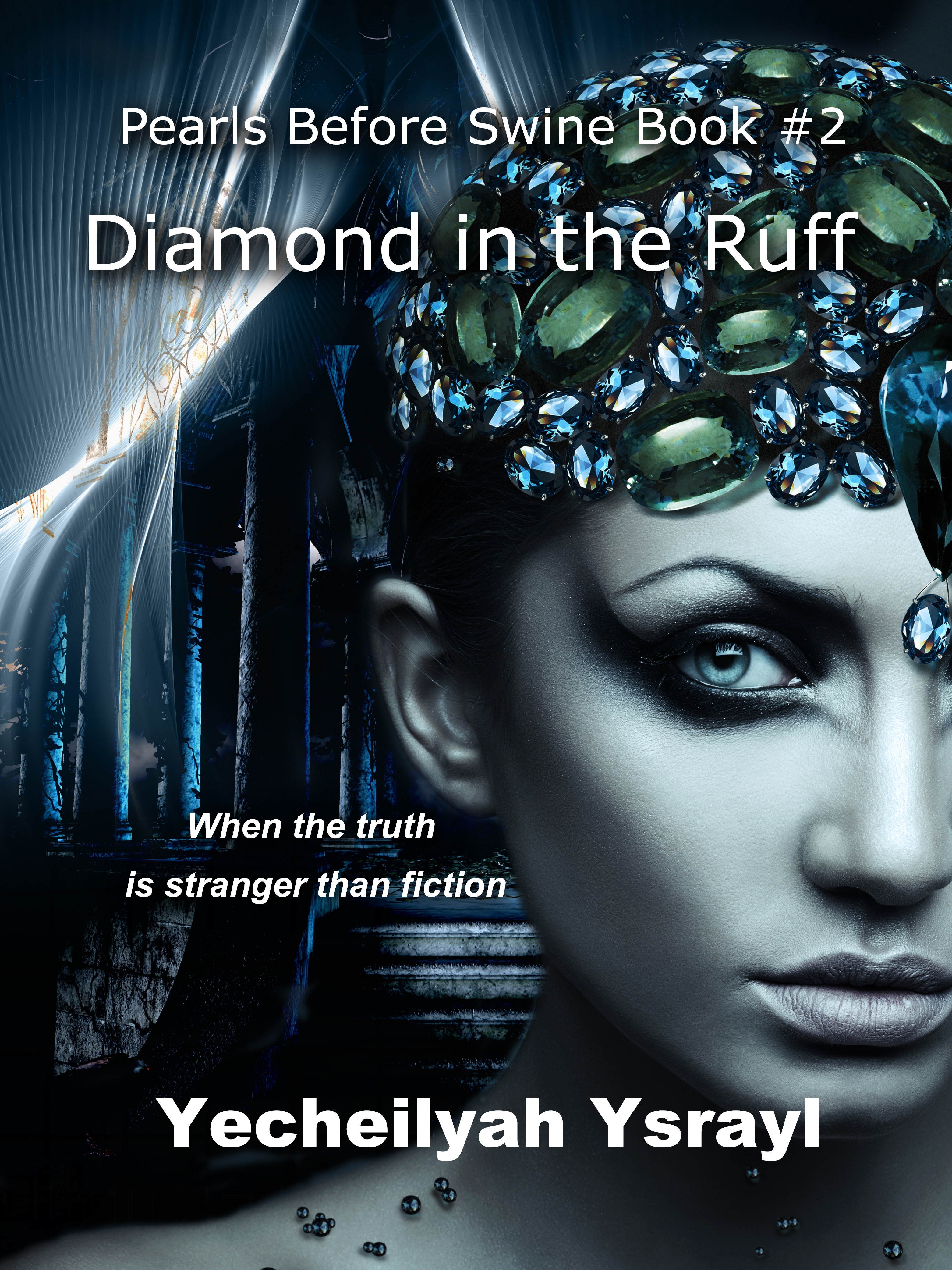
Pre-Made Book Cover Design from Self-Pub for Pearls Before Swine Vol. #2

As the Self-Publishing Industry blossoms, the web is flooded with resources. Everything from marketing and promotion to editing services and even book cover designs. If you have deep pockets, you’d really be able to take advantage of even paying for marketing and promotion if that’s not your cup of tea, so why not book cover design? After all, we are writers, not designers.

But with the amount of information now available, I realize there is no reason for an unattractive cover. For this reason, I am in the process of re-vamping all of my book covers to look more appealing. So of late, I have been looking to purchase a few book cover designs and found some great resources for Pre-Made designs. I am re-editing my novel and I would like to add a better book cover for the next edition. I am also shopping for a cover for my early poetry books and the third installment of the Stella series.

The great thing about Pre-Made Book Covers is that once you buy them they are no longer available anywhere else, so there’s no reason to be selfish about where you got your covers since no one else will have the exact same one. Pre-Made also does not have to mean amateur looking (though some of them are). But there are lots of striking professional looking covers to match your story at great prices. Just make sure your pre-made cover doesn’t look like a four-year-old did it because those ones exist too.

#1: Fiverr

Number 1 on my list is Fiverr. For those who are not familiar by now, Fiverr is an online service where individuals with various skills hire themselves out at very inexpensive rates. You can purchase editing or Book Cover designs for as low as $5! Now, I warn that you get what you pay for, so it is not wise to purchase a $5 cover (just saying). I would also not recommend them unless you really have to but will list it here first because I know some of our finances will work with this option. Be sure to have additional work done (such as 3D stock images added) by purchasing the sellers additional services. Even still, you can spend under $50 and come out with a great book cover design (and be sure to purchase a back and spine).

#2: Self-Pub Book Covers

Next on my list is Self-Pub Book Covers. I love them! I have so far purchased two of their covers already. To sign up is free and I love their variety. You can pretty much find something that fits your book (especially if you spend hours strolling through every single pic. I know, I’m a bit thorough. OK obsessed, whatever). My only thing with them is that you have to purchase a back and spine at a cost separate from the cover. Even still, you’d come out spending far less than you would a custom cover. (If you can afford a custom cover please do so. It is the best thing. This list is for those of us on budgets).

#3: The Cover Collection

My next favorite is The Cover Collection. I have not worked with them but they have great covers on their site at reasonable prices (I think the prices are in British Pounds so you’ll have to convert that if you’re in the U.S.).

#4: Paper and Sage

Another awesome site is Paper and Sage. Find neat pre-made e-book and print book cover designs at low prices. I’m currently seriously looking at their site. Their variety is good and the covers are professional. You can also order custom made covers through this service.

#5: Author Marketing Club

On this site, you’d get to explore the work of an individual artist who designs their own pre-made covers. If you like one, you will email them through the site but you will buy directly from the artist just as you would if you spoke to them directly. Their prices are also extremely affordable. I’ve seen some really professional looking covers for as low as $20.

PreMade Cover for my 3rd Poetry Book.

This is just a fraction of the number of Pre-Made Book Cover Designs available out there for Self-Publishers. I didn’t include 99 Designs because though the process is off the charts (I really enjoyed working with the various professional artist to see who could make the best cover), it’s not ideal if you are on a budget and falls into the custom book cover category.

The benefit of pre-made covers (if you can’t afford a custom cover) is that they are professionally pre-designed by professional artists who understands exactly how to position the font and combine colors and everything that is important to a cover. With all of this information at our fingertips, there really is no reason for a crappy cover.

Remember: Books are judged by their covers! And in this age of technology, there really is no excuse.

Self-Publishing: The Workflow

Banner_Fiction

You are not just a writer. You are not just an author. You do not have the privilege of having an agent or big publishing company to stand behind you. You cannot write a book, sit back and then watch things happen because you are not just a writer anymore. You are a publisher. You are a Self-Publisher. You publish your own books. This means you must stop being a writer. You are much more than that. Now that you publish your own books, you must now think like a publisher. You must organize and plan and live as a publisher. You must become a publisher.

“Self-publishing has gained a great deal of popularity over the past few years. Amazon has made it easy to publish our own work through Create Space and Kindle Select. Unfortunately, the fact it is easy to self-publish has resulted in a proliferation of poorly edited novels as well as novels that need a great deal of help with content and structure. Until these issues are addressed, self-publishing will continue to have an unnecessary stigma attached to it. Many authors just entering the arena of self-publishing have no idea where to start – how to find an editor, a cover artist, and formatters.”

– Editor Glenda Poulter of Rainbow Tales Literary Services

I like this quote because the tone is not bashing toward Self-Publishers, at least not to me, it’s just real talk. It’s hard language, but it’s true:  While I don’t think Traditional Publishers or advocates of Traditional Publishing should stigmatize Self-Publishers because of it, I do understand that because it’s pretty much free or extremely cost effective to Self-Publish, it has in many ways brought down the quality of work in some authors who feel that’s all they have to do. Self-Publishing alone does not automatically degrade the quality of work but  rather, the quality of work put in by the author can in fact degrade the business of a Self-Publisher.

1-angry-eye

In certain situations it can benefit us to look closely at how to better use the components of everything we have to achieve a desired effect.  While certain things in our lives require a foundational stance (like morals and values no one should allow another to alter) other things, like Self-Publishing and Traditional Publishing, can both be understood in a way that is helpful to both. It’s a good idea for Traditional Publishers to understand all that goes into establishing oneself as a Self-Publisher, that it is not easy, and that it does add value to the market by having all of these books now available that would have probably never made it had not some undiscovered genius never taken the chance. It’s also a good idea for Self-Publishers to take some ideas from the Traditional Publishing method to help to increase the professionalism of their work as Publishers. Traditional Publishing exist and  Indie Authors should use this as a resource.

For example: You may not have to worry about pleasing a publisher since you are the publisher, but you do want to create a good experience for your readers. After all, this is how you are going to make money. (Side Note: Speaking of making money, there are people out there making money off of your work. There are those writing Self-Publishing Help Books who have probably never Self-Published a book in their life. There are people conducting seminars, creating products, and overall profiting hand over fist because more and more of you are Self-Publishing. They’re making money off of your workflow. Why shouldn’t you? Just a thought, but I digress).

08walmart-pic-articleLarge

A few years ago, I took a brief class on Career Empowerment and received one of the most valuable pieces of advice I could have ever used over the course of my career. It actually saved me from dying of boredom in that class:

“There really is no such thing as not working for someone. Everybody works for someone. A beauty salon owner depends on customers to come in to pay the rent on the building {mortgage or taxes}. She must pay for the electricity, the repairs etc. Everything about her business depends on customers coming in to get their hair done.”

I found this piece of information profound because I had never thought about it in this way.  When someone studies for an exam, they are not studying for themselves in the sense that they pick up a book and instantly understand what is being said. They first need to be taught by an instructor, they then take notes, and then they study those notes without having to be told, thus, they study on their own. The same applies to writing.  Sure, I can be my own boss and set my own hours, but there really is no such thing as an Entrepreneur in the sense that we make money all on our own.We do not make money on our own. What we do on our own that makes us Entrepreneurs is that we put in work. A Wal-Mart employee ultimately works for the owner, but as the owner, we work for ourselves. We put forth the work necessary to convince the public that our product is important enough to invest in. As a result, we get to set the terms and conditions necessary for the company to grow. That’s what we do. We put in work. We build.

Desk2Destiny-Self-Publishing-TheBookCompany-services

As I mentioned in a previous article: 4 Common Sense ways it will benefit you to Self-Publish”, Indie Authors actually put in more work than those who choose to publish traditionally. The reason is pretty much attributed to common sense: They must do everything themselves. For this reason, there are many Indie Authors who may not start off as educated about the book making process. They can be great writers, but they may not understand that the publishing industry is a little different than other businesses: there is a lot to learn. Without the power of a publisher behind us, indie authors are forced to become much more than just writers. We have to become business men and women. We need to have great communications and marketing skills and we have to be relentless in our quest to get our books seen. Indie authors have to do it all. There is no outside help. Sure we can hire an editor, but that comes at our own expense. We have to develop, or at least hire someone to develop, a quality cover; another expense that a traditional publisher would normally cover. Indie authors have to treat every day like a business day. They need both pre-publishing and post publishing plans, goals, and quality material that never wavers. All of this requires a lot of work and investment financially in order to be successful.

enhanced-buzz-wide-31169-1446560988-11

While success can be defined differently to each person, every Indie Author, or Self-Publisher has the opportunity to produce quality material, but they also have an opportunity to become much more than writers if they are willing to learn something from both the Self-Publishing AND the traditional publishing process. Self-Publishers are publishers after all, and if we continue to put forth both the time and monetary investment necessary to be successful, we can quickly tear down the negative connotations associated with this industry.

And it all starts with that workflow. So let’s keep it moving. It’ll eventually pay off. Hard work always does.


Yecheilyah Ysrayl is the YA, Historical Fiction author of The Stella Trilogy. She is currently working on her next book series “The Nora White Story” about a young black woman writer who dreams of taking part in The Harlem Renaissance movement and her parents struggle to accept their traumatic past in the Jim Crow south. “Renaissance: The Nora White Story (Book One)” is due for release spring, 2017. For updates on this project, sneak peek of chapters and the pending book cover release for this project, be sure to follow this blog and to subscribe to Yecheilyah’s email list HERE.

4 Common Sense Reasons It Can Benefit You to Self-Publish

Crazy Woman Drinking Wine

Twenty years ago, a book followed a routine process: You poured your heart and soul into a manuscript, and when you finished it, you started calling agents and editors who most likely told you to send them a query letter. 

The next step is the book proposal and a few sample chapters. Then the waiting game started, usually ending with disappointment. 

On the other hand, the option to Self-Publish was there, but it had a certain stigma that, thankfully, has waned in this digital era. That stigma can be identified by statements such as, “Your book isn’t really published because you couldn’t get it accepted by a ‘real publisher.'”

However, being a Self-Publisher only means you are in charge of the direction of your book. The publisher (in this case, you) is the one who puts up the money. If you invest in your own printing, you are a Self-Publisher. If you begin to take in manuscripts, you are a small publisher. If you grow, you become a large publisher. Still, many Self-Publishers still wear this “badge of shame” for choosing not to go the traditional route, as if they were the scarlet woman or something.

This list can help clarify and simplify things for you.

4 Common Sense reasons it can benefit you to Self-Publish

• Ownership

Self-Publishing can be the road to your independence. Do you dream of being your own boss? Do you desire more personal freedom? You can turn that dream into a reality. You own all rights to your book as a self-publisher, whereas a traditional publisher would likely own the rights. If they lose interest in your book, you cannot print additional copies unless you purchase those rights. Traditional publishers often require you to purchase your book from them to do any promotion you choose to do for your book. As your own publisher, you print as many books as you need. Here is a dynamic, proven way to shape your own destiny.


• Timing

Traditional publishers work on a long production cycle. They often plan a year to a year and a half—or even longer—to get a book out. As a Self-Publisher, you can do it in a fraction of that time. It’s your material, your career move – you can take control of when you want to publish.


• Increased Income

Self-Publishing offers the potential for huge profits. When you use creativity, persistence, and sound business sense, money is there to be made. Most publishers require their authors to do their own promotion, but if you have to do your own promotion, why not Self-Publish it anyway and make more money? Even if you don’t make much, Self-Publishing allows you to get back what you put in. If you set a plan and work hard at it, you’ll be “making it rain” in no time. Or, you can work hard for some big-time publisher to tell you that you’re just not good enough.


• Control

Self-Publishing gives you the final say on the direction of your book. It reflects your vision and not someone else’s. You can personally guide every step or hire professionals to be on your team. You can choose the cover you like, the typeface, and the title you want. You maintain absolute control over your own book.

Whether you publish Traditionally or Self-Publish, completing a book is a great accomplishment. As to whether or not you’re making money from it, that’s up to you. So go ahead, finish that masterpiece, self-publish if that’s what you want to do, defy the stereotypes, and live happily ever after.

5 Horrible Mistakes Self Published Authors Make

Saw this on twitter, thought I’d share. These are some good points:

The Following is by Laurence O’Bryan:

hands pointing towards business man

Self publishing is a golden opportunity. For the first time in history authors can reach readers without going through the traditional publishing system.

But many self published authors are making horrible, beginner-type-mistakes, which will cripple their book sales. Here’s my take on these mistakes:

1. Not getting outside help. Writers can’t generally be editors, cover designers and marketing experts, as well as being writers. Not if they want to do these jobs well. And asking a relative or close friend to do these jobs for you is probably worse than doing it yourself. Your judgement typically goes out the window when someone close to you does something for you. If you won’t spend money on getting experts your sales will be poor. I know there are occasional exceptions to this, but they only prove the rule.

2. Having unrealistic expectations. Most books, up to ten years ago, sold hundreds of copies. Only 1 in 300 traditionally published books, which got good editing, covers and marketing support, became bestsellers in the past. Publishing became a giant game of throw-it-up and see-what-sticks. With printed books it became ever growing and almost criminally wasteful, when you consider the dirty secret that most of the books you see in book stores are destined to be pulped. Now that game is in decline. If you do get editing, covers and marketing right, you might expect reasonable sales, but publishing is always a gamble, so never risk more than you can afford to lose. Great books don’t always sell well. And Print on Demand is way better than ordering books to store in a front room and then a back room – forever.

3. Not building an email list of people who might be willing to read and review your book on Amazon. This is one of the main reasons traditional publishers take so long to publish a book. They often send review copies out to a large group of their reviewers three months in advance of publication. This policy ensures that positive reviews will be posted day one after the book goes up on Amazon. Self-published authors should consider the day a book goes live on Amazon as a soft launch. The day you have five reviews is the day your book gets launched. The day you have ten is when it can hold its head up. The day it has fifty is the day you can expect Amazon’s algorithms to start presenting it to readers near the top of a list of books someone searched for. Congratulations!

4. Not focusing on what makes your book different. Whatever you write, you need to find something unique about your book. That you’ve written a good me-too book, like many others in its genre, is simply not good enough, unless you are happy with poor sales. Sensational writing, words that jump from a page, a heart-stopping plot, and real recipes from your grandmother in a village in Sardinia, where many people live to be 100, are all potentially unique aspects of a book, which will help you find readers.

5. Not believing in yourself. Self-belief is critical to long-term success as a writer, as in many walks of life.  Writing is a profession where those who believe they can and who don’t give up, succeed. Perseverance and a willingness to learn, to edit the whole book again, for the twenty-seventh time, are necessary characteristics for a writer who is determined to become a success. Adopt these characteristics and your path will open up. In the past, it took most writers about ten years to find a publisher, from starting to write. Each year was spent improving, honing, learning. Be prepared for a long journey. If you love being creative with words, don’t give up because the road is hard. Use the journey to prepare for what lies ahead.

Finally, when you have done all of the above, you will know that you can move on. To the next book. And then the one after. Most books lead to another. One of the joys of writing is discovering what else lies inside us, waiting to be born.