Slow Down: Why You Don’t Need to Rush the End of the Year

This is the time of year when many of us are inundated with a call to “finish the year strong.”

A time when we will be pressured by businesses, organizations, and entrepreneurial gurus to race to the finish line. Social media posts will bombard us with how many days of the year are left, year-end discounts, constant promotions, and posts about how much we’ve grown before the year is even over.

But rushing into the new year doesn’t guarantee a fresh start. Sometimes, it just carries our burnout into January.

Yes, we know. January is not the start of a New Year. Anyone who has done the tiniest bit of research knows that a real new year starts in the spring, when everything is reborn, not in the dead of winter. Stay with me tho.

We’ve all experienced or witnessed the last-minute scramble of trying to summarize the year without fully processing it: trying to complete a weight loss program, write a book, or achieve financial goals in just 10 days. Office parties, school events, family gatherings, all crammed together to see who can win the most before January first.

It can feel like we’re running from something. Perhaps a feeling of not having done “enough,” maybe comparison, and maybe the belief that value is measured by productivity.

It’s already happening with Black Friday sales. As you may have noticed, I rarely have one. I have nothing against them, and I am sure I’ll have something special in the future. Maybe even next year. But for now, it just all feels so exhausting.

I’M TIRED YA’LL.

If you are also tired, remember there is nothing wrong with slowing down at a time when everyone is speeding up. If you are a nature person like me, you know nothing blooms all year long. We were born from the Earth, yet we move opposite to it.

While humans rush to prove their year was meaningful to other flawed humans, nature is slowing down for the winter months. Animals are hibernating, finding ways to escape the cold, and trees have shed their leaves, with plants stopping growth to conserve energy. Even the soil rests, with nutrients being regenerated under frost and snow.

Meanwhile, my neighbor blows his leaves every morning. Poor thing. I want so badly to tell him they are just going to fall again. Let them leaves alone. They are doing what they are supposed to do and helping the soil in the process.

On this side of the Earth, humans accelerate and accomplish as much as possible before the final countdown. But for other living things?

For them, this is a period of rest and preparation for spring.

Slowing down isn’t about doing nothing. It’s about doing what matters with intention.

When we slow down, we reclaim time.

We notice the beauty in ordinary moments, and we greet the “new year” with clarity rather than exhaustion.

Instead of rushing to create a version of ourselves that looks good on paper, we can walk grounded, nourished, and whole.


The end of the year is not a deadline.

It’s a doorway.

Walk through it gently.

It Could Easily Be You

When I was ten years old, my family moved to Milwaukee, Wisconsin, just months after learning to walk again after the car accident. It was the only time we did not live in Chicago during my childhood.

Shortly after moving into a big, beautiful home, we were evicted. With only a few family members in the state who decided we could not live with them, my mother and her three daughters went to a woman’s shelter. My brother was welcomed to stay with an older cousin, but she didn’t have room for the girls.

I’ve gone days without food, months without a roof, and years without the kind of nourishment most people take for granted. So watching people mock families who are about to lose their SNAP benefits isn’t just sad — it’s cruel, and it reminds me how easily empathy gets lost in comfort.

In a matter of days, many American families face the risk of losing their food stamp benefits as the Trump Administration intends to cut payments, affecting about 42 million individuals across the nation. What people are feeling and witnessing is not about lazy parents who are not working to put food on the table. This is about a trash economy that has forced even the hardest-working families to rely on assistance. You might not need it today, but that doesn’t mean you won’t need it tomorrow.

Before the stock market crash of October 1929, there was a time of optimism. Many families prospered as cars and new technology grew. People did not expect to go to their banks and be locked out without warning. Families didn’t expect that they would have to stand in bread lines. It happened suddenly, and it could happen to you, too.

“The loss of SNAP benefits leads to food insecurity, hunger, and malnutrition, which are associated with numerous negative health outcomes in children, such as poor concentration, decreased cognitive function, fatigue, depression, and behavioral problems.”

Melissa Quinn, CBS News

My cousin put it perfectly on Facebook:

“Food stamps fed all of us. Medicaid paid them hospital bills. WIC kept formula in our baby’s bottles. Free lunch stopped our stomachs from growlin in class. The projects gave most of us a roof when we ain’t have one. Financial Aid got a lot of ya’ll them degrees you flexin now. We’ve all had help at some point, so quit looking down on folks still getting it. You just forgot what struggle felt like. Don’t get too high up…the ground still waiting if you fall.”

– Tiff McCormick, Facebook Post

An Artist’s Duty


I was sitting here thinking about how I got to this place of advocating for the restoration of Black history. If it were solely up to me, I would have chosen a less taxing, less unrewarding cause to advocate for.

However, in the words of Nina Simone, “I have no choice in the matter. An artist’s duty, as far as I am concerned, is to reflect the times.”

In school, I was not a student who loved history, and I certainly had no plans to teach it when I grew up.

Unlike other professions where a mistake can be smoothed over, history leaves no room for error. The slightest slip can draw the sting of a thousand voices ready to correct, dismiss, or condemn.

I’ve experienced people debating a point in a video or article they didn’t even finish watching or reading. Yet, here they are, flying Delta to the comment section to respond.

It’s like people talk with their mouths open, the meat still in between their teeth, droplets of spittle sky rocking out of their mouth from food they have not chewed properly, let alone swallowed.

In a time where many of the Civil Rights that Black people fought for are being stripped away, there is no safety net when the facts slip.

Still, I show up.

I press record and publish with hands slick from sweat, skin raw from the invisible cuts of criticism, and keep offering what my people literally bled to learn.

Even when I wonder why I’m doing this, I keep moving forward, not because it’s always fun. It is not. As the saying goes: “Heavy is the head that wears the crown.”

I move forward because I must, and because, to quote Toni Morrison, “This is precisely the time when artists go to work. There is no time for despair, no place for self-pity, no need for silence, no room for fear. We speak, we write, we do language. That is how civilizations heal.”

And so, while it is not always exciting, it is worth it.

I march on, a pen in my hand, a computer in my lap, and a calling in my heart.

I am an artist, and this is my duty.

Breaking From Tradition Can Be a Good Thing

My big brother Ray, nieces Gigi, Jamie, Brook, and Me

Some families keep their history alive around picnic tables, their roots watered each summer by laughter, shared meals, and stories that stretch back generations.

Mine did not.

On my mother’s side, there were no great migrations back home for a weekend, no sea of matching shirts declaring our kinship, no annual roll call of who had been born, married, or passed on.

I didn’t grow up with the smell of charcoal and cousins’ laughter drifting across a summer lawn, the kind of memory stitched into photo albums and passed down like a family recipe. Family reunions simply weren’t our thing. There were no matching T-shirts, no group photos under a banner.

Cousin Laura, Pam, and Me sitting in the back of this truck like some thugs, lol

The closest I came to that sense of gathering was at Chicago block parties. We’d shut down the street, our banquet hall, line the sidewalks with tables and sizzling grills, and open the fire hydrant so the water arched into the air like a silver ribbon. Kids ran barefoot through a cracked-open hydrant, laughing because this time, no one called the police.

Music pulsed from speakers, and for one day, neighbors felt like cousins, and the whole block became family.

But it wasn’t our family.

Six years ago, this ended with our generation.

Jeremiah in the background (Nephew), Big Sissy Pamela, and Lil Cuzzo Angela

What began as a simple backyard barbecue has grown, year after year, into something bigger that we can finally call by its true name: a Family Reunion.

It’s a strange and humbling thing to realize we’re the aunts and unks now—the ones setting the tone, carrying the stories, and shaping the memories for our children.

We’ve rewritten the narrative we inherited.

Many of us are building marriages we’re proud of, raising children under our own roofs, and pursuing careers that light us up. We are not lost to the streets, not numbed by addiction, not absent from the lives we brought into this world.

Aunt Barbara, Lil Reg, and his daughters, Gigi and Brooklyn

Instead, we have passports now. We take our children to see oceans they’ve never touched, mountains they’ve never climbed, cities that speak in languages they’ve never heard. We give them richer experiences, not just with our words but with our lives.

Sometimes, breaking from tradition can be a good thing!

My crazy sisters and me: Yecheilyah, Tracey, Pam, and photo bombed by her daughter, Jamie.

Community Can Be Healing

I spent the weekend before last wrapped in the embrace of family down in Shreveport and Keithville, Louisiana, and it felt like medicine. We rode horses, walked barefoot through the grass, played with dogs, danced like children to country songs (which was hilarious…them country songs a lil freaky, lol) chased chickens, and kissed the soft cheeks of babies.

Cheese!!

In a world that seems to be unraveling, it’s easy to feel unanchored. People are losing their jobs and struggling to pay bills, Medicaid and SNAP Benefits are in danger, and storms, floods, and earthquakes abound. In times like these, it is soothing to turn to community, and I mean real community. To remember what it’s like to be held, to look people in their eyes, to walk barefoot in the grass, and to laugh without looking over your shoulder, waiting for the next unprecedented moment to drop.

We are living in a time when the only time people travel is to work. (And yes, I consider curated events that cost rent and mortgage money to attend is also work.) Time in the country on the farm (which we visit at least once a year) was a reminder of what real rest is, what it feels like, and why it is necessary.

This little baby wasn’t scared at all, lol.

I don’t know what you’re going through in your personal life. I have no idea of the storms you are literally or mentally walking through, but I do know that resting inside the warmth of community, however that looks to you, can be incredibly helpful.

For me, it’s family time since most of us live in different states now. I am excited to spend time with my Chicago people at our annual family BBQ next month. We’re heading to a resort, and it’s going to be a blast, hunny.


We are not supposed to do life alone. Hyper individualism is not the way. This idea that we don’t need anyone is not the song we are supposed to be dancing to. People brag about not having family and friends, and I think that’s sad. No wonder so many people are depressed. 

Whatever embracing community looks like to you, let it be more than a workcation or business venture. Let it be a real coming together. More than that, let it be a balm.

A reminder that community doesn’t just soothe the wounds, but sometimes, it also helps to stop the bleeding.

Avoiding Bad Publishing Advice

Self-publishing can be overwhelming for various reasons, including the limitless number of people who offer advice. The problem is that counsel is not universally applicable. Even the word “Bad” in the title is subjective. Who determines what is bad? Is there any advice that works for us but not for others?

Here is a quick list of things to remember as you continue your publishing journey.

Experience Levels Vary—Resist the urge to follow the advice of people who have not been where you want to go. Some advice may come from beginners who haven’t seen long-term results. For example, some people have self-published several books but have never worked with professionals.

This leads to the next point.

Beware of Personal Bias—People tend to recommend what worked for them, even if it’s not objectively the best method. Someone might tell you to publish a first draft or not to worry about editing because it is what worked for them. But one size does not fit all. What succeeded for one author may not suit your genre, audience, or goals. Remember to apply sound advice that suits you and not make emotional business decisions.

Different Goals Need Different Strategies—Be careful with advice that applies the same strategies to different goals. Your publishing route and the kind of book you write require a different publishing approach. Writing a memoir, a children’s book, or a business book each requires something different.

Outdated Strategies Circulate Often—The publishing landscape changes quickly, so not all tips stay relevant. (Even the articles I have on this website, which date back to 2016, need an upgrade.) Stick to current guidance as much as possible.

Paid Services May Drive Certain Advice—Some give advice to upsell you on courses, editing, or marketing packages. When working with service providers, discern whether a suggestion suits your goals or if it is to persuade you to buy into the service. Many vanity publishers will not care if your story makes sense or if you wrote it in two days. They will encourage you to publish that book as long as you have the money to pay, even if the manuscript is not ready.

You Can Waste Time and Money—Make sure people can show you receipts for their claims. What social proof do they have to support their advice? Remember, reading a book about swimming will not teach you how to swim. Accept advice from people who have been in the water and have done the work. Bad advice can lead to wasted money and, perhaps most importantly, time.

There are many more things to watch out for, such as advice that leads to confusion and second-guessing your decisions. Ultimately, remember that this journey is yours, and you should do what aligns best with your identity and goals. Watch out for conflicting advice that can cause your voice to get lost. Trying to mimic others too closely may make your work less authentic or original.


Need More Help? Register for Indie Korner!

Part I: WRITING WITH KE GARLAND
6/22/2025 | 2-3:00 PM (EST)

Part one is led by KE Garland, who will detail the first step to self-publishing: writing a fantastic book! In our excitement, we tend to skip this step, but no matter how you publish, you still must write something people want to read. Garland will walk us through the first draft, revisions, professional editing, choosing a genre, and everything you need to prepare your manuscript for a publisher, even if that publisher is you!

Part 2: PUBLISHING WITH YECHEILYAH
6/23/2025 | 7-8:00PM (EST)

Yecheilyah leads part two. She will explain the different forms of publishing, from traditional to vanity to hybrid to self-publishing, and why a basic understanding of them matters. She will also discuss how to avoid publishing scams and walk us through the foundational steps to get that amazing manuscript you learned how to write on day one, published at the highest professional level.

REGISTRATION IS OPEN!!

To take advantage of this EXCLUSIVE, limited-seating virtual masterclass, click the buttons below to register for one or both courses. Because they are connected, it is highly recommended that you register for both!


See you in June!

https://www.kegarland.com/indiekorner.html

https://www.yecheilyahysrayl.com/indiekorner

Echoes of Influence

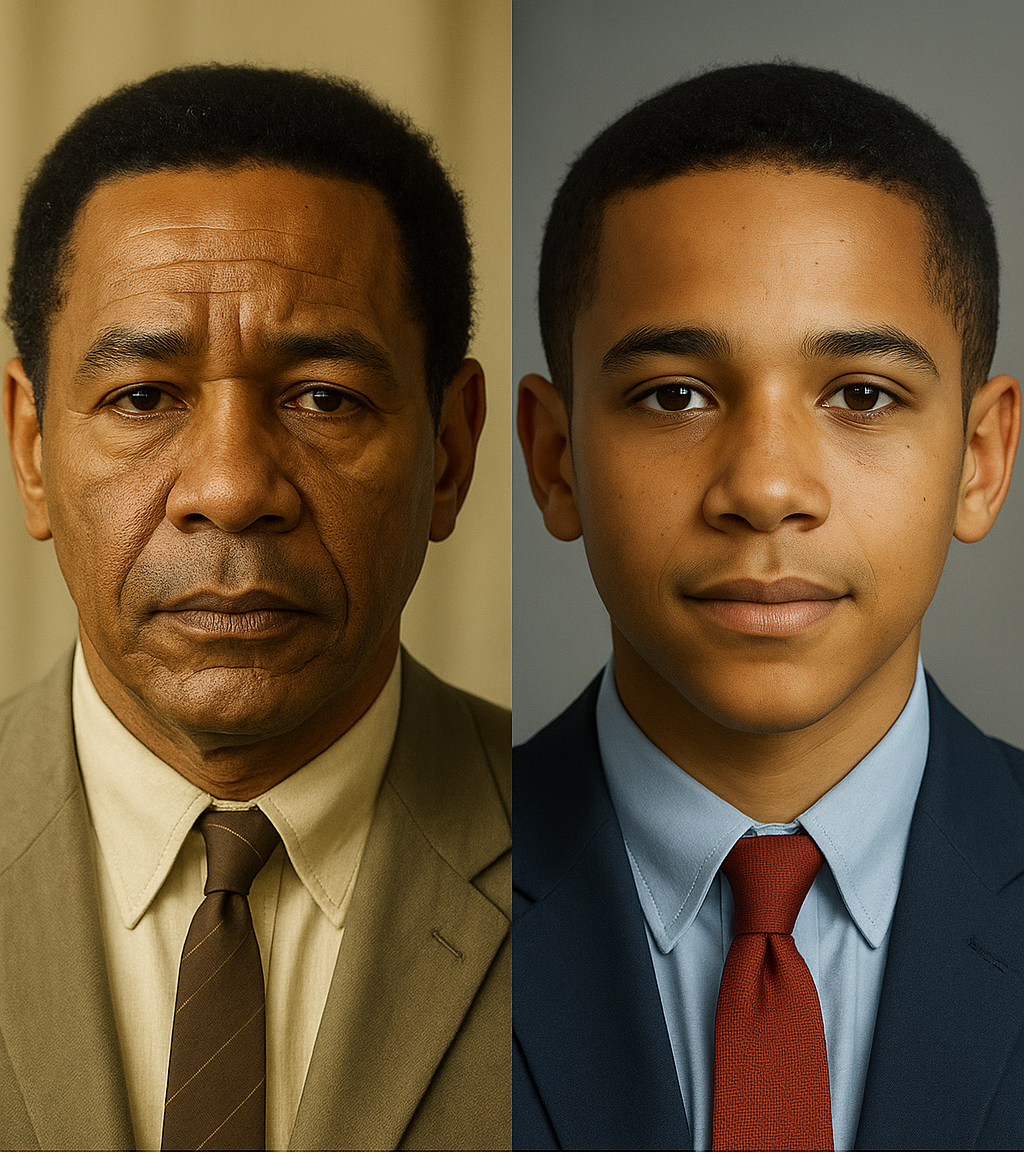
Can ya’ll believe I created this image using ChatGPT? Lol

I love Maya Angelou’s poetry, but it is not what drew me to her. What drew me to Angelou first was her story.

When I read I Know Why the Caged Bird Sings and discovered she had also written other collections of autobiographies, I was delighted by her strength and how it came out in her voice. I watched YouTube videos of her interviews and understood more about how she grew up and what led her down her path. Before Maya Angelou was one of my favorite poets, she became one of my favorite people.

The process of writing out my story on Substack has led me to question how much of what I like really belongs to me and what belongs to the world.

By the time I was born, Angelou was already 59 years old. Her name had already been carved into stone and printed inside the pages of history books. Before I was formed in my mother’s womb, Angelou had been crowned Queen.

But this isn’t really about the amazing Maya Angelou.

I am only using her as an example of how many of us drift through life as mirrors reflecting other people’s likes, passions, and preferences, not out of genuine love but habit.

Is that thing the rhythm in your soul, or is it simply the first thing whispered to you by a world that told you what to like before you liked yourself? Before you knew yourself?

Did you ever listen to that person’s music before they were your favorite artist? Did you ever trace the lyrics with your fingers or read the curve of a poet’s stanzas with your own eyes before you anointed them the best?

Did you ever actually feel the pulse of Angelou’s poetry beneath your skin? Felt her passion jump from the page to her throat and out of her mouth like the voice of many waters? Or do you carry her name like a badge, not because it speaks to you, but because it speaks to everyone else?

Have you ever wandered beyond the well-lit paths of fame into the quiet woods where lesser-known voices sing? Or, have you let the world define your taste, shaping your mind to match the music of the mainstream?

Do you like what you like because you like it or because you’ve been trained to like it?