When promoting your book online, you must do more than post pictures of your cover if you want people to buy it. To be more precise, I want you to focus more on the message and why it matters to you than on trying to sell the book.
What are some of the topics your book covers? Use those topics as stepping stones to reach your target audience. If your book is about how you survived an abusive relationship, you should be finding communities dedicated to eradicating domestic violence and creating content around how you survived it based on what you’ve written in your book. October is Domestic Violence Awareness Month, so you will want to work hard to share your expertise with the people who need it.
If you wrote a fiction book, what kind of escape does it provide readers? Is it entertaining? Romantic? Educational? Does it make us stop to think? Is it thought-provoking? Does it make us laugh until our stomach hurts? The world is hurting now, so people are looking for that getaway.
If you wrote a poetry book, consider participating in open mic nights or reciting poems live on Instagram or TikTok. Join poetry contests, and of course, you cannot miss National Poetry Month in April!
The idea is to focus less on selling the book and more on building community around its content. Think about how your book can add value to readers in your community rather than how you can make a sale.
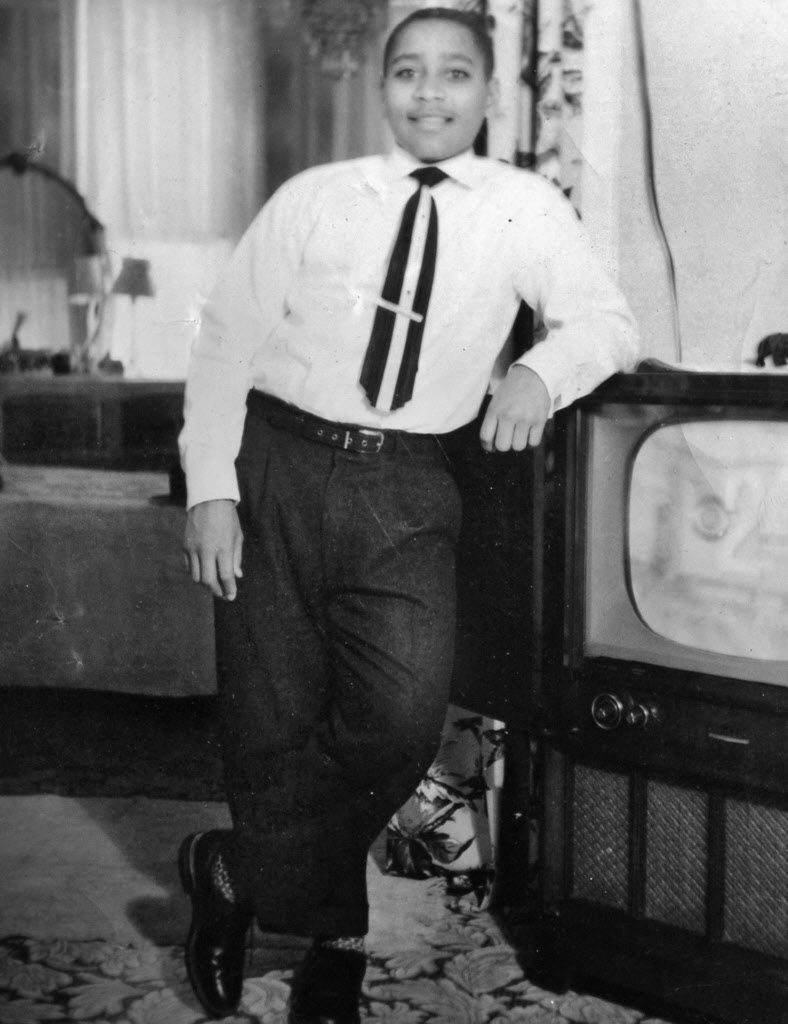
FILE – This photo provided by his family shows Emmett Till in Chicago, about six months before he was killed in Aug. 1955 while visiting relatives in Mississippi. (AP Photo)
Emmett was born Emmett Louis Till on July 25, 1941, at Cook County Hospital in Chicago.
His nickname was Bobo, and his babysitter was Iberia Hampton, mother of Black Panther Party Chairman Fred Hampton.
At 5 years old, Emmett had polio, which left him with a stutter.
Emmett’s Father, Louis Till, was a WW2 soldier. Sadly, he was murdered for allegedly raping and murdering some Italian women along with another soldier.
It was Louis Till’s ring that Emmett wore to Mississippi. He begged his mom, Mamie Till-Mobley if he could wear it and show it off to his cousins. Because he wore this ring, his great uncle Moses Wright could identify his body.
Carolyn Bryant did not only accuse Emmett of whistling (which his cousins said he did whistle). Carolyn also testified that he was physically aggressive and that he propositioned her. According to the transcripts acquired by the FBI in 2004, Mrs. Bryant made it seem that Emmett Till sexually assaulted her, holding her hands and putting his hands around her waist.
After being kidnapped from his family’s home, Emmett Till was taken to a barn in Drew Mississippi where he was beaten according to the testimony of then-18-year-old Willie “Reed” Louis who heard his cries. A few Black men were also alleged to have helped Milam and Bryant. Leroy “Too Tight” Collins, Lee Logins, and Frank Young.
Mississippi tried to cover up the murder by hurrying to bury Emmett’s body. However, Mamie Till got the body shipped to Chicago. Upon arriving back in Chicago on the morning of September 2, 1955, the first stop for Till’s body was the A. A. Rayner Funeral home which, in 1955, was located at the corner of 41st and Cottage Grove. The casket arrived locked and sealed with the state seal of Mississippi, with orders that the casket was not to be opened. If Mississippi authorities could not bury the body in a nameless cotton field, they hoped their seal would keep Till’s story under wraps. But Mamie wasn’t going for that. She forced the casket open.
In 2004, the body was exhumed, and DNA testing was performed, conclusively identifying it as the body of Emmett Louis Till.
On learning of the death of her son, Mamie-Till Mobley made 3 key decisions that forever changed the Civil Rights Movement and cemented her son into history:
She demanded Emmett’s body be returned to Chicago.
She demanded an open casket.
She allowed Jet Magazine to take pictures of Emmett’s battered body and publish them for the world to see.
Had Till’s mother not intervened and reclaimed her son’s body, Till’s lynching may have been recorded in the history books alongside the likes of George Lee and Lamar Smith. Like Till, Lee and Smith were lynched in Mississippi in the summer of 1955 days before Emmett arrived. But unlike Till, their stories have been largely forgotten.
The same train that took Emmett to Money is the same train that brought his remains back to Chicago.
In early 2022, a filmmaker found the kidnapping warrant for JW Milam and Roy Bryant. The warrant also listed Carolyn Bryant, but she was never arrested. (Source: LeFlore Count Courthouse, Greenwood MS, Elmus Stockstill, LeFlore County Court Clerk)
Emmett’s body was taken to the A.A. Rayner Funeral home before arriving at Roberts Temple Church of God in Christ on the South Side of Chicago for the funeral on September 4, 1955. He was buried on September 6th.
The trial began on September 19, 1955, and the white people in the area raised $10,000 for JW Milam and Roy Bryant’s defense fund.
The man in charge of picking the list of jurors for the Emmett Till case was the county attorney who was also one of Milam and Bryant’s defense attorneys.
Still, three of the men on the jury thought Milam and Bryant were guilty until they eventually agreed with the majority. Though they knew the men were not innocent, they also did not think “justifiable homicide”— was a fitting punishment for a Black boy who insulted a white woman.
Mamie Till stayed at the home of TRM Howard in the all-black community of Mound Bayou during her time in the trial. The community was secure, armed, and well-guarded. People said getting into it was like trying to get into the white house.
In 1956, JW Milam and Roy Bryant confessed to killing Emmett Till in Look Magazine for $4,000.
In 2007, Carolyn Bryant admitted she lied about the details of Emmett Till to Duke University senior research scholar Timothy Tyson. However, in an unpublished memoir from 2008 titled: I am More than a Wolf Whistle: The Story of Carolyn Bryant Donham as written by Marsha Bryant, Bryant stands by her story that Emmett put his hands on her. She declares she is a victim as well as Emmett.
Her confession to Tyson was made public in 2017.
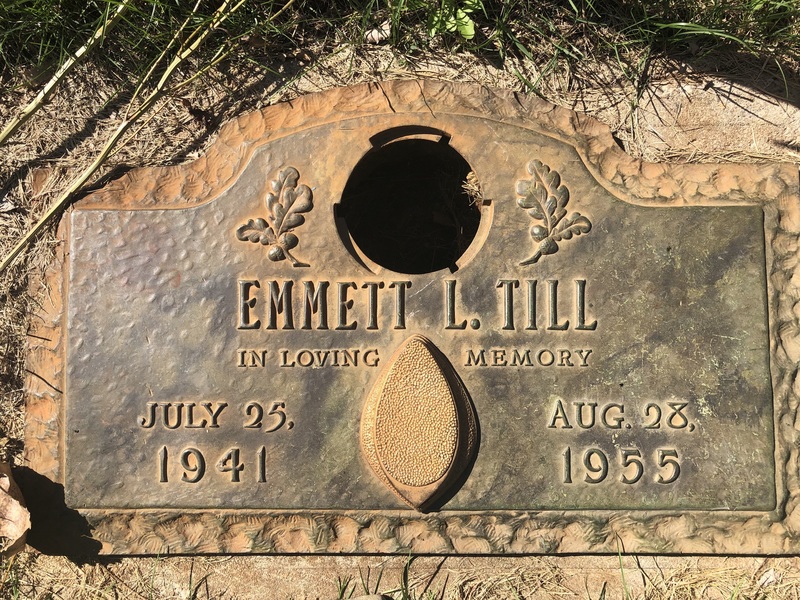
Emmett Louis Till, July 25, 1941 – August 28, 1955
Share Your Journey and Expertise at Least 1 Year Before Publishing Your Book
I released Black History Facts on February 24, 2024. However, the book has been selling steadily since September 2023, when I placed it on preorder. I attribute this largely to how I readied my audience for the book years before it was released. They were prepared when it arrived.
As soon as I knew I would publish the book, I posted black history videos and behind-the-scenes content of my trips to museums and historical landmarks, and I shared new information I found.
I took my people everywhere I went, and they couldn’t wait to see the final product. It became more than a book, but a movement they were just as much a part of as I was.
Post Your Preorder/Buy Link At the Same Time as Your Cover Reveal
Revealing the cover of your new book can be thrilling, but failing to include a buy link means missing out on a lot of potential sales. Whether you’re putting up preorders or announcing the book’s publication, keep your cover reveal for when you’re ready to begin collecting orders. People will be ecstatic to learn you wrote a book and will be willing to buy it right away after viewing your cover, especially if it’s dope!
Pay attention to those who are traditionally published. When these authors show you the cover of a new book, you can also preorder it.
Increase Your Book Reviews
Book reviews are still underrated. Many people do not think they matter, but they do and help authors! And you can work to increase it no matter what stage of the process. Even months or years after release, you can still increase the reviews you receive.
Seek the help of book bloggers, beta readers, and reputable paid review services such as Kirkus and Yecheilyah’s Book Reviews.
The biggest perk to reviews is that they act as social proof. Anyone can call themselves a best-selling author, but reviews help verify that other people think the book is dope, not just the author who wrote it.
It will be odd for someone claiming to be a best-seller to have no book reviews. If it’s such a great book, people should be talking about it.
Book reviews also increase the author’s Amazon rating and expose the book to people who have never heard of it.
I strive to get at least 5-10 book reviews on Amazon in the first few weeks of release and increase from there. However, Amazon is one of many places where people can leave reviews. Blog book reviews are also helpful. Remember, a review is just feedback, so if someone emails you or direct messages you praise for your book, you can use it as a review! (with permission) Slap that bad boy on a graphic and post it to social media as social proof.
Have a Post-Publishing Strategy (Don’t Forget About the Book Once It’s Published)
Too many authors focus solely on the publishing date, but your book is much more than that. Consider how to continue spreading the word about your book after publication. Visit your local libraries and bookstores to inquire about readings, look for interview opportunities, and participate in events, contests, and more. You still want the book to sell after it has been published, so make sure you are working to make that happen.
We often talk about how attractive the book cover should be, and for good reason. Poor cover art is the #1 mistake Self-Published authors make when publishing print books.
But we know that already.
Let’s go inside of the book this time.
When preparing your manuscript for publishing in a print book, the formatting should be done in a way that is different from a college essay, research paper, or blog post.
Here are the top print book mistakes I see self-published authors make and how to avoid them.
Disclaimer. I am not a lawyer. Nothing beyond this point should be taken as legal advice.
No Copyright Page
The copyright page of a book is one page that lets people know who owns the rights to the book and that, generally, the author’s intellectual property cannot be copied without permission.
You do not need to register your book with the copyright office to add this page except if you want to.In this case, register the copyright at copyright.gov. You can do it after you publish the book to Amazon since it takes about 6-13 months (of this writing) to go through.
However, know your book is automatically under copyright when creating it.
The copyright page discourages theft, such as plagiarism, and announces you as the book’s owner. It is like a “No Trespassing” sign; every book should have one.
If you own a software program such as Atticus (PC) or Vellum (Mac), they have copyright templates already designed for you. If you don’t have these programs, creating one is easy. All you need is a copyright notice and a rights reserved.
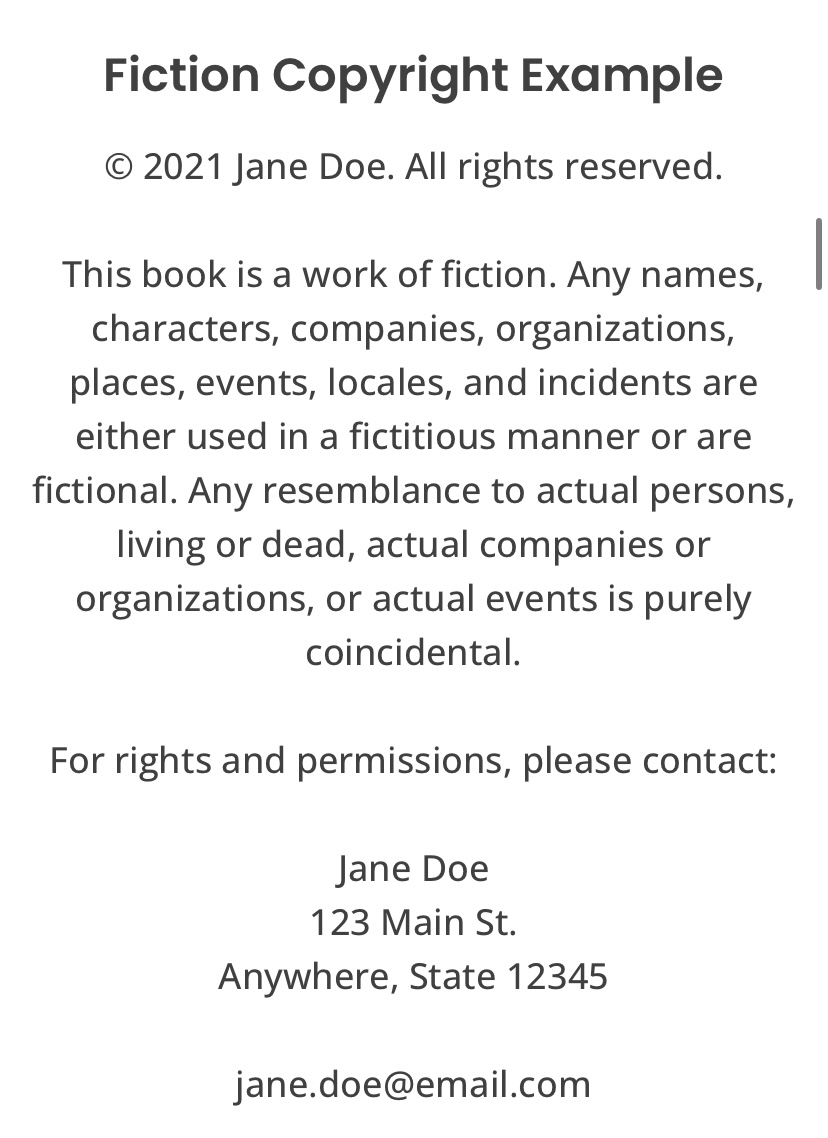
You may also add additional information. Below is an example of a basic, full copyright page.
It should also include your ISBN. For more on ISBNs, click here and here.
This page should appear at the beginning of the book, also known as the book’s front matter, after the title page. The title page is one page that looks like the cover but without the artwork. It includes the book’s title and the author’s name. This title page may appear twice, depending on the publisher. Once at the book’s opening and once more before the opening chapters.
The Author’s Name and Title are Not on the Spine
This is easily avoidable with a professionally designed book cover, but let’s touch on it a bit.
Some books do not need a spine because they are too thin. Otherwise, you will want to have your author’s name and title on the spine of your print book.
The spine binds the front and back of the book and is also important for bookstores.
With the author’s name and title on the spine, a book is easier to find for someone skimming the titles on shelves. Since self-published books are already underestimated, a book without a spine can easily get lost, and the author misses out on sales.
The first thing a potential customer will see is the outward-facing spine, so if the book does not have a title or author name, readers won’t even notice the book.
No Chapter Headings
A chapter heading is how you organize your book so readers know when a section begins and ends. It is literally as simple as adding Chapter One….Chapter Two…Chapter Three.
Chapter headings can also have subtitles or names instead of numbers. In Black History Facts, I use chapter headings and subtitles.
Chapter One (Chapter Heading)
What You Didn’t Learn About Sundown Towns
(Subtitle)
The purpose of chapter headings and sections is to organize the book to make it easier to read and follow. Without it, readers might get confused about where they are in the story. Believe it or not, there are so many authors who make the mistake of not including chapters, making the book look more like an essay.
If you have a software program or professional who formats books, this is easily avoidable as they can add them for you.
Fancy Text
One of the most common mistakes of first-time self-published authors is using fancy text.
Times New Roman, Arial, Helvetica, Calibri, and Cambria are great fonts for books that make them easier to read!
Cursive writing and other fancy text, including colored fonts, make them harder to read.
Too Much Space and Not Enough Words…
Indie Authors who self-publish should also be aware of too much spacing, making the book look like it was written for children (unless it was). An adult-level book should not have so much space between it and the next section that you could write a short bio about your life in between.
Be sure to fill blank spaces with words or shorten the book’s length.
Plan to publish a print book? Don’t forget to add a copyright page, spine, chapter headings, text that is easy to read, and a book with enough words to fill it out.
Investing in professional cover design and interior formatting will help with all of this!
As I read the latest review of my new book, I stumbled across the word historian and paused. “Historian? Me? Nah.”
“Yecheilyah Ysrayl is a renowned author and historian known for her commitment to uncovering and sharing the untold stories of Black history. Her expertise and passion for the subject matter are evident throughout the book, making it a credible and authoritative source of information.”
-Vigil Honor, Amazon Review
“Wow,” I thought, an eyebrow raised. Really? Me? He can’t be talking about me. I am no one’s historian.”
When I think of a historian, I think of a person with a wall crammed with degrees from every university on the planet and a vocabulary that would terrify the most seasoned thesaurus. I see an elderly person who is wise and perceptive about how the world came to be. They sit down to write 500-page books and devour scholarly articles for breakfast.
And let’s not talk about memory.
Neil deGrasse Tyson, aka the smartest man in the world, lol.
Historians, I suppose, have perfect recall and spiritual compasses that allow them to travel from portal to portal and retrieve relics from the past. These folks recite information like a machine. When I think of a historian, I think Neil deGrasse Tyson.
But me?
I can’t even remember where I left the remote half of the time.
While I did well in history class, I wasn’t too interested in it. It was just a class to get through, but nothing I thirsted for outside school. I didn’t seek it out like I did books. I didn’t eat it up like I did poetry. I didn’t love it like I did literature.
Ahh. There it is. Books. It always comes back to books.
My love for reading, particularly about my people’s history, has led me to write about it. Writing about it has led me to research it. Researching it has led me to document it. Documenting it has created in me a fascination to share it.
I got a revelation while watching a podcast episode with Donni Wiggins and Jessica Dupart, and I found myself laughing at Dupart’s candor. She dropped a few F-Bombs and talked about her life growing up as if she and Wiggins were sitting in their own living room. She doesn’t speak corporate or exhibit the characteristics that someone might consider appropriate to be a CEO, yet she runs an 80 million-dollar business.
While I didn’t finish the entire episode, watching it made me think about how dope it is that in today’s world, people are redefining what success looks like just by being themselves. I realized I never considered myself a historian because I didn’t think I knew enough. (I also dislike titles)
I was also clinging to an aged stereotype.
I learned I don’t have to look like that old-school, white male version of what a historian was once thought to be to qualify as such.
It didn’t occur to me that writers are historians, too, documenting history and archiving them into books that live forever.
According to Google, “a historian is a person who studies and writes about the past and is regarded as an authority on it.”
“Her expertise and passion for the subject matter are evident throughout the book, making it a credible and authoritative source of information…”
Well now. I suppose historian doesn’t sound too bad after all.
“The book’s storytelling approach brings history to life, making it accessible and engaging for readers of all ages. Ysrayl’s narrative style ensures that the experiences and contributions of Black Americans are not just facts to be remembered but stories to be felt and understood.”
Sneaking out of the house to ship books during Covid 2020.
Time is one of the numerous advantages of self-publishing. Self-publishers set their own schedules, in contrast to traditional publishing, which enables them to release books fast and often.
And the better an author gets at publishing high-quality books, the more they publish in a shorter time.
However, I caution authors not to rush their current book on the way to the next one.
Some authors only have one book out, but what they’ve been able to do with that book is more than some authors with ten or twenty.
From consulting and coaching to classes and workshops, these authors have turned that one book into a powerhouse of expertise and services, multiplying their income.
But they would not have been able to do this if they had given up too quickly.
They would not have been able to do this if they published the book on Amazon and then forgot about it on the road to the next one.
They would not have been able to do this if they worried about making the best sellers list. (Some authors are making good money selling their books consistently and have never been a Best Seller.)
They would not have been able to do this if they focused on what’s next instead of what already exists.
When we give in to shiny object syndrome, the continual distraction brought on by an ongoing belief that something new is worth pursuing, we miss the blessing right in front of us.
The grass is not greener on the other side. It is greener where you water it. It is greener where you cut it. It is greener where you pluck out the weeds.
It is greener when you give it the time and attention it needs to thrive.
Sometimes, new ideas are not intended for us to act on immediately. Some thoughts need to be written and executed later.
Give that book you worked so hard to produce the time and attention it deserves to grow and develop before moving on to the next best thing.
We believe publishing success is about quantity and hustle. That might work short-term, but the long-term victory is about quality and strategy.
You can spend a lot of time and energy hustling to break the Guinness World Record for the most published books, or you can be more strategic about turning that one book into a full-blown brand. This may require a long-term plan where you might not immediately see results.
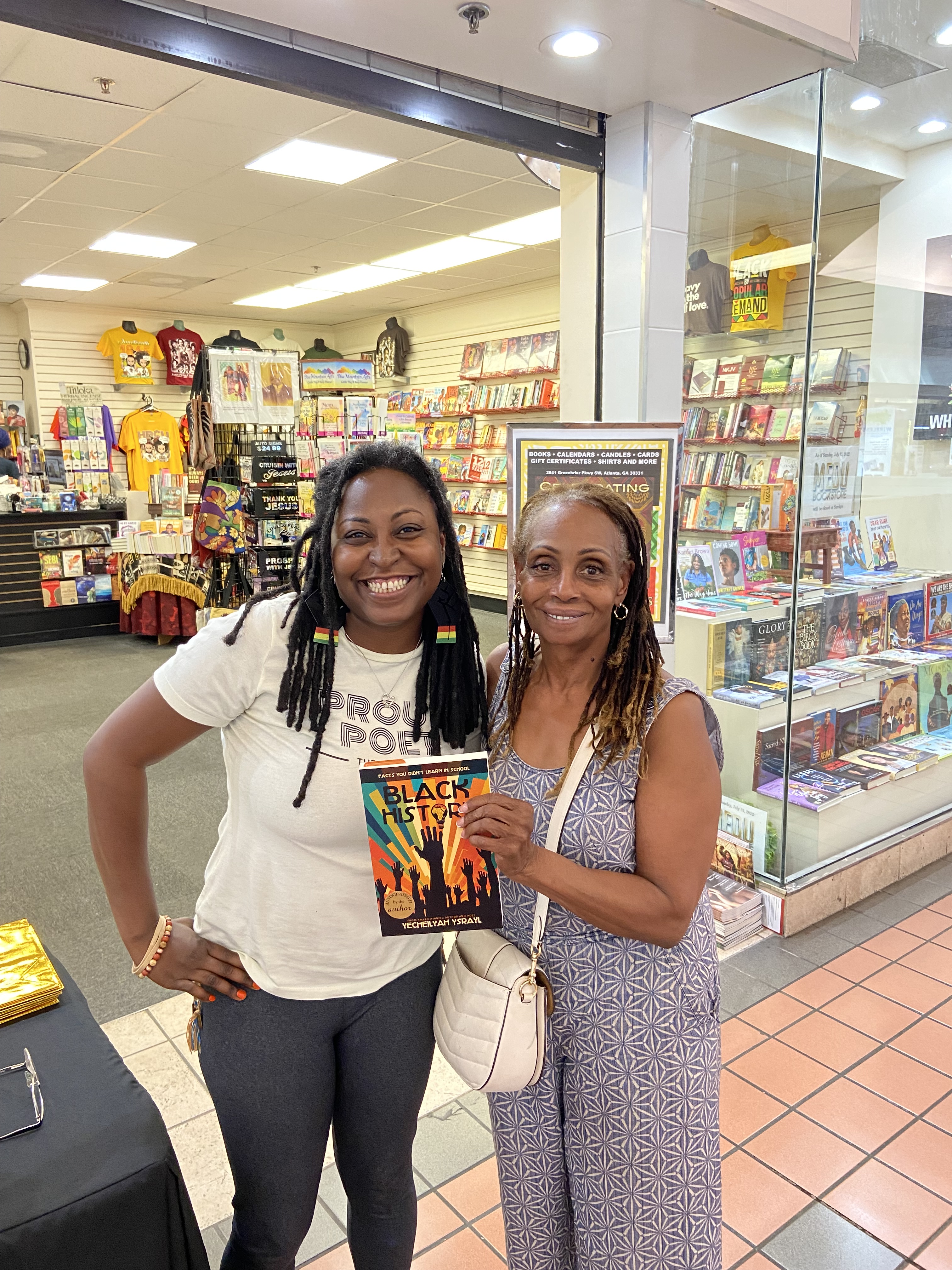
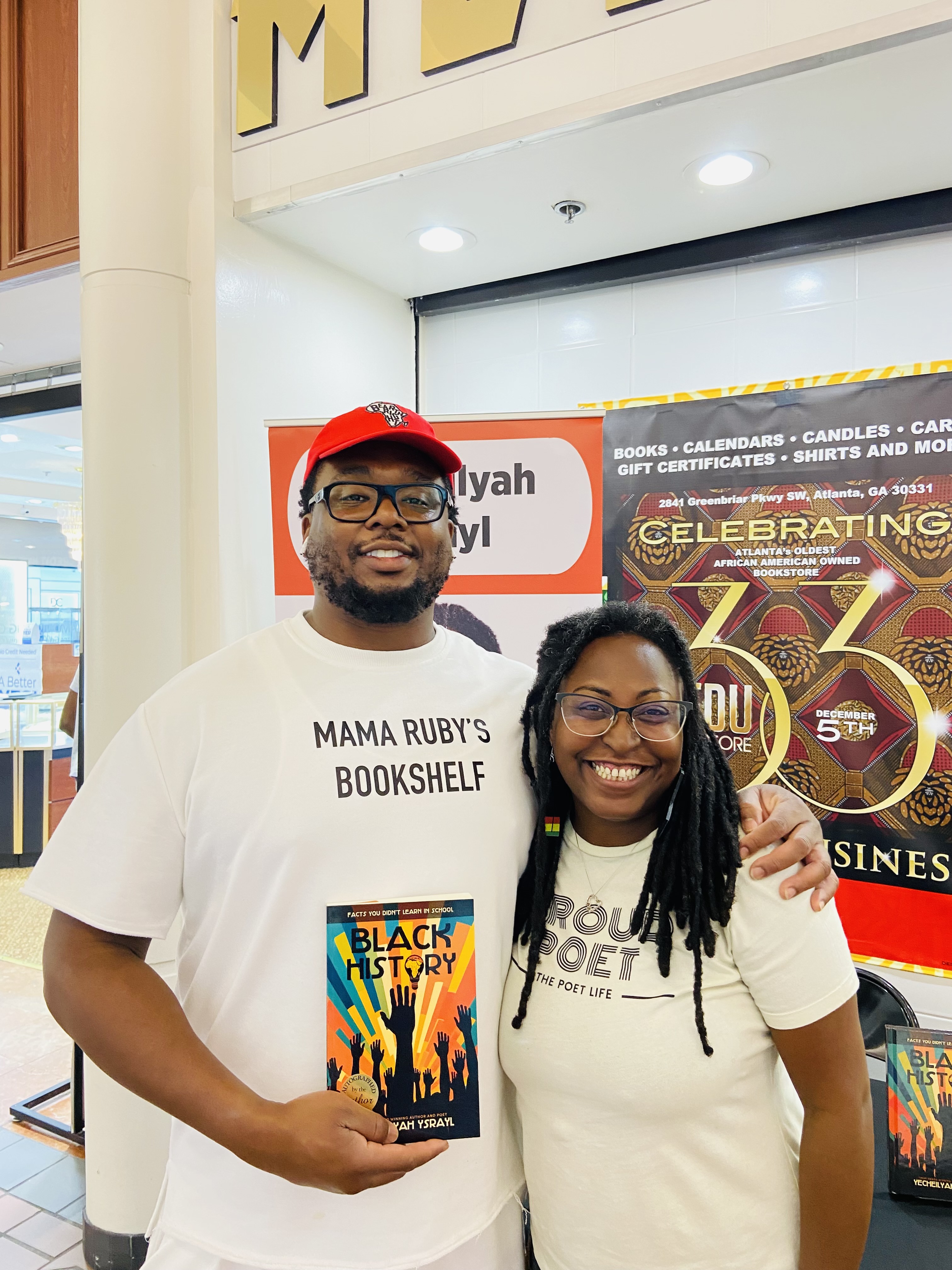
Supporting a fellow poetess at the Atlanta African American Book Festival, 2019.
In my years of consulting with authors and working with them on their books, I’ve discovered that the most difficult challenge for many is not writing the book (many of them have been writing their entire lives) but finding innovative ways to market and promote it.
With so many hats to wear, the last thing an Indie Author wants to do is strategize about how to promote their book day in and day out.
And you know what? We don’t have to!
Everything does not have to be part of some grand strategy that only a rocket scientist could understand. The secret to wisdom is often in its simplicity.
Considering it as relationship-building and connection-making rather than marketing and promotion could help you focus on the reasons behind your book. It involves thinking up creative ways to draw in and hold the interest of those who are already searching for solutions to the problems your books address.
Not only can these connections help you meet new people who buy books, but you might also find a business partner or lifelong friend.
Since your identity as an author is heavily influenced by who you are personally, it might be beneficial to present your individuality and draw on real-world experiences to engage readers on a deeper level.
Dr. Jackie Walters does this well.
Award-winning OB/GYN and star of the hit TV show Married to Medicine on Bravo, I reviewed her book a few years ago. The Queen V: Everything You Need to Know About Sex, Intimacy, and Down There Health Care goes into detail about our precious lady parts and all the ways to stay healthy. She has these videos where she reveals something informative about the vulva, sex, and intimacy.
Here’s the important part: She only sometimes mentions her book in these videos! Sometimes, she’ll just have it sitting to the side, or it won’t be in the shot at all.
Dr. Jackie understands her expertise, and by educating her people and entertaining them with her props (she uses fruits and everything, chile), people are increasingly interested in her topic and her book without her mentioning it in every post.
She just shows up as herself.
In the end, we must show people why they should buy our book, not just that they should. This builds genuine connections and strong relationships that help our books to sell without stressing us out.









 The PBS Blog