Critique a Piece of Work – “A Raisin in the Sun”

I love experimenting with symbolism and imagery in my writing and in my poetry. Last year, I participated in a Writing 101 assignment that asked us to Critique a Piece of Work, in which I shared my thoughts on Gwendolyn Brooks “We Real Cool”. I thought that would be fun to experiment with again today.

Lorraine Hansberry’s “A Raisin in the Sun” is the classic play by Lorraine Hansberry that was performed on Broadway in 1959. The title comes from the poem “Harlem” by Langston Hughes. A Raisin in the Sun is a piece that is loaded with symbolism.
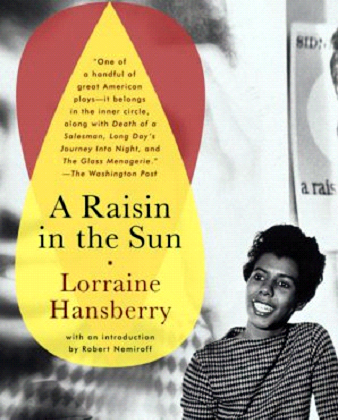
tumblr_mn20qi9cZQ1qd9a66o1_400

To start, heat from the sun is very intense and it drains just as much energy as it gives. It is exhausting and causes death to those who cannot escape a temporary refuge away from its obvious danger. While some sunlight causes plants to grow, too much sun can be destructive.

Raisin

Raisins come from grapes that are dried out by the sun. The sun sucks its moisture and nutrients until it has withered dramatically. However, dried grapes writhe and get small, but they do not turn to mush and rot. (Which is totally awesome. I love raisins!)

A raisin in the sun is symbolic of a family’s dreams under the intense struggles they must endure to reach it. It symbolizes that the family’s dreams and hopes for a better life will never dry up, but more importantly, their dreams will never rot despite the intense struggles they are under.

The Plant

The plant that Mama keeps near the apartment’s sole window is barely surviving because it lacks adequate nourishment.  Yet she is completely dedicated to the plant and lovingly tends it every single day in the hopes that it will one day be able to flourish. This is by far the play’s most overt symbol because the plant acts as a metaphor for the family.

Cockroaches, Rats, etc.

These creatures heavily reinforce the Younger family’s undesirable living situation.

Sunlight

Hansberry writes about sunlight and how the old apartment has so little of it. The first thing Ruth asks about in Act Two, Scene One is whether or not the new house will have a lot of sunlight. Sunlight is a symbol for hope and life, since all human life depends on warmth and energy from the sun. Light is also symbolic for truth. It is the truth that truly sets a people free.


 

A Cam Newton Quote

Let’s go Killa Cam!!

010316-NFL-Carolina-Panthers-quarterback-Cam-Newton-PI.vresize.1200.675.high.39


“I’m an African-American quarterback that may scare a lot of people because they haven’t seen nothing they can compare me to. It’s like here I am, I’m doing exactly what I want to do, how I want to do it, and when I look in the mirror, it’s me. Nobody changed me, nobody made me act this certain way, and I’m true to my roots. But yet people are going to say whatever they’re going to say.”

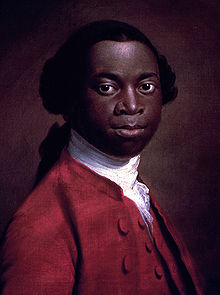
Olaudah Equiano

220px-EquianoExeterpainting

At the age of forty-four Olaudah Equiano wrote and published his autobiography, The Interesting Narrative of the Life of Olaudah Equiano, Or Gustavus Vassa. Written by himself, he registered this writing at Stationer’s Hall, London, in 1789. More than two centuries later, his work was recognized not only as one of the first works written in English by a former slave, but in his narrative, Equiano recalls his childhood in Essaka (an Igbo village formerly in northeast Nigeria), where they practiced Israelite customs and traditions before both he and his sister were kidnapped and sold into slavery.

Writer’s Quote Wednesday – Zora

Welcome back everyone, to another Writer’s Quote Wednesday segment, as hosted by Colleen of Silver Threading. Today,  I draw inspiration from Zora Neale Hurston, a name I’ve been hearing a lot this week:


Zora H

I’ve been reading this quote all week. Not because I’m a Hurston fan to that extent, but I have been studying her history pretty close (for a project I am not telling you about yet, don’t you just love secrets? lol hee hee )and this quote in particular keeps sticking out to me. There is so much here that I cannot begin to verbalize it all. In short, I’m at a place in my life where focus is priority. I feel really free right now with who I am. I would not say that I am content because to be content is to lose focus. Focus is loss when we think that we are where we are supposed to be and we stop striving. That said, I am not there yet; I would not say that I have reached my limit, I have a long way to go. But I do feel my faith is growing. Could be something in the air, a sense of urgency, or an alarm clock on my skin. In the meantime, I’ll just pull in the horizon like a fish net, and drape it around my shoulders.

******************

010516_2129_writersquot1

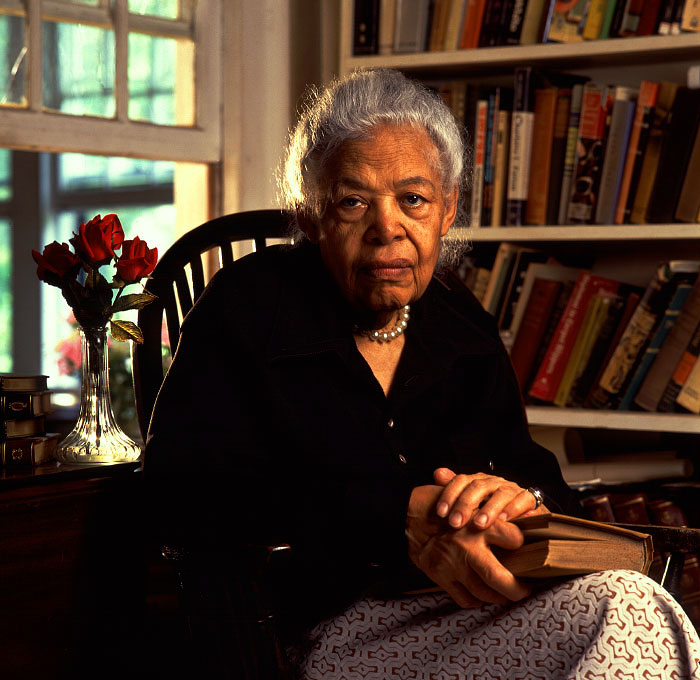
Ann Lane Petry

petry-2
1908-1997

I’ve actually ordered her book, which should be here pretty soon.

1946petry

African American writer Ann Lane Petry is said to showcase the range of the black and white experience in her novels, short stories, and other works. The Street, her most famous novel (the one I’m anticipating to show up with the mail man on my doorstep) is said to be a social commentary on the despair of black urban life in the 1940s. Published in 1946, the novel sold 1.5 million copies and brought Petry to national attention as the first black woman writer to sell a million copies of her book.

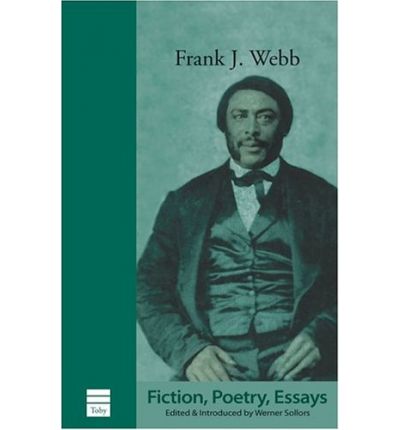
Francis Johnson Webb

9781592640980

Francis Johnson Webb, newspaper editor, is the second published African American novelist. He was born free on March 21, 1828, in Philadelphia to Louisa Burr and Francis Webb. His father, Francis Webb, served as founding member of the Philadelphia distribution agent for Freedom’s Journal*, the first black newspaper in the nation.

Freedom’s Journal was the first African-American owned and operated newspaper published in the United States. Founded by Rev. Peter Williams, Jr. and other free black men in New York City, it was published weekly starting with the March 16 1827 issue.

journal2.jpg