MAY You #MayChallengeDay 9-10

May you never forget where you come from

May you never forget who you are

May your trust be earned

May your love be genuine

May you listen not to reply

May you listen instead to understand

May your eyes speak integrity

May your lips echo the eyes

May you treat others, the way that you treat yourself

May you treat yourself, the way that you treat others

May you defeat fear with a smile

May you smile through the fear

May your heart be content

May contentment be in your heart

May you not complain today

May you use your time wisely

May wisdom be the orchestra of your time

May you see the beauty in every day

May today be

beautiful

Go Into Yourself

download2

“Go into yourself. Find out the reason that commands you to write; see whether it has spread its roots into the very depths of your heart…This most of all: ask yourself in the most silent hour of your night: must I write? Dig into yourself for a deep answer. And if this answer rings out in assent, if you meet this solemn question with a strong, simple “I must,” then build your life in accordance with this necessity..”

― Rainer Maria Rilke

Building – When The Writing Begins

download

Writing does not begin until I can see the entire story, even the end. It is a must that I can see how the story ends. You see for me writers are builders, architects if you will. A book starts with an idea, but not all ideas should become books. Not all ideas are story fabric. Some ideas are meant to be stored for a later time, while others require immediate attention. When an idea enters my mind, I first examine if it’s worthy enough to mature into something more. Is it powerful enough? Can it change lives? Is it different? In short, an idea has to be special, like a rare diamond or a spring of water in the desert. Can we want for it? Does it make us hunger? Does it make us thirst? Not only is it a nice idea, but is it necessary? For me, it has to be something so powerful that it has the potential to grow; an idea that is without potential to grow is not an idea that is fit to become a book.

When I have an idea that is worthy, the writing doesn’t begin just yet. I mean sure, there’s a paragraph here, a sentence there, a potential character name somewhere over there. Lots of things can change as I am seeking to stretch the idea into something more; to mold it into something tangible. The title may change, the name of the characters may change, the setting, plot. I am picking out pieces and adding some. I am changing colors and creating lives. I am an examiner of bricks and mortar to see what fits. Restoring and conserving ideas, coming up with new ways to use them. It is even possible that I may begin to sketch out a stretch of chapters. However, the writing has not yet begun. It does not yet begin because I cannot see the entire work on the page, just shades of pencil and splashes of ink but there’s no real story there. No, words on a page does not mean I have written just yet. Words on a page are merely the sand on the shores, the bricks in the pile, the outer frame of a building with no substance.

When I can see the story move in my head; when I can see it walk its way around from camera to camera; when the dust kicks up and there are actually footprints in the plot; when I can see people speaking and acting and living, that moment when the wind blows for the first time. This is when the writing starts for me. The writing begins when I can hear the story breathe. When I can see the light at the end of the tunnel, the full construction on the page. Even how the book will end and this is when I can truly set out to navigate my way though this world. I am a spectator to a movie that has already begun, a director who must choreograph each scene. This is when I’ve began to write the first draft of a book. It is the moment when I know that the original idea is strong enough, and has the potential to be story fabric.

The Honor of the Mother Goddesses #MayChallengeDay7-8

CybeleLions

For many people, today is a time of reflection on childhood upbringing, celebration, and honor of mothers, grandmothers, and mother guardians in their lives. It’s a day of BBQs, gatherings, and festivities. However, what is the truth concerning the origin of this day? Is it the honor of mothers or Goddesses?

The worship of women go back centuries, decades, worlds…. you get the point. In fact, the first form of the worship of women began with the worship of the Gods. When The Watchers fell, a class of angels in which some came down to have sex with human women and produced therefore on the earth a race of Giants, it was because they became obsessed with human women and mankind’s ability to reproduce. They wanted to come down, get themselves wives, and have them children. In short, these Watcher angels began to worship the woman’s womb. In fact, in ancient cultures, women were worshiped as a way into heaven and thus are the beginnings of the sacred feminine.

mother

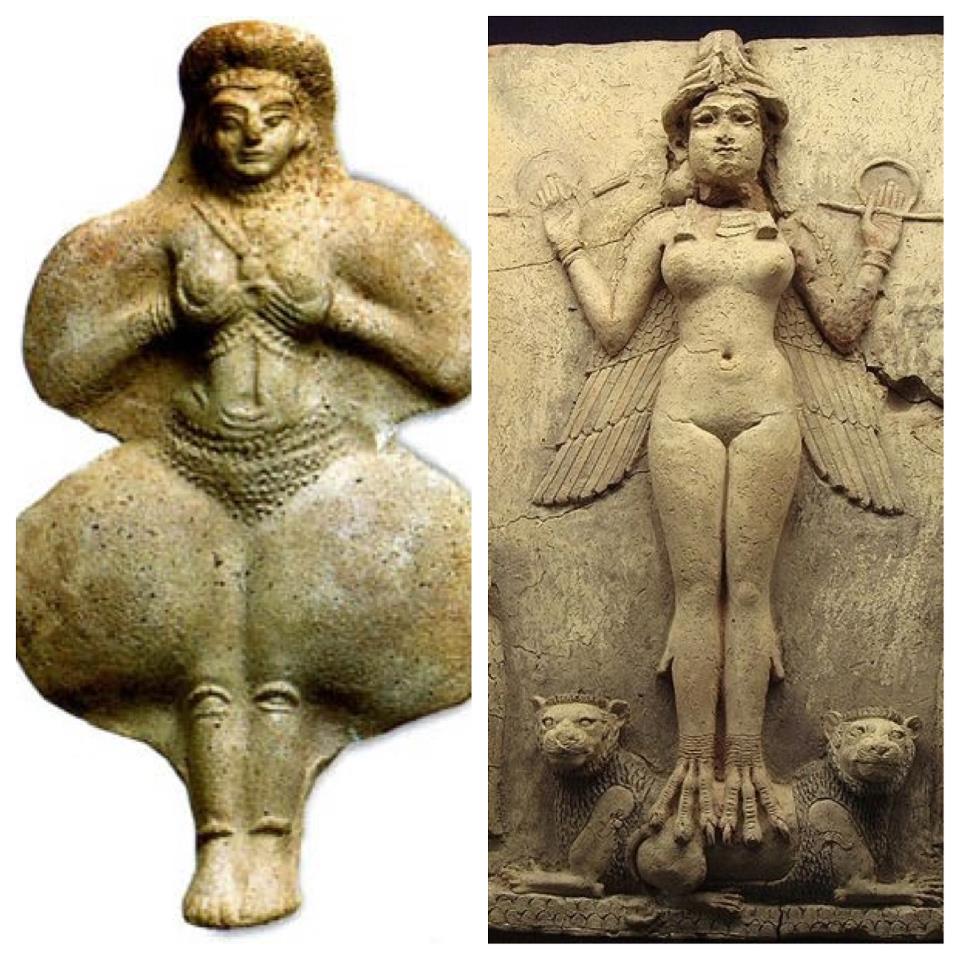
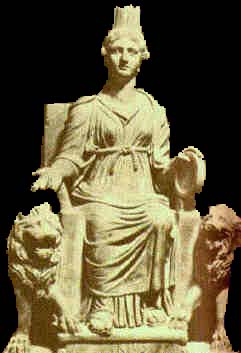
Fast forward some and we can trace Mother’s Day back to the ancient cultures of Greece and Rome. However, it can actually be traced back further than this. Greece and Rome got their worship of the Gods from Egypt after plundering Egypt and taking the worship to Europe. The worship can also be traced back to ancient Babylon and ultimately from the direct worship of the Gods themselves. The honoring of the mother goddess can be traced, not only back to the Greek Goddess Rhea, but also back to Nimrod’s Mother-Wife Semiramis, and the Mother Goddess Isis of ancient Egypt. In fact, The Mother Goddesses, also known as The Queen of Heaven, have been worshiped in all cultures. For Greek and Rome specifically, mother goddesses were worshiped during the springtime with religious festivals. The ancient Greeks paid tribute to the Goddess Rhea, the wife of Cronus, known as the Mother of the Gods (Queen of Heaven) and the Romans held a three-day Roman festival in Mid-March called Hilaria, to honor the Roman Goddess Magna Mater, or Great Mother.

As Christianity spread throughout Europe, the honoring of the Mother Goddesses became disguised and the worship of the Mother Goddesses conformed to the honor of the “Mother Church”. In fact, the worship of the Gods and Goddesses, which in ancient times was simply called Paganism, became part of Christianity by the Council of Nicaea — the group of people who decided what doctrines should make up Christianity. By Christianity, I do not mean the original biblical practice of the saints, brothers, and prophets who did not call themselves Christians but were referred to as Kristianos meaning smeared ones – a derogatory term placed on them because they said they were smeared with the blood of the messiah. We’re talking about the Christianity that sprang from the Roman Emperor Constantine and the Council after they decided to take pagan beliefs with biblical ones. To do this successfully meant to take what the pagans were already worshiping and change the names of the pagan gods to those that would appear to correlate with scripture, and to change the worship of the Gods and Goddesses to that which appeared in some way, biblical.
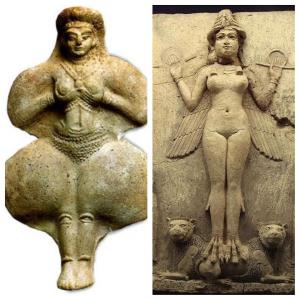
181028_504596846268590_1426190223_n

They disguised the worship of the Gods by conforming them to the worship of something that would appear more innocent. The ancient pagan festival of Ceres, Goddess of Agriculture (from which we get the word Cereal) became Thanksgiving; the ancient pagan festival of Saturnalia, celebration of the Winter Solstice, became Christmas; the ancient pagan festival of Ostara (or Eostre) representing the Spring Equinox became Easter, and The fourth Sunday in Lent, a 40-day fasting period before Easter (also pagan) became known as Mothering Sunday. To show appreciation for their mothers, the people often brought gifts or a “mothering cake” and over time, it began to coincide with the celebration of the Mother Church. Mothering Sunday and Mother Church eventually merged into a single holiday called Mother’s Day. On this day, the worship of the Goddesses continued in the form of honoring mothers. The day always falls on the second Sun-day of May, and like so many other holidays rooted in pagan sun-worship including Father’s Day which always falls on the third Sun-day of June, it was important that the day fell on a day in honor of the pagans most powerful god — The Sun.

Social Media and Networking

“Had I stopped after the first “failure” you would never have heard of this site. You would not be reading this right now. How much is lost because people simply give up.” – JC

(Keep Grinding People)

EC Quote Friday – MayChallengeDay6

Yayy, I made it through the first week of the May Challenge! Is anyone else playing? Because I feel like the only one lol. I rest on Saturdays so unfortunately I will not participate in this challenge on Saturdays so I will see you all Sunday. I plan to incorporate some flash fiction and poetry into Week Two, time permitting. In the meantime, below is your EC Quote Friday:

downloadfile-2

Black History Fun Fact Friday – Timbuktu

2344_1timbuktu_060Timbuktu is a city in the West African nation of Mali, situated north of the River Niger on the southern edge of the Sahara Desert. Founded by nomads, it is most known as “The City of Gold.” While some scholars and proposed travelers attempt to debunk the “myth” (claiming to have reached the city where the homes are made of mud bricks), Timbuktu was one of the most important centers of trade and intellectual life in West Africa, flourishing through participation in long-distance trade networks directed north across the Sahara. The city is known as having traded goods that flowed through the center including salt, ivory, and gold. One of the reasons for Timbuktu’s wealth is the water supply. There are many wells containing sweet water in Timbuktu, where the Niger in flood canals delivers the water to the city. Grain and animals are abundant, so that much milk and butter is consumed.

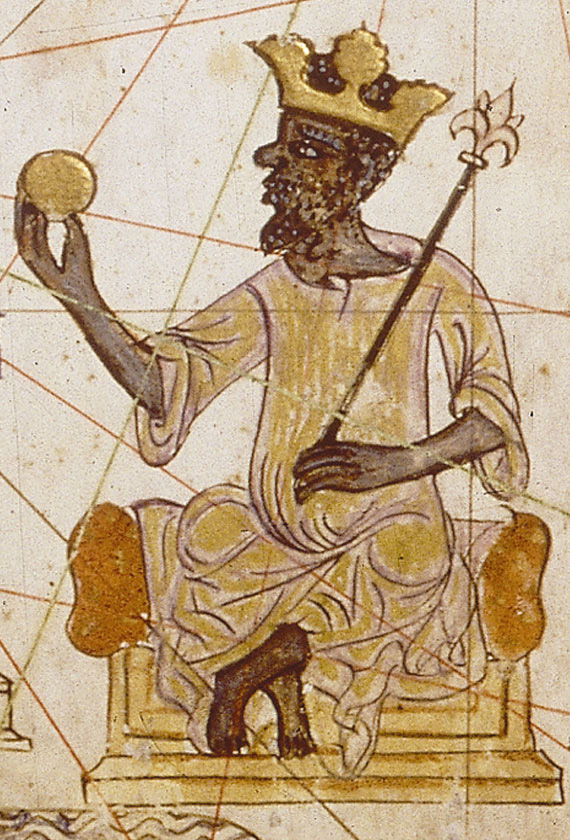
A picture from a medieval atlas, drawn in modern day Spain. It shows the King of Mali, Mansa Musa, who reigned between 1312 and 132, wearing a Gold Crown, Gold Ingot, and Gold Scepter.

During the fourteenth century, the story of Timbuktu as a rich cultural center spread throughout the world. The beginnings of which can be traced to 1324, when the Emperor of Mali made his pilgrimage to Mecca via Cairo. In Cairo, the merchants and traders were impressed by the amount of gold carried by the emperor, who stated that the gold was from Timbuktu. Furthermore, in 1354 the explorer Ibn Batuta wrote of his visit to Timbuktu and told of the wealth and gold of the region. Thus, Timbuktu became renowned as an African El Dorado, a city made of gold.

A great book to read is “From Babylon to Timbuktu” by Rudolph R. Windsor:

61nHWsjEGjL._SY344_BO1,204,203,200_“Until comparatively recent times, knowledge that black Africa was the seat of highly evolved civilizations and cultures during a time when Europe stagnated was limited to a small group of scholars. That great empires, such as Ghana, and later, Mali flourished for centuries while Europe slept through its Dark Ages almost has been ignored by historians. Thousands of years before that, civilization began with the black races of Africa and Asia, including the Hebrews, who were jet black. Because of the scarce literature on the contributions of blacks to world civilization, most people today hold the erroneous opinion that the black races have little real history. It was not known, for instance, that the ancient Hebrews, Mesopotamians, Phoenicians, and Egyptians were black. Now, a growing body of literature is presenting the illustrious history of blacks and their enormous contributions.”

And that’s it for this week’s episode of Black History Fun Facts. Below is last weeks episode in case you missed it:

Publicationbhff


Week #7:

The Immortal Life of Henrietta Lacks