Last year, members of She Wins Society were surprised with awards in the mail honoring their contribution to the community. Imagine my excitement about getting Most Poetic Sister. Scrolling through pictures on my phone, this one stuck out as we prepare for our Conference and Awards Ceremony on November 9th!
It also revealed to me the role that photographs and images play in our joy.
Images are not only suitable for memories; they are silent whispers of time, capturing fleeting moments of joy and weaving stories without words. Pictures are pockets of bliss that freeze laughter and emotions we can experience whenever we look back at them.
Sometimes, when I want to experience joy in a difficult moment, I look at snapshots of a happier time. Each frame holds a fragment of elation, and in their stillness, they evoke the essence of joyful energy.
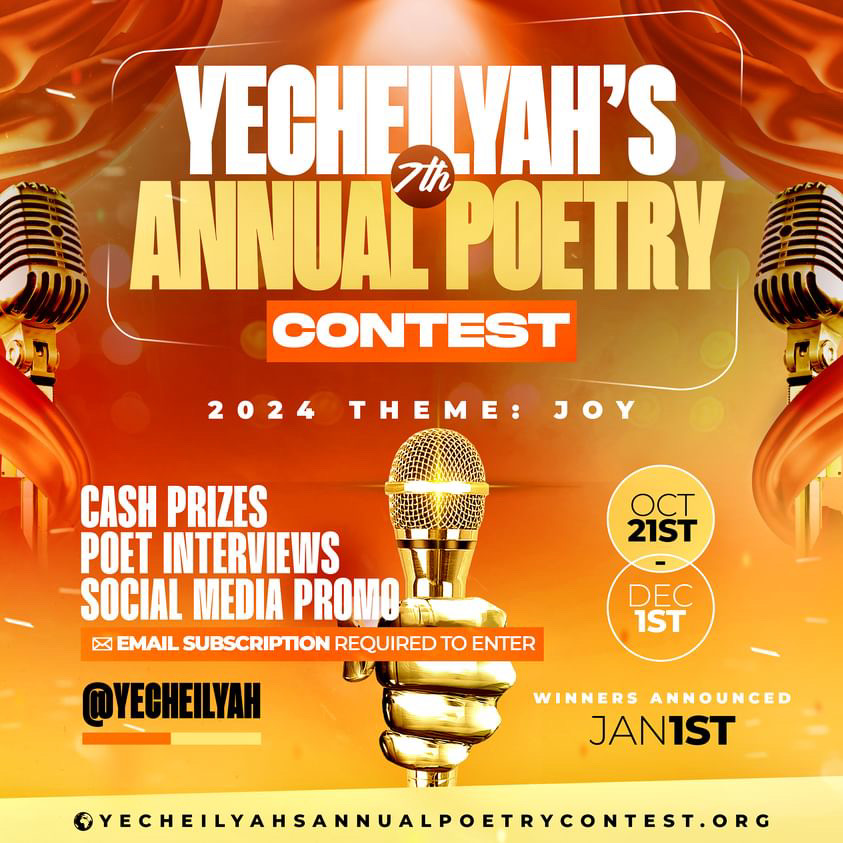
Remember, we are accepting submissions for this year’s poetry contest on Joy from now through December 1st! Get started by subscribing at yecheilyahsannualpoetrycontest.org.
Are you really promoting your self-published book?
Or does it just look and feel like you are promoting your book?
If you are only telling people you wrote a book, but you are not telling them what the book is about, you are not really promoting your book.
If you only show us the cover of the book but do not educate us about the content and core message, you are not really promoting your book.
If you only post Amazon links to social media but do not discuss the book and what we can learn from it, you are not really promoting your book.
These things can be a part of book promotion. Still, alone, they do nothing to generate enough interest in people to want to buy the book, and that is what book promotion is:
A culmination of your activities and strategies to create awareness and generate interest in your book.
This includes but is not limited to:
Advertising: Paid Ads (or just ads in general), digital or print material, website or landing page, etc.
Publicity: Interviews, book reviews, media coverage, guest blog posts, podcasts, etc.
Social Media: Building engagement with readers through entertainment and educational content using any of the many social media platforms. Blogging can also fall under this and is a powerful tool for community.
Events: Conferences, Author Talks, Book Signings, Book Fairs
The purpose is to create enough buzz to interest readers to purchase the book.
Anytime you share a review from someone who reads your book, you ARE promoting your book.
Anytime you create content (graphics, excerpts, videos, etc) that educates or entertains people about your book’s message (nonfiction), characters, or plot (fiction), you ARE promoting your book.
Anytime you talk about the book on a podcast or in an interview, you ARE promoting your book.
Anytime you share your journey and what it was like writing the book, you ARE promoting it.
Anytime you write on a topic that is relatable to the things we can find in your book, believe it or not, you ARE also promoting the book.
We can do many things that look like book promotion on the surface but are ineffective in raising awareness among our readers about the book’s topic and why it’s important to them.
But I hope this post gets you thinking about deeper ways to connect with your audience!
Poetry Business Network Meeting in Atlanta this Weekend
I had an amazing time this weekend at the first in-person Poetry Business Network meeting in Atlanta. As I told my email list folks, it was refreshing to fellowship with people in person and to glean from the wisdom of legendary poets like Georgia Me (Def Poetry Jam), Rewop (who I met at the Poet Life Fest in 2022), and Taalam Acey.
The passion everyone displayed was empowering and helpful in motivating me to rescue my pen from the shadows and immerse myself deeper into Atlanta’s vibrant poetry community. Listening to these poets made me realize there is a lot I don’t know and helped me to understand the importance of knowing the individuals and the history of those who contributed to the development of the craft. It is not just about the writing. Studying the industry that houses these arts and their role in our evolution is also equally important. Imagine saying you are a poet and not knowing Gwendolyn Brooks or Maya Angelou.
It helps to sharpen your writing skills when you know more about your topics and community.
That said, I am excited to announce this year’s poetry contest is now open to accepting submissions!
You will have until December 1, 2024, to submit your poem. Our theme this year is Joy, and we will award our three finalists with cash prizes ranging from $50 to $150! For details on entering, please click on the link below, and be sure to share this with the poets you know!
How often have you heard a traditionally published author say, “I’m a traditionally published author?”
They might say they are a published author but not a traditionally published one. That’s because there are millions of traditionally published authors.
In the same way, introducing yourself as a self-published author does nothing to help the person understand what you write.
It is not bad to call yourself a self-published author or to be proud of that. However, since many self-publishers have smaller budgets, we often desperately identify how we published instead of what we published to get people to take a chance on our books. But this strategy does not work well.
When I pitch schools and bookstores to carry my book, I rarely introduce myself as a self-published author. They will already know this when they look up my ISBN.
Instead, I discuss the book and why it is a good fit for their audience.
Instead of telling people, “I’m a self-published author,” and pushing your book in their face, identify your genre, book, and how it serves your target audience.
You can do this in one sentence:
Original: “I am a self-published author of three books.”
Revised: “I am the author of The Stella Trilogy, a Historical Fiction series that explores African American History, civil rights, and the struggles of Blacks in America.”
We are excited to announce that this year’s poetry contest will begin later this month and run through the end of the year.
This time, we will choose semi-finalists who will be highlighted on our social media. From those semi-finalists, we will choose three winners from the poets with the highest ratings by the judges.
It’s about to be a time!
The entry rules, guidelines, and list of prizes are now available on the website. (Remember, we have a website for the contests now!)
We are also doing something different: We are having the interview with the winners (semi-finalists and finalists) on Instagram Live! Words are too powerful to be limited to paper, especially when expressed in this medium. To quote Maya Angelou, Words mean more than what is set down on paper. It takes the human voice to infuse them with deeper meaning.”
So that is what we will do!
I got my Sidney Shaw voice ready to ask, “When did you first fall in love with poetry?”
Being an author is hard work. Being an Independent Author with no large publishing company, financial backing, or publicity to support you is downright grueling. Who would even want to do this? It is certainly not for the weak.
However, there are things that set some authors apart from others.
And usually, I talk about producing a professional book, but I am not even talking about that here. It is also not about:
If those authors are better writers.
If those authors are better people.
If those authors have more money or even make more money.
It is not even about those authors having a better-quality book (tons of pretty books are not selling).
It is about how those authors have taken the time to nurture and edify their audience with their message before, during, and after their book is published.
These authors have an identity people are familiar with because they have authentically shared their stories, experiences, and knowledge surrounding their topic. This increases their value and creates an emotional bond that makes people want to go out and buy their book when they do publish it.
But this is different from what most self-published authors do.
Most self-published authors, especially new authors, publish a book on a random topic no one has heard them speak on before and hope people will buy it.
We call this hope marketing and it does not work.
You must absolutely take the time to educate and inform people about the content of the book you are writing if you expect them to care enough about it to buy it.
While I have bought books on a whim, for the most part buying a book is an emotional decision. This means we must build awareness that gives people a reason to buy.
People need to know who we are, what we do, and why it’s important to us.
None of this is about selling a book. That part comes later. In the beginning, it is about awareness and emotional connections.
It is as deep as understanding your morals, values, and identity and communicating how this ties into the topic you are discussing.
Highwater High School orders copies of Black History Facts
For many authors who use social media to promote their books, it’s a game-changer. From Instagram reels to TikTok, people are making decent income from their talents.
However, social media is only ONE of many places to sell and promote your book in 2024 and onward.
Bulk Sales to Schools, Universities, Corporations
It’s fantastic to sell $20–30 books one at a time on your author’s website, Amazon, and other online merchants, but selling 10 or more copies at a time in bulk orders is even better.
Why is it better?
Because large organizations and networks have the budget to spend much more than your average consumer trying to make ends meet just like you are. Depending on the organization, you might even sell hundreds if they truly feel you. In fact, everything else we talk about in this post comes back to bulk sales since all these organizations can buy your book in bulk to some extent, whether five copies or 500 copies.
Book Clubs, Book Talks, Open Mic
Offline book clubs are not appreciated talked about enough. Here are groups of people deciding to read one book together and discuss it. What a wonderful way to spread a book’s message and buy that book in bulk! Author events, book talks, and open mics are also good. They also provide great networking opportunities. You’ll meet people with great influence you probably would not have met online.
Queenz Cirlce of ATL gave me gifts!
I once met an older woman at a book signing who was interested in using The Women with Blue Eyes for a book club she hosts. She is old enough to be my mother and does not have social media. However, she does have a book club full of women who read and said she will talk with them about the book. She never got back with me, but this is an example of an opportunity I could have used to sell that book in bulk.
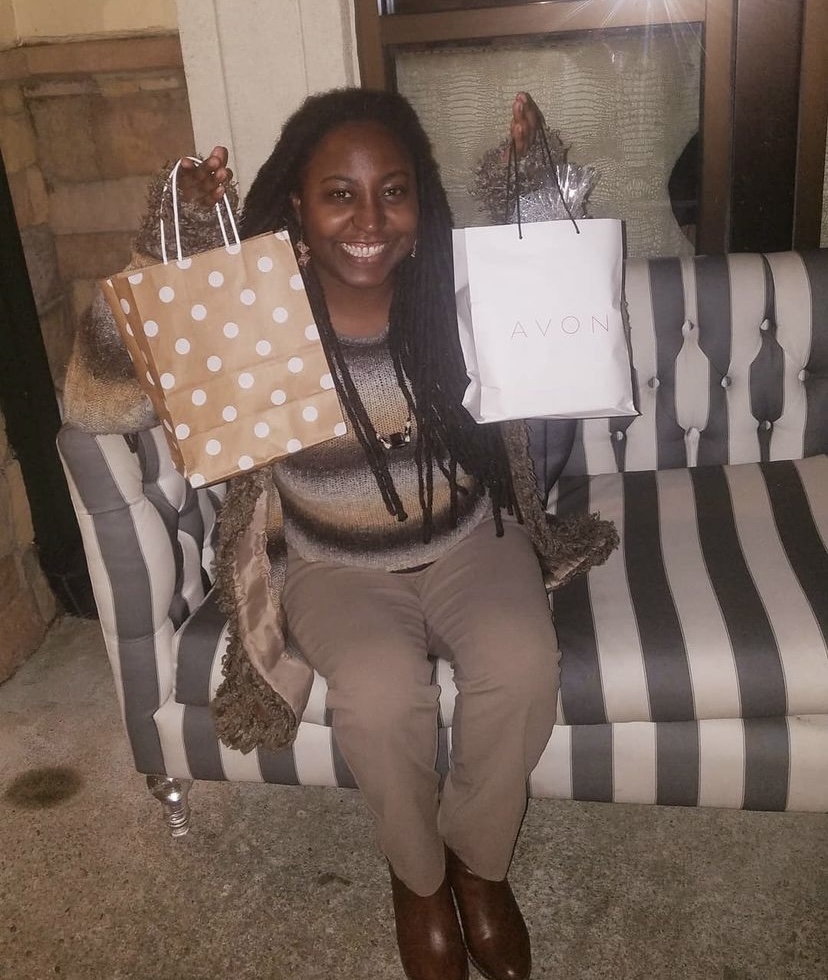
Another example that worked out was meeting a young lady who invited me to be a keynote speaker at her book club back in 2018 (Queenz Circle of ATL) to discuss Even Salt Looks Like Sugar. It was a private, offline dinner. We read from the book, laughed, ate a delicious meal, took pictures, and I sold copies of the book. It was amazing and none of it was online.
Podcasts, Radio Shows
Podcasts can be on or offline since many of them are also streamed on YouTube or Spotify these days, but this is another great way to get the word out about your book. Radio shows are also a great, offline way of promoting your book to listeners. The perk here is that you get to articulate in your own words why your book is so special and what sets it apart. You can then take clips from your interviews and cut them down to fit on Instagram, TikTok, YouTube, Facebook, or wherever you engage online.
This leads me to my next point.
The Work You Do Offline Creates Your Online Content
How you show up offline, whether taking better care of your mind and body, eating, or networking with business professionals, becomes the content you can repurpose online. Attending an event, being interviewed at a radio station or on a podcast, meeting up with readers for an author talk, and whatever work you do in the background becomes the content you post online. This can be photos, videos, testimonials, or whatever you captured from the event.
If you know how to utilize it, social media is a powerful tool for marketing, selling, and promoting your book. It is not the only option, though. Traditional networking techniques and in-person meetings are quite effective and provide you with content for your online posts!







 The PBS Blog