The Writer in Me: TV

A Supernatural Meme that has nothing to do with this post

Does the writer in you get in the way of certain normal activities? Do you react differently in certain situations because of how you analyze the writing in it? Maybe you used to read books strictly for entertainment, but now you can’t stop noticing run-on sentences and comma splices. Well, maybe that’s more along the lines of the Grammatical Geeks (of which I happen to not be one of them, for those of you who’ve counted all of my grammatical mistakes in the first two sentences of this post) but you get the point. For instance, watching movies is not just about watching movies anymore. I don’t know about you, but TV means so much more now than entertainment on a number of levels. One of those levels is writing. When I sit down to watch a good TV show or movie, one thing I notice is how well (or poorly) the writer outlined a scene. Sure the director and actors play a major role, but I’m also looking at how the story was written, what was left out, and why. Its kinda weird I’ll admit. I’m probably the only person who yells at the screen:

“What? That doesn’t even make any sense. Who wrote this?”

On occasion I do blame the actors but mostly for me its the writers. I mean, don’t say Sara hates the color red and then have her skipping down the street in red platforms. And please don’t overdue the dialogue. The second season of American Horror Story almost lost me, way too much talking going on between the head guy of the catholic mental institution and the demonically possessed Nun (yea, forgot both their names). That season just seemed to be a lot slower than the first one. The writer in me therefore sought to mentally ask the writer what happened. Supernatural on the other hand is totally awesome when it comes to dialogue. I love the conversations between Sam and Dean, the humor that is incorporated into the story, and the carrying out of the roles by the actors. Speaking of awesome, when a TV show is excellent the writer again gets all of my praise. It rarely occurs to me that the actors merely improvised or that the director deleted a scene. In the end, I just can’t help the writers eye. But believe it or not this actually helps me in my own writing. When I write, I like to picture it playing out like a movie. I figure if I picture the story unfolding like a movie, chances are I’ll critique it with the same level of attention. Nope,. doesn’t always work but I still do it. In the same way, when I watch TV shows or movies I sometimes see it as a manuscript. I mean, someone had to write it first… write?

Writer’s Quote Wednesday – Wole Soyinka

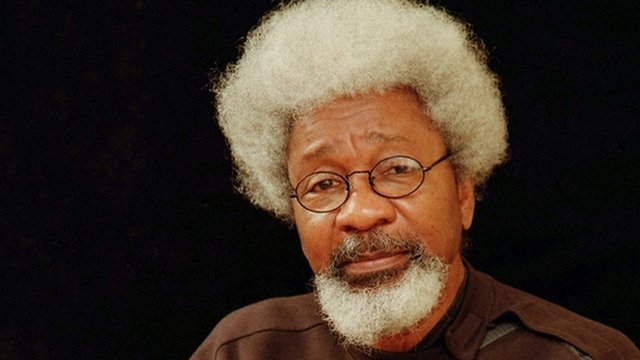
This week, my Writer’s Quote inspiration comes from Wole Soyinka:

Wole

Also known as observation or people watching, you’d be surprised how much you learn just watching and listening. I think that not to pay attention to the works of others will only rob us of an important part of the growing process. It’s one thing to be taught something in the organized sense of the word, to be instructed and shown. We know that this is important in the cultivation of our minds, acquiring and using information (information that’s useful that is, can’t give ear to everything, it’s just not wise). However, I think everyone needs an example. For every question, there is someone living the answer. Somewhere someone is doing it right. They are usually not out in the front, not the most outspoken and not always aware of the pivotal role they play in just being themselves. But they exist and when it comes to writing or blogging, or photography or art or music or whatever it is we are seeking a better understanding of how to implement into our lives at this moment, for every craft there is someone who can give you a tangible example of how to get it done. But you gotta pay attention.

About the Author:

_57791113_000308748-1

Wole Soyinka is a Nigerian playwright, poet, author, and teacher, and received the Nobel Prize for Literature in 1986.

Wole Soyinka was born on July 13, 1934, in Nigeria and educated in England. In 1986, the playwright and political activist became the first African to receive the Nobel Prize for Literature. He dedicated his Nobel acceptance speech to Nelson Mandela. Soyinka has published hundreds of works, including drama, novels, essays and poetry. As a result, colleges all over the world seek him out as a visiting professor.

*******************************

And that’s it for this week’s weekly dose of “Writer’s Quote Wednesday”. Hosted by Colleen of Silver Threading.

writers-quote-wednesday

What Do You Want?

author-quote-3Everyone has their own set of ideas about what makes good writing and marketing. But the key to it all, I think, is individuality. No one does a better job at being you than you, and no one knows the intricate details of your story like you. For this reason, it is important to stick to those methods that best fit your vision, values, and taste.

I think the most important question then for a writer is, “What do you want?” Everything else is extra.

The Short Story

short-story“The short story….. wakes the reader up. Not only that, it answers the primitive craving for art, the wit, paradox and beauty of shape, the longing to see a dramatic pattern and significance in our experience.”

–V. S. Pritchett

“I have always enjoyed short stories and have now found them to be an added joy. They are easy to read and digest, quick to review and……….. a great introduction to an author’s work. They act as an appetizer if you like, tempting you to tackle the meatier course of someone’s novel where you need to commit serious time.”

– Georgia Rose Books

“The particular problem of the short story writer is how to make the action he describes reveal as much of the mystery of existence as possible…The type of mind that can understand [the short story] is the kind that is willing to have its sense of mystery deepened by contact with reality, and its sense of reality deepened by contact with mystery.”

–Flannery O’Connor

“…the short story is a natural form for the presentation of a moment whose intensity makes it seem outside the ordinary stream of time, or the significance is outside the ordinary range of experience.”

—Wendell Harris

Butterfly, My First Writing Love

150508_0002

Where do I trace the birth of this longing? I have not photographic memory as many do, nor do I remember the exact moment I said, “I want to be a writer”. And as I ponder this history of mine, the thunder growls and the winds roar. The skies darken this very moment and hover around this building; leaning its body against my windowsill and making my living room look like evening time. I like it like this really. To hear the thunder roar in the midst of the quiet and the skies darken. It has a calming effect on me. The appearance of lightening is a chance to see pure light, and the sound of horns is a reminder of great power. But I digress. Really I just think they must be excited, just as anxious to discover this mystery. A collection of horns and quarter notes gather from beyond the clouds and deep inside the galaxy, shouting melodiously. The floor beneath me pulsates and sends shivers up my spine. Meanwhile, raindrops tap dance against the roof. Perhaps the scream of heaven is prompting me to remember. I do remember the first time I had the material to organize my writing. I do remember my first journal. I do remember my first writing love.

I was just about to turn fifteen, and though by then I’ve been writing for some time, I had not the care of keeping things organized. I wrote at will and on whatever pieces of paper I could find. But the close of eighth grade presented me an opportunity to confide in that pretty pink booklet with the blue sparkling butterfly on the front. I purchased it in Cincinnati Ohio during our eighth grade school trip. I spotted it at Claire’s, a store at the mall, over in the corner and it was a unique version of many of the journals I had seen in Chicago or anywhere. Somehow I didn’t think I would find it anywhere else in the world. As my peers busied themselves in appropriate teenage endeavors, my pupils danced in delight. Immediately upon seeing it I had to take it home. And I must say it dressed up well for our first date. The pink was fluffy and soft; my fingers found comfort when they slept on top the cotton. The butterfly on top shone bright like the dye was squeezed from fresh blueberries, and to top it off there were little diamonds imbedded in its wings. It wasn’t a diary so there was no lock and key. Nor did I use it as such, but it holds some of my early poems. In fact, I pretty much just used it for poetry, and maybe a journal entry or two here and there. When it opened, the euphoria of opportunity greeted me with the smell of fresh ink, and elegantly curved lines. It wouldn’t be long after this that I would begin my collection of journals and notebooks, but none of them would compare to the first. Butterfly was that first real writing love. The rest were merely copies. And as you can see, I still have it, though it is obviously not as beautiful as it once was. I think I’ll give it to my daughter one day. Maybe. OK well, let me just flip through it first.