
Good Advice for Author Bloggers.
Tag: writer
One Week to Go!
OK people, we have only one week before we go Beyond The Colored Line, so what are we doing about it? I’m not sure. I have been pondering how to culminate to Launch Day and I’m not exactly sure what I want to do. So I’m asking for your help. Below is a multiple choice questionnaire for you to help me decide what to do by telling me what sounds like the most fun. This will only work if everyone participates. I will be making a decision based on the poll no later than Wednesday. That gives everyone a little over two days to vote. The book comes out next Monday. Should I:
a). Hold a 3 Day Giveaway (8/19 Wed-8/21 Fri)
b). Hold a 1 Day Giveaway the day of Launch (8/24)
c). Create a Contest with one grand prize winner announced on Launch Day
d). A and C
Please use this form to submit your answers. I will respond by launching the winning letter Wednesday. If for any reason you have trouble with the form just hit my email directly at ahouseofpoetry@gmail.com.


Writing Distractions
A surge of consciousness spills over your thoughts like a stream of mighty waters. Waves of ideas that suddenly dance upon the mental workspace of your brain, a wide collection of inspiration collectively manipulating ideas, images, and symbols. Together they battle against one another to see which is fortunate enough to make it on the page. Will they splash onto the screen or get caught between blue lines? These are the concerns of words who dream of nothing but getting out of your head. Who, if any, of these ideas will transition from thought to word and from word to living persona? Your fingers are excited by the mere contemplation of it and proceed to structure the foundations of a blank page. That is until something happens. It is usually at this point that someone knocks on the door, the telephone rings, the children are awakened, or a question is asked. Sudden interruptions startle your words out of their skins and they run into hidden spaces and behind writer’s blocks. I don’t know what it is about writing, but it is so easy to be distracted from it. It takes so much concentration and focus that sometimes I find it hard to get back into the swing of things once interrupted. It is an art indeed, a pictorial inscription; a steady stream of carefully arranged thoughts that must glide from the mind to paper without interruption. Any break in this stream may cause the artist to abandon his work until a more appropriate moment. Sometimes I find it hard to even explain this to people! Some just cannot understand how easy it is to break into that mode of concentration. ESPECIALLY if we’re talking about poetry. I can be sitting at the computer immersed in a very pivotal moment and then someone starts talking and then its like, “OK, but can I finish this stanza first?“
Self-Publishing: The Workflow

You are not just a writer. You are not just an author. You do not have the privilege of having an agent or big publishing company to stand behind you. You cannot write a book, sit back and then watch things happen because you are not just a writer anymore. You are a publisher. You are a Self-Publisher. You publish your own books. This means you must stop being a writer. You are much more than that. Now that you publish your own books, you must now think like a publisher. You must organize and plan and live as a publisher. You must become a publisher.
“Self-publishing has gained a great deal of popularity over the past few years. Amazon has made it easy to publish our own work through Create Space and Kindle Select. Unfortunately, the fact it is easy to self-publish has resulted in a proliferation of poorly edited novels as well as novels that need a great deal of help with content and structure. Until these issues are addressed, self-publishing will continue to have an unnecessary stigma attached to it. Many authors just entering the arena of self-publishing have no idea where to start – how to find an editor, a cover artist, and formatters.”
– Editor Glenda Poulter of Rainbow Tales Literary Services
I like this quote because the tone is not bashing toward Self-Publishers, at least not to me, it’s just real talk. It’s hard language, but it’s true: While I don’t think Traditional Publishers or advocates of Traditional Publishing should stigmatize Self-Publishers because of it, I do understand that because it’s pretty much free or extremely cost effective to Self-Publish, it has in many ways brought down the quality of work in some authors who feel that’s all they have to do. Self-Publishing alone does not automatically degrade the quality of work but rather, the quality of work put in by the author can in fact degrade the business of a Self-Publisher.

In certain situations it can benefit us to look closely at how to better use the components of everything we have to achieve a desired effect. While certain things in our lives require a foundational stance (like morals and values no one should allow another to alter) other things, like Self-Publishing and Traditional Publishing, can both be understood in a way that is helpful to both. It’s a good idea for Traditional Publishers to understand all that goes into establishing oneself as a Self-Publisher, that it is not easy, and that it does add value to the market by having all of these books now available that would have probably never made it had not some undiscovered genius never taken the chance. It’s also a good idea for Self-Publishers to take some ideas from the Traditional Publishing method to help to increase the professionalism of their work as Publishers. Traditional Publishing exist and Indie Authors should use this as a resource.
For example: You may not have to worry about pleasing a publisher since you are the publisher, but you do want to create a good experience for your readers. After all, this is how you are going to make money. (Side Note: Speaking of making money, there are people out there making money off of your work. There are those writing Self-Publishing Help Books who have probably never Self-Published a book in their life. There are people conducting seminars, creating products, and overall profiting hand over fist because more and more of you are Self-Publishing. They’re making money off of your workflow. Why shouldn’t you? Just a thought, but I digress).

A few years ago, I took a brief class on Career Empowerment and received one of the most valuable pieces of advice I could have ever used over the course of my career. It actually saved me from dying of boredom in that class:
“There really is no such thing as not working for someone. Everybody works for someone. A beauty salon owner depends on customers to come in to pay the rent on the building {mortgage or taxes}. She must pay for the electricity, the repairs etc. Everything about her business depends on customers coming in to get their hair done.”
I found this piece of information profound because I had never thought about it in this way. When someone studies for an exam, they are not studying for themselves in the sense that they pick up a book and instantly understand what is being said. They first need to be taught by an instructor, they then take notes, and then they study those notes without having to be told, thus, they study on their own. The same applies to writing. Sure, I can be my own boss and set my own hours, but there really is no such thing as an Entrepreneur in the sense that we make money all on our own.We do not make money on our own. What we do on our own that makes us Entrepreneurs is that we put in work. A Wal-Mart employee ultimately works for the owner, but as the owner, we work for ourselves. We put forth the work necessary to convince the public that our product is important enough to invest in. As a result, we get to set the terms and conditions necessary for the company to grow. That’s what we do. We put in work. We build.

As I mentioned in a previous article: “4 Common Sense ways it will benefit you to Self-Publish”, Indie Authors actually put in more work than those who choose to publish traditionally. The reason is pretty much attributed to common sense: They must do everything themselves. For this reason, there are many Indie Authors who may not start off as educated about the book making process. They can be great writers, but they may not understand that the publishing industry is a little different than other businesses: there is a lot to learn. Without the power of a publisher behind us, indie authors are forced to become much more than just writers. We have to become business men and women. We need to have great communications and marketing skills and we have to be relentless in our quest to get our books seen. Indie authors have to do it all. There is no outside help. Sure we can hire an editor, but that comes at our own expense. We have to develop, or at least hire someone to develop, a quality cover; another expense that a traditional publisher would normally cover. Indie authors have to treat every day like a business day. They need both pre-publishing and post publishing plans, goals, and quality material that never wavers. All of this requires a lot of work and investment financially in order to be successful.

While success can be defined differently to each person, every Indie Author, or Self-Publisher has the opportunity to produce quality material, but they also have an opportunity to become much more than writers if they are willing to learn something from both the Self-Publishing AND the traditional publishing process. Self-Publishers are publishers after all, and if we continue to put forth both the time and monetary investment necessary to be successful, we can quickly tear down the negative connotations associated with this industry.
And it all starts with that workflow. So let’s keep it moving. It’ll eventually pay off. Hard work always does.
Yecheilyah Ysrayl is the YA, Historical Fiction author of The Stella Trilogy. She is currently working on her next book series “The Nora White Story” about a young black woman writer who dreams of taking part in The Harlem Renaissance movement and her parents struggle to accept their traumatic past in the Jim Crow south. “Renaissance: The Nora White Story (Book One)” is due for release spring, 2017. For updates on this project, sneak peek of chapters and the pending book cover release for this project, be sure to follow this blog and to subscribe to Yecheilyah’s email list HERE.
10-four word sentences
about Love…
- “Love is all Language”
- “Change begins with Love”
- “To Love is Law”
- “Love others like yourself”
- “Love life like air”
- “Breathe Love like lovers
- “Taste Love with heart”
- “Feel Love with soul”
- “Treasure Love above money”
- Give Love like currency”
Books are…

“Books are meat and medicine
and flame and flight and flower
steel, stitch, cloud and clout,
and drumbeats on the air.”
― Gwendolyn Brooks
Writer’s Quote Wednesday – Richard Wright
I missed you guys last week! I feel soo behind. Now, enough whining. 🙂
For today’s episode of Writer’s Quote Wednesday, I take my inspiration from one of my favorite authors, Richard Wright:

Yes indeed. Richard Wright is another one of my favorite authors (Native Son was simply amazing, a powerful read) and his words speak truth. I try to keep in mind, when I’m writing, that the constant understanding of self; the appreciation of self, and the confidence, not with conceit but with courage, are not optional for success; it is needed. While the defining moment of what that success entails varies, I know that my writing career hinges, in large part, to what I believe I can do. If I believe it is possible to write a novel, that I can do. If I do not believe it is possible, that I will not do. And so, I am only limited by that which I limit myself. I can choose to starve myself out of the endless possibilities before me, or I can feed on them and grow as a writer. Who I am always and must be illuminated in everything that I do. The moment it doesn’t and I, for whatever reason, begin to sacrifice that self-realization, everything I have will begin to diminish. I will be then in a kind of literary poverty.
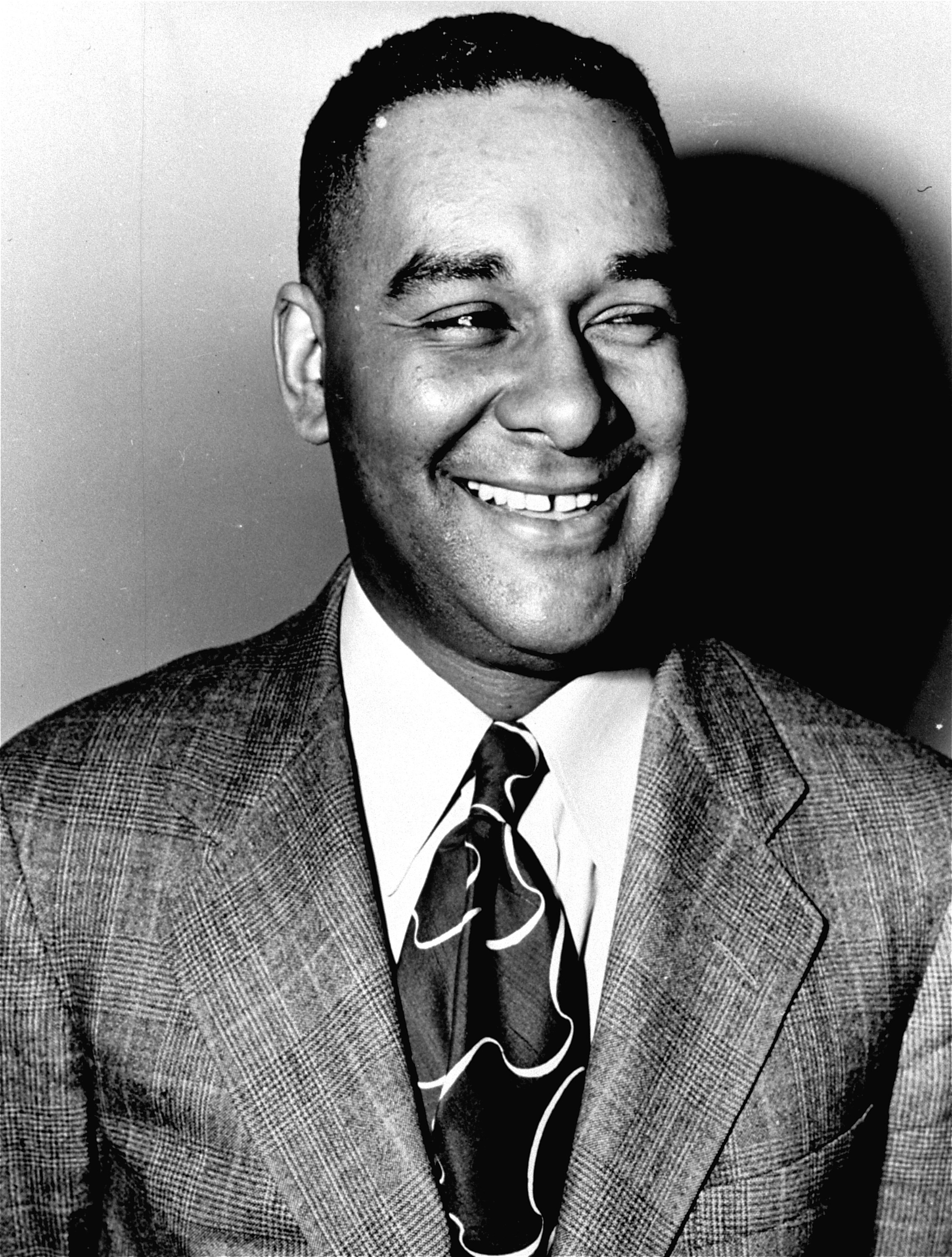
About The Author:
African-American writer and poet Richard Wright was born on September 4, 1908, in Roxie, Mississippi, and though he was only able to get a ninth grade education, he loved reading and eventually published his first short story at the age of 16. Later, he found employment with the Federal Writers Project and received critical acclaim for Uncle Tom’s Children, a collection of four stories. He’s well known for the 1940 bestseller Native Son and his 1945 autobiography Black Boy. Wright died in Paris, France, on November 28, 1960.
*************************
That’s it for this weeks installment of Writer’s Quote Wednesday. Would you like to join us? Click the pic to find out how!

 The PBS Blog