
“You have to read widely, constantly refining (and redefining) your own work as you do so. It’s hard for me to believe that people who read very little (or not at all in some cases) should presume to write and expect people to like what they have written, but I know it’s true. If I had a nickel for every person who ever told me he/she wanted to become a writer but “didn’t have time to read,” I could buy myself a pretty good steak dinner. Can I be blunt on this subject? If you don’t have the time to read, you don’t have the time (or the tools) to write. Simple as that. Reading is the creative center of a writer’s life.” – Stephen King
Tag: tips
5 Creative Ways to Headline Your Blog Post
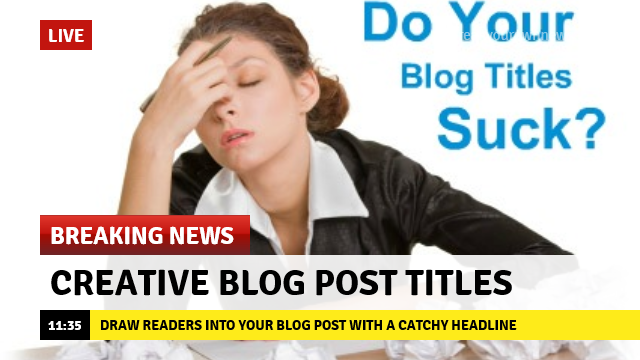
They tell you the first sentence draws you in. After that the first paragraph, and then the first page. I believe however that the real first is the title of the blog post itself. While it may not be ultra extremely important, blog titles do carry weight. This is, after all, still the headline of your post when you decide to publish the article, video, quote, or whatever you are publishing today. It is the teaser that will either pull others in or scare them away. Titles are so important that some people will decide not to tune into a blog post at all because they do not agree with whats in the title (which is too bad for them. Didn’t your mothers ever teach you not to judge a book by its cover?)
Any who, the more I blog the more I learn. As I watch those with years of experience, I have learned a little about what makes for an acceptable blog post headline. Not only have a learned from watching others, but I’ve learned from paying attention to my own reading habits. Below is a list of the blog post titles that usually catch my attention.
#1. Keep It Simple Short
The blog titles that often catch my attention are those that are short and to the point. It is not a good idea to make your blog post titles too long. If posting a quote, it is also not a good idea to post the entire quote as your title. People get bored easily and do not want to read a paragraph before getting to the actual article. Instead, look at your title as if it were a tweet that must be restricted to 140 characters. Ask yourself what the post is about and what key words are important to include. For instance, whenever I write a post about self-publishing I always include Self-Publishing before the title of the post so that those Indie Authors looking for insight can easily find it. I then follow it up behind what the post is about: Self-Publishing: The Workflow, Self-Publishing: ISBN Numbers for example. Short and sweet titles are also those that don’t take much brain power to decipher. “I Hate Coffee” or “This Dumb Computer” is just as likely to attract attention. Both of these titles leads me to my next bullet point.
#2. Something Catchy!
Blog titles that are creative also catches my attention. This reminds me of a cold open in a movie script. Cold Open is a term screen writers use to indicate that you are coming in on an action scene. It is when you come in smack down in the middle of all the drama. Right when the husband walks in and catches his wife pulling her jeans on next to an unidentified figure in the bed. Its the look on his face when she pauses and scans the room as if an excuse is going to pop up in the corner. It is the camera zooming in on a street fight right at the moment when fist meets chin. Ouch. That is what catchy titles can do for readers. It makes us wonder what the rest of the article is about. For example: “Doctors Are Gods”. From the onset, you have no idea what this blog post is about. You don’t know if I actually believe Doctors are Gods, if this is a poem, or if I’m setting out to criticize the profession. In either event I know that I would want to check this post out! Even if I don’t make it through the article, if your blog post said “Doctors Are Gods” it would be enough to peek my interest and I would click on your blog to see what you’re talking about (or if you actually know what you’re talking about).
#3. Shock and Awe
People, for some reason, love drama. If your blog post is controversial or has the potential to spark a heated debate, try a title that will shock your readers into curiosity. This will guarantee some attention and strangely, the weirder the better! If I saw a post that headlined: “Homosexuals Are Taking Over The World” I’d be headed right on over to see what juicy details the blogger has included and if there is any truth there. This is also an example of a title that some may utterly ignore because it offends them. I wouldn’t worry about that. Of course its offensive, your post is controversial! And yet, lots of people will tune in to see what you have to say. Why? Because people looovveee drama! (Speaking of which, exclamation marks in a blog post title is also a good way to get readers attention!)
#4. Current Events
If your blog post is about current events, news, sports, politics, or celebrity drama, include some of that in your blog post title. The only exception here is that it is more effective if your post on current events is well, current. If you want to spark conversation over the latest news be sure to do it right when the action happens. A blog post about Rachel Dolezal would spark some fire but not merely as much as when the story first broke. Kim Kardashians nudity may be today’s distraction, but next week is a different thing. Still, there is another way to play with this: You can make your post historical in nature. For instance, this year would be the 15th anniversary of 9/11. If your post said: “Remembering 9/11” or “Looking Back: When The Towers Fell” that may attract some attention. But, if you published this post on the anniversary it will attract even more attention. Why? Because its a reminder in people’s minds. They will hear about it all day on CNN and everywhere they go. In fact, 9/11 is such a historical, life changing event that you can just title your post: “9/11” and people will tune in. This is yet another way to play with titles. What’s important to world history? Use it.
#5. Questions
And finally, I have also noticed my curiosity peeked on blog post with titles that ask questions. What better way to get someones attention than to ask them a question? This doesn’t have to mean you are actually looking for answers in the article, but it is another way to spark interest. “Is Orange The New Black?” is a creative spin on a title that doesn’t actually have to have anything to do with the TV show. Maybe its a title about race and ethnicity. Maybe it is about the TV show and has nothing to do with race. Just be creative. (Oh and when writing a post that includes a list, like this one, include that number in your blog post! People love advice: “10 Simple Ways to Clean Your Computer” is likely to get some action. Notice that I went a step further and added “Simple” so that people know this article is not just for the technologically advanced).
Knowing Where To End Your Story
Good advice. I would add that for me even just knowing where my story will END helps me to find my way to the beginning. Usually, if I can see the light at the end of the tunnel, then I can write the story.


The other day someone asked on kboards just what they ought to do if they knew where they wanted to END their story, but not where they wanted to START it from.
This is basically how I answered that question.
For me, a story is a little like a journey. It really helps if I know WHERE I want to start off from and WHERE I want to get to. It is kind of like that whole Google Quest map thing where in order to get directions you have to punch in BOTH locations to find out how to get from here to there, providing you don’t mind driving through that brand new school that was built last month and hasn’t made it’s way onto Google Quest yet.

So – if, as in your case, I just DON’T know where I am starting from – I’d probably just try and…
View original post 323 more words
A Story Within a Story – Crafting Chapters
Who knew that this simple realization would come in the middle of the night, as I walked along with McFadden’s Easter on the streets of Harlem and stood shoulder to shoulder under a night sky just as dark as Garvey’s skin, who spoke just a short distance from us. Though I’ve always written in such a way, it was right here on 135th Street and Lenox Avenue when it became a conscious thought and it occurred to me that I can now implement this revelation into my writing in a much more conscious manner. And as Easter’s future husband approached us, I knew that I had to freeze the moment and write this down. She was smitten anyhow and I doubt she’d notice my absence. Surely I can put the book down for a quick, and anxious writing fix.
The words came quickly and rushed to the tips of my fingers after the sun drifted into a heavy slumber last night and the wind whispered just as calm and peaceful as my husband’s breath heaving in and out of his nostrils. I was up, of course, reading when after thirteen straight chapters of Glorious I stumbled upon a revelation I’d be more than selfish not to share.
 I’ve personally fallen in love with short stories. It could just be the impatience of the creative mind that’s got me savoring a quick fix, but I love the fragment of writing time as compared to a full fledged novel. It’s not easier, its just the simplicity of it all I suppose. Nonetheless, whatever the urge I’ve found it tasteful to write short and to the point; where the story is over before it’s left your palette. Not in a way that’s disappointing but too delicious not to crave. A refreshing snack of literature if you will that’s got you begging for more and at the same time offended for not having been given enough. Nonetheless, I was up reading this novel when it hit me: chapters are like short stories within a story.
Though my eyes were heavy, my mind was eager and I noticed that in the best of books we are strung along by string from one point to the next in a series of small revelations all leading to one grand finale. I was reminded in that moment that more than the first sentence, the first paragraph, or the first chapter is the need to keep the story moving in a consistent thread of mini stories wrapped into one large fabric by making sure that each chapter ends as if it alone was a short story within itself. Like a cliff hanger carefully composed to force the reader on to the next chapter. That moment right before Gillespie’s cheeks explode into handfuls of balloons.
I realized that writing is like configuring one grand puzzle by crafting the pieces and deciding which shape belongs where. It is a series of steps, body parts if you will, where each member does it’s part and yet contributes to the completion of the whole. By focusing on the purpose of each chapter, what it sets out to achieve alone and how it ties into the story as a whole, I think this may in fact help us writers to make sure that our books too move along with the same grace and elegance of a McFadden, Ellison, or McMillan.
Re-post: Author Tips on Writing Historical Fiction
This is a re-post from M.K. Tod who writes historical fiction and blogs about all aspects of the genre at A Writer of History. Her recent post included a list of tips on writing Historical Fiction as acquired from around the web. Instead of re-blogging I decided to re-post some of those tips here, they are just too good to let pass us by so I organized them in the list below so we can see them all. Please visit A Writer of History for author source and to comment on her blog. I would also suggest you follow her (especially if your a historical fiction writer), she is always on point with her guest authors, links, and advice:
- Let the characters engage with the historical details – a variation on show don’t tell
- Allow your characters to question and explore their place in society – doing so reveals the context of the times
- Love the process, because readers will still find errors
- Sweat the Small Stuff – small details allow readers to engage all senses in the past world you are building
- Dump the Ballast – too much detail is a killer
- Read historical fiction – sounds obvious doesn’t it but you have to appreciate excellent historical fiction in order to be successful
- Know when to stop researching – cautions about falling down the proverbial rabbit hole
- Research comes before writing – get the facts right to ensure a good foundation for your novel
- Inhabit the mind and skin of your characters – you have to understand the sensibilities of the time so your readers can feel immersed in it
- Pick a universal theme if you can – the concerns of your novel need to resonate with modern readers
- Choose a time and place that really intrigues you – passion will make your story more compelling
No Wonder Your Post Only Got 5 Likes

Before I shut down for the weekend I have to share this. I’m sitting here going through some of my older posts (the ones with 0-5 likes) and my tagging is just sad. Like, it doesn’t even make any sense. I love looking back on my work and seeing where I can improve. So, here’s 7 tips on tagging I acquired from some friends in the blogging world as well as somewhere in this brain of mine. I caution I am not an expert and these tips are just based on my prior knowledge and experience (so far) with blogging:
1. Try to mix your original tags with some general tags. General tags are tags that are often used such as: Blog, Blogger, Blogging, WordPress, Google, General, Poetry, and Writing (for book promo also use Amazon, eBook, and Self-Publishing). Original Tags are any tags you want to use or tags that are unique to your blog such as your blog name (I often use pbs for Pearls Before Swine).
2. Don’t be afraid to step outside the box. Make sure your tags have something to do with the post BUT this doesn’t mean you can’t get creative and add tags you think may drive more traffic since its mentioned in your post. For instance, one of the tags I chose for this post is: “Spelling”. This post is not going to teach you how to spell, but it does say something about spelling. I could have also used “Grammar” or “Grammatically Correct”, or “Punctuation”. I also tagged this post “Follows” and “Support” because they are similar in theme to “Likes”
3. Make sure your spelling is correct in the tags! LOL
4. If you’re going to use less than 15 tags, make them count. It will be best to use commonly used tags, such as Blog, General, and WordPress. Otherwise, it’s best to stick to at least 15 -17 tags. I think any more than that is overkill because…well, just because.
5. Remember that categories count as tags.
6. Keep your tags short and simple! Remember that old saying that if you sell books the way you buy them you’re more likely to increase profit? If you go to Amazon to buy a book, then your book should probably be on Amazon as well. Or, if you are more than likely to purchase an ebook, your book should probably have an ebook version as well. The logic is that you’re a reader first and if you have certain buying habits as a reader then chances are other readers have the same habits and so you use your reader habits in your marketing strategies. Well, if you tag the way you browse the net it may help in the same way. People google the way that they think and have a tendency to use the same keywords over and over again. This means some tags are just taking up space because no one is going to use them. What’s the chances of someone finding “Ilovemymothersomuch”? That’s a tag that doesn’t make any sense. I would tag it “Mothers” instead because if I needed to google articles about a mother’s love that is what I would type in.
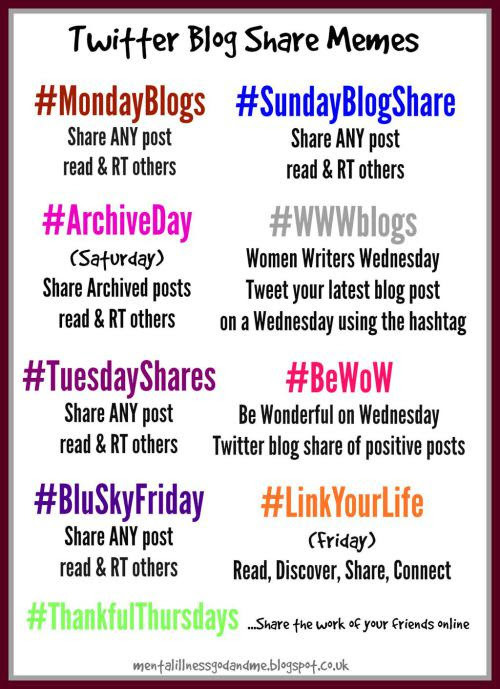
7. As a bonus, here’s a Tag Support Chart I acquired some time ago from a fellow blogger. It displays some commonly used tags separated by days. I don’t always follow the suggested actions that go along with the tags but I do use them. I’m still learning how to tag properly but this chart has been VERY helpful in that process (Tags I often use are: Blog, Blogging, Blogger, General, Writing, Google, WordPress, and I add one of the tags in the chart along with some that have to do with the post itself):
Blog Photos: I Scared Myself Away From My Own Post
OK, you may want to sit down for this one.
A couple weeks ago (or was it last week?? LOL), whenever it was, I had a blogger to comment on a post I wrote asking me to go into more detail concerning photos in a blog post. I never consider myself a “blogging pro” or “advice giver” so her question made me feel very positive about the post as feedback often does. Here’s her question and my response:
Q. Can you share more about your thought that sometimes pictures can take away from a post?
My response:
Sure. Pictures are a great way to compliment a blog post but photos in blog posts is about strategy and not just decoration. If the pictures don’t tie in well with the article it can take away from the written content and become a distraction. Photos chosen should have the potential to reveal something about the post even if there were no words because images set the tone for the post itself. Sometimes I decide not to include pics because I want the focus on the words and a photo in this sense can just be distracting. All in all bad image choices can have a great impact on how people see our blogs.
This morning I did not intend on writing this post, but after scrolling through the reader I experienced something that validates just how important photos are in a blog post. I scared myself away from my own post.
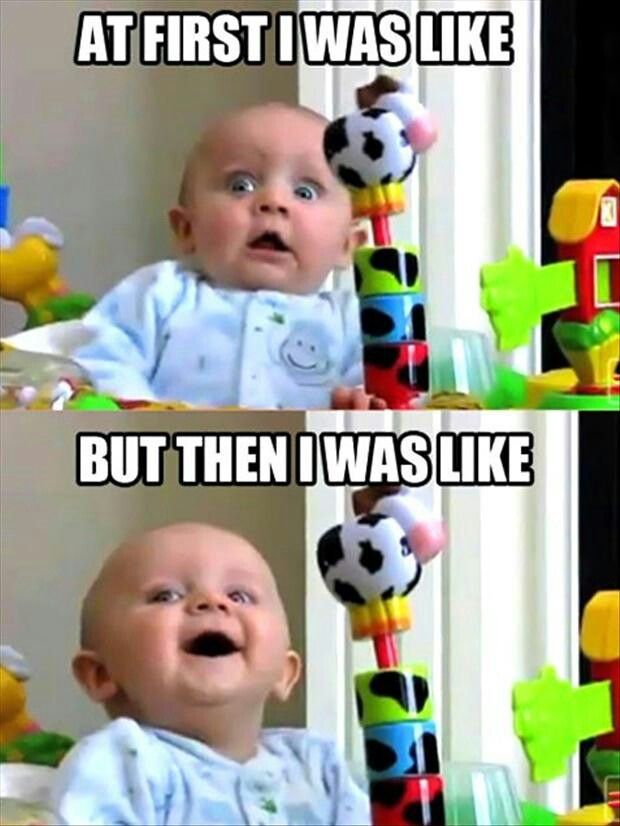
Yesterday, I wrote a post that included a picture of Flavor Flave. When I scrolled through the reader this morning I was shocked to see that photo front and center on my timeline associated with that blog post (go ahead, take a look). I startled myself because I would not have chosen for that picture to be the one used to feature the post. As I opened with “We all have our favorites…” needless to say Flavor Flave was not a good look. I do not nor have I ever been a fan. I do not take back my thoughts in the article and using the photo in the post did look good when I drafted it because it represents what I was speaking about, but it did not mix well with my opening statements or as an advertisement for the post in the reader.
Did I say advertise? Yes. It may not seem important at the time, but photos in blog posts tend to act as promotional items for our blogs before people actually click to see what the post is about. I wouldn’t say to stress out about it, but whether or not people are clicking to tune into our blogs have a lot to do with the way that people think in general and we all know by now (c’mon, say it with me) “Pictures are worth a thousand words”. Just keep in mind that the first picture used in the post will more than likely be the photo that stands front and center as representative of your post. My little experiment proved, beyond a shadow of a doubt, that image choices is not just about what looks good, but it is also about strategy because the photography tends to set the mood for the article itself. The photos you use in your post can have the potential to downgrade the quality of the article if it does not blend well with the written content.
Experiment: Conduct your own experiment. Write a blog post and use an image, any image. Go back to the reader and see which one shows up! If your not too chicken to risks a few likes and views, this can help you to see how the pictures in the post shows up when people are actually scrolling through the reader.
 The PBS Blog