
“To be loved and be loved in return.”💃🏽🎼🎵🕺🏾
Tag: love
90s Throwback Thursday Jams- TLC – Unpretty
I learned from their documentary on Netflix that this started as a poem written by Tionne “T-Boz.”
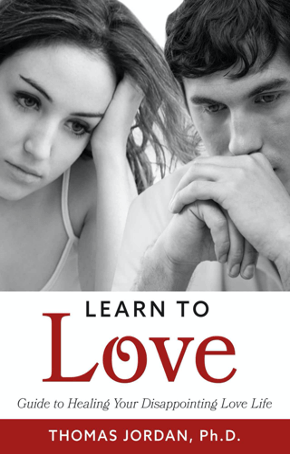
Yecheilyah’s Book Reviews – Learn to Love: Guide to Healing Your Disappointing Love Life by Dr. Thomas Jordan, Ph.D
Title: Learn to Love: Guide to Healing Your Disappointing Love Life
Author: Dr. Thomas Jordan, Ph.D
Print Length: 132 pages
Publisher: Book Baby
Publication Date: December 16, 2019
Clinical psychologist Dr. Thomas Jordan Ph.D. offers various suggestions for how couples might enhance their romantic relationships in his book Learn to Love: Guide to Healing Your Disappointing Love Life. He demonstrates how those earlier love experiences have impacted our current perception of relationships going all the way back to conception using a psychological blueprint.
He uses his personal life experience to show how what we learn in our family shapes our experience of interpersonal reality when we become adults. (Jordan, 92) Dr. Jordan challenges readers to identify what they’ve learned, question what they’ve learned, and then try something new. As you can tell, Dr. Thomas’ explanations are easy-to-understand, and his examples are clear and concise.
One of his most important points is about learned beliefs, behavior, and feelings. Jordan asserts, for example, that if what we’ve learned about love was unhealthy growing up, we will unknowingly, somewhat subconsciously, repeat what was unhealthy in our adult relationships. The key here is what you believe about love relationships will shape your experience.
Suppose someone taught you to think relationships are dishonest because you experienced dishonesty growing up. If you are unaware of this learned belief and have not made changes, chances are your current relationships will recreate dishonesty and generate a feeling that someone is deceptive.
This same thing can apply if you’ve felt abandonment (loss), exploitation (used), abuse (fearful), mistrust (suspicious), controlled (trapped), neglect (deprived), dependency (needy), and rejection (rejected). According to Dr. Jordan, these are among the unhealthy traits we learn and unconsciously recreate in our love relationships if we have not healed from them. Another critical detail Dr. Jordan makes is how we become defensive to avoid vulnerability.
The vulnerability allows people to get to know us better because we have let them in. People shy away from opening up in this way because we cannot be vulnerable without risking unintentional hurt occasionally. What is meant by “unintentional?” There will inevitably be differences between you and the person you are in a relationship with, disagreements, different perspectives, and opinions. These differences are inevitable. There is no escaping it. According to Dr. Thomas, one cannot be in love without feeling unintentional hurt based on differences.
So then, why is “falling in love” worth it? Dr. Thomas has an interesting answer: Because we all have a natural ability to heal. The risk of falling in love is more tolerable and less stressful when we believe in our innate ability to heal. “If hurt leads to loss, we can grieve, heal our hearts, and move on.” (Jordan, 55)
We can avoid pain altogether by not opening up, but being defensive in relationships interferes with our ability to give and receive love. Dr. Thomas notes that love as an emotion is unpredictable and uncontrollable; hence, we “fall in love,” the connotation is that we have lost control. Because of losing control, we risk getting hurt. We avoid this hurt in attempting to achieve a love relationship without being vulnerable, which is not possible.
“Vulnerability is the emotional experience that shows you are open to giving and receiving love.” – Dr. Thomas Jordan
This understanding took me back to the 80/20 rule. It is a lot to expect to receive 100% good from one person because we all have trauma and baggage from our life experiences that we carry with us. Even in an emotionally healthy and stable individual, you might only get 80% of attractive traits.
Can you live with that person’s twenty percent? Or is this person’s twenty percent unbearable/intolerable? What can you realistically tolerate in a love relationship based on your conscious awareness of your own flaws and strengths, combined with your partner’s weaknesses and strengths? What flaws can you live with (accept)?
Anyone, single or married, disappointing love life or not, can learn how to heal by learning to love themselves, starting with being consciously aware of toxic patterns.

Strong Introduction: 4/5
Authenticity / Believable: 5/5
Organization: 5/5
Thought Provoking: 5/5
Solid Conclusion: 5/5
Overall: 5/5
Learn to Love: Guide to Healing Your Disappointing Love Life is available now on Amazon!
To learn more about my registry be sure to visit the Blog Book Review Policy page here.
Throwback Thursday Jams: Maxwell – Ascension (Don’t Ever Wonder)
90s Throwback Thursday Jams – Sounds of Blackness – Optimistic
This song is so appropriate for this time. I pray everyone is doing well, feeling good, and staying optimistic!
For Those Who Are Sad

Can I cradle you in the nook of my arms? If you were here, would you let me? Hold you I mean? I don’t just want a hug. I want to hold you so we cry together. Kiss the top of your forehead like a mother would. On the shoulder of comfort, let your tears drench my shirt and I will love you like an infant. Can these words hold your head up? I do not want the soft spot of your pain to blemish the fragile newness of the warrior you are becoming. Your critics will look at what you are, but I see what you can become. But you’ve got to let me do my job. Let me hold you. Cradle you in my arms with these words. Cradle you in my arms with this pen. This is not a blog. Not today. Today this is air. This is breath. This is permission to breathe. These are words wooing lullabies for the exhausted spirits of the broken.
How Permanent is this Grief?

Something about sorrow sounds spiritual. It sounds like awakenings and revelations. Sounds like pacts and promises. Sounds contradicting too, like hope and despair are twins. We want to shackle ourselves to change. Something about sorrow got us questioning our own mortality. But how permanent is this grief? Where are we two years from now? Is this feeling fleeting? Will we forget our own deaths could be just as close as Kobe’s? Right now is good. It’s all reflection-like. Our throats are full of emotion and saltwater. Only time will tell if this is real or just another ode to the people we worship as Gods. Today, forgiveness is an anthem we sing each morning. Kisses adorn the faces of our loved ones, and the heavens ain’t heard these many prayers since the last celebrity died. And yet I ask myself how permanent is this grief? What have we learned?
There are people we know and love that are close. We can reach out and touch them. Now. Today. Will we? Some of us will Tupac this young man’s legacy while forgetting the promises we made to ourselves to be better people outside of the internet. We will forget those feel-good words we concocted when the world was in mourning. The “every day ain’t promised,” and “hug the ones you love,” we spit into the air as if life has promised our names won’t be the next one carved into the next hashtag. Like our pictures won’t be the ones swarming the internet like the locust currently congregating in East Africa.
Yea, something about sorrow sounds spiritual. Got us thinking about life and truth and family and love. But will this last? How permanent is this grief? That is the question.
 The PBS Blog