My Soul is a Witness

Annndd here she is!

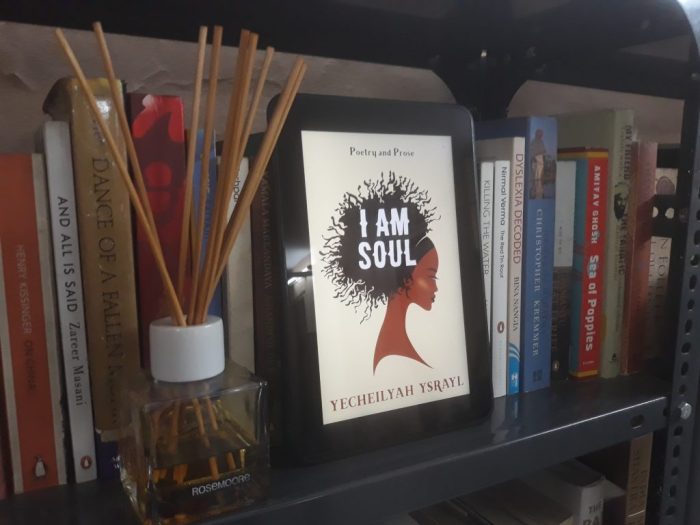
My next collection of poetry releases this year and I have decided on the title, “My Soul is a Witness.” I want to thank the members of my email list for helping me to choose the perfect image (we had a contest featuring several images. If you are not subscribed for exclusive first-looks and sneak peeks, you may click here).

This book releases in the fall and will be available for preorder soon. Exact date to be announced.

Haven’t read I am Soul yet? Get it here.


One of my favorite movies (I have lots of favorites lol) is The Great Debaters. I love the use of language, history, and education, and it also feels like to me they are doing performance poetry, not just debating. When the movie comes on, the Negro Spiritual song, “Witness,” is being sung as the people dance.

Just as with I am Soul, My Soul is a Witness jumped out at me and I felt it in my spirit that this was the appropriate title for the book. The soulful, sacred, and riveting Negro Spiritual songs taught of freedom, of hope, of redemption, and biblical justice and righteousness. I hope these poems do the same for you. I hope that they are liberating, restoring, and reinvigorating. “My Soul is a Witness,” is poetry that reminds us that in our darkest moments, there is still hope. It reminds us that our scars do not cripple us but prepare us for a work, and that our greatest weaknesses make us strong. Here, I give you my ache and my praise. This is a love letter to our overcoming, of yours and mine. My Soul is a Witness.


What the Losses Taught Me

Top of the World, Observation Level, World Trade Center, MD, Copyright © Yecheilyah 12.31.2019
I couldn’t help but think about “Vision” on the Top Floor of the World Trade Center in Baltimore. The view is a beautiful layout of the city and the binoculars let you see everything up close. That’s what 20/20 is about for me, seeing clearly.

20/20 = Perfect Vision

At this time of the year, most people are talking about their wins but I believe it is my losses that have caused the most growth and given me the most lessons. It was the letdowns, betrayals, and disappointments that have cultivated in me the strength I’ve had to endure last year and all the other years before it.

Keep Yourself Full didn’t do as well as I had thought and while it bothered me at first, I can honestly say that as of today I’m okay with it. I’ve been Self-Publishing my books for a while now and what I’ve learned is that experience brings clarity.

Hindsight is 20/20 and what I see now are the mistakes I made with this particular book, the audience I thought would be there but wasn’t, and the solace in knowing that my poetry is inspiring enough.

A ‘Snellen chart’ is an eye chart that’s used to help you determine the clarity of your distance vision. Somebody with 20/20 vision has normal acuity (sharpness or keenness of thought, vision, or hearing) meaning if they were to stand at a distance of 20 feet from the eye chart, then they would be able to clearly see each row of letters. This person has good eyesight.

What’s being said is that if you look back at situations that went poorly, you can clearly see (20/20) what you could have done better.

This entire year is 20/20 which means a time of looking back and reflecting on all I’ve done. I know the word “reflection,” is being used a lot this time of the year so it may not hit you as hard but I caution you not to let its repetitiveness water down its powerful meaning.

Reflection is serious thought or consideration but it also shows, expresses, or is a sign of something and an image of something in the mirror. To reflect is to give serious thought and consideration to ourselves, the image in the mirror. It is to look at ourselves. What do we see? What are we showing or expressing?

My philosophy (for lack of a better term) is “do you but do you intelligently.”

I believed, and still, believe, we should not just decide, but that we should make informed decisions. From this point forward it’s not just about making decisions but knowing why I am making those decisions. It’s about being intentional in every way. From this point forward, everything I do has a reason. Everything is a strategic move. From publishing a book to publishing a post.

There are projects I will retire this year and projects I will relaunch. Looking back, I can see clearly what works and what doesn’t work for my writing business.

I am flawed and imperfect. I will mess up but I am striving every day, learning, and correcting as I go along (with all the failures and pitfalls that come with it). I know these losses can do nothing but make me stronger, and wiser so that when I look back, there is nothing to regret.

The losses taught me to focus the first time around and to trust my discernment so I can see things for what they are, not for what I want them to be. The losses are a reminder to see things clearly.


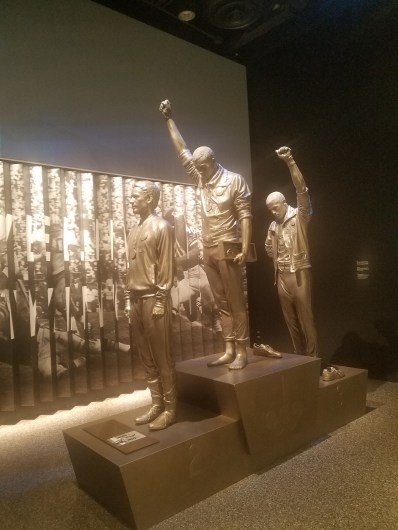
Go to my IG page here to check out more vacation pics at some awesome museums including The Smithsonian Museum of African American History and Culture. Visit me on the web at yecheilyahysrayl.com and subscribe to this blog for notification of more posts.

Black History Fun Fact Friday: What Hollywood Left out the Harriet Movie

I did not intend on writing about this today but then…

I saw the Harriet movie.

Yep. I went to see it.

I know many are protesting the film, but I don’t jump on bandwagons. I wanted to see it for myself to develop my own opinion. I also knew I wanted to write about it.

There are some truths, such as her being referred to as Moses. Unfortunately, there are also a lot of inaccuracies. The movie is Hollywoodish and leaves a lot out. In an interview, I heard the script was written twenty years ago, so that may have something to do with it. In any case, if you are planning to see it, here are some things you may want to know.

  • Harriet Tubman never had a friend named Marie Buchanon.
  • There was never a Black Bounty Hunter named Bigger Long after Harriet Tubman. The same is true of the Brodesses son. They did have a son (Jonathan) but little is known about him. His role in the movie is made up.

While “Bigger Long” is a fictional character, it shouldn’t be overlooked that Black trackers existed and were active during slavery. I think it is vital that as we are striving for historical accuracy, we are not so “Pro-Black” that we forget that a lot of our own people sold us out, and continue to sell us out. While Bigger Long may not have been a real person in Harriet’s life, there were black slave catchers. The movie, it seemed to me, had a lot of ‘women vs. men’ undertones. Not only was Bigger Long the sole antagonist against Harriet (even more so than the Brodesses, son), he was also the one responsible for the death of one of the Black women in the most diabolical, sinister, and brutal way.

The William Still character is based on a real historical figure. Still was a black abolitionist based in Philadelphia, Pennsylvania, businessman, writer, and conductor on the Underground Railroad. In the movie, he was over-the-top with his reactions to Harriet’s return from the missions. Holding his hand to his chest, spinning Harriet around, and at one point, he even falls out of a chair. Some people laughed, but I didn’t find it funny. To me, it made him look like a bufoon.

The Black men in this movie seemed weak to me. I worry this was intentional. Hollywood has a habit of showing black men as less capable when contrasted against the black woman’s strength. Rarely is there a balance to showing black couples as equally competent. The imaginative Marie shows Harriet how to shoot a gun and helps her in her cause. Harriet was a warrior but I am certain the surrounding men weren’t that simple-minded and faithless.

  • Tubman didn’t change her name when she reached freedom. She changed it before then, around the time of her marriage, possibly to honor her mother.
  • Three of Tubman’s sisters were sold, not just one.
  • Two of Tubman’s brothers, Ben and Harry, accompanied her (1) they went with her initially, at the onset of her escape not later as depicted in the film (2) after a notice was published in the Cambridge Democrat offering a reward for her return, Harry and Ben had second thoughts and returned to the plantation so she made the voyage alone.
  • Tubman had spells, dream-states, and visions (I believe she was deeply spiritual, her spells were my inspiration for Nora’s spells in Renaissance), but she also endured seizures, severe headaches, and narcoleptic episodes for the rest of her life from the hit to the head.

This next point wasn’t in the movie but since we are talking about Harriet Tubman I think it’s important to mention.

The Fake Quote:

It’s a good quote and a powerful one. I wish I could say it belonged to Harriet but with every source I checked there’s no documented, historical proof that Harriet Tubman ever said:

“I freed a thousand slaves. I could have freed a thousand more if only they knew they were slaves.”

According to Africacheck.org, The Maxwell Perspective, and Snopes, there are a few possible origins of the quote’s attribution to Harriet:

  • The confusion began when feminist writer Robin Morgan updated her 1970 essay “Goodbye to All That” during the 2008 US Democratic Party’s primary presidential candidate race between Hillary Clinton and Barack Obama. Morgan supported Clinton, and in the essay challenged other women who did not. She wrote: “Let a statement by the magnificent Harriet Tubman stand as reply. When asked how she managed to save hundreds of enslaved African Americans via the Underground Railroad during the Civil War, she replied bitterly, ‘I could have saved thousands – if only I’d been able to convince them they were slaves.’” The implication was that women who didn’t support Clinton were similarly enslaved, and didn’t know it.
  • One expert was Milton Sernett, professor emeritus of history and African American studies at Maxwell School“My impression is that this is a late 20th century quote from a fictionalised account of Tubman’s life,” Sernett told history blogger Ralph Luker, who first queried the quote.
  • More than this, at meetings in 1858 and 1859 Tubman repeatedly said she had personally rescued 50 to 60 people from slavery. So she would never have said she “freed a thousand slaves”.

A quote that has historical proof, and that has been proven to come from her that you can use:

“I was the conductor of the Underground Railroad for eight years, and I can say what most conductors can’t say — I never ran my train off the track and I never lost a passenger.” 

– Harriet Tubman at a suffrage convention, NY, 1896.

“During public and private meetings between 1858 and 1859, Tubman repeatedly told people that she had rescued 50 to 60 people in 8 or 9 trips (this was before her very last mission, in December 1860, when she brought away seven people.) Sarah Bradford exaggerated the numbers in her 1868 biography. Bradford never said that Tubman gave her those numbers; instead, Bradford estimated that it was the number. Other friends who were close to Tubman contradicted those numbers. Tubman also instructed another 70 or so freedom seekers who found their way to freedom on their own”

http://www.harriettubmanbiography.com/harriet-tubman-myths-and-facts.html

Is it possible Tubman freed far more than what is documented even if only through instruction? Absolutely, but we have no proof she said she freed a thousand and could have freed a thousand more.

“My impression is that this is a late 20th-century quote from a fictionalized account of Tubman’s life. “Whoever wishes to use the dubious quote as a political zinger ought to cite a reliable source.”  – Milton Sernett, Harriet Tubman: Myth, Memory, and History

A few more things not addressed in the movie:

  • Tubman’s time as a Union spy (touched on a little at the end of the film), nurse, and cook.
  • Her 1869 marriage to Nelson Davis—a soldier, some 20 years her junior—and the couple’s 1874 adoption of a baby girl named Gertie
  • Her work as a suffragist,
  • Neurosurgery undertaken to address her decades-old brain injury.
  • Her financial hardship later in life.
  • The opening of the Harriet Tubman Home for the Elderly in 1908.

Now, the movie wasn’t a total fail for me. There are some things I liked that are worth mentioning.

I loved the show of Harriet’s spirituality, which I do not equate to anything Christian. Her reliance on her faith, praying, and praising during difficult times. I loved the show of her hands raised and open, historically how we (Israelites/Blacks/AFAM) prayed. Harriet’s spiritual intuition was a beautiful show of faith and her belief that the Almighty was central in guiding her in her journey.

Should you see the film? That is up to you. I will caution that if you plan to bring your children, print this post out (or another fact sheet you’ve vetted), and use it as a reference so they can properly discern the facts in the movie from the fiction.


Check out more Black History Fun Facts here.

The Inspiration of Alex Haley’s Roots

My one and only classic 1976 original version of Roots: The Saga of an American Family
 
It took Alex Haley 12 years to finish Roots: The Saga of an American Family, known widely as simply, Roots. The book shot straight to the top of the bestseller charts, and the twelve-hour mini-series (Jan. 1977) was watched by 130 million people. They translated the book into 37 languages; it won a Pulitzer Prize and National Book Award, and sales soared to over 5.5 million.
 
This was not without controversy. No success story is. Haley had to settle a plagiarism suit out of court—that part of his story was copied from a 1967 novel, The African (The Guardian). It was also said there was no documented evidence that the alleged elder he spoke to in the Gambia had been accurate in his account of Kinte. Critics said that if Haley had written Roots as a fiction novel, there would not have been a cause for alarm. “Most of us feel it’s highly unlikely that Alex actually found the village whence his ancestors sprang”, Henry Louis Gates Jr said in 1998, calling Roots “a work of the imagination.” (But if you listen to Haley here, his story is very detailed. It is also consistent with many of his other interviews and speeches about the story of how Roots came about. This is hard to do if you are lying). 
 
Roots is now part of history and the original 1977 TV series awakened a new generation of young Blacks to the horrors of enslavement when movies and television shows about slavery were few and far in-between (both in books and film). While it may seem an over-saturated topic now, in 1977 this was groundbreaking.
 

Enslaved persons had little knowledge of what Haley referred to as “family continuity.” They were sold so much that as adults they came to know little about their family lineage, where they came from and who they were. Roots was therefore something special because Blacks had come out of the Black Power movement of the 60s, had just seen the deaths of Medgar Evers, Martin King, and Malcolm X. Roots was not just the story of one man’s family but the family of all Black people who had been taken captive and robbed of their family tree and any connection to it. It would become a history lesson, a recommended educational film that Black parents will watch with their children with just as much seriousness as their parents forced them to watch The Ten Commandments. Some would even name their children Kunta Kinte.

After Roots, Octavia Butler used time travel to explore slavery in Kindred (1979), Alice Walker used an African subplot (Nettie’s life in Africa) in The Color Purple (1982) which also went on to win a Pulitzer and National Book Award, and Toni Morrison made a fugitive slave her protagonist in Beloved (1987). Beloved was voted the most influential African-American novel of the 20th century in a poll of PBS viewers. But as Frances Smith Foster has pointed out, “in terms of actual audience and effect on politics and policies, Roots has been the most influential such story in the modern era.”

As I listened to the entire 2hours of the clip linked above, I wondered why I was doing this when I had (seemingly) much more important stuff to do. That is until I came to the final hour and fifty something minutes. Here, Haley speaks about how the father’s name the babies at eight days old. In the villages, the people would not see much of the father for seven days because he was spending time with the baby to come up with a good meaningful and significant name. On the eighth day the people would gather at the family’s home. The mother would come out once hearing the signal and sit on the stool and hold the eight-day-old baby. The father would walk over, lift the infant, and whisper the name into the infant’s ear three times.

He would do this so that the infant would be the first one to know who he/she was. This resembles, to me, the ancient practice of circumcision of the male child, and naming of the child, in ancient Israelite culture (Gen 17:12) which I believe is also Black culture. For example, the Ashanti Empire was a powerful Akan empire and kingdom in what is now modern-day Ghana. Ashan was the name of a city in southern Israel. The word Ashan in Hebrew means “smoke” “smoke city” or “burning city” so that Ashanti means “the people of Ashan or the people of the smoke city”. This was a reference to the city of Ashan after the Israelites took it over during the conquest of Canaan (1 Ch 4:32, 1 Ch 6:59). The Ashanti people had many Hebrew customs and traditions as part of their way of life. For eight days after the birth of a child, it is only on the eighth day that the child receives his/her personal name.

It was here that I had discovered the purpose of my listening to this piece in its entirety. I believe this to be such a powerfully subtle telling of who we, so-called Blacks in America, truly are. For the customs of the Hebrews is something that can still be found among many African cultures such as the Ashan. 

Roots is a powerful example of why we shouldn’t give up on whatever we are striving toward. It inspires me as a writer and as a person of the fruits of patience and of perseverance. While Roots has had (and continues to have) much success, remember that it took Haley 12 years to complete (one whole year from Kunta’s birth to capture… which could be a book by itself). 

Think about that the next time you worry about that book taking too long to finish.

Twelve. Whole. Years.

Black History Fun Fact Friday – The End of Enslavement and Reconstruction

Founded in 1607, America celebrated her 400th anniversary in 2007. Twelve years from 1607 (1619) she brought to her shores the first 20 persons of “African” descent to begin American slavery. (Learn more about that in a previous post here). Tuesday, August 20, 2019, marked the 400th anniversary of this event. In light of the 400th year, I thought this would be an excellent time to revisit some basics. I hope this insight will help us to understand the many disadvantages Blacks have faced since “freedom,” and why the failure of the U.S. to move on its promises to Blacks set a pattern that will define it until this very day.

During the Civil War (when the Southern States wanted to pull away or secede from the U.S. and create its own Country, The Confederate States of America), the U.S. government realized that it had to destroy anything that could be used by the South to support the Confederacy. Being slave labor was a big part of the South’s economy, Lincoln eventually realized that it had to be abolished, a massive blow to the Confederacy. But he didn’t realize this right away and he didn’t want it right away. It was never part of America’s plan to do away with slavery.

“Many people are completely misinformed about Lincoln and the Negro. That war was about two thieves, the North and the South, fighting over the spoils. The further we get away from the actual incident, the more they are trying to make it sound as though the battle was over the black man. Lincoln said that if he could save the Union without freeing any slaves he would. But after two years of killing and carnage, he found he would have to free the slaves. he wasn’t interested in the slaves, but the union.”

– Malcolm X, Playboy Interview with Alex Haley, p 42-43

Malcolm X spoke nothing but the truth and we will prove it (for those willing to understand the truth) in this post.

The 10% Plan

First, Lincoln decided on what is called the 10% plan or Lincoln’s Plan. The 10% plan meant that a southern state could be readmitted into the Union once ten percent of its voters (from the voter rolls for the election of 1860) swore an oath of allegiance to the Union. In other words, when ten percent of the voting population swears an oath of loyalty to the U.S. (no support of the Confederacy). The problem with this plan:

  • The plan did not plan for African Americans
  • The Plan did not even mention African Americans

Wade Davis Bill

Next, was the Wade-Davis Bill offered by Congress. The Wade-Davis Bill (named after Senator Benjamin F. Wade and Representative Henry Winter Davis), required that 50 percent of a state’s white males take a loyalty oath to be readmitted to the Union, also known as the Iron-Clad Oath. These men had to promise no support of the Confederacy. It also required States to give blacks the right to vote and ensure citizenship rights for African Americans.

What was Lincolns response to this?

Nothing.

Pocket Veto

Lincoln did nothing, also known as a Pocket Veto. He did not sign or veto the bill. He simply did nothing. Webster’s Online Dictionary defines Pocket Veto as:

  1. an indirect veto of a legislative bill by the president or a governor by retaining the bill unsigned until it is too late for it to be dealt with during the legislative session.

Eventually, Lincoln had to save the Union. He said if he could save the Union by not freeing any slaves he would do it but obviously, he couldn’t. Ending slavery was the best way to strike the Confederacy and save the Union.

“My paramount object in this struggle is to save the Union and is not either to save or to destroy slavery. If I could save the Union without freeing any slave I would do it, and if I could save it by freeing all the slaves I would do it, and if I could save it by freeing some and leaving others alone I would also do that. What I do about slavery, and the colored race, I do because I believe it helps to save the Union.”

– Abraham Lincoln, Letter addressed to Horace Greeley, Washington, August 22, 1862. Source: The Collected Works of Abraham Lincoln, edited by Roy P. Basler

The Emancipation Proclamation was issued on January 1, 1863, by Lincoln to end slavery in the States that were in Rebellion. This means not all enslaved people were freed. (Looks like Lincoln was going for the “free some and leave others” tactic. It didn’t work though.) On the passing of the 13th Amendment in January of 1865, slavery was officially deemed illegal in America, freeing all people enslaved.

However, many men, women, and children in Texas were still being held bondage and did not know that slavery was over:

“Since the capture of New Orleans in 1862, slave owners in Mississippi, Louisiana and other points east had been migrating to Texas to escape the Union Army’s reach. In a hurried re-enactment of the original Middle Passage, more than 150,000 slaves had made the trek west, according to historian Leon Litwack in his book Been in the Storm So Long: The Aftermath of SlaveryAs one former slave he quotes recalled, ” ‘It looked like everybody in the world was going to Texas.’”

These men, women, and children were still enslaved until June 1865 when Union soldiers, led by Major General Gordon Granger, landed at Galveston, Texas with news that the war had ended and that the enslaved were now free, two and a half years after President Lincoln’s Emancipation Proclamation. Known as Juneteenth, it is the reason many Black Americans celebrate Juneteenth instead of July 4th as their National Independence Day.

“The people of Texas are informed that in accordance with a Proclamation from the Executive of the United States, all slaves are free. This involves an absolute equality of rights and rights of property between former masters and slaves, and the connection heretofore existing between them becomes that between employer and free laborer.” – https://www.juneteenth.com/history.htm

But economic and cultural forces caused a decline in Juneteenth activities and participation as well as ongoing slavery. Before we go on, let’s continue on with Lincoln for full context.

A Change of Heart?

It is believed that Lincoln may have had a change of heart toward the end of his life after returning from a visit to Richmond, VA in 1865. He received opposition from Richmond’s white citizens but it’s Black freedmen welcomed Lincoln with open arms. They saw him as the man who had “emancipated” them and pushed through the 13th Amendment. When Lincoln got back to D.C. he gave the last speech of his life and this is when it gets murky.

Some suggest this is the speech that showcases his change of heart, where he suggests that now that the war was over the Government needed to think about giving African Americans rights, specifically giving Black men the right to vote. Some 200,000 Black men fought in the War and at the very least they should be given the right to vote. (Lincoln did own slaves so did he free the slaves under him during this “change of heart?”) The speech is said to show he was leaning toward Congress’ idea of Reconstruction. And it is believed this speech is the speech that got him killed by well-known stage actor John Wilkes Booth on April 14, 1865, while attending the play at Ford’s Theater in Washington, D.C.

The Problem

The only problem is that even if Lincoln had a change of heart, his death brought in Andrew Johnson as President and Andrew Johnson decided to go with Lincoln’s original 10% Plan and to do so quickly. By December of 1865, he offered pardons to former white slave-owners which authorized them to create new state governments. Now leading Johnson’s reconstruction are the same people who had led the Confederacy, also former slave-owners, and they set out to create laws that would recreate slavery.

Slavery Continued After Juneteenth

Juneteenth didn’t have much meaning for Black people at the time any more than the Emancipation Proclamation for a few reasons:

  1. Technically, the 250,000 Blacks in Texas were already “Free” they just didn’t know it. The document issued on June 19, 1865 was an announcement to those enslaved in Texas of the Emancipation Proclamation. Not an amendment or law.

“As for the Emancipation Proclamation, sir, it was an empty document. If it freed the slaves, why, a century later, are we still battling for civil rights?” – Malcolm X

  1. The announcement urged slaves to stay with their former owners: “The people of Texas are informed that, in accordance with a proclamation from the Executive of the United States, all slaves are free. This involves an absolute equality of personal rights and rights of property between former masters and slaves, and the connection heretofore existing between them becomes that between employer and hired labor. The freedmen are advised to remain quietly at their present homes and work for wages. They are informed that they will not be allowed to collect at military posts and that they will not be supported in idleness either there or elsewhere.


  1. Not all slaves were freed instantly. Many Blacks were still being enslaved both directly (working on plantations) and indirectly (recreated/renamed slave laws). When legally freed slaves tried to leave they were lynched, beaten or murdered.

“When Texas fell and Granger dispatched his now famous order No. 3, it wasn’t exactly instant magic for most of the Lone Star State’s 250,000 slaves. On plantations, masters had to decide when and how to announce the news — or wait for a government agent to arrive — and it was not uncommon for them to delay until after the harvest. Even in Galveston city, the ex-Confederate mayor flouted the Army by forcing the freed people back to work, as historian Elizabeth Hayes Turner details in her comprehensive essay, “Juneteenth: Emancipation and Memory,” in Lone Star Pasts: Memory and History in Texas.”

“Those who acted on the news did so at their peril. As quoted in Litwack’s book, former slave Susan Merritt recalled, ” ‘You could see lots of niggers hangin’ to trees in Sabine bottom right after freedom, ’cause they cotch ’em swimmin’ ‘cross Sabine River and shoot ’em.’ ” In one extreme case, according to Hayes Turner, a former slave named Katie Darling continued working for her mistress another six years (She ” ‘whip me after the war jist like she did ‘fore,’ ” Darling said).”

“In July 1867 there were two separate reports of slaves being freed, and one report of a Texas horse thief named Alex Simpson whose slaves were only freed after his hanging in 1868.” – Blacks in East Texas History: Selections from the East Texas Historical Journal By Alwyn Barr


Convict Leasing

Immediately after the Blacks in Texas were freed from chattel slavery in June of 1865, they were required (under the new governmental system) to have Labor Contracts. Many Blacks returned to their former slave-owners for this so that they were back to working under their former slave-owners.

There is also a well-known loophole in the 13th Amendment that states:

“Neither slavery nor involuntary servitude, except as a punishment for crime whereof the party shall have been duly convicted, shall exist within the United States, or any place subject to their jurisdiction.”

This allowance of slavery for crimes opened the door for Blacks to be put back into an institution of slavery while imprisoned, giving rise to a system of Convict Leasing.

“After the Civil War, slavery persisted in the form of convict leasing, a system in which Southern states leased prisoners to private railways, mines, and large plantations. While states profited, prisoners earned no pay and faced inhumane, dangerous, and often deadly work conditions. Thousands of black people were forced into what authors have termed “slavery by another name” until the 1930s.”

https://eji.org/history-racial-injustice-convict-leasing

Slave Codes

Black Codes is another system of slavery created by the new government. Black Codes were laws specifically created for African Americans, subjecting them to criminal prosecution for “offenses” such as loitering, breaking curfew, vagrancy, having weapons, and not carrying proof of employment. If you remember, these weren’t new laws.

These were the same “offenses” that would get the enslaved whipped or sold during slavery. For instance, the enslaved couldn’t travel from place to place without a pass signed by their owner. “Those without such a pass could be arrested, jailed, and detained as a runaway. Some owners wrote general passes allowing their slaves to “pass” and “repass.” (http://www.inmotionaame.org/gallery) Under Black Codes, Blacks had to carry proof of employment when very few Blacks were employed. Failure to do so will get them jailed.

Although physically freed, Blacks were held economically, emotionally, psychologically, and spiritually captive in the U.S. for over four hundred years. Captive to almost one hundred years of Jim Crow Laws, over eighty years of lynchings, fourteen years of fighting for Civil Rights (if we count from 1954-1968), and the continued Police Brutality of unarmed Blacks that persists to this day.

The era of Reconstruction was to reconstruct or restore the South’s political relationship with the Federal Government; to reconstruct the Southern States’ representation in the National Government. The promises made to freedmen at the abolition of slavery were never realized because perhaps, as Lincoln put it, the purpose was never to free them in the first place but to save the union. Once they reestablished the union America set out to recreate slavery. Promises such as owning land (“40 Acres and a Mule”) were broken when Johnson ordered nearly all land in the hands of the government to be returned to its prewar owners—slave/plantation owners.

The truth is the Emancipation Proclamation, Reconstruction and Juneteenth did nothing to restore land or citizenship rights to the 40 million newly freed Blacks. Instead, they remained psychologically and economically disadvantaged, forced into a mental and spiritual form of enslavement that lasted for centuries.

The 1619 Anniversary: 5 Things people still get wrong about Slavery

There is much more to be added to this list but these five are good points. Black History Fun Fact Friday returns to the blog this week. We will be revisiting some basics. Specifically, the End of Chattel Slavery and Reconstruction.


“In August 1619, the first ship with “20 and odd” enslaved Africans arrived on the shores of Virginia. Four hundred years later, we look back at this moment as the start of an enduring relationship between the founding of the United States and the unconscionable exploitation of the enslaved.

In a sweeping project published by the New York Times Magazine this month exploring the legacy of slavery, Nikole Hannah-Jones wrote, “[The enslaved] and their descendants transformed the lands to which they’d been brought into some of the most successful colonies in the British Empire. … But it would be historically inaccurate to reduce the contributions of black people to the vast material wealth created by our bondage. Black Americans have also been, and continue to be, foundational to the idea of American freedom.”


>>Keep Reading Here<<

Social Media and the Spread of Black History

Image Copyright©2019 Fiza Pathan | insaneowl.com

If you have not already, please be sure to head on over to this post and check out Fiza Pathan’s touching review of I am Soul. I’ll be quoting her review throughout this post but reading it in full will help you add context to what I say here (there is also an audio version of the review on her blog).


“I have read many books and articles about the way a woman of color is treated in society, especially in Indian society. I have studied History and Sociology throughout my college career which gave me a lot of material to study about the situation of colored people in Indian society. But to be frank, I’m not that well equipped to talk or speak about Black American History or the Black American contemporary views on life, culture, society, history, politics, education, et al.” (Pathan, 2019)

Pathan is not the only reader to have confided she is not well versed in Black American History. People have told me on more than one occasion of their lack of extensive knowledge in this area. This does not surprise me. It is why writing on the experiences of Blacks in America is important to me. Like Paul of the bible, I am sent to the nations (Acts 22:21) to bring light to what America has tried to keep hidden for too long.

Americans underestimate how information is disseminated across the world. The news and the information we are exposed to in America is not necessarily the same information that is exposed to people in other parts of the world. Historically, news traveled through radios, television, books, and newspapers. What mainstream media wanted you to know is what you knew. If America didn’t want other countries to see how it treated Black Americans, those countries didn’t see it.

Image Copyright©2019 Fiza Pathan | insaneowl.com

“I have started reading Black American literature in general after I turned 28 years of age in 2017, because of the poems and writings of Toni Morrison, Maya Angelou, Langston Hughes, Alice Walker, James Baldwin and Dorothy West. Yes, you’d wonder where I was and what I was doing with my life, but the fact is that, all said and done, I have just begun to realize the richness and depth of the Black-American experience. ‘I Am Soul’ by Yecheilyah Ysrayl is one book among many that are educating women of color like me from far off countries like India, especially recluses like me, and I’m glad I am being educated.”

– Pathan, 2019

Today, Social Media is a significant catalyst for uncovering the truth about what Blacks have endured and the many businesses and products blacks have invented and how those inventions have been credited to other people. While we must be cautious not to spread disinformation (See this post here), there is still a lot of good that has resulted from the social media revolution. Information is coming out at a rapid speed of both the good and bad historical facts so that there is a desperate need of keen discernment. One such example is the testimony from notable black writers that Blacks could not eat vanilla ice cream in the Jim Crow south, and that they only allowed us to eat it on Independence Day.

“People in Stamps used to say that the whites in our town were so prejudiced that a Negro couldn’t buy vanilla ice cream. Except on July Fourth. Other days he had to be satisfied with chocolate.”

– Maya Angelou, I Know Why the Caged Bird Sings

While visiting Washington D.C. with her parents around Independence Day, poet Audre Lorde’s mom wanted to treat her to some vanilla ice cream, but they refused the family:

“The waitress was white, the counter was white, and the ice cream I never ate in Washington DC that summer I left childhood was white, and the white heat and white pavement and white stone monuments of my first Washington summer made me sick to my stomach for the rest of the trip.” – Audre Lorde, Zami: A New Spelling of My Name

The “White Ice Cream,” rule is said to be more folklore than truth. But why? This is an example of a history hidden and then revealed because of the widespread use of Social Media. Prohibiting blacks from eating vanilla ice cream is not far-fetched, considering the pettiness of Jim Crow law. If blacks couldn’t swim in the same water as whites, it’s not so hard to believe they couldn’t eat white ice cream.

Fun Fact: The vanilla bean is brown and was cultivated and improved by an enslaved black man named Edmund Albuius. In ice cream, a small amount of vanilla is used compared to the other ingredients so that it still looks white (from the milk, cream, white sugar). If a larger quantity of vanilla is used, it would probably be more colored. Take these bars of soap.

“The soap above is scented with Vanilla Sandalwood Fragrance Oil, which discolors dark brown. The tan color will continue to darken over time.” – Bramble Berry, Soap Queen (3 days later, the vanilla in the soap turned it even darker…)

But let’s not digress. The point is, vanilla bean is brown, not white. Joke was on Jim Crow…

“While Jim Crow laws, extensively documented in print and historical record, are fairly well known, less well known are the unspoken etiquette rules for Black people, largely forgotten by anyone who didn’t have to live under them. During Jim Crow, Black people could pick up food at establishments that served white people, but they often could not eat in them. When custom demanded that Black people be served separately from whites, they were often required to have their own utensils, serving dishes, and condiments. So it was customary for Black families who were traveling to carry everything they might possibly need so that (with the help of the Green Book, the guide that helped Black travelers eat, sleep, and move as safely as possible) they could navigate America in relative comfort.”

– Mikki Kendall, Hot Sauce in her Bag, 2016

Black history has been just as raped and stolen and manipulated as her people. Black American History is more than slavery and Civil Rights, but slavery and Civil Rights is still part of that history and must never be forgotten. Black history is the birth of a nation, its upbringing, its captivity, and its overcoming. It is all of it. The good, the bad, and the ugly. We were not only slaves but also soldiers. Not only captives but also captains. We were/are a wealthy people, royal, smart, salt. We are seasoning and soil. But where were we born? How did we begin? What happened once we got here? These are the questions I seek to answer in my literature and articles so that the voices unheard in mainstream media can speak through me and prophesy the truth.

“‘I Am Soul’ to me is a book about being a part of a history that none can forget, but that slowly is changing the way we look at this race of people past, present and to a bright future, God willing.”

– Pathan, 2019

There is something special about the plight of the so-called Black American. What is to be revealed about these people stolen and transported to foreign lands in the bowels of slave ships? These people once stripped of their nationality and culture and are now returning to their natural heritage? Because of Social Media, this truth is easier to disseminate and verify. We have eBooks we can download in an instant, online journals and periodicals, and scholarly material at our fingertips. And we have Independent Publishing whereby artists can write and publish these truths without prejudice.

Image Copyright©2019 Fiza Pathan | insaneowl.com

“Lastly, I would like to recommend this lovely and enriching book to everyone, irrespective of race, community, religion, caste and gender. I hope to review more books by Yecheilyah Ysrayl soon and hopefully, when I do so, I will be more capable of giving a more enlightened review as I will be reading more books about Black American history and literature in the future.” – Fiza Pathan


References:

Why Did My Soap Turn Brown

Maya Angelou, I Know Why the Caged Bird Sings

Audre Lorde, Zami: A New Spelling of My Name

Hot Sauce in her Bag: Southern Black identity, Beyoncé, Jim Crow, and the pleasure of well-seasoned food


Purchase your copy of I am Soul below!