
Anna Belfrage provides insightful advice for Historical Fiction writers. I also find this information relevant for all authors in general.
Tag: google
The Written / Spoken Word

OK, so you’re sitting down somewhere and you decide to read a book. Everything is going well and you’re sure that if given the chance you’ll win “The Best Reader Ever” award. You sit there and you think to yourself: “Wow, I am such a great reader!” All smiles as you professionally turn the pages. Then you decide, at a different time, to read a book. Only this time you decided to read it out loud instead of to yourself. It may even be the same book but somehow it doesn’t seem to be going as well as it did the first time. The same words that flowed smoothly in your head seem to have added more syllables. It’s to the point now that you stumble over words that were hard back in third grade. “Huh? Now I know I can read.” You say to yourself, you cannot understand it and for a second you even close the book and look at the cover. Yes, it’s the same book.
What is the correlation between reading in our heads (silently) and reading out loud? Does speaking guide us deeper into the conversation? What kind of power is there to a voice pumping out words? As I think about this, I wonder how this would sound if I was to record it for you. If instead of a blog post I sent a memo instead, do you think you would understand it better? After all, in this age of technology it is not always easy to discern the intent of text. I wonder if the tone of my voice, my mood, and my pronunciation would change the context in any way.
 In my opinion, I think both the written and spoken word is important. And as I write, I do not believe every poem should be spoken. Some of the poems I write are structured in a way that must be read, while others are structured in a way that must be heard. In this way, I believe the difference in the way we react to the written and spoken word is in the differences in structure and style. For instance, in a letter I may write: “I ponder this as I prepare to release…” But if I was verbally speaking to you I would probably say something like: “I thought about this since I’m about to come out with…” It is not that I cannot write how I would speak; it’s just that we tend to speak in a less formal way when we’re talking than when we are writing. It is much more spontaneous, there is no preparation; we use the slang of our upbringing, and neglect complete sentences.
This is what I like most about the spoken word. There are so many additional elements available to help understand the meaning. You don’t just have words to work with, but there is also body language, facial expression, and tone of voice. A speaker is capable of both giving and receiving feedback instantly. Right away he or she is able to determine whether or not their way of dress, hair style, or accent influences the information in any way.
 On the other hand when we write, it tends to present itself in a way far more grammatically correct (I use grammatically correct loosely and really for lack of a better word since my writing is not exactly grammatically correct in the English sense of the word but you get the point) than if we were to say it out loud; perhaps a symbolic way of representing things like pauses or tone of voice in speaking. While speaking is straight forward, writing must take on a form of speech in a way that demonstrates the moving of lips without physically seeing which is perhaps the implementation of a more proper usage. You can see my facial expression when I’m talking to you but to write it I must use words to create that image. That is what I love most about the written word, a portrait of something painted not by images but by words. A sound heard not because it is audible, but because it was etched into paper in a way that is loud.
 Additionally, the most important, and also the most fun, thing about writing vs. speaking to me is also that it tends to live on longer. This can be a good and a bad thing. It can be a good thing because it gives us the chance to record beautiful words like poetry and stories to live on for as long as they need to. Our books can be passed down to our children and grandchildren like pictures. But it can be a bad thing because if you recorded something wrong or irrelevant that can also live on! I think this is one of the reasons writing has been associated with being a kind of skill. Perhaps it is because we learn to speak before we learn to write. We pick up the language of those around us and attach to them the context of our environment. Before you know it we’re “Mama” and “Dada” all over the place! Now, because we have understood this language and associated it with the people around, this does not mean we know at that moment how to write it which will come much later.
But today is a new day, and with technology the power of speech has taken on new meaning and it too is also considered a skill. Not only can you record permanent versions of speech such as poetry, memos, speeches, lessons, etch, but today writing is not alone but “Public Speaking” has also evolved into a skill.
Unfamiliar Faces – Lost to History
Last week I published a post called “Unfamiliar Faces – Lost to History” where I listed a few people who were affiliated with major historical events in some way but whom we do not hear much about. I stated that I will attempt to list a few every Thursday. This is not a promise. I will do my best, but most of the faces of the truly unknown are not on Google but are hidden inside the pages of books I’d have to revisit, articles and documentaries. Below are four more faces of the unknown I found this week:
#1: The Harlem Hellfighters
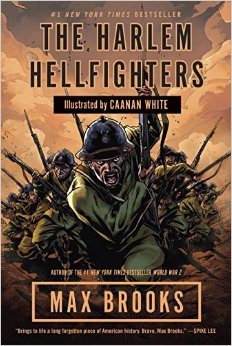
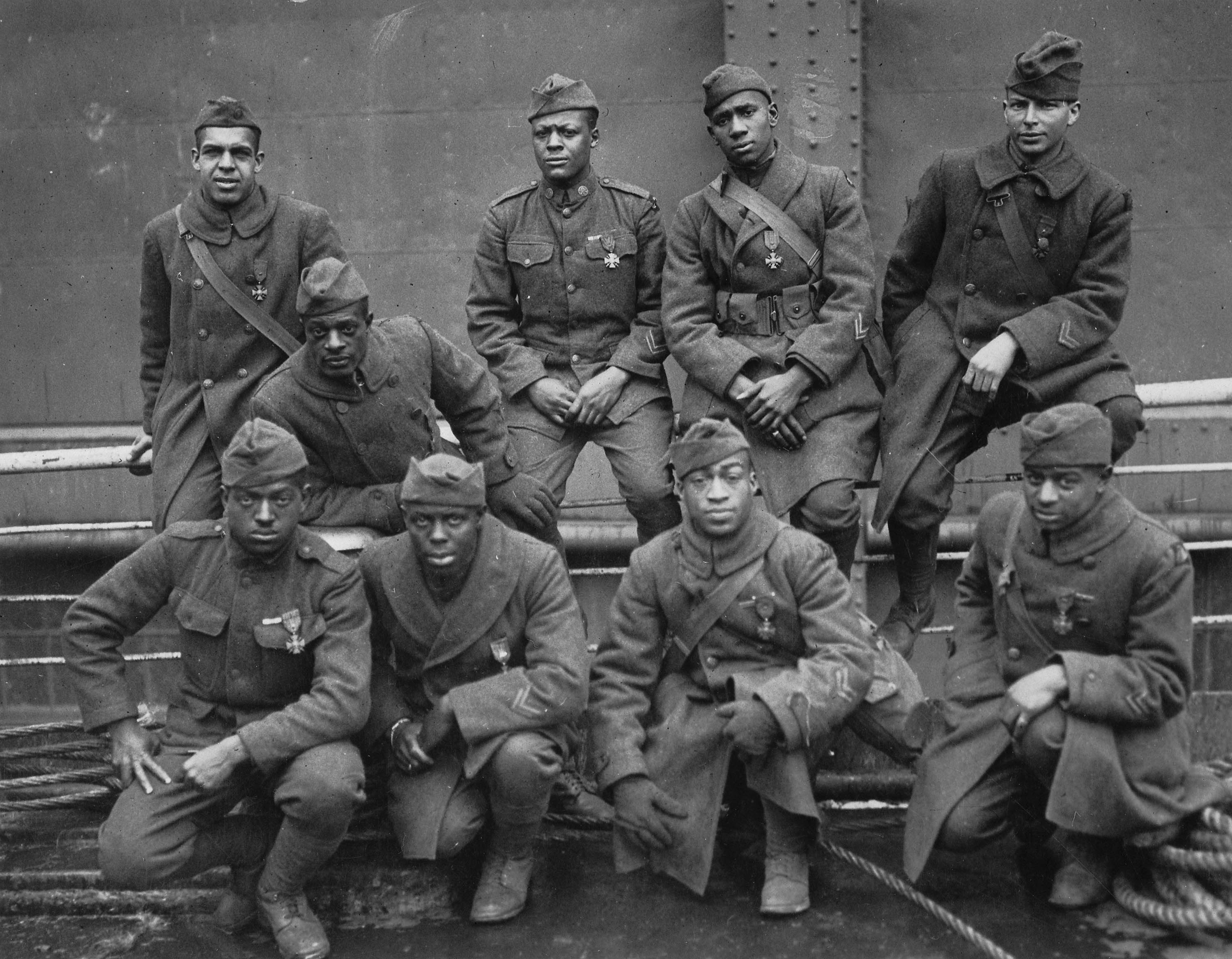
For those who didn’t already know, African Americans have fought in every major war. Little is known of one of the few black combat regiments of World War I. Nicknamed “The Harlem Hellfighters”, February 17th, the day of their battle, became an unofficial holiday. On February 18th of 1919, 3,000 veterans of the 369th Infantry (formerly known as the 15th Colored Regiment) paraded up Fifth Avenue at 23rd Street to 145th and Lenox for the prestigious Croix de Guerre from the French army.
#2: The Olmecs
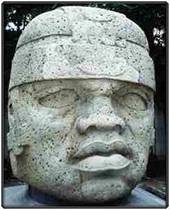

The Olmecs, whose features are similar to that of the African and Asian, are another part of black history we do not often hear about. They, The Olmecs, carved about twenty-two colossal stone heads in the southern parts of Mexico with their likeness and their influence have been found in Guatemala and further south. Olmec type sculptures have also been found in parts of the U.S. In fact, I am not sure if its still there, but there was an Olmec head on the property of The Field Museum in Chicago. If its still there, it should be somewhere near the back for those of you who are in the city.
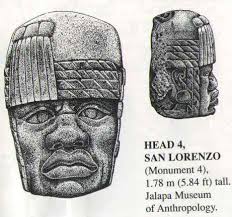
The Olmecs and other pre-columbian Blacks of the Americas were part of a prehistoric trade network that began in Africa and spread worldwide over 100,000 years ago and at various periods afterwards. To learn more about them, read They Came Before Columbus by Ivan Van Sertima and Susu Economics: The History of Pan-African Trade, Commerce, Money and Wealth.
#3: Cpl. Roman Ducksworth Jr

A military police officer stationed in Maryland, was on leave to visit his sick wife when he was ordered off a bus by a police officer and shot dead. The police officer may have mistaken Ducksworth for a “freedom rider” who was testing bus desegregation laws.
#4. Triple Nickles
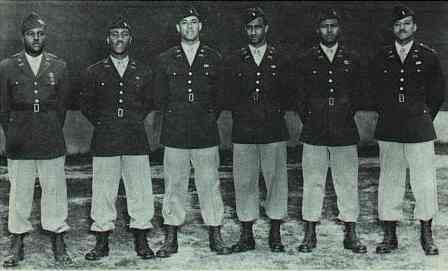
When my husband and I went to the movies about a month ago, a man had on a shirt displaying The Triple Nickle. My husband, former military, stopped and sparked up a conversation with the man. He was surprised to see it since no one really knew who they were. To our surprise, neither did the man. He was just wearing the shirt.
In 1944, 16 black men completed jump training and became parachute-qualified. The Triple Nickles Battalion was the first black airborne unit. Historians suggest the unit paved the way for a more integrated military.
Week #1: Beyond The Colored Line: Interracial Blog Feature with Misty Thomas
 It’s kind of hard to believe this today, but as recent as 1967, there was actually state laws that banned interracial marriage. These laws weren’t overturned until the Supreme Court case, Loving vs. Virginia in 1967. In that case, the Supreme Court found that it was unconstitutional for the state of Virginia to ban interracial marriage.
Although there are no longer any laws banning relationships, interracial dating remains a controversial subject for some people. The Interracial Blog Feature was inspired by my new book, “Beyond The Colored Line”, and was created as a means to foster a better understanding of diverse relationships. Today, we welcome a good friend of mine, Misty Thomas. Misty is the director of a privately owned Montessori School in Houston Texas for children ages 6 – 12 years.
EC: Thank you Misty for spending time with us today. Can you give the racial background of you and your husband for the record and how long you’ve been together?
MT: Hello Yecheilyah. Thanks for inviting me to your blog. I am of mixed nationalities, but I guess most people would call me white. My husband is mixed, his mother is black and his father is black, Mexican, and native Indian.
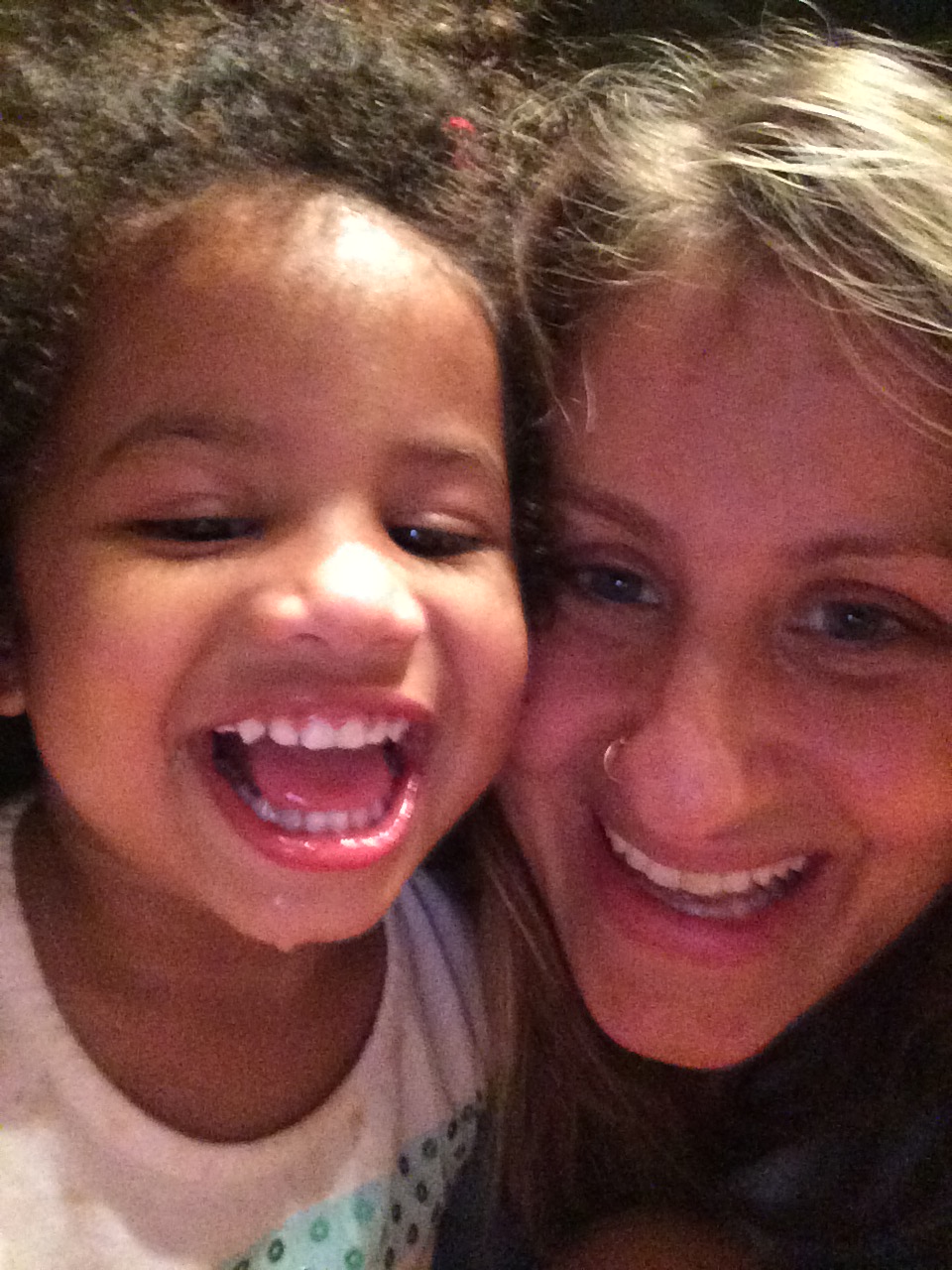
EC: Wow, I love it. Now, the character in my book, Stella May, is what the people of her era deem a “mulatto” that is, she is of mixed ancestry. You have children who are biracial. What advice would you give to mothers of mixed children on how to deal with the stigmas that are often placed to them?
MT: My advice for that question would be to just raise your children as you would if they weren’t of mixed races. I have not yet come into contact with any issues with my children being mixed and anyone giving us any troubles or acting racist.
EC: I love that. Speaking of racism, what are some challenges that interracial couples deal with that couples of the same race may not have to deal with?
MT: This one we have definitely dealt with from people in passing and within our own families when we first started dating. Most of the time if people should look at us in any hateful way it comes from us either being at a place where there is mostly African American people or somewhere where there are mostly white people. People sometimes make faces or just stare and you can feel what they must be thinking. It doesn’t bother us though. With our families in the beginning…I think it was them worrying what others would think.
EC: That is interesting that you say that the looks usually come from an exclusive black group or white group, makes me think about the racial divide still present in America. Now, from observation, when African-Americans and Whites marry, there is more likely to be an African-American husband and a white wife. In fact, 73 percent of all Black and White marriages have this setup. In your opinion and your experience with Interracial Relationships as a white woman, what attracts you to black men?
MT: I do see this is more common that you see white women with African American men. Me personally…I don’t think I have only been attracted to African American men for any particular reason and I have been one to date men of all races. I grew up in a diverse city.
EC: I’m glad you put that out there. Speaking of diversity, I have to bring up this point. I hear a lot of black people, black women in particular, accusing other blacks of being “sell outs” when they date outside their race. Have you or your husband ever had the misfortune of the title and why do you think this is?
MT: I have only had one person or woman hate on me for being with “their” men. We have never had anyone call my husband a sell out or speak out against us being together though anywhere else.

EC: Shame on that one person, smh. Now, a lot of people discern that blacks who speak with a professional tongue are trying to sound white. I speak from experience. My husband is not white but he’s very educated and he too grew up in a diverse city where the majority of people in the town were white. Of the blacks present, he was teased by them a lot for his speech. They said that he sounded, “White”. As a white woman, what are your thoughts on this? Is there such a thing?
MT: I think that is ridiculous and people just stereo type black people. My husband and everyone in his family are well spoken. There are plenty of people of all colors of skin that speak improper.
EC: I’ve always wondered about the conversations between interracial couples concerning the ongoing racial tensions surrounding blacks and whites. Are there any moments where you and your husband disagree with a subject that is race related? If so, how do you deal with that?
MT: Lol, actually we have never had any disagreements in any racial conversations. We know that racism was created by man and we don’t see each other as being different.
EC: Whew, you said something there, “we know that racism was created by men”. Can I quote you on that? LOL. Seriously, that is such a great point. Now, we’re almost done here. Any time before 1967 your relationship would technically be illegal. How does that make you feel today with the knowledge that you’ve chosen to be with someone outside of your race?
MT: Doesn’t surprise me, I have never been one to care what others think or one to follow. I might be one that some would of called a rebel….lol. I don’t like the hatred from the past history, but it is what it is.
EC: Misty, I want to thank you again for being part of this series. If there is one form of advice you would give to people still struggling to accept Interracial Relationships, what would it be?
MT: Your welcome, any time. One thing I would like to share with people who struggle with interracial relationships is that I feel it is a form of being colorblind. You could be blocking yourself of growth as a person for being blinded by color.
EC: Wow, blocking your own growth, that’s deep. As someone who has been married for some time, name one thing that has kept your relationship going.

MT: Love.
***************************

And that’s Misty Thomas on Interracial Marriages, thanks Misty! As you can see, the purpose of this series is to shed light on some of the racial biases that still exist here in America. It is easy to become offended at such topics and say that “a relationship is a relationship” and while this is true, it doesn’t change the fact that these biases still exist. That said, mankind was created to be compatible with one another regardless of race. Thank you Misty for helping me to shed light on that reality. Your interview was insightful, educational and I sure did learn a lot.
In the meantime, tune into next weeks segment on Beyond The Colored Line: Interracial Blog Feature. You don’t want to miss next weeks interview!
Special #Writer’s Quote Wednesday + #BeWoW Edition Part 1 – Finishing

Welcome back to another edition of Writer’s Quote Wednesday as hosted by Colleen of Silver Threading. Today’s Writer’s Quote is part of a Special Edition where I will be combining my Writer’s Quote Wednesday Post with my #BeWoW Post (Be Writing on Wednesday / Be Wonderful on Wednesday) BUT they are coming in two separate posts. This post is Part 1. Part 2 (#BeWoW) will follow. Please bear with me.
My quote today is in honor of a project I’ve been working on and comes from The New Poetry Handbook:

I think we can relate this quote to not just poetry but writing in general. “When a man finishes a story, he shall bathe in the blank wake of his passion and be kissed by white paper”. Yes! Love how that sounds don’t you? LOL.
I love finishing a project and the feeling of accomplishment for having done so. Though I know there’s a lot of work yet to come, it is still a great feeling of positivity that I think resonates with all writers. The way that this woman is staring off into the light is how I often look at something finished; just stare at it just like that lol.
Three years ago I wrote a novel but have since taken it off market so that I can revise it for a 2nd Edition. I have even taken to adding excerpts to this blog every now and again. Today, I am excited to reveal the Book Blurb and the revised Book Cover. Its not ready yet but I am proud of the steps I have finished in the process.
In this post, I will reveal the book blurb. In the next post, I will reveal the book cover. Time permitting, I will have this Book ready to go back on the site and back into your hands by the end of the year. This means I have two major projects to end the year with. The 3rd installment of The Stella Trilogy (The Road To Freedom) and The Aftermath, Second Edition:
The Aftermath
The Aftermath surrounds the life of Doris Whitaker, a 14 year old girl living in Chicago thirty-nine years after America’s streets saw the worst destruction to ever come upon them. In 2016, streets were paved in chaos as people struggled to feed their families and to shelter their young. Bread lines stretched beyond imagination and violence ensued as people became more and more desperate to survive. Little did anyone stop to fathom that when the United States Financial System collapsed, so did the world.
In 2019, three years into America’s most destitute state, King Antiochus and his prophet Lord Pope Feinberg produced a technology that changed the way we lived. It produced financial stability, murder rates dropped significantly, and the world was at peace; or so, some of the world. “The Rebels” also known as “The Infected” is a group of people rebelling against the new system, rising up and refusing the technology. They discovered that it went against their belief systems, their morals and values and that it did not produce the kind of peace it promised. For these reasons, they turned their backs and became the world’s most hated terrorist. Antiochus had members of “The Rebel” Organization hunted down, locked away and eventually murdered. Afterward, he made it a law that anyone showing signs of rebellion were to be treated in mental institutions around the world at an attempt to cure them of the insurgence. Anyone counted with “The Infected” who could not be cured, were murdered in a legal ceremony to purge the evil from the midst of man.
It is now 2055, and this story takes place when troubled Doris is the daughter of wealthy psychiatrist John Whitaker and his wife Cynthia. The family live in a technologically advanced world where people take trips to the past and no one is ever in need. The world is finally at peace and murder rates are at zero. But when Doris and her friends get lost in Jackson Park where one of the deadliest battles took place, the Government questions the Whitaker Family’s ties to The Infected. Hidden secrets are revealed, personal ties are broken and one day Doris never comes home from school.
Discover what happens next in The Aftermath.
******************
And that’s it for this weeks Special Edition of Writer’s Quote Wednesday. Be sure to check out my next post for the Book Cover Reveal to this blurb in a Special Edition of #BeWoW.
The Top 10 Must Haves
- Love
2. Be Kind
3. Work Hard
4. Stay Humble
5. Smile Often
6. Keep Honest
7. Stay Loyal
8. Travel When Possible
9. Never Stop Learning
10. Be Thankful Always
Self Published Books and Libraries: How to Get Your Book onto Library Shelves
Great Info on Self-Publishing and Libraries.

 What Indie Authors Need to Know About the Library Market

By Jane Friedman via Publishers Weekly
It has become a cliché to talk about how e-book distribution has leveled the playing field for indie authors and made the publishing environment more democratic. But accessing the library market remains somewhat more difficult for single authors with just a few titles.
While indie authors can gain some access to libraries by making their books available through major library distributors, that doesn’t mean that those books will be purchased. In many ways, getting self-published titles into libraries hasn’t changed since the e-book revolution: authors still have to prove that they have quality products that fit the collection. And, unfortunately, authors still face the stigma of self-publishing: there’s a long history of patrons offering to donate handwritten poetry collections or memoirs to their libraries.
Though some libraries work with their communities to publish…
View original post 307 more words
 The PBS Blog