Black American History: Why It Matters

It is no secret. Racial tension in the United States has not dwindled. In fact, not only does racism, discrimination, and police brutality continue today but it does so with just as much vigor as if it had been torn from the pages of the 1940s, 50s, and 60s. It is today’s current events that will add to the history our children will one day read about. However, to understand one’s future one must first understand the past.

I spend a lot of time speaking about ancient black history but the truth is that many of us do not even know our current American history. The past is filled to the brim with African American contributions but our understanding of these endeavors is either unknown or utterly flawed. Uncle Tom was not a sell out, Christianity was not beat into black people, Rosa Parks is not the first person to refuse to give up her seat on a bus, Negro spirituals was not made up babble, and black people did not die for the right to vote (we died for Freedom). These are just a few of the common misconceptions that are not only regurgitated as truth, but even taught in our schools. And it is the inspiration behind why I write black.

Not only is slavery being taken out of school textbooks, but many people have no idea concerning what these times were truly like. Nor can many people name more than a handful of individuals in relation to black history itself. Many African Americans in particular have no idea of their rich and glorious past which started long before slavery. I write these books because we cannot guarantee that our present will preserve the rich legacy concerning the true birth of a nation. Today Martin Luther King Jr. and Rosa Parks are the only names many people know and it is a disservice to the many other influential individuals in the black community. Even so, what happens ten years from now? Will Martin King and Rosa Parks names ring foreign? What would have happened if someone long ago did not write about them? Would we have known? Can we depend on modern society to teach history? What happens ten years from now? Will we understand what slavery was really about? Sharecropping? Tenant Farming? Does the black man and woman know who they were before slavery?

The Stella Trilogy is a series of short stories about one family and their search for identity amidst the African American fight for freedom. These books are my attempt to remind all people of our  forgotten legacy so we never forget what freedom looks like.

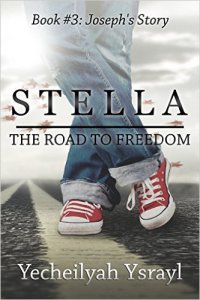
Stella: The Road to Freedom – Joseph’s Story (Book 3)
Stella: Beyond The Colored Line (Book 2)
Stella: Between Slavery and Freedom (Book 1)

51PZaD59VsL._SX331_BO1,204,203,200_Featured Image -- 4819

The Snowflake Method For Designing A Novel

I don’t usually use an outline when writing my books but I found this really neat method I’d like to try. While I can’t say I’ll stick to it like glue, it looks like something that will help me to organize my thoughts without the confusion. For my next project I’ll be using The Snowflake Method. Click Here to check it out. After your reading, research, and daydreaming is done (when you have an idea of what the story is about), here is Step #1 from the article:

Step 1) Take an hour and write a one-sentence summary of your novel. Something like this: “A rogue physicist travels back in time to kill the apostle Paul.” (This is the summary for my first novel, Transgression.) The sentence will serve you forever as a ten-second selling tool. This is the big picture, the analog of that big starting triangle in the snowflake picture.

When you later write your book proposal, this sentence should appear very early in the proposal. It’s the hook that will sell your book to your editor, to your committee, to the sales force, to bookstore owners, and ultimately to readers. So make the best one you can!

Some hints on what makes a good sentence:

  • Shorter is better. Try for fewer than 15 words.
  • No character names, please! Better to say “a handicapped trapeze artist” than “Jane Doe”.
  • Tie together the big picture and the personal picture. Which character has the most to lose in this story? Now tell me what he or she wants to win.
  • Read the one-line blurbs on the New York Times Bestseller list to learn how to do this. Writing a one-sentence description is an art form.

Another important point: It doesn’t have to be perfect. The purpose of each step in the design process is to advance you to the next step. Keep your forward momentum! You can always come back later and fix it when you understand the story better. You will do this too, unless you’re a lot smarter than I am.

*******

Sounds exciting! There is also a book which you can find here. Are you writing a book? Share the method to your madness! How do you stay organized?

Re-post: Author Tips on Writing Historical Fiction

This is a re-post from M.K. Tod who writes historical fiction and blogs about all aspects of the genre at A Writer of History. Her recent post included a list of tips on writing Historical Fiction as acquired from around the web. Instead of re-blogging I decided to re-post some of those tips here, they are just too good to let pass us by so I organized them in the list below so we can see them all. Please visit A Writer of History for author source and to comment on her blog. I would also suggest you follow her (especially if your a historical fiction writer), she is always on point with her guest authors, links, and advice:

  • Let the characters engage with the historical details – a variation on show don’t tell


  • Allow your characters to question and explore their place in society – doing so reveals the context of the times


  • Love the process, because readers will still find errors


  • Sweat the Small Stuff – small details allow readers to engage all senses in the past world you are building


  • Dump the Ballast – too much detail is a killer


  • Read historical fiction – sounds obvious doesn’t it but you have to appreciate excellent historical fiction in order to be successful


  • Know when to stop researching – cautions about falling down the proverbial rabbit hole


  • Research comes before writing – get the facts right to ensure a good foundation for your novel


  • Inhabit the mind and skin of your characters – you have to understand the sensibilities of the time so your readers can feel immersed in it


  • Pick a universal theme if you can – the concerns of your novel need to resonate with modern readers


  • Choose a time and place that really intrigues you – passion will make your story more compelling

Author Identity: Urban Fiction

Earlier this week, I had the pleasure of reading a reblog to an original post I had not seen until then. After promptly liking both the reblog, as published by Whitney of Write, Live, and Love and the original as published by Ja’da of quizoticmuses (who I do believe also has a book out on Amazon), I felt compelled to reply in a separate post so that my commentary was not limited to the comments section of her blog. I thought the post served as a great conversation starter, and I do encourage others to tune in if so inclined.

But before throwing in my two cents here’s the original (used with permission):

“As a writer, I have come to understand that in every capacity the term “urban” is synonymous with “Black people.” I don’t want to be an urban fiction writer; I want to be a writer. But I’m Black writing about Black people and not exclusively Black people drama. So I feel like I’m automatically fitted into the urban fiction slot when really, I just want to write fictional stories. Period.

How do I get there?”

There are certain words that, although can be applied to various races of people, pretty much is a reference to black people depending on the context. Words like Urban, and Minority, to name a couple. Specifically, the term “Urban” is no doubt a crafty way of saying “Black” and Urban Fiction then is used to denote black fiction.

What attracted me to the post is that as a person who speaks often concerning the state of Black America, Black history, its ancient origins, slavery, freedom, and as someone who is deeply passionate about writing about Israelites or so-called blacks, for blacks, our history, and culture, I must say my writing has never been deemed Urban Fiction. This revelation caused me to think that maybe the characterization of Urban Fiction is a bit deeper than being a black writer writing about black people in general but that it is also about the style of writing.

Writing Styles

“Style is the way writing is dressed up (or down) to fit the specific context, purpose, or audience. Word choice, sentence fluency, and the writer’s voice — all contribute to the style of a piece of writing.”– Google

As I began to think about my own reading experience with UF, I am hearkened back to books that have a certain tone and feel to it. These books tend to follow a certain writing style. Though they do tend to deal with the internal struggle of the African American experience, it’s the way that these books are written that makes them different. Personally, my characterization of Urban Fiction books is based upon the language, setting, and overall surroundings incorporated into the book.

This led me to consider that, though I do find it is exclusive to the black community, Urban Fiction is a label applied to a certain kind of writing that not everyone can do. Everybody can’t write good Urban Fiction books, especially people who have not lived the life they are creating for their characters. Urban Fiction is a unique genre. While you can research for Historical Fiction and Romance or Thriller, if you write a UF novel, you had better have lived that life or be familiar with the setting in some way or it will fall flat. It will read fake.

Black Lit or Urban Fic?

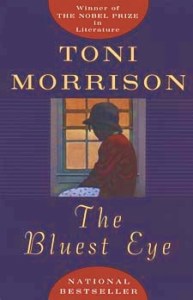
What makes Toni Morrison’s “The Bluest Eye” Black Literature and Tracy Brown’s “Snapped” Urban Fiction? Just by looking at the covers alone we can see that they are two completely different kinds of works, though they are both written by African American female writers about African Americans.

5337019 thebluesteye

Both books are relevant in black society. Both are truths concerning black family life, struggles, and both contain black central characters. So why is Brown known as an Urban Fiction writer and Morrison a Fiction writer? Both are very talented and though Morrison is most prominent, Brown is no less valid. The classification has to do, I think, with the individual writing styles. The overall message of the book itself and the direction in which it tends to expand conversation.

I often find that black writers who write with a passion that is rooted in that hardcore truth concerning black family life, if its raw, uncut, up close and personal, then it is often labeled Urban Fiction.

Believe it or not, this is a conversation that many are already having. Bernice McFadden, the very talented author of nine critically acclaimed novels including SugarLoving DonovanNowhere Is a PlaceThe Warmest DecemberGathering of Waters (a New York Times Editors’ Choice and one of the 100 Notable Books of 2012), and Glorious, has already coined the term, “seg-book-gation”. She argues that black books are lumped into an “African American Literature” category instead of typical genres like General Fiction.

Personally, I see nothing wrong with the separation and encourage Blacks to embrace being such a set-apart people. Nothing we do is going to be normal or traditional because we are not a normal people. We are unique, creative, soulful, we are the salt of the Earth.

Triangle of Sins; Alibi and Midnight: A Gangster Love Story; Diary of a Street Diva; No Disrespect, A Street Girl Named Desire; The Coldest Winter Ever, these are all titles that represent Urban Fiction or “Street Literature” because they focus on the internal struggle of growing up Black in the Hood. They are books that are written in such a way that it captures the personal truths concerning the life many African American’s live and that’s why we love them so much.

These are books about what I like to call, “The Curses” or the struggles blacks have had to endure for centuries now. It is prophecy fulfilled and the gritty reality is what makes them appealing to the Black community.

In closing, Author Identity is all dependent on the mindset and thought processes of the author and who they are. Because Black people set the trend in a host of areas, Urban Fiction and Street Lit is another spin on the norm that African American’s have contributed to. Black people have always been the creators of what is different, creative, or uniquely separated from tradition. If Black writers of fiction are labeled Urban Fiction I believe its more so because of the uniqueness of the work itself. Urban Fiction is not just a genre, but it’s a different way of writing. So whereas one person can write about Blacks and for Blacks and never be looked at as an Urban Fiction writer, the same may not be true for someone else because their styles are different.

(Also, because reading is a HUGE part of writing, people tend to write how they read, what they experienced (or experience) in everyday life, and what they’re most knowledgeable or passionate about.)

:Random 11:

Ja’da posed a great question. I think this is an excellent conversation starter. With her permission I would love to use it as a catalyst for a separate post in which to give my thoughts on the answer to this question. My comment would just be too long.

4everQuixotic's avatarquixoticmuses

As a writer, I have come to understand that in every capacity the term “urban” is synonymous with “Black people.” I don’t want to be an urban fiction writer; I want to be a writer. But I’m Black writing about Black people and not exclusively Black people drama. So I feel like I’m automatically fitted into the urban fiction slot when really, I just want to write fictional stories. Period.

How do I get there?

View original post

Book Trailer – Stella Book #3: The Road to Freedom: Joseph’s Story

Coming to Print, Amazon Kindle, B&N NOOK, iBooks, Google Play, Goodreads, and Kobo Friday, February 26, 2016.

Wealthy and clueless are just some of the words Joseph uses to describe his family. Deeply concerned about the state of Black America, a fight with his brother compels a young Joseph to leave his mother’s house and join his friends for a trip to Atlanta for SNCC’s (Student Non-Violent Coordinating Committee) second conference. Excited to live life on their own, Jo and his friends have left school and the lives they were living for a chance to become part of the movement. With no money and essentially no plan the seven friends, three black and four white, set out for the road when they are stopped by a racist cop who makes them exit the car. The teens are unaware that a mob of Klansmen also awaits them at the New Orleans bus terminal.

Discover what life was like for Joseph when he left his mother’s house in the 3rd installment of the Stella Trilogy, years before a mixed race Jo knew that he was mixed race. Determined to be apart of the movement Joseph McNair, son of “Sidney McNair”, and his friends abandon their lives in search for answers in the Jim Crow south on The Road to Freedom.