Beyond Imagination

pexels-mark-g-2401568

We live in a world where some aspects of truth are not allowed to exist. They live instead behind the pages of books and underneath the skin of imagination. Writing fiction is fun to me because we have the opportunity to play with these elements, mixing and matching reality and daydreams until anything becomes possible within reach of imagination.

Monsters pop in from outer space, people fly, and houses speak to us. But the truth is stranger than fiction and stretches beyond imagination. Nothing we can make up compares to the unusual reality of the kinds of things that actually take place in the real world. You think you’re watching a movie written by a writer who stuttered embellishments in the darkness of his bedroom, fingers tapping against the keyboard while memory plays hide and seek with his thoughts.

But what if his characters really do exist? What if armies of giants live underground with thousand eye locusts like horses ready for battle?

You think Shrek was the genius of a profound imagination until you realize there were talking Donkeys in the history of man. You think The Matrix is just a movie until you begin to understand a parallel universe.

“Truth is Stranger Than Fiction” isn’t just a fancy tagline put together by a writer of fiction. Not something I dug up between the inspirations of Mark Twain. What it seeks to communicate is the notion that nothing we can create can be as unusual as what we are bound to find in real life and speaks metaphorically of the unsettling realness of truth. The “strangeness” of reality. You think something is weird until you find out just how deep the rabbit hole goes.

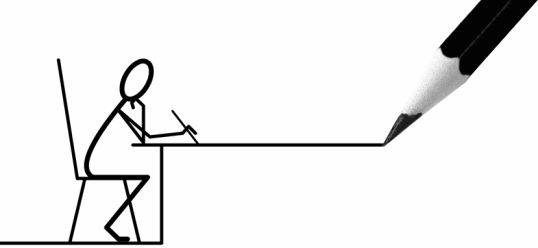
Perhaps maybe your characters are not just stick men, but what if they actually do exist?


Convicted

think-backward-to-write-meaningful-metaphors

His beauty was biblical. Much more than a body, he was diary. He was journal. A standing column of poetry. From the top of his head to the bottom of his feet, this was prophecy. Thought the teacher was a waitress asked her if I could have another round of him. Let’s be realistic, this thing was futuristic like foresight. Every time he opened his mouth I took road trips into his memories. For my blood racing, I could not hide the joy. Trying to catch my breath after falling into his smile we were connected. Too young to understand this love-at-first-sight thing, I could have been dreaming. Maybe this was just my imagination. I was dancing. Moon-walking into complete relaxation. His last name should have been Jackson cause he was a hit. I couldn’t lie. Ran home every day just to go to bed so I can wake up to the sunrise because it reminded me of him. He didn’t know it but my nose was so open I took notes. I was singing. A sucka to every sound of the harmonious humility that escaped like convicts from his lips I was convicted, because I loved him too early.


Yecheilyah Ysrayl is the YA, Historical Fiction author of The Stella Trilogy, Blogger, and Poet. She is currently working on her next book series “The Nora White Story” about a young black woman who dreams of being a writer in The Harlem Renaissance movement and her parent’s struggle to accept their traumatic past in the Jim Crow south. “Renaissance: The Nora White Story (Book One)” is due for release spring, 2017. For updates on this project, sneak peeks of chapters, the pending book cover release, and full blurb for this series, be sure to subscribe to Yecheilyah’s email list HERE.

Show and Tell – The Show vs Tell Debate Critiqued

A wise man once asked a simple question: “What is water?”

A few people gave their answers. Some said “H2O”. Some said, “a transparent liquid found in lakes, oceans, and seas.” Other’s said, “a chemical substance.”

The man smiled. “None of the above.”

The people’s brow buried deeper into their foreheads and their mouths twitched, “what?”

“Don’t give me the name or what you’ve been told it is made of,” said the man.

“Tell me what it is.”
writing-desk2

****

Self-Publishing is a lot like life, there is a question behind everything we think we know. There’s a lot of advice in the Indie Author community. What if I told you that not all of it was good advice? Or shall I say, not all of it is wise advice? It may be useful advice, but is it wisdom? Do we actually know what water is? We do not.

What is the most talked about thing in this community? What is that thing that people just can’t stop talking about? Yes, the Author Platform is one, but what’s another? That’s right, “Show, Don’t Tell.”

Hold on to your seats. A lot of you are not going to like this:

What if I told you this was not very good advice?

I didn’t say it wasn’t useful advice. Advice is subjective like that.

Let’s establish the facts. New authors indeed tend to lean more toward telling than showing and this is a problem for readers because it makes the story difficult to get into. The author’s purpose is to make the reading as easy and as effortless as possible.

Please, for the love of all that is set-apart, make sure your script does not read:

“I walked up to the coffee machine. I grabbed the pot. I walked over to the sink. I filled the pot with water. I put the pot back and turned on the machine. Brandon calls me from the other room. What does Brandon want?”

Everyone say it with me:

“Don’t tell me the moon is shining; show me the glint of light on broken glass.”

Anton Chekhov

Great advice.


I sympathize with staunch “Show, Don’t Tell-ers” because I’ve come into contact with many books that sound just like that example. All the author did was told me what was happening (like one big summary) and bored me to death. My brains shifted in my skull, turned into liquid and oozed from my temples. Gross, right? You don’t want to gross your reader’s people.

Here is wisdom: Show AND Tell.

  • Showing – Writing vividly with detailed images, sensory information, and/or dramatized action
  • Telling – Writing in abstract summaries or simple statements

It is the secret no one is talking about.

Or, almost nobody.

Kristen Kieffer wrote a most excellent post on balancing show and tell and I will quote her in this post because ya know, no need to reinvent the wheel. Though I’d already written this article as a newsletter for my email list long before I read Kristen’s article, I am glad I eventually came across it as it further solidifies my point and now I can use some of her examples as a reference. Kristen Lamb says:

“As writers we are often guilty of too much brain-holding, of coaching the reader. We want to control every emotion, perception and description yet often less is more. When we leave blank space for the reader to fill in, the fiction can have room to blossom into something unplanned for. The story becomes richer and the experience more visceral because it transforms into an echo of the audience’s self-projection. Thus instead of one fixed interpretation, we get countless.” – Kristen Lamb

Aside from both Kristen’s and a few others, few people are talking about this aspect of balancing show and tell. Because of the show vs. tell debate authors are now showing us everything but their booty cheeks. That’s not what show means and makes the story sound just as boring as too much telling. It’s called Storytelling for a reason. You are supposed to tell a story.

The difference is not eliminating telling. You don’t want to show and not tell. You want to balance the amount of telling and showing. The straight action works no more than no action. Your characters just can’t be running all over the place, they need quiet, emotional times too. Balance is key.

Storytelling came from the oral traditions of passing along information by word of mouth. It is the days where your grandmothers and great-grandmothers told the stories of their childhoods. It’s when you sat at their knees to learn of the world that existed before you.

The easiest way to understand this is remembering that Telling gives us the statement, in other words, tells us something is done. Whereas showing is the demonstration of how something is done. That said, why is Anton’s example so popular?

“Don’t tell me the moon is shining; show me the glint of light on broken glass”.

 –Anton Chekhov

When I first read this quote, I pictured a triangular piece of glass that fell from a window and is now sitting on a street corner under the moon. It rained earlier, so it sprinkles the glass with droplets of water. I can tell by the position of the glass and the tiny pieces of gravel because something bad happened. This caused the glass to shatter and yet, there is the light shining through all the brokenness. The story is not over because there is hope.

The moon is shining, tells me what is happening, but the glint of light on broken glass shows me how it happened. (Or at least how I imagine it happened.) It is a demonstration versus information. Don’t tell me they shot the woman in a restaurant. Show me the sweat on the palms of her hands and underneath her armpits, the perspiration sliding down her temples; the tears rolling down her cheeks, and the shakiness of her hands as the pistol is pointed at her head.

Telling is Just as Important

In the words of Steven Moore, who left a comment on the article 5 Examples of Bad Writing Advice from Great Authors:

“You should only provide enough detail so the reader can participate in the creative process by forming their own ideas about characters.”

Telling is just as important as showing and it is because of this being left out that makes “Show, don’t tell”, strange advice. It just doesn’t explain the entire matter. I need not know every single thing that is happening in the restaurant. You don’t have to show me the fly on the windowsill if it’s not relevant to the story.

A general rule of thumb is to show only when it has something to do with the story. Bernice McFadden does a most excellent job at this in This Bitter Earth. Everything mentioned in this book connected somehow. There is nothing mentioned that is insignificant to the story and no question that is not answered by the end of the novel.

Telling is making a statement without the drama. “She touched the pillow.” That’s telling. We don’t learn how she touched the pillow or what she thought when she touched the pillow, we are just told she did and it’s enough. We need not overdramatize her touching of the pillow.

It’s a matter of knowing when to show and when to tell.

Let’s refer to an example in Kristen Kieffer’s article:

Too much showing:

“His eyes were like the sea during a storm, dark blue and tumultuous. His jaw was chiseled like marble, his nose sharp and strong. His golden locks glimmered in the sunlight as he carried the boxes, ropy arm muscles rippling beneath the crimson fabric of his t-shirt.”

I enjoyed reading that actually, but, I am learning something as well. Because I love poetry, I can sometimes show too much! Good thing we have beta readers and editors. Moving on…

Too much telling:

“His eyes were dark blue. His shirt was crimson red. He had a prominent jaw and big muscles. I watched him as he walked into the office, holding a box with his name on it.”

As you can see, too much telling is BORING. My brain is shifting…

Showing and Telling:

“His eyes were dark blue, as tumultuous as a storm at sea, a stark contrast to his cheery crimson shirt. He had that classic Adonis look so many girls admired. Chiseled jaw, strong nose, ropy muscles, I admired them all as he carried his box of belongings into the office.”

“His eyes were dark blue (statement), as tumultuous as a storm at sea (description), a stark contrast to his cheery crimson shirt (description). He had that classic Adonis look so many girls admired (statement). Chiseled jaw (description), strong nose (description), ropy muscles (description), I admired them all as he carried his box of belongings into the office (statement).”

Now that’s a tasty description. Want to create the same in your writing? Kristen advises we use the following formula:

1 Statement + 2-3 descriptions = Balanced writing

I love this advice and will be incorporating this nugget of wisdom in my own writing.

The First Sentence

What is this post without its beginning? I have heard over the years how important you are and your contribution to the writing process but I’ll be the first to admit, I don’t always put you first. Don’t always put much thought into you. So you test my patience with the very need to begin. Times where my mind is far too cluttered with a hanging word waiting to be pushed to the middle of this screen. You see though I trust that I can give birth here, I have since remembered there is movement in stillness. I have since learned to cherish you as something more than a good morning greeting thrown into the air and smashing into walls. I promise to not turn my back or kiss you gently on the morning after. No longer can, “Hello”, or “What’s up my people?” prove sufficient, for you are the commencement. The beginning. The start of this post and worth more than just some nightly fling. For what is the cake without its icing? The cooking pot without its lid? What is a post without its opening sentence? Must I risk my words boiling over the edge of posts and spilling sloppily into WordPress readers? All this mess that a conclusion of a sentence won’t clean-up for me.

Dear Deception

You try to hide, but I know you are there among them. I can hear it when they walk and smell it in their smiles. The truth is that you inebriate them with lies. Overflowing their presence like air under pressure. Shame that some of them can’t even stand up straight, staggering through social media unaware that their ignorance is showing. You have taught them to expose their nakedness. Now their heart is blackened with the scars of falsehood, and their minds poisoned with comfort. Sometimes they are even unaware of the stench they carry like walking viruses and destructive pestilence. They sit among graves and befriend the first corpse they see smiling. You think you know wisdom, but foolishness is bathed in your shadow and kindness is a game you play on the minds of the weak; snickering behind the concocted words of flattery and the secret winking you perform under the mask you wear. You have even fallen prey to your own fabricated illusions. Casting manipulating spells on the unknown, yet you wrap yourself in white and wear a silver wig. Indeed you are deception, a lie that is made to look like the truth.

Dear Chandelier,

CH10092GL-01

Some of us are just too close to the ground to see what the sky looks like and yet you, in your own way, have become the hanging crystal of inspiration. You stand unaffected among grand halls and ballrooms; of corporate offices and living rooms. I watch at the coming and going of guests. Some of them important, some not. They wrap themselves in fruitless conversation and rest their bottoms in chairs that hug the table beneath you. They shout with laughter and hold their noses in the air and yet they live on the ground. They have to look up to you and gasp in awe. So modest and rooted is this simple fixture in a room. I watch as your radiance pulls their mouths to the floor. Watch your occasional swing shift their eyes; watch your gracefulness stop their breaths. Softly and delicately, your crystals spark reflection like the conviction of a mirror, in which we are all forced to see ourselves. We try to move to a less luminous part of the room, but we are powerless to scorch your light. Voices rise to distract from your daintiness. The people scream and yell, come and go, but they are incapable of stealing your glory, let alone catch its shadow bouncing off the walls and chipping at the faces of guests. It is you oh Chandelier. You who remains steadfast and immovable, yet moving. Silent, and yet you sing. Fragile, and yet strong. Beautiful, and yet delicate. Modest, and yet shinning.

You Have the Right to Write

Attention: You Have the Right to Write or anything you don’t say will drive you crazy by intense desire. Creative ideas will overheat until they melt themselves into fragmented descriptions of confused thought and drip like perspiration from your brow. Words will escape your mouth in an explosion of writer’s language. Soon, you’ll start bringing up the names of books to four year olds and correcting sentences fresh out your neighbors mouth, “..not a eraser, an eraser..” you’ll blurt out uncontrollably. Your lips are so bone dry they have wrinkles, and you trip over your tongue as if it does not belong in your mouth. You can’t even blame Writer’s Block for the frustration since you keep missing your periods at the end of sentences. Poor words, left to run on in a string of thought; breathlessly pulsating through veins hoping to make it to the end of your never ending consciousness. The least you can do is appoint a capital letter to keep everyone in check, a comma won’t hurt you either. If you find yourself in this condition, you have the WRITE to consult inspiration before speaking anything into existence, and to have a pen and pad ready for any glint of light amidst the darkness, now or in the future.

His crime? Not Writing!