Many of us are familiar with the Greenwood Community of North Tulsa Oklahoma where blacks built the most prominent community of their time. Deemed “The Golden Door” of opportunity for blacks, the dollar in “Little Africa” circulated 36 to 100 times, sometimes taking a year for currency to leave the community, hence its nickname “Black Wall Street” along with “Little Africa” before its systematic destruction that left it torn and desolate. But it wasn’t until my trip to New Mexico this past week that I discovered other communities that are also worthy of inclusion in Black Wall Street’s Hall of Fame.
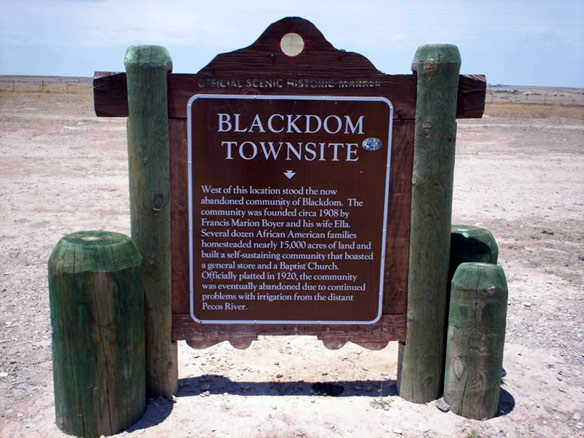
Blackdom
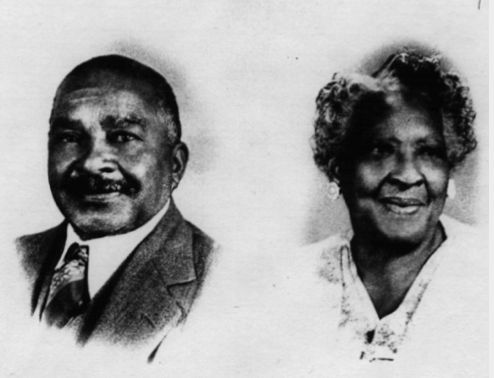
Blackdom was a little known African American community about 18 miles southwest of Roswell New Mexico and was founded by Frank and Ella Boyer. Walking 2,000 miles on foot from Georgia to New Mexico, Boyer left his wife and children behind to cultivate land in the free territory of the West before sending for his family some three years later. At this time in history Blacks had begun migrating from the south in great numbers in a movement called “The Great Exodus” following the Homestead Act of 1862, particularly in Kansas. According to a 2001 archaeological study on the Blackdom region from the Museum of New Mexico, “During the decade of the 1870s, 9,500 blacks from Kentucky and Tennessee migrated to Kansas. By 1880 there were 43,110 blacks in Kansas.”
The Homestead Act gave room for former slaves and free born blacks to reside in the West regardless of race. Here was an abundance of land, free and fertile to anyone who could keep it up. Influenced by W.E.B. Dubois and Frederick Douglass according to historians, Frank was a graduate of Morehouse University and a teacher of Black History which at this time was not very popular. He met his wife, Ella McGruder, a graduate from Haines Institute in Augusta, Georgia, at a teacher’s summer school session. The couple had four children (three sons, one daughter) when Frank set out for New Mexico in 1896.
The desire and influence to build community was first conceived in the mind of Frank’s father, Henry Boyer, a free man. Henry was a wagoner in the American-Mexican war when he first set eyes on the New Mexico land. When he came home, he told stories to his family of the land. Growing up during the Reconstruction Era, after the Civil War, Frank naturally grew up with his father’s dreams in his head and saw the West as the Promised Land to a new start. Ironically, the same life force that made Blackdom thrive as a community was also its downfall. The Artesian Water sprang in abundance as more and more blacks were invited and nourished on the land. Blackdom had its own school, and post office. However, the Artesian Wells eventually dried up and citizens were forced to move to nearby cities such as Roswell to continue their lives. The Boyer family were the last to leave.
After Emancipation, in theory black people were free. They were released from the physical chains of bondage. This freedom however, much like sharecropping, said that one could be self-sufficient by earning a profit, but by the end of the year the amount of debt incurred was a reality check concerning the freedom, or lack therof that actually existed. In the same way, Emancipation didn’t mean anything for a people who continued to suffer spiritually, financially, and mentally from the trials of chattel slavery. For this reason, not all blacks settled to continue occupation in the South but many of them invested in the hard work that slavery demanded and sought to use those skills to work their own lands and build their own communities. These stories fascinate me because it is a part of black history that is rarely, if ever, told. Not all blacks endured economic struggle and poverty after slavery but some, if only for a moment, maintained an air of economic dependency and not only succeeded, but prospered in the process.
As I scrolled through my Facebook feed a few weeks ago, I came across a status update that was upsetting, though sadly not surprising: “That awkward moment when your decision to wear your hair natural comes up in an interview… and not in a complimentary way…”
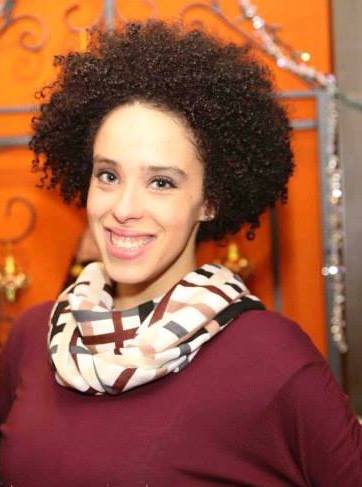
My friend Sonia had interviewed for a position as a Social Media Specialist for a marketing startup in New York City. The interview took place in the common area of WeWork, a coworking office space where the startup had put down temporary roots. As distracting commotion took place around them, she and the rather cold interviewer had the following exchange.
Interviewer: “Is that how your hair is in your LinkedIn picture?”
Sonia: “…Yea.”
Interviewer: “Not straight?”
Sonia: “Nope.”
Interviewer: “Oh… Interesting…”
He then made qualifying statements, such as, “So you say you’re good at SEO,” and “You claim to be a good writer.” I…
Coming to Print, Amazon Kindle, B&N NOOK, iBooks, Google Play, Goodreads, and Kobo Friday, February 26, 2016.
Wealthy and clueless are just some of the words Joseph uses to describe his family. Deeply concerned about the state of Black America, a fight with his brother compels a young Joseph to leave his mother’s house and join his friends for a trip to Atlanta for SNCC’s (Student Non-Violent Coordinating Committee) second conference. Excited to live life on their own, Jo and his friends have left school and the lives they were living for a chance to become part of the movement. With no money and essentially no plan the seven friends, three black and four white, set out for the road when they are stopped by a racist cop who makes them exit the car. The teens are unaware that a mob of Klansmen also awaits them at the New Orleans bus terminal.
Discover what life was like for Joseph when he left his mother’s house in the 3rd installment of the Stella Trilogy, years before a mixed race Jo knew that he was mixed race. Determined to be apart of the movement Joseph McNair, son of “Sidney McNair”, and his friends abandon their lives in search for answers in the Jim Crow south on The Road to Freedom.
You were pulled over because your taillight is out, your license is suspended, and you were speeding.
The reason you’re in the condition that you’re in is not because of the white man and its not just because your black. We are in these conditions as a people largely because of our own lack of accountability for our actions.
A nine year old boy is murdered on the south side of Chicago because of his father’s dealings. Where are the marches at Jesse Jackson? Where is the protest Al Sharpton? Where’s the movement against black people killing black people?
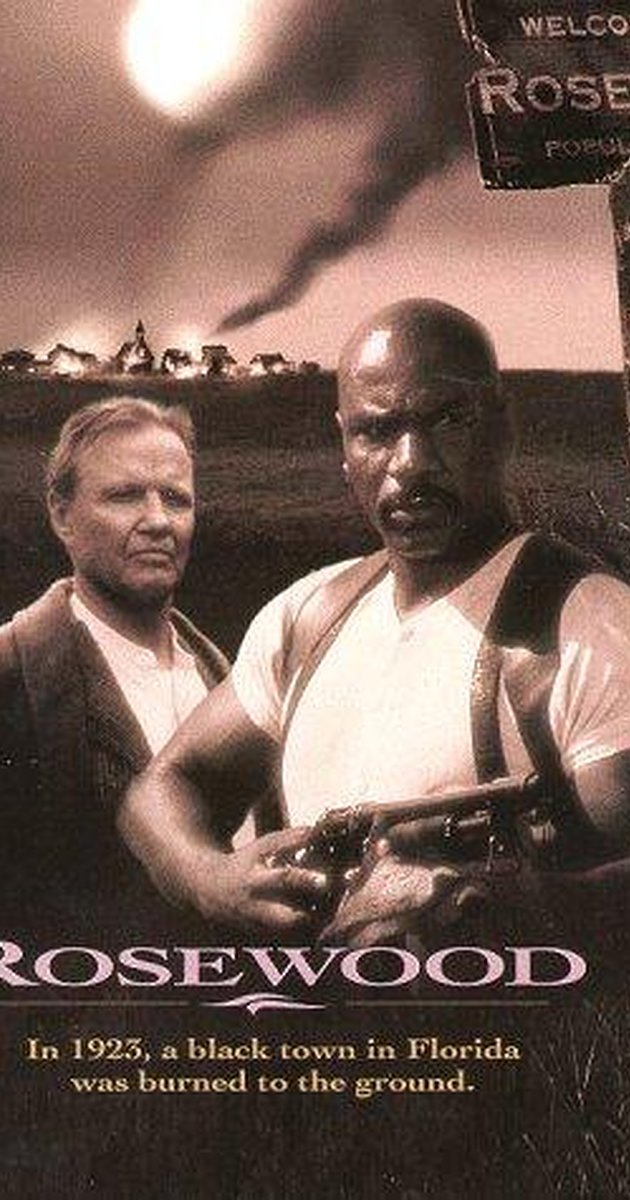
John Singleton said that he will never put another movie out like Rosewood again because black people don’t support it. Rosewood for those who don’t already know is a movie based on a true story, a dramatization of the 1923 horrific lynch mob attack on an African American community.
The Tragedy of Rosewood
In an article written in The Baltimore Sun, Stephen Hunter lists some reasons why the movie Rosewood did not excel calling it “a fundamentally immature, undisciplined work.” He goes on to say “Singleton probably over-romanticizes Rosewood.” Another major criticism was the cowboy theme, something we also see in Quentin Tarantino’s Django Unchained but if you understand history you would know that blacks were the first cow-boys. The term comes from the plantation where black boys were in charge of tending to the cattle. They were quite literally “cow boys”. So not only do I disagree with Hunter, but critics are missing a key element that contributed to why the movie did not do well.
The conversation always comes back to the Rosewood-Booty Call debate. Rosewood came out a week before Booty-Call and almost destroyed Singleton’s career. Booty-Call on the other hand did extremely well, putting leverage to Jamie Foxx’s career.
The truth is that the black community must start taking responsibility for its actions. You are not pulled over just because your black, sometimes its because your illegal. If you know the system is biased, why would you behave recklessly? Even the bible says to give unto Caesar what is Caesars. So if I know its against the law to speed why would I risk getting caught? Likewise, a lack of black identity in film is not just because Hollywood does not want to see conscious movies about black people, but black people don’t even wanna see conscious movies about black people! As strangers in a foreign land we have been taught to hate ourselves and we tend to operate accordingly. If I hate myself I’m going to hate everything about myself. Yes, some of you hate yourselves but you can’t even take responsibility for that simple truth. Your afraid of your own people and you think dark skin a big nose, thick lips and kinky hair is the ugliest thing in the world.
Part of Rosewood’s failure is the fact that many blacks would much rather watch Tyler Perry’s, Medea Goes to Jail. You go to bed wearing a wig and you wake up with a wig. You go to bed with make-up on and you wake up with it on both literally and figuratively speaking. You put on elaborate personas because you hate who you are.
When you hate yourself but you don’t know that you hate yourself, this is a dangerous position to be in because a lack of love turns you into a monster. The stories of Jason and Michael Myers are not horror stories about supernatural beings. They were stories of children who were teased and abused and have consequently learned to hate themselves and it turned them into monsters. Michael Jackson is a real life example of childhood abuse turned horrific. This man was talented and has made great music but he also turned himself into a monster because he hated himself. He hated himself so much that he changed his physical appearance. That’s because when you hate your inside you hate everything outside and millions of dollars ain’t gonna solve it. Money can’t solve hatred only love can. The only way you can conquer self-hate is love, starting with self-love but to love yourself you have to first know yourself and knowing yourself begins with admitting your faults. Take some responsibility for the part you play in how you are treated. It doesn’t exempt anyone for their wrong but it helps you to move forward in yours.
When you know yourself only then can you love yourself and only then can you be yourself.
“This week marks the anniversary of the Rosewood massacre. Hundreds of black people were murdered and lynched and run off their own land and homes. We must never forget the domestic terrorism survived by our people. In 1997 I released a movie on the incident. It wasn’t one of my more successful pictures box office wise but I think it one of the best I’ve done. The same weekend it was released Booty Call came out. I think more black folks were comfortable watching Booty Call that weekend than Rosewood… Which is a shame…. I feel the more we embrace our history the better we can defend against being oppressed in our present. Just my thoughts this morning.”
She has heard for too long now
that her pores bleed the color of slave ships
that chains have been seen in her smile
that her skin shines like a beacon of shame
sprinkled amidst Mississippi cotton fields
sometimes
her beauty sticks out
like a diamond in the ruff they notice her
and still
she is only pretty for a dark skin girl
Who does she think she is?
being darker than a brown paper bag?
The truth is that she is the color of the Goddesses
a dark chocolate kiss
neatly wrapped in silk
want to touch her face
just to see if it’s real
just to see if it’ll melt underneath my fingertips
Instead
I’ll keep my hands to myself
don’t want to be the stone
responsible for the wrinkles in her skin
this delicate rose petal of a woman
reborn in the spring
don’t want my touch
to taint her gorgeous
where not even the bite of Winter
dares to diminish
her light
Since this is the final interview I will skip through the semantics and get straight to the point.
The Interracial Blog Feature was inspired by my new book, “Beyond The Colored Line”, and was created as a means to foster a better understanding of diverse relationships. Not just between whites and blacks but between all diverse relationships.
Today, we welcome a special guest in as our final interviewee. I didn’t know initially that both he and his wife wanted to be interviewed and being I did have an extra spot left you can imagine my excitement. Help me to welcome Andre Wells, husband to Allison Wells from last weeks segment, to the blogosphere.
EC: Well hello there Mr. Wells. As our first and only male guest I appreciate your boldness in letting me interview you! I was starting to think this was a woman thing LOL. So, you know the routine, can you give the racial background of you and your wife for the record and how long you’ve been together?
AW: Hello EC. My name is Andre Wells and I am African American and my wife is Hispanic and Caucasian. We’ve been together for about 12 years, Married almost 10.
EC: Excellent. Now, the character in my book, Stella May, is what the people of her era deem a mulatto, that is, she is of mixed ancestry. You have children who are biracial. What advice would you give to fathers of mixed children on how to deal with the stigmas that are often placed to them?
AW: Be honest with your children about who they are and the struggles they may have to face. Teach them how to respond to stigmas and challenges.
EC: I like that, “teach them how to respond to stigmas and challenges”. Speaking of challenges, what are some challenges that interracial couples deal with that couples of the same race may not have to deal with?
AW: Some people think I am over dominant over my wife or feel the woman must be the head of house because the black man must not be that responsible.
EC: Interesting. There is a big controversy within the black community concerning role reversal or the topic of submission and authority in general.
Mr. Wells, when African-Americans and Whites marry, there is more likely to be an African-American husband and a white wife. In fact, 73 percent of all African-American and White marriages have this setup. In your personal opinion, since you would know more than any of our guests! As a black man, and your experience with Interracial Relationships, what do you think attracts other ethnicities to black men?
AW: Black men are unique. Unique in our looks; unique in the way we carry ourselves; even the way we raise our families. In most cases white women want black men but don’t want the stigmas that come along with it.
EC: Wow. Speaking of black men, I hear a lot of black people, women in particular, accusing other blacks of being “sell outs” when they date outside their race. Have you or your wife ever had the misfortune of the title and why do you think this is?
AW: I’ve heard that term in reference to relationships such as mine. I think it stems from feeling betrayed, jealousy, misunderstanding and some just down right racism.
EC: Speaking of opinions, a lot of people discern that blacks who speak with a professional tongue are trying to sound white. I speak from experience. My husband is not white but he’s very educated and he grew up in a diverse city as well where the majority of people in the town were white. Of the blacks present, he was teased by them a lot for his speech. They said that he sounded, “White”. As a man married to a “bi-racial” woman, what are your thoughts on this?
AW: Black men / women who have to live in a world where success is often based on one’s professionalism and ability to communicate properly, some may face scrutiny when trying to present themselves as respectable individuals in society.
EC: Mr. Wells I am enjoying this interview I must say. Now, speaking of speech, I’ve always wondered about the conversations between interracial couples concerning the ongoing racial tensions surrounding blacks and whites. Are there any moments when you and your wife disagree with a subject that is race related? If so, how do you deal with that?
AW: For the most part we understand and agree concerning each others racial differences. We look to the bible to help us have knowledge of who we are and that generally relieves any confusion we may have.
EC: Speak brother speak! Hope I’m not offending anyone out there, yall know I’m silly hee hee. So loving this interview right now yaass LOL. Were almost done though. Any time before 1967 your relationship would technically be illegal. How does that make you feel today with the knowledge that you’ve chosen to be with someone outside of your race?
AW: I didn’t have knowledge of who I was when I met Allison. But even so, I didn’t even begin to discriminate or allow race to determine who or how I love someone. To me, those days demonstrated racism and racism restricts people from fulfilled lives.
EC: Indeed. Andre, I want to thank you again for being part of this series, it has truly been a pleasure. If there is one form of advice you would give to people still struggling to accept Interracial Relationships, what would it be?
AW: Know that not every “interracial relationship” is joined together because they deny their own or even prefer another race. Some are actually together; love enjoins them and friendship maintains them.
EC: Can I ask you that same question again? I need you to repeat your answer for the record lol. No, seriously, in closing, as someone who has been married for some time, name one thing that has kept your relationship going.
AW: A relationship together in spirit and in truth.
EC: Thank you Mr. Wells, it has truly been a pleasure.
AW: Anytime.
***
It is unusual for me not to put much thought into scheduling Mr. Well’s interview last, simply because I tend to plan everything (well, mostly everything). From the dates I choose to release my books to a subject as complex as this one, nothing I ever do hardly come without reason or significance. That said however, I didn’t put much thought into scheduling Mr. Wells interview last. But as I reflect on his answers, I am thankful for how this series has ended. His answers, in my opinion, summed everything up very nicely. I love how he brought in the bible and spoke concerning identity. What people must understand is that when I bring up these kinds of topics it is not about white or black. I am not trying to unite a color of people. It is not, then, about blacks or whites; it is about identity and nationhood.
It’s been a long ride for our people here in the America’s; from slavery, to Jim Crow, to racism, imprisonment, police brutality, the list goes on. Black people are the only group of people whose nationality changes with the census. They are the only people who cannot trace their lineage back to their natural heritage. If there is any people on the face of the earth more discriminated against than they, more despised and more afflicted then they please, inform me. They are such; the African American is, because their problem is not physical. Being deeper than racism itself, their problem is spiritual. If African Americans can begin to search deeper into the question of “Who am I and what is my purpose?” Then race and the concept of black and white in general will eventually fade. As I have stated on this blog plenty of times and as I will continue to state, I use black and white as terms for understanding, but I do not consider it my nationality. Black is, after all, a color but it does not define nationhood.
I want to thank everyone so much who has taken the time to support this series, either as interviewees or as interactions. I know it touched someone somewhere and for that I am thankful.
As a token of my appreciation for those who have opted to share a piece of themselves with us, I have a special gift.
Over the course of my writing career I have published a number of books and I have carefully chosen a few of them (the ones I think are the best lol) and placed them here. I want you (Interviewees) to each choose which book you would like to have and I will mail it to you at no cost. I am a hard-copy type person so your book will be a hard-copy. It is my way of saying thank you. Choose any one of these you like and email me your mailing address (Please visit the website to see what each book is about. I don’t want to list it here to preserve space on an already lengthy post. Just click on each book as if you were buying it and it shows what each is about):
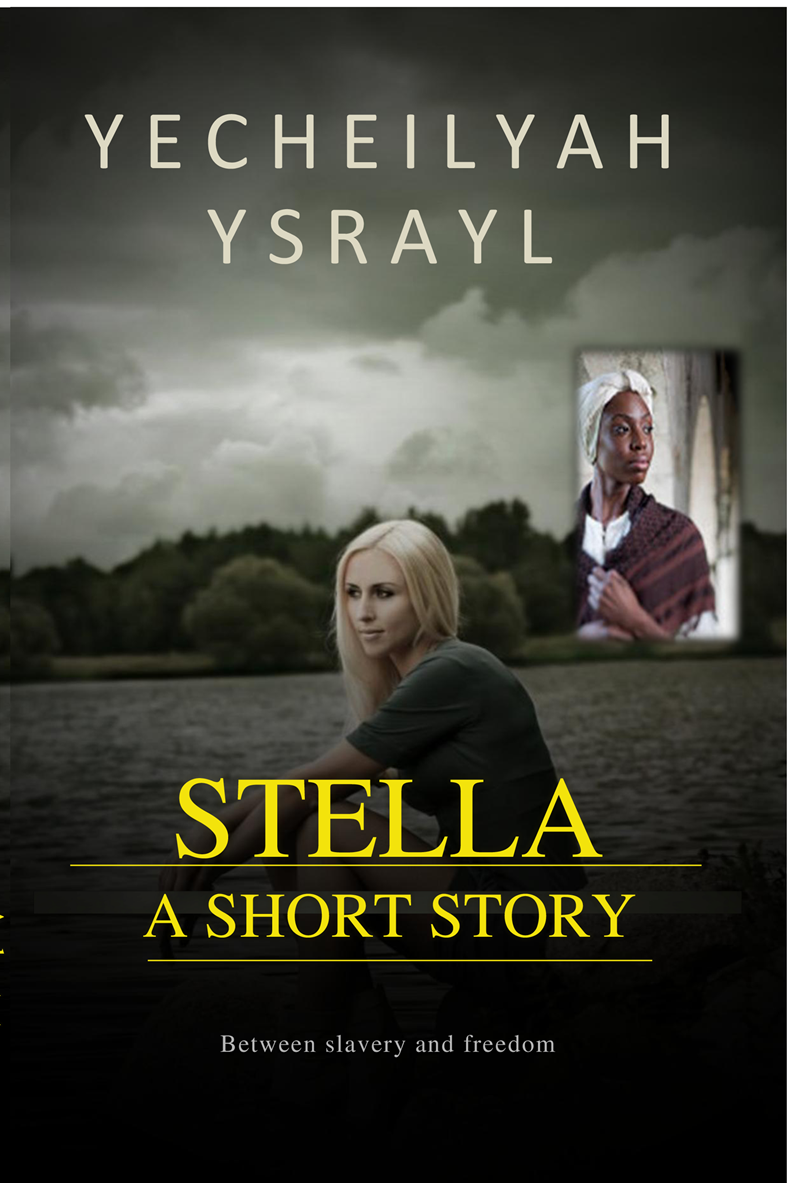
Stella Book #2
Stella Book #1
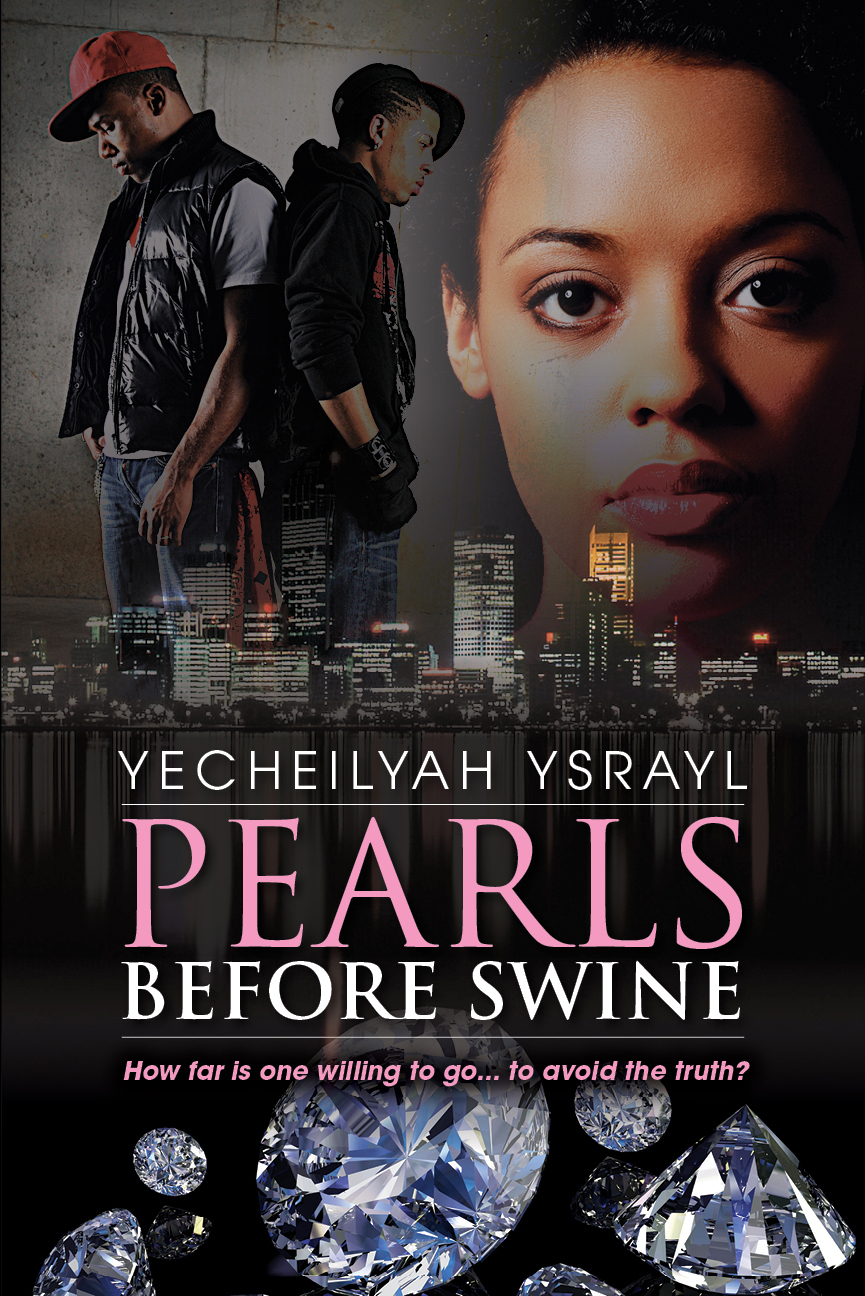
Pearls Before Swine Vol #1 (a play)
From Girlhood to Womanhood (poetry)
In Case You Missed It:
The Interracial Blog Feature – Interviews Beyond The Colored Line:
It’s kind of hard to believe this today, but as recent as 1967, there was actually state laws that banned interracial marriage. These laws weren’t overturned until the Supreme Court case, Loving vs. Virginia in 1967. In that case, the Supreme Court found that it was unconstitutional for the state of Virginia to ban interracial marriage.
Although there are no longer any laws banning relationships, interracial dating remains a controversial subject for some people. The Interracial Blog Feature was inspired by my new book, “Beyond The Colored Line”, and was created as a means to foster a better understanding of diverse relationships. Today, we welcome a good friend of mine, Misty Thomas. Misty is the director of a privately owned Montessori School in Houston Texas for children ages 6 – 12 years.
EC: Thank you Misty for spending time with us today. Can you give the racial background of you and your husband for the record and how long you’ve been together?
MT: Hello Yecheilyah. Thanks for inviting me to your blog. I am of mixed nationalities, but I guess most people would call me white. My husband is mixed, his mother is black and his father is black, Mexican, and native Indian.
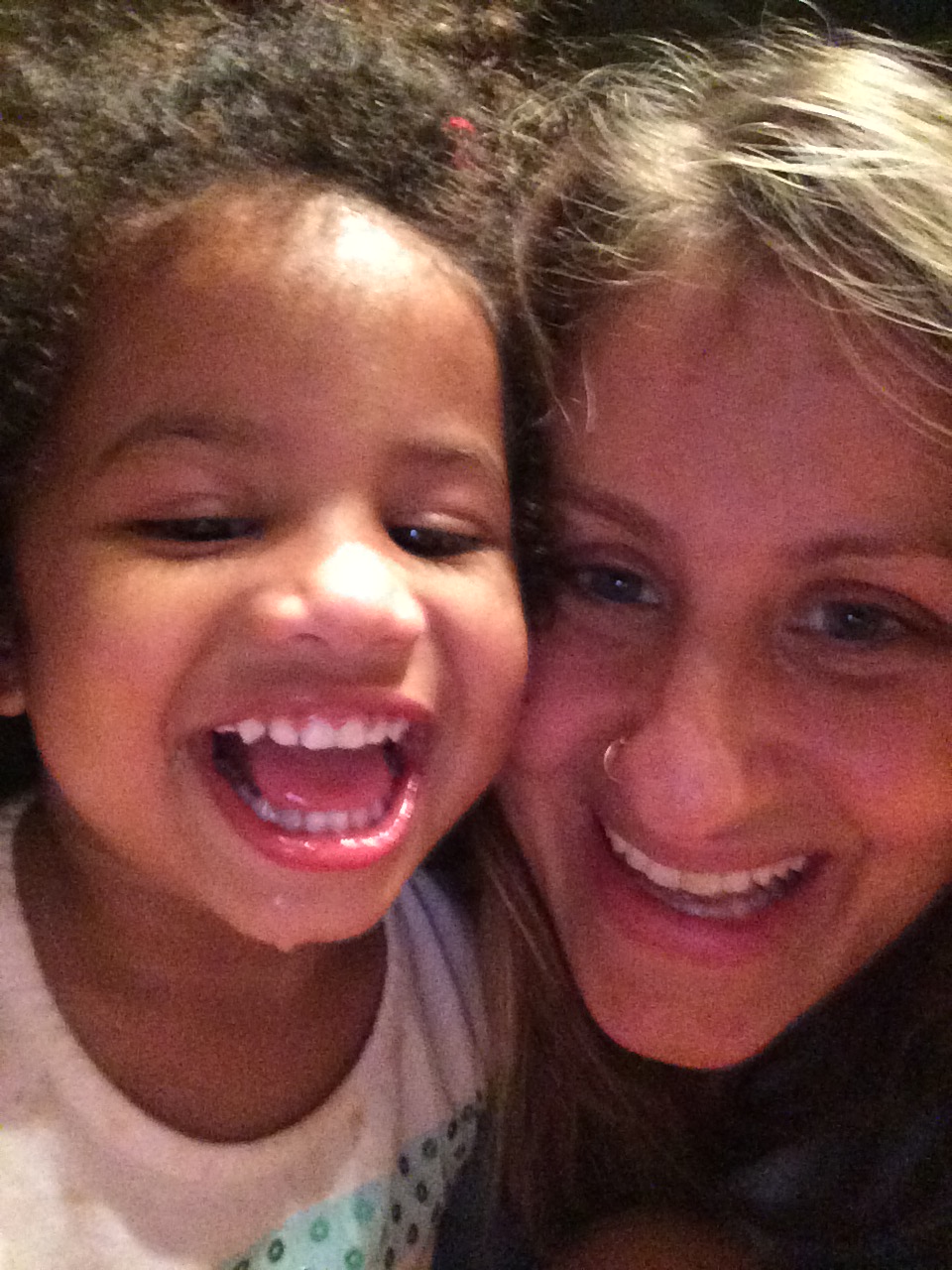
Photo Credit: Misty and LeYah. Used with permission.
EC: Wow, I love it. Now, the character in my book, Stella May, is what the people of her era deem a “mulatto” that is, she is of mixed ancestry. You have children who are biracial. What advice would you give to mothers of mixed children on how to deal with the stigmas that are often placed to them?
MT: My advice for that question would be to just raise your children as you would if they weren’t of mixed races. I have not yet come into contact with any issues with my children being mixed and anyone giving us any troubles or acting racist.
EC: I love that. Speaking of racism, what are some challenges that interracial couples deal with that couples of the same race may not have to deal with?
MT: This one we have definitely dealt with from people in passing and within our own families when we first started dating. Most of the time if people should look at us in any hateful way it comes from us either being at a place where there is mostly African American people or somewhere where there are mostly white people. People sometimes make faces or just stare and you can feel what they must be thinking. It doesn’t bother us though. With our families in the beginning…I think it was them worrying what others would think.
EC: That is interesting that you say that the looks usually come from an exclusive black group or white group, makes me think about the racial divide still present in America. Now, from observation, when African-Americans and Whites marry, there is more likely to be an African-American husband and a white wife. In fact, 73 percent of all Black and White marriages have this setup. In your opinion and your experience with Interracial Relationships as a white woman, what attracts you to black men?
MT: I do see this is more common that you see white women with African American men. Me personally…I don’t think I have only been attracted to African American men for any particular reason and I have been one to date men of all races. I grew up in a diverse city.
EC: I’m glad you put that out there. Speaking of diversity, I have to bring up this point. I hear a lot of black people, black women in particular, accusing other blacks of being “sell outs” when they date outside their race. Have you or your husband ever had the misfortune of the title and why do you think this is?
MT: I have only had one person or woman hate on me for being with “their” men. We have never had anyone call my husband a sell out or speak out against us being together though anywhere else.
Photo Credit: Chris, Misty, and LeYah. Used with permission.
EC: Shame on that one person, smh. Now, a lot of people discern that blacks who speak with a professional tongue are trying to sound white. I speak from experience. My husband is not white but he’s very educated and he too grew up in a diverse city where the majority of people in the town were white. Of the blacks present, he was teased by them a lot for his speech. They said that he sounded, “White”. As a white woman, what are your thoughts on this? Is there such a thing?
MT: I think that is ridiculous and people just stereo type black people. My husband and everyone in his family are well spoken. There are plenty of people of all colors of skin that speak improper.
EC: I’ve always wondered about the conversations between interracial couples concerning the ongoing racial tensions surrounding blacks and whites. Are there any moments where you and your husband disagree with a subject that is race related? If so, how do you deal with that?
MT: Lol, actually we have never had any disagreements in any racial conversations. We know that racism was created by man and we don’t see each other as being different.
EC: Whew, you said something there, “we know that racism was created by men”. Can I quote you on that? LOL. Seriously, that is such a great point. Now, we’re almost done here. Any time before 1967 your relationship would technically be illegal. How does that make you feel today with the knowledge that you’ve chosen to be with someone outside of your race?
MT: Doesn’t surprise me, I have never been one to care what others think or one to follow. I might be one that some would of called a rebel….lol. I don’t like the hatred from the past history, but it is what it is.
EC: Misty, I want to thank you again for being part of this series. If there is one form of advice you would give to people still struggling to accept Interracial Relationships, what would it be?
MT: Your welcome, any time. One thing I would like to share with people who struggle with interracial relationships is that I feel it is a form of being colorblind. You could be blocking yourself of growth as a person for being blinded by color.
EC: Wow, blocking your own growth, that’s deep. As someone who has been married for some time, name one thing that has kept your relationship going.
Photo Credit: Misty and the whole family! Misty, Chris, LeYah Gianni, and Moshe. Used with permission.
MT: Love.
***************************
(These shades tho)
And that’s Misty Thomas on Interracial Marriages, thanks Misty! As you can see, the purpose of this series is to shed light on some of the racial biases that still exist here in America. It is easy to become offended at such topics and say that “a relationship is a relationship” and while this is true, it doesn’t change the fact that these biases still exist. That said, mankind was created to be compatible with one another regardless of race. Thank you Misty for helping me to shed light on that reality. Your interview was insightful, educational and I sure did learn a lot.
In the meantime, tune into next weeks segment on Beyond The Colored Line: Interracial Blog Feature. You don’t want to miss next weeks interview!














 The PBS Blog