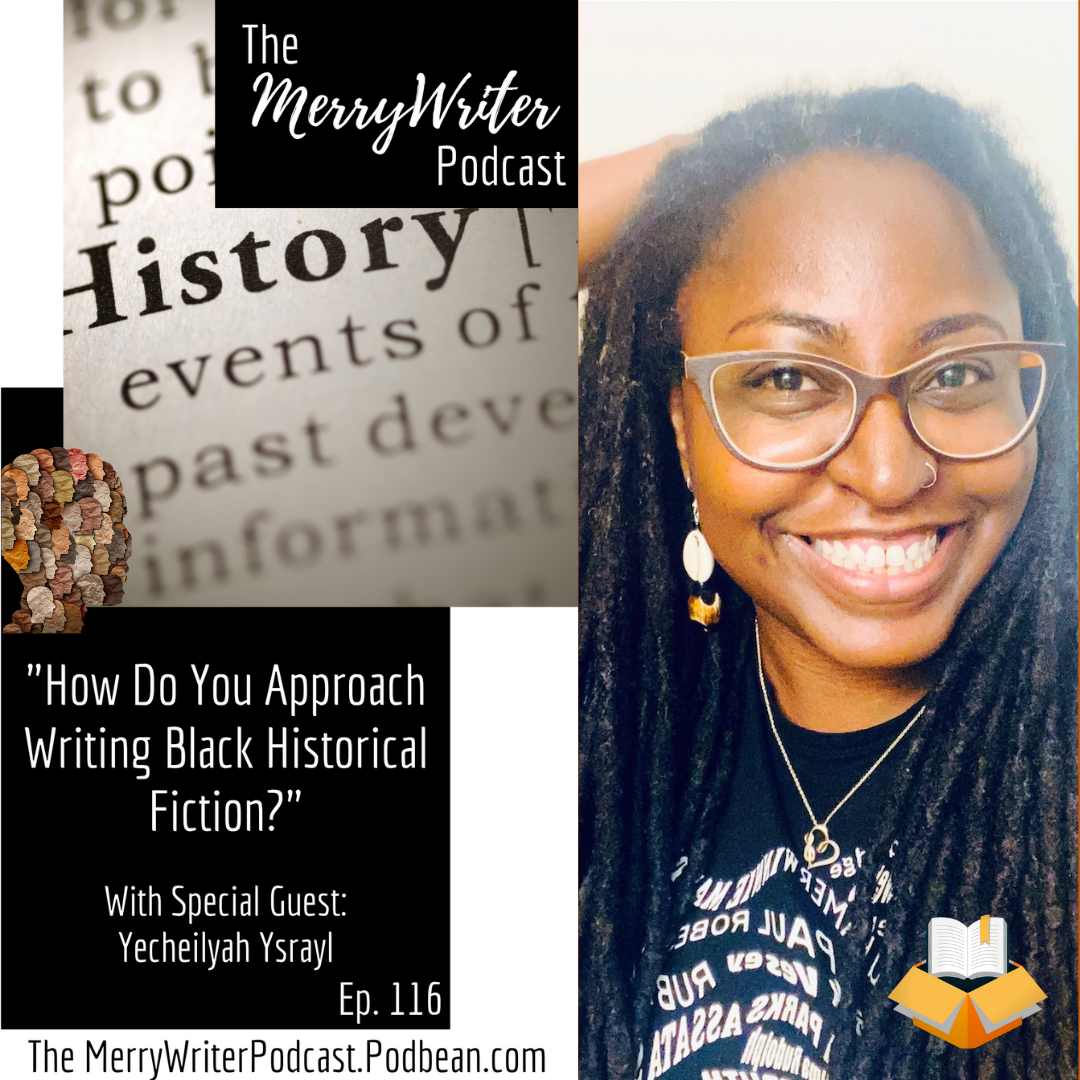
I got to sit with Ari Meghlen and Rachel Poli of The Merry Writer Podcast on writing Black Historical Fiction. Check it out at one of the links below.
EPISODE SHOW NOTES
Have you ever tried writing diverse characters and didn’t know where to start? Or maybe you want to dive deeper into historical fiction? This week, author Yecheilyah Ysrayl joins Rachel in discussing how to approach writing black historical fiction with plenty of tips, advice, and fun conversation. As always, thanks for listening, and let us know your thoughts in the comments below!
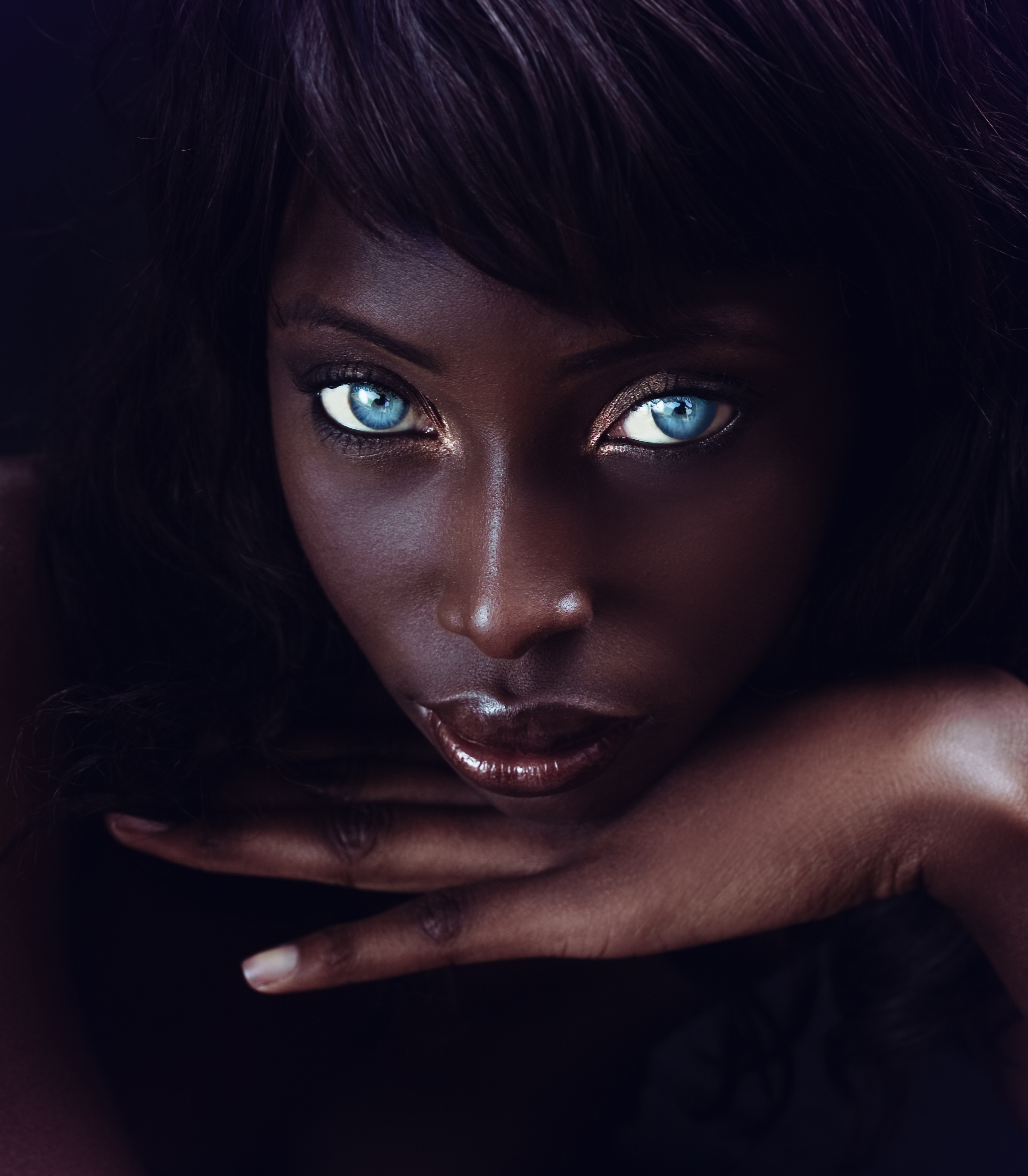
The young woman smiled and waved at the jeep as it sped by, and her brown eyes turned blue.
Paschar twisted her neck, cracking it as it spun around on her shoulders. She looked down at her hands, stretching her fingers.
“Not bad,” she admired herself, ran her hands across the youthful body, and sat down on the bench. She stared down at her chest. The boobs weren’t much to speak of, but she couldn’t expect much in this form. She had heard stories of humans and puberty, a foreign thing to angels who could masquerade in adult bodies instantly.
Paschar watched the cars zoom by, the school busses pick up children, and the scores of humans rushing off to work. An elderly lady sat down on the bench next to her.
“How you?” she said, looking through her purse.
Pas nodded, afraid to speak. She had never had a body this young before.
Noticing the silence, the woman looked up and clutched her chest with one hand. “Your eyes,” she said in a breathless voice. “I ain’t never seen ‘em that bright before.”
Paschar blushed and smiled awkwardly, thankful to see the bus approaching.
The woman stood, swinging her purse over her shoulder, unable to take her eyes off the young woman with the majestic eyes.
“Go on, baby,” she said, letting Paschar in front of her as the bus came to a halt and opened its doors.
Pas coughed and cleared her throat. “Oh no, that’s okay. You can go.”
“No, it’s alright. And you’re gonna wanna do something about that cough. Put something around those skinny lil arms of yours.”
“Yes, ma’am.”
The woman nodded.
Artwork for TWWBE by David Collin
Paschar dropped her coins into the machine and moved to the rear of the bus, and cuddled up to a window seat.
As the bus prepared to take off, it stopped to allow a car to pass and Paschar’s eyes flashed in that familiar way. Her senses heightened as she picked up the familiar scent. Every human had a signature smell to their blood. Like fingerprints, no one was alike.
Pas licked her lips. She didn’t need to turn to see Kayla sitting in the passenger’s seat of Miss Bernice’s car or Micheal sitting in the back. She could practically taste their essence—the purest of energy.
Her eyes twinkled, and her leg bounced up and down. She knew she had to calm herself before she growled. It was all so exciting. Pas could hardly contain herself thinking about seeing Janiyah’s Jeep just moments ago and now Micheal and Kayla. Why had she not thought about this before?
She had had it all wrong. No one cared about Black men. But people were extremely friendly to young humans, naïve even. There were no limits to how far her powers could stretch as a sixteen-year-old in Ethiopian skin.
She felt a coolness come over her as a low, deep throat growl threatened to spill from her mouth.
Paschar leaned back into her seat and exhaled. All was not lost. Her legion might have lost the battle, but she was going to make damn sure they did not lose the war.
She couldn’t wait to start her new job with Janiyah and Tabitha.
This is a continuation of The Women with Blue Eyes series I turned into a novel.
To read sneak peeks of book one published to this blog click here.
To buy me a cup of coffee, purchase the book by CLICKING HERE.
I realize I’ve been a bit MIA lately. Not just on this blog but on social media in general. I have a lot that requires my full attention, which is professional work and personal work. I am in that transition place where I am learning to be patient with understanding what’s next for me, between that place of gratitude for what is but seeking continual growth.
In any event, I am still here, and I do want to try harder to check in with your blogs. I’ve fallen off in the blog world, and I really need to get back to it.
But I am still here. I am well, and I hope you are well too and continue to be so.
To catch up with me, please check out my latest interview in Shoutout Atlanta.
They reached out to me last month, and I enjoyed working with them for the second time.
Click on the link below to read in full, and be sure to share if you feel so inclined!
Due to the COVID-19 Pandemic, ebook subscriptions rose, with ebook usage up 26% in 2021. If you don’t have a digital version of your book available in this digital world, you are leaving money on the table. If you publish through a small press or an Indie or Vanity Press and they can’t make sure your book will have a Kindle or ebook companion, they are doing you a disservice.
2. You don’t have a physical copy of your book.
According to the Alliance of Independent Authors, physical books still outsell ebooks. US print book sales rose 18.5% in the first half of 2021 and outsell ebooks 4 to 1. This means that if you don’t have a physical copy of your book to sell through your own website and at events, you are leaving money on the table. Many financially successful authors are not Amazon Best Sellers, but they still make bank selling through their websites. “Though ebooks and audiobooks are increasingly popular, print books continue to trump in the researched book market, with 66% of readers across the globe saying print offers ‘a more fulfilling and unique reading experience.'”
Physical copies also make it possible to sell your books wherever you are. If you like speaking at events and talking with people face to face, you can (should) always have copies of your books on hand. Sell them to libraries, schools, bookstores, or wherever. Heck, sell those bad boys in bulk if you want.
3. Not doing events and speaking engagements.
Speaking engagements and events can generate significant income through paid meetings and on-site book sales. Live events can also help you connect with readers directly, create word-of-mouth from the people who will tell their friends they met you, and don’t cost anything.* If you are not looking into doing events and speaking, you leave money on the table. Again, this is why having physical books is a good thing. See number two.
*Note: I have heard of people paying to do book signings. I never pay to do a book signing unless I pay for a space for vending at a larger event. If you ask to do a signing and the facility says you have to pay, see why and what’s included or look into hosting the signing somewhere else.
4. You are not turning your books into audiobooks.
Speaking of paid speaking engagements, audiobooks can be a way for authors to attract speaking gigs. According to Audio Publishers Association’s annual survey, a six-year trend of double-digit growth in sales continues in the audiobook space. Add to this the increase of smartphone usage (especially with the pandemic), and people who listen to their books at home or in the car on the way to work. This means that if you are not looking at ways to turn your books into audiobooks, you are leaving money on the table. Audiobooks have the potential to reach a wide range of people, from those busybodies who struggle with time to read to people experiencing visual challenges.
We must think outside the realm of just uploading books to Amazon and letting them rot. You worked hard on your book baby. Discover other ways of getting it out there.
Like I always say, it doesn’t matter how long ago it has been since you’ve published; your book will always be new to the people who have never read it. Our books only die if we let them.
leave a fresh caesar salad a bear hug a tall glass of Merlot the truth a 90s R&B CD four normal periods prayers and a handwritten poem by my bedside by the next new moon.
PS: Breaking the Silence part two is up tomorrow. Be sure you have read part one for the backstory.
PPS. I am back on YouTube. Subscribe here. Also, be sure to follow me on Tik Tok to hear more poems. My name there is the same, yecheilyah.
Even though I didn’t know much when I published my first book, I am glad I took the leap. Without that first, there would not be a fourteenth. My first book was:
From the Depths of a Woman’s Heart was a poetry book I published in 2010. It was the first book I ever sold, a collection of poems I had written going back to High School and coming up to the present. Although I had missed the mark in many areas, people still bought it.
I am not saying to publish an unedited book and slap on a generic cover. That would go against everything I’ve ever written in this series. Ya’ll know I don’t play that. I have since retired that book and a few other books and even republished some books because when you know better, you do better.
I am saying that you just have to write the book at some point, even if you don’t know all the answers. From the Depths laid the foundation for me to get used to the Self-Publishing process, analyze what I did wrong, and improve the next time. My first several books were kind of like a practice run for me to learn and grow.
Nine times out of ten, aspiring authors who express interest in Self-Publishing have not written a book yet. And sadly, many of them spend a lot of time figuring out if Self-Publishing is for them. While there is nothing wrong with this, it can get in the way of writing a book to publish.
After having written the book, you might even decide that Self-Publishing is not for you, and that’s okay.
It’s easy to get sucked up in the never-ending sinkhole that is Self-Publishing advice. Everyone has an opinion about how it should be done, and everybody and they mama is an expert.
No wonder writers are confused and overwhelmed with the process.
Let me simplify it for you:
Start by writing the book.
Before you pull your hair out over how to get your story into the hands of readers, make sure you actually have a story for them to read.
Once you have a completed manuscript, you will better understand the information you need. You can ignore what does not apply and focus on what does.
Having something written helps you be selective in who you listen to and intentional about the direction you want to go.
Don’t be so busy researching how to start that you forget that the biggest lessons come from action.
“If you are silent about your pain, they’ll kill you and say you enjoyed it.”
Zora Neale Hurston
Friday, November 13, 2020
It felt like I had given birth with nothing to show for it.
I was lying on my back in the emergency department of Wellstar Paulding Emergency Hospital with my legs open, my feet in the stirrups. I prayed the doctors examining and whispering over my vajayjay would hurry up. At first, it was just one doctor, but her face did not do a good job of concealing her concern. I could tell the amount of blood was overwhelming her. She called in someone else, and before I knew it, there were three doctors down there.
“Press down like you are having a bowel movement,” said one of them. She looked like she was in charge, and I was instantly terrified.
“What?”
“Just a little bit. Press down.”
So basically, you are telling me to push. Push what? OMG.
I pressed down until she said stop, and I could see them trying to stop the bleeding. I felt like I was on an episode of Grey’s Anatomy.
I was thirteen years old in the summer of 2000, and my dad was sick and dying of cancer. The adults decided we should not witness his last days and sent us to Mississippi with our big sister. (My twin sister Tracey and me are the youngest of my dad’s crew, our other sibling’s already well into adulthood.) Here, at my sister’s house, I had the experience of my first period, and it was not modest or merciful. It came in as if it had been here before and stayed for a full seven days.
No one had explained menstrual cycles to me, we were not being taught about it in school yet, and my sister was at work. Shocked, I cried as Tracey looked on in astonishment. We were terrified. We knew about it, but we did not fully understand it. My stepmother predicted mine would come soon, and every time she brought it up, I would get upset.
“What you gonna do? Stop it from happening? You gonna be the first woman to not have a period?”
I sat on the edge of her bed, brought my eyebrows together, wrinkled my forehead, and curled my lips up with eyes that said, “Yup.”
In my mind, I really thought I could stop it. That’s because I had no idea why it needed to happen in the first place.
We eventuallyfound my sister’s pads, but no one had taught us how to put them on, so I stuffed my panties with tissue and waited until my sister got home.
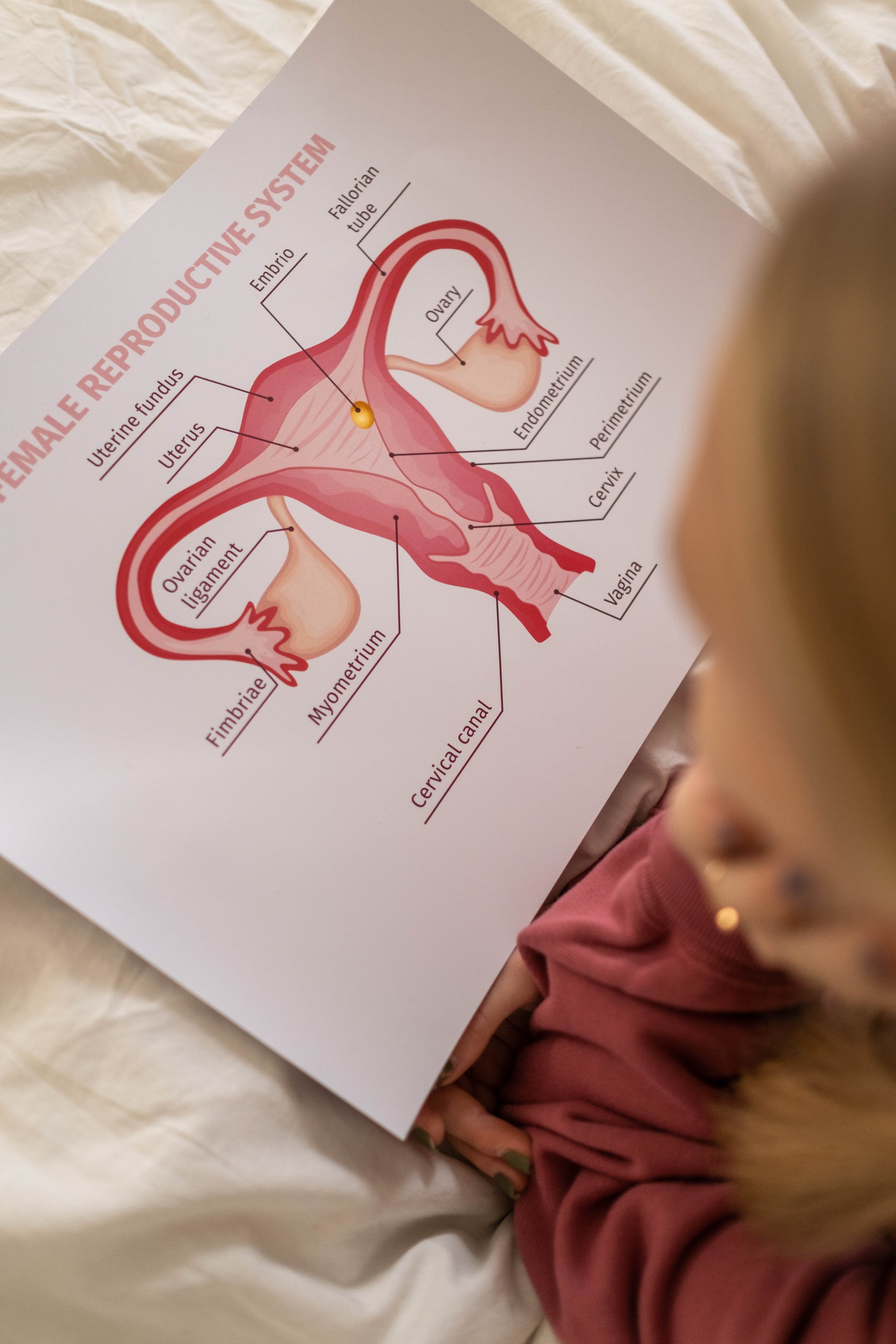
Sadly, my story is not unique. When it comes to the woman’s body, many topics are considered so taboo they are rarely talked about or spoken of at all. Not even in the home. Sexual intercourse, the vagina, pregnancy, abortion, birth control, and menstrual cycles are topics people shy away from, like some kind of disease, leaving many women to learn through experience. Often, traumatic experiences.
“I was around 13 when I asked my Aunt about sex because a lot of my friends at school were talking about it. Instantly, she asked why I’m around those kinds of friends and why I would ever ask that kind of question. She went on to tell me that I shouldn’t be having sex until I’m married and mentioned that I shouldn’t have a boyfriend either. I knew for sure that I was never going to come to her again.”
Afia, 18, of Pawtucket, RI
In the Black community, girls are sometimes shamed for even bringing these subjects up. When my stepmother scolded me for being upset about periods, she didn’t know she was setting me up to be ashamed of it. She never talked about how natural it was for women or asked me why the thought of it made me so upset in the first place.
The teachable moment had passed, and like Afia, I knew I would never come to my stepmother to discuss periods. And, for a long time, I did not even like to say that word. I had developed a deep shame about it.
According to Netflix’s new series, The Principles of Pleasure, one name used to refer to the woman’s external parts back in the day was the Latin term Pudendum, from the verb Pudere, meaning “to make ashamed.”
“…let me know, and we can go get something,” my Aunt said loud enough for us to hear in the other room.
She drank and played cards as they discussed prom and prom night. Her insinuation that if we planned to have sex, we should let her know “so we can go get something” was the extent of what I assumed was “the talk” about sex and birth control. There was no explanation of what she was even talking about. We were also already having sex by then. Not only did her comment make us ashamed to discuss sex with her at all, but Auntie was a couple of years too late anyway.
But parents are people too, and “it’s difficult to recreate experiences that were not modeled for us, and many Black parents of today grew up with inaccurate and negative messages about sex,” says Melissa Carnagey, founder of Sex Positive Families, an organization that supports parents in having sexual health talks with their children.
Tracie Gilbert, Ph.D., Training and Technical Assistance Manager at Answer, which publishes Sex, Etc. had this to say about why some Black adults may not talk to their children about sex:
“Black parents being nervous about talking with their daughters about sex is not only common but historically influenced by the desire to protect them from racism and white supremacist ideas about Black sexuality. Historical tropes about Black people included that they were hypersexual and had loose morals.”
But this is not exclusive to Black women. All women have experienced similar traumatic experiences surrounding sex, menstrual cycles, and birth control.
These myths could be why some adults (like my Aunt, stepmother, and Afia’s Aunt) avoid the conversation altogether.
Like periods and sex, infertility is another topic many women do not openly talk about. As someone who has struggled with it for years, I hope to break the silence by sharing my experience.
How my menstrual cycle started would set the tone for the future of a tumultuous relationship between me and my reproductive system.
November 13, 2020
“Yes, she’s miscarrying,” said the doctor-in-charge.







 The PBS Blog