

“It doesn’t matter how great your shoes are if you don’t accomplish anything in them.” – Martina Boone
“It doesn’t matter how great your shoes are if you don’t accomplish anything in them.” – Martina Boone

A post came through earlier about Movie Night Friday. Please disregard that post; it was supposed to be for tomorrow (obviously). I have rescheduled it to post tomorrow. My apologies for the inconvenience, but if you click on the one that posted today you will not find it. I have removed it.
Thank you for your patience.
– EC
Ron’s #BeWoW prompt today is to explain what ordinary and extraordinary means to us. As I pondered over and over again about the defining moment of these words for me, I found the prompt to be quite the challenge. It was with interesting difficulty for me to talk about these words. To present something more than definitions, but to really talk about these words. While it is an optional prompt, I thought more and more until I was deeply interested in writing on this topic, and there lies my definition. Ordinary and Extraordinary was right there in the midst of my pondering on whether or not to use the prompt at all, standing finger to face, keyboard to post. I could perceive in my mind a subject I thought far more worthy as it would also be easy. Or I could dictionary Webster’s mind for a sneak peek into the traditional history of these words. I could see each day this way too; commonly held thoughts and belief systems coming and going at average pace. Putting nothing less and nothing more into the day at hand. Never pushing limits. Never going beyond. Never taking risk. Never faithfully walking alongside the edge of possibility. The ordinary.
Or, I could create a post out of the challenging. I can break that level of comfort. I could perceive in my mind an opportunity to force the creative mind to produce. Not just to contribute, but to build. I could see each day this way too; holding fast to the individuality I was birthed with. Producing the unexpected. The perceptibly strange. The odd. The extraordinary. Putting forth nothing less than impeccable effort. Pushing limits. Never giving less than 100% of thought. Never settling for traditional, but embracing the different. Fearlessly and boldly walking alongside the edge of possibility. Immersing both my mind and my spirit in the groundbreaking. The unique. The extraordinary.
My choice for Writer’s Quote Wednesday this week is from Steven Pressfiled’s The War of Art:
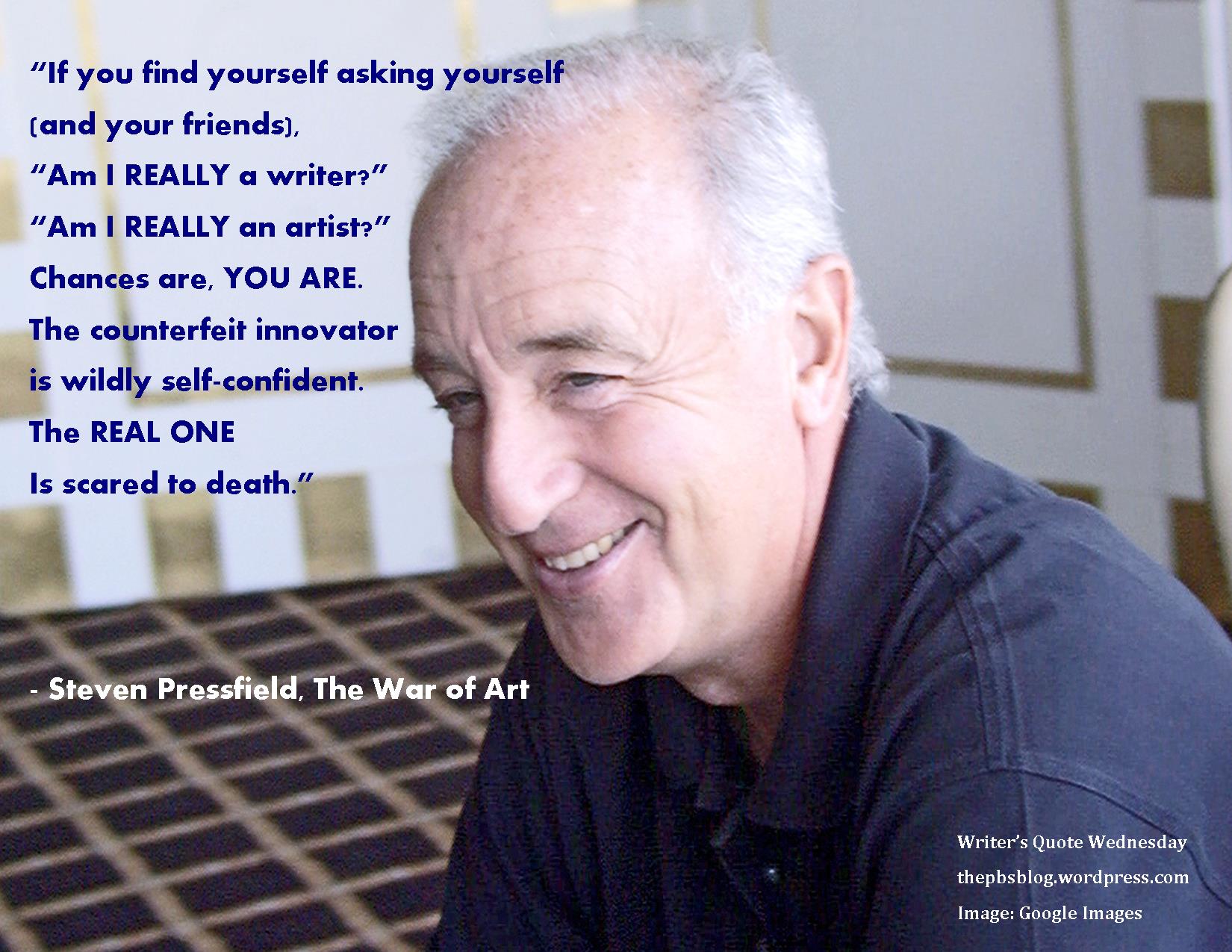
Writers. People who second guess whether or not they have what it takes, and yet are still bold enough to go on. This quote reminds me of what it’s like to be nervous. We’ve all experienced it and we are all familiar with that feeling. Your heart beat races, your palms become sweaty and your body gets all jitterbug on you. Truth is you are scared to death of whatever it is you are about to do. It does not mean you have no confidence, it just means you are not so dependent on yourself that you forget about the big picture and you can’t stop thinking about the possibilities. You know that you can do it; you just don’t know whether or not it will succeed. But still you push forth and you show up at that place or do that thing. It is the war of art. You battle yourself until finally, you put pen to paper and you write. Writers. Sometimes fearful. Sometimes doubtful. Sometimes afraid. But always humble in confidence, and yet courageous in character.
About The Author: (from Wikipedia)
Steven Pressfield (September 1943— ) is an American author of historical fiction and non-fiction, and screenplays.
He was born in Port of Spain, Trinidad, in 1943, while his father was stationed there, in the Navy. He graduated from Duke University in 1965 and in 1966 joined the Marine Corps. In the years following, he worked as an advertising copywriter, schoolteacher, tractor-trailer driver, bartender, oilfield roustabout, attendant in a mental hospital, fruit-picker in Washington state, and screenwriter. His struggles to make a living as an author, including the period when he was homeless and living out of the back of his car, are detailed in his book The War of Art.
His first book, The Legend of Bagger Vance, was published in 1995, and made into a film of the same name, starring Will Smith, Charlize Theron, and Matt Damon, and directed by Robert Redford.
His second novel, Gates of Fire, is about the Spartans and the battle at Thermopylae. It is taught at the U.S. Military Academy, the United States Naval Academy, and the Marine Corps Basic School at Quantico.
In 2012, he launched the publishing house Black Irish Books with his agent Shawn Coyne.
******************
And that’s it for Writer’s Quote Wednesday. Click the pick to join the fun.

http://silverthreading.com/2015/05/13/writers-quote-wednesday-sir-winston-churchill/
French physician Francois Bernier was the first to use the word “race” as a category for scientifically classifying humans in a 1684 essay titled “A New Division of the Earth, According to the Different Species or Races of Men Who Inhabit It”.

In addition, Johan Friedrich Blumenbach (1752-1840), a medical professor in Germany, argued that human beings fall into five races: Caucasian, Mongolian, Ethiopian, American, and Malay. He argued that Caucasians derived from the Caucasus Mountain region and embodied the ideal human from which the others degenerated. It was a popular belief that Caucasians were the ideal form based on a skull that had been found in the Caucasus Mountains, near the alleged location of Noah’s ark. What this classification achieved is the setting up of a color line. Blumenbach classified five chief races of mankind and by attributing psychological value and importance to race; this became what we know as racism.
Science has a lot to do with the usage of “race” to identify a people. Although there is uncertainty in the title about the correctness of the term “race” versus “species” to classify human variation, Bernier relied on categories based on outward physical characteristics such as skin color.
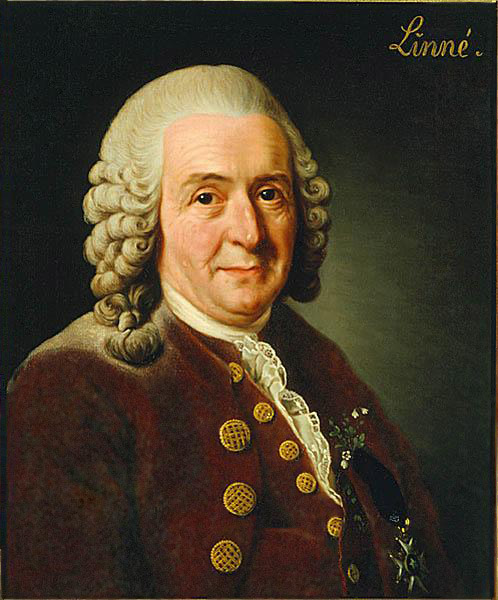 A prime example is Swedish botanist Carolus Linnaeus’ system of biological classifications in Systemae Naturae, published in 1735. Linnaean taxonomy is the system of scientific classification of plants and animals now widely used in the biological sciences. He formalized the distinction among the continental populations of the world and his work helped characterize the concept of race. In the tenth edition of Systemae Naturae, which was published in 1758, Linnaeus projected four subcategories of Homo sapiens: Americanus; Asiaticus; Africanus; and Europeanus. In short, the moral components of race–such as beliefs, values, etc., were not as prevalent where racial hierarchy was already established by slavery, but the word race was a general term that was used interchangeably with species, sort, type or variety. This is why there is no such thing as a race of people.
 The concept of Race is a new ideology and has not always been with us. Genesis Chapter 10, known as The Table of Nations, gives an example of how people were split into nations and lands and language, not races. In fact, “definitions of who is black vary quite sharply from country to country, and for this reason people in other countries often express consternation about our definition.” (F. James Davis). What has happened then? How has a nation of people now become a race of people? They told you about a brown man, a black man, a yellow man, a red man, and a white man. It’s as if they took their crayons and painted us the colors of their expectations. After coloring they began the tasks of assigning these colors to class and certain geological locations in that they may properly identify them. Not necessarily so that these people may identify themselves, but so that racial superiority would reign supreme.
 The U.S. Census Bureau defines race as “a social category recognized by the United States and does not attempt to define race biologically, anthropologically, or genetically”. The Census Bureau recognizes five categories of race: White (people with origins in Europe, the Middle East, or North Africa,) Black or African American (Africa), American Indian or Alaska Native, Asian, Native Hawaiian or Other Pacific Islander. The census also includes a Hispanic ethnic category. It is an ethnic category rather than a race category because the Latino community is said to include many races, such as White, Black, Native American, Asian, and mixed.
The truth is that every single person on the face of the earth belongs to a nation of people, as he was so divided since the beginning, and thus he falls into whatever family according to his nationality. Every people have a nation to which they belong, followed by a specific set of laws, customs, and traditions separated only by land and this is why race does not exist, because there’s no such thing as a race of people. Sure, we may use the term for understanding sake, one may say “my race is..” so that the person next to him gets it, but he does not really belong to a race, he belongs to a nation. Prejudices, Biases, and oppression of one people who feel superior over another people does exist, but race within the concept to which we’ve grown to know it, does not.
I thought this was a great post by Shayla of Curiouser Editing:

As an entrepreneur, do you consider yourself successful? Or do you feel like you’re not quite there yet? Do you sometimes say, “I’ll be happy/successful when I get to this point”?
In the business world, we are engrained with the mentality that success is defined by numbers. We are told that it is something measurable. We are not successful until we get more followers, get more clients, get more engagement, get more subscribers, get more money, get a dream house, getgetgetgetget…
And it’s still not enough.
Because we keep going and we keep pushing ourselves to get better and be all of these things that our inner child would think were nuts.
So when is it enough? When do we get to say, “I did it. I’m successful”? When does that happen?
When are you done?
When you get 10,000 Facebook followers? When you make $8,000 a month? When you can hire your first employee? Second? Third? When you land an interview with a multimillionaire exec?
Speaking of interviews, I recently read one with a millionaire shop owner. She said, “We haven’t succeeded yet. We’re not at a point where we’ll all take a deep breath. I don’t know when we’ll ever stop.”
A millionaire said that.
To someone, that kind of dynamic attitude is contagious. It’s always been for me. But then when a friend asked me, “When are you done?” I began to rethink the definition of success.
Success means, “the fact of getting or achieving wealth, respect, or fame.”
I believe it’s time to change the definition of success. I believe we are more than the numbers on our Facebook page. I believe we are more than the amount of subscribers who read our blogs. I believe we are more than something that can be measured on Google analytics.
Here’s a thought: We already are successful. We were successful the day we put ourselves out there and hustled for our dreams. We were successful ages ago, but for some reason, we thought it wasn’t enough.
We have already succeeded. No amount of fans, followers, likes, subscribers, clients, or dollar signs can ever change that.
Here’s my new definition of success:
The act of waking up each day and being in love with what you do and who you are as a person.
It took me longer than I want to admit to realize what success truly means. It is not a number. It is being happy with who we are and who we strive to be every day.
So are you successful?
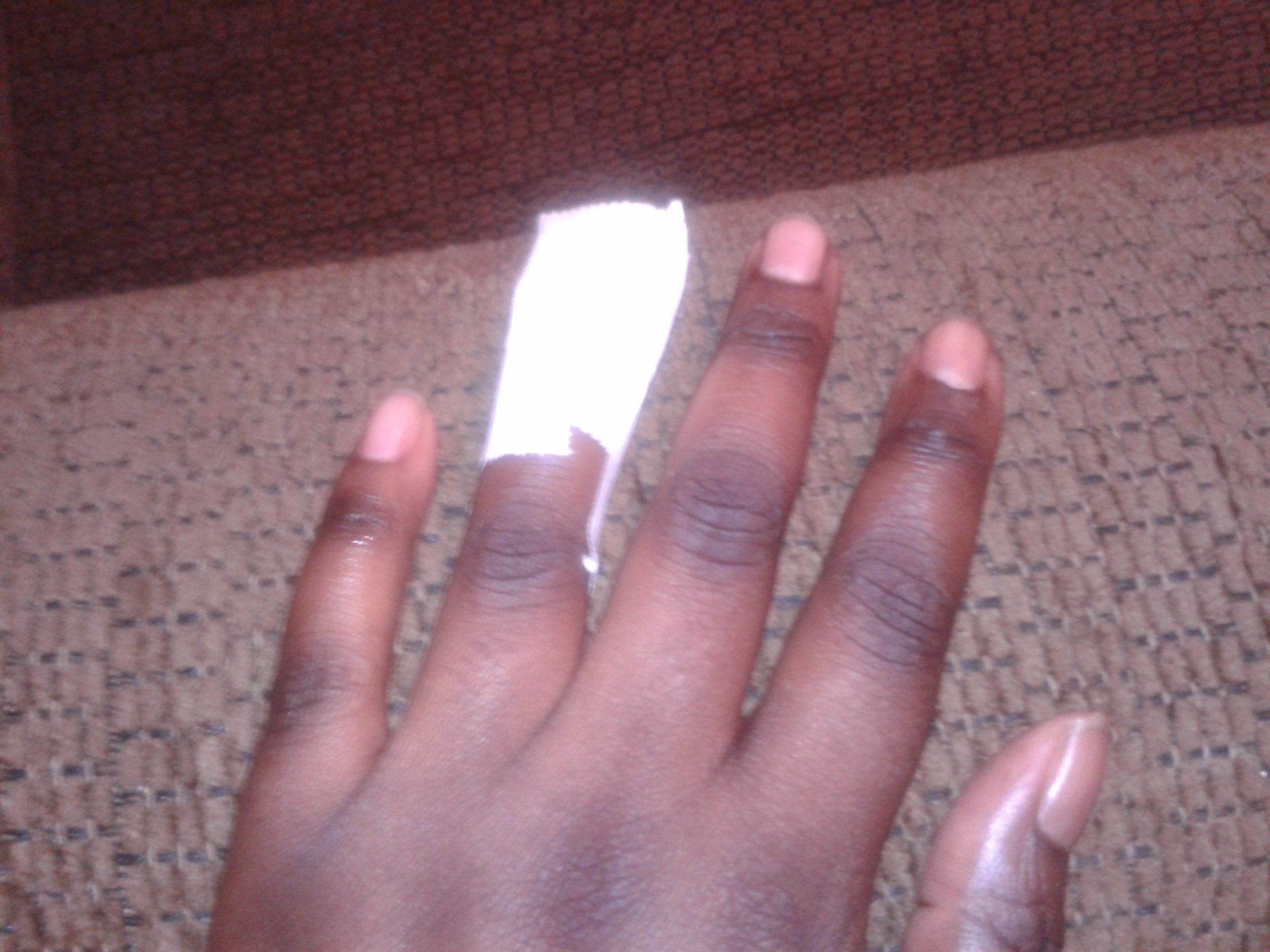 I’m typing with nine fingers today. I do have ten fingers, but one of them happens to be out of commission today. Brilliant me slammed it in the car door last night. Now my wonderful husband can take care of his disabled wife. OK well, it’s really not that bad. It is in a bandage though so I really am typing with nine fingers. But this got me thinking: How often do we appreciate the value of the little things, such as a finger? Do you appreciate your body parts? You’d be surprised how important this small part is to the body. It’s a challenge not using this finger, but I know of a beautiful young woman who was not born with fingers. She has a rare disease that caused her to have webbed feet and no hands. This started me reminiscing on bits of my own history. What if I told you I don’t have a right leg? Well, technically it’s more like no femur bone. Your femur bone is the long bone in your thigh. It’s the only bone in the thigh in fact. It is both the longest and the strongest bone in the human body, extending from the hip to the knee. But I don’t have one. Instead, I have a steel plate. You see, it all started about eighteen years ago:
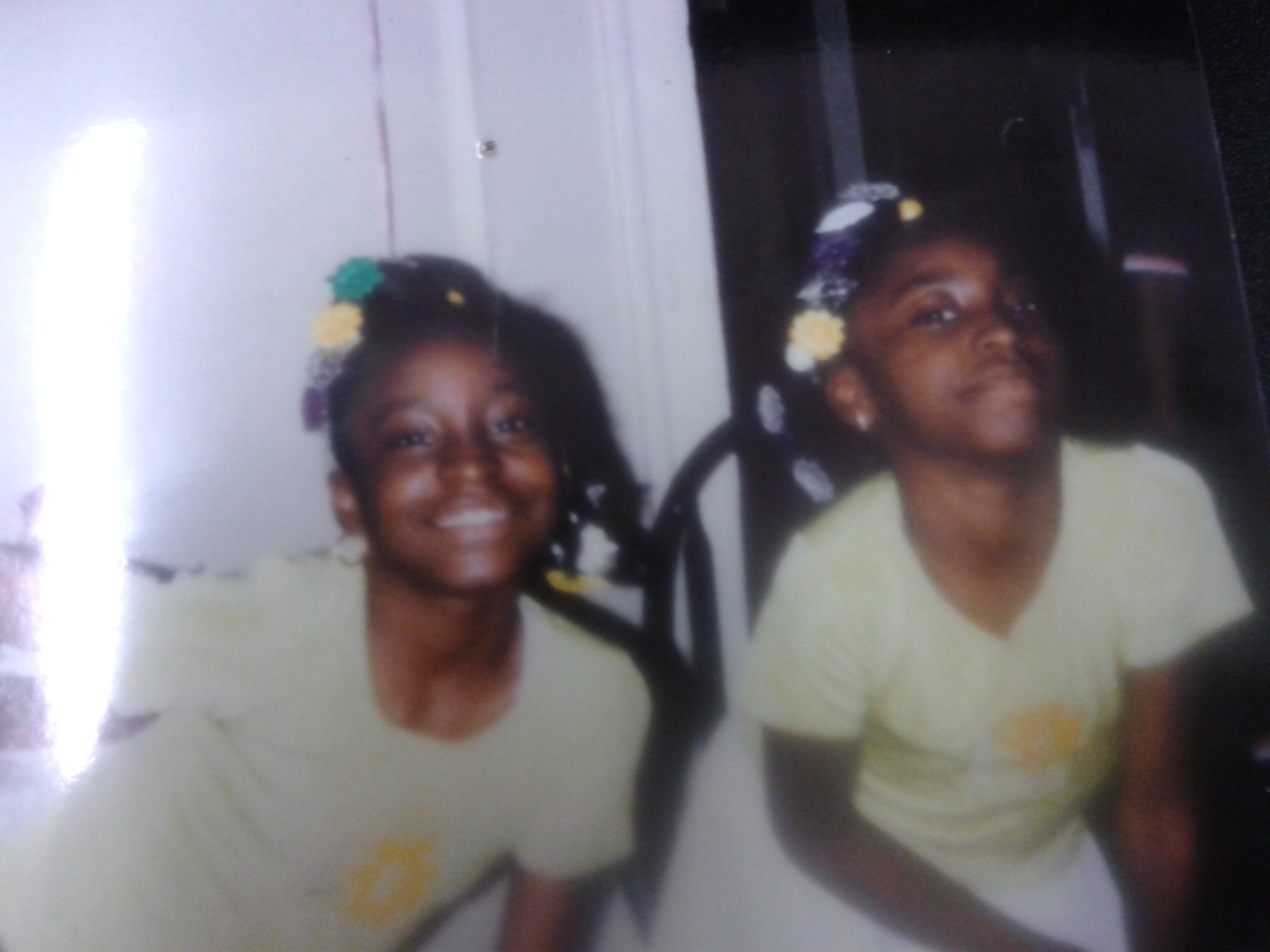
The day was beautiful. The sun danced in the streets and illuminated the green grass. There was an abundance of little ones running around, riding bikes, roller blading, and playing tag. One of the many things I always loved about the neighborhood was the pouring of children who came out to play in the summer time. (I don’t know what’s up with this new generation where everybody stay in the house and play video games. Staying in the house was punishment for us. We loved to play outside). It was 1997, and school was just letting out. 8023 South Paulina is an address I would never forget. It’s the first apartment complex we lived in after moving out of the projects and today, Auntie Roslyn had rewarded us for passing on to the 5th grade. That’s back when a $1 was golden. We spent most of the time hustling for quarters to buy candy, but dollars? We were rich now.
My twin sister and I decided this was the perfect day to visit a friend. And this meant bringing every toy in the house with us. We were excited and that meant that we would invite everyone to the festivities: Barbie, Ken, their car and the whole gang. This wasn’t unusual for the twins; these are the same little people who baked cakes in their easy bake oven and sold them to the kids in the neighborhood at a quarter each.
“Time to come in the house!” Boomed my mother’s voice. She actually called our names though. This was when parents still stood in the middle of the street and called your whole government to attention because the street lights were on and you were not at home. The day had gone smoothly. Our friend didn’t give us a reason to argue our ten year old genius about why she shouldn’t do this and that and for the most part we all played nicely. But as the sun began to set and the street lights crawled to attention, it was time for us to leave our dear friend down the street to come on back in the house.
This is when the story gets interesting. Cradling toys in our arms, my ears caught wind of the music before the ice cream truck floated down the street and a smile crept on my face. You see, I’d been scheming on how to spend this dollar since earlier that day. It was a precious gift and I wanted to make sure that I used it on something really good. I suppose now is the best time to remind you that my most favorite desert is ice cream. So, when the jolly jingle of something that sounded like, “pop goes the weasel”, sang down the street with its bright lights and large display of choices, I knew then and there what I wanted.
“Hold my stuff,” I instructed my twin sister. I was after all the oldest and back then five minutes was like five years, and let’s just say I wielded my authority proudly.
“But mama said to come in the house,” she whined.
Why must she do this now? I hated when twin started whining and complaining. It always brought attention to the seriousness of the situation. Why can’t she just get with the flow? The annoyance of her pleas etched into my face. I smacked my lips as I ignored her common sense.
“Just hold my stuff,” I said.
Before she could protest any more I decided to take a quick dash across the street. The ice cream truck was on the other side serving the people on the other side of the street. This should have been my warning that tonight was not the night for ice cream. However, I was stubborn so this logic didn’t occur to me. I wanted ice cream and I wanted it now.
I looked both ways before speeding across the street. I saw a white car and it all went black.
When I came to, I was rolling off the hood of this stranger’s car and onto the concrete. Twin and I were premature babies, only 3 and 4 lbs. each. And so we had always been small coming up. We were ten but we looked more like we were five. It is only now that I understand weight gain, but all throughout elementary and High School I never had to be concerned about my weight. When I graduated from High School I was 100 lbs. and could fit into size 1-2 jeans.
Needless to say that car tossed my small body around like a rag doll. When it was finished I lay on the cold concrete praying no one moved me. I had no knowledge of the medical field or any of that stuff at ten, and yet I knew enough to know I didn’t want anyone to touch me. Somehow, I knew that if I was touched it would not be good. But despite my pleas to be left alone, my mouth didn’t move and my voice shut down. No one heard my cries because it was all in my head. I was in shock and though I wanted to scream my mouth didn’t move. As a result, someone scooped me into their arms and not only could I not speak; now I could not breathe.
The person laid me in the grass and my breath returned to me. There was no pain as I lay there surrounded by the neighborhood. Everyone had come out to see the kid who got hit by a car. Either by walking by or peeking heads out of windows. I scanned the crowd until I realized my hand was being squeezed. To my left was the woman who hit me and her tears soaked her face. She pleaded and pleaded her apologies over and over again.
“Get over yourself,” I thought.
I wasn’t being mean; it’s just that I forgave her already. I still had not felt any pain and only prayed now that I would live. I forgave her over and over again while simultaneously praying I wasn’t going to die. But I was talking in my head again. The lady had not heard me and my mouth still had not moved. It wasn’t until I looked down at my right thigh that the pain came and my mouth opened. The thigh (it couldn’t have been mine) was twice the size of my real one and the pain was excruciating. To make a long story short my leg (or more precisely my femur bone) was broken. I had to get a steel plate put in and twenty-four surgical staples. I came home from the hospital with a walker which I thought really sucked. Here I am with a broken leg and all I was concerned with was why they couldn’t have given me crutches. Truth is I was fitted for them, but they couldn’t find two of the same height for tiny ole me.
“Aww man”, I thought, “I love those.” Yea, I was the kid who played on other people’s crutches. But the one time I needed them I was given an ugly brown walker instead. It didn’t help that they tied balloons around the thing. Yea, it really looks good now.
I was spoiled rotten of course when I came home, though the wrapping and unwrapping of my bandage and going back and forth to the hospital was no fun. Today you would never know the difference, though I still do have the scar which starts a little above my knee and stretches to right below my hip. It’s basically the whole thigh. Trace your finger from above your knee till it stops at the end of the thigh, that’s the length of my scar. The only side effects are the weather. When the weather changes dramatically, like from warm to cold, I get aches similar to that of arthritis. And sometimes I know when it’s about to rain (my leg tells me).But other than that I’m fine. I learned a valuable lesson though:
Obey your mother and father AND appreciate your body parts! Someone somewhere does not have what you have. And just think, I broke my femur, the strongest bone in the body, how ironic.
Crafting Compelling Stories from the Heart
Rest is Resistance
goodies from my mailbox and camera
I am more than breath & bones. I am nectar in waiting.
virtually travel with us
Dr. Andrea Dinardo, Ph.D., Psychology
Supporting and Promoting Indie Authors
Adventures in Writing
Writer, Reviewer, Activist
The best Mommy advice on all things kids
Writing Advice from a YA Author Powered by Chocolate and Green Tea
Parenting Blogger, Poet & Storyteller, and Children's Book Author.
Changing the World one Article at a time
where all emotions are cared for!
Entertaining Stories and Motivational Quotes
Sweet As Honey Among The Pages.
press on to know the lord
Changing the world, one word at a time.
Featuring books written by authors of color.
Essays, art and poetry
Leaving it all on the page because we are all shattered mirrors looking to mend our images.
Casting Alerts. Podcast series and talent directory about Blacks in Hollywood
Let's Talk About Books
Always on the hunt for a good story
 The PBS Blog