5 Ways to Use Social Media as Part of Your Book Marketing Plan

Social media is not a marketing plan but can be part of a larger strategy because it is a connection tool. It helps you to find, connect with, and nurture your audience.

It is through these connections that you build the like and trust factor. People believe in you and trust you.

When people believe in you, they buy from you.

Here are Some Ways to Use Social Media as Part of Your Larger Strategy:

Share your journey and inspiration.

Why are you writing this book? Who are some of your favorite authors and their books? What inspired you to write in the first place? What’s the story behind your title? What’s your story?

Follow accounts related to your topic.

Who follows you on social media is less important than who YOU follow. These accounts influence you personally and train the algorithm to show you more of the same.

Engaging with accounts that are relatable to your topic, beliefs, morals, values, and passions will do two things.

First, it will make you aware of trending topics in the news related to your area of expertise, which will help you create relatable content.

Discussing current events related to your book’s genre can be a great way to generate interest and attention while using social media to share your thoughts and insights. This helps build your author platform, authority, and attract more readers to your work.

Secondly, following like-minded accounts and engaging with them will introduce you to more people who might enjoy reading your kind of book.

Center Content Around the Topics/Themes of Your Book

Focus your messaging on connections and themes related to your book. Consider how the post might be educational, inspirational/motivational, informative, or entertaining. Even when I post something silly to TikTok, I make sure it aligns with what I am known for.

My rule of thumb is that the post must have something to do with black history/history in general, poetry, or books in some way. As a result of only focusing on these things, I’ve grown my TikTok account from 3K to 26.1K followers, highest view at 1.5 million, and increased subscriptions to my email list.

Leverage Relationships

Collaborate with other writers, authors, and business people who write books similar to yours or offer a service you can benefit from. Can they get you on their podcast? Review your book? Promote it on their pages? Can they repost/share your book cover? Do they know of anyone who can offer a service related to what you do? As the old saying goes, “closed mouths don’t get fed.” A lot of opportunities to gain exposure comes from simply asking.

Social Proof

We live in a world where most people only believe what they see. Share screenshots of book reviews, excerpts, quotes, and recommendations from others to provide social proof that can help boost interest in your book. This proof can also showcase your writing through blog posts, articles, videos, graphics, and more. Give people a taste of what they can expect from the whole meal. People self-publish books every day so show what sets you apart.

I hope this helps get your 2024 book marketing efforts off to a good start!

Check out more Indie Author Basics articles here.

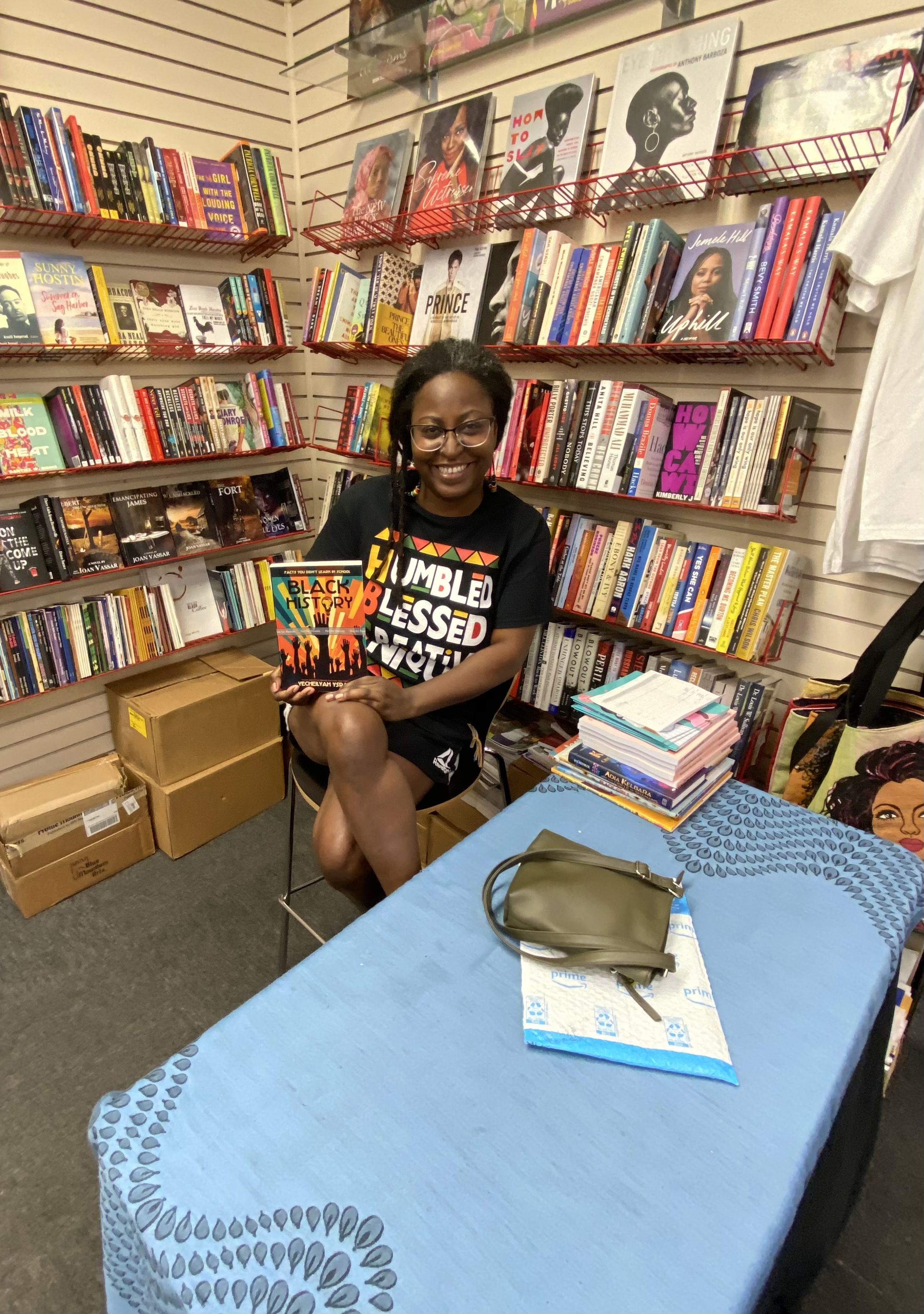
Preorder Your Copy of Black History Facts You Didn’t Learn in School Here!

http://www.blkhistorybook.com | 2.24.24

The Top 2023 Self-Publishing Platforms for Writers (Aggregators and Retailers)

According to Kindleprenuer, a vetted and well-respected platform for self-publishers headed by Dave Chesson (who has listed me among its Ultimate List of Best Book Review Blogs under Yecheilyah’s Book Reviews), these are some of the best platforms for writers who self-published in 2023. (I put them in my own order, though, lol.)

  1. Amazon’s Kindle Direct Publishing (Retailer)
  2. IngramSpark (Aggregator)
  3. Barnes and Noble Press (Retailer)
  4. Draft2Digital (Aggregator)
  5. PublishDrive (Aggregator)
  6. Apple Books (Retailer…direct access to Mac users)
  7. Bookbaby (Aggregator)
  8. KOBO (Retailer)

But what’s the difference between a retailer and an aggregator?

Book retailers are platforms where you can upload your book directly to their site and sell on their market. These are your Amazons, B&Ns, Kobo’s and more.

Book aggregators are third-party platforms where you may submit your book, and it will be distributed to book merchants all over the world. It is one of the simplest ways to get your book on practically every online retailer’s website without much effort. Draft2Digital and PublishDrive are two of the most prominent book aggregators.

What I Use

Amazon has an 85% market share over all these platforms, so I will start with Kindle Direct Publishing to get my books on Amazon.

While other platforms, such as Bookbaby and IngramSpark, can send your book to Amazon, I have found it best to use Amazon for Amazon to decrease the chances of my book not showing up or being out of stock.

However, I opt-out of expanded distribution while on Amazon, which will put my book into Ingram’s database under Amazon. I want it under my own company.

After I upload my files to KDP, I head over to Ingram.

Under my own Ingram account, I publish my book to IngramSpark. I have not done this with every book, but I have done it with my last two and in the future. I do this for easier distribution to bookstores and libraries but under my own company name (Literary Korner Publishing), not Amazon.

This is where having bulk ISBNs comes in handy, as you will need one for Ingram different from what you used on Amazon. Ya’ll know I don’t do free ISBNs except for with ebooks.

Then, I log into my account on Draft2Digital and upload my files there to get my ebook on all major online retailersโ€”however, I opt-out of Amazon since I have already uploaded my book there separately.

I also have yet to use their print book version, now available for authors who want to use the feature. I only use them for the digital version of my book so if you’ve tried their paperbacks let me know how it turned out! How’s the quality compared to KDP?

When it’s said and done, I’ll have my book available on Amazon, B&N, iBooks, Kobo, and everywhere books are sold online with the option to get it into bookstores, libraries, and schools.

Save this post if you plan to self-publish in 2024 and let me know what has worked or not worked for you!

The Self-Publishing Debate: Should You Spend Money to Publish Your Book

I didn’t plan on posting today, but there is a debate going on about whether new authors should spend money on self-publishing their books.

In brief, publishing a book you want others to spend their money on will cost some financial investment if you care about your reader’s experience.

There’s a reason authors who sign with conventional publishing houses don’t pay money for editing and cover art. It is because the publisher has a team of experts to take care of that. In exchange, the author sells the rights to their book and receives royalty payments for sales.

As a self-publisher, you are the publisher, which means you are responsible for outsourcing everything you need to ensure a profitable product.

It doesn’t have to be an arm and a leg, but you want to, at minimum, cover editing, a decent cover design, print and digital formatting, and own your ISBN from Bowker so that you are the publisher of record.

Paying someone to publish your book is also not self-publishing.

If you paid someone to publish your book, including editing it and everything else, you have not self-published it. You have paid a vanity press to publish it for you.

I’ve heard too many horror stories from authors who say they will never self-publish again, only to discover they never actually self-published. They signed with a vanity press who uploaded the book to Ingram, and did little more than the author could have done themselves.

But this isn’t about vanity presses. This is about how too many people self-publish because they think it’s easier than all other routes: vanity, hybrid, and traditional. They have not considered if they have the time and resources to self-publish or if it’s even something they are really interested in.

The truth is that not everyone is equipped to be their own publisher, which is fine! First-time authors are not required to self-publish, but if they do, they must recognize the financial risks involved in providing a quality product worth people’s money.

You cannot throw a book together that you claim you didn’t do to make money and then sell this mediocrity to other people.

Cause technically, you can self-publish for $0, but it will look like it.

I blame the existence of this debate on the whole “art” conversation. Authors don’t think they have to invest financially because too many of us consider publishing a book a passion project instead of a business decision.

This is the first mistake.


Check out more Indie Author Basics articles here.

Preorder Your Copy of Black History Facts You Didn’t Learn in School Here!

http://www.blkhistorybook.com | 2.24.24

On Fear

I don’t exist out of thin air.

I didn’t just pop up out of nowhere teaching this through Google and YouTube University.

I teach this because I’ve lived through it.

And, while much of what I discuss is well-known on the tail end of 2023, it wasn’t when I first started. Self-publishing has been around for ages, but Print-On-Demand was new, and no one was talking about it, let alone their journey.

Without that first book, there would be no I am Soul or any other book.

I self-published my first book in 2010, and it was trash.

But I was 23 and unafraid.

There is something to be learned from young people.

The content was good, but the production was poor.

I knew nothing about editing, book cover art, or proper formatting.

Every mistake that could be made by self-publishing a book, I have made it and then some over the years.

But even though the book was far from perfect, I still sold copies. And even though I didn’t know what I was doing, my youthfulness had armed me with the boldness to put it out there anyway.

“Take the risk or lose the chance.”

I remember being at my in-laws house in Memphis. My husband had told my nephew:

“You can do anything if you believe it. You can climb that wall if you wanted to.”

Do you know what this five-year-old did?

He proceeded to climb the walls.

The fact that he could fall had never crossed his mind. And if it did, he didn’t care.

As we age and experience the brutality that is sometimes this life, we become more afraid.

This causes us to overthink until fear paralyzes us into not taking action.

And now, we are afraid to move forward because we are afraid to fail. In many ways, this also means we are afraid to learn!

“The fear will become your weakness if you don’t overcome it.” – Yecheilyah

I cannot say if I would have taken that leap of faith, the proof of what is not seen, had I known everything there was to know about book publishing. It would not have been perfect enough for me.

The most insightful lessons you will learn is through doing the work.

Don’t let overthinking paralyze you into not taking action.


Check out more Indie Author Basics articles here.

Preorder Your Copy of Black History Facts You Didn’t Learn in School Here!
http://www.blkhistorybook.com | 2.24.24

Should You Put Your Book Up for Preorder? It Depends.

What is a preorder?

A pre-order is when you make a book available for purchase before its official release dateโ€”typically a week to a year in advance.

Traditionally, publishers have books available for preorder as early as six months to a year in advance. They do it because strong pre-sales tell retailers the book will be in high demand, affecting the number of books stocked at stores and allowing them to make bestseller lists.

Self-published authors can learn from this, not necessarily to make the bestsellers list but to gauge interest in their new book and give them time to market/promote it.

I believe studying the traditional publishing model can help Indie Authors become better self-publishers in some areas, but that’s a conversation for a different day.

By putting my book up for preorder, I have not only made early sales but already have a bookstore interest in stocking it. (I am also aiming for schools. We’ll see how this goes!)

Reasons for setting up preorders depend on your marketing strategy, which could be:

  • To gauge interest in the book based on preorder sales
  • To increase sales ranking
  • To get the proof copy of the book into the hands of early reviewers, bookstores, and organizations
  • To give you time to market /promote the book (on/offline)
  • To prepare your audience for the next book in a series
  • To build excitement and anticipation

Preorders that tend to do well

Authors with several books published and larger audiences tend to do better with preorders because they already have people waiting for their next book.

Even if the author has a small audience, preorders can be good if the book is in high demand. It is one of the reasons I put my black history book up for preorder so early.

I’ve built up enough hype and awareness for the book that people were already looking for it on Amazon and asking where they could buy it. Putting it up for preorder ensures I take advantage of the opportunity to catch interested readers while the book is on their minds.

blkhistorybook.com

Authors writing a series also do well. They might offer the first book at a discount and then have the next book on preorder. People who love the first book in the series will likely buy the next one.

Preorders that don’t do as well

First-time authors who don’t have an audience do not always do well with preorders and might benefit from just releasing the book. As stated, preorders are more useful for experienced authors because they already have an audience.

It is also not a good idea to set up preorders if you’re not able to commit to a publication date in advance.

The most important thing to remember is that you have much more flexibility and creative control as an independent author than if you were traditionally published. You can play around with different strategies and see what works.

Cover Reveals

Cover reveals are fun and all, but they serve no real purpose if people can’t buy the book or preorder it on the spot. I recommend holding off on showing the cover until you are ready or almost ready to accept orders.

Promoting Preorders

Although preorders are a beneficial marketing strategy for some authors, it is also a lot of work. Here are my top tips:

  • Consider running your preorders for a shorter time than the traditional model. Just because your celebrity authors release books on preorder a year in advance doesn’t mean you have to. We are Indies. We do what we want. (*wink*) Yours can be as short as two weeks to a month before release. Also for Amazon, the preorder only counts on the day of the order. This means that the longer the preorder period, the harder it is to sustain a high ranking on that book. (If your goal is to achieve a high ranking.)
  • Preserve most of your energy for when the book is out. Too many authors get hung up on the release date and wear themselves out. Remember that your book will sell for weeks, months, and years afterward, so pace yourself. If your preorders are through Amazon, you still receive your royalties per their regular royalty payment schedule after your book is published anyway, not before.

This is my first experience running a lengthy campaign, but I’m saving most of my energy for when the book comes out. Those of you who know me are aware that I rarely do anything without a purpose. Because I anticipated my schedule would be hectic toward the end of the year, I postponed the release until the new year. I’ll put it to the test and, of course, report back!


Check out more Indie Author Basics articles here.

Preorder Your Copy of Black History Facts You Didn’t Learn in School Here!

http://www.blkhistorybook.com | 2.24.24

What Indie Authors Can Learn from Jada Pinkett-Smith’s Book Launch

As an author, I cannot help but to look at the book marketing side of celebrity book launches of this magnitude. And, because it’s such a controversial launch, I want to give a disclaimer.

Disclaimer: This post is not about dissecting the morality of Will and Jada Pinkett Smith, condoning how she has gone about her launch, or suggesting authors expose their personal lives. Rather, we can use a viral book launch as an example of how we can strategize when rolling out our launches.

In today’s post, we look at a few lessons we can learn from Jada’s book launch that you don’t have to be a millionaire author to implement.

Timing

The timing of Jada’s bombshell about her and Will’s separation contributed to even more interest in the book than she already had. As the Smiths likely anticipated, the public ate it up and left no crumbs.

Indie authors might discover that releasing content (of their own discretion, not necessarily so personal) at specific times can enhance reception and reach. Authors should plan their book releases, publication dates, and marketing efforts carefully and strategically.

Establishing a Platform & Leveraging Existing Platforms

It might seem that Jada’s recent revelations are new, but between her Red Table Talk show (where she discussed personal matters openly) and her Instagram lives, Jada has long established herself as someone who has raw and open conversations as part of her personal brand.

Indie authors can learn from this by sharing content on their social media platforms that give insight not only into their books but also about them as a person. Again, at their own discretion.

Kerry Washington is an example of someone who is in the public eye, but who lives a private life. She does not show her children on social media and we also hardly ever see her husband.

Jada also used other platforms to her advantage, spilling the tea on other people’s talk and radio shows. Indie authors have the same option. Consider guest blogging or cross-promoting with other authors.

Sneak Peeks That Pique Interest

Tupac Shakur has evoked strong emotions in fans since his death in September of 1996. Jada Pinkett Smith is well aware of this, and she is well aware that any comments she makes about him or her relationship with Will are bound to go viral. Jada fed us the information she wanted us to know and controlled the narrative through a traditional media interview.

Indie authors can learn from this by strategically choosing which parts of the book to discuss publicly before release. While some authors worry about giving their books away, the right information can do more to help rather than hinder a book’s success.

While the cover is essential, its the content inside of the book that keeps us reading. The cover pulls us in, but the story makes us stay.

Whether you’ve already published your book or are writing one, educating us about your topic and even revealing minor tidbits about what’s INSIDE the book can help garner more interest.

Are there any bookish lessons you’ve observed from celebrity authors? Let’s discuss in the comments!


Check out more Indie Author Basics articles here.


Preorder Your Copy of Black History Facts You Didn’t Learn in School Here!

http://www.blkhistorybook.com | 2.24.24

Self-Publishing: Understanding Copyright and Distribution

Copyright

First-time self-publishers often worry about copyright or that someone will steal their idea. This is typically the first sign of a novice self-publisher.

However, new and established authors might worry about someone stealing their books now that AI is here.

First, you should know that you own the copyright to your book at the moment of creation.

This is why it’s irrelevant for vanity presses to tell you that you keep 100% of your rights as a perk to working with them. You already have it.

But, if you want to take it a step further, you can obtain an official copyright through the US copyright office (copyright.gov) and receive a Library of Congress number, which allows librarians to catalog your book at LOC.gov.

Note: If you plan to request US Library of Congress (LOC) cataloging, be sure to assign the ISBN well in advance of publication to allow for LOC processing time.

Photo by lil artsy

Keep in mind that the ISBN has nothing to do with the copyright or the ownership of the work. It is also not connected to the Library of Congress cataloging. The ISBN is simply a number identifying the book and who published it.

It is important for self-publishers because we want to be listed as the publisher of record. That is why we self-published: to be in total creative control of the process and our own publishers.

Seeing the name of who published the book might not be a big deal to readers or authors who intend to stick to selling their books online, but for authors who wish to get the attention of booksellers or to sell their books in bulk to larger corporations, it is a bigger deal. Booksellers find it too inconvenient if the book is not returnable through Ingram (the book distributor, not IngramSpark the self-publishing arm). Although KDP’s extended distribution actually goes through Ingram, one of the main reasons why retailers don’t want to stock titles published by Amazon is that they are not returnable.

And Amazon is their biggest competitor.

Frankly, bookstores can care less about Amazon or that you are an Amazon bestseller.

Free ISBNs could also restrict your distribution options.

Distribution

Copyright is not to be confused with distribution rights.

Like traditional publishing, self-publishers want their books available through multiple channels. They want to control the distribution of their book.

In its simplest form, distribution rights is the right to make your book available to the customer.

When you are signed with a publisher, you must go through them to get copies of your book.

When you are your own publisher, you can order as many author copies of the book as you want and decide where your book shows up.

For print books, for example, it means going from your printer to a retailer or directly to your reader.

In the case of ebooks, this can entail sticking to Amazon exclusively or using an aggregator like Draft2Digital to make your work available at a variety of stores, including Barnes and Noble, Apple iBooks, and Books-A-Million.

For distribution to bookstores,* small publishers and self-publishers do not typically have the manpower to use a full-service distributor like traditional publishers who can warehouse and distribute large book print runs. Thus, we usually opt for a wholesale distributor such as Ingram because it is best suited to print-on-demand (POD) printing.

*Having your book on Ingram Spark does not necessarily mean bookstores will order copies of your self-published book from Ingram.

The best practice is to self-publish through Amazon’s KDP for Amazon and then publish separately through Ingram and other platforms.

In other words, you don’t have to be concerned about someone stealing your book concept. Every book has already been written. Your perspective is the key ingredient. The way you write it is what makes it unique. Nobody else can write like you. Additionally, your book was already protected by copyright when it was written. For more security or peace of mind, you can also purchase a copyright through copyright.gov.


Check out more Indie Author Basics articles here.


Preorder Your Copy of Black History Facts You Didn’t Learn in School Here!

http://www.blkhistorybook.com | 2.24.24