Been a minute since I gave you an EC quote Friday. Today I just want to remind you that it’s hard to beat someone who won’t quit. Whatever you do, just keep going:
If you wrote an article no one reads, write another one. If you sing a song no one hears, sing another one. If you publish a book no one reads, publish another one. If you dance your heart out and no one watches, dance again. The most obvious solution to me in the face of adversity is to keep going. To always try just one more time.
James Shober was an African American doctor and the first Black doctor in North Carolina. James was born on August 23, 1853, in what is now Winston-Salem, North Carolina. James father Francis Edwin was a white businessman and politician who served in the North Carolina state legislature and the United States Congress. His mother was an 18-year-old enslaved woman named Betsy Ann.
Betsy was of mixed race who lived in Salem and passed away in 1859 when Shober was between six and seven-years-old. He was sent back to the Waugh Plantation near Waughtown, North Carolina, where his grandmother lived with other family relatives.
Educated at Lincoln University in Oxford, Pennsylvania, Shober then enrolled in the Howard University School of Medicine in Washington, D.C. where he was one of the forty-eight graduates in 1878.
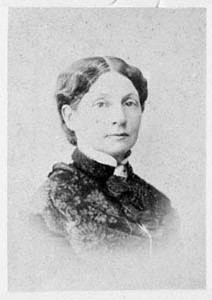
Image from Library of State, James Shober
After graduation, he began practicing medicine in his home in Wilmington, then the state’s largest city. Shober was the only Black doctor in a city of more than 10,000. There were only a handful of licensed black doctors across the United States following the Civil War. Shober now joined those ranks in 1878 and became the first professionally trained Black physician in North Carolina.
On June 28, 1881, James married Anna Maria Taylor, an educator who taught at the Peabody School in Wilmington, and they became the parents of two daughters, Mary Louise and Emily Lillian. His daughters both graduated from Fisk University and pursued a number of professions. James Shober died young, at just 36 years-old on January 1, 1889.
What became known as “The Atlanta Child Murders” happened in Atlanta between 1979 and 1981, when about 29 Black children, teens, and young adults were kidnapped and murdered. A majority of the killings shared common details. In 1979, for instance, Edward Hope Smith, also known as “Teddy,” and Alfred Evans, also known as “Q,” aged 14 and from the same apartments, disappeared four days apart. Their bodies were both found on July 28 in a wooded area, Edward with a .22 caliber gunshot wound in his upper back. They were believed to be the first victims of the “Atlanta Child Killer.”
On September 4, the next victim, 14-year-old Milton Harvey, disappeared while on an errand to a bank for his mother. He was riding a yellow bike, which was found a week later in a remote area of Atlanta. His body was not recovered until November of 1979.
On October 21, 9-year-old Yusuf Bell went to the store. A witness said she saw Yusuf getting into a blue car before he disappeared. His body was found on November 8 in the abandoned E. P. Johnson elementary school by a school janitor who was looking for a place to use the bathroom. Bell’s body was found clothed in the brown cut-off shorts he was last seen wearing, with a piece of masking tape stuck to them. He had been hit over the head twice, and the cause of death was strangulation. Police did not immediately link his disappearance to the previous killings.
On March 4, 1980, the first female victim, 12-year-old Angel Lenair, disappeared. She left her house around 4 pm, wearing a denim outfit, and was last seen at a friend’s house watching Sanford and Son. Lenair’s body was found six days later, in a wooded vacant lot along Campbellton Road, wearing the same clothes she had left home. A pair of white panties that did not belong to Lenair was stuffed in her mouth, and her hands were bound with an electrical cord. The cause of death was strangulation.
I won’t go on as the accounts get more and more disturbing. The FBI joined the multi-agency investigation in 1980. The investigation was closed following the conviction of Wayne Bertram Williams for two of the murders in 1982. After the trial, law enforcement linked Williams to 20 more of the 29 murders.
Not all of the missing children have been found, and not all the murders were attributed to Williams. Some believe he was falsely accused. Those days, it was hard to know what to believe. Tensions were high and rising with each body found. Hundreds of residents volunteered for a community watch program at schools, playgrounds, and shopping centers. Others took up baseball bats and patrolled the streets.
Children teased each other about getting caught by “The Snatcher” as the assumption was that it was just one killer, but officials at the various local, state, and federal agencies working the cases couldn’t agree.
In the wake of missing children and young people again, this time in Chicago, it’s imperative that we all be careful. These are dangerous times, and it really doesn’t matter where you live. Be careful out there, people, and keep an attentive eye on your children.
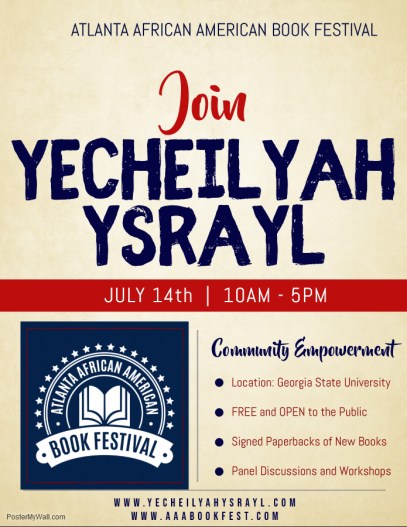
The inaugural Atlanta African American Book Festival is FREE and OPEN to the PUBLIC and will take place on Saturday, July 14, 2018, at Georgia State University. Over 70 authors will convene in Atlanta to present their work to the Atlanta community. Author categories include fiction, non-fiction, romance, YA fiction, middle-grade fiction, and children’s picture books. Journalists, editors, publishers, literary critics, and scholars from various fields will be present. Panel discussions and workshops will engage festival attendees in topics concerning literary industry tips, civil disobedience, activism, emotional and spiritual well-being, restorative justice, and health and wealth. Children’s activities include a story corner and festival dance floor.
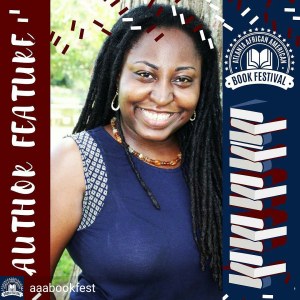
I will be one of many authors in attendance and I would be honored to have your support at my table. Since I did not have a launch signing or gathering for Revolution, I’d like to use this as an opportunity for a post-launch celebration. You will have the chance to purchase signed paperback copies of my two most recent books (and not just mine but other authors too), take pictures, take part in workshops, and meet industry professionals. Again, attendance at the festival is FREE so you’ll just need to make it here (food is not allowed inside the venue but there will be food trucks on the outside). This is not just an entertainment event but we also seek to implement community programming that promotes black literary arts and family sustainability within our community. To check out my AAA blog feature, click here.
Today, we are taking a look at a woman whose husband we know well. Frederick Douglass is well-known but his first wife is not. For the sake of time, I am combining sources from various articles since I have not had the chance to put something together for you this week. Enjoy.
Anna Murray Douglass
Frederick and Anna met in 1838, when he still went by the surname Bailey and she by Murray. The daughter of enslaved parents in rural Maryland around 1813, Anna was the first of her siblings to be born free after her parents were manumitted (set free). She lived with her parents until the age of 17, at which point she headed for Baltimore and found work as a domestic helper. Over the years she managed to earn and save money; the vibrant community of more than 17,000 free blacks in the Maryland city organized black churches and schools despite repressive laws restricting their freedoms. When she met Frederick—historians disagree on the when and where their acquaintance occurred, but it may have been in attending the same church—she was financially prepared to start a life with him. But first, he needed freedom.
By borrowing a freedman’s protection certificate from a friend and wearing the disguise of a sailor sewn by Anna, Frederick made his way to New York City by train (possibly spending Anna’s money to buy the ticket, says historian Leigh Fought). Once there, he sent for Anna and they were married in the home of abolitionist David Ruggles. According to Rosetta, Anna brought nearly everything the couple needed to begin their life together: a feather bed with pillows and linens; dishes with cutlery; and a full trunk of clothing for herself.
In 1837, Frederick met a free Black woman, Anna Murray, who was born in 1813. Her parents had been freed before she was born, and Anna worked as a laundress and a housekeeper. Anna used her savings and sold a bed to pay for train tickets for Frederick, which he used to escape to freedom. She also sewed a sailor outfit for him, which he wore as a disguise. Fredrick had tried to escape before, but it was not until Anna helped him that he escaped successfully.
Once Frederick got to New York, Anna joined him and they married and moved to New Bedford, Massachusetts. They had five children together. When they moved to Rochester, New York, she turned their home into an Underground Railroad stop, providing shelter for runaway slaves en route to Canada.
Frederick Douglass
As Frederick became more involved in activism, their relationship became more strained. Anna could barely read and write, and felt out of place among Frederick’s friends. His friends, most of whom were highly educated and intellectual, openly looked down on Anna (to his credit, he vigorously defended her against any who suggested she was not a worthy wife). Anna enjoyed being part of the Black community in New Bedford, but in 1847 Frederick moved the family, and as his circle of friends widened, hers diminished. Anna was also tormented by rumors that Frederick had affairs during his many travels. On two occasions, Frederick had women he was rumored to be sleeping with move into Anna’s house, causing controversy between the couple and within Frederick’s political community.
While Frederick began his climb as an abolitionist orator, Anna cared for their children, born between 1839 and 1849: Rosetta, Lewis, Frederick, Charles, and Annie. In 1847, they moved to Rochester, New York, where Frederick began publishing his newspaper, the North Star. The gulf between Anna and Frederick widened over the years; she could barely read and write and was rarely a part of his activist life and growing circle of prominent white and black abolitionist colleagues. After the death of their youngest child, Annie, in 1860, Anna’s health steadily deteriorated. She died on August 4, 1882 at their home, Cedar Hill, across from Washington, D.C. She was carried back to Rochester, New York, where she was buried in Mount Hope Cemetery.
One year after Anna’s death, Frederick remarried. His second wife was Helen Pitts. She was born in 1838. Her parents were abolitionists, and she was an ardent abolitionist and suffragette. In 1880, her family moved next door to the Douglass family, and Helen assisted Frederick with his work. She also worked as a clerk and co-edited a women’s rights magazine.
Their marriage was quite a scandal. Helen was white and twenty years younger than Frederick. His children felt the marriage disrespected their mother. Frederick and Helen’s friends were shocked because they felt the marriage was too sudden and because they were worried about the race and age differences. Helen’s family cut off contact with her altogether, and their local society was appalled that a black man and white woman were married at all.
Helen Pitts’ response: “Love came to me, and I was not afraid to marry the man I loved because of his color.”
Frederick’s response: “This proves I am impartial. My first wife was the color of my mother and the second, the color of my father.”
EC thoughts: I feel kind of sad for Anna and I can’t help but to wonder why Frederick, intelligent as he was, did not teach her to read and write. Did she not want to learn? Or did he not want to teach her? We can only speculate.
Very well said. Fav. Post Quote: Beta Reading is not editing, and the reader should not make comments that are editorial in nature. Those kinds of nit-picky comments are not helpful at this early stage because the larger issues must be addressed before the fine-tuning can begin, and if you are beta reading for someone, the larger issues are what the author has asked you to look at. *Comments disabled here. Please comment and share the original post*
Once again, the question of the difference between beta reading and editing has arisen in one the many forums I frequent on Facebook. So, I feel the need to revisit a post from 2015, Beta Reading VS. Editing. If you’ve already seen this post, nothing has changed in the world of editing and beta reading since this first appeared. But thank you for stopping by!
Indies rely heavily on what we refer to as beta readers to help shape their work and make it ready for editing. But in many online forums, authors use the term used interchangeably with editing, and the two are completely different.
And unfortunately, some indie published works are clear examples of work by authors who don’t realize the importance of working with an editor, although it is apparent that they have had assistance from beta-readers.
What is quite disappointing to me, is the many traditionally published works that seem to fall…
My new book releases on May 30, 2018 and is $12.00 to pre-order the paperback (this includes shipping within the U.S.) and I am not ashamed of that. I am worth it. Surely, those who support me can spend $12 in support of an Independent Author who does it all herself. I am not signed with a traditional or small press publisher, Literary Korner Publishing is my business (spelled with a K on purpose) and I run it myself. This book will be available for pre-order in ebook soon at $2.99 and will go up once the book is out. This thought led me to an Indie Author Tip I thought I’d share.
There’s nothing wrong with charging what you’re worth. There are lots of books on Amazon that are free. According to Google, there are between 40 – 60,000 free books swimming in the Amazon sea. Many of them are also poorly edited (if at all) and mediocre in production. If you’ve been publishing awhile, consider raising your book prices. Usually, when people pay for something, they invest their time in it because they don’t want to waste their money. Even if they dislike the book and feel like they did waste money, they still read it. Paying for anything adds value and when people buy something of value they feel committed to not wasting it. I don’t know about you, but I don’t want to sit on people’s Kindles. I write books so that people can read them. Not so that I can say I’m an author and feel awesome about myself. No. I write to be read.
People are more invested in things they pay for. Higher pricing means higher quality
Pricing is positioning
Pricing is not length but value
If you’re not a new author (meaning you have multiple titles out) consider raising your ebook prices above 99cents and I would go as far as to say to do this for preorders as well. The reason is like I already said, there are tons of books available for 99cents already and they are poorly produced. Even if you sweat blood writing your book, paid good money to edit your book and paid good money for a decent cover (not to mention if you paid for formatting), to some readers it won’t matter. They will see your price and ignore it on the way to the “good” stuff.
Some people are also brand buyers. This means that they only buy stuff that are named-brands. This could be a book, a shoe or an article of clothing. But many of us are not famous writers and we are not well known (yet). For this, we are inferior by definition. We are not actually inferior of course, but brand-buyers don’t care how cheap the book is if they never heard of the author or are not familiar with the writing. They are not going to buy the book no matter how cheap it is.
I am no one special and you don’t have to listen to me. I am sure there are better articles written by better writers. However, I do pay attention and my suggestion would be that if you are a new author (never published a book before), set your price to 99cents for pre-order for the ebook and then raise the price (not too high though, remember no one knows you yet) when the book releases. If you are not a new author (multiple titles out) and you know that your book is a good read (you got good feedback on it, you got it edited and all that) I would say to start setting your ebook pre-order prices higher than the 99cent price point.
I would recommend 99cents or free only for a limited time. Maybe your book is free for one day or 99cents for one week but I would recommend putting a limit on it. I think that Indie Publishing has progressed tremendously and that better quality books are expected. You would not see a famous traditionally published author (who actually writes good books) with an ebook for pre-order at 99cents and as a reader, I notice that books above 99cents are the books that are actually worth the read.








 The PBS Blog