5 Horrible Mistakes Self Published Authors Make

Saw this on twitter, thought I’d share. These are some good points:

The Following is by Laurence O’Bryan:

hands pointing towards business man

Self publishing is a golden opportunity. For the first time in history authors can reach readers without going through the traditional publishing system.

But many self published authors are making horrible, beginner-type-mistakes, which will cripple their book sales. Here’s my take on these mistakes:

1. Not getting outside help. Writers can’t generally be editors, cover designers and marketing experts, as well as being writers. Not if they want to do these jobs well. And asking a relative or close friend to do these jobs for you is probably worse than doing it yourself. Your judgement typically goes out the window when someone close to you does something for you. If you won’t spend money on getting experts your sales will be poor. I know there are occasional exceptions to this, but they only prove the rule.

2. Having unrealistic expectations. Most books, up to ten years ago, sold hundreds of copies. Only 1 in 300 traditionally published books, which got good editing, covers and marketing support, became bestsellers in the past. Publishing became a giant game of throw-it-up and see-what-sticks. With printed books it became ever growing and almost criminally wasteful, when you consider the dirty secret that most of the books you see in book stores are destined to be pulped. Now that game is in decline. If you do get editing, covers and marketing right, you might expect reasonable sales, but publishing is always a gamble, so never risk more than you can afford to lose. Great books don’t always sell well. And Print on Demand is way better than ordering books to store in a front room and then a back room – forever.

3. Not building an email list of people who might be willing to read and review your book on Amazon. This is one of the main reasons traditional publishers take so long to publish a book. They often send review copies out to a large group of their reviewers three months in advance of publication. This policy ensures that positive reviews will be posted day one after the book goes up on Amazon. Self-published authors should consider the day a book goes live on Amazon as a soft launch. The day you have five reviews is the day your book gets launched. The day you have ten is when it can hold its head up. The day it has fifty is the day you can expect Amazon’s algorithms to start presenting it to readers near the top of a list of books someone searched for. Congratulations!

4. Not focusing on what makes your book different. Whatever you write, you need to find something unique about your book. That you’ve written a good me-too book, like many others in its genre, is simply not good enough, unless you are happy with poor sales. Sensational writing, words that jump from a page, a heart-stopping plot, and real recipes from your grandmother in a village in Sardinia, where many people live to be 100, are all potentially unique aspects of a book, which will help you find readers.

5. Not believing in yourself. Self-belief is critical to long-term success as a writer, as in many walks of life.  Writing is a profession where those who believe they can and who don’t give up, succeed. Perseverance and a willingness to learn, to edit the whole book again, for the twenty-seventh time, are necessary characteristics for a writer who is determined to become a success. Adopt these characteristics and your path will open up. In the past, it took most writers about ten years to find a publisher, from starting to write. Each year was spent improving, honing, learning. Be prepared for a long journey. If you love being creative with words, don’t give up because the road is hard. Use the journey to prepare for what lies ahead.

Finally, when you have done all of the above, you will know that you can move on. To the next book. And then the one after. Most books lead to another. One of the joys of writing is discovering what else lies inside us, waiting to be born.
Need a Book Review? – Free Resource

6a00e551344c0a88330133edb922ac970b

I happen to be in a reading mood and as a result I am extending my hand to get into some good Indie reads. I am not the CEO of The Best Company Ever and the blog I run is small, but every little bit helps, and I am willing to read your book for free and offer my opinion. I am not charging anything except you send me a copy of the book. You will receive in return promotion through this blog and my social networks.

 
As not to overwhelm myself, I’ll be accepting only 2 books a month (so that’s two authors a month). If you’re interested in letting me read your book in exchange for an honest review and some added promotion, please send me an email and I will give you the details on how to qualify.

free_resources5

Why am I doing this? Because as a Self-Publisher, I know that every little bit helps. I have some time to read and would love to see what you have to offer.

Email:
ahouseofpoetry@gmail.com

What The Heck is Author Branding?

writing_as_professionalAh, the freedom of Self-Pub, gotta love it right? You can write as many books, covering as many angles as your full heart desires. Romance, Sci-Fi, Historical, Biography, not even the sky is the limit. But what makes your Romance novel stand out from the rest? What makes your History book the best? Self-Publishing is not like other businesses. It is not a jewelry store, a brightly lit collection of possibilities. A host of shiny things that pretty much sell themselves. It is not a restaurant, a place where menus lay open for people to see and to choose. When I walk into Burger King I know exactly what I want and how I want it and I know what I am getting. I already know what to expect from the food. But book publishing is different from other businesses because there is a lot to learn and there is a lot to do.

writers-block2I think the most challenging aspect of Self-Publishing is being able to prove to your target audience that your book is worth buying. Especially as a new author. It is critical at this point that we show ourselves to be set-apart from the rest. That we garner the kind of trust in our readers that we have in Burger King. That when people pick up one of our books they know they are about to have it their way. That was corny, but the point is that they know that the journey in which they are about to embark on is a good one. Have you ever picked up a book and did not have to question if it would be a good one? That is because, like your favorite restaurant, you are familiar with the taste of the authors’ words and the way they move around in your mind when you read them.

writing-groupWhat is an Author Brand? As a Self-Publisher, it is not something that immediately comes to mind. In the midst of writing and editing and book cover design, branding is the least of our worries. Of course we think about it (eventually), but when we set out to write a book Author Branding is not at the top of our list of priorities. It is a term that is heard among literary agents and blah blah blah. We are Self-Publishers after all. We make and break our own rules. But, being a Self-Published Author does not mean you live on Mars. You are, after all, part of the world and in the business of publishing. It doesn’t really matter if you publish traditionally or if you self-publish, we can all benefit from learning more about the business, which is constantly changing.

AuthorBrand

Author branding in short is basically how you want to be known as an author. The good thing is that many of us have already begun a form of Author Branding by establishing our perspectives and personalities as we blog.

“Serious writers who want to succeed as authors should include branding in their early success planning. A strong brand helps an author in the same ways it helps a company. It gives you name recognition and helps you sell your products—your books.” – Nina Amir

I know, Branding sounds like a lot of work. Makes me think about large corporations and blah blah blah. But, the good news is that little ole me can establish a form of branding without hurting my brain with talk from branding experts and people with more degrees than hairs on my head. Below are six simple branding tips for authors as suggested by Nina:

Here’s how you start: Think about how you want to be known as a writer. To determine this, consider:

• the types of writing you want to do
• the subjects about which you want to write
• the types of stories you want to tell
• the themes you want to cover in your work
• the ways in which you want to serve your readers
• the clients or customers you want to attract
• the spin-off books (sequels or series) you would like to publish
• your values
• your interests
• your passion
• your purpose

Does something stand out? Is there one quality, topic or aspect you’d like to highlight so that you become known for it? If so, this is a good place to start. You then can create logos, taglines and websites that feature and highlight this concept so you become known for it. This becomes your brand.

literI like using myself as an example because no one likes to hear about the adventures of invisible people. I am flesh and bone and person so here goes. I suck at branding myself in the name area. I know what is required to establish myself across the web and yet I continue to move away from it (hey, maybe that is my brand, ha!). My Author Website, my blog, and my social networking sites pretty much have different names. I know, that sucks, but that’s me. I’m A House of Poetry, A Literary Korner, and a PBS Blog, it doesn’t get any more different than that. I am the brand far as I’m concerned, so like, whatever.

You can either be special like me or you can use this tip:

• Use your brand statement across all your social networks.

Use the same title, tag line, photo and colors, etc., across all your social networks, as well as in articles, videos, and guest post, and always provide a link “home.” This helps you get you known quickly and easily and is another way to strengthen your brand once you’ve developed it. And tie everything you do back to your author website.

Yea, sure. I’ll think about it.

Self-Publishing: Just Write

46-FE3-Self-Publishing
I’ve heard enough criticism of Indie Authors and self-published books to last a lifetime and for the most part, I agree with them. I believe a lot of self-published books are low in quality. I think the editing and proofreading of some of these books suck, and I think some of the book cover designs are far from eye-catching. But I also believe we are overlooking one major detail:

Untitled-1
Many books that are published by big Publishing Companies have some of these same problems, but no one is going to talk about that because after all, who wants to stand against St. Martin’s Griffin? No one will talk about these poorly written, and sometimes poorly edited books published by some of the most famous Publishing Companies. It is because these books have the reputation of professionalism. They are backed by publishing houses with teams of support systems that Indie Authors simply do not have. Is this an excuse? Of course not. But what I would like to suggest to Indie Authors is this: JUST WRITE.

Self-publishing-300x300Produce a professional product and keep producing. Your content may suck at first but you will never please everyone so just write. Write and invest in the  professional quality material. Identify the readers who like what you write and engage them. Self-Publishing is a slow game. So don’t go into get rich or die trying. I would even suggest you have another career on the side for bills sake and livelihood because it will be awhile before you start making real money from your book sells. This will not only assist you in life outside of writing, but it will help you to invest in your own writing. You should never solely depend on your writing career financially starting out because everybody knows writers do not make much money. Traditional Publishing or Self-Publishing, we are not ballers so don’t set yourself up for disappointment by raising the stakes too high. Ambition is great, but this is a slow process in which Indie Authors need continual improvement by producing plenty of books.


r-INDIE-TRADITIONAL-PUBLISHING-600x275

It is at this point that you will need to identify your writing goals. What is it you want from self-publishing a book? Is it to make the New York Times Bestsellers list? Is it to entertain your circle of friends only? Why are you self-publishing a book? This is a question only you can answer and depend on what that answer is you will have to take it from there. Your motivation, however, will have to be deeper than making money. I’m not talking about finding god and all that extra stuff. This ain’t church. I’m talking about your personal inspiration because whatever that inspiration is it will have to be the driving force behind your will to keep going. There will be frustration after frustration  in an industry to which, despite failure, you must continue to produce. It’s exciting initially because you’ve published a book, which is a huge accomplishment, Yay!! Go You! But what now?

121-h_main-w

You set it up in your mind that the money will start pouring in and it doesn’t happen. That’s because it doesn’t work like that. Not even for writers who traditionally publish. As I’ve stated, a lot of Self-Published books suck for various reasons but don’t let the industry fool you:

Traditionally published books do too.

You think these books are automatic bestsellers? You think they’re striking gold? Nope. That’s the illusion but I’m here to tell you: writers don’t make money. At least not at first. Not Self-Published writers or Traditionally Published writers and you can take that to the bank and cash it.

So what do I propose? Do you throw in the towel? Do you do away with that manuscript? Do you stop here? No. You pass go, collect $200 and use it to keep writing. Whether your aspiration is to publish traditionally or Self-Publish, just write. But dedicate yourself to it. Here are a few tips to help get you started:

– Good Editing / Proofreading

– Nice Book Cover Design (FYI: Most major publishing houses buy multiple stock images from places like Getty images and combine them using Photoshop. Wanna know the secret to that nice book cover? I just told you).

– Formatting

– Easy to Follow Structure

– Jaw dropping opening scene

Keep it simple, keep it professional, and keep it coming. Don’t worry too much about the formalities and all that extra stuff these so called professionals keep telling you because your story probably does suck to them, but that don’t mean it’s not a masterpiece to someone else.

Just keep Writing.

Common Self-Publishing Mistakes

Really? Is she really talking about self-publishing again? Yes, as a matter of fact I am. I already told you I’m in love with writing.

So, we’ve discussed briefly some Common Sense reasons to take advantage of the Self-Publishing Industry, and we’ve even talked about the professionalism (or lack thereof) among the industry. Today however, I would like to feature an article (with my 2 cents in-between) that will shed some light on some of the most common self-publishing mistakes known to Indie Authors. Ready? Alrighty then, let’s go. Excerpts written by Cate Baum:

Book Cover Designs

cover129-500x750“It may seem very easy to take a snap and use it as a cover, slotting it into one of the simple templates available on many of the book publishing platforms such as Createspace at Amazon. However, these templates should be used only as a very last resort. Why? Because these templates are truly only there for the most design illiterate of us all, and for those who don’t much care about how their book looks, for instance, maybe the book is being published for a charity or a niche, local audience who anticipate the book’s availability. There is a completely blank template for adding your own design, which is perfectly sized. I use this one with my own design, forgoing all of the added titles and image holders on the others; because if you wish to sell your book to a new audience out there, you’re going to need to spend some time or some money on a cover. Make sure your cover is eye-catching and clean, and can be seen at a distance because thumbnails on Amazon, Barnes and Noble and most other book sites are going to use a thumbnail to show your book off as a first point of sale.”

Very good advice! I must admit I am guilty of doing this very thing years ago as I embarked on the Self-Publishing path. But as I began to look more deeply into the professional outcome of the product, it became clear to me how important the book cover design was to the book. The content is the most important no doubt, but book cover designs are also just as important. I think authors should sit back and ask themselves (as I ask myself), no matter the audience, and no matter whether or not you’re trying to make Oprah’s book club, “what do I really want from the end product?” Just because you don’t expect to get rich, doesn’t mean your work can’t be the best. Remember, “Be exceptionally good at everything you do because light attracts light.” Check out these “Lousy Book Covers” for an example of what not to do (really, that’s the name of the website, I didn’t make that up): http://lousybookcovers.com/

Not Spending Enough Energy on Editing

edit1

“We say this many times over, and I am constantly surprised by the number of self-publishers who go ahead and publish anyway, even when they know themselves their book contains errors! This is death to your book sales, and will not be ignored by readers, not just for this book but for all your books connected to your name. Editing is fairly expensive and tedious, but if you wish to make sales and give up the day job, it is vital you edit your work. Two-part edits are minimum: a proofread to find spelling and grammar errors, and then a formatting pass, followed by a structural edit to the actual story and characters. This will flag up any parts of the book that do not communicate well and parts where you’ve dragged on or skipped over detail that could become boring or confusing to your readers. In such a tough and competitive market an edit is an essential, professional process for any serious writer, even if you think you can spell, write, format and structure I bet you money an editor will find a bunch of stuff that you had missed, wood-for-the-trees style.”

So true. I know I know, would all of the grammatical geeks please calm down?  Nobody cares that you’ve counted over 50 grammatical errors in this post already, that’s what we have you for. 🙂

But seriously, I notice that one of the hardest stumbling blocks to tackle for some Indie Authors is finances. Often, we don’t put a lot into the editing of the material because we can’t afford it. But, if you want the most professional look possible, I would highly suggest you invest in editing. If nothing else, put some sheckles (yea, I said that), away for a decent editor to be your extra set of eyes, it may just save your novel’s life. Now don’t get me wrong, I’m not as critical a reader as some may be when it comes to grammatical errors but I’m telling you now, if it’s so bad that it becomes hard to read, that’s going to throw me off completely and I’m gonna care more about watching the Walking Dead than reading your book.

Insisting on a Fancy Font

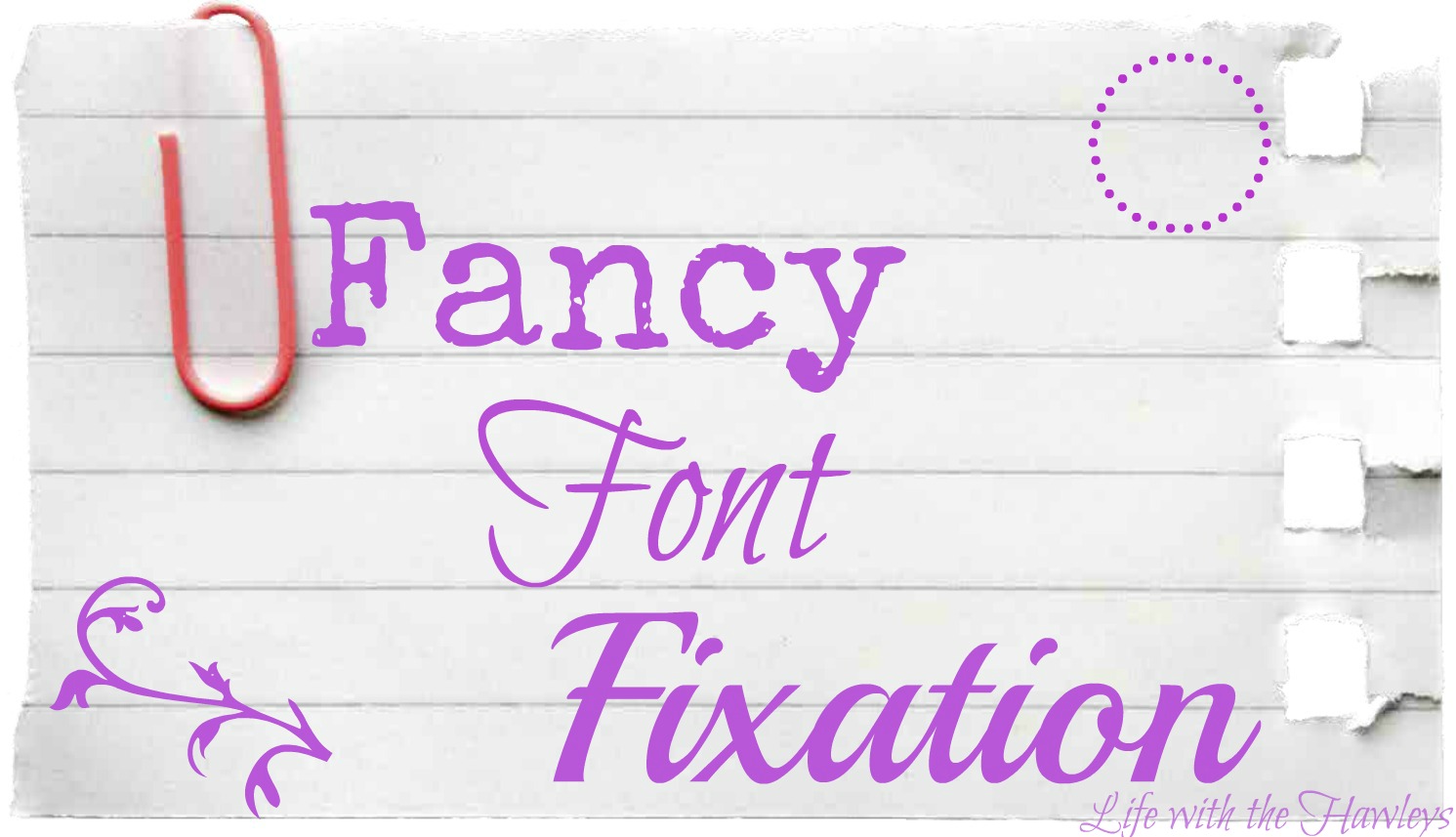
Fancy Font Fixation

Ok, thanks a lot Cate, but I think I’ll take it from here.

Please don’t do this people. Unless your book is some kind of graphic specialty or Children’s Book or something that requires some kind of cursive expertise, please don’t adjust your fonts in fancy writing. Only because you’re not in grade school anymore, the focus here is not how cute it looks, but how professional. Below is a basic list of the kinds of fonts that I would suggest for Chapters and such:

• Times New Roman
• Verdana
• Calibri
• Garamond
• Tahoma

Since I have to go now, I’d have to come back to this topic, but I hope what little information I was able to share may be of assistance to you. The most important obvious investments you can start out with though  is Editing and Book Cover Design.