There is much more to be added to this list but these five are good points. Black History Fun Fact Friday returns to the blog this week. We will be revisiting some basics. Specifically, the End of Chattel Slavery and Reconstruction.
“In August 1619, the first ship with “20 and odd” enslaved Africans arrived on the shores of Virginia. Four hundred years later, we look back at this moment as the start of an enduring relationship between the founding of the United States and the unconscionable exploitation of the enslaved.
In a sweeping project published by the New York Times Magazine this month exploring the legacy of slavery, Nikole Hannah-Jones wrote, “[The enslaved] and their descendants transformed the lands to which they’d been brought into some of the most successful colonies in the British Empire. … But it would be historically inaccurate to reduce the contributions of black people to the vast material wealth created by our bondage. Black Americans have also been, and continue to be, foundational to the idea of American freedom.”
Since 2015, The Velvet Note has consistently been named one of the best Jazz Clubs in Georgia, and I have the honor of headlining its first Author/Word event. “Velvet Voices,” is a thought-provoking series of presentations by authors, historians and spoken-word artists and premiers on Wednesday, August 21, 2019, in Alpharetta, Georgia from 7:00-9:30p. The series will run from 8/21 through 9/25, and I am the opener for the first show reading excerpts from my Historical Fiction novel Renaissance: The Nora White Story. Some fantastic poets will bless the mic, and it is also an open mic for attendees.
Enjoy thought provoking discussion in an award-winning, beautifully-appointed listening room. I will have copies of Renaissance, and I am Soul on hand to sign. If this series does well, The Velvet Note will incorporate it into its regular program. Get your tickets NOW and let’s make history!!
If you have not already, please be sure to head on over to this post and check out Fiza Pathan’s touching review of I am Soul. I’ll be quoting her review throughout this post but reading it in full will help you add context to what I say here (there is also an audio version of the review on her blog).
“I have read many books and articles about the way a woman of color is treated in society, especially in Indian society. I have studied History and Sociology throughout my college career which gave me a lot of material to study about the situation of colored people in Indian society. But to be frank, I’m not that well equipped to talk or speak about Black American History or the Black American contemporary views on life, culture, society, history, politics, education, et al.” (Pathan, 2019)
Pathan is not the only reader to have confided she is not well versed in Black American History. People have told me on more than one occasion of their lack of extensive knowledge in this area. This does not surprise me. It is why writing on the experiences of Blacks in America is important to me. Like Paul of the bible, I am sent to the nations (Acts 22:21) to bring light to what America has tried to keep hidden for too long.
Americans underestimate how information is disseminated across the world. The news and the information we are exposed to in America is not necessarily the same information that is exposed to people in other parts of the world. Historically, news traveled through radios, television, books, and newspapers. What mainstream media wanted you to know is what you knew. If America didn’t want other countries to see how it treated Black Americans, those countries didn’t see it.
“I have started reading Black American literature in general after I turned 28 years of age in 2017, because of the poems and writings of Toni Morrison, Maya Angelou, Langston Hughes, Alice Walker, James Baldwin and Dorothy West. Yes, you’d wonder where I was and what I was doing with my life, but the fact is that, all said and done, I have just begun to realize the richness and depth of the Black-American experience. ‘I Am Soul’ by Yecheilyah Ysrayl is one book among many that are educating women of color like me from far off countries like India, especially recluses like me, and I’m glad I am being educated.”
– Pathan, 2019
Today, Social Media is a significant catalyst for uncovering the truth about what Blacks have endured and the many businesses and products blacks have invented and how those inventions have been credited to other people. While we must be cautious not to spread disinformation (See this post here), there is still a lot of good that has resulted from the social media revolution. Information is coming out at a rapid speed of both the good and bad historical facts so that there is a desperate need of keen discernment. One such example is the testimony from notable black writers that Blacks could not eat vanilla ice cream in the Jim Crow south, and that they only allowed us to eat it on Independence Day.
“People in Stamps used to say that the whites in our town were so prejudiced that a Negro couldn’t buy vanilla ice cream. Except on July Fourth. Other days he had to be satisfied with chocolate.”
– Maya Angelou, I Know Why the Caged Bird Sings
While visiting Washington D.C. with her parents around Independence Day, poet Audre Lorde’s mom wanted to treat her to some vanilla ice cream, but they refused the family:
“The waitress was white, the counter was white, and the ice cream I never ate in Washington DC that summer I left childhood was white, and the white heat and white pavement and white stone monuments of my first Washington summer made me sick to my stomach for the rest of the trip.” – Audre Lorde, Zami: A New Spelling of My Name
The “White Ice Cream,” rule is said to be more folklore than truth. But why? This is an example of a history hidden and then revealed because of the widespread use of Social Media. Prohibiting blacks from eating vanilla ice cream is not far-fetched, considering the pettiness of Jim Crow law. If blacks couldn’t swim in the same water as whites, it’s not so hard to believe they couldn’t eat white ice cream.
Fun Fact: The vanilla bean is brown and was cultivated and improved by an enslaved black man named Edmund Albuius. In ice cream, a small amount of vanilla is used compared to the other ingredients so that it still looks white (from the milk, cream, white sugar). If a larger quantity of vanilla is used, it would probably be more colored. Take these bars of soap.
“The soap above is scented with Vanilla Sandalwood Fragrance Oil, which discolors dark brown. The tan color will continue to darken over time.” – Bramble Berry, Soap Queen (3 days later, the vanilla in the soap turned it even darker…)
But let’s not digress. The point is, vanilla bean is brown, not white. Joke was on Jim Crow…
“While Jim Crow laws, extensively documented in print and historical record, are fairly well known, less well known are the unspoken etiquette rules for Black people, largely forgotten by anyone who didn’t have to live under them. During Jim Crow, Black people could pick up food at establishments that served white people, but they often could not eat in them. When custom demanded that Black people be served separately from whites, they were often required to have their own utensils, serving dishes, and condiments. So it was customary for Black families who were traveling to carry everything they might possibly need so that (with the help of the Green Book, the guide that helped Black travelers eat, sleep, and move as safely as possible) they could navigate America in relative comfort.”
– Mikki Kendall, Hot Sauce in her Bag, 2016
Black history has been just as raped and stolen and manipulated as her people. Black American History is more than slavery and Civil Rights, but slavery and Civil Rights is still part of that history and must never be forgotten. Black history is the birth of a nation, its upbringing, its captivity, and its overcoming. It is all of it. The good, the bad, and the ugly. We were not only slaves but also soldiers. Not only captives but also captains. We were/are a wealthy people, royal, smart, salt. We are seasoning and soil. But where were we born? How did we begin? What happened once we got here? These are the questions I seek to answer in my literature and articles so that the voices unheard in mainstream media can speak through me and prophesy the truth.
“‘I Am Soul’ to me is a book about being a part of a history that none can forget, but that slowly is changing the way we look at this race of people past, present and to a bright future, God willing.”
– Pathan, 2019
There is something special about the plight of the so-called Black American. What is to be revealed about these people stolen and transported to foreign lands in the bowels of slave ships? These people once stripped of their nationality and culture and are now returning to their natural heritage? Because of Social Media, this truth is easier to disseminate and verify. We have eBooks we can download in an instant, online journals and periodicals, and scholarly material at our fingertips. And we have Independent Publishing whereby artists can write and publish these truths without prejudice.
“Lastly, I would like to recommend this lovely and enriching book to everyone, irrespective of race, community, religion, caste and gender. I hope to review more books by Yecheilyah Ysrayl soon and hopefully, when I do so, I will be more capable of giving a more enlightened review as I will be reading more books about Black American history and literature in the future.” – Fiza Pathan
I want my truth
before slavery.
I want customs and traditions
without being conditioned
I want unconditioned
hair.
I want my stuff.
I want my Kings and Queens
my silver and my gold
I want my laws and commandments and my stories
retold.
I want do-overs
for how we’ve been done over
I want my children re-educated
Give me raised fists
and two-parent households.
I want functioning Black family units,
Afros, Black power, curly hair
and I want my cocoa butter skin.
I want credit for all my skills.
I want my midwives
I want my tribes
I want my inventions before you re-invented them.
I want Lewis Howard Latimer
not Thomas Edison.
I want my covenants renewed
I want my 40 acres and a mule.
I want my land rich as I left it
I want my spirituality accepted
I want my names changed back
I want my Proverbs and freedom songs
and I want my Moses Black.
I want what you stole from me
I want King Solomon Black and comely.
I want it all back.
Uncle Tom has a legacy rich in racism and is a derogatory term applied to blacks who “sellout.” Sambo is also rich in racism and is a derogatory term. Historically, these two have been used interchangeably although they are not the same. These two are so intertwined in modern society and so incorporated into our language I am not sure they can ever be separated. It will be difficult to view them as anything other than names used to describe black people who betray other black people. Think Tom Dubois on the social and political television comedy Boondocks.
In this post, I will give some background on the Coon, the Sambo, and the Uncle Tom and reveal the truth on how Tom was not the sellout we have made him out to be.
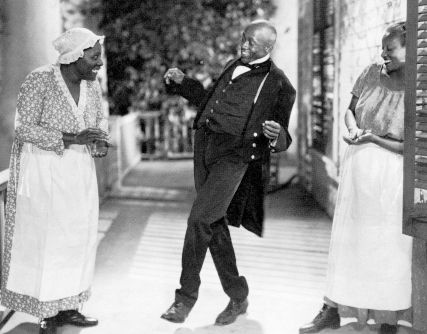
Let’s start with the Coon caricature. The name is an abbreviation of the word Racoon so that the name alone is dehumanizing. The prototype for the coon caricature was Lincoln Theodore Monroe Andrew Perry, known by his stage name as Stepin Fetchit. His signature was that he was the world’s laziest man. He was always sleepy, his eyes low and his speech slow. He took minutes just to complete simple sentences.
A scene of him laying in bed in pajamas taking three whole minutes to answer the phone and then another whole minute to say “hello” is what could be expected of his stage performances. The idea behind the coon was that he acted like a child although he was an adult. Stepin Fetchit also tap danced (hence “step it”) so that “Perry epitomized the mumbling, shuffling, buck-eyed buffoon who acted like he didn’t know his ass from a hole in the ground.” (BlackThen)
Stepin Fetchit manifested what racists whites thought of blacks and became one of the top paid black entertainers of his time.
The Sambo was portrayed as lazy, easily frightened, and chronically idle, an inarticulate buffoon. While the Coon was considered an adult who acted like a child, the Sambo was not considered an adult but was depicted as a perpetual child incapable of living as an Independent adult. What is important to note about the Sambo and the Coon was that they were born from names applied to the characteristics of real people. This is important to remember when we get to Uncle Tom. A stereotype is created when a widely held but fixed and oversimplified image or idea of a particular person or thing applies to an entire group of people. Perry was certainly a buffoon, the real-life version of the coon but to refer to all so-called African Americans as coon is what created the stereotype.
The Sambo caricature was born from enslaved blacks who were so loyal and dedicated to the slave owner they would betray their own people. The characteristics of the Sambo really did (and does) exist. “Stereotypes are “cognitive structures that contain the perceiver’s knowledge, beliefs, and expectations about human groups” (Peffley et al., 1997, p. 31). These cognitive constructs are often created out of a kernel of truth and then distorted beyond reality (Hoffmann, 1986).
Racial stereotypes are constructed beliefs that all members of the same race share given characteristics. These attributed characteristics are usually negative (Jewell, 1993).” The Coon and Sambo stereotypes contain kernels of truth. There really were blacks who were happy and willing to betray, and completely aid in the destruction of their own people.
Notice that “Acting white” is not part of the characteristic of the Sambo or Coon. The thing that made the Sambo and Coon an embarrassment and disgrace to the race was their loyalty to those who oppressed them, their betrayal of their brethren and their willingness to make a fool of both themselves and their people. Being intellectual, prompt, professional, and well spoken are not traits that “belong” to “white” people and certainly had nothing to do with these stereotypes. It’s actually the opposite. Racists at that time did not want blacks to read, write, display characteristics of dignity and esteem and professionalism. They wanted to portray them as ignorant, foolish, and childish.
Uncle Tom
While the Sambo and Coon caricatures fit this description, Uncle Tom was not the same and it would take an entirely different post to look into how he became associated with these caricatures. For now, let’s see who he really was.
Again, stereotypes come from kernels of truth. Just as Lincoln Perry was the epitome of the Coon, and sellout blacks were the real-life Sambos, the fictionalized story of the Uncle Tom was inspired by a man named Josiah Henson.
Josiah Henson
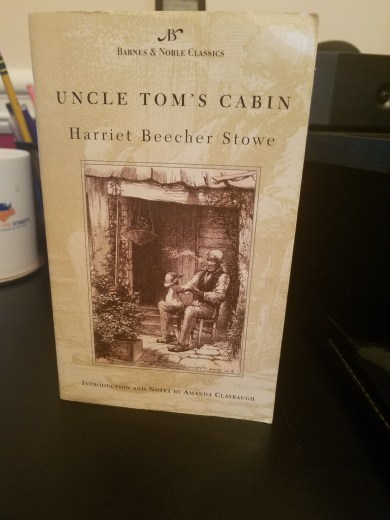
Josiah was an author, abolitionist, minister, and Harriet Beecher Stowe’s inspiration for Uncle Tom’s Cabin. Henson’s father was whipped, got his ear cut off, and was sold south after hitting a white man who tried to rape his wife. Henson never saw his father again, but this gives us insight into Josiah’s character. He became a preacher through memorizing verses although he couldn’t, at the time, read and write. In 1830, Henson ran away with his wife and two youngest children, walking over 600 miles to Canada but he didn’t stop there.
“Henson helped start in 1841 a freeman settlement called the British American Institute, in an area called Dawn, which became known as one of the final stops on the Underground Railroad. Henson repeatedly returned to the U.S. to guide 118 other slaves to freedom. It was a massively dangerous undertaking, but Henson saw a greater purpose than simply living out his life in Ontario, Canada. In addition to his service to the school, Henson ran a farm, started a gristmill, bred horses, and built a sawmill for high-quality black lumber— so good, in fact, that it won him a medal at the first World’s Fair in London ten years later.”
Henson’s life inspired the work of Harriet Beecher Stowe’s Uncle Tom’s Cabin. Tom displayed the following characteristics:
He refused to beat black women
He refused to force other black people to pick cotton
He took the cotton out of his own bag and put it in other’s bags so those slaves wouldn’t get whipped for not having the proper weight (as you know, the enslaved had to pick a certain amount of cotton or they would be punished.)
And he refused to tell where attempted escaping slaves were hiding
Josiah Henson was not a Coon, and he was not a Sambo. Instead, he helped hundreds of enslaved men, women, and children escape North years before the Underground Railroad. He was a good man and a great leader.
Be sure to check out other Black History Fun Facts on the page here.
Sources
Uncle Tom’s Cabin by Harriet Beecher Stowe, paperback edition
I’ve been swamped in schoolwork which is stopping me from living my best life on these black history posts. Today, I compiled a list of links I found throughout the week and books I recommend since I did not get to complete a full post on one topic. The books are what I really encourage you to look into. Unlike the internet, they provide more detailed and in-depth research and citations from scholars and others useful for deep research.
Descendants of Last Slave Ship Still Live in Alabama Community
The story of the Clotilda and the people who built Africatown.
I spoke about “Africa Town” once before on this blog (See post here). This article shares some insightful information on the descendants of that town. (You may also remember the book recently released on behalf of Zora Neale Hurston of the Clotilda).
South African paramilitary unit plotted to infect black population with Aids, former member claims
Group said to have ‘spread the virus’ at the behest of Keith Maxwell, eccentric leader of the shadowy South African Institute of Maritime Research, who wanted a white majority country where ‘the excesses of the 1960s, 70s and 80s have no place in the post-Aids world’.
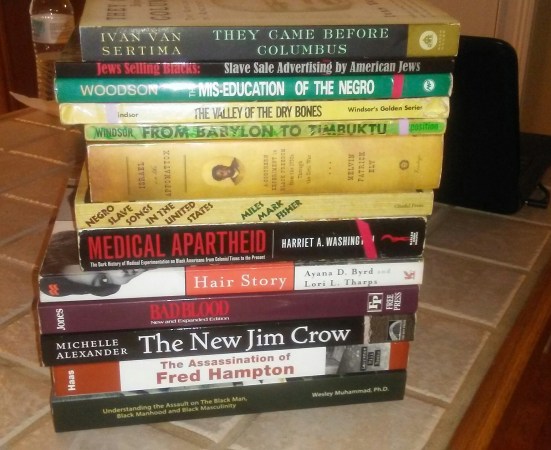
Don’t let February be the only time you are interested in your history. From the shelf, here are some of my favorites. I recommend them all:
They Came Before Columbus, Ivan Van Sertima
Jews Selling Blacks: Slave Sale Advertising by American Jews
The Miseducation of the Negro, Carter G. Woodson
The Valley of Dry Bones: The Conditions that Face Black People in America, Rudolph Windsor
From Babylon to Timbuktu: A History of the Ancient Black-Races including the Black Hebrews also by Rudolph Windsor
Negro Slave Songs in the U.S. Miles, Mark, Fisher
Israel on the Appomattox: A southern experiment in black freedom from the 1790s through the Civil War, Melvin Patrick Ely
Medical Apartheid: The Dark History of Medical Experimentation on Black Americans from Colonial Times to the Present, Harriet A. Washington
Hair Story: Untangling the Roots of Black Hair in America, Ayana D. Byrd and Lori L. Tharps
The Assassination of Fred Hampton: How the FBI and the Chicago Police Murdered a Black Panther
Bad Blood: The Tuskegee Syphilis Experiment, James H. Jones
Understanding the Assault on the Black Man, Black Manhood, and Black Masculinity, Wesley Muhammad
The New Jim Crow: Mass Incarceration in the Age of Colorblindness, Michelle Alexander
There are so many others but this should be enough to get your started! Be sure to check out the other Black History Fun Facts on the Black History Fun Fact Friday page.
The question is deceptively simple. While it may seem like the history of “black people,” or a month worth of 28 days of “Black Pride,” or a horrific recap of slavery, Black History is deeper and richer than this. The African diaspora consists of a worldwide collection of communities and not all black-skinned people are part of the same nationality of people.
Are we going to talk about Black Biblical History and refer to ancestral names? The bible does not support the concept of race which means that we are then dealing with another aspect of black history. What is the nationality of the so-called “black people” of the western hemisphere and abroad? Are we talking about the Israelites (who are black) the Egyptians (black…Israel and Egypt is in Northeast Africa by the way), the Ethiopians, Nubians, Somalians, the Philistines, the Canaanites, Assyrians (who were Black Hamites), or the Elamites (descendants of Shem with Afros and full beards)?
“King Solomon said, ‘I’m Black but I’m comely,’ so what color would all of Solomon’s sons be? The Messiah went into Egypt to hide, how could that be done with blonde hair and blue eyes? It’s not about skin complexion, it’s just a fact, the people of the bible were black.”
Are we talking about the Ghanaian? Nigerian? Kenyan? Ashanti? Are we talking about the Jamaican, Haitian, Dominican, Afro-Cuban, Afro-Puerto Rican, Afro-Brazilian?
Do we discuss Kings and Queens? Who was King Solomon and King David? Did you know they were black Israelite Kings? Or, who was Mansa Mussa, Samore Toure, King of Sudan, or King Tenkamenin of Ghana? Who was Amina, Queen of Zaria, Candace, the empress of Ethiopia, Makeda, Queen of Sheba, Nefertiti, Queen of Ancient Kemet or Yaa Asantewa, Ashanti kingdom, Ghana?
Black people are worldwide so when we say “Black History,” we have a lot to talk about and fortunately for you, this blog is all about that not just in February but every Friday (or every other Friday) of the week. If you’re one of those people who live for the deep and rich experiences of Blacks not just in America but worldwide, if you live for this on an everyday basis, then you’ve come to the right place!
Next week, we have a new episode coming up. For now, this is a great time for you to review some of the articles we already have available on this site. Below are some of the more popular ones and I’ll see you next week!
Learn more by visiting the Black History Fun Fact Friday Page HERE.
ATTN: A quick word. I have selected four of my books that will be on a 99cent digital sale for the ENTIRE month of February! In honor of Black History Month, The Road to Freedom, Renaissance, Revolution and I am Soul will be 99cents in ebook. If you’ve never read any of my books this is an EXCELLENT opportunity to see what the hype is all about.










 The PBS Blog