#Book #Review – Flirting With Disaster by Tracy Brown

Title: Flirting With Disaster
Author: Tracy Brown
Print Length: 104 pages
Publisher: St. Martin’s Griffin (November 5, 2013)
Publication Date: November 5, 2013
Sold by: Macmillan
Language: English
ASIN: B00DK41PHU

Tracy Brown is not a Self-Published Author but I am writing this review because I think the message in this read is so important. So let’s get into it:
51guDjK2KAL._SX373_BO1,204,203,200_

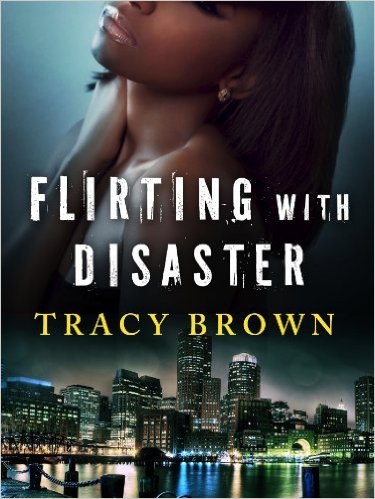
Flirting With Disaster is a novella about a young black woman named Chloe Webster and her relationship habits. Chloe and her family are not rich, but sisters Chloe and Willow have everything they need from their single mother Rachel Webster. Chloe is a young twenty year old pursuing a degree in Journalism at Hunter College and enjoying the freedom living at home is affording her. She does not have to pay bills or get a job and be held down by adult responsibilities. Chloe’s mother, Rachel, is a hard working bank clerk at Midtown Manhattan and can afford her daughters this luxury. Though the author does not reveal Rachel’s age, I imagine her as someone who had her daughters young but who is hip to the workings of the streets and works hard to give her daughters everything they need. Rachel doesn’t want them dating drug dealer boyfriends who shower them with designer clothes and expensive gifts. Rachel teaches her girls that just because they live in the hood does not mean they have to act like hood rats. For this reason, Rachel showers them herself. While watching their grades like a hawk, she gives them monthly shopping sprees and bi-weekly hair appointments. As a result, while Chloe is a beautiful young woman pursuing a career, she is also conceited and naive. Everything I am sure her mother strives hard to teach her not to be.

The story opens with Chloe leaving the St. George bus terminal and hurrying to catch The Staten Island Ferry to Lower Manhattan. Finally finding a seat and catching her breath she catches the eye of Trey, a handsome young man dressed just enticing enough for someone like Chloe to notice. Fresh black Nikes, blue jeans, and a Coogi polo shirt. Trey has that laid back, neatly groomed low hair cut, T.I. style that Chloe likes. After all, what a man has on his feet is all too important to her. After exchanging some flattering words, Chloe decides to let Trey wine, dine, and spend on her. Without giving up the goodies, Chloe keeps Jason on the side for her physical needs while Trey showers her with everything she thinks is worthy of a man: expensive gifts, dinners and everything else physically attractive to a twenty-year old who is used to getting what she wants. But all that glitters ain’t gold and all that looks good is far from it.

Trey has lots of secrets and housed between his good looks and expensive gifts is a very troubled man. In fact, Trey noticed Chloe because of something much more disturbing than her good looks. Growing up in a troubled home, Chloe reminds Trey of his mother who walked out on him years ago and left him with his abusive father. Distracted by the physical attractions of what makes for a good man, Chloe is blinded to other attributes that should come into question. What is Trey’s last name? What’s Trey’s family like? What kind of people has he dated in the past and why have those relationships ended? Where is his family? Where do they live? What kind of people are they? These are questions women should ask themselves when dating any man. These are also questions Chloe does not have the answers to. Warned by both her mother and sister that something is not right about this man, Chloe ignores their concerns and continues to spend Trey’s money and play with his mind. Chloe is having fun flirting with disaster. She will learn the hard way that there is much more to a man than his shoe size, his wallet, and his physical appearance.

One of the criticisms of this book is that it was too short. I do not think so. In fact, I think it was just as long as it needed to be. The message does not, in my opinion, require lots of Chapters to get across and is not difficult to understand. Lots of young people look for and are attracted to men like Trey. They are sucked in by the name brand designer clothing, the job that pays well, and the expensive gifts. But it is not just young people, it is society itself. We teach our daughters that a man with no money is not worth their time. We also encourage our daughters to be with men who could financially provide for them and to ignore everything else. Forget that he must be mentally stable, genuinely kind, and spiritually insightful. Forget that he must be loving and compassionate. While a man has a responsibility to provide for his family, there is also so much more that men provide. They provide protection, spiritual guidance, and discipline for our children just to name a few.

**********

I think all young people should read this book. The lesson is priceless. Find Flirting With Disaster on Amazon.

We Can Move Mountains

Huge mountains
and great hills
they tower above our heads
like father’s to sons
the intimidating weight
of experience
to our youth
like a mother’s instruction
heavy with discipline
is the carved stone
the frightening rock
but it is true
we can move mountains
if we tried
if we faith-ed
one pebble at a time
one pen to a rhyme
one stuttering syllable
and leaking ink
we scatter mustard seeds
and stumbling blocks
like children at play
except
there are no toys
no plastic dolls
or wind up cars
just similes
and metaphors
passing pebbles
and conquering mountains

Bad Reviews

Linda G. Hill over at Life In Progress opened an important discussion on Bad Book Reviews and since I happen to be patiently waiting for feedback myself, I thought I’d share my thoughts.

file(2)

First, let me just say that Linda’s dilemma is a very difficult position to be in and as such I think she handled it well. I’m going to try and respond from both perspectives since I too review books and I am also an Indie Author.

The Author

As an author, though there are tons of authors asking for reviews, this is a decision I take very seriously and I think others should too. When I ask people to “read my book free in exchange for an honest review” to me this means I am asking for their honest opinion. An opinion I think is much more valuable than the money they would otherwise pay to just read the book on their own time. When I ask for an “honest review” it means I want them to be respectful about it, but I also want them to be real. That said, I include in my correspondence emails that if the review is negative, for the reviewer to email me their criticisms personally. This is so I have the opportunity to see where I falter before the world does. If my book is that horrible, I want the chance to correct myself. This, I feel, is only natural. Even when you have an issue with someone in everyday life, you have a responsibility to alert that person first before anyone else. You don’t tell Sally, Laura, and John and you do not inadvertently third person Facebook, Twitter, or blog post them. No, you tell them. People aren’t stupid. They will know if your post is about them. So that is why I’d want the opportunity to know where I falter before being put on front street. Now, let’s flip the script.

The Reviewer

From a personal perspective, I do not care to write reviews on books I would rate at below a 3 (for Indie Authors) because I know how important of a consideration people take Book Reviews when deciding to purchase the book. I also know how damaging low ratings can be specifically for Indie Authors.  I prefer instead to message the author privately.

As a reviewer, I email my below 3 thoughts to the author personally (just as I’d want done to me) and I give them the opportunity to decide if they want me to continue on with the review and to publish it. Since I am providing an honest review, I refuse to rate and or post a good review for a not so good book. For this reason, I think personal outreach is the best option. Not only is it professional and respectful, but it is also what I would want someone to do for me.

How Bad is a Bad Review?

It really depends on how bad the review is and the buying habits of the reader. Not everyone will buy a book based on its reviews. I am a prime example of this. I paid no attention to reviews before I became an author. Prior to this, I read the descriptions of books and decided for myself if it was for me. You can say that I’m old school. If the book was bad it was just money burned but it wasn’t a grand deal. I suppose back then every book was a gamble: win some, lose some.

Today, I pay more attention to reviews (obviously) but I still do not always buy books this way. Meaning I am more likely to purchase a book from Amazon based on its description and preview (first few chapters) more so than the reviews. Why? Because in the end they are still others opinions and while everyone is entitled to their opinions my thought process may not be the same. Just because you disliked a book does not mean that I won’t love it. On the other hand, there’s Amazon.

Every good writer will get a low rating at some point, but too many low ratings and reviews can damage an Authors overall Amazon rating. While I do think Indie Authors need thick skin in this industry, as a reviewer I would consider the stigmas already imposed on Self-Publishing, my own thoughts as an Indie, and how ratings influence an authors account. As a result, I publish nothing lower than what I see as average, like a C which is a 3. Before, I wouldn’t even publish three’s but have recently decided to do so.

So How Important is a Book Review?

Book reviews are essential to Self-Publishing, specifically, because its the conversation about the book and the discussion it fosters that makes the review of such value. Traditional Publishing already has a head start. It is backed by big publishing houses with large teams. Indie Authors on the other hand have to garner attention and discussion about the book on his or her own–which can be done in many ways– but is largely done by way of the book review. Good or Bad. For me personally, there is a greater purpose the book review serves. While book reviews can increase sales, they can also be used in other ways.

Good book reviews for instance can be printed on promotional items or used to spark important conversations. Bad reviews on the other hand can help the author to grow in the areas where his  writing is weak. Who else is going to inform a Self-Published author (who has no large team of professionals) that they should tighten up than the compassionate book reviewer?

Final Thought

Bad reviews suck but as an Indie Author  I prepare myself for them because I am, after all, asking people for their honest opinion. While I am not so naive to think all negative feedback is warranted (some people are just not going to be interested in the story), criticism is part of growth and even best selling Traditional Authors whose work we know is top quality, even they receive negative feedback sometimes.

If you’re really serious about your writing, you will expect the good and the bad. Think of it this way: For most successful Traditionally Published authors, there is not the privilege of someone successfully reaching out to them personally and getting anything but their agent or whoever else checks their emails. For this reason, these authors get bad review publicity all the time. Sistah Souljah’s “A Deeper Love Inside” (sequel to “The Coldest Winter Ever”) has so many bad reviews I would just cry. The moral of the story is: don’t expect everyone to love you. No author has this privilege. Understand also that while valuable, book reviews is just one way people decide to buy books so one bad review doesn’t necessarily mean your career is over.

As reviewers, I think its important to highlight where we think the author has done well and then give constructive feedback to the author on that personal level and let them decide if they want it made public (just in case they want to take your advice and change something). Speaking of advice, I also think its important for reviewers to give feedback that will benefit the author. Don’t just say the book is bad (different ways to say this) but be sure to tell the author why. Be thorough in your analysis of someone’s work so that they can follow through and improve.

“The thing about a book (even yours) is that not everyone will love it. If you don’t believe me, look up your all-time favorite book on Goodreads or Amazon and check out the 1-star reviews. Those people hated the book you love.

When you get your first bad review, you will want to defend yourself and your work. Don’t. And don’t let Aunt Freda defend you, either. This will be hard, because it will seem like some of the reviewers either didn’t read—or skimmed—your book.

Remember why you write. Is it for praise? No, it’s because you love telling stories. So, tell them. If praise comes as a result, smile and strut around for a while. If not, consider whether there’s anything valuable in the critical reviews and then get back to your work-in-progress.”

– Julie Doherty

She was not a poet

57c58bd85a99545cb86853eb4fe652a7

No one told her she was supposed to taste the lyrics first
That her brain was supposed to decipher the intent of melody
before it escaped her mouth
That her taste buds were supposed to burst forth
before she spit them out
She had no aspiration that we should admire
Never attended a poet’s university
Or danced between the poetic techniques they said would enhance the skill
Did not feel the irony of brilliantly untalented brush upon her skin
Did not notice the personification walk away with simile and metaphor
Did not know what all these terms were for
For
She was not
A
Poet.
Did not understand Dickinson’s Train
Why it lapped the miles,
And licked the valleys up,
And stopped to feed itself at tanks
Or why frost stood still and stopped the sound of feet
No one warned her that imagination was supposed to pass on information
about the sweet, sour, salty and bitter substances of alliterations
and internal rhyme schemes
but she fell head first in love with the way the words moved around in her mouth
with the way her emotions tickled against the backdrop of her heart
with the filled something that racked against the torn cells of her tongue
with the calm that sprayed peace into the air
with the poetry that took her there
so she sang
sang poetry with all of the ignorance stomping around in her stomach
but she sang
did not care about its government name
did not worry about its image
did not care that her words were not professional enough
for she
was not
a
poet…