“We Slipped and Learned to Read”

5d25a2da4a0c0310961470f064550418

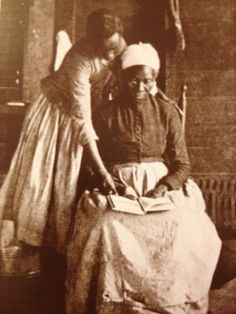
It is common knowledge that slaves were lawfully restricted from learning to read and write. One less commonly stated fact however, was that slaves were not completely ignorant. They could not read and write English but this did not mean they could not read and write period. As strangers in a foreign land, many African American’s had no knowledge of English or even America itself and thus had to be re-educated. Something they were restricted from as slaves.

It was obvious that slave owners understood that their control over the slave had to supersede the physical. To keep a slave in bondage, not just physically but spiritually and mentally, slave owners knew they had to invent a much stronger rope than one that wrapped itself around the Magnolia. To do this, they realized that knowledge is power and this realization became the beginning of slave codes throughout the United States that put restrictions on slaves learning to read and write. This included, most especially, reading the bible.

However, ironically, it was the reading of the bible and listening to the speech of their slave masters (who often spoke openly around blacks they assumed ignorant) that helped coach slaves into the reading process. The law was specific, reading or even teaching reading both had death penalties. Still, persistent as they were, slaves still found a way to by pass the law, slipped, and learned how to read. For many slaves reading and writing meant, if not physical freedom, mental and spiritual freedom. They could use it as a tool to escape slavery physically or write of the horrors of the institution as did many in the famous slave narratives. The following is an excerpt from a writing done by Janet Cornelius and published by Clark Atlanta University on slaves and literacy:

“Despite the dangers and difficulties, thousands of slaves learned to read and write in the antebellum south. Few left traces of their accomplishments, but 272 ex-slaves who told how they learned to read and write during slavery provide insight into the literacy process within the slave community. For slaves, literacy was a two-edged sword: owners offered literacy to increase their control, but resourceful slaves seized the opportunity to expand their own powers. Slaves who learned to read and write gained privacy, leisure time, and mobility. A few wrote their own passes and escaped from slavery. Literate slaves also taught others and served as conduits for information within the slave communication network. Some were able to capitalize on their skills and literacy as a starting point for literacy careers after slavery ended. Historians of education have drawn a distinction between bible literacy, whose prime motive was the conservation of piety and liberating literacy (slaves used the bible to learn to read), which facilitates diversity and mobility.”

– by Janet Cornelius, Phylon (1960-)

Vol. 44, No. 3 (3rd Qtr., 1983), pp. 171-186
Paper Published by: Clark Atlanta University

The Bedroom

phx-2bedroom-suite

The bedroom is the most intimate place in the house. It is not a place where everyone is invited in. It is a place of intimacy. Your time spent here is very valuable; it is your place of rest and refuge. The bedroom is representative of your mind.

My sister used this as an example yesterday and it struck a cord with me as something that would make for a much needed discussion. You see, we live in the age of information. No longer is it required to read 5,000 page encyclopedias at libraries. All you have to do now is Google what you want and technology takes care of the rest. We are in a time of knowledge and information. This can be a good thing, but it can also in many ways be a dangerous thing.

Not all information is good information and not all knowledge is good knowledge. Our minds can be so easily cluttered these days with the opinions and feelings of others or distracted by something that mean nothing. Everyone is on a quest to sound more intellectual than the next person and in the end they both give birth to foolishness. Deception wraps its arms around the four corners of the bed and hides underneath beautiful plump comforters that are outlined in gold. But what does your mind really look like? What about stress? What about being so busy that you don’t have time to live? Mental clarity is essential to a person’s overall daily operation. Are you allowing the wrong people, places, and things to occupy your mind?  Is all your business on Facebook?

A bedroom is not a kick it place. It is not a discussion place. A bedroom is an intimate place. A relaxing place. Are you letting everyone in? What’s going on in your place of refuge?

Today, visit your bedrooms. What’s there?

1. What am I doing right now that I can rejoice in?
2. What am I neglecting to do that I know is right?
3. What needs to be evaluated, examined, and then held onto or removed?

Remember, you can’t find rest in a crowded room.

Social Media Automation – Why I Don’t Use It

file(6)

It probably would make life much easier if I posted to one account and it automatically posted to all of my other social media accounts. There is a way this can be done by enabling social media automation and I am sure the busier I get the more I would be willing. But for right now there are some key reasons I am just not attracted to this strategy.

They Are Different Platforms

I’m probably the only person in the world who does not want to link her social media accounts (including this blog). Those of you who follow me on IG, FB, and Twitter have probably already noticed that I use them as separate entities. I’m not into linking them at this moment. That would be slightly annoying to me actually. This is because for me, Facebook, Twitter, and Instagram may be the top 3 Social Media sites active right now, but they are three totally different platforms. This means they require similar but slightly different navigation techniques. Let’s start with Instagram.

Instagram

file(5)

Instagram is all about the image. This, in my opinion, gives it advantages over Facebook and Twitter in the promotional area when it comes to pictures. When you scroll through Instagram, each picture is shown one by one according to your followers most recent uploads. As you scroll through, you cannot help but see them even if you skip through the ones that are not interesting to you. This means there is less distraction here than on the other platforms. Instagram is a go-getter for attention because there is not enough space to browse through anything else outside of that timeline. People can also upload videos, another major attention keeping strategy. While Instagram allows room for wording and descriptions of the pictures, the most important thing is the photo itself. Bold and bright colors that capture and keep people’s attention is a must for IG which makes Book Cover designs and promotional flyers very attractive for authors and they garner lots of attention. Quotes and Meme’s have also become a favorite. Authors can upload pictures of books they are reading, screenshot Amazon reviews, or post quotes from the authors they love. Lots of wording in the form of an Image is not something I would want to upload to IG. Instead, I would much rather use images with wording that stand out. Far as IG is concerned, the most important thing to remember for me is the strategic use of the image.

Twitter

file(4)

Twitter’s restriction on word count is a plus for me. In fact, it is what attracted me to this platform in the first place. It is a fun way to post constant updates and does not take up a lot of time. Twitter is the hub for short promotional shout outs and gives me the opportunity to be creative with words. People’s attention spans are short so its not necessary to be long winded. Instead, authors can boost the visibility of posts using the #hashtag, a social discovery mechanism that is actually taken from the tagging strategy of using keywords that others are also using and networking through those words. Twitter gives you the opportunity to upload photos as well, but it is not the platform for pictures in my opinion. When I scroll through my IG timeline I can instantly see the pictures. When I scroll through my Twitter timeline however, I will either see half of the picture or (via automation) I’ll see a link to the picture file that is uploaded. This is not very attractive or important to me in the moment I am browsing the Twitter timeline. I’d much rather read a short quote or click on a link to an article. Articles, this is another major plus with Twitter. It is so much easier to click on news articles and blog posts from Twitter. In fact, Twitter is the biggest hub for sharing news and taking advantage of real time information. Is there a crisis happening? You are sure to get real time updates through your Twitter feed. Re-tweets also make it easy to share and promote the work of others.

Facebook

8043979-120875522_3-122095019_13-v1

Facebook is the place to be for a combination of all of these things: pictures, family, friends, quotes, news articles, etc. Facebook also does not have a word count limit which gives posts the opportunity to have a longer shelf life, meaning more people are likely to see your post last week on your Facebook profile than your Twitter timeline. Twitter is “What’s Happening Now?” and Facebook is just “What’s Happening?” For authors, Facebook is the place for storytelling, poetry, etc. Because you can write longer posts, you can really go in on showcasing your writing skills because FB is really great when it comes to longer conversations (You can give everyone a taste of your skills 🙂 ). When you publish a popular post (lots of likes, commentary, views) it will stay at the top of the timeline more which will give it lots of attention. In addition, old posts that have new comments will make their way back to the top which means new people will get to see it. Facebook’s major negative is that it is too crowded, or at least to me. There is a lot going on. People are chatting, playing games, watching videos, looking at pictures, and even listening to music through Facebook. Facebook is a large platform by which to expand a network and garner attention for a product but it can also be a show off. Because its such a large platform, people are sometimes less genuine than they should be. Everyone wants to prove that their lives are the best thing since sliced bread even if its not really this way in reality. People also tend to confide in Facebook more than they should, venting thoughts, actions, and family issues that should never be put on display for the world to see. For this reason, I find myself neglecting Facebook a lot unless I really have something important to share. However, I will not completely neglect it as a social media marketing strategy because together, with the use of Twitter, and Instagram, it can create one strong marketing dynamic if used correctly. Facebook is also great for connecting with family and friends whereas Twitter and Instagram opens the door for networking more with professionals and strangers. You are more likely to connect with a family member or someone you know by way of Facebook than the other platforms.

socialab-infographic

Social Media Automation combines these accounts into one, making everything you post on one automatically post to the others and this is cool (for well established businesses it may just be very cool) but right now its just not for me. It may save me time, but it doesn’t give the impression that a real person is behind the computer if every post is automatically generated. It can also get boring at times (at least to me). Right now I would like to continue to use my social media platforms separately. Why? Because they are separate platforms.

Francis Johnson Webb

9781592640980

Francis Johnson Webb, newspaper editor, is the second published African American novelist. He was born free on March 21, 1828, in Philadelphia to Louisa Burr and Francis Webb. His father, Francis Webb, served as founding member of the Philadelphia distribution agent for Freedom’s Journal*, the first black newspaper in the nation.

Freedom’s Journal was the first African-American owned and operated newspaper published in the United States. Founded by Rev. Peter Williams, Jr. and other free black men in New York City, it was published weekly starting with the March 16 1827 issue.

journal2.jpg

Choices

I woke up this morning to this scene in The Matrix Reloaded. I’ll just leave it here:

shapeimage_2

Oracle: We can never see passed the choices we don’t understand.

Neo: You mean I have to choose whether Trinity lives or dies?

Oracle: No, you already made the choice. Now you have to understand it.

– The Matrix Reloaded

The Oscars: Our Fight

635889667266550353-smith

OK, so what’s my thoughts on this? Well, there’s the good, the bad, the ugly and everything in-between. There’s the surface and then there’s what is beneath the surface but I’m not going to get into all of that. There’s some dark clouds in Hollywood but there’s some sunshine too. As far as the Oscar Boycott is concerned, I don’t have much to comment. On this cool, yet beautiful Saturday, my day of rest, my Sabbath, and my calm. On this day, where I usually do not post, I needed to write this and I choose to keep it beautiful.

From the positive end of the spectrum, there’s a glint of light attempting to bud and to shine and to erupt into something beautiful. Something is trying to break through the hard shell, pierce the darkness, and replenish the damaged soil in Hollywood. Who knows what will come of it. Will blacks gather as a cohesive unit to achieve something of their own? It is not really just about the Oscars. It’s about a jolt of consciousness that is needed, and perhaps now being conceived, to move this powerful people. Come forward Gideon. Come forward David. Come forward Samson. Come forward and tell your story the way that it needs to be told.