Beyond The Colored Line – Book Trailer Release

So, as many of you are already aware, I am preparing to release a Short Story titled “Beyond The Colored Line” this summer. As May crawls to an end, and we enter what we like to refer to as the official month of summer, my manuscript is finally in the hands of my editor. Meanwhile, while Stella gets a make-over, I will be busy promoting her grand arrival. So without further procrastination, below is the final release of the Book Trailer. Just click the Lights Camera, Action image to be taken to my author website to view the video.

conrad-knutsen-lights-camera-action

Thank you for your support!

Yecheilyah’s Book Reviews – Eternal Traces by Shonda Brock

Title: Eternal Traces

Author: Shonda Brock

Website: http://www.shondabrock.com/

ISBN 13: 978-0-9904242-0-8(ebk)

ASIN: B00KH8VGT4

Published: May 20, 2014

Publisher: Shonda Brock

Pages: 248

Genre: Romance, Paranormal, Multicultural, Multicultural Paranormal Romance, Fiction

Rating: 4/5


Eternal Traces is a Multicultural Paranormal Romance novel surrounding the life of Veteran and Cardiologist Meryt Brownstone. Brownstone is an African American woman who struggles to lay claim to her personal and mental life despite her professional success. While Meryt dreams of a change of scenery, she prefers to avoid getting too close to people and prefers to fly under the radar. She has not been involved in any serious romantic relationship in some time and frequents daydreams of an ancient world. Hardworking and driven, Brownstone is also an undercover agent for the government and divides her time between work, chatting with her friend Cindy, secret missions, and experimenting with synthetic blood.

Speaking of blood, Meryt’s life changes dramatically when she meets Dr. Fitzgerald and Dr. Rene Daniels, two brothers who start working at the hospital and are very interested in her study on synthetic hemoglobin. Meryt’s sexual trance is immediately sparked with even the slightest glimpse of Rene. She is drawn to him on many levels, and she is unable to keep her eyes off of him. Meryt is guarded with her heart and refuses to let love develop naturally, despite Cindy’s insinuations that she has feelings for the new doctor.

But Dr. Rene’s attraction goes above and beyond her expectations, and the tingling sensation of need makes her crazy. In addition to being hypnotic, Rene avoids her like the plague after first meeting her despite having stunning blue eyes. Meryt’s curiosity about him is further piqued by this as she starts to wonder why. Meryt is a former soldier with military training who occasionally carries out covert operations, but Rene has a secret of his own to be concerned about that, despite his ravenous need, keeps him apart from Meryt.

As the story begins to unfold, I enjoyed the Egyptian and African connection and the parallels between the past and present as expressed by the author. As the story picks up, we see that ancient Egypt is a key figure in Meryt’s visions and an important mission to the Sudan becomes a major turning point in the novel as the lines between dream and reality become blurred. Historically, Egypt is blood brothers to the Nubian and they both descend from Ham whose name means hot, burnt, and black. This means the Egyptians would have looked just like the African American today. In addition, the Kushites (Ethiopians or Nubians), whose name means burnt face, lived south of Egypt in what is called the Sudan today.

Meryt’s mission to the Sudan, therefore, was a nice complement. I also enjoyed the symbolism of which there were many. One example is Meryt’s temper when she’s upset and her career as a cardiologist, paralleled against the details of Rene’s life. It created an interesting bridge of commonality between the two. How so? You’d have to read the book to find out!

As my first ever Multicultural Paranormal Romance novel, I wasn’t sure if I wanted to take a plunge on this one. However, I must say it’s one of those books where, even if you disagree with the concepts, it is hard to put down. You will want to get to the end and see how it all plays out. It also has a unique storyline, so I am glad I took the chance.

While some parts left me anxiously anticipating action, when similarities arose between Meryt’s life and that of Queen Nitocris, I was happy to see that my thirst for answers were quenched as the plot thickened. Between Dr. Daniel’s charm, Meryt’s stubborn ways, and their colliding worlds, Meryt’s carefully composed life will never be the same again. Shonda makes sure to have readers holding onto their seats and holding their breaths for one adventurous ride of Eternal Traces.

Ratings:

Plot Movement / Strength: 4/5

Entertainment Factor: 4/5

Characterization: 4/5

Authenticity / Believable: 4/5

Thought Provoking: 4/5

Recommendation: 4/5

Overall Rating: 4/5

Also check out Part 2 “Eternal Burns”. To learn more about Meryt and Shonda, visit them online: Website: http://www.shondabrock.com/ Twitter: https://twitter.com/shondabrock

coversb

Beyond The Colored Line – Final Sneak Peek

Book2Week three-four:

My apologies for the delay on this; I have recently come back to town and this week has been busy trying to get back on schedule. But, as promised, here are the final sneak peeks of Beyond The Colored Line:

Note: This excerpt is part of a book written by Yecheilyah Ysrayl. No part of this publication may be reproduced, or stolen in a retrieval system, or transmitted in any form or by any means without written permission of the publisher. The exception would be in the case of brief quotations embodied in the critical articles and reviews and pages where permission is specifically granted by Yecheilyah Ysrayl.

*******************

1932
Age 16
**************************

“Never limit yourself sweetheart.”

Aunt Sara was sitting at the vanity table applying red lipstick to lips that I didn’t think could get any redder. Aunt Sara was a thin but shapely woman, filling out the beautiful dark red dress that went down to her ankles, but held snug at the waist with a petite black belt. She wore black heels, and her red hat sat on the bed next to me as I sat watching her perfectly apply more make-up. She was in the middle of another lecture.

“We got the whole world just waiting for us and the least we can do is oblige. Besides, it’s not like you’re betraying anyone or denying anything. You have just as much a right to this life as anybody.”

It was Tuesday night and Aunt Sara was going out again. She tilted her head this way and that in the mirror and smiled her approval.

Mama lost the house. She tried to do the best she could with the visitors and such, but the depression didn’t allow for people to want to travel much. And the taxes came to be too much for a laundry woman’s salary. We moved to Chicago where things weren’t much better. The Great Depression was particularly severe here because of the city’s reliance on manufacturing, the hardest hit area nationally. Only 50 percent of the Chicagoans who had worked in the manufacturing sector in 1927 were still working by the time we arrived, especially Negroes. By now, 40 to 50 percent of Negro workers in Chicago were unemployed, including Aunt Sara. She was a school teacher, but wasn’t making any money. By the end of the year, the city would owe teachers more than eight months’ pay. But Chicago’s population grew enormously because of the mass lynching’s taking place in The South. Negroes escaped Mississippi as if running from a plague. And for just $11.10 they were brought by train to a new world. Everything was still segregated. In fact, Chicago is the most segregated place I’d ever seen. But you could hold your head up in Chicago. So to us, it still offered a freedom that didn’t exist in in The South. It was the land of milk and honey. And the crisis didn’t seem to affect Aunt Sara as it did Mama anyway. She didn’t particularly like being a part of the life Sara lived and she was depressed over our situation.

“Speaking of the whole world, what is it with you and that Timmy boy?” Sara puckered her lips for a final review as she spoke.

“Tommy Aunty, his name is Tommy,” I said.

Tommy and I had become rather close as we got older, though I couldn’t decide if we were dating or not. Aunt Sara clasped her hands together as she stood and sat next to me on the bed, “Oh, my memory these days.”

“Tommy’s a good friend, nothing special.” I lied.

“That’s my girl,” said Sara, grabbing her hat and putting it on, admiring herself again in the mirror as she spoke.

“I don’t think it’s a good idea for you two to see each other no how. There’s not much room for opportunity with such men. You must learn to play the game sweetheart.”

“Are we so different?” I asked.

Sara turned to face me, “You can drink your coffee black all you wanna, but I’d prefer a little cream to taste. I swear I don’t know what’s gotten into your Mother, teaching you to hate yourself is what she doing. There’s nothing wrong with embracing who you are, you remember that.”

I sunk down in my seat, embarrassed. I knew where she was going with this. Every day was Saturday for Aunt Sara. Uncle Bob, as we were instructed to call him (though marriage didn’t exist between them) was Sara’s new man, a wealthy doctor on Chicago’s North side. The problems of the Great Depression affected every group of Americans, but no group was harder hit than Negroes living in the cities trying to live like rich white folk. In some Northern cities, whites called for Negroes to be fired from any jobs as long as there were whites out of work. Otherwise, the depression meant nothing to Negroes who had been depressed in America for nearly 400 years. For this reason, we were Aunt Sara’s little secret hidden securely inside Uncle Bob’s pocket. She didn’t just pass for white, Aunt Sara was white. And coming from a white mother and half white father no one second guessed us, not even Bob.

“I tell you what, the ladies and I are attending a small gathering this evening, and you should come along.”

“But I’m only sixteen,” I said.

Sara smiled, “And? Who’s asking questions? Today you’re sixteen years old sitting in a house wasting your life away. But tonight, tonight you are the most beautiful twenty-one year old they’d ever lay their eyes on. The most beautiful white woman they’d ever seen.”

One Year Later

I laughed as Tommy and I strolled down the Negro area of town, arm linked in arm. We had decided to stop fooling ourselves and had begun dating. I must say, being with Tommy was one of the most refreshing parts of my life: smart, colored, and hilariously funny. His presence alone gave me a sense of relaxation I didn’t feel at home. I didn’t have to pretend or fear discovery. It was a relief being with him, and a lot of fun too. Indeed, the love I had for that man could never be mistaken and could never be traded. He was my first love and I love him still.

Tommy held open the door to The Shack, a mom and pop restaurant owned by Negroes. As I entered the restaurant, however, my foot stopped mid-air over the threshold.

“Sidney?”

It was Annie, one of the first friends I’d met in Aunt Sara’s circle. I had begun living a double life. It was easier than I’d expected. I had, after all, enjoyed the private education, the fine dresses, and the parties. I found myself looking forward to the freedom of going where I wanted and buying what I needed. We were one of the few European families doing well during the depression and loved by everyone. Aunt Sara and Bob got closer. We were invited to his inner circle of friends and family, which meant standing on top the highest hill and waving. Even Mama began to lighten up just a bit. Things were going well, until now.

“Annie, what a surprise!” I said as Annie and I hugged each other, planting dainty kisses on each other’s cheeks, fake grins all over the place. Annie looked Tommy up and down, while he held onto the door, as if she had just spotted a piece of trash on the ground that must be disposed of quickly.

“You must be the servant. I’m Anne, how do you do?”

Tommy let the door slip from his hands, closing quietly as Annie held out her hand; covered in a crisp white glove made of finer cotton than spread across his kitchen table. Tommy’s family were sharecroppers. Silently he wondered how many barrels of cotton it took to make it glow in the darkness. He looked at Stella, staring deeply into the green eyes he once adored, and the reality of the present situation lit a fire inside of his chest. He hoped he wouldn’t fall down dead from a heart attack. It would be a shame for his dad to find out his son died cause of a thing as a woman’s glove.

Tommy said nothing, just kept his eyes fixed on mine. I didn’t want to look away, but I couldn’t help but to feel them shooting little prickly darts into my skin, and it was beginning to burn. I had to think of something. Quick. I pleaded with his eyes.

“Why of course, where are my manners? Thomas, this is a friend of mine Annie. Annie this is Thomas, the new driver.”

I hopelessly tried to catch sight of his eyes. I wanted to plead mercy, but Thomas’ eyes searched instead for something on the ground. I turned my attention back to Annie.

“Why of course,” said Annie. “I was just telling Daddy about how difficult it is to find one these days. Why we just replaced a cook last week. Poor Mama was devastated,” we laughed, only hers was real.

“I told her we’d just have to get Miss Pearl to do it, but you know Daddy couldn’t stand for that. A housekeeper cooking? Why the next ball would be simply atrocious,” we laughed again as I silently prayed for a miracle.

“Anywho,” continued Annie, “I am off, but do come by tomorrow. The women and I are having tea, you know Mama’s dying to show off the furniture.”

“Of course,” I said as we hugged and kissed again.

As I waved goodbye to Annie, I turned to plead my case to Tommy, who was already halfway down the street. And just like that, our friendship had ended.

***********************

I’m so grateful you’ve taken the time to read this far, I hope it means you are enjoying the story. If you’d like to continue reading and find out what happens next, you can get the book from Kindle for just $2.99 when it releases this summer and less than $10 in paperback.

I plan on writing another book in this series later this year, and with your permissions I’ll let you know when that’s available and send you some more free chapters. Until then, if you want to know what I’m up to, you can follow me on Twitter @: https://twitter.com/ahouseofpoetry.

Stella Revealed: Book Blurb for New Book

C3ERuFi

The Daily Post gave an exciting blog prompt yesterday on giving the book blurb to a book you want to write:

“Write the blurb for the book jacket of the book you’d write, if only you had the time and inclination.”

I wasn’t going to take part in this prompt initially, but since I have written a book (available soon), I decided this was the perfect time to give the book blurb to my upcoming book: “Beyond The Colored Line“:

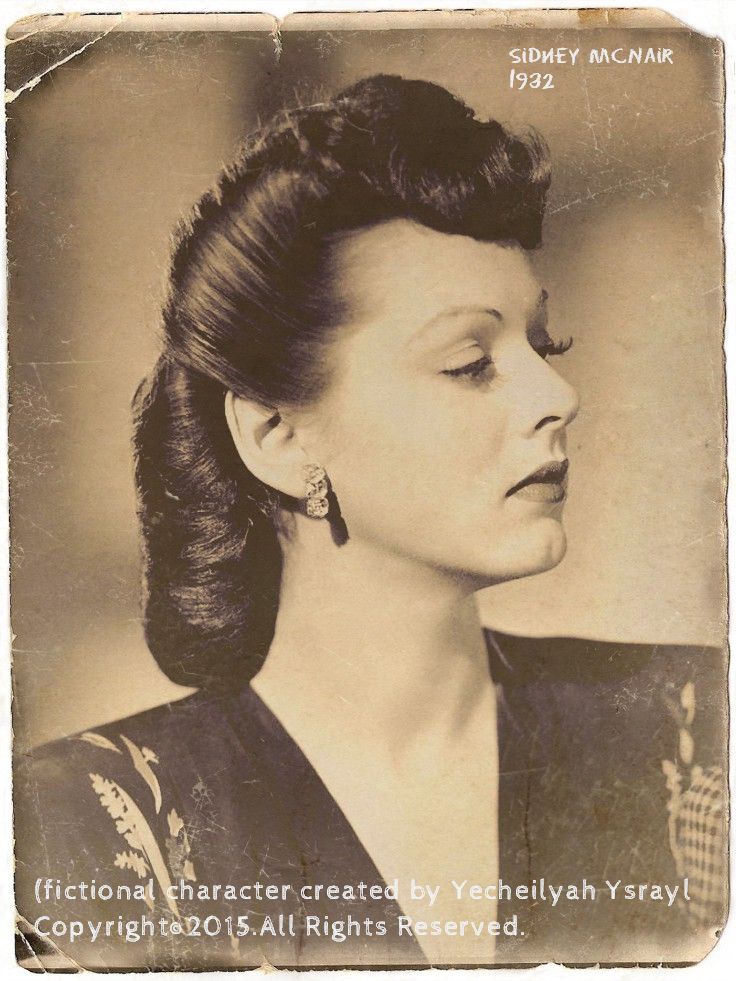
“Growing up has not been easy for Stella. Just a few generations from slavery, Stella is the daughter of Judith May. Mother and daughter share the blood of a black woman and her white slave owner. Unable to cope with the teasing and bullying from both the white and black kids, Stella struggles with identity and a place to belong. She does not feel she can find her rightful place among the blacks and neither among the whites. That is except on Saturdays. Stella loves Saturdays! Where her and mother take occasional walks on the town and enjoy all of the privileges that come with a light skin tone. Years later, after a discussion with Aunt Sara persuades her to pass, Stella decides to live her life as Sidney McNair, a white woman. But living Saturdays isn’t as easy as visiting them.

How will Stella deal with the new challenges that come with her new life? Will she ever find the courage to face the truth concerning herself? How far is too far?

Beyond The Colored Line – Part 2 of Book 2

Book2****************************

Disclaimer: The following post is excerpted from a book written by Yecheilyah Ysrayl and is property of Yecheilyah Ysrayl. No part of this publication may be reproduced, or stolen. Permission is only given to re-blog, social media sharing for promotional purposes and the case of brief quotations embodied in the critical articles and reviews and pages where permission is specifically granted by Yecheilyah Ysrayl. (For permission write to: ahouseofpoetry@gmail.com)  Copyright © 2015, All Rights Reserved.
*************************************

Part 2
_________________________________________________
1928
5 Years Later
Age 12
*******************************
Daddy run off to who knows where on account of his life. Some racist whites had seen him and Mama together and threatened to lynch him if found. So he run off to nobody knows where. The community gossip is that his brothers know, but they won’t say. We weren’t alone though, Mama and me. Seems like Mama filled the hole where Papa should have been with our whole family. The house always stayed filled with guests: my people, and peoples of my people. My granddaddy was a colored man, and so owned this land. My name sake, his mama Stella, was a slave and was given this house by her owner. As the story goes, after Grandma died, I was born. Since Mama was the closest, she named me after her. We got stories going all the way back to her girlhood, and stories of Grandpa Solomon too. I heard the stories mostly on Sundays, since all the family come down. My aunts would gather around the table with my mom and they laugh and cry most of the night about they girlhood. I don’t have any uncles except from my daddy side, but they don’t come around much cause of my aunties. Uncle Roy say Mama acts different around her sisters and that they too uppity, especially Aunt Sara. She’s the youngest of my aunties and the most spoiled. She’s the one who convinced Mama to send me to a private school to escape all the worry, and boy were my uncles hot! They said we were breaking the law – that a Negro had no business in a white school. But Aunt Sara said I had all the right in the world since I was technically half white after all.

“But does the school know she colored?” one of my uncles would ask.

“That’s none of the school’s business now is it?” Aunt Sara would say and they’d just go back and forth until Mama break it up.

That’s the story of my life: Was I white? Was I Negro? Race wars always concerned these two groups of people, and there ain’t seemed to be much place for a mulatto. Speaking of race, not all talks were good talks. Not all round table discussions were filled with laughter and jolly drinking. I used to sit up until my eyes were red with fatigue to hear Mama and my uncles talk about all the killings that were taking place around the country, and especially in the south.

“That’s what I say,” said the voice of Uncle Keith. “Up there in Minnesota.”

“That close?” Mama gasped. I could just picture her now with her hand over her chest. Mama had a thing for the dramatics.

“Yea that close. What, woman you living under a rock? They just had one on over in DeKalb last month,” said Uncle Roy.

“It’s a crying out loud shame,” continued Keith. “Say they dragged the boys from the cell and a whole mob of ‘em lynched ‘em. Say it was bout least a thousand of ‘em.”

“My my,” said Aunt Rebecca.

“Well you know what I say, if you can’t beat ‘em, join ‘em,” said Sara.

“Where did you come from?” said Deborah, annoyed.

“From betwee–,“ began Sara.

“Please, spare us,” said Mama.

“I didn’t ask the question,” said Aunt Sara, smacking her lips.

But there were times, of course, I witnessed for myself evidence of the events rocking the country. One day, Mama and I went to visit Cousin Mary in Texas, and drove the truck up to a general store. We walked in, and being only about five at the time, I picked up a post card hanging on one of the shelves. It was of a man hanging on a tree that supported an iron chain that lifted him above fire. The man didn’t seem to have much of a body left. His fingers were cut off, his ears and his body burned to a crisp. On the back of the postcard read:

“This is the barbeque we had last night. My picture is to the left with a cross over it.  Your son, Joe.”

I learned later the picture was of a 17-year old mentally ill boy named Johnny, who had agreed to having raped a white woman. And everybody at home still talked of the Cairo circus of 1909, the public lynching that took place here in Illinois. I asked Mama once if we could go to a circus like that, and she told me to never ask her of such things again. I couldn’t understand what had Mama so upset till I found out what kind of circus it was. It was events such as this that caused my aunts not to want much to do with the land or the house. They say it’s too close to slavery. So when Granddaddy died, Mama took on the burden of keeping it, and keeping it full too. I got kinfolk I see every weekend, and some I never met before. And some I don’t think are kinfolk at all; they just come for a hot meal and a bed. But that was alright with Mama. She didn’t care none about being taken advantage of. She just wanted to be around people she could feed and clothe. Her heart was just full of love like that. Sometimes they spend the night, but other times they just come and go. Sundays were the biggest days. Mama cook a feast of a dinner: fried chicken, yams, macaroni and cheese, fried brim and crappy, greens, pies, cakes. You name it, it was on our table. Everything except pork. Mama say Granddaddy was always talking about his Hebrew Heritage and teaching them about it too. Said he didn’t like being called Negro and African, and they weren’t allowed to call him that either, or themselves for that matter. Granddaddy say with his face all proud, “There are two things in the world I would never be: Christian and a Hog Head.”

Then he’ll light his pipe and go on rocking in his favorite chair, like the conversation was supposed to be over, even though folk mouths hung open. That’s another reason my uncles say we uppity:

“Everybody due for a lil fat back every now and again. Everybody Negro that is,” Uncle Roy would say, cutting his eyes over at Mama.

“Good thing we ain’t Negro then huh?” Deborah would shoot back.

Deborah, named after my great great great grandmother, fit right into her biblical name and was the most like Daddy, taking her Israelite Heritage seriously and practicing the laws of the Old and New Testament. Most of the family thought she was crazy. That didn’t stop her from speaking her mind though. But good eating and conversation was just the half of it. There was music, dancing, drinking, smoking, and gambling too. Cousin Walter would bring over some of his hooch and the grown-ups forget all about the children, which was just the way we liked it. I had a lot of cousins and friends, but no one was as close to me as Thomas. Tommy’s mom died off when he was just a baby, and his dad come across the road looking for direction one day when me and Mama come walking along. Come to find out they didn’t really need direction so much as a bed to sleep in. Mama let them stay with us for a while until Luther, Tommy’s dad, got off his feet. But that didn’t stop them from coming around. Luther and Mama became good friends and Tommy was over every weekend. My aunties used to think there was something going on between Mama and Luther till she shut up the gossip with news of Luther’s lady friend, who also became friends with Mama. So naturally Tommy and I were good friends, but we were also enemies and partners in crime. Tommy was dark as charcoal with big lips, nappy hair, and a wide nose. And I envied him for being so obviously Negro. It’s the same reason I liked him too.

“How you get so dark?”

“I don’t know,” said Tommy. “Just lucky I guess.”

“Lucky? What you got to be so proud for? Ain’t no girls liking no skin that dark.”

“Shut up white girl,” said Tommy.

“Shut up big head,” I say.

That’s usually when he punches me in the arm and I’d have to hunt the rest of him throughout the house.

We weren’t much of a church going family; party going is more like it. Except when Mama wanted to show off a new dress or hat, when somebody died or needed saving, and on Holidays and such. Folk would come from all over southern Illinois to hang out with “Cousin Judy”, as Mama was often called. Sunday’s sure were fun, my second favorite day of the week.

Saturdays was my favorite day of the week. It was the day for shopping and that only meant one thing: Chicago. First, Mama would wake me to the smell of biscuits or pancakes. This was to keep me full enough throughout the day so she didn’t have to worry none about food buying. Then, I was commanded to bathe down real good, paint my arms and legs with oil, untie my curls from the night previous, and we’d both put on our Sunday’s best and be two of the most beautiful women you’d ever seen. I was a young lady now and shopping was the best thing to a young lady next to boys (but you couldn’t like them in public). You could like shopping though. I loved going from store to store in search of the finest. Skipping along while Mama scanned the insides of magazines for stuff she only saw on TV. We would squeeze our way through crowds of people, just bumping into each other. They weren’t dressed as professional today. Instead, they wore their weekend wear, bought ice cream for their children and went inside movie theatres, and so did Mama and I. We could buy candy or jewelry, or perhaps a new hat or two with the money Mama made from the laundry. We drank from water fountains without label, and spent money without prejudice. Everything was so easy on Saturdays, life itself was better. We had us a good time on Saturdays because on Saturday, no one knew we were colored.

– Stella M.

**********************************************

What did you think about the second part? I hope it held your interest and you’re ready for chapter three. I am leaving you with a surprise part from  Book 1 below. For the prologue to Book #1, see last week’s post. If you like this story so far, would you do me the favor of sharing this post with your friends who might enjoy reading it also? Re-blog or share on your social networks. Thanks a lot! And I’ll see you next week for Part 3.

Click Here to Read a Surprise Part from Book #1

The Stella Trilogy – An update

Book2

As many of you know, I have a few projects that I am putting out this year. One of them is The Stella Trilogy. It began years ago when I was helping a student with a creative writing assignment. I am not sure what it was exactly, but it had to do with descriptive writing. To make a very long story short, I wrote the first scene to Book #1 which was at the time not a book at all. It wasn’t until years later, after the paper had collected enough dust on my computer, that I realized how much I adored the layout of the scene and how I wanted to make it better. I wanted to expand it and to add to it. But what I enjoyed most about it was how short it was. I noticed then how writing the short had made me so content. It was basic, sweet, and engaging. I decided then that I would try my hand at writing short stories, and The Stella Trilogy was born.

As I prepare to send Book #2 in for editing, I would like to share some of it (unedited) with you. Because of the length of this series, it is broken down into Parts instead of Chapters. And I intend to release the first 4 Parts  to Book #2 right here on The PBS blog. As I do so, I would love your feedback. 🙂

About Stella:

The Book:

Stella is a work of Historical fiction, and is distinctive in its focus on one woman’s road to self-discovery against the backdrop of the African American fight for justice, racial equality, and freedom. The 3-Part series focuses on the history of one family in their struggle for racial identity. Discover in this Trilogy how 3 individuals living in separate time periods strive to overcome the same struggle, carefully knit together by one blood. Book #1 is Available Now in Print and E-Book. 

The Character:

Just barely two generations from slavery, Stella is the daughter of Judith May. Mother and daughter share the blood of a black woman and her white slave owner. Unable to cope with the teasing and bullying from both the white and black kids, Stella struggles with identity and a place to belong. She does not feel she can find her rightful place among the blacks and neither among the whites. That is except on Saturdays. Stella loves Saturdays! Where her and mother take occasional walks on the town and enjoy all of the privileges that come with a light skin tone. Eventually, after a discussion with her Aunt persuades her to pass, Stella decides to live her life as Sidney McNair, a white woman. But living Saturdays isn’t as easy as visiting them.

I’m giving these parts away for free because one of the things I enjoy about blogging is the direct feedback at our fingertips. So before I publish this second part, I would like to broaden my platform and make it easier to connect with my readers. I am scheduling the post now and the first Part to Book #2 will post next Thursday, April 16, 2015. I will then proceed with the following Parts over the next 3 weeks:

Beyond The Colored Line:

Part #1: 4/16/2015
Part #2: 4/23/2015
Part #3: 4/30/2015
Part #4: 5/7/2015

“That’s the story of my life: Was I white? Was I Negro? Race wars always concerned these two groups of people, and there ain’t seemed to be much place for a mulatto” – Stella May

Stella

poster

“Raised under the protection of her mother and the field hands, Stella is unaware that she is a slave. Not being accustomed to hard labor, things change when Mama dies and she falls into the cruel hands of Marse Saddler. Years later, when The Louisiana Constitutional Convention of 1864 allegedly abolishes slavery in the state, Stella learns of Saddler’s plan to keep her on the plantation. She then agrees to accompany Saddler’s daughter Miss Carla and her husband John, to The Windy City {Chicago} and learns the hard way the difference between slavery and freedom.” 

(This short story will be published to The PBS blog and is free to the public. Anybody who follows The PBS Blog can take part in the reading of the series every Friday beginning January 23, 2015).


 *Note: Liking The PBS Facebook Page is not the same as following the blog, you have to actually visit this site and sign up to get the automatic New Post emails. *