Yecheilyah’s Book Reviews – Chains of Gold by Ken Robb

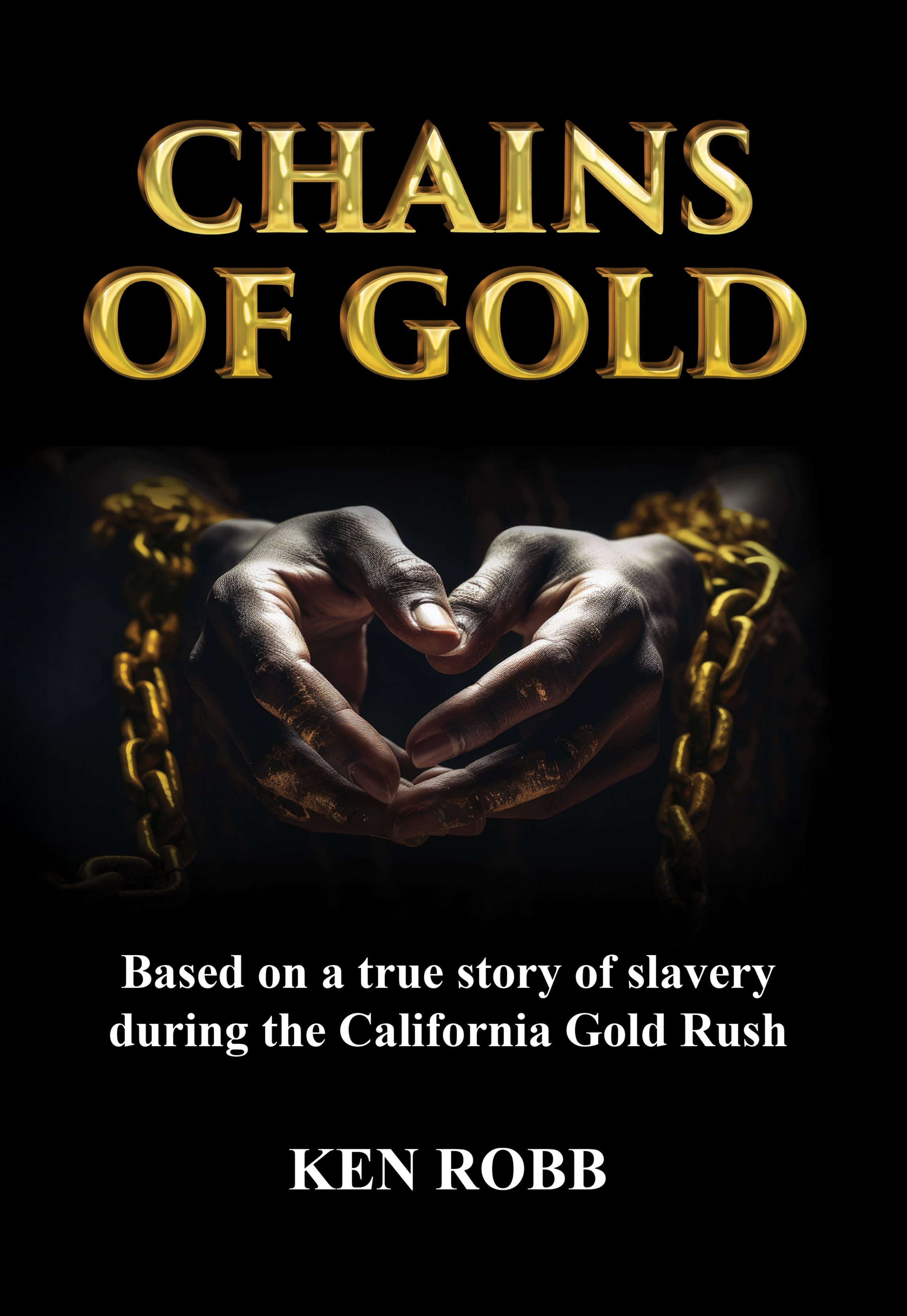
Title: Chains of Gold: Based on the True Story of Slavery During the California Gold Rush

Author: Ken Robb

PublisherWord Star Ink

Genre: Historical Fiction, US Historical Fiction

Published: September 22, 2025

Pages: 438 pages


The year is 1852, and Carter is shouting his freedom into the face of the law as deputies close in, threatening to drag him back to Mississippi in chains. From this moment of terror, the story retreats a couple of years back to the Perkins Plantation, where Carter is not free at all but enslaved, under the watch of a brutal overseer. It is here that Charles Perkins returns home from college to witness the abuse of his slaves.

Although Carter and Charles are half-brothers, playing side by side as boys, adulthood exposes the lie of that intimacy. One is granted power by birth; the other is denied ownership of his own body. I was struck by how powerfully the author juxtaposes affection and oppression throughout the story, illustrating how love can coexist with, and be corrupted by, slavery. Carter and Charles’ bond is no match for a system designed to break one man for the comfort of another.

Charles Perkins is the oldest to inherit the plantation. He was gifted land and slaves, and his father wants his sons to learn how to manage a plantation. Despite this, Charles is noticeably different from his brother. Rather than basking in the excitement of running his own plantation, Charles shows more compassion, doesn’t want the enslaved to be mistreated, and has dreams of going to California to find gold.

Carter is an intelligent Black man. He knows how to read despite being enslaved (something he hides), pays attention to details (especially details on slavery), carries his Bible everywhere he goes, and watches Charles’ back. He is more responsible and proves to be his brother’s keeper on more than one occasion.

While Carter yearns for true freedom, Charles is a man of his time. Despite how much grace he extends, he is still a slave master. As Charles reminisces about the beauty of the mansion and the land, recalling his father’s ambition and how hard their ancestors worked to farm and buy the land, Carter reminds him that “more land means more slaves.” He knows it was built with his family’s blood, sweat, and tears. (Robb 2025)

Though looking at the same view, the men see two different worlds. This is reflected throughout the story. While Charles’s love interest, Emmy, gives him a professional photo to remember her by, Carter’s love interest, Peg, gives him a charcoal drawing she made using a mirror.
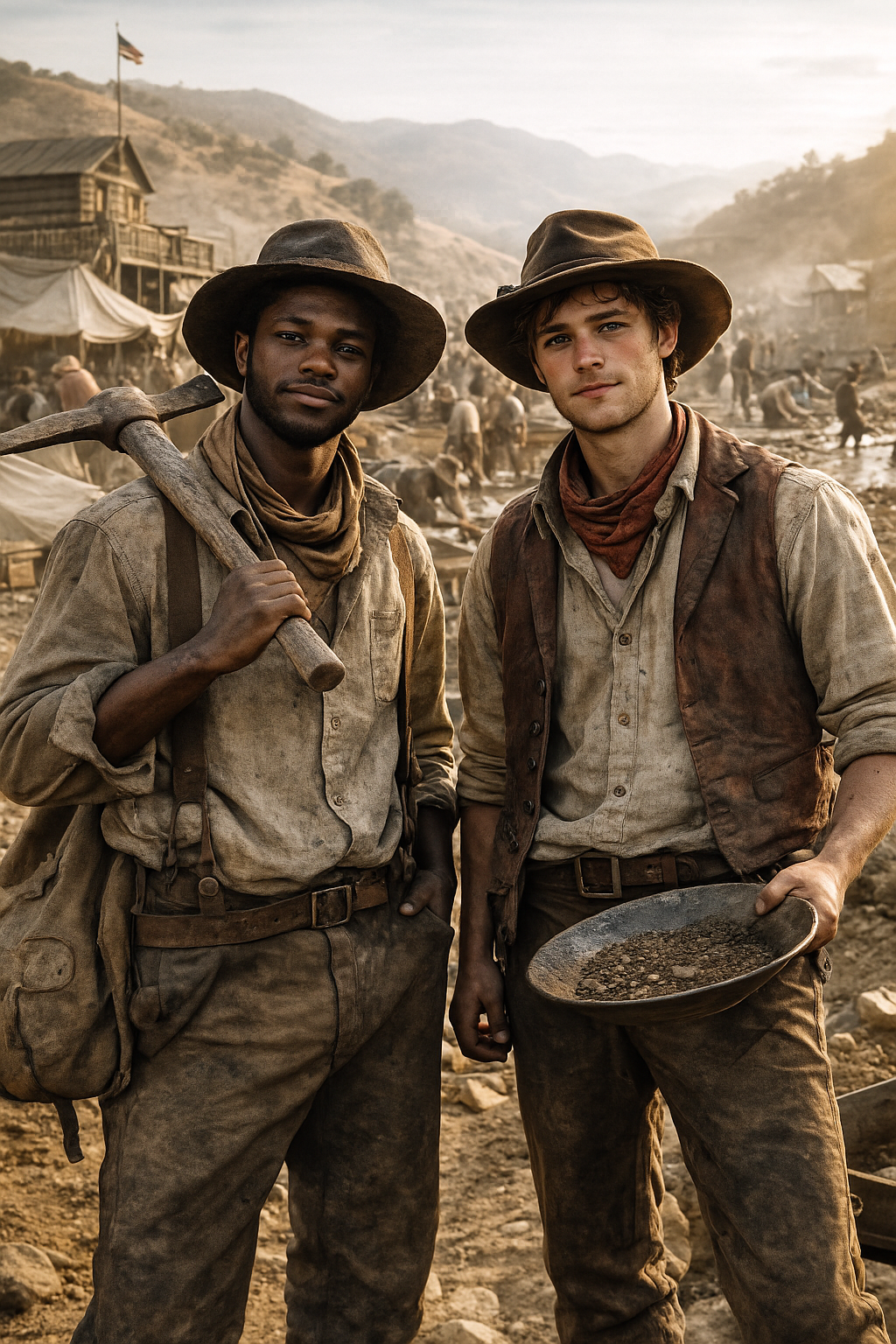
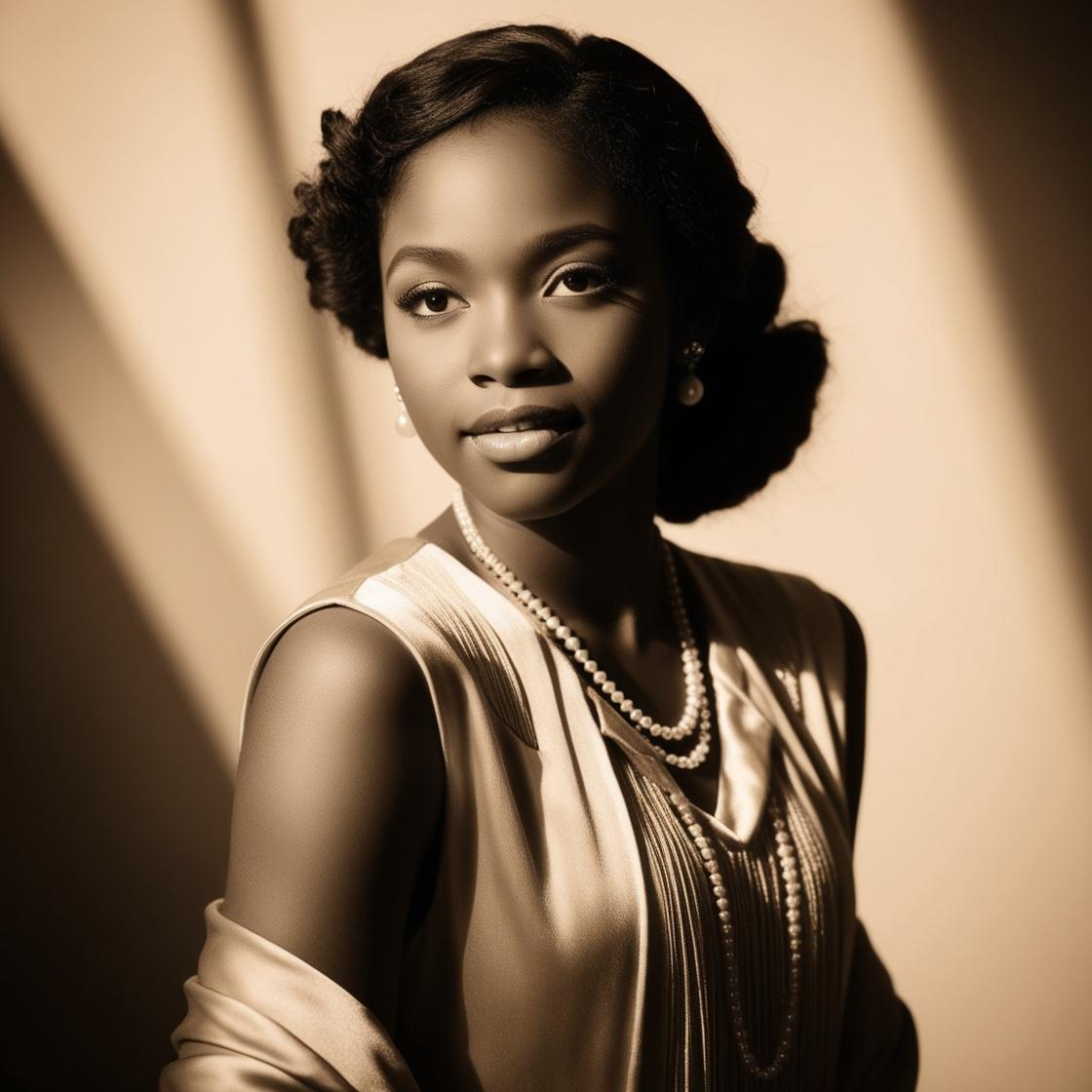
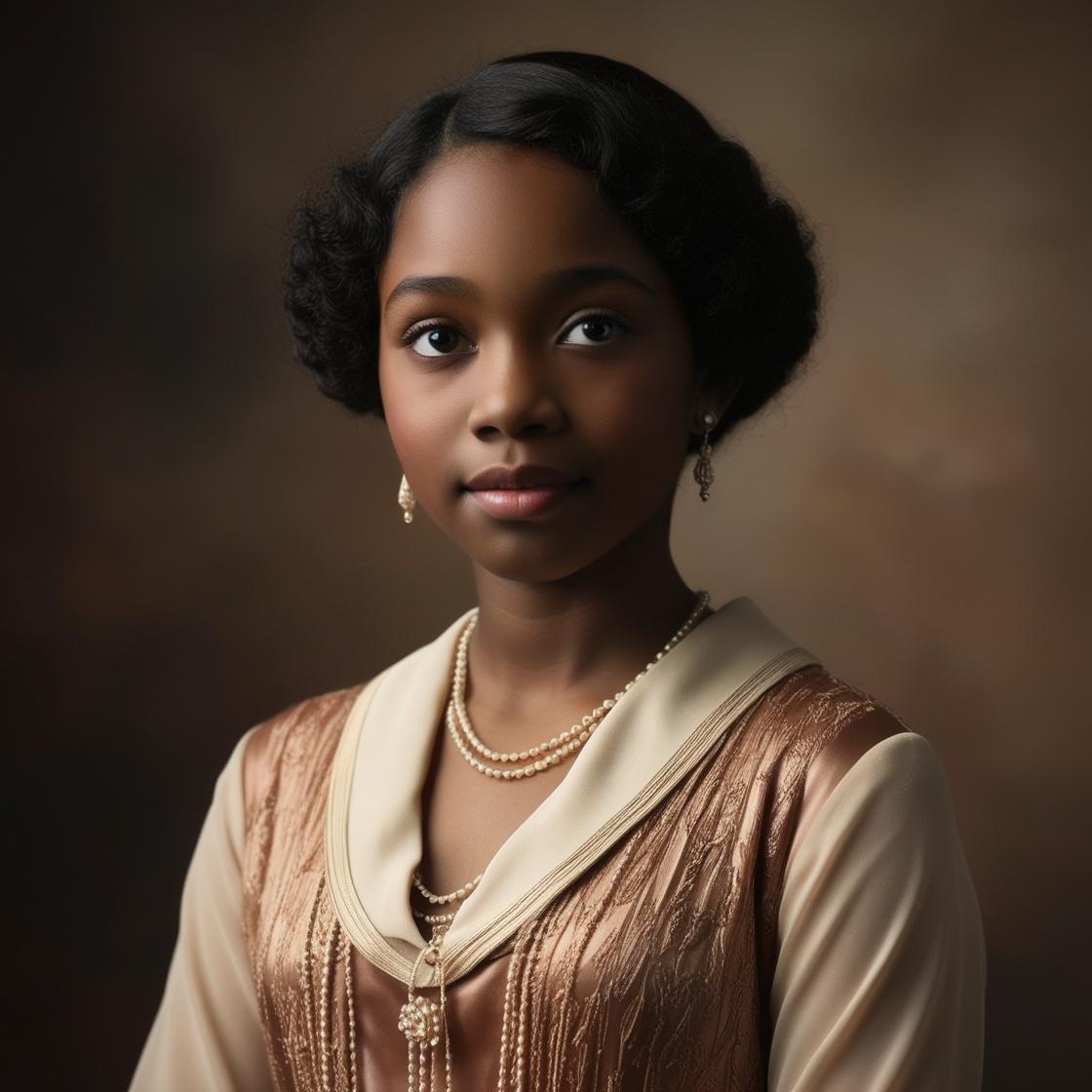
My AI rendition of Carter and Charles

The narrative eventually follows Carter and Charles westward to California in pursuit of gold, a journey the author renders with careful attention to historical details. Rather than functioning solely as an adventure, the passage underscores the persistence of racial and social hierarchies across geographic space. In California, distance from the plantation does not translate into liberation from inherited roles. Charles’s attempts at fairness are marked by visible moral ambivalence, yet the surrounding society repeatedly reasserts the boundaries between them.

This tension is crystallized in several figures throughout the book, such as Bill, the seasoned miner, whose disapproval when Carter refers to Charles as his “master” exposes the unspoken codes governing race, power, and language. This tension resurfaces in Charles’s exchange with Fritz, who asks whether Carter is paid.

Although Charles views himself as well-intentioned, his decision not to compensate Carter—and his quiet assurance that the money would not matter to him—reveals how deeply he remains anchored in the assumptions of mastery. In this moment, Charles acts not as an equal or a brother, but as a man still shaped by the privileges of ownership.

The author does a good job of highlighting the lesser-known aspects of California’s history that are not widely taught.
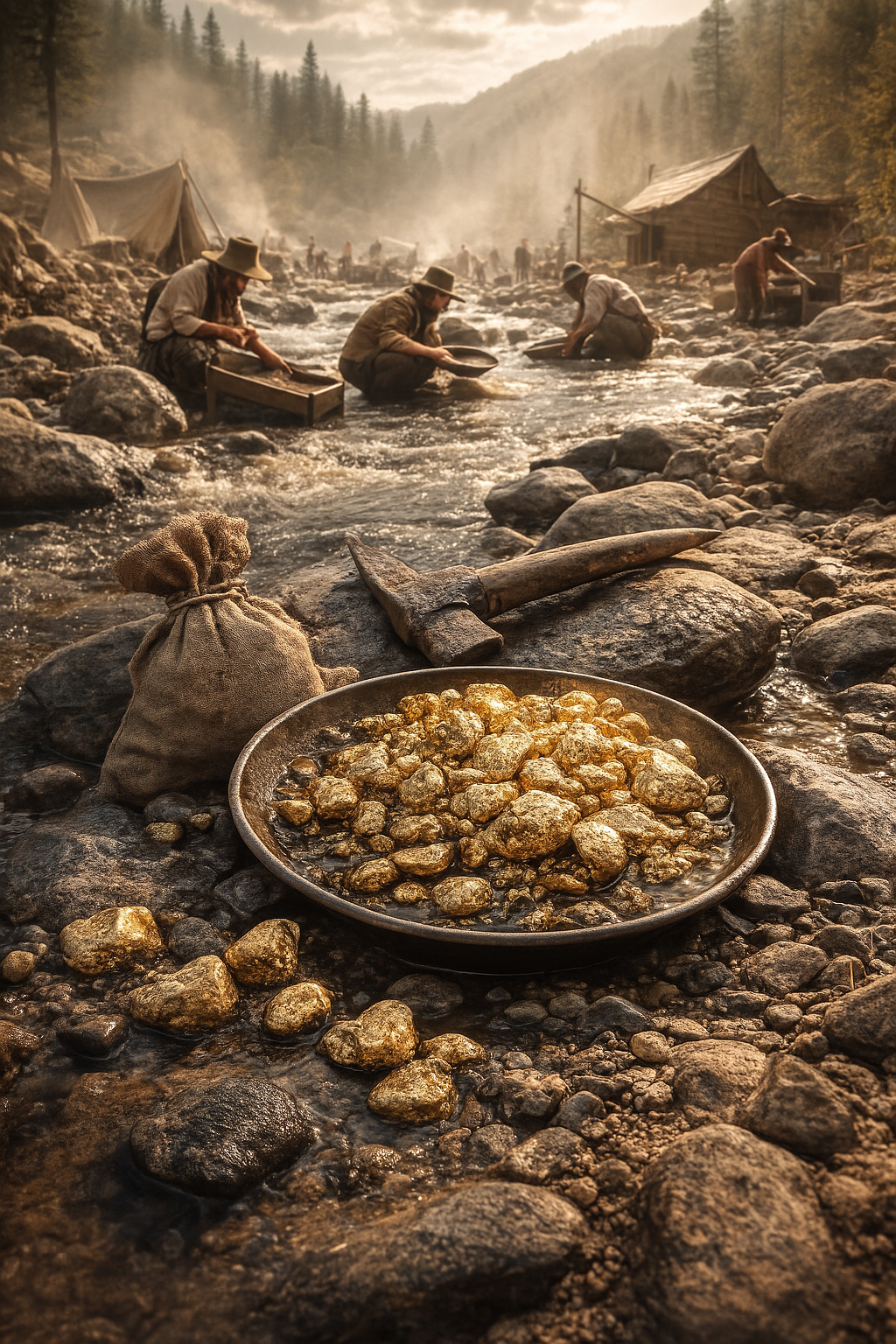
Slavery and unfree labor were deeply ingrained during the Gold Rush era, despite California’s 1850 admission as a “free state” prohibiting slavery. Slaveholders brought enslaved Black people to work mines, and state laws like the 1852 Fugitive Slave Law enforced this practice. This resulted in complicated legal disputes, community resistance from free Black Californians, and the persistence of servitude until the Civil War.

The best thing about this book is that it’s based on a true story. Both the characters and the Gold Rush era are also well-researched, including the scene where Charles explains to the men how to transform the gold into banknotes. We often overlook the fact that paper money was once backed by gold, until the gold standard was removed in 1971 when Nixon ended the dollar’s convertibility to gold. This is why a dollar in 1800 had far more buying power than a dollar in 2025.

In 1850, $1 could buy what about $40 buys now.


This is a long book, so it will take some time to read. However, if you are looking for some good historical fiction, this one is well worth the time! I was eager to see what would become of the characters.

I think you will too.

Ratings

  • Plot Movement / Strength: 4/5
  • Entertainment Factor: 4/5
  • Characterization: 5/5
  • Authenticity / Believable: 5/5
  • Thought Provoking: 5/5

Overall: 5/5

Chains of Gold is Available On Amazon Here!

The Review Registry is Closed for 2025.

To Be Added to the Waitlist for 2026, please email the first chapter of your book to the email listed in our review policy with “Book Review Waitlist” in the subject line. While this does not guarantee a review, it places your book at the top of the list for consideration in the new year.

To apply for 2026, click here
IMG_8994

Yecheilyah’s Book Reviews is a reputable review service that features writers from around the world, including both traditionally and self-published authors. We are listed on Kindlepreneur as a top-tier book review blog and on Reedsy as one of their vetted active book blogs that provide insightful, excellent book reviews.

*Books are read in the order they are booked.

Yecheilyah’s Book Reviews -Cancer Courts My Mother by LindaAnn LoSchiavo

Title: Cancer Courts My Mother

Author: LindaAnn LoSchiavo

PublisherProlific Pulse Press LLC

Genre: Contemporary Poetry, Death, Grief, and Loss Poetry

Published: November 7, 2025

Pages: 40 pages


We live in a society with a rule we’re never taught, but somehow already know: you do not speak ill of your mother. Mothers are indeed sacred, but in this language, the rule is that mothers are beyond critique, beyond blame, untouchable. It means you are never to speak badly of them. Ever. Not in public. Not even to yourself. It’s not carved in stone or written on any wall, yet it hovers among us silent, expectant, immovable. Cancer Courts My Mother defies that silence.

These poems and stories peel back the polite mask to reveal the complicated, aching truth of loving a mother who has not always loved you well—and then being asked to care for the very person who once caused the hurt. It is bravery set to verse, honesty without apology, and the painful dance between resentment and devotion when illness becomes the final judge.

“Bad memories are cadavers that refuse burial. Instead of an archive of velveteen nostalgia, her name leaves gravel in my mouth.”

The title suggests that cancer is courting the mother, but more deeply, the illness is also courting the daughter who tells this story. In this piece, LoSchiavo is not only the narrator; she is the wounded child. As she tends to a woman who once sharpened every word into a blade, she is confronted with a new version of her mother: frail, softened by illness, gentled by morphine.

“Cancer helped adorn my mother with patience, her acidic breath pausing to accept the spoon that brought breakfast.”

The disease becomes an unwanted chaperone, pulling the daughter into an intimate dance between what was and what is—between the sting of old wounds and the strange tenderness of caring for the very person who caused them.

In the piece “Flash,” the author reveals how her breached birth changed everything.

“To hear my mother tell it, a respectful infant should politely slide from the womb.”

I felt sympathy for the daughter because one cannot control how they enter the world, and she articulates this with a raw truth in the lines, “eventually, I became a vegetarian, refusing to eat anything that had a mother.”

These kinds of powerful lines are all throughout the book, and you’ll want to sit wth them. While the book is a short, quick read, you wouldn’t want to rush through it. The words deserve to be savored for their deeper meaning.

While holding space for the daughter, I also felt empathy for the mother. I know from the testimony of family and friends that motherhood is no fairytale. I understand how a mother can lose herself to the point of resentment. I enjoyed balancing these two thoughts, and I love that the author gave me this opportunity.

As the Grim Reaper inches closer to claiming his prize, we can see how, despite the daughter’s feelings toward her mom, it is not without deep love, proving society wrong: We can tell the truth about mothers while loving them.

As KE Garland writes: “There are kind ways to characterize those we love, without denigrating them.”

The way this book is written conveyed the truth without judgment.

“When my mother died, she took home along with her.”

As someone who has also lost her mom to multiple illnesses, I sympathize with that powerful line, and it reminds me of a line from Nayyirah Waheed, who says, “My mother was my first country. the first place i ever lived.”

(The non-capitalization in Waheed’s lines is intentional.)

My only wish is to see this as a whole book, maybe a memoir, so we can have the entire experience. The poetry and the prose, the haikus, are all excellent, but it’s such a good story that I wanted to read some of it raw and without poetic decoration.

Ratings

  • Structure and Form: 4/5
  • Originality/Authentic Voice: 4/5
  • Creativity/Lyrical Content: 5/5
  • Thought Provoking: 5/5

Overall: 4.5/5

Cancer Courts My Mother is Available Now on Amazon!


The Review Registry is Closed for 2025.

To Be Added to the Waitlist for 2026, please email the first chapter of your book to the email listed in our review policy with “Book Review Waitlist” in the subject line. While this does not guarantee a review, it places your book at the top of the list for consideration in the new year.

To apply for 2026, click here

Up Next: Chains of Gold by Ken Robb: Based on a True Story of Slavery During the California Gold Rush

IMG_8994

Yecheilyah’s Book Reviews is a reputable review service that features writers from around the world, including both traditionally and self-published authors. We are listed on Kindlepreneur as a top-tier book review blog and on Reedsy as one of their vetted active book blogs that provide insightful, excellent book reviews.

*Books are read in the order they are booked.

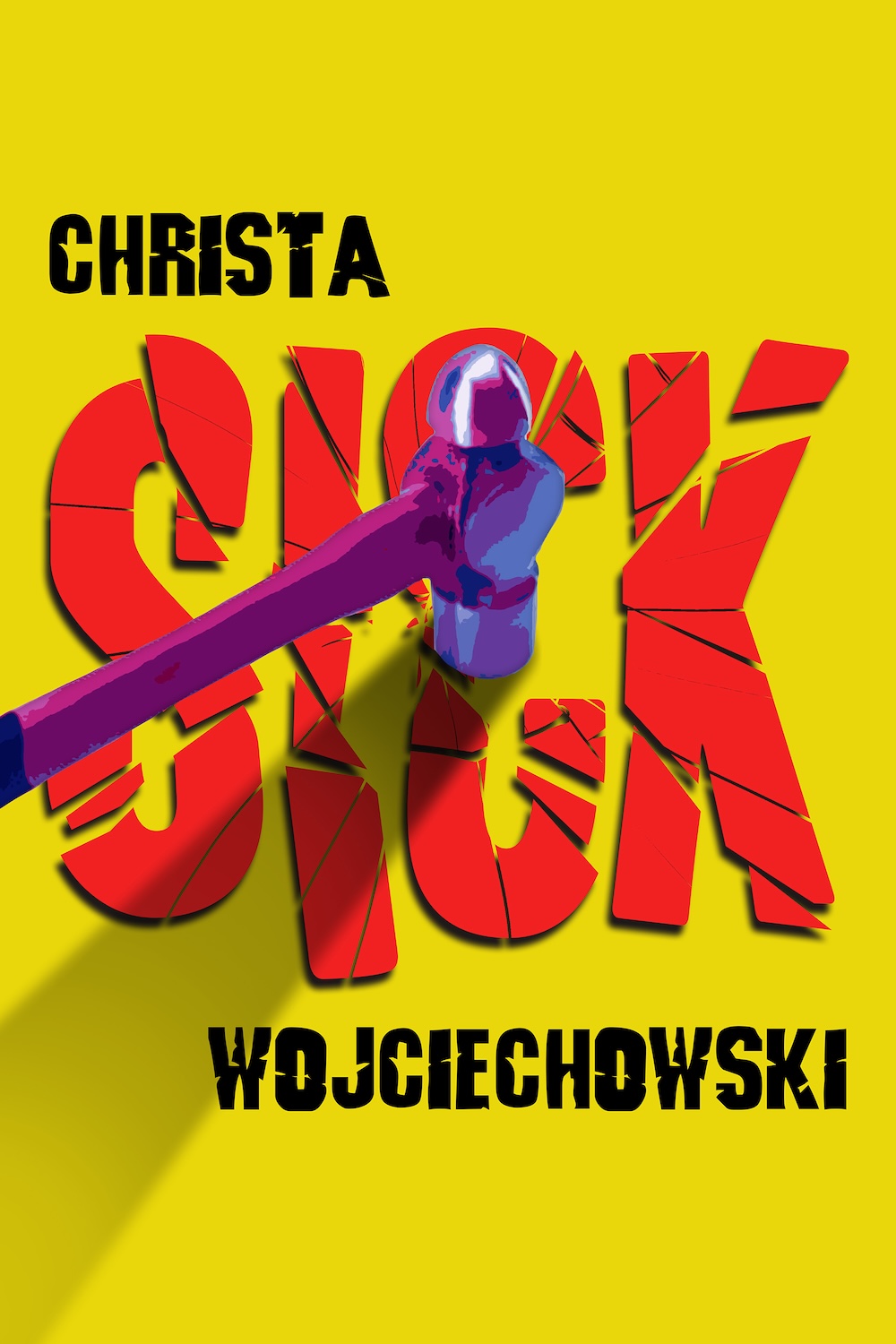
Yecheilyah’s Book Reviews – Sick by Christa Wojciechowski

Title: Sick

Author: Christa Wojciechowski

PublisherBlood Bound Books

Genre: Medical Thriller, Psychological Fiction

Published: October 14, 2025

Pages: 282 pages


Susan Branch is in a different kind of prison. She is a prisoner of her husband’s illnesses. From broken bones, surgeries, rashes, and medications she sometimes steals from her job as a medical clerk of a podiatrist, Susan is forced to take care of her ailing husband. John is diagnosed with Idiopathic Thrombocytopenic Purpura, a complicated blood disorder, and for Susan, “In sickness and in health” takes on a literal meaning.

“Medications to give, wounds to clean, bed pans to empty, and food to serve.” (pg. 20) Taking care of John has become Susan’s life, going to work her only reprieve before returning to a home where she is locked inside the unsanitary cell of her and John’s bedroom. 

As the story unfolds, John begins to feel less like a husband and more like a helpless child trapped in a man’s body. Susan reads to him until her voice cracks, feeds him baby food, hums lullabies meant to soothe infants, and speaks to him like a mother coaxing a toddler to behave, calling him a ‘good boy.’

John pouts, sulks, and whines when things don’t go his way, and Susan seems to shrink a little more each day, her life orbiting entirely around John’s frailty. She is no longer a wife, not even quite a woman anymore, but a nurse, a mother, a prisoner in her own home.

My version of John and Susan using Chatgpt Sora, lol.

As the story progresses, we learn more about John Branch’s history, his upbringing, and his perspective on life. Readers gain insight into how John Branche’s response to the trauma of his childhood has influenced his adult decisions. When I read this story years ago, I said he was retarded. However, this progeny of old money is not retarded at all. John is quite the mastermind and narcissist with a sophisticated way of manipulating those around him. John does not believe his actions are wrong. He thinks we are all guided by our natural instincts. Speaking of nature, the author plays well with irony and karma. 

This story is well-written and fleshed out. The more you read, the more is revealed. Just when you think you’ve figured it out, there are more layers of the onion to peel off. The author keeps you on your toes, and the more I read, the more I found myself imagining watching an episode of American Horror Story.

Psychological fiction might just be my new favorite genre. I love twists and things that make me go “Whaatt??”

There are parts of the story where I felt sorry for Susan, and parts when I didn’t. Is she a prisoner, or is she also sick? Or, as John would say, are we all just a little sick?


“Most of us hide it so deep within that we can convince ourselves it doesn’t exist, while it gestates like a mutant embryo. But you can detect it in everyone. You can sniff it out. You can see it in people’s eyes when they think no one is watching them. There are tells—religion, porn addiction, smoking, or something as innocent as nail biting. Anything to distract themselves from the beast slumbering inside.”

– John Branch

89707

Ratings

  • Plot Movement / Strength: 5/5
  • Entertainment Factor: 4/5
  • Characterization: 5/5
  • Authenticity / Believable: 5/5
  • Thought Provoking: 5/5

Overall: 5/5

Sick is Available Now on Amazon


My Review Series is Open Again for a Limited Time.

Apply here

Due to the high demand, you must apply based on the instructions provided at the link. Please do not send anything other than what is specified.

IMG_8994

Yecheilyah’s Book Reviews is a reputable review service that features writers from around the world, including both traditionally and independently published authors. We are listed on Kindlepreneur as a top-tier book review blog and on Reedsy as one of their vetted active book blogs that provide insightful, excellent book reviews.

*Books are read in the order they are received.

The Stella Series: Meet the Family

As mentioned, I am reviving the Stella series with a fourth book! For those who have not read the first three books, I’ll share excerpts, nuggets, and tidbits as we prepare for the fourth installment. Today, we are refamiliarizing ourselves with some of the family. Enjoy!


Stella May

Born in 1845, Stella is the daughter of a Black woman named Deborah on Paul Saddler’s Plantation in Shreveport, Louisiana. From a young age, she can remember running through cotton fields and being loved by her family. To young Stella, life is simple and fun. She eats sweet cakes, plays with her friend Carla, and helps the grownups by carrying buckets of water to the field. Stella discovers she is a slave for the first time after Deborah’s unexplained death. Now, she learns the hard way the difference between slavery and freedom.

Solomon Curtis May

Solomon has no speaking roles, but his existence is essential for the family timeline. Solomon Curtis May is Stella’s only son, born in the fall of 1870 after she was sexually assaulted by the husband of her mistress. Solomon falls in love with a white woman and marries her after inheriting land outside Chicago. They have four girls: Deborah, named for his grandmother, Judith, Rebecca, and Sara.

Judith May

Solomon’s daughter Judith married a Black man and gave birth to a baby girl she named Stella after her grandmother. However, after enduring much teasing and discrimination for her mixed features, Judith’s daughter copes with this trauma by denying part of her ancestry. She changes her name from Stella to Sidney McNair and passes for white. After marrying a white man and having his children, Sidney lives her life on the other side of the color line.

Sidney McNair

Her aunt Sara influenced Sidney to pass for white and learn to enjoy her privileges. Sidney marries a wealthy white man named Clarence McNair, and they have four children: Edward, Karen, Joseph, and Glenda, whom they raise as white.

However, when she finally reveals the truth to her adult children in 1979, the shock of their real identity is a betrayal that stretches across generations.

Karen and Noah

Sidney’s daughter Karen McNair falls in love with a young Black man named Noah Daniels. He is a leading member of the Black Panther Party and thinks he’s dating a white girl. At this time, Karen also does not know that she is mixed race, although she has many more African American features than her siblings. The couple endures many trials because of their perceived interracial union. Together, they have a son, Noah Jr, who has a much more significant role as an adult in book four.

Edward McNair

Of all Sidney’s children, her sons are the most conflicted by their mother’s betrayal. Carrying many characteristics of his father, Clarence, Edward has not only lived his life as a white man but has also enjoyed the privileges of doing so and cannot come to grips with his new reality. In brief, Edward does not want to be Black, and his daughter, Cynthia, does not yet know about her true identity because of her father’s secrets.

However, although he appears to reject his heritage, something in Edward’s subconscious won’t allow him to completely forget it. We see this when he names his youngest son after his great-grandfather, Solomon.

Joseph McNair

Joseph is also conflicted about his mother’s decisions, but goes in another direction. Still under the illusion that he is just a white boy, he nevertheless feels sympathy for the plight of Blacks and fights for their freedom with his friends during the 1960s.

Unlike Edward, Joseph wishes he were Black. He grew up to marry a Black woman named Fae, and together, they have two children, a boy named Michael and a girl named Tanya.

Introducing Tanya and Michael…

Born in the early 90s, Tanya and Michael are the children of Joseph and Fae and are young adults in the early 2000s. They face the challenge of defining themselves in a society shaped by their father’s choices and haunted by the truths Stella once fought to conceal.

In book three, they are small children, but in book four, they are young adults. In his part, we weave together the struggles of a new generation to find their voice, identity, and place in a world still wrestling with its past. The echoes of Stella’s decisions resound, reminding us that even as times change, the threads of heritage and truth remain unbroken.


Get Started on The Stella Trilogy!

Book Four: Joseph’s Children

(Working Title)

(WIP/Coming Soon)

Stay tuned for a sneak peek at chapter one of book four!

The Stella Series Continues

I published the first book in the Stella Trilogy in 2015 and revised it in 2020. I have been working on a part four recently, and I am excited to continue this family’s story.

If you have not read the series, I highly recommend it in preparation for the next part. (If you read these books from 2015 to 2016, you are advised to read the revised editions with the alternate ending!)

Like the others, it will be a historical fiction novella or short novel.


When Cynthia McNair’s grandmother overhears her and her boyfriend joking about Blacks in a derogatory way, she has a story. Born in 1845, Stella Mae was an enslaved woman on the Saddler Plantation in Shreveport, Louisiana. Forced to stay on the plantation after Emancipation, she endures much abuse and revelation. She eventually gives birth to an only son, whom she names Solomon Curtis Mae. Stella’s story takes place in book one, Between Slavery and Freedom.

Solomon was given land by the same enslaver who freed him and Stella. As a man, Solomon married a white woman, and they had four girls: Deborah, Rebecca, Judith, and Sara.

Solomon’s daughter Judith gave birth to a baby girl named after her grandmother because they looked so much alike. However, this Stella did not take pride in who she was and lived her life as a white woman and raised her children as white. We watch her struggle from delusion to acceptance during the Jim Crow era as she navigates being married to a racist white man who doesn’t even know his wife is Black. Stella has even changed her name to Sidney McNair. Her story takes place in the second book, Beyond the Colored Line.

Sidney McNair, formerly Stella, gave birth to four children: Edward, Karen, Jospeh, and Glenda. Edward is Cynthia’s father.

Because she raised them as white, Sidney’s children did not know about their African ancestry until 1979. The person most conflicted about this was Joseph, who felt sympathy for the plight of Blacks and fought for their freedom with his friends during the 1960s. His story takes place in the third book, The Road to Freedom. In book three, we learn that Joseph married a Black woman named Fae, and they had two children, Tanya and Micheal.

Joseph’s Children: Book Four in the Stella Series (WIP)

Book Four unfolds in 2008. Tanya is now eighteen, her confidence growing as she steps into adulthood with fire in her heart and ambition in her eyes. Her sixteen-year-old younger brother Michael wrestles with the same questions of identity and purpose that once drove their father to leave home in search of answers nearly half a century earlier.

Against the backdrop of Barack Obama’s historic presidency, the heartbreak of Trayvon Martin’s murder, and the rise of Black Lives Matter, Joseph’s children navigate a new era. They face the challenge of defining themselves in a society shaped by their father’s choices and haunted by the truths Stella once fought to conceal.

The story weaves together the struggles of a new generation to find their voice, identity, and place in a world still wrestling with its past. The echoes of Stella’s decisions resound, reminding us that even as times change, the threads of heritage and truth remain unbroken, binding the present to the past.

Stay tuned for a sneak peek at chapter one!

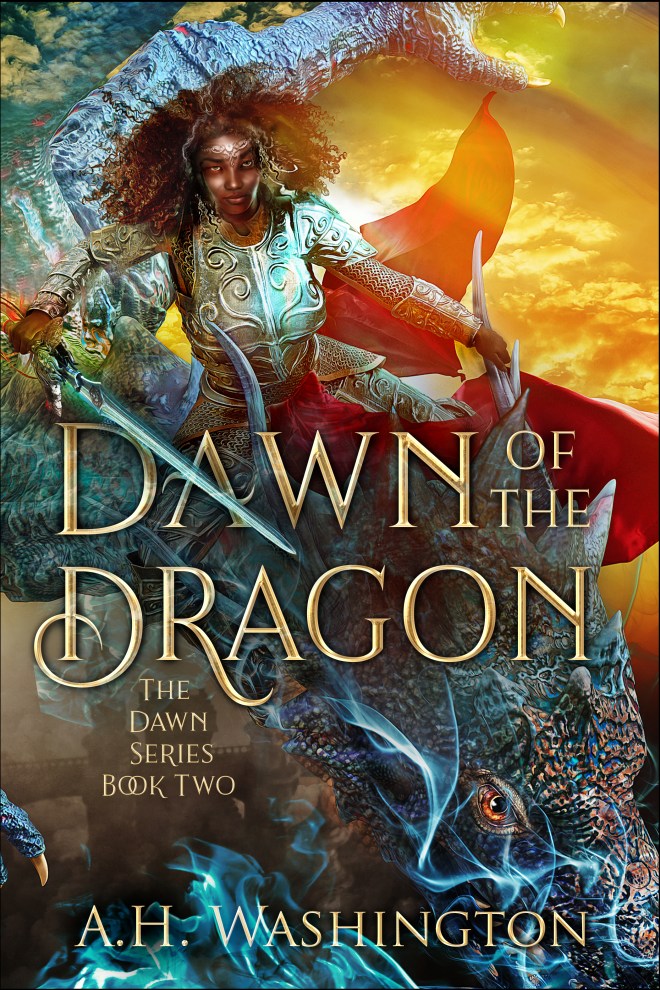
Yecheilyah’s Book Reviews – Dawn of The Dragon: The Dawn Series Book 2 by Aundriel H Washington

Title: Dawn of The Dragon: The Dawn Series Book 2
Author: Aundriel H Washington
Print Length: 177 Pages
Publisher: Aundriel’s Press
Publication Date: September 15, 2020


What if you saw a giant blue dragon in your neighbor’s backyard?

That’s how fantasy writer Aundriel Washington kicks off chapter one of book two in the Dawn series. With a 129 ft wingspan and standing twenty-five feet tall, Xavgon blocks the sun. Riding on his back is the central character Kalera, who draws some unwanted attention as she lands her dragon on Rocheblave Street in New Orleans. The police, National Guard, FBI, and military surround Kalera and her dragon. The girl and her creature, whom she refers to as her son, are coming from the Zaylen Realm, the world Kalera got sucked into in book one, Palera Dawn.

Xavgon freezes time to give them a chance to figure out how to escape the authorities. They run into the house of Kalera’s boyfriend Zaron and are joined by Musfall, her friend, and voodoo priest. They must find their way back to Zaylen to defeat Zaylen’s ruler, King Ager. To do this, they set out on a mission to Gros Cave, the door to Zaylen. Their first mission is to go to the Saint Louis Cathedral, where Musfall’s priest friend is a cave diver. Together, Kalera, Xavgon, Zoran, Musfall, and Kalera’s dog Rome, set out on a mission that takes them through a whirlwind of adventure and revelation.

This book maintains good action. I love the first chapter-opening, which reminded me of the movie Bright with Will Smith. I can imagine the authorities terrified as they surround a residential area where a large, fire-breathing creature has landed. Dawn of the Dragon is book two in a series, and for this, I don’t think the author needs a prologue. The way chapter one opened is good enough to capture and maintain the reader’s attention.

The author also did an excellent job of recounting what happened in book one so that readers new to this book can understand how all of this started. I also enjoyed how Xavgon communicated with Kalera telepathically. When she thinks about Harriet Tubman, for example, the dragon asks, “who is Harriet?” It helped the magical aspect of the book come to life.


Plot Movement / Strength: 3/5

Entertainment Factor: 4/5

Characterization: 3/5

Authenticity / Believable: 3/5

Overall: 3/5*

Dawn of The Dragon: The Dawn Series Book 2 is available now on Amazon


My book review registry is still CLOSED. These are reviews booked before the unexpected loss of my mom. I will be reopen for new submissions at a later time. Be sure to visit the Blog Book Review Policy page here to learn more.

Yecheilyah’s Book Reviews – Storm Wrack and Spindrift (Remnants Book 3) by Margaret Pinard

Title: Storm Wrack & Spindrift (Remnants Book 3)

Author: Margaret Pinard

Print Length: 259 Pages

Publisher: Taste Life Twice Publishing

Publication Date: December 2, 2019


About.

The MacLeans have suffered being thrown off their land, emigrating to the New World, surviving in the forest wilderness, and losing their father Gillan in a bizarre murder. Now, ten years later, the two youngest emigrants will split the family across an ocean.

Sheena pursues a future back in Scotland with her husband Gordon Lamont. Alisdair dreams of university and a chance to reform the political system in the colony that denied him justice for his father’s death.

But the British Empire of the 1830s has yet more obstacles to throw in their path. When the only school in the province only accepts Anglican students, what will Alisdair do? When Sheena finds herself in a role of authority over families like her own, how will she cope with the isolation?

And when both their hopes of peace and stability are dealt a telling blow, how will they stay true to their fighting spirit?

STORM WRACK & SPINDRIFT is a dramatic story of family survival and personal struggle set against social upheaval. While voter enfranchisement was advancing in London, and slavery finally outlawed in the Empire, the tiny stage of rebellion in a backwoods colony farm could still have deep repercussions. Every life is precious, every decision important–which is why the early struggle for Responsible Government and other civil liberties continues to encourage us today.

I enjoyed reading about the MacLean family, especially since the author did an excellent job transporting readers to the era of the 1830s. The descriptions and dialect are authentic, and any lover of historical fiction would enjoy the natural flow of reading. I enjoyed the back-and-forth between Sheena’s experiences in Scotland and Alisdair’s challenges with the family on the farm.

I sympathized with his conflict with wanting to study law but not wanting to leave the family who needed his help. The characters are undoubtedly the stars of this book. I love children, so I am fond of Mairi and her bond with Grannie. They are so sweet together, and even though Neil (Mairi’s dad) is sad, the author does an excellent job portraying his misery. Speaking of grief, prepare yourself. This book has its moments.

I was glad to hear about the Slavery Abolition Act, which ended slavery in most British territories and freed over 800,000 enslaved Africans in the Caribbean, South Africa, and a small number of people in Canada. It received Royal Assent on August 28, 1833, and took effect on August 1, 1834. (Henry, 2020) The government compensated slave owners for the value lost from freeing enslaved people, and the character Sheena was not having it.

“And is there any proposed fund for the slaves, since by abolishing slavery, we admit we had no right to own other people in the first place?”

“Well no—”

“No, of course not.”

I liked the detail about Rhoda, Sheena, and Gordan’s widowed housekeeper participating in abolitionist demonstrations and the mention of Wilberforce’s death. William Wilberforce, a British politician, philanthropist, and pioneer of the anti-slavery movement, died in 1833. By describing Rhoda’s relationship with Wilberforce in detail and illustrating how his death affected her, the author was able to relate Wilberforce to the family on a personal basis.

While I enjoyed this story, for me, it cannot be read as a standalone novel as marketed. As the third book in the series, I felt a bit lost initially because it felt like something was missing, such as everything leading up to the MacLean’s family’s life on the farm.

The epilogue is intriguing, and I wonder if the author would consider adding another book to the series, possibly centered on the experiences of Mairi.

Plot Movement / Strength: 3/5

Entertainment Factor: 3/5

Characterization: 5/5

Authenticity / Believable: 4/5

Thought Provoking: 4/5

Overall: 3/5

Storm Wrack & Spindrift (Remnants Book 3) is available now on Amazon!