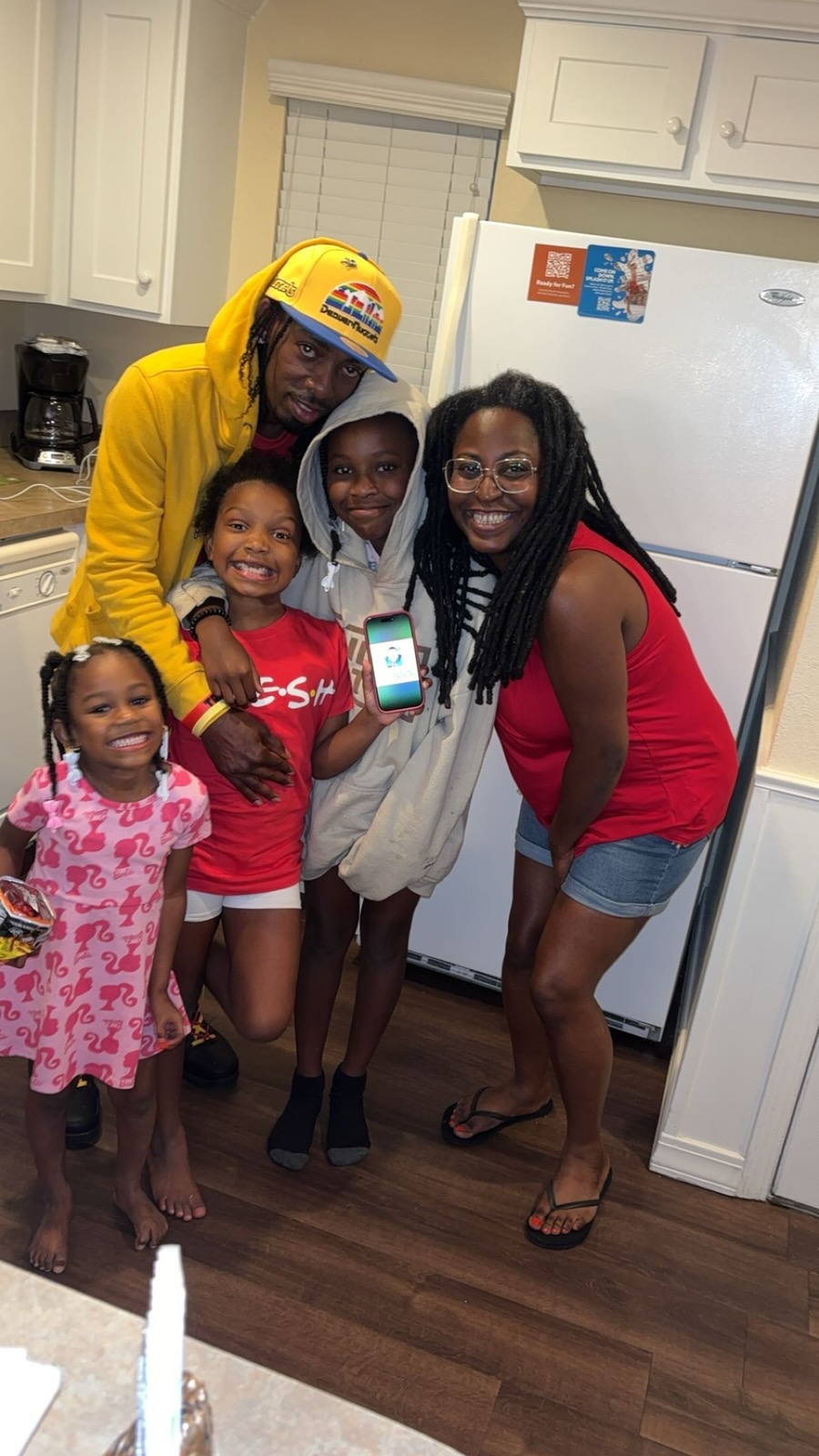
My big brother Ray, nieces Gigi, Jamie, Brook, and Me
Some families keep their history alive around picnic tables, their roots watered each summer by laughter, shared meals, and stories that stretch back generations.
Mine did not.
On my mother’s side, there were no great migrations back home for a weekend, no sea of matching shirts declaring our kinship, no annual roll call of who had been born, married, or passed on.
I didn’t grow up with the smell of charcoal and cousins’ laughter drifting across a summer lawn, the kind of memory stitched into photo albums and passed down like a family recipe. Family reunions simply weren’t our thing. There were no matching T-shirts, no group photos under a banner.
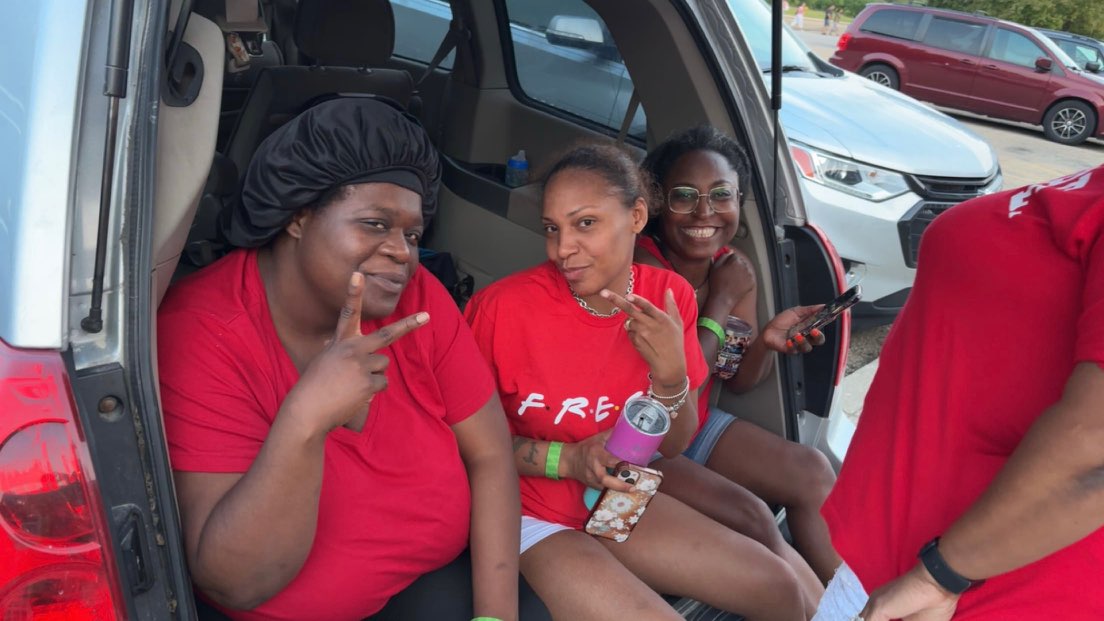
Cousin Laura, Pam, and Me sitting in the back of this truck like some thugs, lol
The closest I came to that sense of gathering was at Chicago block parties. We’d shut down the street, our banquet hall, line the sidewalks with tables and sizzling grills, and open the fire hydrant so the water arched into the air like a silver ribbon. Kids ran barefoot through a cracked-open hydrant, laughing because this time, no one called the police.
Music pulsed from speakers, and for one day, neighbors felt like cousins, and the whole block became family.
But it wasn’t our family.
Six years ago, this ended with our generation.
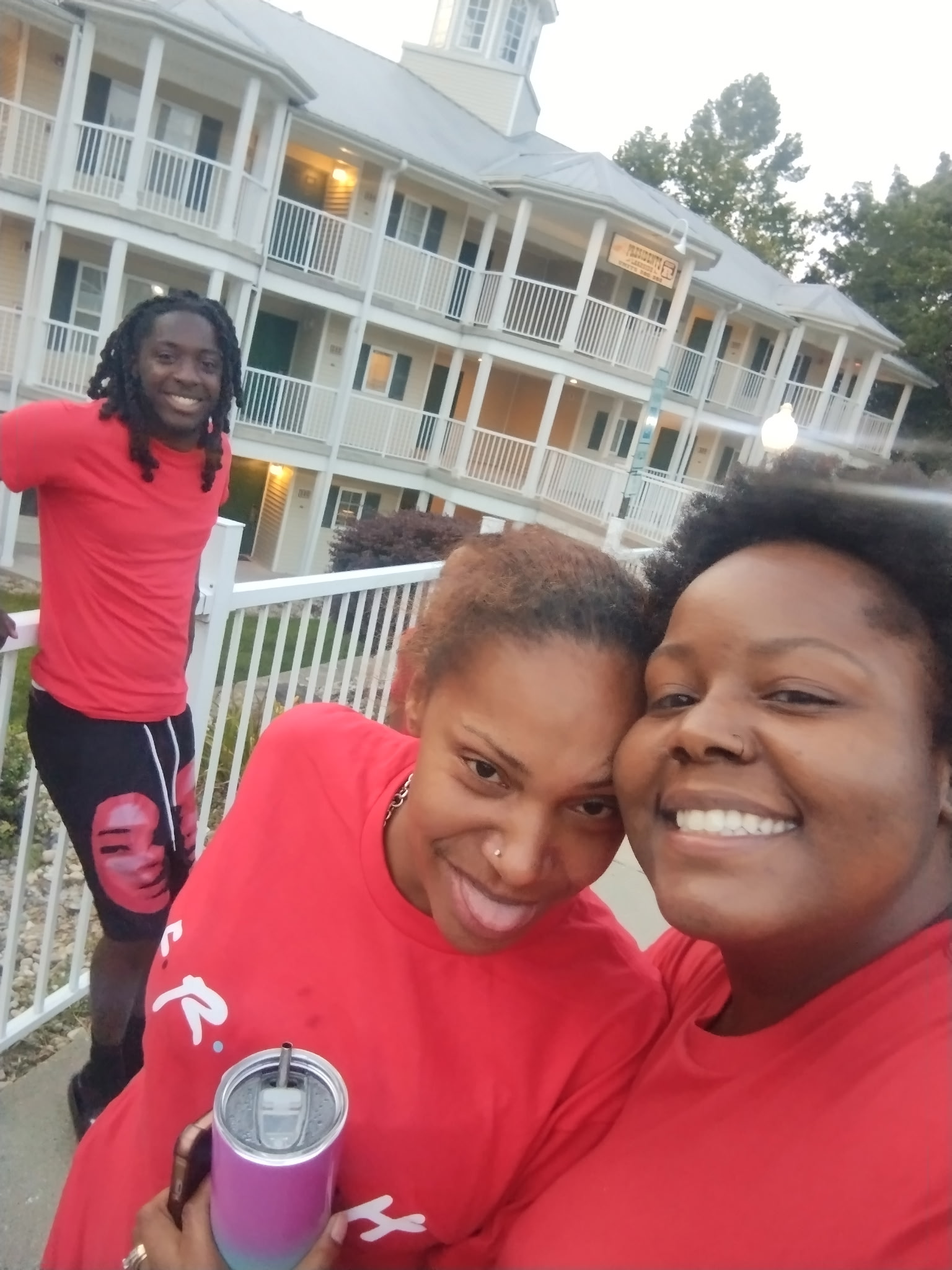
Jeremiah in the background (Nephew), Big Sissy Pamela, and Lil Cuzzo Angela
What began as a simple backyard barbecue has grown, year after year, into something bigger that we can finally call by its true name: a Family Reunion.
It’s a strange and humbling thing to realize we’re the aunts and unks now—the ones setting the tone, carrying the stories, and shaping the memories for our children.
We’ve rewritten the narrative we inherited.
Many of us are building marriages we’re proud of, raising children under our own roofs, and pursuing careers that light us up. We are not lost to the streets, not numbed by addiction, not absent from the lives we brought into this world.
Aunt Barbara, Lil Reg, and his daughters, Gigi and Brooklyn
Instead, we have passports now. We take our children to see oceans they’ve never touched, mountains they’ve never climbed, cities that speak in languages they’ve never heard. We give them richer experiences, not just with our words but with our lives.
Sometimes, breaking from tradition can be a good thing!
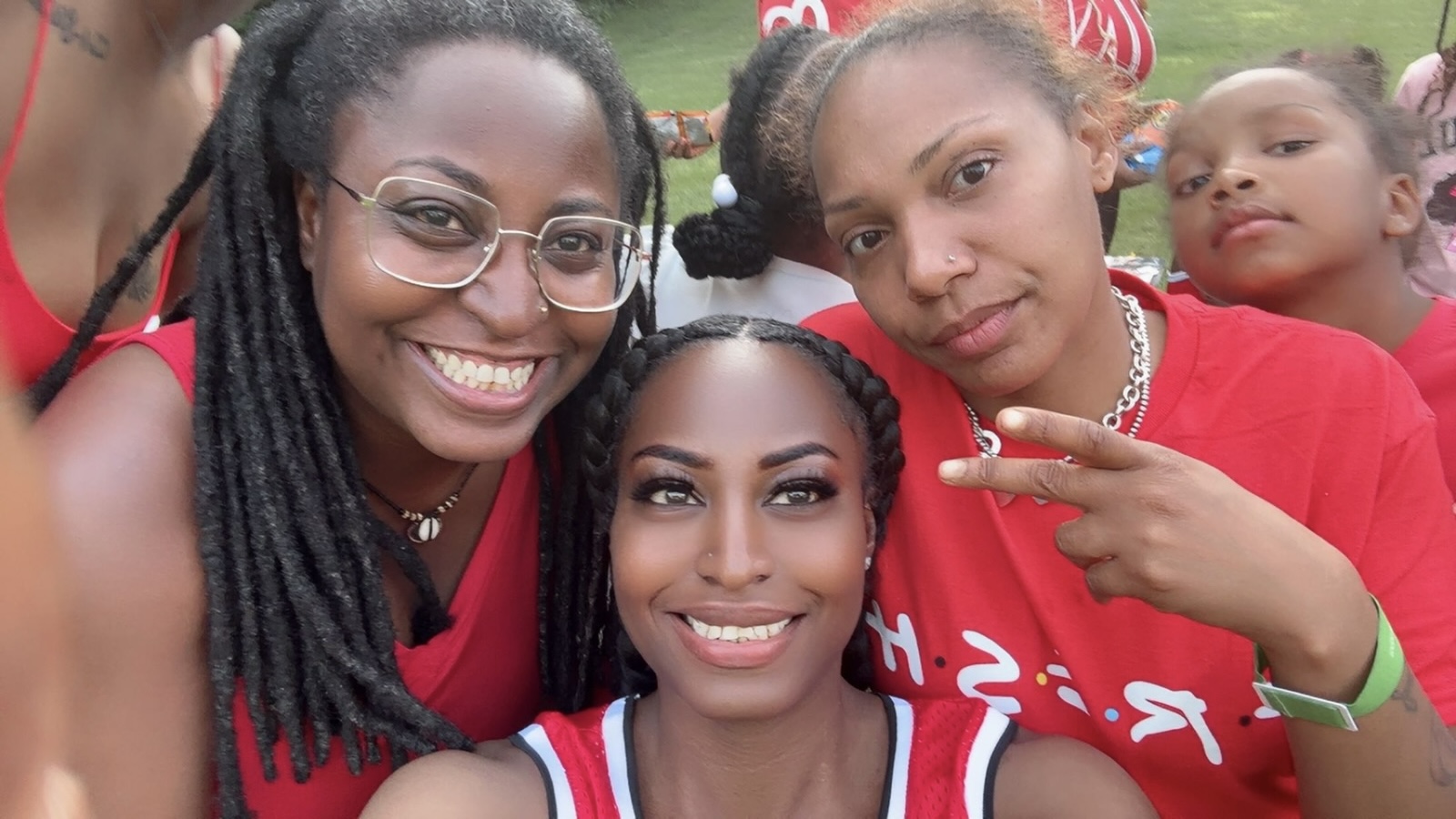
My crazy sisters and me: Yecheilyah, Tracey, Pam, and photo bombed by her daughter, Jamie.
I spent the weekend before last wrapped in the embrace of family down in Shreveport and Keithville, Louisiana, and it felt like medicine. We rode horses, walked barefoot through the grass, played with dogs, danced like children to country songs (which was hilarious…them country songs a lil freaky, lol) chased chickens, and kissed the soft cheeks of babies.
Cheese!!
In a world that seems to be unraveling, it’s easy to feel unanchored. People are losing their jobs and struggling to pay bills, Medicaid and SNAP Benefits are in danger, and storms, floods, and earthquakes abound. In times like these, it is soothing to turn to community, and I mean real community. To remember what it’s like to be held, to look people in their eyes, to walk barefoot in the grass, and to laugh without looking over your shoulder, waiting for the next unprecedented moment to drop.
We are living in a time when the only time people travel is to work. (And yes, I consider curated events that cost rent and mortgage money to attend is also work.) Time in the country on the farm (which we visit at least once a year) was a reminder of what real rest is, what it feels like, and why it is necessary.
This little baby wasn’t scared at all, lol.
I don’t know what you’re going through in your personal life. I have no idea of the storms you are literally or mentally walking through, but I do know that resting inside the warmth of community, however that looks to you, can be incredibly helpful.
For me, it’s family time since most of us live in different states now. I am excited to spend time with my Chicago people at our annual family BBQ next month. We’re heading to a resort, and it’s going to be a blast, hunny.
We are not supposed to do life alone. Hyper individualism is not the way. This idea that we don’t need anyone is not the song we are supposed to be dancing to. People brag about not having family and friends, and I think that’s sad. No wonder so many people are depressed.
Whatever embracing community looks like to you, let it be more than a workcation or business venture. Let it be a real coming together. More than that, let it be a balm.
A reminder that community doesn’t just soothe the wounds, but sometimes, it also helps to stop the bleeding.
Self-publishing can be overwhelming for various reasons, including the limitless number of people who offer advice. The problem is that counsel is not universally applicable. Even the word “Bad” in the title is subjective. Who determines what is bad? Is there any advice that works for us but not for others?
Here is a quick list of things to remember as you continue your publishing journey.
Experience Levels Vary—Resist the urge to follow the advice of people who have not been where you want to go. Some advice may come from beginners who haven’t seen long-term results. For example, some people have self-published several books but have never worked with professionals.
This leads to the next point.
Beware of Personal Bias—People tend to recommend what worked for them, even if it’s not objectively the best method. Someone might tell you to publish a first draft or not to worry about editing because it is what worked for them. But one size does not fit all. What succeeded for one author may not suit your genre, audience, or goals. Remember to apply sound advice that suits you and not make emotional business decisions.
Different Goals Need Different Strategies—Be careful with advice that applies the same strategies to different goals. Your publishing route and the kind of book you write require a different publishing approach. Writing a memoir, a children’s book, or a business book each requires something different.
Paid Services May Drive Certain Advice—Some give advice to upsell you on courses, editing, or marketing packages. When working with service providers, discern whether a suggestion suits your goals or if it is to persuade you to buy into the service. Many vanity publishers will not care if your story makes sense or if you wrote it in two days. They will encourage you to publish that book as long as you have the money to pay, even if the manuscript is not ready.
You Can Waste Time and Money—Make sure people can show you receipts for their claims. What social proof do they have to support their advice? Remember, reading a book about swimming will not teach you how to swim. Accept advice from people who have been in the water and have done the work. Bad advice can lead to wasted money and, perhaps most importantly, time.
There are many more things to watch out for, such as advice that leads to confusion and second-guessing your decisions. Ultimately, remember that this journey is yours, and you should do what aligns best with your identity and goals. Watch out for conflicting advice that can cause your voice to get lost. Trying to mimic others too closely may make your work less authentic or original.
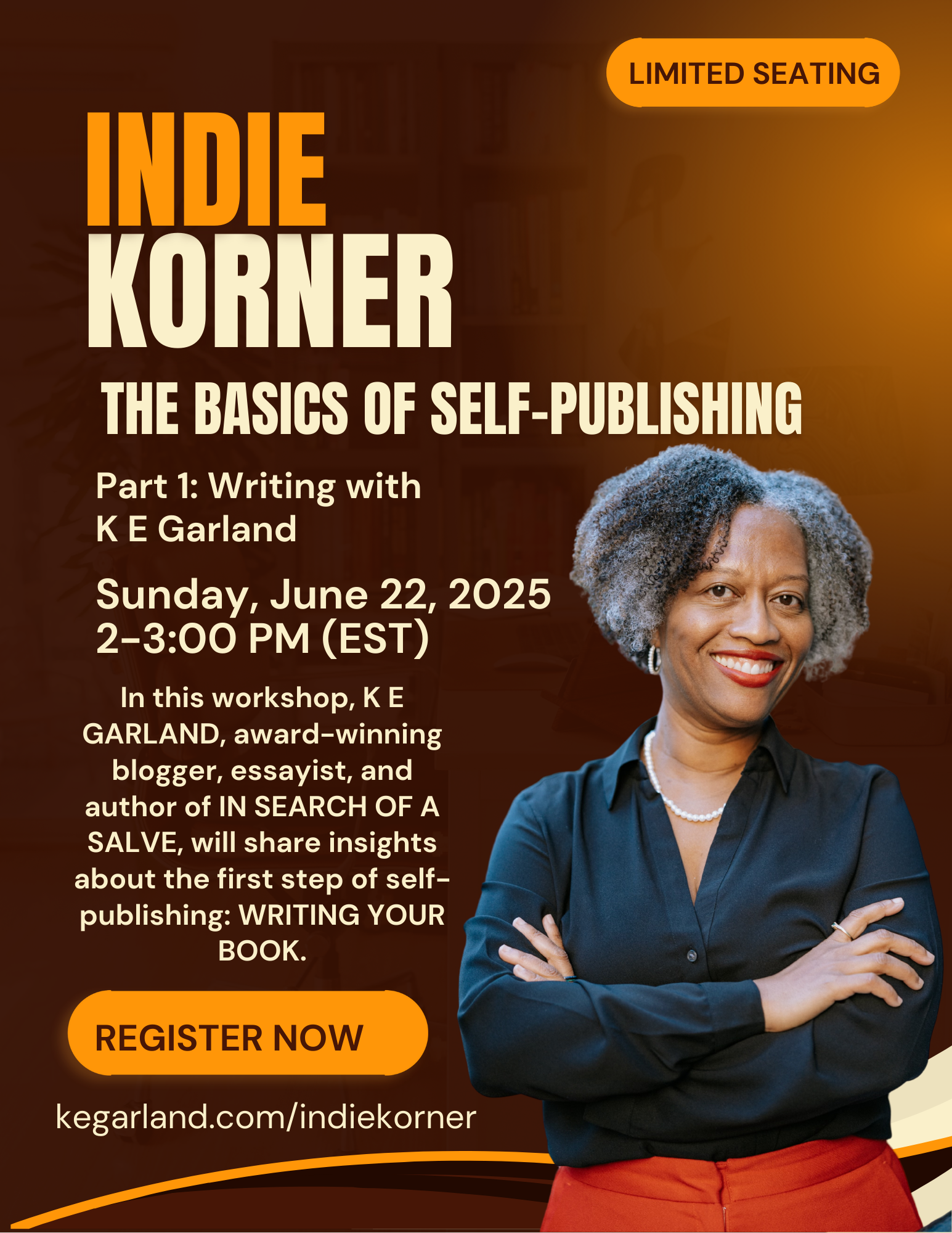
Need More Help? Register for Indie Korner!
Part I: WRITING WITH KE GARLAND 6/22/2025 | 2-3:00 PM (EST)
Part one is led by KE Garland, who will detail the first step to self-publishing: writing a fantastic book! In our excitement, we tend to skip this step, but no matter how you publish, you still must write something people want to read. Garland will walk us through the first draft, revisions, professional editing, choosing a genre, and everything you need to prepare your manuscript for a publisher, even if that publisher is you!
Part 2: PUBLISHING WITH YECHEILYAH 6/23/2025 | 7-8:00PM (EST)
Yecheilyah leads part two. She will explain the different forms of publishing, from traditional to vanity to hybrid to self-publishing, and why a basic understanding of them matters. She will also discuss how to avoid publishing scams and walk us through the foundational steps to get that amazing manuscript you learned how to write on day one, published at the highest professional level.
REGISTRATION IS OPEN!!
To take advantage of this EXCLUSIVE, limited-seating virtual masterclass, click the buttons below to register for one or both courses. Because they are connected, it is highly recommended that you register for both!
“If growing up is painful for the Southern Black girl, being aware of her displacement is the rust on the razor that threatens the throat. It is an unnecessary insult.”
– Maya Angelou
I am excited to have reached my substack goal of having the first ten subscribers! Actually, I have eleven, so I have exceeded my goal. Tee Hee.
WordPress will always be home, and I will continue to write here. My goal on Substack is still to restore Black historical truth, except I am restoring my own truth. I am opening up more about my personal story and laying the foundation for a new journey.
But it’s not just about my story.
“I Wasn’t Built to Break” isn’t just about a car accident or a broken leg—it’s about the fractures life leaves behind. It’s about shattered hearts, struggling communities, and the resilience that rises through the cracks.
Yes, I’ll share the story of that life-altering accident, but I’ll also take you through my early years wrapped in poverty, my battles with fertility, and the relentless attempts this life has had to break not just me but Black women like me.
And yet, through it all, I stand, we stand—unshaken, unbroken, and undefeated.
Hop on over there and subscribe so you don’t miss it!
We are already three articles in. Click on the link below to catch up.
I know it’s been a while since we last spoke. Here, let me get your coat.
Shake the chill from your bones and leave the weight of the world at the door.
Speaking of the door, there is a shoe rack next to you. Go ahead and remove your shoes. I have some footies you can slip into. I hope you like the color black.
I took the liberty of roasting the coffee beans with a whisper of cinnamon and French Vanilla cream. I hope that’s okay.
Sit. Let the loveseat cradle you. Relax yourself. You are home. I’ll open the curtains so the light can spill in on us.
Here’s your coffee. Let your hands wrap around the warmth of the mug, and the heat seep into your skin like an unspoken promise—exhale as long as you need.
The world outside can wait. Here, in this quiet space, there is no rush, no burden too heavy, only the sound of our voices, the comfort of shared silence, and the rich laughter of coffee poured into porcelain.
Let’s drink deep and savor the moment—just you, just me, just the steady rhythm of being.
Now that you have your mug and are snug like a bug in a rug, here’s what I’ve been up to lately…
I am no longer surprised to find purpose in the people I meet. I am being guided to certain people for a reason. When I complimented Michelle on her Afro at the She Wins Conference last year, I had no idea she had such a rich backstory. When I did a video about the real Great Debaters, I didn’t know Michelle had also attended Wiley College!
Here are some fun facts I learned from her essay: “GROWING UP ON THE ‘COLORED’ SIDE OF THE BORDER:
Meet Michelle Petties, whose grandmother and aunt attended Wiley College, a historically Black college depicted in the 2007 film The Great Debaters, starring Denzel Washington. If you follow me on TikTok, I made a video about the real debaters that you can find under my Must Watch playlist. Michelle also attended Wiley in 1974.
Photo Credit: Michelle Petties | The author’s childhood home at 1208 E. Travis St., formerly known as Border Street.
Michelle was born and raised in Marshall, Texas, on Border Street (now Travis St), which served as a literal line of separation between the Black community situated south of the street and the white one on the north.
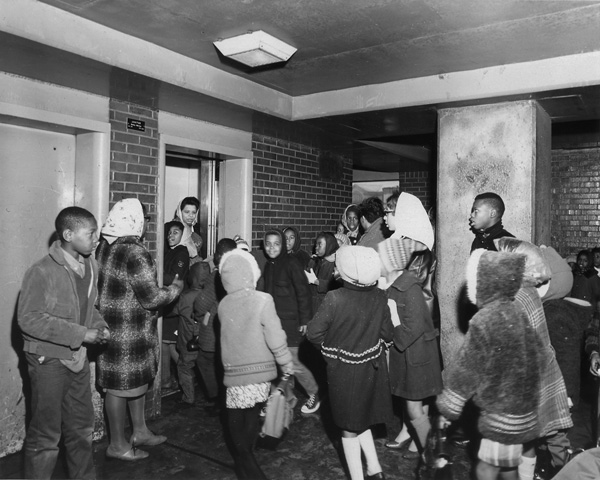
Photo Credit: Michelle Petties | The author (third from right, second row) at Sam Houston Elementary School in 1965.
In the fall of 1965, Michelle became one of the first Black students to integrate Sam Houston Elementary School.
A library worker denied her entrance because she was not a “mammal.” “If that sounds strange to you,” said Michelle, “imagine how it sounded to a young Black girl growing up at a time when segregation was still very much a part of the culture.”
Photo Credit: Michelle Petties | George Foreman, perhaps Marshall, Texas’s most famous son, meets President Lyndon B. Johnson in 1968. LBJ’s wife, Lady Bird Johnson, was born on a former plantation in Karnack, Texas, which is considered the Greater Marshall area.
I’ve been writing poetry since I was twelve years old, but it wasn’t until I joined the UMOJA Spoken Word group in High School that I truly understood it and how to fuse the words on the page with my voice to bring them to life.
At the time, I didn’t know much about Kwanzaa or its meaning, let alone that UMOJA was the first principle. Lasting for seven days, Kwanzaa was initiated by Dr. Maulana Karenga in 1966, with each day representing a practice. Umoja, the first principle of the Nguzo Saba, focuses on unity on the first day, December 26th. According to Karenga, “during Kwanzaa, we practice the candle lighting ritual called ‘lifting up the light that lasts,’ based not only on the history of our people in practice but also on the sacred teachings of our ancestors.”1
Although I don’t celebrate holidays today, 2 I appreciate the breadcrumbs sprinkled throughout my life that helped me to later identify my purpose, which will always go back to restoring the forgotten heritage to the forgotten people. As one who does not believe in coincidences, I think it’s important, maybe even wise, to notice those tiny steppingstones throughout our lives that molded or mold us into the people we are today.
An example of breadcrumbs could be me joining the Umoja poetry group, meeting my husband in an African American studies class, and marrying him in February, Black History Month. We did not intend to do this as we did not have a wedding. We mutually decided to elope on what we thought was a random day during a random month.
I now know nothing is random. I do not believe that things just happen.
As we prepare to end another year and embrace a new one,3 I challenge you to think more deeply about the things that have happened in your past and that happen now and see if you can make connections between them and your purpose. Consider that there is more to those coincidences and Deja Vu moments we’ve been taught to toss to the wind. This is not only a fun reflection activity, but it can also be helpful for those who do not yet know their purpose or mission.
It takes a deep spiritual maturity to appreciate things we’ve experienced and see their connection to who we are now without condemnation of that thing or ourselves. Sure, you know what you know, but you didn’t always have that understanding. Once upon a time, you needed to be guided to where you are today. Those are the breadcrumbs.
Ten, twenty, maybe even thirty years from now, we will see hints given to us today that helped guide us to wherever we are in the future.
And in the future, we will smile and nod in recognition of those stepping stones we were too preoccupied with life to notice but that led us to where we are.
“Celebrating Kwanzaa in Difficult and Demanding Times: Lifting Up the Light that Lasts.” Dr. Maulana Karenga. Los Angeles Sentinel, 12-26-24. ↩︎
I appreciate and respect Kwanzaa for what it is, but I don’t participate in its associated rituals. ↩︎
For the extra-woke people out there, yes, I know a new year technically does not begin in the dead of winter but in spring. However, we will still measure the time based on the Gregorian calendar’s two thousand and twenty-fifth year. You still have to report back to work, and your children will still return to school in January something 2025. Thus, I will use the measurement of time most familiar with today for clarity. Let’s not be Pharisees about this.↩︎









 The PBS Blog