MSN Reports: “These twins can teach us a lot about racial identity”

As many of you already know, I also happen to be a twin. So naturally, I was drawn to this story. Racial identity also happens to be the central theme of the short story series (Stella Trilogy) I’m writing, each part surrounding a person’s search for identity, knit together by the same blood. Book #1: Between Slavery & Freedom is available now on Amazon, B&N, Kobo, Lulu, iBookstore, etch. In the meantime, check out this article.

BBibCwu.img
© Provided by Vox.com Lucy and Maria Aylmer as children (YouTube)

MSN News Article:

“There’s a set of biracial twins in the UK who are turning heads because one is black and the other is white.” That’s how the New York Post introduced a profile of Lucy and Maria Aylmer, 18-year-olds whose father identifies as white and whose mother is “half-Jamaican” (and, we’re to assume, thinks of herself as black).

It’s just the most recent story of fraternal twins born with such dramatic variations in complexion they’re seen by many — and even see themselves  — as members of two different racial groups.

Each of these situations and their accompanying striking images, is a reminder of how fluid and subjective the racial categories we’re all familiar with are.

What “black and white twins” can teach us about race: it’s not real

Lucy and Maria’s story, and all the other sensational tales in the ” Black and White Twins: born a minute apart” vein are actually just overblown reports on siblings who, because of normal genetic variations that show up in more striking ways in their cases, have different complexions.

But they’re fascinating because they highlight just how flimsy and open to interpretation the racial categories we use in the US and around the world are.

Even the Post’s description of the Aylmer twins is clumsy, asserting that they’re each “biracial,” but stating in the very same sentence that one is white and the other is black.

And the fact that the two, despite having the same parents,  see themselves as belonging to two different racial groups ( “I am white and Maria is black,” Lucy told the Post) proves that there’s a lot more than biology or heritage informing racial identity.

It’s a reminder that the racial categories we use are fickle, flexible, open to interpretation, and have just as many exceptions as they do rules when it comes to their criteria for membership— that’s why they have been described as “not real,” meaning:

  • They’re not based on facts that people can even begin to agree on. (If we can’t even get a consensus that people with the same parents are the same race, where does that leave us?)
  • They’re not permanent. (If Lucy decides one day, like many other people with similar backgrounds, that her Jamaican mother is black and therefore, so is she, who’s to stop her?)
  • They’re not scientific. (There’s no blood test or medical assessment that will provide a “white” result for Lucy and a “black” one for Maria.)
  • They’re not consistent (Other twins with the same respective looks and identical parentage as these twins, might both choose to call themselves black or biracial.)

“Not real” doesn’t mean not important

Of course, none of this changes the fact that the concept of race is hugely important in our lives, in the United States, in the UK where the twins live, and around the world.

There’s no question that the way people categorize Lucy and Maria, and the way they think of themselves, will affect their lives.

That’s because, even though race is highly subjective, racism and discrimination based on what people believe about race are very real. The racial categories to which we’re assigned, based on how we look to others or how we identify, can determine real-life experiences, inspire hate, drive political outcomes, and make the difference between life and death.

But it’s still  important to remember that these consequences are a result of human-created racial categories that are based on shaky reasoning and shady motivations. This makes the borders of the various groups impossible to pin down — as the “black and white” twins demonstrate — and renders modern debates about how particular people should identify, futile.”

Recipe Sunday: The Mung Bean

mung_beans1_0

So I have a niece with extreme allergies. As a result she is a vegetarian, but not just a vegetarian but extreme vegan. Her allergies are so bad that she cannot eat meat and is pretty much allergic to anything you can find in the dictionary. So anyway, I invited my sister and my nieces to my home to chill one Sunday afternoon and my sister mentioned we were having burgers.

Burgers? But niecee can’t eat burgers”.

Oh yes she can”, said sis, “She can eat these burgers”.

And this is how I was introduced to the Mung Bean.

My sister (we’ll call her V for now) made some of the most delicious vegan burgers I’ve ever tasted for them not to be made of meat. Now mind you my household is meat-a-tarians. I don’t have to define that for you do I? So yea, we meat eaters around here. But we both enjoyed the burger alternatives. Throw some cheese on there and make it up like a regular burger and Burger King ain’t got nothing on you. She made them thick and meaty too. V also makes imitation steaks out of these. So today I would like to share some information with you on the Mung Bean from an Article V gave to me written by a woman named Kim @ Affairs of Living:

Sprout-Mung-Beans-Step-9“If you eat beans, but haven’t yet ventured into the wonderful world of mung bean, you must! Mung Beans are used in many ways in SE Asian, Indian, and Middle Eastern cuisine. They are soaked, ground and used for flat-breads. They are sprouted and served raw. They are processed into noodles. They are peeled and split, and used to make dal, where they take on a smooth, velvety texture that is a true comfort food. They are cooked whole with coconut milk to make a sweet soup. They are mashed and used as fillings in sweet buns and deserts. They are cooked plain and added to various rice dishes. Quick cooking, full of protein, and easily digested, mung beans are considered to be an extremely healing and nourishing bean. Because they are small, they are easier to digest than larger beans, and are recommended for cleanings the body toxins. In Ayurveda medicine, they are considered tridoshic, meaning people of every constitution can find nourishment in the mung bean. And in Chinese medicine, mung beans are considered a cooling food and are recommended for detoxification, clearing heat, reducing swelling and edema and promoting urinary tract function.

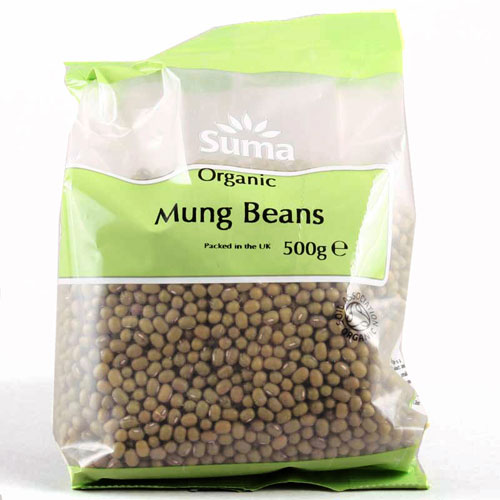
34603-org-mung-beans-500Dry mung beans can be purchased in a variety of ways. Whole, they are bright and green. Or you can purchase them split where they take on the name moong dal. You can get moong dal either with the skins still on and or peeled-once peeled, they are light yellow. I love peeled moong dal, it is probably my favorite. I generally buy mung beans at the Asian markets, where they are the cheapest (this is also where V buys hers).

Hint: You can also use the mung bean as a flour!

“Additionally, it is high in iron, folate, copper, magnesium, manganese, phosphorus and potassium. Mung beans are also considered a low glycemic food, and are perfect for people concerned about blood sugar spikes. Using mung bean flour combination with other flours is a great way to add extra protein, fiber, and healthy, slow-digesting carbs.

Homemade Mung Bean Flour – Gluten Free, Vegan, High Protein

Yield: Approx. 2 1/4 c Flour.

Ingredients:
2 c mung beans (either whole or peeled or split or a mix)
Equipment:
Coffee Grinder or High Power Blender

Roasting the Beans:
1. Preheat oven to 400 F.
2. Spread beans evenly on baking sheet. Place in oven and roast for 20 minutes until golden, stirring every 5 minutes to prevent burning.
3. Remove from oven and cool completely.

Grinding the Beans:
1. In a coffee grinder or high power blender, grind the beans in batches. I used a coffee grinder (No, not me, Kim) and ground 1/2 c beans at a time.
2. Grind for approx. 30 seconds, shaking beans in grinder to evenly mix.
3. Once your beans are ground to a fine powder, transfer to a large bowl and grind the next batch.
4. Once all of your beans have been ground, let the flour cool (Grinding warms it up!) and then transfer to an alright container. Store in a cool place.

Responsibilities

Yecheilyah-72dpi-1500x2000-e-bookI know I know it’s been a scarce week (or two) here on The PBS Blog. Truth is I began a number of projects years ago that are starting to show signs of fruit. I am completing my first short story series. In fact, Stella Book #1 Releases Next Week which will be promptly followed by additional parts taking me well into the summer and just in time to begin work on Pearls Before Swine Vol. #2 in the fall. Needless to say I expect to have a busy year (yaaasss). But the biggest project, the one I am super siked to be on the finishing end of is the audio for my Third Poetry Book Collection “Womanhood Don’t Begin in Menstrual Cycles”, which releases next month (March). But while I set out to organize my life offline, it led me to today’s post: Responsibilities.

This has nothing to do with projects or books, but life. As we go about our daily routines and the accomplishments of our goals there is a lot missing from the accountability end of this whirlwind of events and circumstances. We must keep in mind that we are responsible for everything we say, everything we do and everything that we write. There’s a quote that says ” We are what we write”, and what a profound truth. I speak and you listen and as a result of my speaking you in turn perceive. You may either accept or reject and that’s your business. I cannot be responsible for the way in which your eyes see, but I can be responsible for influencing what you see. In other words, our personal lives would be so much better if as individuals we took responsibility for who we are and what we are and those things that we influence, good or bad.

A young man dies on the street corner. He is 17 years old. By age 5 he can quote the rap lyric to every rap song known to man. His routine consists of school, TV, food and back again. Homework has been lost in-between. At age 10 he came into the house at whatever hour his youthful activities would warrant. By age 13 he was buying his own clothing and paying his mothers bills. By the age of 16 he was paying her rent altogether. At 17 years old a young man is gunned down on the street corner. The aftermath presents a distraught mother who cannot fathom the animal who would gun down her son. “He was a good boy”, she says. And while I would not doubt he just may have been a nice guy, what was he doing on the corner in the first place? What kind of activities led him there? And at what point does this mother take responsibility for the kind of behavior she approved the moment she accepted what she knew to be drug money? Or perhaps I trip over a rock and scar my face in the process. Oh and I was texting by the way so I wasn’t exactly looking up. I was not paying attention and as such I could not see what was in front of me. This is the kind of accountability in which I speak.

Healing can only come from personal accountability. I can never fix what is wrong with me if I cannot acknowledge my own imperfections. It is important to ask ourselves: “What is it about me that led to this? What is it about my heart that chose this?” Because only until we come fully into the understanding of our personal selves can we begin to make changes. Until then we will never progress in our lives. But once the process of personal accountability has begun, then we will begin to improve on those struggles we once thought were immovable. A bad situation is always a bad situation, but growth is optional. We choose to accept who we are and who we have become. We decide what aspects of our lives will change and which will remain based on our level of responsibility. When we are at fault we choose to accept or deny that fault. And when we have made a mistake we choose how that mistake will change us.

Perception and Reality

perception

I wonder what your life would be like. What kind of thoughts would exist in that head of yours, and what kind of actions they would produce if you were not subjected to the perception of society. Where would we be if infancy did not play tricks on our mental by conforming our ways to those around us? If childhood was met with the kind of vision we often go back to. If foresight was 20/20, would we see what exist or would our lives still be dictated only by what we choose to see?

Nin_SeeThingsIt is an interesting ponder, where would you be in your life if you were brave enough to neglect civilizations norms? If you were brave enough to risk insanity by choosing to see beyond what is the desire of your personal self. I stare out into the distance and watch as Bobby Kristina fights for her life. But what is really there? Is it a young woman fighting for her life, or is it a life that was doomed to begin with? This is the second time she was found face down in a similar position as her mom. Once before Whitney’s death and again afterwards. What kind of reality was this young woman born into? Is she dying, or is she already dead? I just use this as an example because it is an event fresh in our minds. Are we courageous enough to embrace reality? Or will reality always be plagued by our individual perspectives?

aaff57942df6eb16793e94c8fd709b33Perception is not always reality. Nor is reality always the way we perceive it to be. We float through life half blind. A physical touching of tangibility engulfs our days. We smell and taste and touch of surface life. Gliding along all the crooked reasons why it is not important to search for the truth beneath the surface. Wondering whether or not we should think inside or outside the box without first asking where the box came from to begin with. We sit here with a handful of normal while amazing stands in the shadows. She is waiting for you to identify her existence so that you may find refuge underneath her wings. Instead we glide along life wondering if the glass is half empty or half full. In the meantime, there is no glass.

Special Places

150208_0001I find you in diverse places: coffee shops, libraries, community centers, parks, even out on the front lawn! Writer’s sprinkled miscellaneously about the earth: polished glasses, warm tea or iced coffee (depending on the weather), Mac books, PC’s and a 3 1/2 pound miracle between their ears. Is there a special place you go to write? You can’t see it, but it’s there; the invisible surge of energy that powers creativity. Electricity is all around us–the power of technology beating through our cell phones, lights, computers, and dishwashers. Yet technology has not its hold on electricity, for it exists beyond the tangibility of anything we can explain. We have not precisely deciphered its definition or explained the beauty of lightening. Energy, it pulses its way through nature, and slithers its way through our fingers.

The table circles its way around my small dining room, with four chairs to keep it company. One of these chairs props itself against the wall and faces forward. From here I can see the landscape of everything from the living room, to the kitchen and peer out the window at the same time. The swimming pool is naked of bodies and is in need of attention from maintenance. It’s a nice day in Shreve City; right now the community is as quite as it often is on Sundays except for the elderly woman walking her puppies. There is nothing special about this view, yet it is where I go to charge when I have not the solitude of being away at the office. It is an unusual place, yet being here is incentive enough to write. Here I may fulfill the need of written expression the moment I sit my bottom in this wallflower of a chair, revitalized by the invisible power that charges our anxious need to build.

Reading – The Write Way

tumblr_lhiimg18wx1qcf1klMy first love was Mildred D. Taylor. It was the sixth grade, and I was Smitten for Stacey, Cassie, and the whole Logan gang in the classic “Roll of Thunder Hear My Cry”. I realized then my love for African American literature, history and culture. The sharecropping family had snagged at the core of my heartstrings and had me feigning for every Taylor book ever written. I went on to court “The Road to Memphis, “Let the Circle Be Unbroken”, “Mississippi Bridge” and all the others. It wasn’t a conscious thought of mine that I was coming to love reading. That literature caught my eye and curved my wanting into a lovesick smile. Didn’t occur to me that I’d found an inner itch only scratch-able through the deciphering of words on a page. Clearly I was hooked, spending more and more time at school libraries, showing favoritism toward my English school teachers, and carrying home a grocery store bag of books at a time.


reading-infoReading, what is its connection to writing? I’m not a literacy expert so I don’t have any fancy advice to give you. But I do know my love for reading fed my love for writing. I got lost in the world of the authors and their writing became an automatic mimicking on my part. Almost just as instant as I’d fallen for reading I fell for writing. It is almost inherent that a love for reading will eventually lead to a love for writing. Eventually I wanted to be the architect behind the words. I wanted to be the illustrator behind the way the sky looked, how tall the buildings were and what dress Doris decided she’d wear today, or if she would wear a dress at all. I was introverted and reading and writing provided an avenue of self-discovery and speech. And so I sat down at the table, and I painted words on a page.


social-readingI can’t imagine giving students advice on writing, without a lecture on how important it is that they read. It is possible to develop a longing for the writing process without having a love for reading at first, but it is my opinion that in order to grow and to nurture this longing, the student must attempt to develop a love for reading. It is not research that teaches one how to write novels and screenplays. It is not fancy degrees and hours of lecture time. Higher education surely helps, but it is not the focal point of learning how to mentally process what it means to write. Reading is in my opinion, the write way. When you sit down to read a book, you’re not just lost in the story, but you are taking in the way that writer is building his world. You learn how to structure dialogue, setting, and character development to name a few, all just by reading. School teaches us the techniques, the mechanics of writing; school teaches us to be conscious of things like mood and tone, but this is not the first time we are introduced to it. Higher Education teaches us to be consciously aware of these things, but we begin using them far before organized instruction. I’ll give you a real life example:

When I was a junior in High School, my AP Lit professor gave us an assignment where we had to write a series of poems using varying poetic techniques, such as imagery for example. When I got my paper back, what caught my attention is a little note from the teacher that read: “Great use of Alliteration!”  It caught my attention because I didn’t even know what that was. Alliteration is basically the repetition of words with the same consonant sound occurring closely together such as: “But a better butter makes a better batter.”

Reading-2But I didn’t know this back then, nor was it ever taught to me. I had to look inside of a dictionary for the meaning of Alliteration because I had never heard of it before, yet I used it here. I used it because it is possible that I read it and picked up on it. As a matter of fact, with all the books I read prior High School I am sure I read it somewhere, and thus stored it in my mental capacity, which I became consciously aware of by way of organized schooling. I still have that paper today and every now and again I look back on my teachers remark for inspiration.

One can surely write their thoughts on a page, but the basics of how to format these thoughts come from reading and learning from others who have already done it. Anyone can take ideas from the head and transcribe them, but to create an entire reading (of whatever form) based solely on desire without having read the works of others, I cannot imagine it. Reading is indeed, the write way.

Before and After Blog Awards Part 2: Pros, Cons

liebster-blog-award

So over a month ago I wrote a post on Blog Awards called Before and After Blog Awards. In this post, I speak on how I felt about them before and after I knew what they were, how they are distributed, and what I think will make them shine just a little bit more. Today, I am doing a follow up post on my thoughts concerning Before and After Blog Awards only this time from the perspective of someone who has received them.

In the first post, I had never before received a blog award so my perspective was based on my understanding of what they were, not so much my experience on what they were which makes a great difference (you can research a topic and discuss it with a group of people, but if you have lived that topic it’s a lot different). So now that I have received a few Blog Award nominations and have therefore become intimately part of the process, here are my thoughts.

The Pros:

Search anywhere in the blogosphere and you will find post after post of people’s thoughts on what they think makes for a successful blog. These posts, always insightful to read, talk about everything from follower count to blog views to dashboards and everything you can think of in order that you may gage (according to your personal ethics) what makes for a successful blog. But there’s no real way (aside from your personal ethics and stuff like that) to determine if you’re really reaching someone except for:

1). Well thought out comments, (I’m talking actual full commentary not short glossed over courtesy’s we all give to strangers we pretend to like),

2). Real time e-mails or blog post shout outs / support directly from followers 3). and Blog Awards
2011-blog-awards2

I think Blog Awards are a great way to show appreciation for another blogger as well as inform that blog (s) that you are tuned into their content. When I received my first blog award I was ecstatic! It was the close of 2014 and I was excited to end on such a great note. I didn’t expect to be so happy about it, but I was because I’m just an appreciative kind of person. It feels good to know that someone’s thinking about you. When I received my 2nd Blog Award I noticed my level of excitement was a lot more calmed, but it was still an amazing feeling of appreciation nonetheless. It is for this reason that though given  my views about it, I will always accept my nominations; now whether or not I’ll follow the rules…. that’s another story and leads into my After Blog Award Cons:

The Cons:

As I’m sure I mentioned in the first post, I do have some thoughts I feel will increase the genuine appreciation of blog awards. One of which are the rules. So far I’ve been nominated for four total blog awards, however in all cases I noticed I did not exactly follow the rules although I accepted the award. I don’t know if that’s considered cheating or not (I hope not lol) but there were some valid reasons (in my opinion) for skipping out on some of the terms. Ironically, the one problem I have with Blog Awards is the nomination process of other blogs, even though this is the way I’m usually nominated. Perhaps you can consider me a rebel (with a cause) and for the record I really do love giving back, but I think the blog awards with the nomination of a set number of blogs attached to the rules takes away some of the edge. Everyone likes to win and I think that’s great, but in real life everyone does not win. In fact, I think one of the major downfalls to the American Public School System is the re-arranging of the curriculum so that answers are correct as long as they make the children feel better. But I digress…


blog-awards-vote-hereAwards bring to mind competition with the person who worked the hardest winning the competition. While I’m sure everyone works hard to come up with a list of the blogs they think qualifies for the award, you can never be sure that everyone puts forth the same lengthy thought process necessary to really consider those blogs. For this reason the requirement to nominate a set number of blogs is always kind of tedious for me and downgrades the experience a bit. I love giving back, but I always want to make sure the blogs I nominate are truly deserving and are not just byproducts of a chain reaction:

grafton-media-blog-awards-61

Congratulations! You’re So Special!
“Thank You!”
“Now nominate someone just as special as you!”
“Oh, ok.”

Lol…I know it sounds like I’m hating but I really do love blog awards as my excitement shows when I receive them. Nomination Blog Award rules has gotten me Blog Award nominations but this can be somewhat tricky for three reasons:

a). To nominate a large number of blogs is to be in tune with those blogs enough to know that they qualify for those awards

 
b). Bloggers follow a variety of blogs themselves, some less than others.

 
c). Blog Nominations < Nomination being the key word

Let’s start by elaborating on point a). since I think it’s the most important:
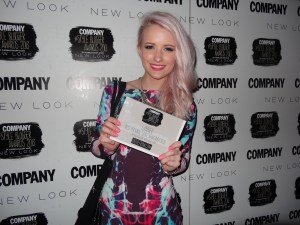
DSC02030It is common knowledge in the blog world that with so many different blogs (and not to mention the lives we live outside of technology) it is possible to miss out on a lot of material even from blogs you enjoy. While someone may just follow your blog, it is possible that they will not get to read your every published post, or that they even want to. However, by requiring a number of blog nominations from recipients, it forces bloggers to dig around the blogosphere for blogs that in their opinion make the grade, this is great. As I stated, I’m all for giving back. The problem with this technique though is that the blogger may not necessarily nominate bloggers whose blogs meet the qualifications to be associated with that award. Sure, I may have a friend whose blog I really like, but if my nomination requires me to nominate 20 people for the “Keeping it Real–No Chaser” Blog Award and my friend’s blog is about Cats, technically I’m not supposed to nominate that blog if this cat blog does not keep it real. Technically I’m supposed to only list blogs I think are worthy of the award under that specific title. However, I just may throw this Cat woman in the pot of nominations because she’s such a good friend and I got one more nomination slot to fill. Naiveté does not want me to believe it, but common sense says that all Bloggers are not nominating people whose blogs fit the award; bloggers are nominating their friends and friends of their friends.

blog-awards-humbleThis is cool beans, but I think it will be a showcase of a much greater level of professionalism if we increased the competition by making sure our nominees actually deserve this particular award. Perhaps a process of elimination culminating in a final win to which that blogger posts something about themselves without the requirement to nominate others. I’m not saying its bad to nominate others, I’m saying this is how awards are given in the world. I recognize your writing with the presentation of an award. If someone else deserves the same award, they are given this by the overseeing officials not the award recipient. It is possible that the first 5-7 people nominated under a 15-20 nominee requirement truly deserves it, but what happens when you get down to the 17th person? Or the 20th and you’re all out of blogs that fit that criteria? At this point some of us are scratching the surface of people we follow for someone to fit these shoes. This can result in a disingenuous nomination. Did I get nominated because you really enjoy my blog? Or because you tune into a majority (don’t expect it to be all) of my material and found it enlightening? OR was I just a final attempt to fulfill a blog award quota?

I think Blog Awards are great and I am by no means saying my nominations were the result of this example, but I think taking certain changes into consideration will make them much more desirable and the recipient much more accepting. I know I know, “Where’s your Blog Award Mrs. Bright Ideas?” I’m actually working on that….on a slightly different level though.

Moving on….b):

It’s impossible for someone with only a handful of followers to seek the nomination of the same amount of bloggers or close to it honestly (meaning these people honestly fit this criteria, not just your favorites list). As stated this can result in a disingenuous nomination by someone who does not necessarily hate your blog, but who knows little to nothing about you but feels the need to jot down your name to fulfill the nomination. Have I done this? Of course not, this is why I break blog award rules because I’m not just going to write down anything, I’m going to make sure my nominees actually deserve the award.

Moving on…

c). And let’s not forget the most obvious typo of all: Nomination.

vixen-blog-awards-957x670

Maybe I’m just a little slow here, but Nominations are part of the process of selecting a candidate for either election to an office, or the bestowing of an honor or award. These are Blog Nominations, but how does anyone win? Doesn’t it make sense to have blogs to nominate 15-20 of their favorite blogs under a specific category for the culminating of a final win? I do understand this happens in some part of the world, but as it relates to the steady chain of blog nomination awards here my question is this: I received the nomination along with a lot of other people, “Yay us!” Now, what must I do to be declared winner? 🙂

In closing I now know how it feels to receive a Blog Award, it is a great feeling. Even while knowing what they are and how they are circulated it’s still a reminder that someone in some quite part of the world is listening and that’s inspiration enough for anyone to keep writing. However, this very same system has the potential to be degraded if someone was to find out they weren’t nominated for an award because someone cared, but they were nominated only because the blog rules required it.For this reason I think it’s  a good idea to tweak the rules a bit to make Blog Awards more exciting and it’s recipients more willing to accept them (as a lot of people have decided not to take part in the process). Until then, I encourage all Blog Award Nominees to nominate Blogs you honestly feel are deserving of that Award, not just those who are your friends.