The Accident

“She shouldn’t have been running across the street!” said a familiar voice in the crowd.

It was Cousin Rachel and if I had the energy to throw a scowl her way I would have. I still had not felt any pain and only prayed now that I would live. I scanned the crowd, it appeared the entire neighborhood had come to see the event. Heads popped outside of windows, neighbors stopped in their places and strangers huddled together alongside family, shoulder to shoulder, as if shielding me from the outside and encasing me inside the core of the sidewalk.

Meanwhile, my fingers tingled with blood that raced toward the tips because someone was squeezing the life out of my left hand, and their tears kissed their apologies on top my skin. She was the woman who hit me and was knee deep in apologies and instant compassion consumed me. I forgave the woman over and over again while simultaneously praying I wasn’t going to die. But I was talking in my head again. The lady had not heard me, my mouth still had not moved, and my memory only went as far back as rolling off the hood of someone’s car, down the window and onto the ground. (For some reason I remember sliding down the window). Prior to this I was on a quest for ice cream and decided a quick dash across the street would grant me this prized possession. Needless to say I was wrong.

It wasn’t until I looked down at my right thigh that the full realization of what happened came to me: my right thigh was twice the size of my left one. Still, I felt no pain. I felt nothing in fact. I just lay there consumed by thought and words that had no sound. It wasn’t until the Ambulance arrived and I made the transition from the ground to the vehicle that the shock wore off and the excruciating discomfort started.

emergency-room-sign

The arrival to the hospital itself is a blur. I was in so much pain that everything seemed surreal. It turns out that I’d broken my leg, or more precisely, my femur bone (the longest bone in your body, located near the thigh). I remember staring into the ceiling, my little brown body highlighted against the white sheets. My mom was to my left as we waited for the doctors to return. My whole right leg had been wrapped in some kind of casing and the feel of it was that it was getting heavier and heavier as time passed. As I cried out in agony, I could not understand what was taking them so long to come back. I also wondered who had done this cruel thing as to wrap my broken leg in a cast, which made my leg so unbelievably heavy that I could not lift it and supposed then that it was not only paralyzed, but by the time the doctors felt like getting started I would have no leg left, for it was diving deeper into the bed and the mattress began to fold over.

Of course, none of this really happened. My leg was not wrapped in a cast and was not sinking into the bed.

When the doctors and nurses finally did return, in what seemed hours later, they started to cut my clothes off which added to my rising dislike of these people. I was wearing something really cute that now sat in shredded pieces of nothing. Meanwhile, in my head, I was explaining to no one in particular about the evil doctor who commanded his men to try and make my leg disappear and cut up my nice clothes. I’m sure he wanted to do away with me and I was being taken to a secret laboratory in which this would happen. I was just about to imagine what he was going to do when someone put a pill in my mouth. When I woke up I was laying in recovery with a steel plate replacing my leg, twenty-four surgical staples piecing me back together and surrounded by family.

check-up

I still remember when mama took me to my first check-up. I assumed the clever doctors had found me and sought to continue their plan. In my head, I’d been rescued by family who found a way to piece me back together and store me away in recovery. Now however, we were on our way to the doctor’s office and had to cross a big street that I’m sure came out of nowhere. On my journey to get across, I wondered what kind of technology they were using. I’d better be careful not to step on the yellow lines; it may activate some special gadget and suck me deep into the ground. Because my enemies had decided it was better that I use a walker instead of crutches, which I’d hoped to experience, it took me what seemed forever to get across the street. The evil doctors had done it this time, they were back and I was sure that they had somehow stretched the already wide road so that with each step I was not getting closer, I was only getting further and further away. I thought about telling mama about these corrupt men but I didn’t want to blow my cover. If she was protecting me they couldn’t know about it.

When we got to the office and they removed the staples, I was instructed by the doctor to move my leg back and forth but I couldn’t do it. My body had not all the way adjusted to the steel plate and told me this wasn’t a very good idea. Instantly, I stopped and threw a scowl the doctor’s way, “Way to go genius that hurts.” But I knew what he was trying to do. He was trying to kill me. I better not say anything, they may try to kidnap mom and throw me in that laboratory again.

*****

I would like to publish a memoir one day. While I am still undecided as to publish an entire manuscript, I have taken to writing down bits and pieces of my life story and publishing excerpts to this blog for practice. What you have read is the true story of when I was hit by a car at ten years old. Names of real persons have been changed to protect their identities.

Word to the Wise

how-to-self-publish-your-book-pop_8319

As we approach the month of August, when teachers return to work and students go back to school, I couldn’t help but to get excited that in just a few short weeks (mid August) I will be publishing another book. I’m really excited about this one and this excitement led me to a thought which in turn led me to something I think all Self-Publishers should take into consideration. I know that finances are a big deal to Self-Publishers and we are always looking for the most cost effective, yet professional, way to produce so here goes:

Never use POD (Print on Demand) services like LuLu and Createspace for anything other than Printing your books. Do not use POD editing services, POD promotional services, or POD book cover design services. Why? Because you can save a lot of money not doing so.

The most effective and creative action we can take as Self-Publishers is to use Print on Demand Companies as Printer Companies for our books, and then sell them from our own Author websites. Let people buy your books from YOU and you take a percentage of that income to pay the Printing Company (Createspace) to print the book AND if you don’t have the funds to buy your books in bulk from the POD, you can still send it to the buyer directly from the POD service. Remember to apply wisdom to everything that you do, so remember that you still have to pay the POD to print the book and to ship it so set your prices high enough to actually reap a profit but low enough to be reasonable. When people have to go to YOUR website this helps build you as an Author brand.

LOL

However, there are some exceptions  to be understood when considering these methods:

  • You’ll never make Amazon’s Best Sellers List using this method because your buyers are not buying from Amazon they’re buying from you. If making Amazon’s Best Sellers list is important to your writing goal (which is understandable) I suggest you ignore this post, carry on and not use this method. (It would be wise to use Amazon to sell your e-books and your Author site to sell your print books, kill two birds with one stone).

*Here’s another secret*

Amazon, Createspace, Kindle Select etc., is extremely popular right now. When people hear your book is on Amazon they go and inquire, they get excited and you feel like you’ve accomplished something great, AND YOU HAVE. But, it’s not really that big of a deal. If you really want to build yourself as a Self-Publisher, invest in your own Self-Publishing Company and make YOUR name the one people get excited about. It doesn’t have to be anything fancy, just your name alone will do. (I will draft another post for another day on building a Self-Publishing Company and creating a name brand in the most cost effective way possible).

  • If you don’t buy in bulk and are shipping directly from your POD, you won’t have the chance to include promotional products with the book since it ships directly from the POD, which doesn’t help you with promotion.

BUT …

(OK so I’m really letting all the cats out the bag, gonna have to get a dog)

…you can send readers a separate gift with the money you saved AHEAD of the books arrival with these special offers (bookmarks, flyers, business cards, gifts etc.). Make sure to expedite the mail so that it gets there BEFORE the book for a professional outcome. Include a little note that thanks them for the purchase and that you hope they’ll enjoy the free gift. Don’t forget to include your contact information (business card) and to also inform them that their book is on the way! Readers will appreciate this, trust me. Why? Because, who doesn’t like to get mail filled with free goodies? Plus, if your readers are anything like yours truly, they’re extremely anxious for the book’s arrival and a little something ahead of time will help calm their nerves while they wait .

I hope this information has been helpful. Now, get off the internet and back to writing :).

Writer’s Quote Wednesday – Roald Dahl

So first I want to give a warm welcome to all of the new bloggers joining Writer’s Quote Wednesday. Yayy!

So for today’s segment of Colleens Writer’s Quote Wednesday, I draw my inspiration from Roald Dahl:

quote-so-matilda-s-strong-young-mind-continued-to-grow-nurtured-by-the-voices-of-all-those-roald-dahl-40-77-38

220px-Matildaposter

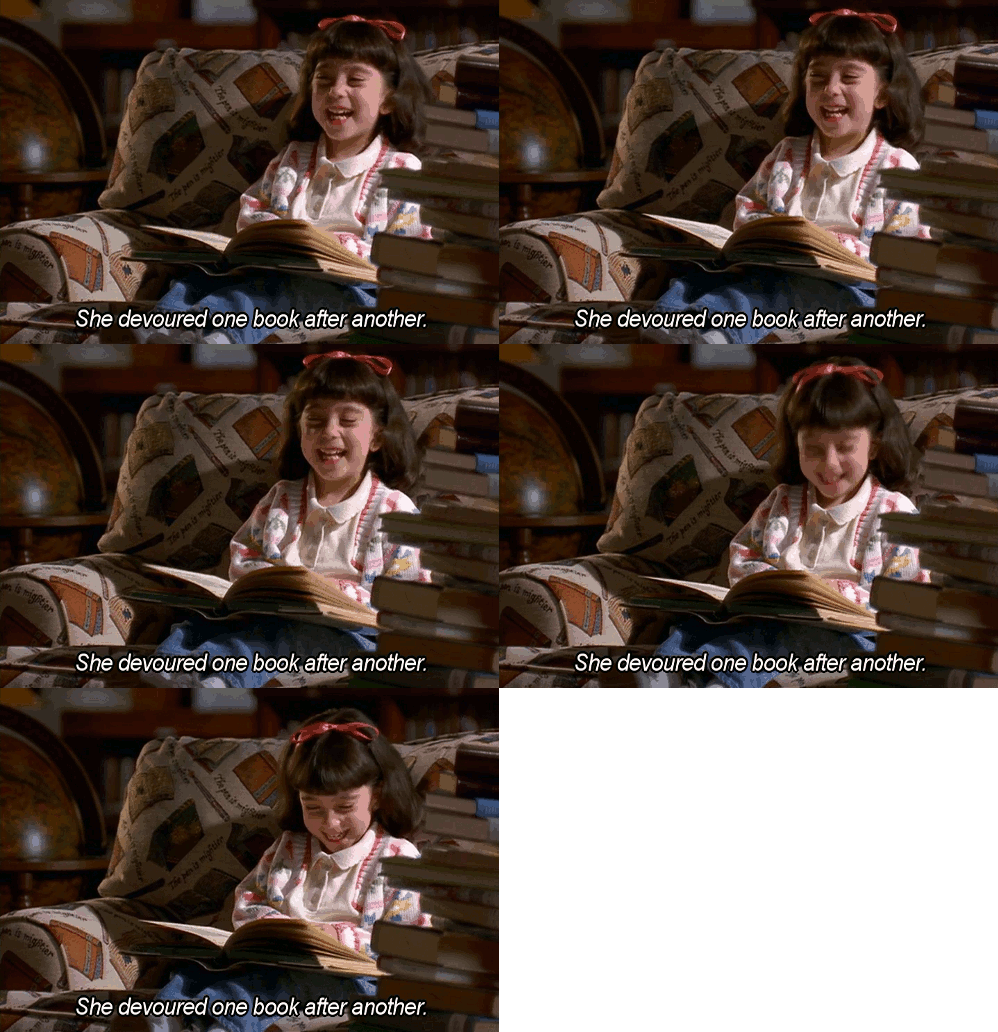
This was definitely not my first choice for Writer’s Quote Wednesday but it carries with it a memory that I found exciting to share. Matilda was one of my favorite movies when I was a kid and I loved most that Matilda loved to read like I did. She was a magical kid with supernatural abilities but reading seemed to me to be her most powerful ability; it seemed to me her foundation. It didn’t just give her knowledge but it opened her mind.

1-Matilda-quotes

Of course, Matilda is a fictional character, but reading this quote brought me back to that innocence of childhood while simultaneously becoming inspirational writing advice. That is: you never know who your writing helps. The people who silently depend on the comfort of your words, hanging onto them like little pieces of salvation scribbled in ink. A breath of fresh air to whatever stifled reality they may find themselves in. Matilda was all alone in the emotional sense of not having a family who loved her but her mind was nurtured by the words of all those authors who knew nothing of it. Sometimes we are saviors to readers we will never know exist. If that ain’t inspiration, I don’t know what is.

About The Author:

roald-dahl_1452844c

Roald Dahl is a children’s author who wrote many of the most famous children’s books turned movies of our childhood (well, some of our childhoods. I was born in ’87 so the 90s was kinda my time lol): Matilda, Charlie and the Chocolate Factory, and James and the Giant Peach to name a few. Dahl wrote his first story for children, The Gremlins, in 1942, for Walt Disney but it wasn’t very successful at the time. It wasn’t until 1961 that Dahl first established himself as a children’s book writer with the publication of James and the Giant Peach which was adopted into a movie in 1996. Three years later (’64) Dahl published Charlie and the Chocolate Factory which was also made into a popular movie. A film adaptation of Charlie and the Chocolate Factory was released as Willy Wonka and the Chocolate Factory in 1971.

In addition to James and the Giant Peach and Charlie and the Chocolate Factory, Dahl’s most popular kids’ books include Fantastic Fox (1970), and Matilda (1988).

************************

And that’s it for this week’s installment of Writer’s Quote Wednesday. Don’t forget to click the pic and join the fun….you know you want to!

writers-quote-wednesday

An Easy Way to Prepare Your Book’s Table of Contents for E-Book

sample e-book properly formatted (not just converted!)


One of the most challenging aspects of Self-Publishing for me, in the beginning, was preparing my book for e-book conversion for proper viewing as an e-book on electronic devices. Of course, formatting and conversion slightly differ (anyone can use the method I am about to show to make ePub and Mobi files, but unless you format the underlying HTML and CSS properly, the result will not look as professional as we all intend as authors like the image above. Often there will be blank lines between paragraphs, no indentations, no TOC (table of contents), links that don’t function, and everything left aligned including headings that were meant to be centered hence, the difference between conversion and actual formatting…. but that’s another post for another day).

So anyway, as I ventured on this Self-Publishing endeavor, I was practically pulling my locs out trying to prepare my manuscript to be accepted by retailers for electronic devices. As we are familiar, manuscripts that are prepared for an e-book has to be done in a way where the electronic device can easily navigate the book. The electronic device easily accomplishes this by utilizing the navigation functions built into an EPUB file to move around the e-book. This is done by properly creating a Table of Contents section or in technical terms, a Navigation Control File. Basically, because your device is not going to be printed like in the old days, it needs guidance on how to move around. Your Kindle or Mobile phone needs to know where each section begins and ends. It does this by looking for Header Styles in your document. While you can either pay someone else to do this or let your POD (Print on Demand) service do it for you, an easy way to learn to do it yourself is to format your manuscript using Heading Styles. Heading Styles are at the top of your Word Document and looks something like this:

styles MS Word

So Below I’ve listed how each section should be properly headed using these Heading Styles to create the TOC. To make this simple, I am only going to assume your book has a few main levels: Title Page, Copyright, Chapter, Sub-chapter, Preface, Body, Epilogue, and Sections:

1. Apply Heading 1 style to the Title and to each line containing a Section name (copyright, prologue, etc.) or section (Part 1, Section II, etc.). Heading 1 style will always appear at the top of the next page.

2. Apply Heading 2 style to each line containing a Chapter name or number

3. Apply Heading 3 style to each line containing a sub-chapter / subtitle or subsection.

That’s it! Pretty simple huh? I know most of you already know how to do this, but you never know who else may be pulling their hair out :). In most cases, your POD distributor will not reject your manuscript if you use this format.

(Don’t use additional Heading styles (Heading 4, Heading 5) to denote chapter or section breaks, as these will not generate most TOC *Table of Contents* entries. Most readers will not be able to navigate to these chapters resulting in retail distribution partners, such as Amazon Kindle and B&N, to reject your e-book).

Self-Publishing: The Workflow

Banner_Fiction

You are not just a writer. You are not just an author. You do not have the privilege of having an agent or big publishing company to stand behind you. You cannot write a book, sit back and then watch things happen because you are not just a writer anymore. You are a publisher. You are a Self-Publisher. You publish your own books. This means you must stop being a writer. You are much more than that. Now that you publish your own books, you must now think like a publisher. You must organize and plan and live as a publisher. You must become a publisher.

“Self-publishing has gained a great deal of popularity over the past few years. Amazon has made it easy to publish our own work through Create Space and Kindle Select. Unfortunately, the fact it is easy to self-publish has resulted in a proliferation of poorly edited novels as well as novels that need a great deal of help with content and structure. Until these issues are addressed, self-publishing will continue to have an unnecessary stigma attached to it. Many authors just entering the arena of self-publishing have no idea where to start – how to find an editor, a cover artist, and formatters.”

– Editor Glenda Poulter of Rainbow Tales Literary Services

I like this quote because the tone is not bashing toward Self-Publishers, at least not to me, it’s just real talk. It’s hard language, but it’s true:  While I don’t think Traditional Publishers or advocates of Traditional Publishing should stigmatize Self-Publishers because of it, I do understand that because it’s pretty much free or extremely cost effective to Self-Publish, it has in many ways brought down the quality of work in some authors who feel that’s all they have to do. Self-Publishing alone does not automatically degrade the quality of work but  rather, the quality of work put in by the author can in fact degrade the business of a Self-Publisher.

1-angry-eye

In certain situations it can benefit us to look closely at how to better use the components of everything we have to achieve a desired effect.  While certain things in our lives require a foundational stance (like morals and values no one should allow another to alter) other things, like Self-Publishing and Traditional Publishing, can both be understood in a way that is helpful to both. It’s a good idea for Traditional Publishers to understand all that goes into establishing oneself as a Self-Publisher, that it is not easy, and that it does add value to the market by having all of these books now available that would have probably never made it had not some undiscovered genius never taken the chance. It’s also a good idea for Self-Publishers to take some ideas from the Traditional Publishing method to help to increase the professionalism of their work as Publishers. Traditional Publishing exist and  Indie Authors should use this as a resource.

For example: You may not have to worry about pleasing a publisher since you are the publisher, but you do want to create a good experience for your readers. After all, this is how you are going to make money. (Side Note: Speaking of making money, there are people out there making money off of your work. There are those writing Self-Publishing Help Books who have probably never Self-Published a book in their life. There are people conducting seminars, creating products, and overall profiting hand over fist because more and more of you are Self-Publishing. They’re making money off of your workflow. Why shouldn’t you? Just a thought, but I digress).

08walmart-pic-articleLarge

A few years ago, I took a brief class on Career Empowerment and received one of the most valuable pieces of advice I could have ever used over the course of my career. It actually saved me from dying of boredom in that class:

“There really is no such thing as not working for someone. Everybody works for someone. A beauty salon owner depends on customers to come in to pay the rent on the building {mortgage or taxes}. She must pay for the electricity, the repairs etc. Everything about her business depends on customers coming in to get their hair done.”

I found this piece of information profound because I had never thought about it in this way.  When someone studies for an exam, they are not studying for themselves in the sense that they pick up a book and instantly understand what is being said. They first need to be taught by an instructor, they then take notes, and then they study those notes without having to be told, thus, they study on their own. The same applies to writing.  Sure, I can be my own boss and set my own hours, but there really is no such thing as an Entrepreneur in the sense that we make money all on our own.We do not make money on our own. What we do on our own that makes us Entrepreneurs is that we put in work. A Wal-Mart employee ultimately works for the owner, but as the owner, we work for ourselves. We put forth the work necessary to convince the public that our product is important enough to invest in. As a result, we get to set the terms and conditions necessary for the company to grow. That’s what we do. We put in work. We build.

Desk2Destiny-Self-Publishing-TheBookCompany-services

As I mentioned in a previous article: 4 Common Sense ways it will benefit you to Self-Publish”, Indie Authors actually put in more work than those who choose to publish traditionally. The reason is pretty much attributed to common sense: They must do everything themselves. For this reason, there are many Indie Authors who may not start off as educated about the book making process. They can be great writers, but they may not understand that the publishing industry is a little different than other businesses: there is a lot to learn. Without the power of a publisher behind us, indie authors are forced to become much more than just writers. We have to become business men and women. We need to have great communications and marketing skills and we have to be relentless in our quest to get our books seen. Indie authors have to do it all. There is no outside help. Sure we can hire an editor, but that comes at our own expense. We have to develop, or at least hire someone to develop, a quality cover; another expense that a traditional publisher would normally cover. Indie authors have to treat every day like a business day. They need both pre-publishing and post publishing plans, goals, and quality material that never wavers. All of this requires a lot of work and investment financially in order to be successful.

enhanced-buzz-wide-31169-1446560988-11

While success can be defined differently to each person, every Indie Author, or Self-Publisher has the opportunity to produce quality material, but they also have an opportunity to become much more than writers if they are willing to learn something from both the Self-Publishing AND the traditional publishing process. Self-Publishers are publishers after all, and if we continue to put forth both the time and monetary investment necessary to be successful, we can quickly tear down the negative connotations associated with this industry.

And it all starts with that workflow. So let’s keep it moving. It’ll eventually pay off. Hard work always does.


Yecheilyah Ysrayl is the YA, Historical Fiction author of The Stella Trilogy. She is currently working on her next book series “The Nora White Story” about a young black woman writer who dreams of taking part in The Harlem Renaissance movement and her parents struggle to accept their traumatic past in the Jim Crow south. “Renaissance: The Nora White Story (Book One)” is due for release spring, 2017. For updates on this project, sneak peek of chapters and the pending book cover release for this project, be sure to follow this blog and to subscribe to Yecheilyah’s email list HERE.

Writer’s Quote Wednesday – Maya Angelou

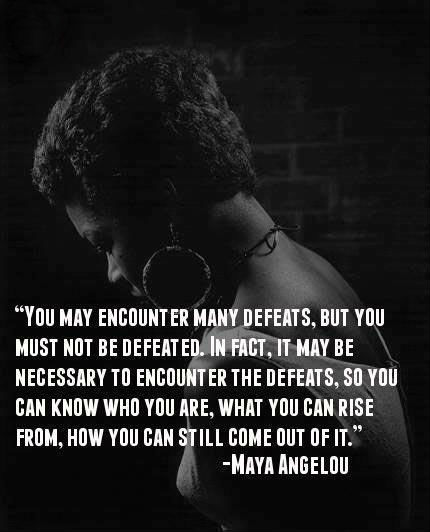
Welcome back to another episode of Writer’s Quote Wednesday on The PBS Blog as Hosted by Colleen of Silver Threading. This week, I take inspiration from Maya Angelou:

You-may-encounter-many-defeats

I still remember when I told my English teacher I wanted to be a writer in High School. Instantly her eyes blushed the same color of worry my mother’s does when she knows I want to do something that is near impossible. As nice as she could put it, she explained that I may want to get an additional job, you know, just in case. Little did she know however that I’d wanted to write books since elementary school, and nothing she said was going to change that. She’d explained how difficult it is for writers and I even had a glimpse of them portrayed in movies. Always the same story: a struggling writer who can’t make ends meet because no one buys his books.

Any author understands how extreme the challenges can be. It seems that if you wish to take on writing and publishing, then you must also wish to take on defeat and failure. But when I read this quote, I am reminded that many of the struggles we endure are necessary to erect a kind of strength, a gift, or a power that we didn’t know existed inside of us at all. If I had not gone through what I have in my life, I would never be as effective in overcoming similar stumbling blocks headed my way. But these struggles do more than strengthen the individual, they strengthen others. None of the education in the world can compare to experience. When you’ve been between a rock and a hard place you can encourage and inspire others with your testimony, same as Angelou has just inspired us here. So, like her, I’d advise this Writer’s Quote Wednesday:

When you encounter many struggles in your writing endeavors, understand that it may be necessary for you to encounter them so that you can find your voice and become stronger at what you do. No hardship seems pleasant at the time, but know that in the end it is for your benefit.

**************************

writers-quote-wednesday

Don’t Forget to check out Silver Threading to see how you can join the fun and support other Writer’s Quote Bloggers. Trust me, they’re awesome. You know what to do :).

Memoir Sample – The Aid Office

pic2_robert_taylor_high_rise

Our family survived off welfare and from that end I know it to be helpful. It was however, a possessive lover. In Robert Taylor, no one’s father was present since their mother’s couldn’t receive welfare with them. But not that men weren’t present; their existence was obvious since the projects themselves overflowed with innocence. Thousands of children the byproduct of casual sex, and drive by love pieced together somehow between the cracks of the doors left open by the ladies from the welfare office, who searched everywhere but the crack of your buttocks to ensure it wasn’t present. So the men were around, fathers of children who knew them as nothing more than the Ray Ray’s and Big Mikes of the block. Men who sort of hung out on the corners or underneath the beds of open women, too filled with desire and dreams to deny a no-good-man a place between her legs. So the kids kept coming, the men kept leaving, and the welfare office remained packed. And if it, the Welfare, sensed anything positive had taken place, even if it was a new hairstyle, they needed to know from where the money had come, how much was it and how often was it around so they may deduct that amount from the meager rations they were already giving out. It didn’t matter if it was a jar of peanut butter or a new hat, if it was expected to come from an additional money source, it would be calculated and deducted from the monthly government assistance.

If she was found to have a man living with her, whether he worked or not, she could lose her money altogether. Not only was my father not around, but my Uncle had to make a covenant with the closet when the social worker came by. You see, a man’s  presence was a threat to the relationship between a woman and her government. Thus the poor were required to remain so in the buildings if they desired to receive the little nothings they were receiving from Welfare. If they showed any sense of pride that required a level of discretion at what we commonly referred to as, “The Aid-Office”, it was as if the clerk had been instructed to repeat their business louder than the person obviously desired over the intercom so that the entire room could hear it; this made it extremely embarrassing to visit the office.

1280px-BLACK_RESIDENTS_ON_ONE_OF_THE_BALCONIES_OF_THE_ROBERT_TAYLOR_HOMES,_A_LOW_INCOME_HIGHRISE_APARTMENT_BUILDING_IN..._-_NARA_-_556175

If by any chance the women wanted a divorce by acquiring some fancy job, the government made sure to snatch away all its benefits so that she is better off to remain part of the relationship than to do away with it. What use is a “good job” when she can’t afford to pay the rent if it increases because of her salary? Or what use is a “good job” when she can no longer receive Medicaid for children who are constantly bleeding from the violence of their environment? This is a place where children used garbage dumps as a playground. What use is it, of a “good job”, when she can no longer receive food stamps as a means to feed her children? It is thus better for her to stay married, financially, to the system than to get a “good job” that leaves her just over broke and in the same situation as she started out as. Marriage? Out the question, she can lose her benefits by daring to marry her children’s father—she wasn’t allowed to have one in the home, let alone marry him. Needless to say, the system divided more than it brought together, and was quite jealous and possessive of its lover, the Black Woman.

– Concrete Children: Life Inside the Robert Taylor Projects

********

I would like to publish a memoir one day. While I am still  in the infancy stages of understanding memoir writing, I have taken to writing down bits and pieces of my life story and publishing excerpts to this blog for practice.