A Historical Moment: Meeting Michelle

Michelle Petties

I am no longer surprised to find purpose in the people I meet. I am being guided to certain people for a reason. When I complimented Michelle on her Afro at the She Wins Conference last year, I had no idea she had such a rich backstory. When I did a video about the real Great Debaters, I didn’t know Michelle had also attended Wiley College!

Here are some fun facts I learned from her essay: “GROWING UP ON THE ‘COLORED’ SIDE OF THE BORDER:

  • Meet Michelle Petties, whose grandmother and aunt attended Wiley College, a historically Black college depicted in the 2007 film The Great Debaters, starring Denzel Washington. If you follow me on TikTok, I made a video about the real debaters that you can find under my Must Watch playlist. Michelle also attended Wiley in 1974.
Photo Credit: Michelle Petties | The author’s childhood home at 1208 E. Travis St., formerly known as Border Street.
  • Michelle was born and raised in Marshall, Texas, on Border Street (now Travis St), which served as a literal line of separation between the Black community situated south of the street and the white one on the north.
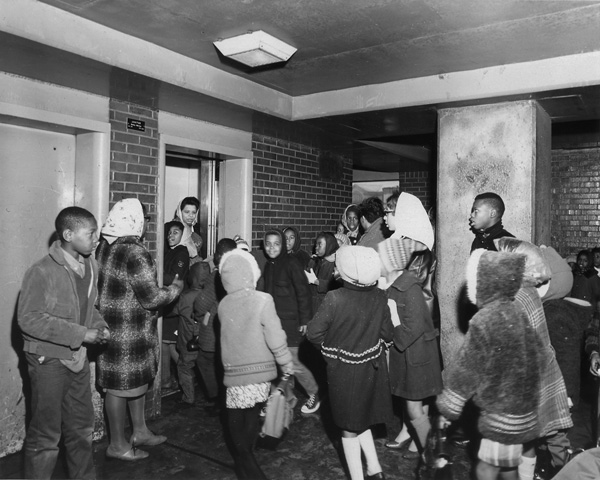
Photo Credit: Michelle Petties | The author (third from right, second row) at Sam Houston Elementary School in 1965.
  • In the fall of 1965, Michelle became one of the first Black students to integrate Sam Houston Elementary School.
  • A library worker denied her entrance because she was not a “mammal.” “If that sounds strange to you,” said Michelle, “imagine how it sounded to a young Black girl growing up at a time when segregation was still very much a part of the culture.”
Photo Credit: Michelle Petties | George Foreman, perhaps Marshall, Texas’s most famous son, meets President Lyndon B. Johnson in 1968. LBJ’s wife, Lady Bird Johnson, was born on a former plantation in Karnack, Texas, which is considered the Greater Marshall area.
  • She used to play with George Foreman as a child.

You Can Read Michelle’s Full Essay Here!

Why Self-Publishing Poetry is Different From Other Books

Publishing a poetry collection differs from publishing a novel or nonfiction book. One main reason is the editing; poets must pay special attention to this.

When looking for an editor for our poetry collections, we must ensure they know how poems work. Some poems, for example, are not intended to be grammatically correct. They might include lowercase letters where they would not normally be and play with conventions of spelling, layout, and typography.

An editor of poetry must be a critical reader and familiar with current trends in poetry publication. They must work closely with the poet to understand what is deliberate and what is not. A good editor will point out grammatical errors and ask if they are intentional—frequently, they will be, but it is a good editor’s job to ask.

Poetry editors must be willing to respect the intention of the poet. They must exercise restraint in those areas where they think a piece should be corrected when the poet did not intend it to be. It is also helpful to know whether the poem respects the conventions of the form or deviates deliberately. For instance, if there is a misstep in the rhyme scheme, it should be flagged in case the poet wants to adjust it.

In short, authors who self-publish poetry must find editors who are knowledgeable about how poems work. It would be even better if the editor were also a poet.

If you enjoyed this post, check out our archive on Indie Author Basics, designed to guide you to self-publish your books with excellence.

Stay Warm, Good People!

Yecheilyah’s 7th Annual Poetry Contest Spotlight: Trevita Johnson

Today, we are kicking off our spotlight series of the winners of our 2024 poetry contest!

First up is our first place winner, Trevita Johnson!

I have known Trevita for years but did not know she was a poet! Her poem “Her Journey to Joy” inspired and spoke to our hearts. It stayed true to the theme and was easy to understand and digest.

You’ll hear her recite it live this afternoon (1/21/2025, 11:30a) on Instagram Live! You will also read her piece, but details will be provided later. We’ve got something special up our sleeves for that!

About Mrs. Johnson:

Trevita Johnson lives in North Carolina with her husband of almost 24 years, Austaniel Johnson. They have three young men, ages 25, 21, and 19. Johnson graduated from East Carolina University and is a former middle school math and science teacher of fifteen years. She has traveled along her creative path for several years, starting her UrNaturalLocs brand by doing natural hair, locs, and braids. She started creating and selling natural hair clothing, expanding her brand name to UrNaturalLocsGear.

UrNaturalSkinTreatz

Trevita currently sells homemade soaps, sugar scrubs, head-to-toe body wash, and body butter online through her Etsy shop, UrNaturalSkinTreatz. She has been creating skincare under the name KardaYah’s Kreations since 2017 but rebranded in 2020 as UrNaturalSkinTreatz. She uses natural ingredients such as shea butter, coconut, and avocado oil to create healthy skincare.

Trevita enjoys journaling, reading, listening to audiobooks, traveling, and spending time with her grandbaby.

IG/TikTok: UrNaturalSkinTreatz

FB-Trevita Johnson

Website: urnaturalskintreatz.etsy.com


Stay glued for details on Yecheilyah’s 8th Annual Poetry Contest 2025, including this year’s theme!

Yecheilyah’s 7th Annual Poetry Contest Winners, 2024

Yecheilyah’s 6th Annual Poetry Contest Winners, 2023

Yecheilyah’s 5th Annual Poetry Contest Winners, 2022

Yecheilyah’s 4th Annual Poetry Contest Winners, 2021

Yecheilyah’s 3rd Annual Poetry Contest Winners, 2019

Yecheilyah’s 2nd Annual Poetry Contest Winners, 2018

Yecheilyah’s 1st Annual Poetry Contest Winners, 2017

Yecheilyah’s 7th Annual Poetry Contest: Finalists Revealed

Introducing Our 2024 Poetry Contest Finalists and Prize Package Winners!

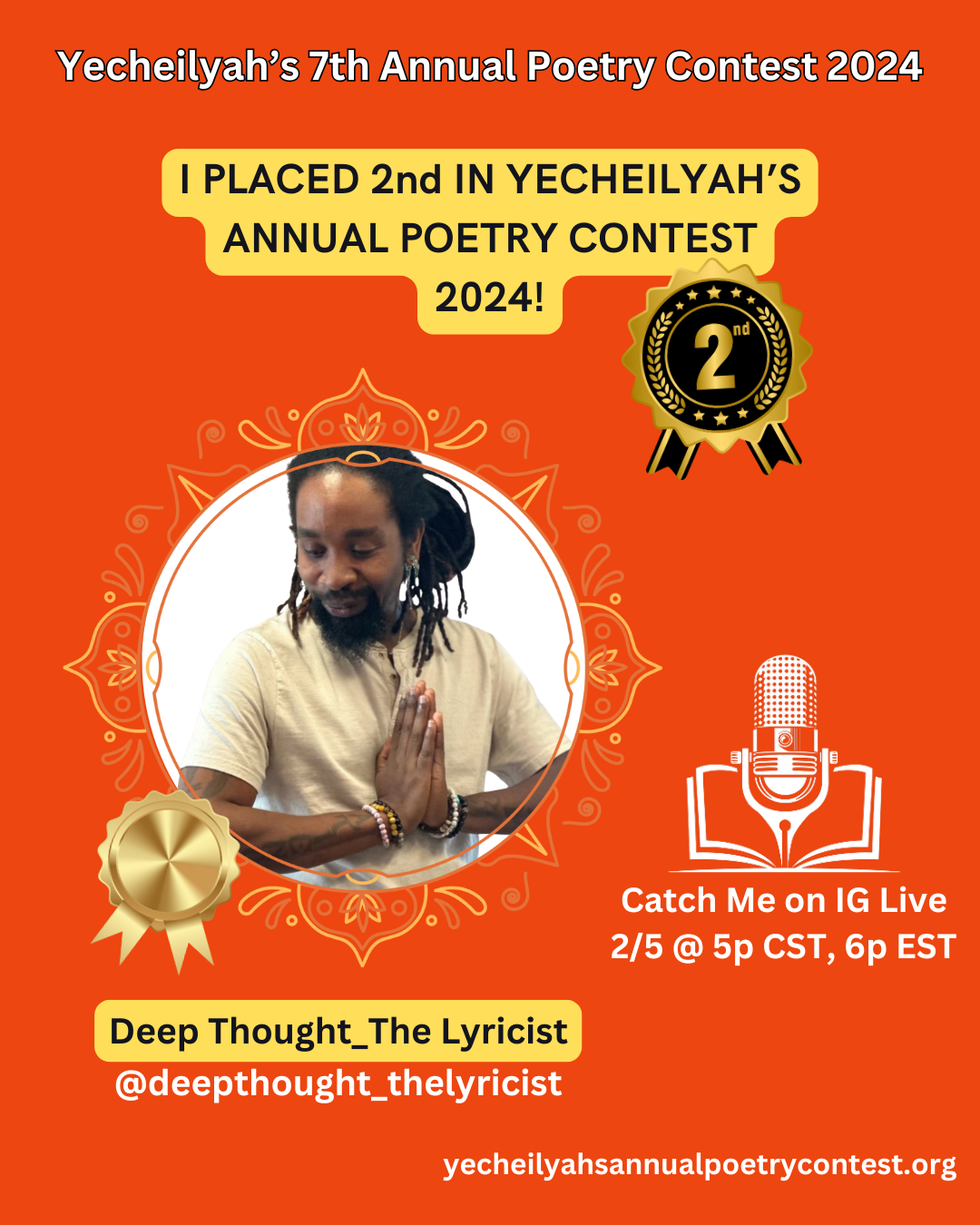
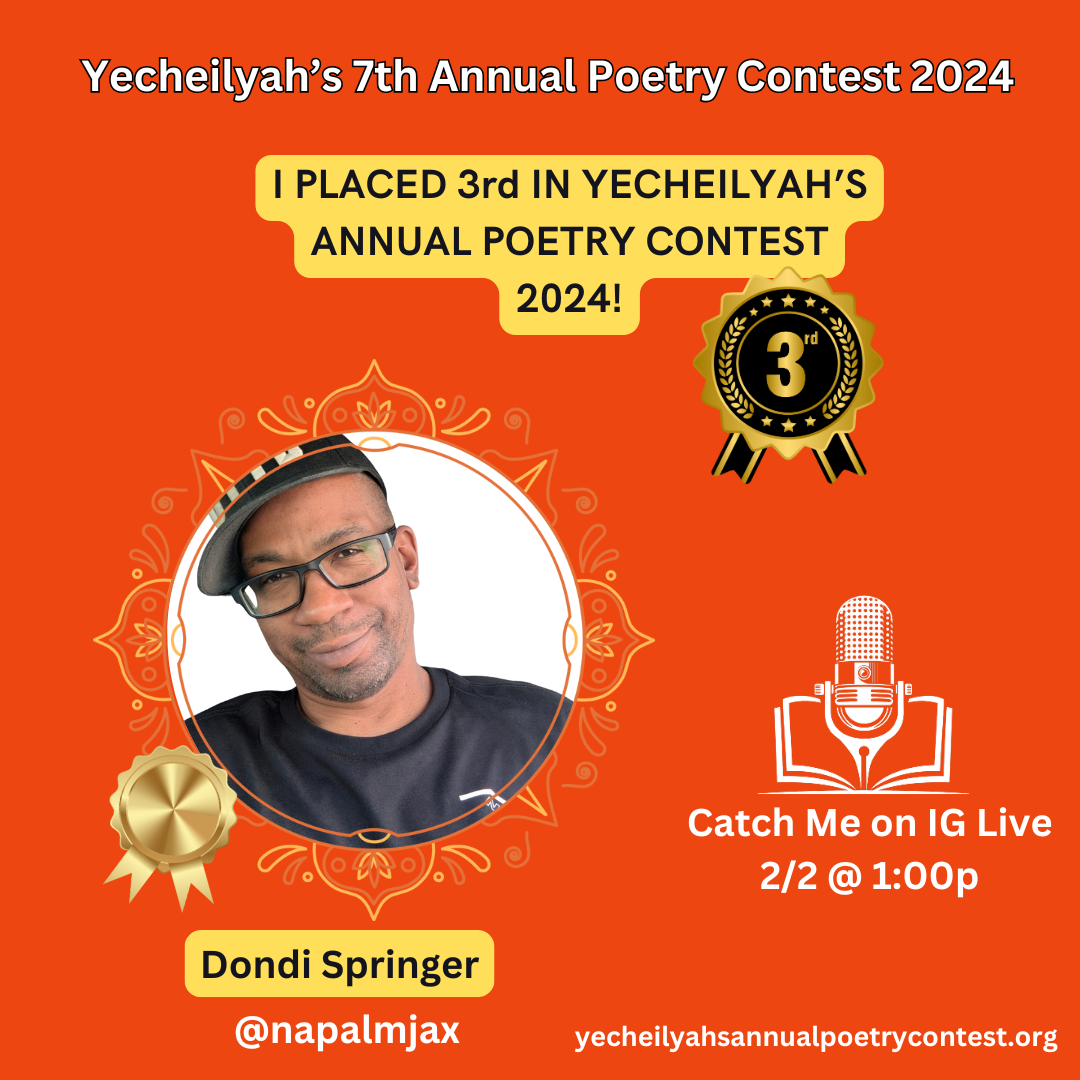
I am so incredibly proud of this year’s winners! Please help me congratulate these fantastic poets, who are now winners of Yecheilyah’s Annual Poetry Contest, Season 7!

Her Journey to Joy
by Trevita Johnson

Hope Moon, Joyful Skies
by Arsenio M. Sorrell, aka Deep Thought the Lyricist

Echoes of Joy
by D.A. Springer

Winners, please look out for an email in the next 24-48 hours with details on how to secure your prized package and the next steps for your interviews.

Each of these poets will receive an individual spotlight on the blog and an interview feature. We are eager for you to hear their winning poems and the inspiration behind their pieces.

Please head over to Instagram and show them some love. The post will go live on my page shortly. View and follow @yecheilyah.

Cool Fun Fact: When we announced the semi-finalists, I didn’t know who the three winners would be. At least not consciously. It wasn’t until we went over the poems with a fine-toothed comb and arranged them that I realized I had placed the winning poets in almost the exact order of the poems we loved most!

Stay glued for details on Yecheilyah’s 8th Annual Poetry Contest 2025 including this year’s theme!

Yecheilyah’s 7th Annual Poetry Contest Winners, 2024

Yecheilyah’s 6th Annual Poetry Contest Winners, 2023

Yecheilyah’s 5th Annual Poetry Contest Winners, 2022

Yecheilyah’s 4th Annual Poetry Contest Winners, 2021

Yecheilyah’s 3rd Annual Poetry Contest Winners, 2019

Yecheilyah’s 2nd Annual Poetry Contest Winners, 2018

Yecheilyah’s 1st Annual Poetry Contest Winners, 2017

Notice the Breadcrumbs: A Reflection Activity

I’ve been writing poetry since I was twelve years old, but it wasn’t until I joined the UMOJA Spoken Word group in High School that I truly understood it and how to fuse the words on the page with my voice to bring them to life.

At the time, I didn’t know much about Kwanzaa or its meaning, let alone that UMOJA was the first principle. Lasting for seven days, Kwanzaa was initiated by Dr. Maulana Karenga in 1966, with each day representing a practice. Umoja, the first principle of the Nguzo Saba, focuses on unity on the first day, December 26th. According to Karenga, “during Kwanzaa, we practice the candle lighting ritual called ‘lifting up the light that lasts,’ based not only on the history of our people in practice but also on the sacred teachings of our ancestors.”1

Although I don’t celebrate holidays today, 2 I appreciate the breadcrumbs sprinkled throughout my life that helped me to later identify my purpose, which will always go back to restoring the forgotten heritage to the forgotten people. As one who does not believe in coincidences, I think it’s important, maybe even wise, to notice those tiny steppingstones throughout our lives that molded or mold us into the people we are today.

An example of breadcrumbs could be me joining the Umoja poetry group, meeting my husband in an African American studies class, and marrying him in February, Black History Month. We did not intend to do this as we did not have a wedding. We mutually decided to elope on what we thought was a random day during a random month.

I now know nothing is random. I do not believe that things just happen.

As we prepare to end another year and embrace a new one,3 I challenge you to think more deeply about the things that have happened in your past and that happen now and see if you can make connections between them and your purpose. Consider that there is more to those coincidences and Deja Vu moments we’ve been taught to toss to the wind. This is not only a fun reflection activity, but it can also be helpful for those who do not yet know their purpose or mission.

It takes a deep spiritual maturity to appreciate things we’ve experienced and see their connection to who we are now without condemnation of that thing or ourselves. Sure, you know what you know, but you didn’t always have that understanding. Once upon a time, you needed to be guided to where you are today. Those are the breadcrumbs.

Ten, twenty, maybe even thirty years from now, we will see hints given to us today that helped guide us to wherever we are in the future.

And in the future, we will smile and nod in recognition of those stepping stones we were too preoccupied with life to notice but that led us to where we are.


  1. “Celebrating Kwanzaa in Difficult and Demanding Times: Lifting Up the Light that Lasts.” Dr. Maulana Karenga. Los Angeles Sentinel, 12-26-24. ↩︎
  2. I appreciate and respect Kwanzaa for what it is, but I don’t participate in its associated rituals. ↩︎
  3. For the extra-woke people out there, yes, I know a new year technically does not begin in the dead of winter but in spring. However, we will still measure the time based on the Gregorian calendar’s two thousand and twenty-fifth year. You still have to report back to work, and your children will still return to school in January something 2025. Thus, I will use the measurement of time most familiar with today for clarity. Let’s not be Pharisees about this. ↩︎

Yecheilyah’s 7th Annual Poetry Contest: Semi-Finalists

There was not a single poem I did not personally enjoy.

Everyone contributed something distinct while also teaching us something.

The variety and ingenuity, from visual to audio, were incredible. I appreciate how everyone put their best foot forward. I thank you for participating and sharing your heart with us!

Without further delay, the poets who have made it into the semi-finals and will go on for a chance to win the cash prizes are as follows (in no particular order):

Her Journey to Joy
by Trevita Johnson

Hope Moon, Joyful Skies
by Arsenio M. Sorrell, aka Deep Thought the Lyricist

Joy in the Morning
by Lilanie, aka Kerece Williams

Echoes of Joy
by D.A. Springer

Parable of the Daughter
by Chérie J. Grant

Only three of these five will advance to the finals! That’s right. You are looking at your winners and don’t know it. And nope, they are not in order of placement for all you smart people, tee hee.

The ultimate announcement will be made on Thursday, January 2, 2025! Which of these dope poets made it to the top 3? Stick around and find out!

We pushed it back a day in case some of you return from travel.

As with each year, you can read the winning poems on this blog. We are also interviewing them live, so you don’t want to miss that!

In the meantime, please show these poets some love when you see the post, which goes live on my page shortly. View and follow @yecheilyah.

Be Sure to Visit Us on the Web and Stick Around for Details on Next Year’s Contest Theme and Dates!

Yecheilyah’s 1st Annual Poetry Contest Winners, 2017

Yecheilyah’s 2nd Annual Poetry Contest Winners, 2018

Yecheilyah’s 3rd Annual Poetry Contest Winners, 2019

Yecheilyah’s 4th Annual Poetry Contest Winners, 2021

Yecheilyah’s 5th Annual Poetry Contest Winners, 2022

Yecheilyah’s 6th Annual Poetry Contest Winners, 2023

Always There Are the Children

Something devastating is happening, a bone-chilling, frightening thing.

The children are dying.

In this year alone, I have learned of the deaths of four young people, three of them children under 25 years old. All of them were from people I know; they were firstborns, the first fruits of their mother’s wombs.

It has made me reflect deeply on how we foster future generations while remembering old ones. As a history buff, I understand how easy it is to dwell on the past. However, I’ve realized that the past, present, and future are inextricably linked; if we ignore one, we disregard the others.

I had the fortunate opportunity to speak with my husband’s great-aunts this past weekend as we mourned the death of their sister, our grandmother. They are all in their 70s and 80s, so I asked them what advice they have for the next generation. Almost everyone said to listen to the elderly. Essentially, you should obey your mother and father. Today, many may refer to this as honoring the ancestors. Whatever phrase you use, the broad consensus is to listen to those who came before you.

Growing up on a farm, where they grew and raised everything they ate, I got the impression they weren’t just saying this because they were elders but that it was a genuine conviction in which they truly believed.

Growing up, many of us heard the warning: “Honor your mother and father so your days are prolonged on the earth.”

I think about the depth of this as I watch the children perish.

One of my favorite poems from Nikki Giovanni is “Always There Are the Children.”

For me, it is a reminder that we do not live forever in these bodies. We will pass on one day, but there will always be children. What we pour into them while we live determines whether there will be more Nikki Giovannis and Maya Angelous.

Unfortunately, we live in a world obsessed with two things: appreciating people only once they’ve passed and only once they have become great. Rarely do we recognize the process and honor the in-between spaces. Seldom do we honor the becoming.

This robs the children.

And the children are not just minors in small bodies; we are the children, too. We are also daughters and sons, and I hope that we learn to nourish ourselves in the same way that those who came before us were nursed, and that we do so early on, rather than waiting until we are thought to have made it, because we are born worthy.

“We prepare the way with the solid
nourishment of self-actualization
we implore all the young to prepare for the young
because always there will be children.”

-Nikki Giovanni