
 Good evening there loves. Yall miss me? No? Ok, whatever, I’m back.
Tonight’s Black History Fun Fact Friday is Women Poets. In honor of the release of my third poetry book collection on 3.31.15, we’re going to look at some of the black women poets who inspire me and have made such an impact on the world of literature in general.
Phillis Wheatley

I would like to present first Philips Wheatley because as I embark on publishing my third collection of poetry, I cannot help but wonder what it must have been like for her to be the first. Phillis Wheatley was the first black poet in America to publish a book. She was born on May 8, 1753 in West Africa and brought to New England in 1761, where John Wheatley of Boston purchased her as a gift for his wife. Like many of her time, Phillis was taught to read by her owners and could read and write English by the age of nine.
Many people are under the impression that slaves were of pure ignorance; that they muttered broken English because they were imbecile. This is not truth. Slaves were only ignorant so far as the English language is concerned, at which they could not read, write, and could barely speak. They were strangers in a foreign land and introduced to ways to which neither they nor their fathers had known. Put me in the middle of a street in China and see how dumb I will be.
Nonetheless, Wheatley also became familiar with Latin, Greek, the Bible, and selected classics at an early age. She began writing poetry at thirteen (around the same time I started writing), modeling her work on the English poets of the time, particularly John Milton, Thomas Gray, and Alexander Pope. Her poem “On the Death of the Rev. Mr. George Whitefield” was published as a broadside in cities such as Boston, New York, and Philadelphia and garnered Wheatley national acclaim. This poem was also printed in London.
Anne Spencer
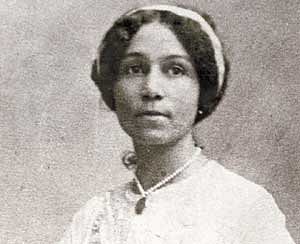
Anne has too many names for me to keep up with so we’ll stick with Anne Spencer. Anne was born in Virginia in 1882. She was the daughter of a former slave and her mother enrolled her in school for the first time when she was eleven years old. She graduated seven years later as valedictorian. Known as a “Harlem Renaissance Poet”, Anne was good friends with many Harlem Renaissance writers, including James Weldon Johnson, Langston Hughes, and W.E.B. Du Bois. Spencer’s poetry engages themes of religion, race, and the natural world. Thirty of her poems were published during her lifetime, in such anthologies as The Book of American Negro Poetry (1922) and Caroling Dusk (1927) and was the first African American woman poet to be featured in the Norton Anthology of Modern Poetry (1973).
Gwendolyn Brooks
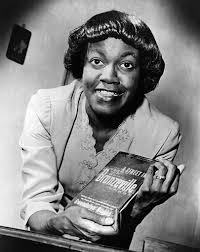
For some reason, whenever I say this woman’s name I think of Books. Seems like it should be Gwendolyn Books, but anyway, Brooks and I do actually have something in common: we are both from Chicago. Brooks was born in Topeka, Kansas, but her family moved to Chicago when she was young. Her father was a janitor who had hoped to become a doctor; her mother was a schoolteacher and trained pianist. They were supportive of their daughter’s passion for reading and writing. Brooks was thirteen (again around the same age I was when I began writing) when her first published poem, “Eventide,” appeared in American Childhood; by the time she was seventeen she was publishing poems frequently in the Chicago Defender, a newspaper serving Chicago’s black population. After such formative experiences as attending junior college and working for the NAACP, she developed her craft in poetry workshops and began writing the poems, focusing on urban blacks, that would be published in her first collection, “A Street in Bronzeville”.
Maya Angelou
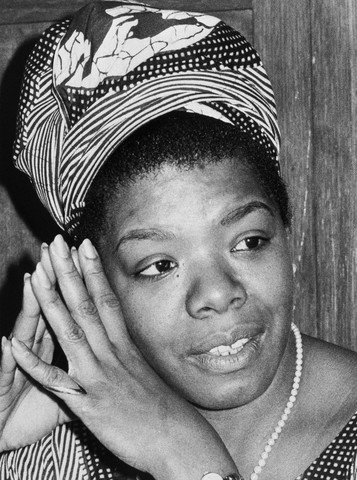
I could probably leave this part blank and many of you would still know who this woman was. The poet and award-winning author known for her acclaimed memoir “I Know Why the Caged Bird Sings” and her numerous poetry and essay collections. Born on April 4, 1928, in St. Louis, Missouri, writer and civil rights activist Maya Angelou is known for her 1969 memoir, I Know Why the Caged Bird Sings, which made literary history as the first nonfiction best-seller by an African-American woman. In 1971, Angelou published the Pulitzer Prize-nominated poetry collection “Just Give Me a Cool Drink of Water ‘Fore I Die”. She later wrote the poem “On the Pulse of Morning“—one of her most famous works—which she recited at Bill Clinton’s inauguration in 1993. Angelou received several honors throughout her career, including two NAACP Image Awards in the outstanding literary work (nonfiction) category, in 2005 and 2009. She died two days after my 27th birthday on May 28, 2014.
Sonia Sanchez
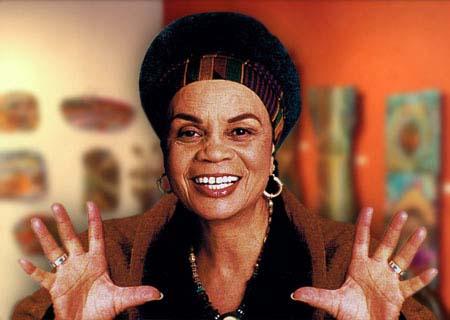
Sonia is another poet whose name rings with such prominence that I could leave her bio blank too and many of you would still know who she is. Born Wilsonia Benita Driver, on September 9, 1934, in Birmingham, Alabama Sanchez lived with her paternal grandmother and other relatives for several years after her mother died in childbirth a year later. In 1943, she moved to Harlem with her sister to live with their father and his third wife. Sonia married and divorced Albert Sanchez, a Puerto Rican immigrant whose surname she kept.
In the 1950s, Sanchez formed a poets’ group, the Broadside Quartet. Sanchez began teaching in the San Francisco area in 1965 and was a pioneer in developing black studies courses at what is now San Francisco State University, where she was an instructor from 1968 to 1969. Sanchez is the author of more than a dozen books of poetry, including “Morning Haiku” (Beacon Press, 2010); “Shake Loose My Skin: New and Selected Poems” (Beacon Press, 1999); “Does your house have lions?” (Beacon Press, 1995), which was nominated for both the NAACP Image and National Book Critics Circle Award; “Homegirls & Handgrenades” (White Pine Press, 1984), which won an American Book Award from the Before Columbus Foundation. From the 1970s through the ’90s, she wrote poetry, plays and kids’ books. She retired from her Laura Carnell chair in English in 1999.
Nikki Giovanni
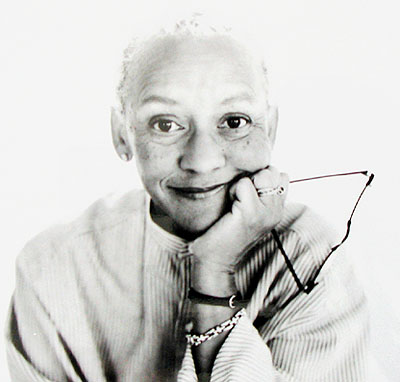
Giovanni’s collections, like the women before her, focused on African American identity. Born Yolanda Cornelia, Nikki Giovanni was born in Knoxville, Tennessee on June 7, 1943 and raised in Cincinnati Ohio, a place I got the chance to visit for our 8th Grade school trip. On July 28, 2000, when I was thirteen years old, I lost my Dad to cancer. In December of 2014, I lost my Aunt to the same disease. In some way or another I can sympathize with Giovanni, who is not only a poet but a Lung Cancer survivor and has contributed an introduction to the anthology Breaking the Silence: Inspirational Stories of Black Cancer Survivors (Hilton Publishing, 2005). Giovanni has been awarded The Langston Hughes award for Distinguished Contributions to Arts and Letters in 1996, as well as more than twenty honorary degrees from national colleges and universities. She has been given keys to more than a dozen cities, including New York, Los Angeles, Dallas, Miami, and New Orleans. She has served as poetry judge for the National Book Awards and was a finalist for a Grammy Award in the category of Spoken Word.
She is currently professor of English and Gloria D. Smith Professor of Black Studies at Virginia Tech, where she has taught since 1987.
Ntozake Shange
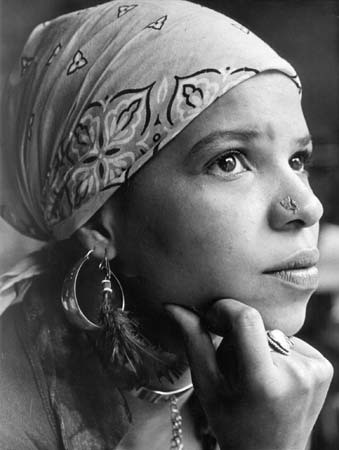
I fell in love with Shange’s poems almost instantly. I really enjoy the raw truth of experience embodied in the words and the style in which they occupy the page is hard to ignore. I like how she allows the words to be written just how they are spoken, how they ignore the “professionalism” of the edit. (though poetry does tend to allow for this kind of freedom).
Born Paulette Williams, Ntozake Shange was born into an upper middle-class African-American family. Her father was an Air Force surgeon and her mother a psychiatric social worker. Cultural icons like Dizzie Gillepsie, Miles Davis and W.E.B. DuBois were regular guests in the Williams home. Shange attended Barnard College and UCLA, earning both a bachelors and master degree in American Studies. But Shange is most famous for her play For Colored Girls Who Have Considered Suicide/When the Rainbow Is Enuf (1975) which is how I was introduced to her. A unique blend of poetry, music, dance and drama called a “choreopoem,” it “took the theater world by storm” said Jacqueline Trescott in the Washington Post, as it “became an electrifying Broadway hit and provoked heated exchanges about the relationships between black men and women…Its form—seven women on the stage dramatizing poetry—was a refreshing slap at the traditional, one-two-three-act structures.” The play uses female dancers to dramatize poems that recall encounters with their classmates, lovers, rapists, and abortionists. The women survive abuse and disappointment and come to recognize in each other the promise of a better future.
June Jordan
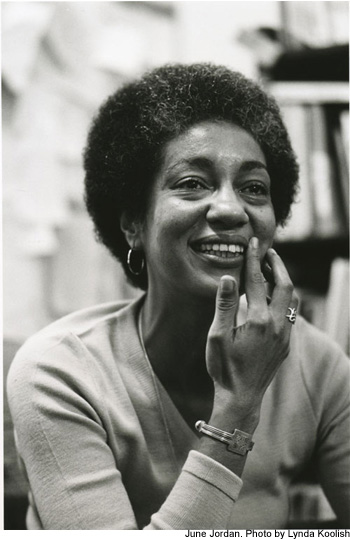
June Jordan is the author of children’s books, plays, a novel, and Poetry for the People: A Blueprint for the Revolution (1995), a guide to writing, teaching and publishing poetry. Her collections of political essays include Affirmative Acts: Political Essays (1998) and Technical Difficulties (1994). Basic Books published her memoir, Soldier: A Poet’s Childhood, in 2000.
Born in New York City on July 9, 1936, June Jordan attended Barnard College. She received the National Association of Black Journalists Award, and fellowships from the Massachusetts Council on the Arts, the National Endowment for the Arts, and the New York Foundation for the Arts.
Her numerous books of poetry include Directed by Desire: The Collected Poems (Copper Canyon Press, 2007), Haruko/Love Poems (1994), Passion (1980), and Things That I Do in the Dark (1977), among many others. She taught at the University of California, Berkeley, where she founded Poetry for the People. June Jordan died of breast cancer on June 14, 2002, in Berkeley, California.
Rita Dove

Rita Dove is the first African-American woman to be named Poet Laureate of the United States, and only the second to win a Pulitzer Prize for poetry (Thomas and Beulah, 1987), Rita Dove has achieved a great deal in her career. Her multi-layered poems dramatize the stories of individuals both living and dead against the backdrop of larger historical forces (I really like “Reverie in Open Air”). Rita was born in Akron, Ohio on August 28, 1952. Her books of poetry include (but are not limited to) Sonata Mulattica (W. W. Norton, 2009); American Smooth (W. W. Norton, 2004); On the Bus with Rosa Parks (W. W. Norton, 1999), which was named a New York Times Notable Book of the Year and was a finalist for the National Book Critics Circle Award. In addition to poetry, Dove has published a book of short stories, Fifth Sunday (University of Kentucky Press, 1985), the novel Through the Ivory Gate (Pantheon, 1992), essays in The Poet’s World and the verse drama The Darker Face of the Earth (Story Line Press, 1994). She also edited The Best American Poetry 2000 and The Penguin Anthology of Twentieth-Century American Poetry (Penguin, 2011).
Dove is Commonwealth Professor of English at the University of Virginia, where she has been teaching since 1989.
********************************************
And that’s it for this week’s episode of Black History Fun Facts. Don’t forget to check out last week’s episode, in case you missed it:












 The PBS Blog