Yecheilyah’s Book Reviews: Take My Hand by Dolen Perkins-Valdez

Title: Take My Hand

Author: Dolen Perkins-Valdez

Publisher: Berkley

Published: April 12, 2022

ASIN: B0998ZCQTK

Pages: 367

I have little time to read for leisure, so it excited me to squeeze in this gem.

Civil Townsend was a nurse at the Family Planning Clinic in Montgomery, Alabama, in 1973. Erica (thirteen) and India (eleven) were assigned to her case. As their nurse, Civil is to administer the Depo-Provera birth control shots.

This shocks Civil as the girls are still very young, have never been sexually active, and little India is not only mute but has yet to start her cycle. 

The Williams sisters are being raised by their father and grandmother, both illiterate, their mom having passed on. Their living conditions in rural Alabama are not fit for any human to live.

Take My Hand is a powerful historical fiction novel that tells the story of the Eugenics Movement that led to the involuntary sterilization of Black women in the twentieth century. This sterilization continued in many states until as late as the 1970s.

Eugenics, from the Greek word eugenes, was a term coined by Francis Galton, the cousin of Charles Darwin. It was a racist scientific idea that only those “well-born” or with “good” genes should be allowed to reproduce. This was a fancy way of controlling the Black population, which meant that at the center of eugenicists’ agenda were Black women.

“We don’t allow dogs to breed. We spay them. We neuter them. We try to keep them from having unwanted puppies, and yet these women are literally having litters of children.” 

Barbara Harris, Founder of Children Requiring a Caring Kommunity (CRACK),
C. 1990
Although Erica and India are fictional characters, they represent the many actual women who experienced this form of lynching. In August 1964, the North Carolina Eugenics Board met to decide if a 20-year-old Black woman should be sterilized. 

She was a single mother with one child who lived at the segregated O’Berry Center for African American adults with intellectual disabilities in Goldsboro. According to the North Carolina Eugenics Board, the woman (whose name was redacted from the records) was said to exhibit “aggressive behavior and sexual promiscuity.” She had been orphaned as a child and had a limited education. The board determined she was not capable of rehabilitation.

Take My Hand also mentions The Tuskegee Syphilis Experiment (1932-1972) and the Roe vs. Wade decision (‘73). You can tell by how Valdez brings it out that she fully intends to educate her readers on these events. As the characters are learning, so are we. 

The story opens in 2016 and is told from the perspective of an elderly Civil traveling back to Alabama to visit an adult but sick India. The story goes back and forth between 1973 and 2016.

This is a book about racism, sexism, classism, poverty, and white privilege.

But it is also a story of strength.

Although heartbreaking, I find the book well-written and historically accurate.

Ratings

Plot Movement / Strength: 5/5

Entertainment Factor: 5/5

Characterization: 5/5

Authenticity / Believable: 5/5

Thought Provoking: 5/5

Overall: 5/5
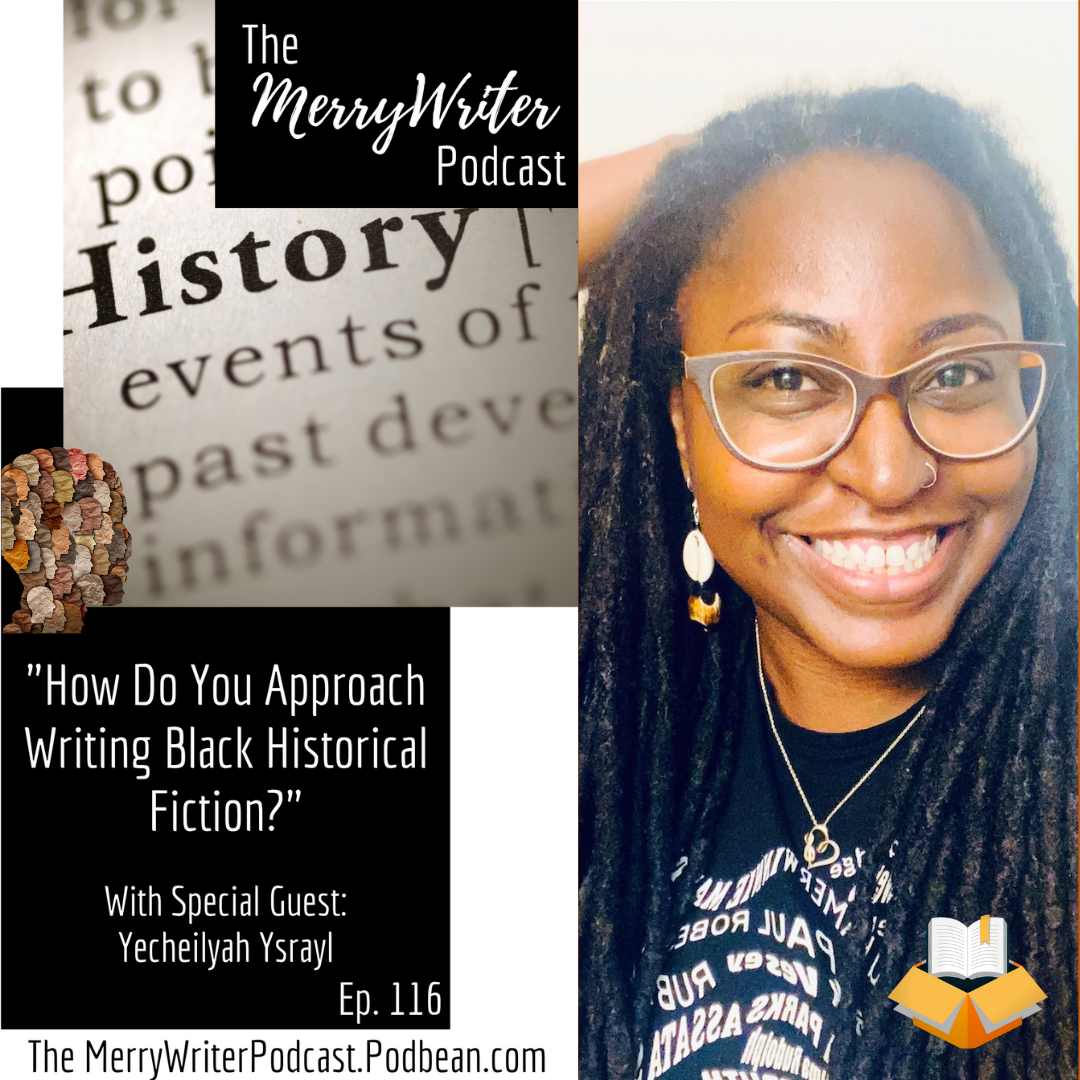
How Do You Approach Writing Black Historical Fiction?|Ep. 116 | The Merry Writer Podcast

I got to sit with Ari Meghlen and Rachel Poli of The Merry Writer Podcast on writing Black Historical Fiction. Check it out at one of the links below.

EPISODE SHOW NOTES

Have you ever tried writing diverse characters and didn’t know where to start? Or maybe you want to dive deeper into historical fiction? This week, author Yecheilyah Ysrayl joins Rachel in discussing how to approach writing black historical fiction with plenty of tips, advice, and fun conversation. As always, thanks for listening, and let us know your thoughts in the comments below!

Pod Link:

https://pod.link/1504502949

YouTube: 

https://youtu.be/Lmufz1WW5l4

Podbean: 

https://themerrywriterpodcast.podbean.com/e/how-do-you-approach-writing-black-historical-fiction-ep-116-the-merry-writer-podcast/?token=04b9284c45a417396afde887ca5a6fcc

And be sure to check out Rachel and Ari’s blogs below!

Rachel:

http://rachelpoliauthor.com/

Ari:

https://arimeghlen.co.uk/

Do You Know Your Somebodiness?

Crazy to think that in just a few short hours, this day will be part of history. As I write this, I think about how easily today becomes a memory. The question is, will it be a day worth remembering? Will I remember a cold day with clear skies and the birds building their nests in the tree outside my bedroom window?

As I sit here wearing my I am Black History sweatshirt and my blackballed fists earrings, I am forced to ask myself what it means. What does it mean to be the embodiment of black history? 

When I think about it, I think about legacy. Those things we leave behind for others to grab onto. We live in a world where a person’s significance is realized the most after death. Something about the absence of their presence forces us to consider the nobility of the lives they lived and what we take from it.

Toni Morrison once said, “the function of freedom is to free someone else.” I think about the responsibility of that, and I resolve that being black history in the flesh means to live my life in such a way that black people feel free. 

Still, I am constantly contemplating what that means in all its fullness. How does a person feel free? What parameters must exist for an individual to feel uncaged? These are not simple questions to answer, yet I think we answer them daily with our actions. I think we answer them with the lives we live.

Alice Walker said “the most common way people give up their power is by thinking they don’t have any.” I supposed this is why Dr. King talked about holding on to your somebodiness, because your somebodiness is your power. Your sense of identity and belonging. Your truth. 

Do you know your somebodiness? Do you know your mother’s name and her mother’s name? Do you know your people? Do you know from what root you sprang? How much time do you spend investigating how to reclaim your own identity? You say you are black history. You wear the shirts, use the hashtags and pump your black fists into the air, but do you know your name? Do you know what was taken from you? Do you know what was not?

Do you know your own somebodiness

Freedom Ring – Part One

Photo by Ron Lach from Pexels

The Train

Louis pulled the olive-drab wool service cap down as far as it could go. Why he was hiding his face, he didn’t know. It was not like anyone could see him. Louis’s heart fluttered. After all these years, even the thought of her made him blush. His excitement was quickly replaced by sorrow. He had not been the best husband. Maybe if he were, she would not have asked for that restraining order, he would not have joined the Army, and the terrible future he knew was coming would not happen.

But Louis was on a mission, so now he couldn’t think about that. Life was funny in that way. Sometimes you don’t realize your purpose until after you have already lived.

The scream of the train’s horn startled him out of his thoughts. The 63rd Street Station in Chicago was lively, with travelers. He looked down at his watch as the train’s horn sounded again. They will be here any minute now.

“Now, where do you think you are going?”

Louis looked up and smiled. That tiny voice and round, golden-brown face always did something to him. Then, she had the nerve to have those sexy glasses on. But Mamie wasn’t talking to him and had not spoken to him in years. No, Mamie Carthan was talking to their son.

Louis stopped thinking about her beauty and rushed over to stand next to them. There was not much time left, and although he knew neither one could see him, the whole situation still made him nervous. Nerves. Was that even a thing anymore? Louis brushed imaginary lint from his wool, four-button olive coat. It was the same coat he had been wearing for ten years now. The same uniform he has worn since he died.

“Come on, ma. I’m gonna be late,” whined the chubby little boy.

Louis smiled. He knew Emmett would be a handful the day they discovered he was a breech baby. That’s why he gave him his name because he knew he’d be hard-headed, just like his father. Emmett Louis Till. Bursting into the world wide-eyed and feet first.

“Yea, but you didn’t kiss me goodbye.”

Emmett smiled and gave Mamie a peck on the cheek.

Give her the watch.

Louis cleared his throat. He hadn’t realized how long it’s been since he had said anything out loud. He looked around at the people walking by. It was strange the way they seemed to look right at him.

Give her the watch. 

He repeated the command as he stared down at his son.

You won’t need it where you are going.

He could see the boy thinking the words over in his head. He knew he thought they were coming from his own mind. Louis had come to learn that sadness was different in the after-world, but if he could, he would shed a tear. He stood watching his son remove the watch he was wearing and give it to his mother, and his heart ached at the future.

“Here,” said Emmett, “take my watch.”

Mamie frowned as she put it on, “Why?”

“I won’t need it where I’m going,” he said, turning his back to his mother and dashing off in the direction of the train where his cousin Wheeler and great Uncle Moses were waiting.

“Bobo, wait! What about your ring?”

Louis turned away from Emmett to look admirably at his ex-wife. She was the one and had always been the one. He thought she was chosen for him to be his wife this entire time. But the truth is she was chosen to be Emmett’s mother.

He pulled himself away from her face. He was running out of time. Emmett had to be on that train.

Show it to the fellas.

Emmett turned around and pulled the ring from his pants pocket, and put it on, rubbing his fingers across his father’s initials. He lifted his head and stared straight ahead, like someone who had just discovered a new world or happened upon a new invention, and flashed a big grin.

“I’m gonna show this to the fellas!”

Mamie laughed and waved her handkerchief.

“Alright then, boy. Go on ahead now.”

Louis watched his son jump on the train and Mamie staring after him. He remembered the day he got the thing made in Europe, just one year since he had been drafted into the Army. But it was not his ring anymore. Soon, the whole African American community would wear that ring. 

No. This was no longer LT’s ring. Now, it was the ring of freedom.

The quietness of the station alarmed him, and Louis looked around in awe of the now dark, empty station. The Master warned him that time moved differently here. He had better get a move on it if he was going to make it to Money in time.

Louis inhaled deeply as his body disintegrated into the wind for his next mission.


After watching ABC’s “Let the World See” about the role of Mamie Till and how she handled Emmett Till’s death, I was happy to see some discussion about Emmett’s father, Louis. Since grade school, I have been studying the Emmett Till story, when I first learned about it, heard many versions of the story, and have seen countless documentaries. My favorite is the one that aired in 2005, “The Untold Story of Emmett Louis Till,” on YouTube. I like it mostly because Mamie Till was still alive and could tell it the way only she could.

But in all the docs, even my favorite one, there was never anything about his father. This had me thinking.

What if we tell both of their stories at the same time? 

Louis Till died at the young age of twenty-three when he was accused of assaulting some Italian women in Europe while serving overseas in the Transportation Corps of the U.S. Army during World War II. He and a friend were found guilty and lynched in 1945. 

What if our story doesn’t end here? 

What if the spirit world informs Louis about his son’s death and its necessity to jump start The Civil Rights Movement? 

And what if it becomes Louis’s responsibility to make sure Emmett wears his ring so that they can identify his body? 

And what if his soul isn’t allowed to rest until he does? 

What if we can tell both stories through the power of the ring that binds them?

Yecheilyah’s Book Reviews – Fields of Grace by Wendy Waters

Title: Fields of Grace
Author: Wendy Waters
Publisher: Wendy Waters
Publication date: October 24, 2019
Genre: Biographical Fiction
Pages: 444
ASIN: B07ZL2FHBG

It is September 23, 2009, and there is a dust storm in Sydney. But, Grace is from a family of pagans, so it is not only a dust storm for them. As the amber glow, which Grace calls the glowing, tangerine-colored fog, blankets the city, Grace Fieldgrill, now in her seventies, senses her time has come to die. The amber glow will want a sacrifice, and she is ready to give herself.

Grace believes the day she unlocks the trunk in the corner of her room, the spirit of John, her feu sacré or sacred flame, would come, as prophesied by her mother, to whisk her away. But, before she dies, she wants her son, Christian, to know the truth about his birth father and her granddaughter Samantha (Sam) to succeed in her career. These are affairs she must sort through before sunset. Grace commands Sam to unlock the trunk, and this is where our story begins.

“73-years is a long time to remain earthbound when you want to fly.”

I am not convinced Ms. Waters is not a poet. As with Catch the Moon Mary, Fields of Grace is full of poetic language and reads like a romantic love story and a historical fiction novel. When Sam opens the trunk and pulls out items, we follow Grace back to 1934, where she lives at the Wyncote House, a ladies-only establishment. The women of the house are hilarious. Although, Julia’s low self-esteem and constant complaints about not being pretty made me want to jump through the page and shake her.

As a history buff, I loved how the author used actual historical figures to interact with the fictional characters, which I love doing in my own writing. Sir John Gielgud was an English actor and theater director whose career spanned eight decades. And Peggy Ashcroft was an English stage actress who appeared in both classic and modern plays. Peggy and Gielgud’s relationship in the novel reminded me of brother and sister:

‘Our new thespian is rich, flings money like confetti at a wedding. A little flattery will grant me artistic freedom.’

‘Peg pushed my remaining ribbons aside and swiveled to face Mr. Gieldgud. ‘How rich?’

‘I knew that was all you heard.’

Wendy Waters, Fields of Grace

The author also gives us updates on Hitler and the pending war and where the world stood on women’s rights at the time.

Some parts were so fun I found myself reading some of the lines aloud as if I was in a play. Here is a funny exchange between Peggy and Grace about a handsome man named Dashiell Tanner, who has just replaced another actor:

‘I think he has talent, don’t you?’

‘No.’

‘He’s incredibly handsome.’

‘He’s incredibly arrogant.’

‘So, you’re not in love with him?’

‘Do I sound like I’m in love with him?’

Wendy Waters, Fields of Grace

You will learn the significance of this exchange when you read the book.

The story goes back and forth from past to present. I was worried about getting lost, but the author did this so well it was not confusing at all.

My only criticism is the book is very long, and it might be too much for readers with not a lot of time on their hands. (It took me a while to finish myself). Otherwise, I found Fields of Grace to be an exciting and entertaining read. 

Plot Movement / Strength: 4/5

Entertainment Factor: 5/5

Characterization: 5/5

Authenticity / Believable: 4/5

Thought Provoking: 4/5

Overall: 4/5

You Can Pick up Your Copy of Fields of Grace on Amazon

Black History Fun Fact Friday – Sundown Towns

BLACK HISTORY

“Beginning in about 1890 and continuing until 1968, white Americans established thousands of towns across the United States for whites only. Many towns drove out their black populations, then posted sundown signs.” – James W. Lowen

When I first published this article in 2017, I got much controversy about it. I didn’t take it personally for two reasons. First, very little literature covers sundown towns, and not much is said about it in the limited topics covered during black history month.

The other reason is, although these towns were known as sundown towns, the people of the town did not call it that. It was only a well-known fact that some blacks were not allowed in some towns, and if they visited, they had better leave before the sun sets or risk lynching. Therefore, when I wrote about it, some people thought I was making it up.

IMG-1223
Follow me on Instagram @yecheilyah

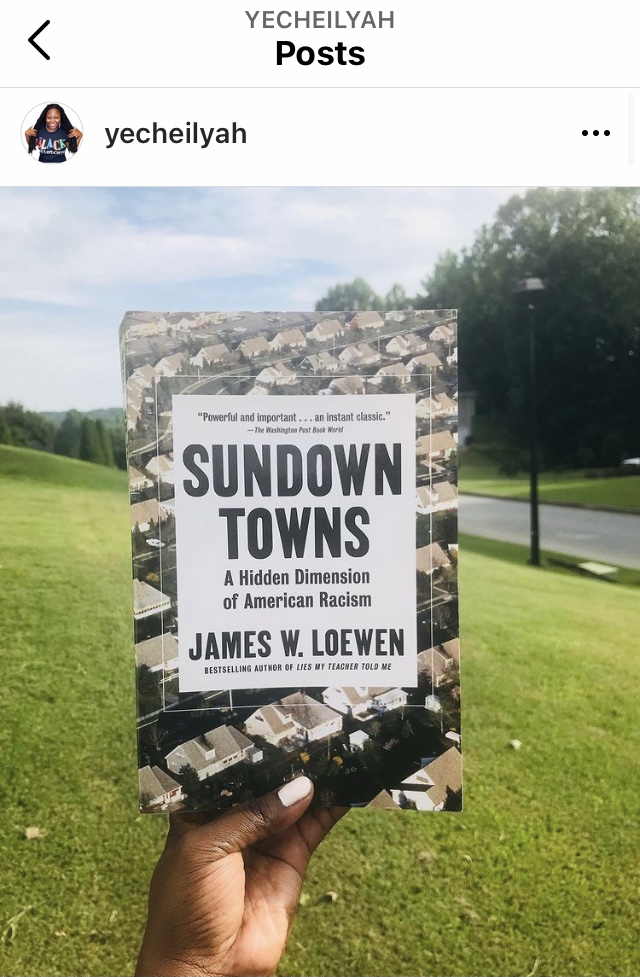
This past week, I posted this image to my Instagram, and I was surprised to see how many more people had not heard of this. For this reason, today, we are revisiting our black history fun fact on sundown towns.


“Is it true that ‘Anna’ stands for ‘Ain’t No Niggers Allowed’?” I asked at the convenience store in Anna, Illinois, where I had stopped to buy coffee. “Yes,” the clerk replied. “That’s sad, isn’t it,” she added, distancing herself from the policy. And she went on to assure me, “That all happened a long time ago.” “I understand [racial exclusion] is still going on?” I asked. “Yes,” she replied. “That’s sad.”—conversation with clerk, Anna, Illinois, October 2001.

James W. Loewen, Sundown Towns: A Hidden Dimension of American Racism (Touchstone, 2006),3

Anna, Illinois, was named after the daughter of the town’s founder but got its more derogatory name after the 1909 lynching of a black man in Cairo, IL, and the mob of angry white citizens who drove out Anna’s 40 or so black families following the lynching. It is at this point that Anna, IL became a sundown town.

A sundown town is a town with an exclusive population of non-whites on purpose. They are towns with overwhelming populations of non-whites and are so deliberately.  Sundown towns were also known as “Sunset Towns.”

“A sundown town town is an organized jurisdiction that for decades kept African Americans or other groups from living in it and was thus “all-white” on purpose.”

Side Note: In the black community, black kids are constantly warned to “come in the house when the street lights come on,” so many of us had to be in the house before the sunset. I wonder if Sundown Towns had something to do with this. Not to say black parents are the only ones with this command, but it’s food for thought.

Although signs were posted, forced exclusion was also implemented:

“There were also race riots in which white mobs attacked black neighborhoods, burning, looting, and killing. Across America, at least 50 towns, and probably many more than that, drove out their African American populations violently. At least 16 did so in Illinois alone. In the West, another 50 or more towns drove out their Chinese American populations. Many other sundown towns and suburbs used violence to keep out blacks or, sometimes, other minorities.”

– America’s Black Holocaust Museum, James W. Loewen, PhD; Fran Kaplan, EdD; and Robert Smith, PhD

The Beginning

Sundown towns began after slavery and the Civil War when blacks left the plantations and poured into every city and corner of the country. This was followed by the system we know as Jim Crow.

Jim Crow laws were state and local laws that enforced racial segregation in the southern and northern United States to keep blacks in a state of servitude. It included having to look down and step to the side when a white person walked by, drinking from separate water fountains, entering the rear of the bus, sitting in the balcony of the movie theater (which came to be known as “Nigger Heaven,”), attending separate schools, and more.

While Jim Crow and segregation are most notably known as a southern practice (“The Jim Crow South”), it also existed in the north. In fact, many parts of the north were more segregated than the south, and when it comes to Sundown Towns, these communities mainly existed in the north as the Great Migration brought floods of blacks into northern cities. Many suburbs to this day are mostly white because they were either part of redlining -the systematic denial of various services to black residents either explicitly or through the selective raising of prices – or its white residents ran its black residents out of town, and the descendants of those people kept it that way.

White_only_-_Detroit_1943

I’ll use Chicago as an example, still one of the most segregated cities in America. Yes, I said Chicago. Remember, we started this conversation with Anna (“Ain’t No Negroes Allowed”), Illinois.

Screenshot (14)
From Time .com / Bettmann / Getty Images

Dr. Martin Luther King Jr. visited Chicago in 1966 due to the high poverty rate in black neighborhoods and rented an apartment on the west side. He was there as part of what he would call The Poor People’s Campaign and the Freedom Movement. On August 5, 1966, King led a march through Cicero, an all-white district, and was hit in the head with a rock by members of the angry mob.

Years later (the early 80s), my brother-in-law and his friends would be chased out of this same area, racial slurs hitting their backs as they rode their bikes out of Cicero.

poster_caa060f6d48c41ae8e6e574b5838f5ed_57654824_ver1.0_640_480

This statue below is of Orville Hubbard, which sits outside of the City Hall in Dearborn, Michigan, was the cause of much controversy when people started to learn more about his past.

Hubbard was the mayor of the then all-white suburban town outside of Detroit from 1942 to 1978 and, in a 1969 speech acquired by the New York Times, said that “If whites didn’t want to live with N–they sure didn’t have to.” He went on to say this was a free country, and this was America.

“City police cars bore the slogan ‘Keep Dearborn Clean,’ which was a catch phrase meaning ‘Keep Dearborn White,’ ” according to David Good, a lifelong resident of the city who is the author of ‘‘Orvie: The Dictator of Dearborn,” a biography of Mayor Hubbard.

“Out here in Dearborn where some real Ku Klux Klans live. I know Dearborn, you know I’m from Detroit, used to live out there in Easten. And you had to go through Dearborn to get to Easten. Just like riding through Mississippi once you got to Dearborn.” – Malcolm X

Over time the name “Sundown-town” faded, but Sundown Suburbs still exist. A sundown suburb is a discrete way in which Sundown-towns live today when large white populations migrate to the suburban part of the city with the express purpose of separating themselves from the minority population. We can see this in our Cicero example.

You Are Woman

Photo by Kingsley Osei-Abrah on Unsplash

You are a rarity.
A gemstone that is not only precious but scarce.
You’ve been disgraced and beatdown so long
I doubt you know the difference.
Something is only precious when it is preferred.
But when a gemstone is rare
people search for it, and when they find it, they rejoice
for a rare gem is not easily available
for it, one must look.
There is no creation like you.
There is no body like yours.
No mind can conceive of the things you’ve seen
Even the ground is confused in the way that you walk
When you wake, the earth
quakes and shudders and the sun smiles
No instruction can map out the contents of your mind
You precious one.
You rarity.
You delicate rock.
You silk mountain.
Do not become small for those who refuse to climb.
Let the ordinary ones stay on the ground.
Let those who cannot swim stay on land.
Understand, you are a fist full of moon.
And those who cannot appreciate your light
must stay in the darkness.
There is no place for shadows
in the land of the living.
You are life.
You are womb.
Without you, the man was incomplete,
and without help.
You are not only golden
You are gold.
You are historic.
You are not only precious
You are rare.

You are woman.