Black History Fun Fact Friday – Meta Vaux Warrick Fuller

black-history1

Welcome back to Black History Fun Fact Friday.

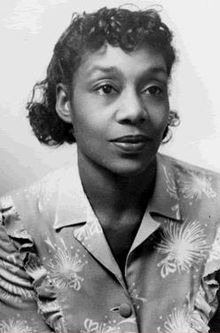
Today I introduce to you Meta Vaux Warrick Fuller, the first black woman to receive a federal commission for her art. Fuller’s artwork became the precursor to the resurgence of African themes in art seen during the Harlem Renaissance Movement. Not only a time of Jazz, Literature, and Flapper women, this explosion of black artistic culture also included artwork which is not discussed as much as let’s say the literature and the music.

fuller_meta

Born in Philadelphia in 1877, Fuller was the youngest of three children born to William and Emma Warrick. Prominent hair stylists who owned a flourishing Philadelphia store, Fuller’s father was a prosperous barber and the owner of several shops. Her mother was a hairdresser with wealthy white clients who were served in the family’s shop. The family also took vacations to the same places as did their upper-class white Philadelphian clients and lived in a three-story house. Why is it then that Fuller’s name is different from her parents?

Meta was named after one of these clients, Meta Vaux, the daughter of a Senator Richard Vaux. It makes me think about many blacks during the time and whether or not we felt we needed to assimilate into white society in order to fit into the culture of America. For instance, both W.E.B. Dubois and Meta (who was close with Dubois) felt that blacks were capable of the highest achievements but also that this meant to be educated as whites were educated. In addition, despite eventually producing “African” themed art, Meta rejected DuBois initial suggestion that she concentrate on African-American themes when they first met in Europe.

While Meta was successful and is highlighted here as an unfamiliar face, a precursor if you will to The Harlem Renaissance, the movement itself was not all rainbows and whistles. While the artistic explosion is something I love (being a poet and all) I hate that some blacks (as talented as we are) felt at the time that they needed to fit in with White America in order to make it, a truth not everyone is willing to acknowledge but this is Black History Fun Fact Friday so we must keep it real. As Carl Van Vechten titled his book, for many blacks Harlem was, at the time, “Nigger Heaven”.

1-2-227-25-explorepahistory-a0a8l1-a_349
Fuller’s Work: Ethiopia Awakened

Nonetheless, in October of 1889, Fuller arrived in Paris where for the next three years she would study with prominent French sculptors which would have a major impact on her work. While in Europe this is where she would encounter Dubois for the second time and it was the beginning of a friendship that continued for many years. Dubois and Thomas Calloway was organizing a Negro exhibit for the Paris Exposition and visited Meta’s studio to her surprise.

When Meta returned to the States, she established a studio in Philadelphia where art organizations flourished and in the early 1900s through the twenties she continued to do well. In 1928, she was selected to show her work at The Pennsylvania Academy of Fine Arts.

In 1909 she did a 15-piece work for The Jamestown Tercentennial Ex­position illustrating black’s progress in America since the Jamestown settlement. Fuller also received a gold medal for “The Jamestown Tab­leau,” and this  established her reputation as an artist and began a long and committed career. Despite my personal feelings, it is refreshing to study the faces of some of the unknown artists of this most important time in history.
Black History Fun Fact Friday – 5 Harlem Renaissance Women You Probably Don’t Know

If you’re anything like me, you get tired of the same repeated history. Martin Luther King Jr., Rosa Parks, Frederick Douglass, Harriet Tubman, Langston Hughes, and Zora Neale Hurston. These are names to which we are exceptionally familiar. They were great but we know them. Let’s talk about something else.

Admittedly, I didn’t have a lot of time on my hands this week so I decided to compile a list of women who took part in The Harlem Renaissance to which we aren’t too familiar for this week’s fun fact. Enjoy.

Dorothy West

220px-dorothy_west

The daughter of a freed slave, the only child of Isaac and Rachel West, Dorothy West’s father built a fruit and vegetable business that provided the family a more affluent life among Boston’s middle class. Nicknamed “The Kid” by Langston Hughes and sharing an apartment with Zora Neale Hurston, Dorothy West was a young member of the Harlem Renaissance. Not yet 20 in 1926 when her short story ”The Typewriter” won a prize from the Urban League’s Opportunity magazine, Dorothy moved to Harlem and joined the poets, novelists, musicians and other artists.

Alice Moore Dunbar-Nelson

161026-alice-dunbar-nelson-mn-1818_bec0fab5be09e60abe3bda10c1a72980-nbcnews-fp-360-360

When I first came across Alice I kept trying to figure out what was so familiar about her name. It wasn’t until I researched her that it became apparent. She was once married to Paul Lawrence Dunbar before they separated in 1902. Alice Moore Dunbar-Nelson was born in New Orleans, Louisiana, to mixed-race parents. Documented as African American, Anglo, Native American, and Creole, her works cover the complex subjects of race, ethnicity, and oppression. Her first book, Violets and Other Tales (1895), was published when she was just 20. A writer of short stories, essays, and poems, Dunbar-Nelson was one of the few black female diarists of the early 20th century.

Clarissa Scott Delany

resize

Clarissa looks as if she was fly back in the day lol.

Born in 1901 in Tuskegee, Alabama Delany is most known for her powerful poem “The Mask”. Dying at an early age (26) she did not contribute many works but still contributed by publishing poetry and journal articles into the newspaper Opportunity. After her young years in Alabama, she was sent to New England where she graduated from Wellesley College in 1923. During Delany’s years at Wellesley, she attended meetings of the Boston Literary Guild. Speakers were featured each week. Delany started writing and gained the attention and became associated with the Harlem Renaissance.

May Miller

miller_m

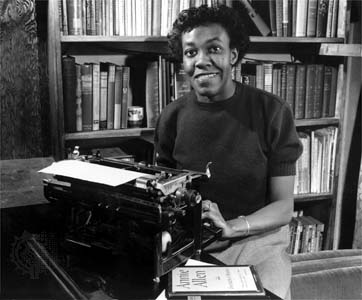
“To read across May Miller’s life is to read across the history of 20th century America.”

– Myra Sklarew

It begins with May’s father, Kelly Miller. Born a year before Emancipation he was the first African American to attend John Hopkins University and among the first blacks to learn to read in public schools. He studied mathematics, physics, and astronomy. His daughter, May Miller was the most widely published playwright of The Harlem Renaissance. Myra writes how May often told about having to give up her childhood room for visits by W.E.B. Du Bois, author of The Souls of Black Folk, and the poet Paul Laurence Dunbar. She spoke of visits by Booker T. Washington, Carter G. Woodson, and Alain Locke.

Maria Bonner

marita_bonner

One of four children, Marita Bonner was born in Boston to Joseph Andrew and Mary Anne Bonner. She was raised and educated in Boston, attending Brookline School, where she received musical training and in 1918 she entered Radcliffe College, concentrating in English and comparative literature. In Washington Bonner became closely associated with poet, playwright, and composer Georgia Douglass Johnson, whose “S” Street salon was an important gathering place for many of the writers and artists associated with the New Negro Renaissance of the 1920s better known as The Harlem Renaissance: Langston Hughes, Countee Cullen, Jessie Fauset, May Miller, Alain Locke, Jean Toomer, Willis Richardson, and others. She also began to publish her writing in journals like The Crisis of the NAACP and Opportunity, the official journal of the Urban League. Her first published pieces, “Hands” and “On Being Young-a Woman-and Colored,” appeared in The Crisis in 1925.


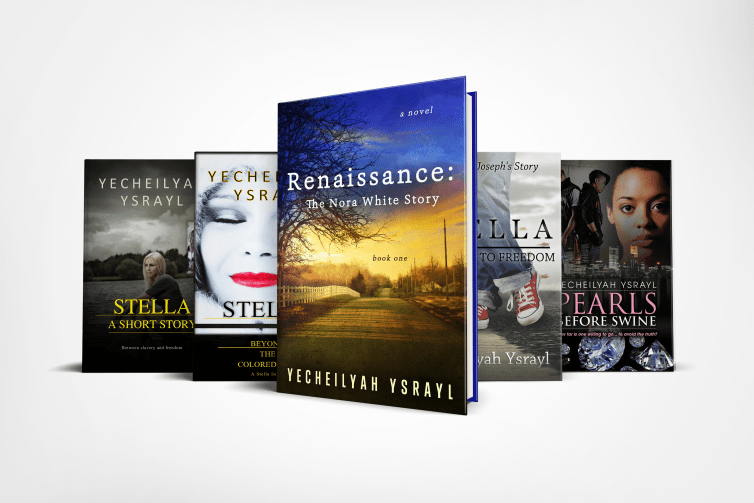
Yecheilyah Ysrayl is the YA, Historical Fiction author of eight books most notably, The Stella Trilogy, Blogger, and Poet. She is currently working on her next book series “The Nora White Story” about a young black woman writer who dreams of taking part in The Harlem Renaissance movement and her parents struggle to accept their traumatic past in the Jim Crow south. “Renaissance: The Nora White Story (Book One)” is due for release July 15-16, 2017. For updates on this project, sneak peeks of other projects, nuggets and tidbits, video tutorials, writing inspiration, and more, be sure to follow this blog and to subscribe to Yecheilyah’s email list HERE.

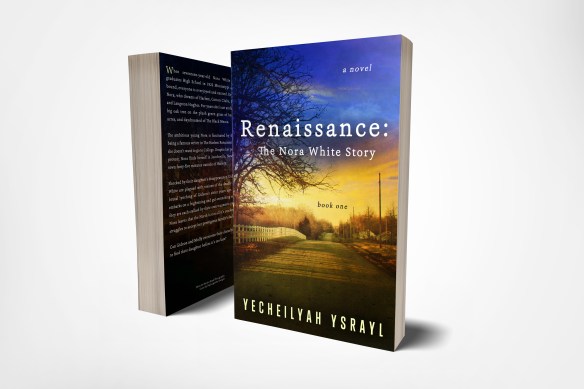
Renaissance: The Nora White Story (Book One)

The Nora White Story  – Coming 2017

nora-white

Title: The Nora White Story (Book One)

Author: Yecheilyah Ysrayl

Publisher: Literary Korner Publishing

Photo by: Brick-a-Brack Photography, Cover by Najla Qamber

Edited by: Cynthia Brooks

Release: Saturday, July 15, 2017 (Online), Sunday, July 16, 2017 (Live)

Venue: The 2017 Tampa Indie Author Book Convention, Chic Venue

I’ve pushed the release date for this back to this summer instead of this spring and it is my sincere hope that it’s well worth the wait! As you all know I’ll be attending the upcoming Indie Author Conference in Tampa Florida next year. I pushed the release date back so that I can release the paperback edition there at the convention. The spot is beautiful and to be able to share this moment with my fellow authors is priceless. Be sure to support this event, promote it, and to view the guest list so far HERE.

About.

Pageflex Persona [document: PRS0000039_00014]

When seventeen-year-old Nora White successfully graduates High School in 1922 Mississippi and is College bound, everyone is overjoyed and excited. Everyone except Nora. She dreams of Harlem, Cotton Clubs, Fancy Dresses, and Langston Hughes. For years, she’s sat under Mr. Oak, the big oak tree on the plush green grass of her families five acres, and daydreamed of The Black Mecca.

The ambitious, young Nora is fascinated by the prospect of being a famous writer in The Harlem Renaissance and decides she doesn’t want to go to College. Despite her parent’s staunch protest, Nora finds herself in Jacobsville, New York, a small town forty-five minutes outside of Harlem.

Shocked by their daughter’s disappearance, Gideon and Molly White are plagued with visions of the deadly south, like the brutal lynching of Gideon’s sister years ago. As the couple embark on a frightening and gut wrenching search for Nora, they are each stalked by their own traumatic past. Meanwhile, Nora learns that the North is not all it’s cracked up to be and struggles to accept her prestigious family’s dark secrets.

Can Gideon and Molly overcome their disturbing past in time to find their daughter before it’s too late? 

Renaissance: The Nora White Story (Book One)
July 15th – 16th 2017

book-and-e-reader-nora-w

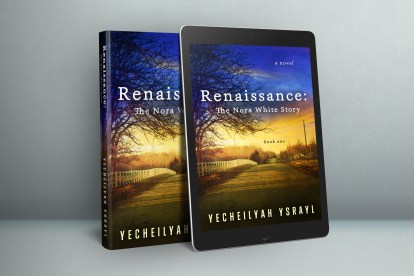
Book Cover Release – The Nora White Story – Book One

Tomorrow (12/23) I am officially on vacation and considering I won’t return until after the new year I’ve decided to release this cover now before I leave (as was planned). You will see my social media banners begin to change as the new year settles in. Sorry Stella, 2017 is all about Nora!

From the Author of The Stella Trilogy

“Familiar with Yecheilyah Ysrayl through her Pearls Before Swine (PBS) blog, and a solid understanding of the many forms of slavery, the title Stella: Between Slavery and Freedom grabbed my attention, but the subtext hooked me. Following Yecheilyah Ysrayl’s blog for about a year I looked forward to an informed, thought provoking read. I wasn’t disappointed.”  – EVA Lambert

“In light of recent events in our world today, this read is important in remembering the racist past of the United States. I enjoyed the writing style of the author, who was able to capture different characters through their dialogue and how she wrote their accents. Though Ysrayl is not a white teenage boy, she is able to write his narration convincingly, while also being able to give other perspectives through the rest of the characters.”

–  Swimming Through Literature

books-ec

“Yecheilyah Ysrayl takes us on a colorful and thought provoking journey through the eyes of a mulatto slave woman Stella. Generations later, Stella’s descendant Cynthia May has no idea of Stella’s life as a slave, nor the true identity of their bloodline. Since Cynthia is a racist she is in for a rude awakening. Stella is reminiscent of a wonderfully written slave narrative, a story of history and pain, it is brilliant opener of the Stella series.“ – Kathryn Reed

“No people can truly be free until they know who they are.” This story maintains good pacing; it’s inspiring, and thought-provoking. Labels don’t make us who we are, but it’s what’s on the inside of us and being comfortable in our own skin. I truly enjoyed reading this. I’m going to read it again.”- Silver Pen Entertainment

How You Can Help

propped-up-nora-w

 I think we all know that the self part of Self-Publishing can be deceiving in that everyone needs help or will need help at some point down the book publishing line. That said after thinking about it for a long time I have decided to step down from the Facebook platform for now.  (You can read more about where to find me online HERE.)

So, what I’d like is a little help in spreading the word about the pending release of this book, either across your Facebook pages or wherever. You can re-blog this post, you can share my cover on your social media (with proper credit), whatever it is you can afford to invest far as time is concerned in helping me to get the word out, I truly appreciate it and I don’t take it for granted. Time is a very precious commodity and I appreciate you spending it with me.

If you want to take your support further and you’re interested, I am putting together an Advanced Review Team. ARCs (Advanced Review Copies)  go out March, 2017 for those interested. Email me HERE for details.

Be sure to tune in tomorrow (12/23) for my final Book Review of the year. I have a very special Guest Author stopping in!


Yecheilyah Ysrayl is the YA, Historical Fiction author of eight books, notably The Stella Trilogy, Blogger, and Poet. She is currently working on her next book series “The Nora White Story”. Stay tuned for updates on this project, to include the book trailer, and sneak peeks. Be sure to follow this blog and to subscribe to Yecheilyah’s email list HERE for exclusives.

Black History Fun Fact Friday – The Chicago Black Renaissance

black-history

Many of us have heard of The Harlem Renaissance, the literary, musical, and artistic movement that exploded during the 1920s in Harlem New York. Also known as The New Negro Renaissance, the New Negro Movement, the Negro Renaissance, and the Jazz Age, the Great Migration of blacks from the south to northern cities like New York produced a national movement centered around black culture and tradition.

Music, poetry, literature, art, and theatre was brought to the mainstream from a black perspective in a huge way. Magazines such as The Crisis (the NAACP monthly journal) and Opportunity (the monthly publication of the Urban League) employed Harlem Renaissance writers on their editorial staff, published their poetry and short stories, and promoted African American literature through articles, reviews, and annual literary prizes. Names like Alain Locke, Langston Hughes, and Zora Neale Hurston come to mind.

However, though termed Harlem Renaissance, the time was much more complex than Harlem itself (which in many ways can make it hard to define). While standing as the anchor for the movement, Harlem was just one piece of a much larger puzzle. Across the United States and the Caribbean, The Renaissance was taking place. In fact, only some of the writers, musicians, and artists were native to Harlem itself. The Renaissance did not just happen in Harlem but a Black Metropolis was brewing in other big cities as well, such as Chicago.

Gwendolyn Brooks
Gwendolyn Brooks

As the Harlem Renaissance was winding down, The Chicago Black Renaissance was getting started, or rather, continuing. Creativity and activism was blooming from the great number of blacks coming up from the south to escape Jim Crow and The Great Depression. While it’s true many blacks did not suffer as much during the depression due that many of us were already struggling (having been depressed since we got here) there were some who came to Chicago from southern states like Mississippi and secured well paying jobs that were no longer available. While at first blacks could work at factories, meat packing places, and steel mills, the great depression shut this down.

Blacks were also dealing with extremely poor living conditions and fighting housing discrimination. As more and more blacks moved to Chicago the city was also still getting a large immigrant population pouring in from Europe so there was always competition for jobs and since segregation was in full effect, many blacks found themselves at a loss. However, there is great beauty that often springs from the depths of struggle and The Black Mecca of Chicago’s South Side was quite literally a diamond in the rough.

The black belt of Chicago’s South Side, as it was called, was the location for such diamonds.  Jazz, Blues, and Literature flourished as an outlet for blacks to voice their discontent not only about the city but also the whole of the black experience in America in general, and when Gwendolyn Brooks passed a pool hall in a Chicago neighborhood and took notice of a group of young men standing around, “We Real Cool” (a poem that speaks from the point of view of these seven young men, see my analysis of the poem here) was born. Chicago exploded in culture from the 1930s through the 1950s and the south side remains the most cultured part of city today.

Music, art, literature, and journalism were all part of The Chicago Renaissance. Though never deemed “Chicago Renaissance” officially, there are many who contributed to the movement whose names we’ve grown to know. The writers: Richard Wright (born in Mississippi but moved to Chicago in 1927), Frank Yerby, Margaret Walker, Willard Motley, John H. Johnson (publisher of Ebony), St. Clair Drake and Horace R. Cayton (who later co-authored Black Metropolis), Gwendolyn Brooks, Arna Bontemps, and Lorraine Hansberry; entertainers Nat King Cole, Ray Nance and Oscar Brown, Jr.; dancers Katherine Dunham and Talley Beatty; photographer Gordon Parks, and the artists Elizabeth Catlett and Hughie Lee Smith.


Yecheilyah Ysrayl is the YA, Historical Fiction author of eight books, most notably The Stella Trilogy. She is currently working on her next book series “The Nora White Story” about a young black woman who dreams of taking part in The Harlem Renaissance movement and her parents struggle to accept their traumatic past in the Jim Crow south. “Renaissance: The Nora White Story -Book One” is due for release summer, 2017. For updates on this project, sneak peek of chapters and the pending book cover release for this project, be sure to follow this blog and to subscribe to Yecheilyah’s email list HERE.

Writing about Passing: Jessie Redmon Fauset

jessie-redmon-fauset-1882-1961-grangerJessie Redmon Fauset was born on April 27, 1882, in Camden County in New Jersey, and grew up in Philadelphia, Pennsylvania. She attended Philadelphia High School for Girls, where she was likely the sole African American in her class. Because Bryn Mawr College was reluctant to accept its first black student, they instead chose to help Fauset to get a scholarship to attend Cornell University. Fauset did well at Cornell and after graduating in 1905, Fauset’s race kept her from being hired as a teacher in Philadelphia. Instead, she taught in Baltimore, Maryland and Washington, D.C.

During the Harlem Renaissance, two papers were in circulation among black people that helped to greatly influence the movement: The Crisis, headed by W.E.B. Dubois, and The Opportunity, headed by Charles S. Johnson. While there seemed to be quite a competition from the two, stemming from the position of the two men, the writers also reflected the same. While Zora Neale Hurston wrote for The Opportunity, Fauset wrote for The Crisis and eventually became editor in 1919.


2657593132_8b9365f0a5While researching and studying for Stella Book #2, which launches tomorrow and deals with the subject of passing, I noticed that Fauset wrote a lot about passing; all of Fauset’s novels were the stories of black middle class passing for white. Her first novel “There is Confusion” is the love story of a wealthy black woman who falls in love with a medical student and dreams of being a dancer but is held back because of her race. Published in 1923, her second novel “Plum Bun” is about a black woman who desires to be an artist; and decides to do so by passing as white and rejecting her family and friends. The story ends with her embracing her race and finding true love with a black man. In 1931 she published her third novel “Chinaberry Tree”. Her last novel “Comedy”, a study of the tension between drama and narration, was published in 1933. Inspired by a Greek tragedy, it is another story studying the dynamics of passing by giving voice to a black woman who can be seen as white. She passes for white in her everyday life and convinces her oldest children to do the same. The youngest child was too dark to pass which eventually leads him to commit suicide.