The House Behind The Cedars

Good evening beautiful people,

I wanted to share with you a book I read a while ago as I began organizing and researching for Beyond The Colored Line.

As many of you know, I am preparing to release a short story soon that deals with the concept of passing: when a member of one ethnic group passes as a member of another ethnic group. Most notably, when an African American who appears European passes, or pretends, to belong to that race.

This has been a phenomenal experience exploring history, and I’ve had the opportunity to come across some decent reading material. One of the books I read is The House Behind The Cedars by Charles W. Chesnutt, who was, interestingly enough, light enough himself to pass and did on occasion. Chesnutt’s paternal Grandfather, Waddell Cade, was a white slaveholder, and his Grandmother, Ann Chesnutt, Cade’s mistress, was a free Black woman.

The book is about a brother and sister, John and Rena Walden, two African Americans, who decide to cross the colored line by pretending to be white to claim and maintain their portion of the American dream.

The book was first published in 1900 and revealed how deep self-hatred could be for a people lost to true identity. It shows the extent to which some are willing to go to keep secrets hidden and what they are willing t

o endure to be part of the American fabric to which they believe they are entitled.

It also showcases how the depth of childhood exposure and teachings play a part in one’s perception, not just of the world, but of one’s own self.

Without revealing too much, Chesnutt surpassed race in general and also included status. No one would choose to be poor or hungry, Black or white, and I find this is the basis on which many of my ancestors who did pass built their logic.

Still, what price is one willing to pay to live the American dream?

And is it the American Dream, real? Is it a real thing, or is it a perception?

The Hobbyist Writer & Understanding Goals

Freelance-Writing-Jobs-For-Beginners

“Do you consider writing to be a Hobby alone? Or do you intend to build a business around it”

This is a question I often ask people who approach me with the idea of writing and self-publishing a book. Mostly young people who are new to the industry and do not have a lot of information about how to go about the Self-Publishing process. So I thought I’d write about it here since I was recently approached by a young woman who’s writing her first novel (yayy her!). The core of the question is this: What goals do you have for this book? Is it the first of many or something you just want to try and see where it takes you? Do you plan to become an author with websites and blogs and networks or is this just something you want to put out to see your name in print? Do you plan to publish Traditionally or Self-Publish?

68b90b6835021f0ad6345f0be9a77b98

It benefits to weigh the pros and cons of self-publishing and traditional publishing. Even though I’m a Self-Publisher, by looking into TP (the unofficial abbreviation for Traditional Publishing), I’ve learned a lot in my career. I’ve learned how to be better organized for example. I have always said myself: “if you don’t think you can put in the work necessary for self-publishing, it may be a good idea not to.” But I have learned too that everyone does not have this option, though they have this option. For most people, the option to publish traditionally flies out the window at the thought that it will never happen because it’s based on the approval of someone outside of themselves and it is therefore no guarantee. But as a result, they blindly plunge into this ever growing sea of books and fall into the category of a Hobbyist Writer.

What is a Hobbyist Writer? Something I made up. But, more specifically, a Hobbyist Writer is someone who’s infatuated with the idea of publishing. There is no specific goal or reasoning behind publishing the book except to see what it’s like to hold its preciousness between your fingers and bask in the awe of what you’ve done. The internet has made it easy to publish almost anything. Thus, there are waves of new authors out there who write specifically to publish their work and to see it in print. I think this is great. On the other hand, if you plan to get more serious and organized, to simply write books and publish them without vision, or direction does nothing for your writing career. So know what you want and the requirements to obtain it. Writing a book doesn’t have to mean you want to publish it and publishing a book doesn’t mean you want to sell it. Thanks to today’s technology, we have these options. You can sell a book or you can just give it away for free. So I would definitely say to clearly define your goals before stepping out. A goal is a desired result that a person or a system envisions, plans and commits to achieve and in my opinion does tend to change over time.

Picture1

Personally, I publish often, at least once a year (with the exception of this year, where I plan to publish three books as part of a short story series) because I like writing and I think the best way to polish any skill is to do it often. And I do hope that the more I engage in the process, the better at it I’ll become and the more people I’ll reach. What I enjoy most is that with each book I learn something new, and I am able to add that to my stored chamber of experience. Though I write a lot, I do not consider myself a Hobbyist Writer because the desired result, the end game if you will, is to build something greater than a sea of published books. There’s a lot I want to do eventually that go beyond writing my own books. At the same time, I like to keep everything organized and this is when the business me kicks in. I believe that everything you do, whether you get paid or not, should be done with some level of professionalism. So if you’re going to write a book, it should have some level of significance even if it’s just a hobby. If nothing else, I have learned that if you don’t place value on your work, no one will. And that’s why established and clearly set goals are important; it adds value to the work. Whether that work comprises something you just want to try or something you want to build on.

What Do You Want?

author-quote-3Everyone has their own set of ideas about what makes good writing and marketing. But the key to it all, I think, is individuality. No one does a better job at being you than you, and no one knows the intricate details of your story like you. For this reason, it is important to stick to those methods that best fit your vision, values, and taste.

I think the most important question then for a writer is, “What do you want?” Everything else is extra.

Yecheilyah’s Book Reviews – Eternal Traces by Shonda Brock

Title: Eternal Traces

Author: Shonda Brock

Website: http://www.shondabrock.com/

ISBN 13: 978-0-9904242-0-8(ebk)

ASIN: B00KH8VGT4

Published: May 20, 2014

Publisher: Shonda Brock

Pages: 248

Genre: Romance, Paranormal, Multicultural, Multicultural Paranormal Romance, Fiction

Rating: 4/5


Eternal Traces is a Multicultural Paranormal Romance novel surrounding the life of Veteran and Cardiologist Meryt Brownstone. Brownstone is an African American woman who struggles to lay claim to her personal and mental life despite her professional success. While Meryt dreams of a change of scenery, she prefers to avoid getting too close to people and prefers to fly under the radar. She has not been involved in any serious romantic relationship in some time and frequents daydreams of an ancient world. Hardworking and driven, Brownstone is also an undercover agent for the government and divides her time between work, chatting with her friend Cindy, secret missions, and experimenting with synthetic blood.

Speaking of blood, Meryt’s life changes dramatically when she meets Dr. Fitzgerald and Dr. Rene Daniels, two brothers who start working at the hospital and are very interested in her study on synthetic hemoglobin. Meryt’s sexual trance is immediately sparked with even the slightest glimpse of Rene. She is drawn to him on many levels, and she is unable to keep her eyes off of him. Meryt is guarded with her heart and refuses to let love develop naturally, despite Cindy’s insinuations that she has feelings for the new doctor.

But Dr. Rene’s attraction goes above and beyond her expectations, and the tingling sensation of need makes her crazy. In addition to being hypnotic, Rene avoids her like the plague after first meeting her despite having stunning blue eyes. Meryt’s curiosity about him is further piqued by this as she starts to wonder why. Meryt is a former soldier with military training who occasionally carries out covert operations, but Rene has a secret of his own to be concerned about that, despite his ravenous need, keeps him apart from Meryt.

As the story begins to unfold, I enjoyed the Egyptian and African connection and the parallels between the past and present as expressed by the author. As the story picks up, we see that ancient Egypt is a key figure in Meryt’s visions and an important mission to the Sudan becomes a major turning point in the novel as the lines between dream and reality become blurred. Historically, Egypt is blood brothers to the Nubian and they both descend from Ham whose name means hot, burnt, and black. This means the Egyptians would have looked just like the African American today. In addition, the Kushites (Ethiopians or Nubians), whose name means burnt face, lived south of Egypt in what is called the Sudan today.

Meryt’s mission to the Sudan, therefore, was a nice complement. I also enjoyed the symbolism of which there were many. One example is Meryt’s temper when she’s upset and her career as a cardiologist, paralleled against the details of Rene’s life. It created an interesting bridge of commonality between the two. How so? You’d have to read the book to find out!

As my first ever Multicultural Paranormal Romance novel, I wasn’t sure if I wanted to take a plunge on this one. However, I must say it’s one of those books where, even if you disagree with the concepts, it is hard to put down. You will want to get to the end and see how it all plays out. It also has a unique storyline, so I am glad I took the chance.

While some parts left me anxiously anticipating action, when similarities arose between Meryt’s life and that of Queen Nitocris, I was happy to see that my thirst for answers were quenched as the plot thickened. Between Dr. Daniel’s charm, Meryt’s stubborn ways, and their colliding worlds, Meryt’s carefully composed life will never be the same again. Shonda makes sure to have readers holding onto their seats and holding their breaths for one adventurous ride of Eternal Traces.

Ratings:

Plot Movement / Strength: 4/5

Entertainment Factor: 4/5

Characterization: 4/5

Authenticity / Believable: 4/5

Thought Provoking: 4/5

Recommendation: 4/5

Overall Rating: 4/5

Also check out Part 2 “Eternal Burns”. To learn more about Meryt and Shonda, visit them online: Website: http://www.shondabrock.com/ Twitter: https://twitter.com/shondabrock

coversb

Kindle App for i-Phone Users

Great info for readers and authors. And if you don’t have an iPhone, or a phone period, there’s Kindle for PC or Kindle for Mac you can download for free.

Lisa W Tetting's avatarLisa W. Tetting

kindleapp

Hi guys,

Just a quick post while Scandal is on commercial break. Ha, ha! Earlier today I found something that should help all of us writers with sales. You may already know about it, but because it is new to me I’m posting about it. Usually I am a girl who needs a hard copy of a book, but I needed to read a book for some research I am doing and it is only available on Amazon as an e-book. My dilemma was I don’t own a tablet.

The Amazon Kindle App for i-Phone was the answer! I decided to go ahead, order the book and worry about how  to read it later. In the past I have downloaded PDF files and a cookbook or two and been was able to view them on an i-Books App so I thought there might be a way to open a Kindle…

View original post 81 more words

Beyond The Colored Line – Final Sneak Peek

Book2Week three-four:

My apologies for the delay on this; I have recently come back to town and this week has been busy trying to get back on schedule. But, as promised, here are the final sneak peeks of Beyond The Colored Line:

Note: This excerpt is part of a book written by Yecheilyah Ysrayl. No part of this publication may be reproduced, or stolen in a retrieval system, or transmitted in any form or by any means without written permission of the publisher. The exception would be in the case of brief quotations embodied in the critical articles and reviews and pages where permission is specifically granted by Yecheilyah Ysrayl.

*******************

1932
Age 16
**************************

“Never limit yourself sweetheart.”

Aunt Sara was sitting at the vanity table applying red lipstick to lips that I didn’t think could get any redder. Aunt Sara was a thin but shapely woman, filling out the beautiful dark red dress that went down to her ankles, but held snug at the waist with a petite black belt. She wore black heels, and her red hat sat on the bed next to me as I sat watching her perfectly apply more make-up. She was in the middle of another lecture.

“We got the whole world just waiting for us and the least we can do is oblige. Besides, it’s not like you’re betraying anyone or denying anything. You have just as much a right to this life as anybody.”

It was Tuesday night and Aunt Sara was going out again. She tilted her head this way and that in the mirror and smiled her approval.

Mama lost the house. She tried to do the best she could with the visitors and such, but the depression didn’t allow for people to want to travel much. And the taxes came to be too much for a laundry woman’s salary. We moved to Chicago where things weren’t much better. The Great Depression was particularly severe here because of the city’s reliance on manufacturing, the hardest hit area nationally. Only 50 percent of the Chicagoans who had worked in the manufacturing sector in 1927 were still working by the time we arrived, especially Negroes. By now, 40 to 50 percent of Negro workers in Chicago were unemployed, including Aunt Sara. She was a school teacher, but wasn’t making any money. By the end of the year, the city would owe teachers more than eight months’ pay. But Chicago’s population grew enormously because of the mass lynching’s taking place in The South. Negroes escaped Mississippi as if running from a plague. And for just $11.10 they were brought by train to a new world. Everything was still segregated. In fact, Chicago is the most segregated place I’d ever seen. But you could hold your head up in Chicago. So to us, it still offered a freedom that didn’t exist in in The South. It was the land of milk and honey. And the crisis didn’t seem to affect Aunt Sara as it did Mama anyway. She didn’t particularly like being a part of the life Sara lived and she was depressed over our situation.

“Speaking of the whole world, what is it with you and that Timmy boy?” Sara puckered her lips for a final review as she spoke.

“Tommy Aunty, his name is Tommy,” I said.

Tommy and I had become rather close as we got older, though I couldn’t decide if we were dating or not. Aunt Sara clasped her hands together as she stood and sat next to me on the bed, “Oh, my memory these days.”

“Tommy’s a good friend, nothing special.” I lied.

“That’s my girl,” said Sara, grabbing her hat and putting it on, admiring herself again in the mirror as she spoke.

“I don’t think it’s a good idea for you two to see each other no how. There’s not much room for opportunity with such men. You must learn to play the game sweetheart.”

“Are we so different?” I asked.

Sara turned to face me, “You can drink your coffee black all you wanna, but I’d prefer a little cream to taste. I swear I don’t know what’s gotten into your Mother, teaching you to hate yourself is what she doing. There’s nothing wrong with embracing who you are, you remember that.”

I sunk down in my seat, embarrassed. I knew where she was going with this. Every day was Saturday for Aunt Sara. Uncle Bob, as we were instructed to call him (though marriage didn’t exist between them) was Sara’s new man, a wealthy doctor on Chicago’s North side. The problems of the Great Depression affected every group of Americans, but no group was harder hit than Negroes living in the cities trying to live like rich white folk. In some Northern cities, whites called for Negroes to be fired from any jobs as long as there were whites out of work. Otherwise, the depression meant nothing to Negroes who had been depressed in America for nearly 400 years. For this reason, we were Aunt Sara’s little secret hidden securely inside Uncle Bob’s pocket. She didn’t just pass for white, Aunt Sara was white. And coming from a white mother and half white father no one second guessed us, not even Bob.

“I tell you what, the ladies and I are attending a small gathering this evening, and you should come along.”

“But I’m only sixteen,” I said.

Sara smiled, “And? Who’s asking questions? Today you’re sixteen years old sitting in a house wasting your life away. But tonight, tonight you are the most beautiful twenty-one year old they’d ever lay their eyes on. The most beautiful white woman they’d ever seen.”

One Year Later

I laughed as Tommy and I strolled down the Negro area of town, arm linked in arm. We had decided to stop fooling ourselves and had begun dating. I must say, being with Tommy was one of the most refreshing parts of my life: smart, colored, and hilariously funny. His presence alone gave me a sense of relaxation I didn’t feel at home. I didn’t have to pretend or fear discovery. It was a relief being with him, and a lot of fun too. Indeed, the love I had for that man could never be mistaken and could never be traded. He was my first love and I love him still.

Tommy held open the door to The Shack, a mom and pop restaurant owned by Negroes. As I entered the restaurant, however, my foot stopped mid-air over the threshold.

“Sidney?”

It was Annie, one of the first friends I’d met in Aunt Sara’s circle. I had begun living a double life. It was easier than I’d expected. I had, after all, enjoyed the private education, the fine dresses, and the parties. I found myself looking forward to the freedom of going where I wanted and buying what I needed. We were one of the few European families doing well during the depression and loved by everyone. Aunt Sara and Bob got closer. We were invited to his inner circle of friends and family, which meant standing on top the highest hill and waving. Even Mama began to lighten up just a bit. Things were going well, until now.

“Annie, what a surprise!” I said as Annie and I hugged each other, planting dainty kisses on each other’s cheeks, fake grins all over the place. Annie looked Tommy up and down, while he held onto the door, as if she had just spotted a piece of trash on the ground that must be disposed of quickly.

“You must be the servant. I’m Anne, how do you do?”

Tommy let the door slip from his hands, closing quietly as Annie held out her hand; covered in a crisp white glove made of finer cotton than spread across his kitchen table. Tommy’s family were sharecroppers. Silently he wondered how many barrels of cotton it took to make it glow in the darkness. He looked at Stella, staring deeply into the green eyes he once adored, and the reality of the present situation lit a fire inside of his chest. He hoped he wouldn’t fall down dead from a heart attack. It would be a shame for his dad to find out his son died cause of a thing as a woman’s glove.

Tommy said nothing, just kept his eyes fixed on mine. I didn’t want to look away, but I couldn’t help but to feel them shooting little prickly darts into my skin, and it was beginning to burn. I had to think of something. Quick. I pleaded with his eyes.

“Why of course, where are my manners? Thomas, this is a friend of mine Annie. Annie this is Thomas, the new driver.”

I hopelessly tried to catch sight of his eyes. I wanted to plead mercy, but Thomas’ eyes searched instead for something on the ground. I turned my attention back to Annie.

“Why of course,” said Annie. “I was just telling Daddy about how difficult it is to find one these days. Why we just replaced a cook last week. Poor Mama was devastated,” we laughed, only hers was real.

“I told her we’d just have to get Miss Pearl to do it, but you know Daddy couldn’t stand for that. A housekeeper cooking? Why the next ball would be simply atrocious,” we laughed again as I silently prayed for a miracle.

“Anywho,” continued Annie, “I am off, but do come by tomorrow. The women and I are having tea, you know Mama’s dying to show off the furniture.”

“Of course,” I said as we hugged and kissed again.

As I waved goodbye to Annie, I turned to plead my case to Tommy, who was already halfway down the street. And just like that, our friendship had ended.

***********************

I’m so grateful you’ve taken the time to read this far, I hope it means you are enjoying the story. If you’d like to continue reading and find out what happens next, you can get the book from Kindle for just $2.99 when it releases this summer and less than $10 in paperback.

I plan on writing another book in this series later this year, and with your permissions I’ll let you know when that’s available and send you some more free chapters. Until then, if you want to know what I’m up to, you can follow me on Twitter @: https://twitter.com/ahouseofpoetry.

Stella Revealed: Book Blurb for New Book

C3ERuFi

The Daily Post gave an exciting blog prompt yesterday on giving the book blurb to a book you want to write:

“Write the blurb for the book jacket of the book you’d write, if only you had the time and inclination.”

I wasn’t going to take part in this prompt initially, but since I have written a book (available soon), I decided this was the perfect time to give the book blurb to my upcoming book: “Beyond The Colored Line“:

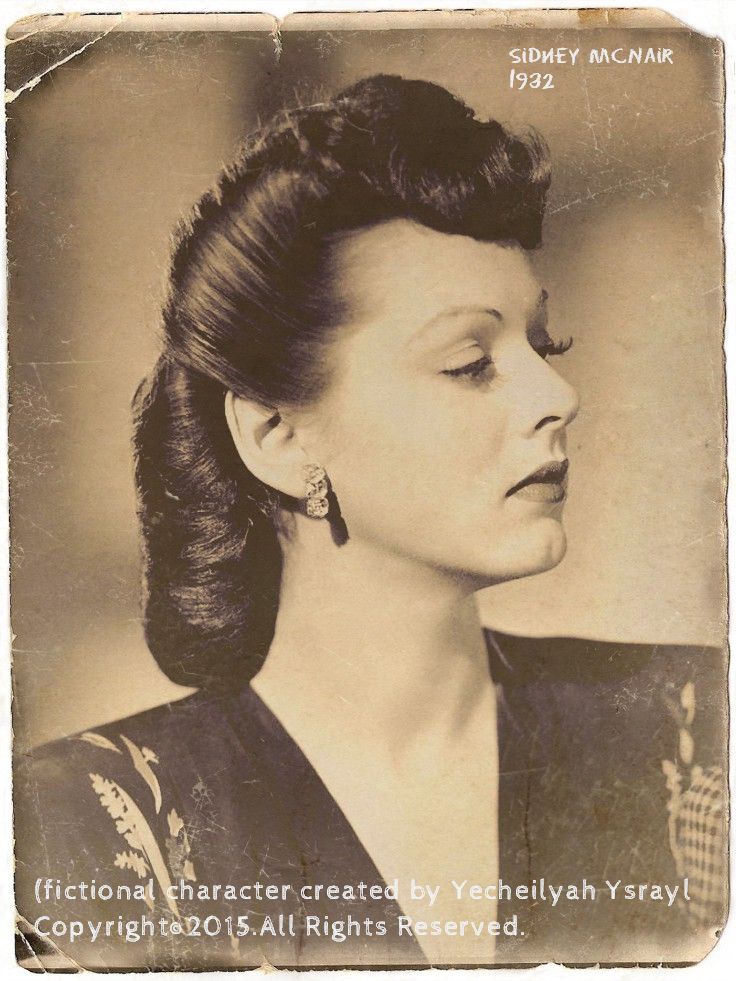
“Growing up has not been easy for Stella. Just a few generations from slavery, Stella is the daughter of Judith May. Mother and daughter share the blood of a black woman and her white slave owner. Unable to cope with the teasing and bullying from both the white and black kids, Stella struggles with identity and a place to belong. She does not feel she can find her rightful place among the blacks and neither among the whites. That is except on Saturdays. Stella loves Saturdays! Where her and mother take occasional walks on the town and enjoy all of the privileges that come with a light skin tone. Years later, after a discussion with Aunt Sara persuades her to pass, Stella decides to live her life as Sidney McNair, a white woman. But living Saturdays isn’t as easy as visiting them.

How will Stella deal with the new challenges that come with her new life? Will she ever find the courage to face the truth concerning herself? How far is too far?