Owning Your Writing Craft

Like I always say, take some time to enjoy the journey. Post quote: “Look at where you started and where you are now. Be proud of the distance you’ve traveled and how much you’ve accomplished, so far.”

theryanlanz's avatarRyan Lanz

craft ink table

by Tonya R. Moore

There’s all this hubbub floating around out there lately, conflicting theories of all the DOs and DON’Ts of what it takes to be or become a successful author.

Some time ago, I saw some Perpetual Writing Advice Giver actually tweet that if you’re a writer promoting your work and you don’t have this many (double digit) thousand followers on Twitter, you’re simply not trying hard enough. To add insult to offense, said party didn’t even have a half of that “strongly suggested” following.

View original post 342 more words

Black History Fun Fact Friday – The Soto Brothers

black-history1

Two kids had already been killed down the street from the apartment complex that would one day be the center of media attention when Black Panther Chairman Fred Hampton would be murdered in his bed this same year. Teens from the Henry Horner projects had been protesting for months, a little over a year to be exact, for a traffic signal at the corner of local schools and health clinics where two teens had already been killed. The city refused. In addition, earlier this year, police kicked down the doors of a Panther office, brutally beating and injuring six people and one bystander on Madison Street.

As you can see, the climate of 1969 Chicago was already heated surrounding citizens and the city. Police brutality in Chicago is far from anything new and this year they were on a roll.

screenshot-365_li
Source: JET Magazine, Oct. 30, 1969

John Soto was an active member of the protest campaigns to get a traffic light installed at the corner, a few blocks from Fred’s Apartment. Sadly, John only lived to seventeen, were killed just one day (Oct 5th) after a police raid on a Panther office. According to the reports, John fought with the police before being “accidentally” shot by them. The already agitated community grew furious and John’s brother, Michael Soto, returned home from the army to attend his brother’s funeral. Five days later, on October 10, 1969, Michael Soto too was shot and killed. The black community did not believe in coincidences.

screenshot-356_li
Source: The Chicago Tribune, Oct. 11th,1969

It was said that Michael was killed because, after being stopped by police, he pulled out a gun, contrary to the account given by witnesses.

The community became even more outraged and according to the NAACP’s Commission of Inquiry, “The commission discovered that a substantial segment of the community believed that, contrary to all police reports, John and Michael Soto had been murdered by the police because of their participation in the traffic light protests.”

Source: JET Magazine, Oct. 30, 1969

According to Jeffrey Haas, Panther Lawyer of The People’s Law Office and author of “The Assassination of Fred Hampton: How the FBI and the Chicago Police Murdered a Black Panther”, (one of the books I’m reading), the coroner’s inquests in the Soto case were delayed; meanwhile, the internal police investigation found John’s death to be “accidental homicide” and Michael’s death “justifiable homicide”.

I decided to dedicate this week’s Black History Fun Fact to these brothers because of two things:

  1. Google’s limited amount of information on them
  2. Their minimum mention in black history

Though their lives were sadly ended, I wanted to highlight what happened to them for those who may not have been familiar. They existed and are among the many so-called Black and Hispanic men and women who died at the hands of law enforcement.

Update: Interestingly enough, I found this article and thought I’d update this post to include the link:

Chicago police use excessive force, DOJ finds

“Chicago police officers’ use of excessive force, she said, stemmed in large part from what the Justice Department found were severely insufficient training and accountability procedures — including failing to train officers to de-escalate situations.”

http://www.cnn.com/2017/01/13/us/chicago-police-federal-investigation/index.html

Black History Fun Fact Friday – 5 Harlem Renaissance Women You Probably Don’t Know

If you’re anything like me, you get tired of the same repeated history. Martin Luther King Jr., Rosa Parks, Frederick Douglass, Harriet Tubman, Langston Hughes, and Zora Neale Hurston. These are names to which we are exceptionally familiar. They were great but we know them. Let’s talk about something else.

Admittedly, I didn’t have a lot of time on my hands this week so I decided to compile a list of women who took part in The Harlem Renaissance to which we aren’t too familiar for this week’s fun fact. Enjoy.

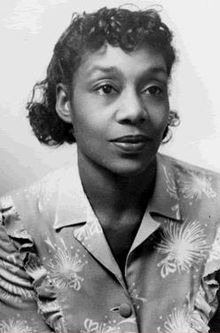
Dorothy West

220px-dorothy_west

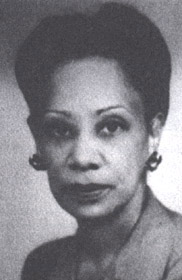
The daughter of a freed slave, the only child of Isaac and Rachel West, Dorothy West’s father built a fruit and vegetable business that provided the family a more affluent life among Boston’s middle class. Nicknamed “The Kid” by Langston Hughes and sharing an apartment with Zora Neale Hurston, Dorothy West was a young member of the Harlem Renaissance. Not yet 20 in 1926 when her short story ”The Typewriter” won a prize from the Urban League’s Opportunity magazine, Dorothy moved to Harlem and joined the poets, novelists, musicians and other artists.

Alice Moore Dunbar-Nelson

161026-alice-dunbar-nelson-mn-1818_bec0fab5be09e60abe3bda10c1a72980-nbcnews-fp-360-360

When I first came across Alice I kept trying to figure out what was so familiar about her name. It wasn’t until I researched her that it became apparent. She was once married to Paul Lawrence Dunbar before they separated in 1902. Alice Moore Dunbar-Nelson was born in New Orleans, Louisiana, to mixed-race parents. Documented as African American, Anglo, Native American, and Creole, her works cover the complex subjects of race, ethnicity, and oppression. Her first book, Violets and Other Tales (1895), was published when she was just 20. A writer of short stories, essays, and poems, Dunbar-Nelson was one of the few black female diarists of the early 20th century.

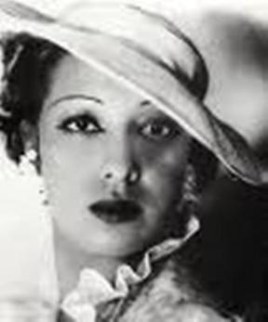
Clarissa Scott Delany

resize

Clarissa looks as if she was fly back in the day lol.

Born in 1901 in Tuskegee, Alabama Delany is most known for her powerful poem “The Mask”. Dying at an early age (26) she did not contribute many works but still contributed by publishing poetry and journal articles into the newspaper Opportunity. After her young years in Alabama, she was sent to New England where she graduated from Wellesley College in 1923. During Delany’s years at Wellesley, she attended meetings of the Boston Literary Guild. Speakers were featured each week. Delany started writing and gained the attention and became associated with the Harlem Renaissance.

May Miller

miller_m

“To read across May Miller’s life is to read across the history of 20th century America.”

– Myra Sklarew

It begins with May’s father, Kelly Miller. Born a year before Emancipation he was the first African American to attend John Hopkins University and among the first blacks to learn to read in public schools. He studied mathematics, physics, and astronomy. His daughter, May Miller was the most widely published playwright of The Harlem Renaissance. Myra writes how May often told about having to give up her childhood room for visits by W.E.B. Du Bois, author of The Souls of Black Folk, and the poet Paul Laurence Dunbar. She spoke of visits by Booker T. Washington, Carter G. Woodson, and Alain Locke.

Maria Bonner

marita_bonner

One of four children, Marita Bonner was born in Boston to Joseph Andrew and Mary Anne Bonner. She was raised and educated in Boston, attending Brookline School, where she received musical training and in 1918 she entered Radcliffe College, concentrating in English and comparative literature. In Washington Bonner became closely associated with poet, playwright, and composer Georgia Douglass Johnson, whose “S” Street salon was an important gathering place for many of the writers and artists associated with the New Negro Renaissance of the 1920s better known as The Harlem Renaissance: Langston Hughes, Countee Cullen, Jessie Fauset, May Miller, Alain Locke, Jean Toomer, Willis Richardson, and others. She also began to publish her writing in journals like The Crisis of the NAACP and Opportunity, the official journal of the Urban League. Her first published pieces, “Hands” and “On Being Young-a Woman-and Colored,” appeared in The Crisis in 1925.


Yecheilyah Ysrayl is the YA, Historical Fiction author of eight books most notably, The Stella Trilogy, Blogger, and Poet. She is currently working on her next book series “The Nora White Story” about a young black woman writer who dreams of taking part in The Harlem Renaissance movement and her parents struggle to accept their traumatic past in the Jim Crow south. “Renaissance: The Nora White Story (Book One)” is due for release July 15-16, 2017. For updates on this project, sneak peeks of other projects, nuggets and tidbits, video tutorials, writing inspiration, and more, be sure to follow this blog and to subscribe to Yecheilyah’s email list HERE.

Black History Fun Fact Friday – The Chicago Black Renaissance

black-history

Many of us have heard of The Harlem Renaissance, the literary, musical, and artistic movement that exploded during the 1920s in Harlem New York. Also known as The New Negro Renaissance, the New Negro Movement, the Negro Renaissance, and the Jazz Age, the Great Migration of blacks from the south to northern cities like New York produced a national movement centered around black culture and tradition.

Music, poetry, literature, art, and theatre was brought to the mainstream from a black perspective in a huge way. Magazines such as The Crisis (the NAACP monthly journal) and Opportunity (the monthly publication of the Urban League) employed Harlem Renaissance writers on their editorial staff, published their poetry and short stories, and promoted African American literature through articles, reviews, and annual literary prizes. Names like Alain Locke, Langston Hughes, and Zora Neale Hurston come to mind.

However, though termed Harlem Renaissance, the time was much more complex than Harlem itself (which in many ways can make it hard to define). While standing as the anchor for the movement, Harlem was just one piece of a much larger puzzle. Across the United States and the Caribbean, The Renaissance was taking place. In fact, only some of the writers, musicians, and artists were native to Harlem itself. The Renaissance did not just happen in Harlem but a Black Metropolis was brewing in other big cities as well, such as Chicago.

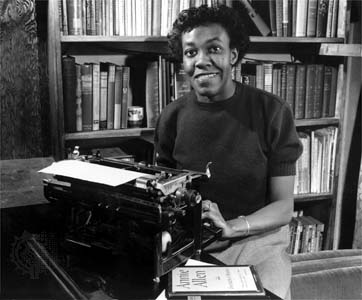
Gwendolyn Brooks
Gwendolyn Brooks

As the Harlem Renaissance was winding down, The Chicago Black Renaissance was getting started, or rather, continuing. Creativity and activism was blooming from the great number of blacks coming up from the south to escape Jim Crow and The Great Depression. While it’s true many blacks did not suffer as much during the depression due that many of us were already struggling (having been depressed since we got here) there were some who came to Chicago from southern states like Mississippi and secured well paying jobs that were no longer available. While at first blacks could work at factories, meat packing places, and steel mills, the great depression shut this down.

Blacks were also dealing with extremely poor living conditions and fighting housing discrimination. As more and more blacks moved to Chicago the city was also still getting a large immigrant population pouring in from Europe so there was always competition for jobs and since segregation was in full effect, many blacks found themselves at a loss. However, there is great beauty that often springs from the depths of struggle and The Black Mecca of Chicago’s South Side was quite literally a diamond in the rough.

The black belt of Chicago’s South Side, as it was called, was the location for such diamonds.  Jazz, Blues, and Literature flourished as an outlet for blacks to voice their discontent not only about the city but also the whole of the black experience in America in general, and when Gwendolyn Brooks passed a pool hall in a Chicago neighborhood and took notice of a group of young men standing around, “We Real Cool” (a poem that speaks from the point of view of these seven young men, see my analysis of the poem here) was born. Chicago exploded in culture from the 1930s through the 1950s and the south side remains the most cultured part of city today.

Music, art, literature, and journalism were all part of The Chicago Renaissance. Though never deemed “Chicago Renaissance” officially, there are many who contributed to the movement whose names we’ve grown to know. The writers: Richard Wright (born in Mississippi but moved to Chicago in 1927), Frank Yerby, Margaret Walker, Willard Motley, John H. Johnson (publisher of Ebony), St. Clair Drake and Horace R. Cayton (who later co-authored Black Metropolis), Gwendolyn Brooks, Arna Bontemps, and Lorraine Hansberry; entertainers Nat King Cole, Ray Nance and Oscar Brown, Jr.; dancers Katherine Dunham and Talley Beatty; photographer Gordon Parks, and the artists Elizabeth Catlett and Hughie Lee Smith.


Yecheilyah Ysrayl is the YA, Historical Fiction author of eight books, most notably The Stella Trilogy. She is currently working on her next book series “The Nora White Story” about a young black woman who dreams of taking part in The Harlem Renaissance movement and her parents struggle to accept their traumatic past in the Jim Crow south. “Renaissance: The Nora White Story -Book One” is due for release summer, 2017. For updates on this project, sneak peek of chapters and the pending book cover release for this project, be sure to follow this blog and to subscribe to Yecheilyah’s email list HERE.

Black History Fun Fact Friday – Jan Matzeliger

black-history

Growing up, my brother was a collector of the latest Nikes. He was the Air Force One version of the Air Jordan lover. He’ll collect all kinds of pairs of “Air Ones” and stack them in his room or in the basement. It was truly a work of art and since he actually is an artist, sometimes he even drew on them! In any event, it’s no secret, black people love shoes! I don’t say that in a discriminatory way, for African Americans are known to set the trend. There’s nothing wrong with our love for fashion which is often mimicked all over the world. It makes sense then, why it was an African American man who helped to revolutionize the shoe making industry. Meet Jan Matzeliger.

jan-matzeliger

Jan Matzeliger was born in Surinam, formerly known as Dutch Guiana, in South America. Of mixed ancestry, Jan’s father was a Dutch engineer and his mother of African ancestry. Naturally, since his dad was an engineer, Jan would accompany his father to work and developed a skill for repairing complicated equipment.

At nineteen, Jan left home to explore the rest of the world, and began work aboard an Indian ship. He found his way to America and settled in Pennsylvania where he became interested in shoe making and worked at a shoe making factory.

Jan Matzeliger Machine
The Lasting Machine

Though Jan was interested in improving how shoes were made, two obstacles were in his way: He could barely speak English and at that time shoes in the U.S. all came from the small town of Lynn, Massachusetts where “Hand Lasters” (people who could attach the different parts of the shoe together by hand), could only produce 50 pairs of shoes per ten-hour day. Though paid well, Jan had the discernment to see that what Hand Lasters were doing was not as good as everyone thought. There had to be a better way.

Specifically, there was no machine that could attach the upper part of a shoe to the sole and this is basically what the “Hand Lasters” were doing and they were the experts. According to them, “No matter if the sewing machine is a wonderful machine. No man can build a machine that will last shoes and take away the job of the Laster, unless he can make a machine that has fingers like a Laster – and that is impossible.” Jan Matzeliger thought they were wrong and set out to build a machine that would do just that.

Jan's Finished Lasting Machine
Jan’s Finished Lasting Machine

Jan is a great inspiration for setting out to achieve something that no one thought would work. He worked hard on this machine using whatever he could find – cigar boxes, nails, paper, scrap wire—and after six months had a workable model. Jan however, did not have much money. He also kept his project secret. Still, the “expert” Hand Lasters found out and made fun of him for his project. Someone offered him $50.00 for the machine but Jan wasn’t having it. They tried to play him, but he was smarter than that. He turned down more and more offers and continued perfecting his machine until a better offer came from which he could acquire the tools to perfect the machine even more.

In March of 1883, the United States Patent Office issued a patent for Jan’s machine, which could produce 700 pairs of shoes a day, to the Hand Lasters 50 pair and the rest is history. Jan had officially revolutionized the shoe making industry.

Some of my brother’s art, “The Shoe King”

130320_0020 130320_0030 130320_0032 130320_0034

How does Jan’s invention help us today?

Today, shoe making involves four departments: Clicking or Cutting, Closing or Machining, Lasting & Making, Finishing Department and the Shoe Room. The Lasting and Making part is where Jan’s invention would come in. “In the early days of shoe making, shoes were made mainly by hand. For proper fit, the customer’s feet had to be duplicated in size and form by creating a stone or wooden mold called a “last” from which the shoes were sized and shaped. Since the greatest difficulty in shoe making was the actual assembly of the soles to the upper shoe, it required great skill to tack and sew the two components together. It was thought that such intricate work could only be done by skilled human hands.” (Wikipedia)

That is until Jan’s machine. Today, soles, which were once laboriously hand-stitched on, are now more often machine stitched or simply glued on by shoe making manufacturing.

In Case You Missed It:

Black History Fun Fact Friday: Sarah Rector

Sources.

Jan Ernst Matzeliger

https://en.wikipedia.org/wiki/Jan_Ernst_Matzeliger

Now Everyone Can Afford Decent Shoes.”5 Dec 2012. https://web.archive.org/web/20120821203314/http://www.users.fast.net/~blc/xlhome9.htm Archived from the original on August 21, 2012.

“Jan Matzeliger”. The Black Inventor Online Museum.

Jan H. Liedhard. “No. 522: Jan Matzeliger (transcript of radio show Engines of Our Ingenuity episode)”. University of Houston.

“Jan Ernst Matzeliger ‘Lasting Machine'”. Lemelson-MIT. Massachusetts Institute of Technology. Retrieved 29 February 2016.

Reference: Hayden, Robt. C., Eight Black American Inventors. Addison-Wesley, 1972

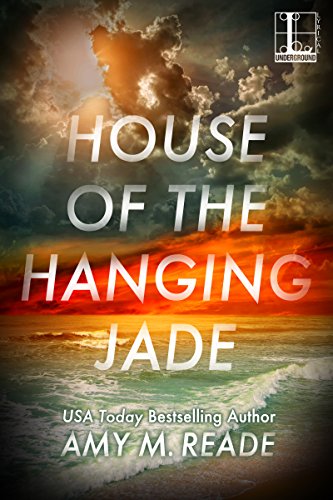
Yecheilyah’s Book Reviews – House of the Hanging Jade by Amy M. Reade

Title: House of The Hanging Jade

Author: Amy M. Reade

Print Length: 246 pages

Publisher: Lyrical Underground (April 26, 2016)

Publication Date: April 26, 2016

Sold by: Penguin Random House Publisher Services

Language: English

ASIN: B0138NHCMO


Not willing to cope with Washington’s brutal winters, Kailani breaks up with restaurant owner Geoffrey and leaves her job to return home, returning to the warm weather and beauty of Hawaii, black sand, and the curling waves of the Pacific Ocean. In preparation to return, Kailani searches for employment and secures a position as personal chef to Lars Jorgensen, owner of Kaimana Surf Company, and his wife, Dr. Barbara Merriweather, on the West Coast of the Big Island in the district of North Kohala.

When she arrives, the Jorgensen’s house is beautiful, and this sous-chef is ill-prepared for what awaits beyond the lush tropical gardens of palm trees, midnight jasmine, red ginger, and pergola laden with hanging Jade. As Kailani settles in, a series of events begin to unfold that question the stability of the Jorgensen household. First, Lars and Barbie don’t seem to like each other much, which could have something to do with Barbie’s roaming eye.

When Barbie asks Kailani to make more nutritious meals to reduce her family’s craving for junk food, the kids dislike Kailani’s healthy cooking. Nevertheless, this is not the full scope of Kailani’s issues. As Geoffrey relocates to Hawaii to be with her, things start to become strange, and a body is discovered on the Jorgensens’ property.

I liked reading about the kinds of meals Kailani would make for the family because she is a chef, especially as she started to get inventive to convince the kids to eat healthily. I got a sense of Hawaiian culture through it.

I also like how the plot focuses on this one family. That gives the story a TV show feel, which I like. Whenever I put my Kindle down, I think about what I will read in tomorrow’s House of the Hanging episode. The Jorgensen’s are off the chain.

What’s really going on in the house with the hanging Jade?

Ratings:
Plot Movement / Strength: 4/5
Entertainment Factor: 4/5
Characterization: 5/5
Authenticity / Believable: 4/5
Thought Provoking: 5/5
Overall Rating: 4 / 5 stars

House of the Hanging Jade is available  now on Amazon!

51zd4bwadxl

Be sure to contact this Best Selling Author at the links below!

Amy can be found online at the following places:

Website: www.amymreade.com

Blog: www.amreade.wordpress.com

Goodreads: www.goodreads.com/author/show/8189243.Amy_M_Reade

Amazon: www.amazon.com/Amy-M.-Reade/e/B00LX6ASF2/ref=ntt_dp_epwbk_0

Facebook: www.facebook.com/groups/AmyMReadesGothicFictionFans/

Twitter: www.twitter.com/readeandwrite

Pinterest: www.pinterest.com/amreade

Instagram: www.instagram.com/amymreade

************

bitmoji-926110877

The First 300: How I Reached 300 Blog Followers in 3 Months

blogging

I don’t know what it is this week but I’ve been in a blog subject type of mood. Every article post idea has been about blogging. Could be the excitement still emanating from my radio show feature with Annette earlier this week –listen here- or it could be the excitement over reaching the 1,000 subscriber mark (and the crowd goes wild…. or not), but I thought I’d share my first experiences as a new blogger two years ago.

I started this blog in 2014. This post’s conception was thinking back to the early days, where I praised reaching three hundred and four hundred followers. It was fun! I even monitored the international support I received, and I was really excited about it, and I suppose before we get into it, gratitude is the real first bullet-point. My focus was on my own growth, and I celebrated that increase regardless of how other bloggers were doing.

My first blogging experience with The PBS Blog, specifically, got off to a good start, and I managed to reach 300 followers in my first three months. Here’s some of what I did. Will it work for you? Possibly, but everyone has to find their own way eventually. These points are just here to give you a start and some encouragement.

1. Resurrect Old Writings

When I started this blog, I was still blogging on WordPress under a different account. The name of that blog was A House of Poetry (you can find my silly post about cheating on that blog with The PBS Blog here), and it was a blog dedicated entirely to poetry. The thing is, it didn’t go anywhere, and I wasn’t committed to it. 

When I started this blog, I started by transferring many of my published poetry from the old blog to this blog. I also tore into some old poetry books, rewrote some older poems, and added them to this blog. My goal was to introduce myself by showcasing something I knew was a strength: poetry. Every day I published a new poem, and the faucet was on.

  1. Get Organized

I knew I could not survive too long by publishing only poetry. I had already tried that, and it didn’t work.

I got organized and, admittedly, a tad bit crazy, but I’ll speak on that next.

I decided to incorporate some features into this blog. I decided to publish three posts a day, all covering three different themes: One poem, one article or creative writing piece, and one quote.

Every day I published these to attract more than one kind of reader. Some people liked the poetry most, others the quotes, and others the written piece. I was on the road to creating variety with my blog, which is what I wanted. Many people say to have a niche, but that has not worked well for me. What I needed was quality content and to better connect with others.

  1. Consistency

As I said, I got a little crazy on this blog.

I was publishing three posts every day, six days a week. I knew I could not keep up this momentum for long, but I felt it was essential to initially establish a presence, so I tried to achieve consistency. Beginnings are difficult and challenging, but character is critical for blogging, which is developed by consistently producing valuable and relatable content.

Even if you post once a day or even once a month, it can make a big difference.

It’s important to remember my first experience with blogging was not this blog.

“If at first, you don’t succeed, dust yourself off and try again.”

I have had two blogs before this one. With this blog, I have learned how to stay true to myself while incorporating my passion into something relatable to other people. Preach art all you want, but people need to feel and relate to what you say to truly understand it since people rarely give ear to what they do not understand.

  1. Persistence

Posting a lot does not mean that I was getting feedback. All of these beginner posts got anywhere between zero to five likes and no comments. I was not sure how to engage, or what it meant to produce quality content. I knew that I had something to say and that I needed to get a good foundation under me as a beginner. What it helped me to do was to be humble. I learned to always respond to comments and to rejoice at whatever growth I got. Ten likes were golden, and because of this experience, it still is. I even take the time to open every email notification of a new like or comment. I know which of you will like what based on your like habits! Yes, I’ve gotten to know you better too.

  1. Networking

The most effective strategy was networking, or as I like to call it, the bonding process. The posting was not, and I do not think it will ever be enough. My first time seeing real feedback was when I started to follow other blogs, comment on other blogs, share content from other blogs, and interact in challenges. This is when I saw real growth. I noticed one hundred followers in one month, then another hundred, and then another. I noticed that I was getting one hundred followers a month, and by the end of my first three months, I had a lovely three hundred under me.

  1. Building

I am not sure if there is a standard with blogging, but three hundred followers were mine initially. For a long time, I considered ending this blog. Over time, I decided it may be worth keeping. As I made this decision, I also had to consider building. The building meant paying attention to many technical things I had not paid attention to before, tags, content, images, social media sharing, and networking.

No longer was it sufficient to post anything, now I had to consider a lot of background work that may help build a more significant blog. In the beginning, it was posting, the equivalent to getting myself out there, but now, if I was to continue to grow, I had to continue to do more than just post. I had to consider how important blogging was to me and how much time I was willing to dedicate to it. Now it was about more than just posting; it was about doing the work.

bitmoji638116932

Here’s to another one thousand. Maybe someday, all of this work will pay off, and I will be writing and blogging full time. Here’s to endless possibilities. Cheers.