

“Just when the caterpillar thought the world was ending, he turned into a butterfly”. ~Proverb
“Just when the caterpillar thought the world was ending, he turned into a butterfly”. ~Proverb

FYI: The images used in this post are Rated R per nudity.
When 20 year old Sara Baartman got on a boat that was to take her from Cape Town to London in 1810, she could not have known that she would never see her home again. Nor, as she stood on the deck and saw what had become her home disappear behind her, could she have known that she would become the icon of racial inferiority and black female sexuality for the next 100 years.

Sarah “Saartjie” Baartman (before 1790 – 29 December 1815) was the most famous of at least two Khoikhoi women who were exhibited as freak show attractions in 19th century Europe under the name Hottentot Venus—“Hottentot” considered an offensive term, and “Venus” in reference to the Roman goddess of love. While in her teens, Saartje migrated to an area near Cape Town, where she was a farmer’s slave until she was bought in Cape Town by William Dunlop, a doctor on a British ship. At age 20, Saartje headed for London with Dr. Dunlop where, it was agreed, that they would get rich by displaying her body to Europeans; catering to the people’s’ sexual fascination with aboriginal peoples. Prancing in the nude, with her jutting posterior and extraordinary genitals, she provided the foundation for racist and pseudo-scientific theories regarding black inferiority and black female sexuality. The shows involved Saartje being “led by her keeper and exhibited like a wild beast, being obliged to walk, stand or sit as ordered.” Saartje’s predicament drew the attention of a young Jamaican, Robert Wedderburn, who was agitated against slavery and racism. Subsequently, his group pressured the attorney general to stop this circus. Losing the case on a technicality, Saartje spent four years in London and then went to Paris where she was exhibited in a traveling circus, and seen frequently controlled by an animal trainer in the show.
It was here that she crossed paths with George Cuvier, Napoleon’s surgeon-general, who was also considered to be the dean of comparative anatomy. In his capacity of social anthropologist, he arrogantly and erroneously concluded that she was the missing link. She turned to prostitution and when she died poor in 1816, almost immediately Cuvier had her body cast in wax, dissected and the skeleton articulated. Her organs, including her genitals and brains, were preserved in bottles of formaldehyde. Her remains were displayed at the Musée de L’Homme in Paris until as late as 1974.
“Stay on guard this wicked land will try to strip your soul… got our men selling blow our women on the stripper pole. Once your morals hit the floor do anything to pay the bills, 400 years still ain’t on the level playing field.”

While one cannot control what is forced upon them, one can make the decision to choose a different path. While the treatment of Sara and the retaining of her body parts were horrific, we cannot neglect her choice to prostitute herself. We have all been in positions where we felt we did not have a choice, for struggle and oppression has a tendency to do away with all logic. But what I would like to remind us of today is the importance of not making excuses for those choices. There’s a difference between making a mistake and making a commitment to willfully do. Often we set out to blame outside forces for what we have become because we’ve been deceived into thinking we have no choice. This is not to judge the actions of Sara as a slave, but what we need to understand is that today many Black women are slaves and they are slaves without permission or coercion. There is little difference between Sara Baartman and the current Video Vixen. They are both slaves. Today, the Black woman’s mentality leaves her shackled to a mental incapability of thinking outside of the way she was taught to do so within the physical institution of slavery. She cannot think independently on a physical, mental, or spiritual level outside of what her captives have taught her because of her unwillingness to take responsibility for her own ignorance.

As a result, every time someone attempts to show the so called Black women the error of her ways she is apt to point to an instance, circumstance, person or persons outside of herself. She may very well bring up facts, but she is unable to see the role she plays to make manifest those statistics. It is always a situation where men have abused or disrespected her. It is always everyone else fault except hers. Either a man did it or the white man did it. Many of the women seen on TV, such as the Niki Minaj’s are showing women examples of what it means to be a whore, to prostitute one’s body and to be proud of it. Sadly, many of you idolize these women. You sit back and you allow your little girls to be entertained by such filth. Beyonce is a married woman (allegedly) and yet she prances around the stage half naked and you think it’s cute. You do not teach your little girls about Proverb 31 women and about the Sara Baartman’s; you teach them about the Beyonces. As a result, many young women, crossing all ethnicity’s, grow up with aspirations to put basic morals and values on the back burner while they twerk.
The reality however is that everything is not a stereotype. It is not all a conspiracy. Abuse exists but there is still a choice we must begin to understand about the role we play in deception. It’s not always about deception, but it is also about our willingness to be deceived.


Soft kisses and warm hugs is what she gets from men.
Hot dates and perfume smells, but from truth she rebels.
An emotional roller coaster ride he takes her…
every so often they visit this amusement park.
And she wants to cringe when he grabs hold of her but instead of listening to herself
she listens to her heart.
Unwanted lips kissing her face and she takes it all in stride
afraid to admit her mistakes because of her pride.
Soft kisses turn into sloppy kisses
and warm hugs turn into feelings so hard and cold you’d think they were milk mugs.
Hot dates she no longer wants to take
but her financial status is at stake.
No more Christian Dior, Stephanie Taylor or Dolce Gabbana because she’s known on the streets as being his hottest baby mama
so she rebels.
Refusing to follow directions like a sterile sperm cell alone she cannot fertilize
this she soon realize
so she turns back to what she often refers to as hell.
She can’t understand what has happened to the warm hugs and innocent smells, yet she rebels.
He has painted her face with his fist,
multicolor on its sides
Sharpening his nails to cut her thighs’ and insides
but she laughs it off in stride
afraid to admit her mistakes because of her pride.
Excuses upon excuses she is determined to sell, so she rebels.
Convinced this is the last time she
runs to the nearest store praying her favorite make-up is on sale.
But she looks good though!
Driving his Lamborghini
shades on windows down, saying to herself “I know you see me!”
Blasting Jay-Z she agrees, “I can’t leave this alone the game needs me!”
So she endures the nightly screams of “Please don’t beat me!”
Attempting to open her eyes, Truth tries but she refuses to see.
Months and months have passed, and she’s lying in a place filled with screams and death mail.
Truth’s flowers she now wants to smell but her obituary has come too early,
so to the dirt,
she Rebels.
Oh how creative! I never seen coonery disguised so well.

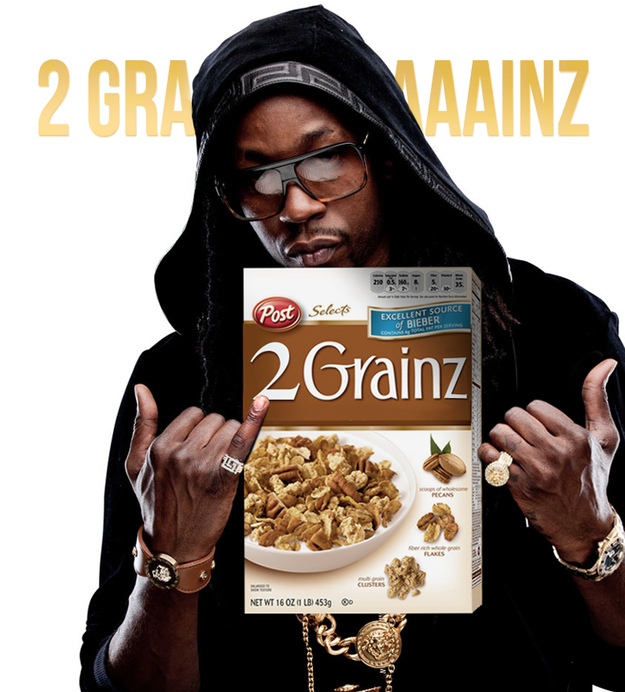
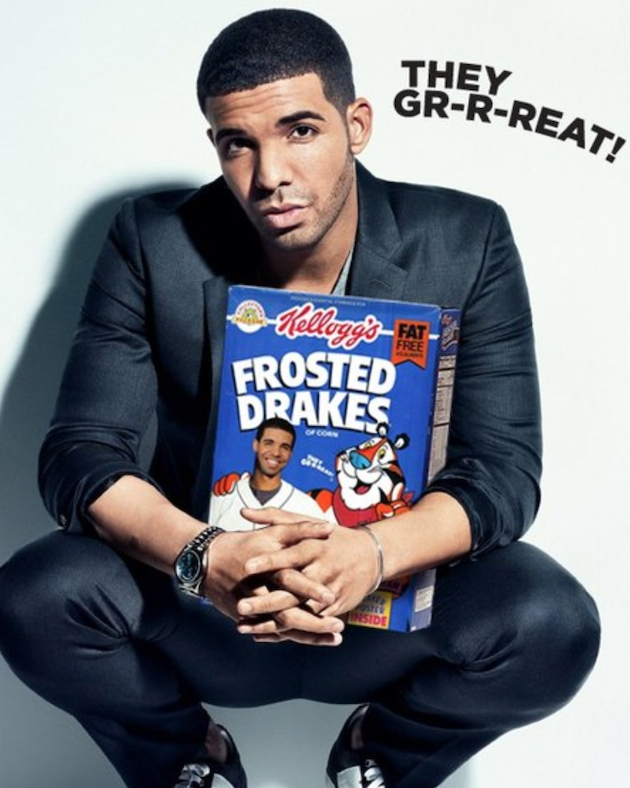



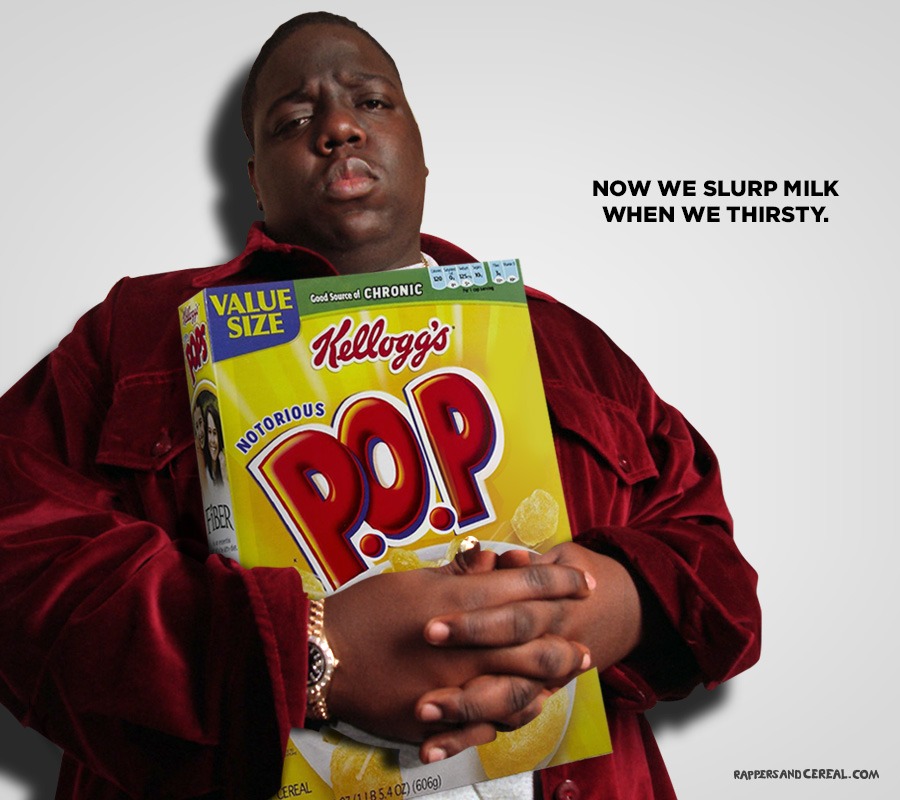

 I don’t understand why some of you burden yourselves. Life is hard enough that we don’t have to add unnecessary baggage. Like, why do I have to buy the organic egg vs. the regular egg? The organic salad vs. the regular salad? And what’s wrong with tap water? 100 yrs ago we couldn’t have dreamed of buying water and yet here we are. I bet you they ain’t tripping over water in Africa though, or in some third world country where they drink water you wouldn’t even bathe in. Goldberg gonna be selling you air next though, then there’s gonna be a debate about which air tank is the healthiest. There is just so much more important things in the world to worry about than what we choose to carry. Sometimes it’s not the load that breaks us down, it’s both how we choose to carry the load and the load we choose to carry.
So if you’re a non-chef like me but you’re also married and enjoy serving your hubby delicious recipes, today’s Sunday Sweet Treat is definitely for you, it’s even all natural.
 Today we are cooking up Chocolate Fudge Brownies using Marie Callender’s Fudge Brownie Mix.
Directions:
You Will Need:
1/3 cup oil, 2 large eggs, (2 Large eggs for chewy brownies. 3 Large eggs for cakey brownies) 1 Tbsp water, Chocolate chips
Preheat oven to 350 degrees F.
1. In a bowl combine 2 large eggs, 1 Tbsp water, 1/3 cup oil. Mix well.
2. Add dry mix and mix only until combined (about 30 strokes).
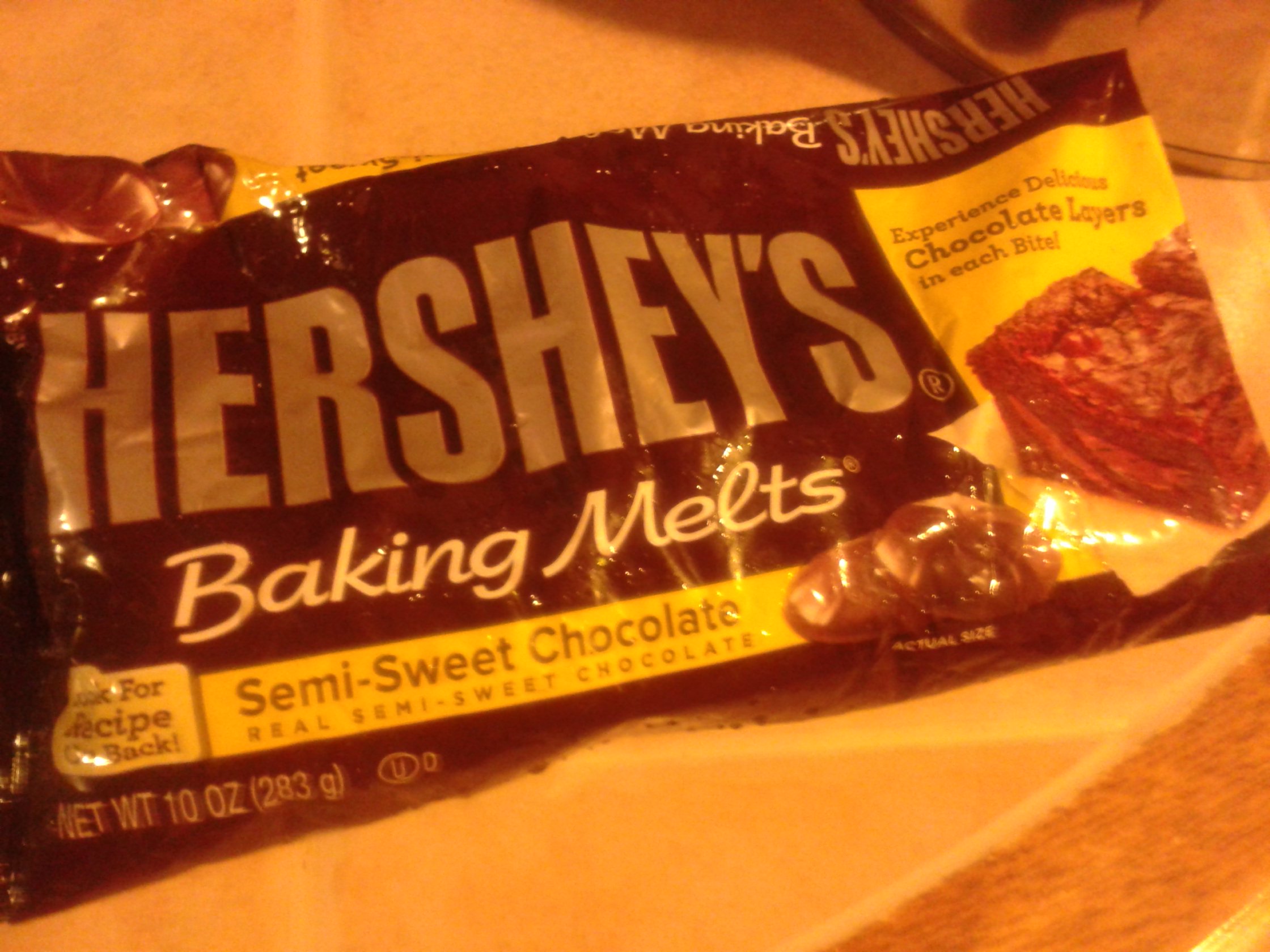
3. Now, this recipe is for extra fudge, chocolate chip brownies. So at this point you are going to take your chocolate chips and place them into a greased baking pan. I like to use the muffin pan (as those of you who are familiar with this blog already know), but you can do the same thing for a regular one sheet baking pan as well. Grease the pan and place the chocolate chips down first. I used Hershey’s Baking Melts, round flat chocolates, and placed them at the bottom of the greased pan.
4. Pour brownie mix from step #2 into greased baking pan, spread evenly. (For chocolate layered brownies, pour some of the mix into the pan first, then the chocolate chips, and then pour the rest of the mix in last.)

5. Bake at 350 degrees F for 30-35 minutes. High Altitude Baking: Add 2 Tbsp of water. Yield: 12 (1.75 x 1.75) bars. To make 8 x 8 pan use (1 lb) of mix and bake for 30- 35 minutes at 325 degrees F. For richer brownies, substitute melted butter or margarine for oil.

Step #6: Enjoy!

At least now I have an excuse to buy chocolates < What’s with this anyway? Where’s the book that says chocolate heals a broken heart? I can’t answer that for you, but I will say it is some prescription. But anyways, I’m digressing < seems I do that a lot.
So, as I was saying, a house of poetry and I finally broke it off. After just a year of hot and steamy poetry I just couldn’t do it anymore. I mean it was nice in the beginning no doubt, but I obviously have fidelity issues. I’m actually not that bad really. I mean, I haven’t thought of any new blogs to create ever since me and PBS started hanging out <why does The PBS Blog bring this smile to my face? See, that’s my problem, I’m in love with the PBS blog, not like we haven’t been over this already though (Ok, so I said the same thing about you, but why we bringing up old stuff tho?) And why am I explaining myself? It’s not like I have to report to a house of poetry posts anymore anyway. Not like I got metaphors hanging from dashboards and love notes between comments and whatnot. Speaking of which, I was really good to you so you can stop making me out to be the bad girl here. I mean, I know that you technically don’t exist anymore but you can give me some credit. You act like I just up and left. I did give you a warning this was going nowhere so technically I didn’t really cheat on you behind your back. Is it really my fault that you ignored the signs? Like you didn’t see all these followers easing their way to the PBS blog in the middle of the night.
Crafting Compelling Stories from the Heart
Rest is Resistance
goodies from my mailbox and camera
I am more than breath & bones. I am nectar in waiting.
virtually travel with us
Dr. Andrea Dinardo, Ph.D., Psychology
Supporting and Promoting Indie Authors
Adventures in Writing
Writer, Reviewer, Activist
The best Mommy advice on all things kids
Writing Advice from a YA Author Powered by Chocolate and Green Tea
Parenting Blogger, Poet & Storyteller, and Children's Book Author.
Changing the World one Article at a time
where all emotions are cared for!
Entertaining Stories and Motivational Quotes
Sweet As Honey Among The Pages.
press on to know the lord
Changing the world, one word at a time.
Featuring books written by authors of color.
Essays, art and poetry
Leaving it all on the page because we are all shattered mirrors looking to mend our images.
Casting Alerts. Podcast series and talent directory about Blacks in Hollywood
Let's Talk About Books
Always on the hunt for a good story
 The PBS Blog