Race Doesn’t Exist

French physician Francois Bernier was the first to use the word “race” as a category for scientifically classifying humans in a 1684 essay titled “A New Division of the Earth, According to the Different Species or Races of Men Who Inhabit It”.


6a00d8341bf68b53ef0133ed28d33d970b-800wi

In addition, Johan Friedrich Blumenbach (1752-1840), a medical professor in Germany, argued that human beings fall into five races: Caucasian, Mongolian, Ethiopian, American, and Malay. He argued that Caucasians derived from the Caucasus Mountain region and embodied the ideal human from which the others degenerated. It was a popular belief that Caucasians were the ideal form based on a skull that had been found in the Caucasus Mountains, near the alleged location of Noah’s ark. What this classification achieved is the setting up of a color line. Blumenbach classified five chief races of mankind and by attributing psychological value and importance to race; this became what we know as racism.

Science has a lot to do with the usage of “race” to identify a people. Although there is uncertainty in the title about the correctness of the term “race” versus “species” to classify human variation, Bernier relied on categories based on outward physical characteristics such as skin color.
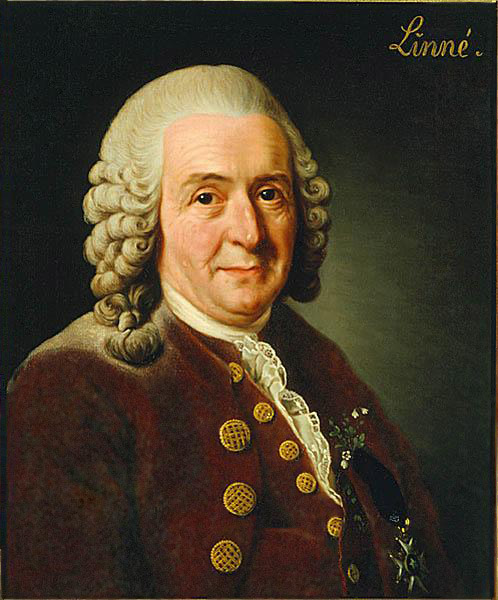
Carolus_Linnaeus_(cleaned_up_version)A prime example is Swedish botanist Carolus Linnaeus’ system of biological classifications in Systemae Naturae, published in 1735. Linnaean taxonomy is the system of scientific classification of plants and animals now widely used in the biological sciences. He formalized the distinction among the continental populations of the world and his work helped characterize the concept of race. In the tenth edition of Systemae Naturae, which was published in 1758, Linnaeus projected four subcategories of Homo sapiens: Americanus; Asiaticus; Africanus; and Europeanus. In short, the moral components of race–such as beliefs, values, etc., were not as prevalent where racial hierarchy was already established by slavery, but the word race was a general term that was used interchangeably with species, sort, type or variety. This is why there is no such thing as a race of people.

crayons-labThe concept of Race is a new ideology and has not always been with us. Genesis Chapter 10, known as The Table of Nations, gives an example of how people were split into nations and lands and language, not races. In fact, “definitions of who is black vary quite sharply from country to country, and for this reason people in other countries often express consternation about our definition.” (F. James Davis). What has happened then? How has a nation of people now become a race of people? They told you about a brown man, a black man, a yellow man, a red man, and a white man. It’s as if they took their crayons and painted us the colors of their expectations. After coloring they began the tasks of assigning these colors to class and certain geological locations in that they may properly identify them. Not necessarily so that these people may identify themselves, but so that racial superiority would reign supreme.

6a00d83420747353ef01a511c3312b970c-320wiThe U.S. Census Bureau defines race as “a social category recognized by the United States and does not attempt to define race biologically, anthropologically, or genetically”. The Census Bureau recognizes five categories of race: White (people with origins in Europe, the Middle East, or North Africa,) Black or African American (Africa), American Indian or Alaska Native, Asian, Native Hawaiian or Other Pacific Islander. The census also includes a Hispanic ethnic category. It is an ethnic category rather than a race category because the Latino community is said to include many races, such as White, Black, Native American, Asian, and mixed.

The truth is that every single person on the face of the earth belongs to a nation of people, as he was so divided since the beginning, and thus he falls into whatever family according to his nationality. Every people have a nation to which they belong, followed by a specific set of laws, customs, and traditions separated only by land and this is why race does not exist, because there’s no such thing as a race of people. Sure, we may use the term for understanding sake, one may say “my race is..” so that the person next to him gets it, but he does not really belong to a race, he belongs to a nation. Prejudices, Biases, and oppression of one people who feel superior over another people does exist, but race within the concept to which we’ve grown to know it, does not.

Closed

closed

This Blog is now closed from: Wed. 4/29 – Mon., 5/4

I don’t have a lot of time on my hands today. I am preparing to hit the road (travels, yesss). It is not just any road trip though; it is to embark on an event I hope will change lives. My family and I are part of a Stage Play that will answer some of the most pressing questions to date: “Why does Racism in America still exist? “Why have black people suffered for nearly 400 years at the hands of discrimination, police brutality, etc?” “What events in our history allowed these things to take place?” “Who were we before slavery?” So forth and so on. We will be before the face of the people and I hope it is an enlightening and groundbreaking experience for all of us. The event takes place in Chicago at the Dusable Museum of African American History and chronicles the History of the Black man and woman in America. I will post pictures of our journey as soon as I can.

Note: Thursday’s Sneak Peek Episode of Stella  has been postponed until next week. I know I know but look at it this way, next week you get a double dosage of fun as we wrap up our sneak peek series. 

IMG_3455425796116

Black Entrepreneurship

“Yes, let me get a beef and cheese please.”

I stood in observation as my husband passed the cashier the card to complete the purchase. It was nice and warm out yesterday and the Little Caesar’s boomed with life. The bright orange and yellows of the colors blended perfectly with the chipper atmosphere that always accompanies warm weather. The young woman in front of us bounced around, smiling and joking as she completed the purchase, buzzing around the restaurant to finish other things, like what the young man behind her (slightly older, I round him off to be eighteen) was pulling up on the laptop. Yes, the laptop. Maybe it too wanted to take part in whatever it was going on up front, eager to be cradled in the arms of its owner. As my nose preoccupied itself with fresh dough and pizza sauce, I let my eyes roam the rest of the store. The warm ovens and counter-top blocked my direct view, however the bodies spilling over the sidelines and walking back and forth did not allow for much obscurity. Plus, the cooking area that I could not see wasn’t very concealed, resounding like the halls of a high school, the chit chatter of non business conversation floated into the air. An older woman sat waiting for the remake of an order as if she’d rather be watching the news, and a young man with three small boys came in behind us. The itty bitty’s could not have been more adorable, though they looked like three little men. Two of which sported white t-shirts and blue jeans, Jordan’s, light complexion, and a head full of what we used to call bee-bees (when the naps let you know it’s time for another haircut). These boys looked to be no older than a year and appeared to be twins. The other boy was darker in complexion and a couple years older with softer hair outlining a Mohawk. He was, by far, more outspoken if you will and decided it was time to climb on top the counter and see what all the commotion was about. He even decided he’ll stand up and had plans of jumping until his father caught wind of his body in his arms. Whew, that was close.

A couple more customers came in, two young women. The sun was out and so were they. I smiled at my husband who preoccupied his eyes with his cell phone. I’ll tease him about all the booty standing in his way later. Let’s just say there were enough thighs to go around. They were there to see if such and such had come into work today and discussed this with their friends, emptying conversation over the tops of counters and over the people’s heads.

As I sat back and watched this scene play out before me, feeling more and more like this was my kitchen and my children had invited their friends to dinner,  I began to wonder: “It would be nice if the same black people who worked this store could also own it”. They are so content right now, making the hourly wage that could support Jordan and cell phone habits. But, what if we taught young people to look at their 9-5s as potential businesses? Often we ask ourselves, “What do I want to be when I grow up?” But our interest never completely change as we transition into adulthood. They are just better developed but they never completely change. So instead of the ancient “What do you wanna be when you grow up?” Is it possible to start asking the question: “What do you enjoy doing?” And, “in what way can you turn that into a business idea?'” If you work part time at a restaurant, why not see what it takes to own one like it one day? If you like doing hair, why not set out to have your own shop and list of clientele? Housekeeping at a hospital? What does it take for you to become licensed and contract yourself out to hospital chains and apartment complexes?

I could go on and on about why I think Black Entrepreneurship is important, but it is best that we look at the facts together:

“Koreans own the beauty supplies and nail shops; Arabs and Mexicans own the fast food restaurants and liquor stores; Jews / Europeans own the banks, pawn shops, and other lending institutions, and east Indians own the gas stations. The so called African American owns little to no businesses in his own community.”

ncmutualindus

African Americans are the biggest consumers and yet they own no businesses within their own communities. To be a consumer means you are not an investor, you are not an owner, you are instead a spender. Before the collapse of one of the most prominent African American communities in the nation, the dollar in the greenwood community of Northeast Tulsa Oklahoma rotated 36-100 times before it left the community. This means, the people in that community spent money at the local stores before going outside that community. For instance: Clothes bought at Elliot & Hooker’s clothing at 124 N. Greenwood could be fitted across the street at H.L. Byars tailor shop at 105 N Greenwood, and then cleaned around the corner at Hope Watson’s cleaners at 322 E. Archer. Today, the dollar leaves the black community in less than 15mins.

Stella Revealed: Book Blurb for New Book

C3ERuFi

The Daily Post gave an exciting blog prompt yesterday on giving the book blurb to a book you want to write:

“Write the blurb for the book jacket of the book you’d write, if only you had the time and inclination.”

I wasn’t going to take part in this prompt initially, but since I have written a book (available soon), I decided this was the perfect time to give the book blurb to my upcoming book: “Beyond The Colored Line“:

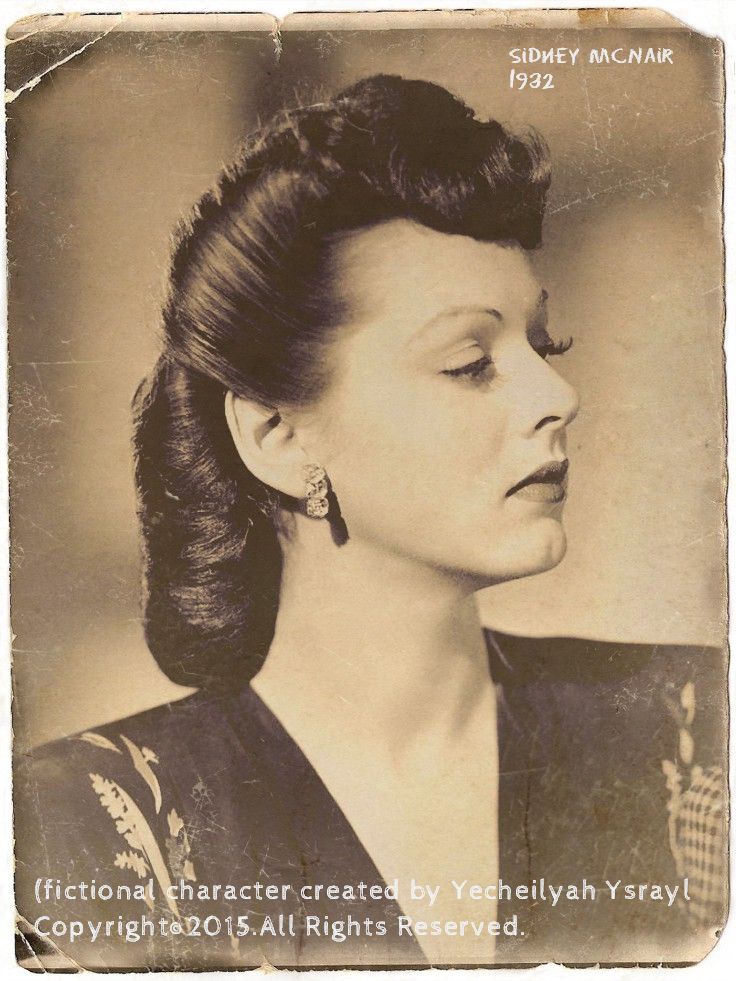
“Growing up has not been easy for Stella. Just a few generations from slavery, Stella is the daughter of Judith May. Mother and daughter share the blood of a black woman and her white slave owner. Unable to cope with the teasing and bullying from both the white and black kids, Stella struggles with identity and a place to belong. She does not feel she can find her rightful place among the blacks and neither among the whites. That is except on Saturdays. Stella loves Saturdays! Where her and mother take occasional walks on the town and enjoy all of the privileges that come with a light skin tone. Years later, after a discussion with Aunt Sara persuades her to pass, Stella decides to live her life as Sidney McNair, a white woman. But living Saturdays isn’t as easy as visiting them.

How will Stella deal with the new challenges that come with her new life? Will she ever find the courage to face the truth concerning herself? How far is too far?

Beyond The Colored Line – Part 1

 Today is the debut release of Part 1 of Book #2, “Beyond The Colored Line” in the Stella Series.Below is a reminder of what this book series is all about:

Stella is a work of Historical fiction, and is distinctive in its focus on one woman’s road to self-discovery against the backdrop of the African American fight for justice, racial equality, and freedom. The 3-Part series focuses on the history of one family in their struggle for racial identity. Discover in this Trilogy how 3 individuals living in separate time periods strive to overcome the same struggle, carefully knit together by one blood.

Log-Line for Book 2:

“Determined to be accepted by society, a black woman desperately seeks to hide her true identity when a prevailing conversation with her aunt provokes her to pass for white.”

Find out in this Stella Sequel what’s truly Beyond The Colored Line.

*****************************************************

Disclaimer: The following post is excerpted from a book written by Yecheilyah Ysrayl and is property of Yecheilyah Ysrayl. No part of this publication may be reproduced, or stolen. Permission is only given to re-blog, social media sharing for promotional purposes and the case of brief quotations embodied in the critical articles and reviews and pages where permission is specifically granted by Yecheilyah Ysrayl.

Copyright © 2015, All Rights Reserved.

Book2

Part 1
___________________________________________

September 4, 1923

“You’s white.”

Margaret and Josephine had their hands on their hips again, Josephine taking the lead role as always. The soft wind swayed the handmade dress in all directions, hovering well below her long skinny legs. Her hair was pulled up into a collage of pony tails with twists that never really wanted to stay together. Stella got lost for a minute, slightly envious. She wished her hair was that thick. But instead she was given a sandy blonde that could never keep a braid. School had just started at Crestwood Elementary of Belvedere City, just south of Boone County, Illinois. And already Stella could see this would not be a good year, same as the others.

“I’m not white; I’m Negro, same as you,” said Stella.

Josephine rolled her eyes, “You look white. You sound white. I thinks you white.”

The girls laughed. Meanwhile, Stella’s blood boiled, the blush of anger showing quickly in the space of her cheeks and around her ears.

“You’s white cause we say you’s white,” said Margaret.

“That’s right,” co-signed Josephine, “What kind of name is Stella anyway? What you some kinda slave?”

“Naw,” said Margaret, “she ain’t no slave, naw, she massa.”

Josephine turned her head slightly, laughing hysterically in Margaret’s ear, who saw it coming out the side of her eye.

“Josephine!” yelled Margaret. But it was too late. Stella was already on top of Josephine, pulling at her neatly pressed hair and slamming her face into the dirt. Stella could hear the screams of the teachers nearby calling her name, but she just couldn’t stop.

“I’m not white! I’m not white! I’m the same as you!” Stella yelled.

Josephine was crying now, as Margaret tried to peel Stella off of her.

“I’m Negro the same as you!” she yelled.

Later That Day

Judith stood by the door tapping her feet impatiently against the hardwood, and burning a hole in the back of Stella’s head, who sat silently on the sofa with her head down.

“You’re going to have to learn to control yourself Stella.”

“But ma–“

“Did I ask you to say a word?” scolded Judith, answering the door at the same time. Expecting her guest, she opened the door before the bell rang and gracefully let in Mrs. Velma Conner, Stella’s teacher.

“Good afternoon”, said Judith. “I’d like to apologize again for what happened today. May I offer you some coffee?”

“Never mind that,” said Velma. “I don’t specs to be here long.”

“Well let me offer you to a seat then,” said Judith.

Judith sat beside Stella as Velma took the sofa across from them and cleared her throat.

“Stella seems to be having a very difficult time adjusting. Her temper is far too easily tickled, if you catch my meaning.”

“I do,” said Judith.

“We think perhaps she would be better off in a more comfortable environment, somewhere more of her liking, if you catch my meaning,” said Velma.

Judith straightened and looked Velma in her sparkling blue eyes, “Not exactly.”

“Well, Ms. May, the accusations from some of the children are hard to ignore.”

“What accusations?” Judith interrupted.

“Well, you know, children will be children,” Velma laughed slightly. “It’s just that they don’t take very well with our kind. Surely you’d prefer for Stella–.”

“Our kind?” Judith interrupted again.

“Why yes,” said Velma, shaking her head.

“You don’t have to say anything more, Mrs. Conner.”

Judith stood up, smoothed the apron hanging from her waist and approached the door.”

“Stella May?”

“Yes mama?”

“Go on upstairs so me and your teacher can talk.”

“Yes ma’am,” said Stella, hurrying off upstairs.

Velma remained seated, “Is there a problem?”

Judith smiled, “No, there’s no problem. But I do want you to leave my house.”

Velma stood, pointed her nose into the air and walked toward the door, clearly offended.

“By the way, the school has placed Stella under suspension, you understand why.”

“Oh, I do,” said Judith. “You see, defending ourselves, is what we’re taught.”

An expression of confusion spread across Velma’s face as she stared into the green eyes of the white woman in front of her, disgusted that she would stoop so low as to lay with one of them.

“What we’re taught? I’m not sure I’m following you,” said Velma.

“Oh yes,” said Judith, “It’s one of the first things my Negro father taught me, you know, our kind I guess.”

The pink rushed to the woman’s nose as she hurried out the door.

And that’s how things had been for us growing up. I couldn’t understand what made mama so strong. She loved daddy with every bone in her body, but they couldn’t be together. Society would never have of it. Mama was Negro sure enough as she was white, but Papa didn’t trust it. I thought about Papa that day and all the other days like it as I stood at the top of the stairs and watched as my mother waved goodbye to my racist teacher, with a smile on her face.

– Stella May

**************************************************

I really hope you  enjoyed the first part of my book! The fun continues with Part 2 next Thursday. If your enjoying yourself so far, would you mind sharing this on your social networks? Thanks a lot! Also be sure to come back for the continuation next week. And that’s not all, for your convenience, I’ve provided the link to the prologue to Book #1. I love writing and learning and sharing what I’ve learned and I’m really excited to be sharing this journey with you.

Prologue to Book #1

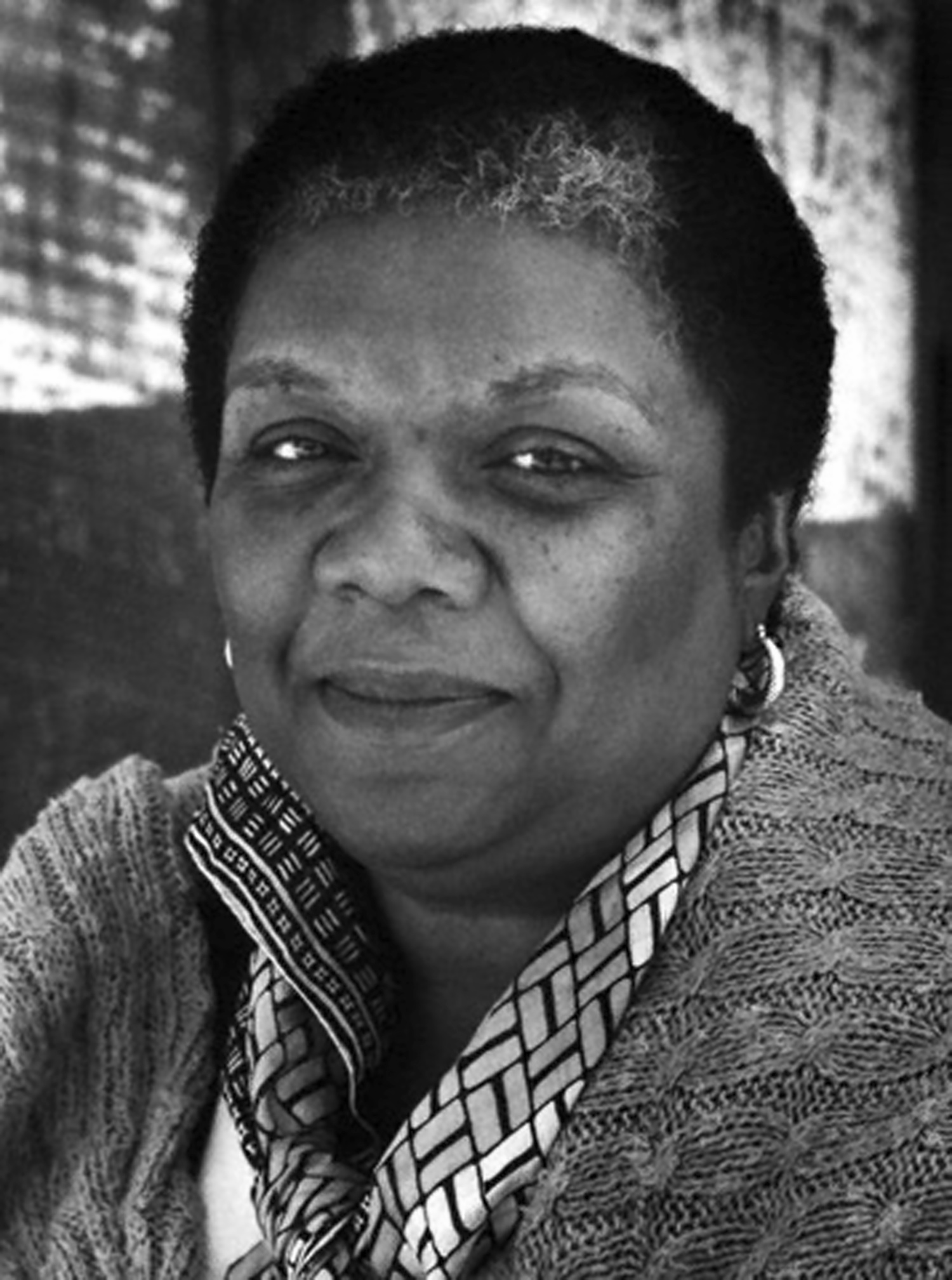
Writer’s Quote Wednesday – Lucille Clifton

My pick for today’s Writer’s Quote Wednesday is from poet Lucille Clifton:

Lucille C

I believe life tends to happen in stages. There are certain bridges that we have crossed as stepping stones to get to where we are; a small portion of the bigger picture to lead us on. And even where we are today is of itself a mere foundation for where we will be tomorrow. As I think about this, I am recalled to Lucille’s quote and I am reminded of the compassion and the respect that we should have for one another because you never know what’s beyond those eyes. What they have seen, what they see, or what they have endured. And even our idea of what seems difficult or simple can play a different role in the life of someone else. I may have known homelessness but the man who lost his mother to cancer may experience a struggle that would have broken me, whereas my homelessness could have broken him. Makes me think about what each person has endured and how it has contributed to their strength. No matter how seemingly small it was something that we ourselves probably could not have faced if given the chance to do so.

About the Author:

20070309clifton
Lucille Clifton 1936–2010

What I noticed right away about Lucille is that she puts the sweet in “short and sweet”. Her poems are often not very long-winded, but they are short, almost speeding like, but not tasteless. Clifton is noted for saying much with few words. In a review of her work, Peggy Rosenthal commented, “The first thing that strikes us about Lucille Clifton’s poetry is what is missing: capitalization, punctuation, long and plentiful lines. We see a poetry so pared down that its spaces take on substance, become a shaping presence as much as the words themselves.”

In an American Poetry Review article about Clifton’s work, Robin Becker commented on Clifton’s lean style: “Clifton’s poetics of understatement—no capitalization, few strong stresses per line, many poems totaling fewer than twenty lines, the sharp rhetorical question—includes the essential only.”

In addition, Lucille Clifton’s work hinges largely on life, emphasizing endurance and strength with a focus particularly on the African American experience and family life. It is another reason I enjoy her poetry. In 2007, Clifton was awarded the Ruth Lilly Poetry Prize in which the judges remarked,

One always feels the looming humaneness around Lucille Clifton’s poems—it is a moral quality that some poets have and some don’t.”

In addition to the Ruth Lilly prize, Clifton was the first author to have two books of poetry chosen as finalists for the Pulitzer Prize, Good Woman: Poems and a Memoir, 1969-1980 and Next: New Poems (1987).

mQxHuV_bFdPyDQqbcdTWmTgAn additional plus is that Lucille was not just a poet, but she was also an author of children’s books, designed to help them to understand the world and enable an understanding of black heritage specifically.

In books like “All Us Come Cross the Water “(1973), Clifton raises awareness of African-American history and heritage. Her most famous creation, though, was Everett Anderson, an African-American boy living in a big city; an eight title series that won the Coretta Scott King Award. Connecting Clifton’s work as a children’s author to her poetry, Jocelyn K. Moody in the Oxford Companion to African American Literature wrote: “Like her poetry, Clifton’s short fiction extols the human capacity for love, rejuvenation, and transcendence over weakness and malevolence even as it exposes the myth of the American dream.”

And that’s it for this weeks episode of Writers Quote Wednesday!

writers-quote-wednesday

Be sure to checkout Silver Threading to see how you can join the fun.

http://silverthreading.com/2015/03/25/writers-quote-wednesdaykatherine-neville/

False Leaders & Mentors

Speaking of Black History Month, there’s a desperate need for fresh leadership within our community. A lot of people look to figures like Al Sharpton and Benjamin Crump as leaders but the truth is that men like this are leading a lot of you astray. These men do nothing for black people except manipulate situations and line their pockets. While it is true that young black men are murdered, the aftermath of these kinds of events is sadder. Not only are black men murdered, but afterward your leaders come in and the objective of the situation is altered. Trayvon Martins parents are rich from their son’s death. Al Sharpton took them under his wing and collected garbage cans filled with money and Mike Brown’s parents are well on their way. There is nothing fake or conspiracy theory about the deaths of these men this is conspiracy fact, but it is the aftermath that is manipulated. For what reason does a mother need a lawyer when her son is murdered? She needs a lawyer only when she is told to sue for civil rights transgressions. Meanwhile, your human rights are continually violated and your leaders do nothing about it. The saddest thing about the deaths that continue to pile alongside the streets of black communities is oddly not the deaths themselves. The saddest thing about it is the can of whitewash the leaders of these people hold in their pockets, prepared to spill deception at the first sight of blood. How long will we continue to give birth to death still lying on the bed of Sharpton’s dream?