Just so you know, I fell for you first. Maybe it’s because that Logan boy and I shared the same name I was birthed with. I mean, back then I had never been to the deep south and I’m sure Stacey Logan knows more about the land than I do. Anyway, I was in 6th grade when we met. You didn’t know it then but you introduced me to black literature and I’m not afraid to claim that title or to separate black writer’s into a category of their own. How could our experiences not be likened to the Roll of Thunder? You were that seed planter for the rooted passion I now carry with me.
Sista Souljah
You always kept it real so Imma return the favor. You see my eyes hypnotized every young man who lusted for my lil sweet self. All fresh and new and walking all lady like. And then you came knocking at my consciousness like the Coldest Winter Ever but claimed No Disrespect. I’m sure we connected by way of the struggle. You see I was brought up in the Robert Taylor projects on Chicago’s south side so crack heads, rats, and hunger didn’t alarm me. I fell in love with the way you never sugar coated the truth and anyone whose been where we’ve been knows just how real your words are.
Maya Angelou
How long must the caged bird write before she sings? I can’t credit myself for coming up with that line. You showed me how a poet can use metaphors to write fiction too. Even though your memoir is all truth, your talent transformed it into something that can be considered just as poetic as phenomenal women. Your voice was passionate and strong and thundered like waves of air across the sky. Even in death is your memory, still that uplifting arm rising like dust and written down in history.
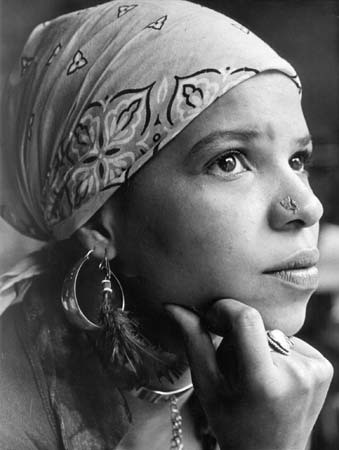
Ntozake Shange
Speaking of poetry, ever since I heard you speak I wanted to write for colored girls. You brought me back to those Souljah days with your raw tongue. How it unfolded from the very bottom of your gut and lifted the skirt to every pain black women have endured since the days their slave masters told them that rainbows weren’t enough. You didn’t write the way that I was taught in school, you wrote the way that I spoke. Like when my friends and I crowded around de front porch and ma boyfriend waz whispering quite literally, sweet nothin’s in my ear. And I laughed stupid like “You pretty” was something revolutionary enough to show my privates for.
Toni Morrison
By the time I got to you my thoughts started to evolve into a wanting I couldn’t put my finger on. My mind had gone from reading for entertainment to studying the books I read. I was on a search for something deeper than cotton fields, magnolia trees, and project rats. By the time you came along I was reading in-between the lines and trying to find that thing called freedom. And I wondered just how deep I had to look for that Tar Baby.
Gwendolyn Brooks
As soon as I found out you were from my home town we bonded. Was real cool like besties from the low end on the South Side. Bonded like 47th Street and State, Bronzeville, or Englewood. You see your lyrics had depth like the deep south you was born in, but had that look about it that screamed Chi-Town. Simple poetry that spoke volumes. You taught me that if I loved him the right way, saw him the way I was supposed to, that a man became more than just a body.
Terry McMillian
This relationship of ours! I can read you anytime and Lewis will always seem like the same Ray Ray and Pookie we all know. You perfected the art of black family life and character development. Every book I read of yours sends me into that world and I’m just laughing and shaking hands with your people like they my people because they are. I have stayed up plenty of nights turning pages and laughing and trying to figure out just what it means to be A Day Late and Dolla Short.
***************
A Love Letter to the Black Women Writers Who Liberated Me Read the title of an article written by Ashley Gail Terrell, a freelance writer from Michigan working on her first novel. Her post was inspiration for this piece.
I believe there are stepping stones to everything in life. That something that leads and guides us from one place to another so that we can reach the place we’re supposed to be. It can be anything from music, movies, television, people, places, things, and even books. Now, because of choice we do not always see these stepping stones for what they are; do not always notice the impact they are having in the moment in which we experience it and for some of us, perhaps we never will. But when I read this title, I thought back to the writers who I have come to love over the course of time and I began to meditate on how they have influenced my writing. When I was not yet where I am, spiritually, mentally, and physically, these writers (although not just these writers) became valuable launchpads on behalf of my writing today, sparking a flame of passion for the art that I still carry with me.
“Who taught you to hate the texture of your hair? Who taught you to hate the color of your skin? To such extent you bleach, to get like the white man. Who taught you to hate the shape of your nose and the shape of your lips? Who taught you to hate yourself from the top of your head to the soles of your feet? Who taught you to hate your own kind? Who taught you to hate the race that you belong to so much so that you don’t want to be around each other? The most disrespected woman in America, is the black woman. The most un-protected person in America is the black woman. The most neglected person in America, is the black woman.”
– Malcolm X, May 5, 1962 at the funeral service of Ronald Stokes in Los Angeles.
This post is for the colored girls growing up in ghettos and back alley ways where not even the front porch is safe. No offense to those who ain’t colored or black or african american or whatever byword we choose to call ourselves these days. You see I’ve known too many young women aborting their purpose for the opportunity to be hood certified. You know it. Named brand from the lobe in her ears to the Gucci panties and matching bra somebody said was worth holding our heads up for. Ladies, true power is made when you stop giving it away. When even your emotions themselves can’t be touched. You see the real women–the ones who are truly wealthy–they work smarter, not harder and this ain’t about a cliche. Cliche’s got nothing on a woman who can not only manage her time but her emotions too. Cliches got nothing on a woman with structure, order, and morals to guide her. Cliches got nothing on a woman with a plan who knows how to use it. Arguing back and forth with people or jumping in someone’s face because they said something negative about you gives away your power, and when someone else has your power they can control you with it. I know reputation is important at this age but smart girls learn to keep their mouths shut and are not impressed by the latest gear or level of popularity. You see a name brand shoe is amateur to she who has wisdom. She who has wisdom spends her time cultivating her mind. She spends her time learning how to be a woman. She who has wisdom is heard of, but is rarely heard. This means that people know of her, but don’t hear much from her. This is because the smart girls know how to keep their mouths shut. You will never see the smart girls bickering back and forth on Facebook and Twitter. A smart girl’s energy and her time is too precious. Even when a smart girl is offended you won’t know about it and when she strikes back you’re not sure if she did. Even when she excels a smart girl doesn’t necessarily have to make noise, you see her works will speak for her. Smart girls are not puffed up and conceited. They understand that comfort zones are beautiful, but no growth happens there. So smart girls hit hard but move silent. This is what makes her who she is. She doesn’t seek attention, she seeks respect because it lasts longer. You see, girls who are smart understand that there are two very precious commodities in life. One is time and another is wisdom. A smart girl can walk into a room wearing rags and still be respected, why? Because of her sincere desire for instruction. Smart girls are known for not what’s on their feet, or what drips from their necks, but smart girls are known for what’s in their minds. And oh yea, before I forget, two things. Number One: Smart girls don’t go around hating and envying each other, they’re worth too much for that. Jealousy is beneath a smart girl. Two: Smart girls understand the value of patience and therefore seek the approval of men, not boys. Still, a smart girl understands that to get a man she must first become a woman. It pays to be a smart girl.
As I scrolled through my Facebook feed a few weeks ago, I came across a status update that was upsetting, though sadly not surprising: “That awkward moment when your decision to wear your hair natural comes up in an interview… and not in a complimentary way…”
My friend Sonia had interviewed for a position as a Social Media Specialist for a marketing startup in New York City. The interview took place in the common area of WeWork, a coworking office space where the startup had put down temporary roots. As distracting commotion took place around them, she and the rather cold interviewer had the following exchange.
Interviewer: “Is that how your hair is in your LinkedIn picture?”
Sonia: “…Yea.”
Interviewer: “Not straight?”
Sonia: “Nope.”
Interviewer: “Oh… Interesting…”
He then made qualifying statements, such as, “So you say you’re good at SEO,” and “You claim to be a good writer.” I…
I would like to present first Philips Wheatley because as I embark on publishing my third collection of poetry, I cannot help but wonder what it must have been like for her to be the first. Phillis Wheatley was the first black poet in America to publish a book. She was born on May 8, 1753 in West Africa and brought to New England in 1761, where John Wheatley of Boston purchased her as a gift for his wife. Like many of her time, Phillis was taught to read by her owners and could read and write English by the age of nine.
Many people are under the impression that slaves were of pure ignorance; that they muttered broken English because they were imbecile. This is not truth. Slaves were only ignorant so far as the English language is concerned, at which they could not read, write, and could barely speak. They were strangers in a foreign land and introduced to ways to which neither they nor their fathers had known. Put me in the middle of a street in China and see how dumb I will be.
Nonetheless, Wheatley also became familiar with Latin, Greek, the Bible, and selected classics at an early age. She began writing poetry at thirteen (around the same time I started writing), modeling her work on the English poets of the time, particularly John Milton, Thomas Gray, and Alexander Pope. Her poem “On the Death of the Rev. Mr. George Whitefield” was published as a broadside in cities such as Boston, New York, and Philadelphia and garnered Wheatley national acclaim. This poem was also printed in London.
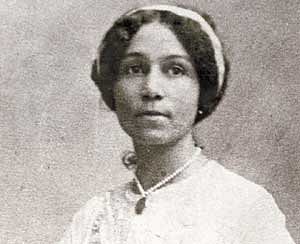
Anne Spencer
1882–1975
Anne has too many names for me to keep up with so we’ll stick with Anne Spencer. Anne was born in Virginia in 1882. She was the daughter of a former slave and her mother enrolled her in school for the first time when she was eleven years old. She graduated seven years later as valedictorian. Known as a “Harlem Renaissance Poet”, Anne was good friends with many Harlem Renaissance writers, including James Weldon Johnson, Langston Hughes, and W.E.B. Du Bois. Spencer’s poetry engages themes of religion, race, and the natural world. Thirty of her poems were published during her lifetime, in such anthologies as The Book of American Negro Poetry (1922) and Caroling Dusk (1927) and was the first African American woman poet to be featured in the Norton Anthology of Modern Poetry (1973).
Gwendolyn Brooks
1917–2000
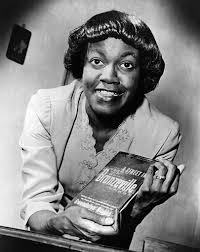
For some reason, whenever I say this woman’s name I think of Books. Seems like it should be Gwendolyn Books, but anyway, Brooks and I do actually have something in common: we are both from Chicago. Brooks was born in Topeka, Kansas, but her family moved to Chicago when she was young. Her father was a janitor who had hoped to become a doctor; her mother was a schoolteacher and trained pianist. They were supportive of their daughter’s passion for reading and writing. Brooks was thirteen (again around the same age I was when I began writing) when her first published poem, “Eventide,” appeared in American Childhood; by the time she was seventeen she was publishing poems frequently in the Chicago Defender, a newspaper serving Chicago’s black population. After such formative experiences as attending junior college and working for the NAACP, she developed her craft in poetry workshops and began writing the poems, focusing on urban blacks, that would be published in her first collection, “A Street in Bronzeville”.
Maya Angelou
1928-2014
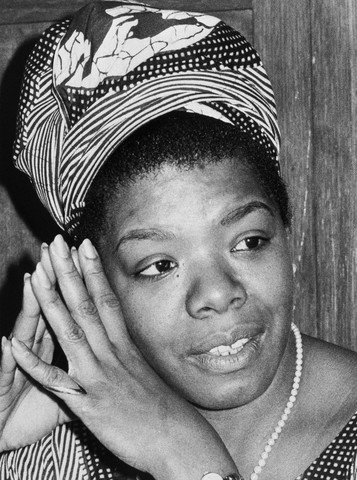
I could probably leave this part blank and many of you would still know who this woman was. The poet and award-winning author known for her acclaimed memoir “I Know Why the Caged Bird Sings” and her numerous poetry and essay collections. Born on April 4, 1928, in St. Louis, Missouri, writer and civil rights activist Maya Angelou is known for her 1969 memoir, I Know Why the Caged Bird Sings, which made literary history as the first nonfiction best-seller by an African-American woman. In 1971, Angelou published the Pulitzer Prize-nominated poetry collection “Just Give Me a Cool Drink of Water ‘Fore I Die”. She later wrote the poem “On the Pulse of Morning“—one of her most famous works—which she recited at Bill Clinton’s inauguration in 1993. Angelou received several honors throughout her career, including two NAACP Image Awards in the outstanding literary work (nonfiction) category, in 2005 and 2009. She died two days after my 27th birthday on May 28, 2014.
Sonia Sanchez
1934
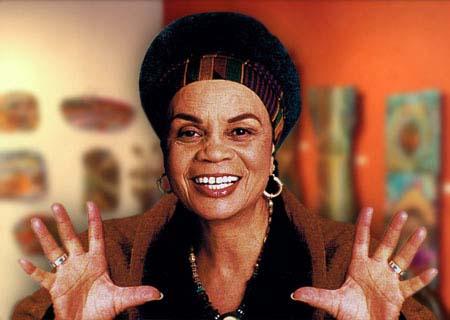
Sonia is another poet whose name rings with such prominence that I could leave her bio blank too and many of you would still know who she is. Born Wilsonia Benita Driver, on September 9, 1934, in Birmingham, Alabama Sanchez lived with her paternal grandmother and other relatives for several years after her mother died in childbirth a year later. In 1943, she moved to Harlem with her sister to live with their father and his third wife. Sonia married and divorced Albert Sanchez, a Puerto Rican immigrant whose surname she kept.
In the 1950s, Sanchez formed a poets’ group, the Broadside Quartet. Sanchez began teaching in the San Francisco area in 1965 and was a pioneer in developing black studies courses at what is now San Francisco State University, where she was an instructor from 1968 to 1969. Sanchez is the author of more than a dozen books of poetry, including “Morning Haiku” (Beacon Press, 2010); “Shake Loose My Skin: New and Selected Poems” (Beacon Press, 1999); “Does your house have lions?” (Beacon Press, 1995), which was nominated for both the NAACP Image and National Book Critics Circle Award; “Homegirls & Handgrenades” (White Pine Press, 1984), which won an American Book Award from the Before Columbus Foundation. From the 1970s through the ’90s, she wrote poetry, plays and kids’ books. She retired from her Laura Carnell chair in English in 1999.
Nikki Giovanni
1943-
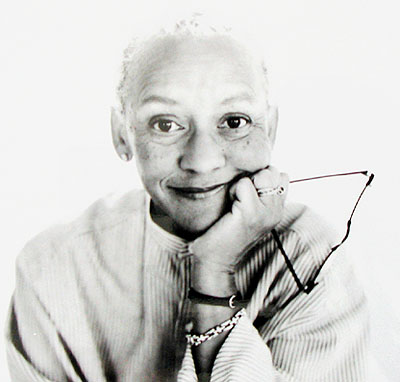
Giovanni’s collections, like the women before her, focused on African American identity. Born Yolanda Cornelia, Nikki Giovanni was born in Knoxville, Tennessee on June 7, 1943 and raised in Cincinnati Ohio, a place I got the chance to visit for our 8th Grade school trip. On July 28, 2000, when I was thirteen years old, I lost my Dad to cancer. In December of 2014, I lost my Aunt to the same disease. In some way or another I can sympathize with Giovanni, who is not only a poet but a Lung Cancer survivor and has contributed an introduction to the anthology Breaking the Silence: Inspirational Stories of Black Cancer Survivors (Hilton Publishing, 2005). Giovanni has been awarded The Langston Hughes award for Distinguished Contributions to Arts and Letters in 1996, as well as more than twenty honorary degrees from national colleges and universities. She has been given keys to more than a dozen cities, including New York, Los Angeles, Dallas, Miami, and New Orleans. She has served as poetry judge for the National Book Awards and was a finalist for a Grammy Award in the category of Spoken Word.
She is currently professor of English and Gloria D. Smith Professor of Black Studies at Virginia Tech, where she has taught since 1987.
Ntozake Shange
1948-
I fell in love with Shange’s poems almost instantly. I really enjoy the raw truth of experience embodied in the words and the style in which they occupy the page is hard to ignore. I like how she allows the words to be written just how they are spoken, how they ignore the “professionalism” of the edit. (though poetry does tend to allow for this kind of freedom).
Born Paulette Williams, Ntozake Shange was born into an upper middle-class African-American family. Her father was an Air Force surgeon and her mother a psychiatric social worker. Cultural icons like Dizzie Gillepsie, Miles Davis and W.E.B. DuBois were regular guests in the Williams home. Shange attended Barnard College and UCLA, earning both a bachelors and master degree in American Studies. But Shange is most famous for her play For Colored Girls Who Have Considered Suicide/When the Rainbow Is Enuf (1975) which is how I was introduced to her. A unique blend of poetry, music, dance and drama called a “choreopoem,” it “took the theater world by storm” said Jacqueline Trescott in the Washington Post, as it “became an electrifying Broadway hit and provoked heated exchanges about the relationships between black men and women…Its form—seven women on the stage dramatizing poetry—was a refreshing slap at the traditional, one-two-three-act structures.” The play uses female dancers to dramatize poems that recall encounters with their classmates, lovers, rapists, and abortionists. The women survive abuse and disappointment and come to recognize in each other the promise of a better future.
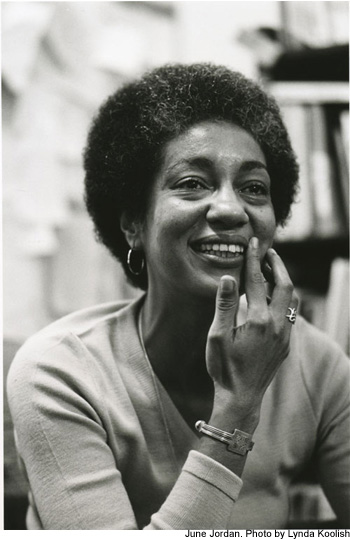
June Jordan
1936-2002
June Jordan is the author of children’s books, plays, a novel, and Poetry for the People: A Blueprint for the Revolution (1995), a guide to writing, teaching and publishing poetry. Her collections of political essays include Affirmative Acts: Political Essays (1998) and Technical Difficulties (1994). Basic Books published her memoir, Soldier: A Poet’s Childhood, in 2000.
Born in New York City on July 9, 1936, June Jordan attended Barnard College. She received the National Association of Black Journalists Award, and fellowships from the Massachusetts Council on the Arts, the National Endowment for the Arts, and the New York Foundation for the Arts.
Her numerous books of poetry include Directed by Desire: The Collected Poems (Copper Canyon Press, 2007), Haruko/Love Poems (1994), Passion (1980), and Things That I Do in the Dark (1977), among many others. She taught at the University of California, Berkeley, where she founded Poetry for the People. June Jordan died of breast cancer on June 14, 2002, in Berkeley, California.
Rita Dove
1952-
Rita Dove is the first African-American woman to be named Poet Laureate of the United States, and only the second to win a Pulitzer Prize for poetry (Thomas and Beulah, 1987), Rita Dove has achieved a great deal in her career. Her multi-layered poems dramatize the stories of individuals both living and dead against the backdrop of larger historical forces (I really like “Reverie in Open Air”). Rita was born in Akron, Ohio on August 28, 1952. Her books of poetry include (but are not limited to) Sonata Mulattica (W. W. Norton, 2009); American Smooth (W. W. Norton, 2004); On the Bus with Rosa Parks (W. W. Norton, 1999), which was named a New York Times Notable Book of the Year and was a finalist for the National Book Critics Circle Award. In addition to poetry, Dove has published a book of short stories, Fifth Sunday (University of Kentucky Press, 1985), the novel Through the Ivory Gate (Pantheon, 1992), essays in The Poet’s World and the verse drama The Darker Face of the Earth (Story Line Press, 1994). She also edited The Best American Poetry 2000 and The Penguin Anthology of Twentieth-Century American Poetry (Penguin, 2011).
Dove is Commonwealth Professor of English at the University of Virginia, where she has been teaching since 1989.
********************************************
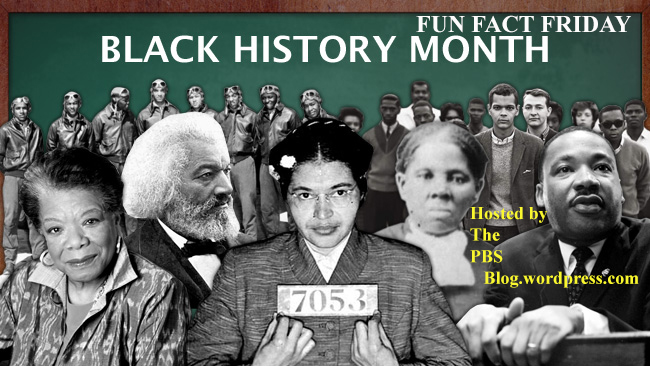
And that’s it for this week’s episode of Black History Fun Facts. Don’t forget to check out last week’s episode, in case you missed it:
FYI: The images used in this post are Rated R per nudity.
When 20 year old Sara Baartman got on a boat that was to take her from Cape Town to London in 1810, she could not have known that she would never see her home again. Nor, as she stood on the deck and saw what had become her home disappear behind her, could she have known that she would become the icon of racial inferiority and black female sexuality for the next 100 years.
Sarah “Saartjie” Baartman (before 1790 – 29 December 1815) was the most famous of at least two Khoikhoi women who were exhibited as freak show attractions in 19th century Europe under the name Hottentot Venus—“Hottentot” considered an offensive term, and “Venus” in reference to the Roman goddess of love. While in her teens, Saartje migrated to an area near Cape Town, where she was a farmer’s slave until she was bought in Cape Town by William Dunlop, a doctor on a British ship. At age 20, Saartje headed for London with Dr. Dunlop where, it was agreed, that they would get rich by displaying her body to Europeans; catering to the people’s’ sexual fascination with aboriginal peoples. Prancing in the nude, with her jutting posterior and extraordinary genitals, she provided the foundation for racist and pseudo-scientific theories regarding black inferiority and black female sexuality. The shows involved Saartje being “led by her keeper and exhibited like a wild beast, being obliged to walk, stand or sit as ordered.” Saartje’s predicament drew the attention of a young Jamaican, Robert Wedderburn, who was agitated against slavery and racism. Subsequently, his group pressured the attorney general to stop this circus. Losing the case on a technicality, Saartje spent four years in London and then went to Paris where she was exhibited in a traveling circus, and seen frequently controlled by an animal trainer in the show.
It was here that she crossed paths with George Cuvier, Napoleon’s surgeon-general, who was also considered to be the dean of comparative anatomy. In his capacity of social anthropologist, he arrogantly and erroneously concluded that she was the missing link. She turned to prostitution and when she died poor in 1816, almost immediately Cuvier had her body cast in wax, dissected and the skeleton articulated. Her organs, including her genitals and brains, were preserved in bottles of formaldehyde. Her remains were displayed at the Musée de L’Homme in Paris until as late as 1974.
“Stay on guard this wicked land will try to strip your soul… got our men selling blow our women on the stripper pole. Once your morals hit the floor do anything to pay the bills, 400 years still ain’t on the level playing field.”
While one cannot control what is forced upon them, one can make the decision to choose a different path. While the treatment of Sara and the retaining of her body parts were horrific, we cannot neglect her choice to prostitute herself. We have all been in positions where we felt we did not have a choice, for struggle and oppression has a tendency to do away with all logic. But what I would like to remind us of today is the importance of not making excuses for those choices. There’s a difference between making a mistake and making a commitment to willfully do. Often we set out to blame outside forces for what we have become because we’ve been deceived into thinking we have no choice. This is not to judge the actions of Sara as a slave, but what we need to understand is that today many Black women are slaves and they are slaves without permission or coercion. There is little difference between Sara Baartman and the current Video Vixen. They are both slaves. Today, the Black woman’s mentality leaves her shackled to a mental incapability of thinking outside of the way she was taught to do so within the physical institution of slavery. She cannot think independently on a physical, mental, or spiritual level outside of what her captives have taught her because of her unwillingness to take responsibility for her own ignorance.
As a result, every time someone attempts to show the so called Black women the error of her ways she is apt to point to an instance, circumstance, person or persons outside of herself. She may very well bring up facts, but she is unable to see the role she plays to make manifest those statistics. It is always a situation where men have abused or disrespected her. It is always everyone else fault except hers. Either a man did it or the white man did it. Many of the women seen on TV, such as the Niki Minaj’s are showing women examples of what it means to be a whore, to prostitute one’s body and to be proud of it. Sadly, many of you idolize these women. You sit back and you allow your little girls to be entertained by such filth. Beyonce is a married woman (allegedly) and yet she prances around the stage half naked and you think it’s cute. You do not teach your little girls about Proverb 31 women and about the Sara Baartman’s; you teach them about the Beyonces. As a result, many young women, crossing all ethnicity’s, grow up with aspirations to put basic morals and values on the back burner while they twerk.
The reality however is that everything is not a stereotype. It is not all a conspiracy. Abuse exists but there is still a choice we must begin to understand about the role we play in deception. It’s not always about deception, but it is also about our willingness to be deceived.







 The PBS Blog