Once Upon a Time in Alabama

Once upon a time in Alabama, there was a racist white man named Charles Agustus Lamar who was angry with Northern states and their desire to end slavery. He devised a plan to send a ship to Africa to buy Africans for $100 and sell them for $1,500. His ship, called the “Wanderer,” made national news in 1858 that it had successfully imported 370 people from Africa who would be enslaved.

However, the slave trade had been outlawed, and Lamar was arrested for illegal slaving.

That’s when another racist white man, steamboat captain Timothy Meaher, made a bet that he could do the same thing but not get caught.

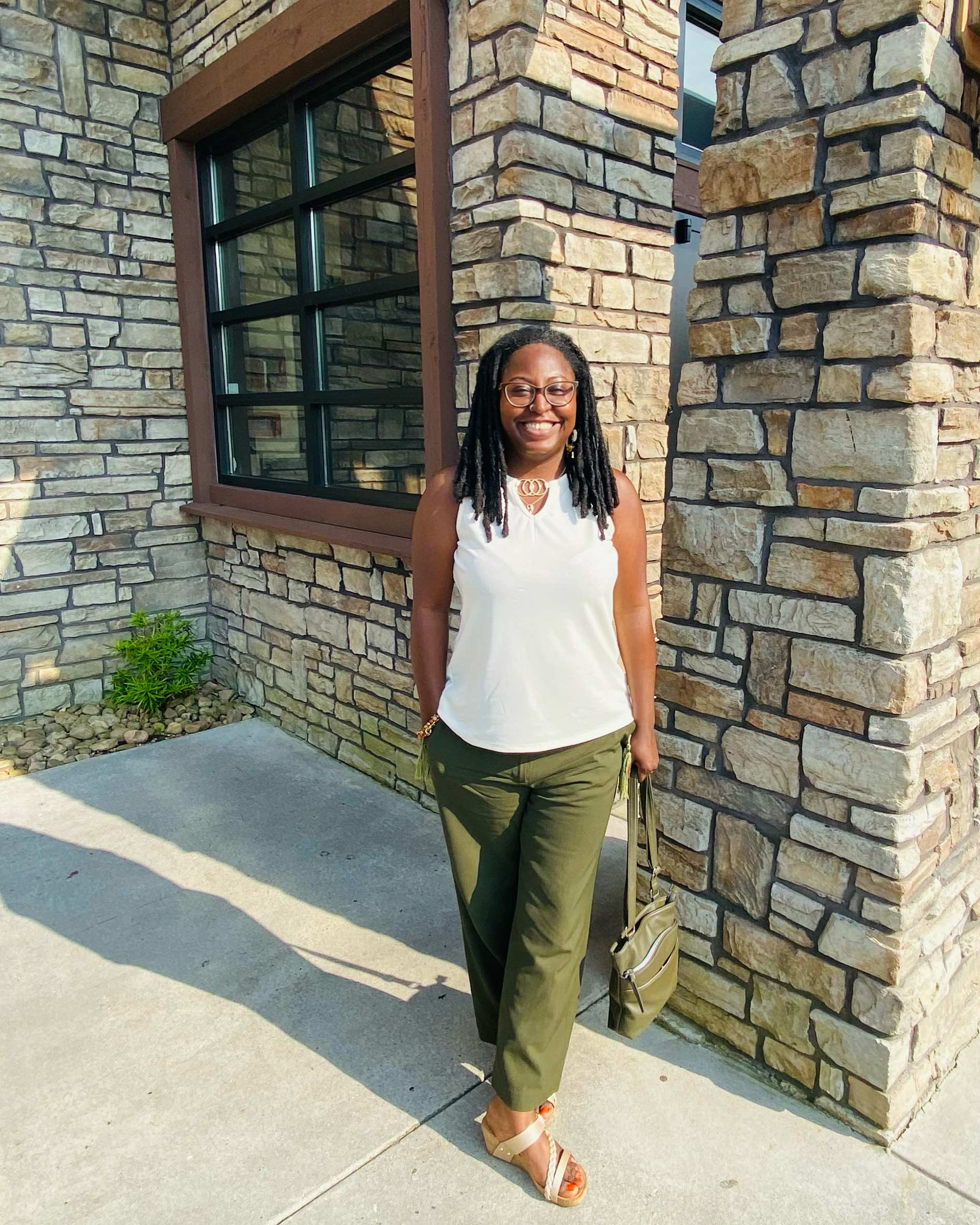
Photo: Yecheilyah

On July 8, 1860, the ship (called the Clotilde / Clotilda) sailed into waters near Mobile Bay carrying 110 men, women, and children stolen from Africa under the cover of night.

They were bought from the Dahomey tribe at $100 each.

After dropping the people off, they burned the ship to hide the evidence, and it was thought to be gone forever.

Photo: Yecheilyah

However, 160 years later, wreckage from the Clotilda was discovered by an environmental journalist, filmmaker, and charter captain Ben Raines who wrote about it in a book The Last Slave Ship: The True Story of How Clotilda Was Found, Her Descendants, and an Extraordinary Reckoning.

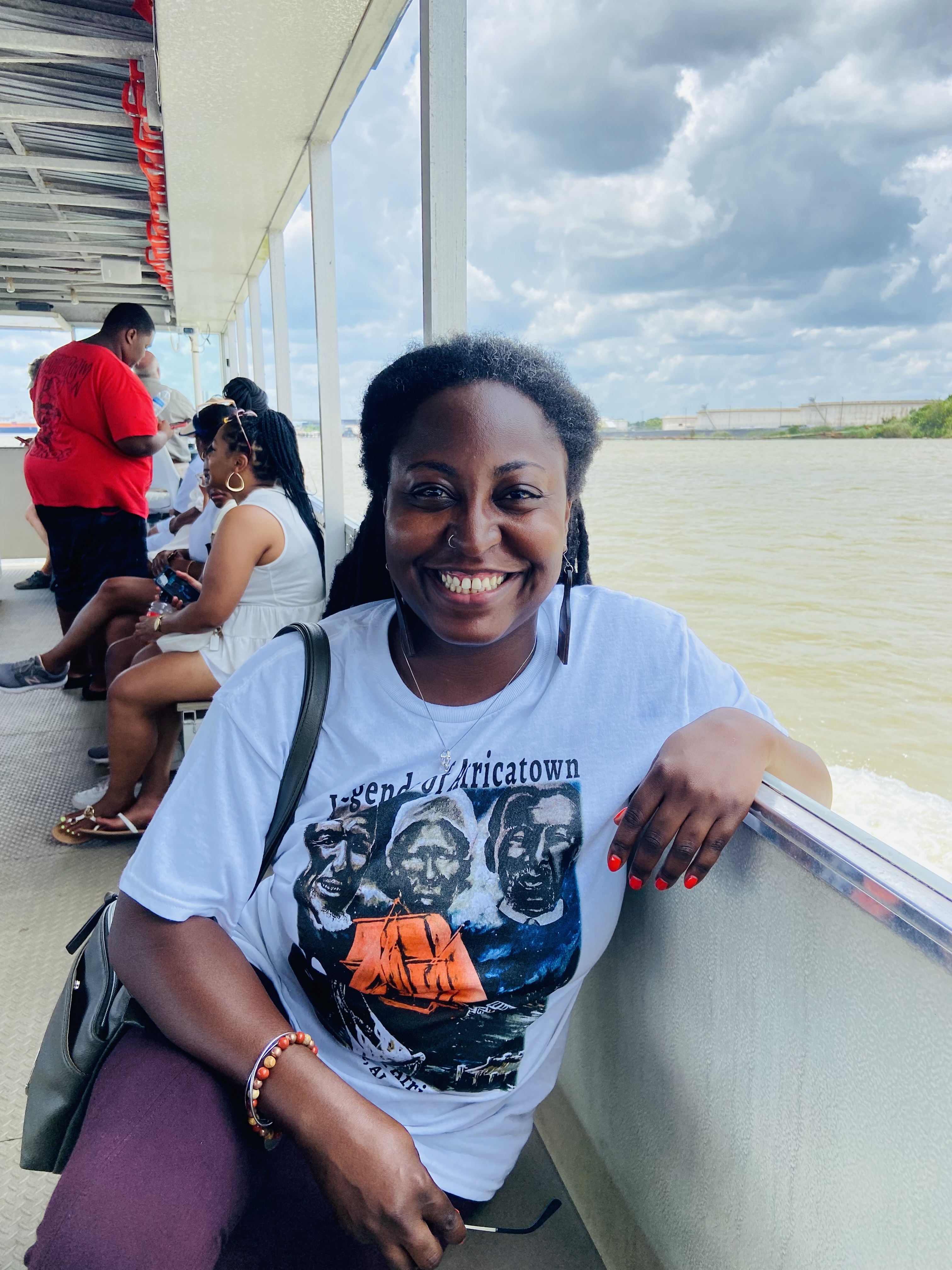
On Saturday, July 8, 2023, I and a group of others had the opportunity of a lifetime on the 163rd anniversary of Clotilda bringing our people into this land.

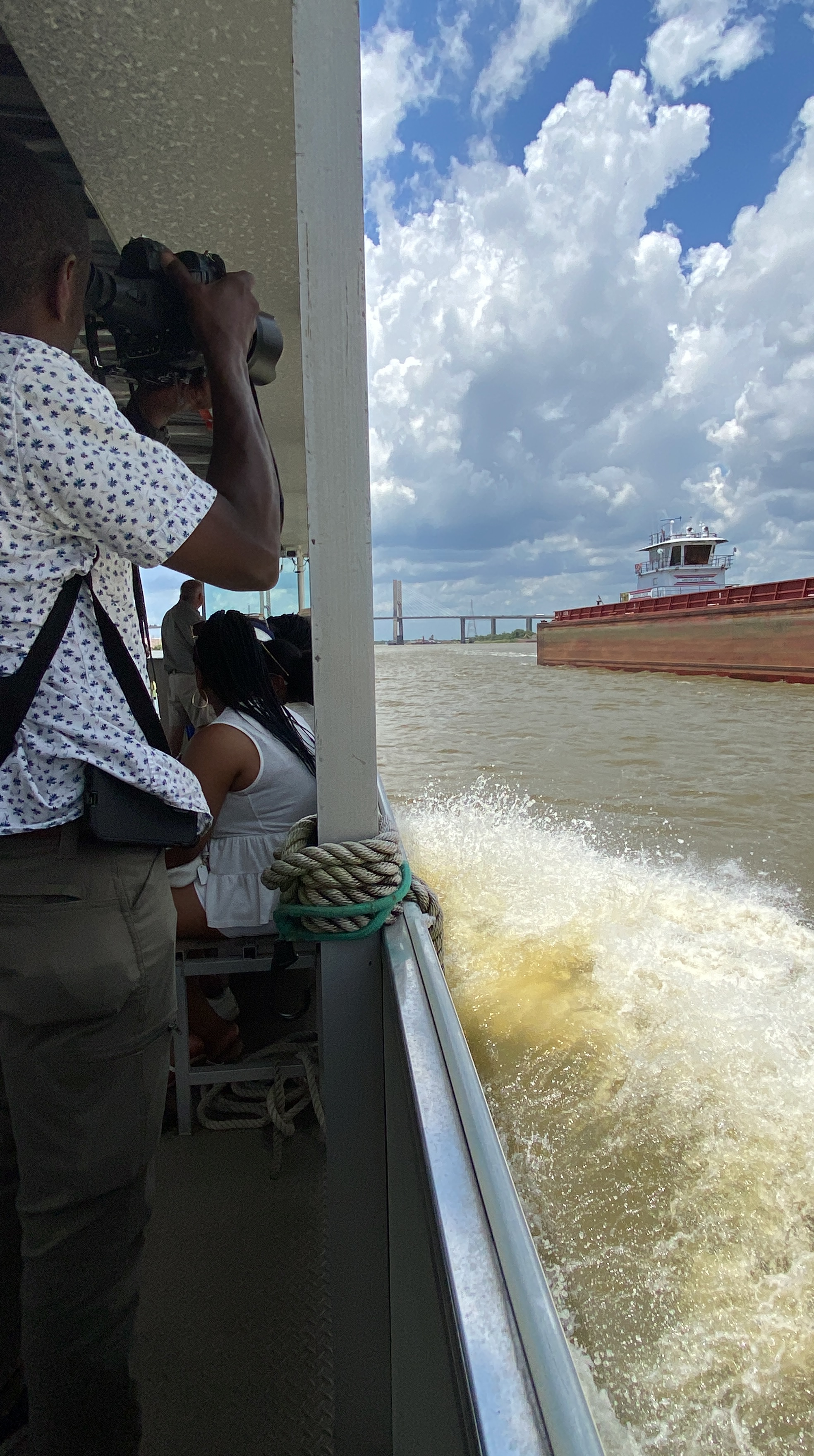
We met and talked with Raines about his journey and findings and sailed to the location of the wreckage, still buried underwater.

It was a humbling experience that filled my heart with much gratitude.

We saw the swamps our people had to walk through once they were let off the steamboat, and it made me truly not want to complain about anything ever again.

A festival was also taking place to celebrate the opening of the Africatown Heritage House.

It felt like 150 degrees out there and ya girl put this scarf on me. Imma let it slide cause she from Kenya, lol.

Once our people were freed, they built their own community and called it Africa Town, which was the original name because the founders ruled it according to the laws and customs of their African homeland. By the early 1900s, Africa Town (later spelled Africatown) was the fourth largest community in the nation governed by African Americans, attracting the attention of Booker T. Washington and Zora Neale Hurston.

Today, Africatown is on the brink of disappearing, though it is a huge part of why this story has been preserved, as the Clotilda prisoners passed it down to their descendants.

More on Africatown and the Clotilda will be covered in the book!

What’s Next?

On our way back from the site, we discussed hopes that there is more focus on preserving the community of Africatown and providing it with the resources needed to thrive. With the money pouring in from the Heritage House, the fear is people might want to come in and gentrify the area. The hope is there is money going into the community to help the people too.

We also hope they do not remove the Clotilda wreckage from the water. Not only will it cost millions of dollars just to remove it, but it might also decrease the value of the wreck and the area.

We propose that instead, a replica of the ship can be made. Again, this will bring resources to the community as everyone wants to see the actual ship. There could be tours conducted to view the replica, the Heritage House, and finally, a boat tour through the location (the same as the one we took this weekend). It can be an exciting three-day or full-day adventure with resources going toward rebuilding the Africatown community.

Photo: Yecheilyah

Africatown is the only known Black community that still exists today that was founded by Black people who had come straight from Africa.


My new book, Black History Facts You Didn’t Learn in School is coming in 2024. I am currently looking for beta readers willing to receive an ARC for advanced feedback. If you are interested, please see this post for details and email me.

Details on the cover reveal, preorder details, and official release date coming soon.

I can’t wait for ya’ll to see the cover!

Unapologetically You

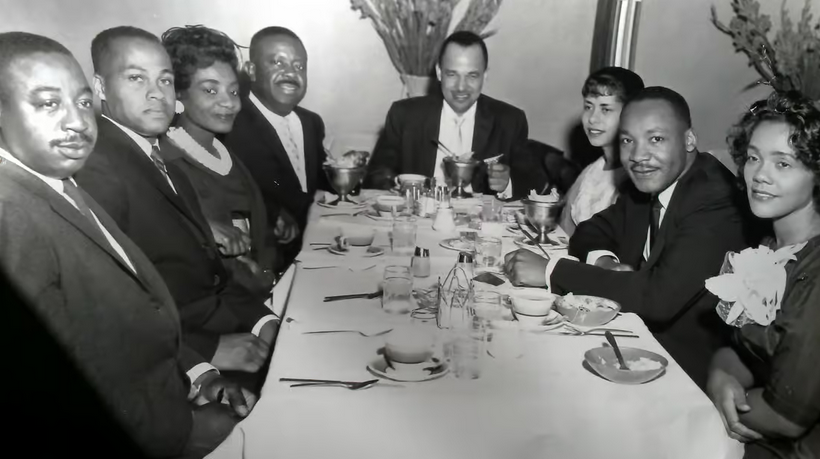
Rev. Fred Bennett, Mr. Isaac Farris, Sr., Mrs. Christine King Farris, Rev. Ralph D. Abernathy, Dr. Roy C. Bell, Mrs. Clarice Wyatt Bell, Dr. Martin Luther King, Jr., Mrs. Coretta Scott King; Pascal’s Restaurant, Hunter St., Atlanta, GA. ~1962 — Photo via Dr. Clarice Bell on Flickr

I am no longer doing anything uncomfortable to make others comfortable.

Yesterday, I turned 36, and you would think this is a lesson I’ve learned by now.

But Paschal’s restaurant was the straw that broke the camel’s back. It upset me for a number of reasons.

But first, a little history.

I chose Paschal’s because I heard about their fried chicken and soul food. Google also informed me that the area has a fantastic civil rights history, having served as the main gathering spot for movement leaders, such as Dr. Martin Luther King Jr., Andrew Young, Maynard Jackson, and others. It was founded in 1947 by two Black men, James and Robert Paschal.

I saw Dr. King’s and others’ images on the walls and was sold.

I didn’t look at any other spots after that. That was where I wanted to go. The prices were steep, but I didn’t care. I was told to pick out any place I wanted, and this is what I wanted.

Or so I thought.

The first red flag was the valet parking, which we paid for via cash app.

I frowned. Cash app? 

Now I’ve used cash app for many things, but a restaurant isn’t one of them.

But I didn’t want to be difficult so I said okay.

We walked in, and I felt like I was back in High School.

Call me bougie, but I was uncomfortable.

I am all for having a good time with my people, but this looked a lot different from the layout on the website.

I expected a fine dining experience with adults and a hint of black history and soul food.

And while the historical images were there, I got a room full of black people blasting Beyonce and standing around like they were at a club.

I was disappointed in what had become of the place. Although I’ve never been, I am sure it was a lot more refined when Dr. King ate here.

You can tell just by the picture above. See how they are carrying themselves? See the arrangement of the dishes? See the dignity?

The lack of decency and respect for our ancestors enough to take care of what they left us (because I am sure the Paschal’s would expect more) saddened me.

To make a long story short, we left.

It is not that I would never eat there. There is a time to kick back in that way. It is that I expect more. I expect more from my people just like I expect more from myself.

Take care of the legacy your ancestors leave behind.

Being Unapologetically Me

Thus, as my heart began to race and irritation blanked my face, I realized all the times I settled because I wanted others to be okay even if that meant I wasn’t. And I decided right then and there that I would no longer accept anything that made me uncomfortable just because I didn’t want to be “too much.”

am too much.

My standards are high, and from this point forward, I will walk unapologetically in this truth. 

I suppose the message here is, I hope you will too.

Be unapologetically YOU.


Update: 

We returned to Paschal’s months later and had a much better experience! The music was tasteful, it wasn’t crowded, and the fried chicken was divine. (The fried green tomatoes, not so much.) The first time, I didn’t consider graduation and Memorial Day weekend. I would recommend this place for sure. There is a grown and sexy vibe with the dimmed lights, bar, and jazz. Just ensure there aren’t any events happening that day and the children are still in school when you go.

Black History Book Street Team

Photo by fauxels on Pexel

I am excited to be on the finishing end of this book and start to send out ARC copies.

If you are familiar with the Black History Fun Fact Friday series, this book is that series in book form, only much more polished and with more information.

Beyond that series, what inspired the book?

We are particularly familiar with the names of Dr. Martin Luther King Jr., Rosa Parks, Frederick Douglass, Harriet Tubman, Langston Hughes, and Zora Neale Hurston. These outstanding leaders had a lasting impression on Black Americans’ history.

But two questions stick out:

  1. How much do we really know about them?
  2. What are some names and histories of other leading Black people and events we are unfamiliar with.

I am looking for:

  • Black / African American readers passionate about Black history
  • Readers of any ethnicity who love Black history
  • History buffs in general
  • Readers willing to leave an Amazon review of the book when it releases

What to Do Now

Please email me at yecheilyah@yecheilyahysrayl.com if you are interested in beta reading to receive a copy.

Who’s in??

Yecheilyah’s Book Reviews – I See You HBCU by Keyshawn McMiller

Title: I See You HBCU

Author: Keyshawn McMiller

Illustrator: Bryan McMiller

Publisher: Why Be I Publishing

Published: September 8, 2022

Pages: 31


The cutest black history children’s book, I See You HBCU is the ideal resource for parents who want to teach their young children about the importance and influence of historically black colleges and universities.

Beautifully illustrated and just 30 pages, little Ahman discovers a box marked “HBCU” while helping his parents carry boxes as they move into their new, larger home. He is bitten by the curiosity bug as he asks his mom and dad what the letters stand for.

He is in for an exciting lesson on Historically Black Colleges and Universities, from how they helped Black students to fit in when we couldn’t go to the same schools as whites to how Edward Waters College was the first HBCU in Florida.

The story centers on an adorable African American family, and the graphics are reminiscent of Boondocks by Aaron Mcgruder. As they respond to Ahman’s inquiries, the mother and father are kind and patient with him. You might feel like a young child on the sofa as your parents dance to the memories of their historically black institutions.

By the end of the book, the author adds an extensive list of HBCUs as a guide for readers!

This is an excellent book to start the conversation about higher education from an African American perspective if you have kids under 10. I think of this as the first of several books that will follow Ahman’s journey. Let’s hope the author feels the same way!

IMG_3599

Ratings:

Age Appropriate for Content: 5/5
Storyline: 5/5
Illustrations: 5/5
Child Self and Self-Identity: 5/5
Thought Provoking: 5/5
Overall Rating: 5 / 5 stars

Grab I See You HBCU for your little ones here!

IMG_4984


To have your book reviewed on this blog apply here. The registry is open for a limited time.

Stay tuned for our next dope read. Next up:

Lifeline of a Soul: The Life-Changing Perspective I Gained While Teaching Entrepreneurship to Prisoners

Yecheilyah’s Book Reviews is a reputable review service that features writers from all over the world, both traditionally and independently published. We are listed on Kindlepreneur as a top-tier book review blog and Reedsy as one of their vetted active book blogs that provide insightful, excellent book reviews.

*Books are read in the order they are received.


What Have You Done?

Photo by Christina Morillo

“A time comes when silence is betrayal.”

– Dr. Martin Luther King, Jr.


On October 16, 2022, I posted a video of things you didn’t know about MLK to TikTok and Instagram. I followed this with a video of women who refused to give up their seats on public transportation before Rosa Parks on October 26th.

And my social media has not been the same since.

My TikTok account increased from 200+ followers when I posted the videos to 1K.

The Rosa Parks video has over 200K views, 30K likes, and over 3K shares on TikTok.

The MLK video is up 57K views, 7K likes, 948 saves, and over 1K shares on Instagram.

But this has not been without controversy.

Since posting the videos, I have experienced attacks on me personally and Dr. King’s legacy. I am okay with this. It comes with the territory.

When telling the truth, the truth teller must expect push back. Prepare your heart for testing. Otherwise, should you wish not to receive negative feedback, do nothing and say nothing.

If you wish to be liked by everyone and not change the world, don’t. Sit on your hands and be quiet.

My calling does not require me to do the latter.

I only have a few questions for those who find fault in me, Dr. King, the videos, and anything I put out.

What have you done to move the needle forward for the advancement of anything?

When you call out Dr. King’s discrepancies and highlight his sins over his triumphs, do you ask yourself what you have done?

Do you consider in your own heart the skeletons in your own closet that no one knows about but you and YAH?

Do you consider your own flaws in your tearing down of someone else?

What programs did you start? What rally did you attend? How many people have you fed? How many people have you clothed?

Is trolling people online and preaching from Facebook and Black Twitter the extent of your ministry? Is debating doctrine on YouTube the catalyst of your movement?

What real work have you done? Whose life was made better by your presence?

We should ask ourselves these questions before critiquing someone else’s mission.

Don’t let your food get cold worrying about what’s on someone else’s plate.

And, for the record, my post was not about Dr. King, the Christian God, and the symbol of white sympathy that this society has made him out to be. My post was about a better understanding of Dr. King, the man, his positive actions, and how his activism has been largely watered down.

For More Black History Facts Be Sure to Visit the Archive Here and Lookout for the Book Coming 2023.

What Indie Authors Can Learn from the Kyrie Irving Controversy

Kyrie Irving is in hot water for posting a link to the documentary Hebrews to Negroes: Wake Up Black America to his Twitter account. The movie is a film adaption of the Independently Published book by the same name. It is alleged that the movie has much antisemitism in it, (I disagree but that’s a different post), and Irving has since taken the tweet down and apologized to the Jewish community via an Instagram post.

This post is about how he found the documentary and what Indie Authors can learn about platforms.

Kyrie Irving found the documentary by researching Yahweh on Amazon, saying that’s what his name translates into. According to this interview, he typed the name in the search engine, and the movie came up.

Many Indie Authors have long-cut ties with Amazon, which is their business. What I hope we can gain is an understanding of how people search for information, namely books, and the role that it plays for us as authors.

Photo by Ricardo Esquive

Amazon is not a distributor or bookstore. Amazon is a retailer that sells many things but is known for books. They are known for books because, in addition to selling books, they operate a Self-Publishing arm called Kindle Direct Publishing or KDP. Amazon is so very well connected with books that bookstores hate them, and people who think of buying a book (and now movies) turn to Amazon almost instinctively.

Amazon is also the world’s second-largest search engine, with Google being the first.

“Amazon, with 54 percent of product searches taking place, is the world’s largest search engine for e-commerce. Technically, Amazon is the second largest search engine in the world excluding Google.”

Decoding the World’s Largest E-commerce Search Engine: Amazon’s A9 Algorithm 

When someone wants to search for a book and does not want to visit an offline bookstore like Barnes and Noble, where will they search first?

That’s right. Amazon.

Hebrews to Negroes was released on December 6, 2014.

Today (11/2022), it is a #1 Bestseller with tons of new reviews. Yes, he searched for the movie, but the book is a #1 Bestseller.

All because a rich and famous celebrity tweeted the link.

And this celebrity found it on the second largest search engine in the US.

The Point

When deciding what platforms to put your book on, consider not what you want but what readers want.

When your average reader wants to look up a movie, topic, or book, they are not going to Smashwords. They are not going to Draft2Digital. They are not even going to Goodreads like that. They are also not flooding B&N.com, though they’ll visit the brick-and-mortar bookstore (catch that).

When people (not necessarily people who are always on the internet and are familiar with the book world but everyday people with jobs who happen to want to buy something) want to look up information, they go to Google and Amazon.

Photo by Andrea Piacquadio

Ignoring this is just not good business sense, except that your goal is not to make money from your books or bring a whole lot of awareness to it, which is cool. Not everyone publishes a book for these reasons.

(It is also not wrong to be on the other platforms, also known in the Indie community as “going wide.” It means you are not exclusive to Amazon but have your book available at other online retailers, which is awesome. I go wide myself. At the risk of steering away from the topic, that’s a post for a different day.)

However, for those of you Self-Publishing books you want people to buy, not being on Amazon is not bad or wrong, but it is leaving a lot of money (and exposure) on the table. 

This post is a nudge to consider more strongly the platforms you wish to sell your book (if you are selling it).

It is a reminder to go to the places where your potential reader will most likely hang out. 

That is the message.

Kyrie Irving found Hebrews to Negroes and made it a bestseller by posting the Amazon link (without a caption) because the book was sitting on a platform where readers are most likely to search for books. 

Go where your readers are most likely to hang out, and search for books like yours.


Click here to access more Indie Author Basics Articles.

Black History Fun Fact Friday – 5 Things You Didn’t Learn About the 1963 16th Street Church Bombing

Yesterday marked the 59th Anniversary of the bombing of the sixteenth street baptist church that killed four little girls on September 15, 1963, in Birmingham, Alabama. After revisiting revisions for the book, I realized I hadn’t included a chapter on this story. You’ll have to get the deeper details later. For now, here are five things we didn’t learn about that tragedy.

Bombings Were Common in Black Homes and Churchs At That Time

Part of the shock and awe factor was the audacity of someone to bomb a church. But, this wasn’t the first time a bombing had taken place. African Americans lived in constant fear as bombs and riots erupted during summer. On December 25, 1956, the KKK bombed the home of civil rights activist Reverend Fred Shuttlesworth. Fifty dynamite explosions occurred in Birmingham between 1947 and 1965, giving the city its nickname “Bombingham.”

Campaign to End Community Integration

The bombings started as a campaign by white people to stop Black people from moving into all-white neighborhoods. Governor George Wallace and Birmingham’s Commissioner of Public Safety Eugene “Bull” Conner went the extra mile in their fight to keep the south segregated. The starting point of many marches, the Sixteenth Street Baptist Church was a target because it was where civil rights activists held many meetings during the 1960s.

The Fifth Little Girl

A fifth little girl was injured but survived. We don’t hear much about Sarah Collins Rudolph, but she was the sister to Addie Mae Collins and was present in the basement with the girls during the explosion. She was blessed to survive, though she lost her right eye.

The Two Little Black Boys

Sadly, the four girls weren’t the only tragedy that happened that day. Shortly after the church bombing, someone killed two black boys, Johnny Robinson Jr. and Virgil Ware. In the book, we’ll dig deeper into their story and what led to their deaths.

A Separate Service

With over 8,000 attendees and Dr. King giving the eulogy, Carole Robertson’s family opted out of the joint funeral and held a separate, private funeral for her. I can’t say that I blame them. What’s worse than seeing the small casket of your now deceased daughter but also having to see the three coffins of her friends?

Black History Facts You Didn’t Learn in School

Coming 2023