A Love Letter To Some of the Black Women Writers Who Inspired Me

9_ylH3e7j_article_large
Image Credit: Black Girl Lost – Sunday Kinfolk

Mildred D. Taylor

Just so you know, I fell for you first. Maybe it’s because that Logan boy and I shared the same name I was birthed with. I mean, back then I had never been to the deep south and I’m sure Stacey Logan knows more about the land than I do. Anyway, I was in 6th grade when we met. You didn’t know it then but you introduced me to black literature and I’m not afraid to claim that title or to separate black writer’s into a category of their own. How could our experiences not be likened to the Roll of Thunder? You were that seed planter for the rooted passion I now carry with me.

Sista Souljah

You always kept it real so Imma return the favor. You see my eyes hypnotized every young man who lusted for my lil sweet self. All fresh and new and walking all lady like. And then you came knocking at my consciousness like the Coldest Winter Ever but claimed No Disrespect. I’m sure we connected by way of the struggle. You see I was brought up in the Robert Taylor projects on Chicago’s south side so crack heads, rats, and hunger didn’t alarm me. I fell in love with the way you never sugar coated the truth and anyone whose been where we’ve been knows just how real your words are.

Maya Angelou

How long must the caged bird write before she sings? I can’t credit myself for coming up with that line. You showed me how a poet can use metaphors to write fiction too. Even though your memoir is all truth, your talent transformed it into something that can be considered just as poetic as phenomenal women. Your voice was passionate and strong and thundered like waves of air across the sky. Even in death is your memory, still that uplifting arm rising like dust and written down in history.

Ntozake Shange

Speaking of poetry, ever since I heard you speak I wanted to write for colored girls. You brought me back to those Souljah days with your raw tongue. How it unfolded from the very bottom of your gut and lifted the skirt to every pain black women have endured since the days their slave masters told them that rainbows weren’t enough. You didn’t write the way that I was taught in school, you wrote the way that I spoke. Like when my friends and I crowded around de front porch and ma boyfriend waz whispering quite literally, sweet nothin’s in my ear. And I laughed stupid like “You pretty” was something revolutionary enough to show my privates for.

Toni Morrison

By the time I got to you my thoughts started to evolve into a wanting I couldn’t put my finger on. My mind had gone from reading for entertainment to studying the books I read. I was on a search for something deeper than cotton fields, magnolia trees, and project rats. By the time you came along I was reading in-between the lines and trying to find that thing called freedom. And I wondered just how deep I had to look for that Tar Baby.

Gwendolyn Brooks

As soon as I found out you were from my home town we bonded. Was real cool like besties from the low end on the South Side. Bonded like 47th Street and State, Bronzeville, or Englewood. You see your lyrics had depth like the deep south you was born in, but had that look about it that screamed Chi-Town. Simple poetry that spoke volumes. You taught me that if I loved him the right way, saw him the way I was supposed to, that a man became more than just a body.

Terry McMillian

This relationship of ours! I can read you anytime and Lewis will always seem like the same Ray Ray and Pookie we all know. You perfected the art of black family life and character development. Every book I read of yours sends me into that world and I’m just laughing and shaking hands with your people like they my people because they are. I have stayed up plenty of nights turning pages and laughing and trying to figure out just what it means to be A Day Late and Dolla Short.

***************

A Love Letter to the Black Women Writers Who Liberated Me Read the title of an article written by Ashley Gail Terrell, a freelance writer from Michigan working on her first novel. Her post was inspiration for this piece.

I believe there are stepping stones to everything in life. That something that leads and guides us from one place to another so that we can reach the place we’re supposed to be. It can be anything from music, movies, television, people, places, things, and even books. Now, because of choice we do not always see these stepping stones for what they are; do not always notice the impact they are having in the moment in which we experience it and for some of us, perhaps we never will. But when I read this title, I thought back to the writers who I have come to love over the course of time and I began to meditate on how they have influenced my writing. When I was not yet where I am, spiritually, mentally, and physically, these writers (although not just these writers) became valuable launchpads on behalf of my writing today, sparking a flame of passion for the art that I still carry with me.


Carmelo Anthony Makes Public Stance Against Police Brutality

586566-260471

First off let me start off by saying ” All Praise Due To The Most High.” Secondly, I’m all about rallying, protesting, fighting for OUR people. Look I’ll even lead the charge, By Any Means Necessary. We have to be smart about what we are doing though. We need to steer our anger in the right direction. The system is Broken. Point blank period. It has been this way forever. Martin Luther King marched. Malcolm X rebelled. Muhammad Ali literally fought for US. Our anger should be towards the system. If the system doesn’t change we will continue to turn on the TVs and see the same thing. We have to put the pressure on the people in charge in order to get this thing we call JUSTICE right. A march doesn’t work. We tried that. I’ve tried that. A couple social media post/tweet doesn’t work. We’ve all tried that. That didn’t work. Shooting 11 cops and killing 5 WILL NOT work. While I don’t have a solution, and I’m pretty sure a lot of people don’t have a solution, we need to come together more than anything at this time. We need each other. These politicians have to step up and fight for change. I’m calling for all my fellow ATHLETES to step up and take charge. Go to your local officials, leaders, congressman, assemblymen/assemblywoman and demand change. There’s NO more sitting back and being afraid of tackling and addressing political issues anymore. Those days are long gone. We have to step up and take charge. We can’t worry about what endorsements we gonna lose or whose going to look at us crazy. I need your voices to be heard. We can demand change. We just have to be willing to. THE TIME IS NOW. IM all in. Take Charge. Take Action. DEMAND CHANGE. Peace7 #StayMe7o

Source: http://bossip.com/1331619/carmelo-anthony-takes-out-full-page-in-the-new-york-daily-news-to-call-on-fellow-athletes-to-stand-for-change-on-police-brutality/

Do Not Ask What, Ask Why

unsplash-laptopbackupfimage

We’ve known “What” since stepping foot off slave ships. We’ve known “What” since the crack of the whip. We’ve known “What” since Lynch mobs and sharecropping. We’ve known “What” since overseers, paddy rollers and colored signs. We’ve known “What” since the back of city buses and Jim Crow. We’ve known “What” since crack, ghettos and foster homes. Indeed, if there is anything black people are familiar with, it is what. The question is therefore not what, the question is why? Why the haunting images of public executions of black men? Why does the protests of Black Lives Matter mirror that of the Civil Rights Movement when we should have moved passed this? How is it that what happened 50 years ago and DIDN’T work, will somehow work today? Have we not marched? Have we not protested? Have we not already sang freedom songs and willingly gone to prison? Why are black people at the bottom of every single ethnic group and society there is? Why have we been here for nearly 400 years and have yet to produce the economic standing of nations who have been here not even half that time? The question is not what, the question is why? Why are things always so black and white? Why is it always black against white?

In the book of Exodus there is a story. This story is about the Israelites. Pharaoh said to kill off the Hebrew boys for fear that the Hebrew population would grow and that they would overrun the Egyptian population (Ex 1:9-16). More so, they will do unto the Egyptians what the Egyptians have done unto them. Fears of uprisings among African Americans can be traced back to the days of Nat Turner. To think this fear has been lost or has gone away is not to have been alive.  You see “Why?” has been around for centuries and on the tongues of every prophet. “Why?” is in the blood of every black man and woman walking this earth today. It is in every breath we take, and every move we make. “Why” is in our very DNA, our living souls breathing proof of the covenant we made so long ago. Do not tell black people that they should not be angry when our sons blood cries out to us from the ground. Instead, ask “Why?” Do not ask What, Ask Why because why is the key to everything. Why is understanding that what is happening out there is bigger than any man. “Why?” is understanding there is a reason black lives do not matter in this land. “Why” is understanding the story of Israel, the covenant they broke, and its connection to the black man and woman in America today. You see, “Why” is the key when you are the people of the book, when the police is Pharaoh, and America is Egypt.

Tales of African American History Found in DNA

Very interesting article. Check it out:

“The history of African Americans poses special challenges for geneticists. During the slave trade, their ancestors were captured from genetically diverse populations across a portion of West Africa. Adding to the complexity is the fact that living African Americans also may trace some of their ancestry to Europeans and Native Americans.”

Black History Fun Fact Friday – Medical Apartheid

This Week’s episode of Black History Fun Fact Friday is the recommendation of Harriet Washington’s Groundbreaking book Medical Apartheid.

ec2d5b63c1c9fe0a8ec648f7f75c3fd1

Medical Apartheid is about the deliberate infection of people with deadly or debilitating diseases, exposure of people to biological and chemical weapons, human radiation experiments, injection of people with toxic and radioactive chemicals, surgical experiments, interrogation and torture experiments, tests involving mind-altering substances, and a wide variety of others. Medical experiments on children, the sick, mentally disabled individuals, and most especially Blacks, often under the guise of “medical treatment” go back for centuries.


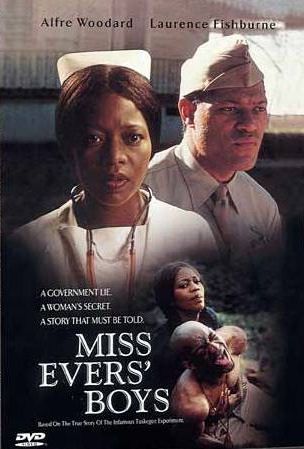
ea_d_38868_0_MissEversBoysOne well-known case of experimentation on Blacks is The Tuskegee Syphilis Experiment, a clinical study conducted between 1932 and 1972 by the U.S. Public Health Service to study the natural progression of untreated syphilis in rural African-American men in Alabama. Mrs. Evers Boys starring Alfred Woodard and Lawrence Fishburne is a movie modeled after this experiment. The men were told that they were receiving free health care from the U.S. government and for forty long years had to tackle the deadly side effects of a disease many of them didn’t know they had. Also, it must be stated that many of these men did not previously have the disease before the experiments began.

The Public Health Service started working on this study in 1932 during the Great Depression, in collaboration with the Tuskegee Institute, a historically black college in Alabama. Investigators enrolled in the study a total of 600 impoverished sharecroppers from Macon County, Alabama. Of these men, 399 had previously contracted syphilis before the study began, and about 201 did not have the disease. Because these men were poor and often had no access to free medical care, the enticing sound of free medical care, meals, and free burial insurance for participating in the study prompted many of the most reluctant to take part. None of the men infected was ever told he had the disease, nor was any treated for it with penicillin after this antibiotic became proven for treatment.

According to the Centers for Disease Control, the men were told they were being treated for “bad blood“, a local term for various illnesses that include syphilis, anemia, and fatigue.

9780385509930_custom-11bb499dd9e2430b63af7a3b00d4cbf9b26dd62c-s6-c30The product of years of research, Medical Apartheid is an excellent book and source of study by Harriet A. Washington on the dark history of medical experimentation on Blacks from the colonial times to the present. She speaks in depth about the history of such organizations as Planned Parenthood and The Negro Project, known previously as The American Birth Control League (whose true purpose was to rid the world of so-called “weak breeds” who were downgrading the American population through a system known as Eugenics), to other frightening tools on unwilling and unknown people.

Throughout the 1840s, J. Marion Sims for example, often referred to as “the father of gynecology”, performed surgical experiments on enslaved African women, without anesthesia. The women—one of whom was operated on 30 times—regularly died from infections resulting from the experiments. In order to test one of his theories about the causes of trismus (locked jaw) in infants, Sims performed experiments where he used a shoemaker’s awl to move around the skull bones of the babies of enslaved women. He also addicted the women in his surgical experiments to morphine, only providing the drugs after surgery was already complete, in order to make them more compliant.

A documentary that is a great compliment to Harriet’s book is called MAAFA, an explosive exposé of the racist eugenics agenda of the abortion industry in the United States. It makes the case that, though abortionists claim to advocate privacy, women’s rights, and reproductive choice, their true motive is racial genocide and ethnic cleansing and goes back for centuries.

MAAFA can be watched for free on YouTube HERE.

Get Medical Apartheid on Amazon HERE.


Publicationbhff

And that’s it for this week’s episode of Black History Fun Facts. Here’s Last Week’s Post in case you missed it:

Week #5: Negro Spirituals

Black Slaves, Native Masters

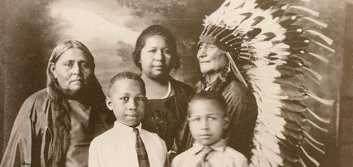
“I got Indian in my family.”

Is something I hear often among the black community. Even in my own family, my mom talks of how her dad was 100% Cherokee Indian and how our family were cow slaughters which explains my maiden last name which is Hereford, a kind of cow.

Black Slaves, Native Masters

However, while many black families are proud to proclaim their Native Heritage, what is rarely passed around our dinner tables is an important fact in American History. This fact being that even the 5 Civilized Indian Tribes held slaves. A lot of black people jump at the chance to proclaim the above statement because oppressed people typically wants to identify with other oppressed people but the truth is stranger than fiction. Native Americans were oppressed by Europeans but they both had black slaves. In fact, Native Americans knew the layout of the land better than anyone else and it was they who taught the Europeans how to track and to capture slaves. (This is why in last weeks Underground Episode the little boy asked the black slave, “You used to live with the Indians didn’t you? And you taught my daddy how to track.” He used to live with the Indians because he was their slave same as he is the slave to the little boys father. Underground is a very well written TV show).

“Though the harsh treatment of enslaved Africans largely paled in comparison to that of white slaveholders, Blacks still were treated as an underclass among Native Americas. The Five Civilized Tribes even established slave codes that protected owners’ property rights and restricted the rights of Blacks.”

(Barbara-Shae Jackson, The Atlanta Black Star)

What’s deep about my family history is this:

Cherokee is one of the tribes who took part in the Trans-Atlantic Slave Trade (along with Chickasaw and others). In addition, the term “Cow-Boy” is also derivative of slavery. The slave boys who handled the cows were called cow boys. So when you watch Quentin Tarantino’s Django the content is actually not out of context far as the cow boy theme is concerned and my maiden name is potentially much more deep than we know.