Guest Feature – A Modern Day Slave Plantation by Laura Dimon Part 2

*Note: This article was not written by The PBS Blog, it is featured as part of the continuation of an ongoing series and is written by Laura Dimon. Please view our Guest Feature or Article Section for Part 1*

**************************

Angola_Prison_--_Leadbelly_in_the_foreground

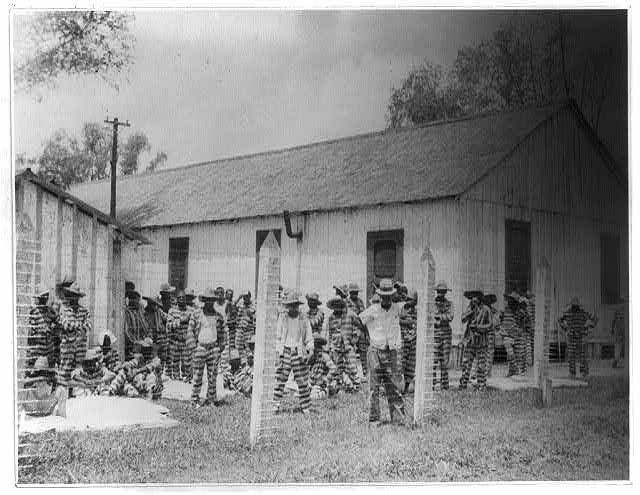
In 1972, the prisoners were virtually all black. Merciless guards — all white men, called “freemen” — worked the inmates like slaves. Sugar cane was the main crop, King said. In the documentary film In the Land of the Free, it’s stated that the inmates labored all day every day for a measly $.02 per hour. The abuse didn’t stop there. As NPR reported, “There was a prisoner slave trade and rampant rape; inmates slept with J.C. Penney catalogs tied to their waists for protection.” King was one of three men who formed the famous Angola 3 group, leaders of the Black Panther Party’s Angola chapter. King said they were fighting for equality, but he later realized their efforts had been misaimed: “We were focused on civil rights, but we didn’t have human rights,” he said.


Prison Horses

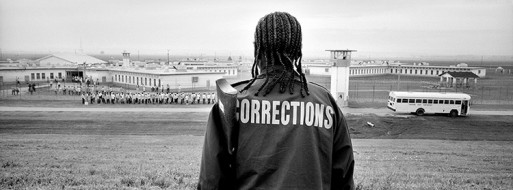
In our most recent conversation, I asked King, “How’s it going?” “It’s … ongoing,” he replied. It’s easy to see why: Little has changed at Angola. It remains a time warp, a living, breathing relic of a shameful past. Of about 6,000 inmates currently in custody, roughly 70% are black and 30% are white. In October 2008, NPR reported, “In the distance on this day, 100 black men toil, bent over in the field, while a single white officer on a horse sits above them, a shotgun in his lap.” The context of this modern day slave plantation is unfortunately appropriate. Nola.com wrote that Louisiana is the world’s “prison capital,” with 1 in 86 residents serving time — nearly double the national average. The racial skew is extreme. One in 14 black men in New Orleans is behind bars; 1 in 7 is either in prison, on parole or on probation. Louisiana is “notorious for racial disparities in its justice systems,” Andrew Cohen wrote in the Atlantic.


One highly concerning aspect of Louisiana’s judicial scheme is that, unlike in 48 states, a unanimous jury decision is not required — only 10 jurors have to vote to convict someone, even for a life sentence. Oregon is the only other state with this system, but it doesn’t have the same tremendous racial component. Cohen wrote, “Prosecutors can comply with their constitutional obligations to permit blacks and other minority citizens to serve as jurors but then effectively nullify the votes of those jurors should they vote to acquit.” It is one of “the most obvious and destructive flaws in Louisiana’s broken justice system,” he wrote, arguing, plain and simple: “Louisiana is terribly wrong to defend a law that was born of white supremacy.”

grace-before-dying-513x190
A Duke University study examined more than 700 non-capital felony criminal cases in Florida and found that, in cases with no blacks in the jury pool, blacks were convicted 81% of the time while whites were convicted 66% of the time. The researchers concluded that “the racial composition of the jury pool has a substantial impact on conviction rates” and that “the application of justice is highly uneven.”


Image Credits: AP, Peter Puna, Robert King, Google Images

Learning Disabled: A Manmade Disease

One of the duties I perform almost daily, about 2-3 times a week (it used to be 5), is that I provide tutorial services to children, primarily in the area of literacy—reading, writing, and vocabulary. I have also Home Schooled children for three years prior to my tutorial services, who ranged anywhere from Kindergarten to 6th grade. Needless to say, I rather enjoy teaching children; it involves my two most favorite things: teaching and children (obviously). We even do a Lecture presentation on the Dumbing Down of the Educational System, primarily its relation to black youth. We’ve presented in Kentucky, Chicago (my home town…south side! < in my Chicago voice, if you ain’t from the Chi don’t worry, you won’t get the joke), Baltimore, and Houston to name a few. In my experience, I’ve learned so much about how children learn and some of the valuable methods needed to assist them in this endeavor. I still don’t consider myself an expert, but what I’ve come to research and to understand by way of hands on face to face experience has taught me a lot. And today I would like to speak briefly on learning disabilities because there is simply no such thing.

learning-classroom-288x162

Certainly, there are indeed children who have a much more difficult time reading and writing than others. As early as 1867, a German teacher of the deaf founded a school for slow learning children. Accordingly, these children’s memories were too weak to remember letters and due the poor motor coordination of their fingers they had difficulty learning how to write. So the teacher understood he must implement remedial reading methods. This did not mean however, that these children were mentally retarded. The moral of the story is that problems with learning have always been around, the question is, when did the idea of a “neurological dysfunction” called herein Learning Disabled, become the term to which we apply to children who learn at a slower pace than others? And does a Learning Disability actually have anything to do with how they learn in the first place?

Duchenne_de_Boulogne_3(2)

A disease is an illness caused by a virus that has attacked the immune system, and on April 6, 1963, a new disease was implemented in Chicago that had its roots in the south, that would very soon be given to millions of black schoolchildren before ballooning into a worldwide epidemic. It was said to have been hidden deep inside the neurological system according to psychologist. What we didn’t know however, was these were the same psychologist who had been studying the brain and central nervous system in search for man’s soul since the time of Wilhelm Wundt, founder of experimental psychology back in the 18th century. Wundt believed that man didn’t have a soul living inside of him, and as such he was no different than an animal whose actions are almost always reactions. That is, man’s behavior is only determined by his surroundings and can thus be altered by way of stimulus-response; provide the right stimuli, get the right response. In short, he can be programmed like an animal in a laboratory. So, fast forward to the 1960’s when scientist and psychologist began to back the promotion of one of the most deadly diseases now plaguing not just the so called African American community, but communities in general. The United States Government would spend billions of dollars on this new affliction over the next 20 years.
brown

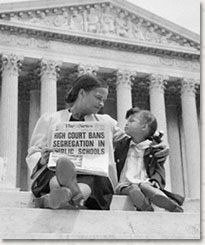
In 1963,  nine years after the Brown vs. Board of Education verdict of 1954, that stated that racial segregation of children in public schools violated the Equal Protection Clause of the Fourteenth Amendment (FYI, the decision did not fully desegregate public education in the United States, though galvanizing the Civil Rights Movement), The Learning Disabled Movement began taking root. The beliefs that people were a result of their environment had long since upheld the belief that wealthy children of well-to-do neighborhoods would flourish academically, while poor children of impoverished neighborhoods would not. Of course, we have to keep in mind that this was during the Civil Rights Era and that (even until this day) there are certain code words that are often used to represent a certain group of people so that the declarations remain politically correct, and are not cause for concern. What was meant by this is simply that rich white kids in the suburbs would do better than poor black kids in the ghettos academically. However, in the 1960s, parents of white children saw a drop in their children’s IQ’s and academic success. They saw that their children too, were not performing very well. And since psychologist had long since experimented with the brain and nervous system enough to provide the statistical data to “prove it”, these parents formed The Learning Disabilities Movement, in which there was allegedly a mental disorder associated with their children’s lack of academic success:

“For many of the parents of these children, accustomed as they were to success and acclimated to a pain-free educational scheme, these results seemed fluky. Since they felt themselves entitled to success, failure was an obvious aberration {oddness}. Educators faced a similar problem: They could not blame the low test scores on racism and poverty or even the lack of funding. Students from the most lavishly appointed schools in the nation were failing to make the grade. The impetus for change came from parents first. They could have blamed “systematic social influences on the schools” for the failures, or they could have blamed principals and teachers for ineptly handling neurologically normal children. Or they might have decided that their children were “slow learners, ecologically disabled, or just bored to death by school.” Instead, they gravitated toward the idea that their children suffered from learning disabilities.” – Charles Sykes, Dumbing Down Our Kids, pg. 189-190

There was, of course, no such thing as a learning disability, but the “professionals” sure did clear that up. Put together a hodgepodge of numbers and graphs and people would believe anything. And they did. “Learning Disabilities” appealed to many parents and helped to jump-start the birth of a nation. But this program would soon become something much greater. After Brown vs. Board of Education, this program would become the savior of separate but unequal. This is when we come back to Samuel Kirk, the Chicago Psychologist.
13315291-mmmain

In that same year, 1963, Kirk created The Learning Disability, except the LD movement had already begun in the south between white parents and the “professionals” who backed them. This Learning Disability he would create however, would flip the script: it would no longer be used as an excuse for prominent white parents; it would become a tool against black children. Now black children (especially black boys), can be separated from white children and it was not against the law. The Gifted program took off around this same time, the 1960s. It was a program to which school children’s IQ’s would be tested to separate those who were highly intelligent from those who were not. The concept of IQ (Intelligence Quotient), which is used in the “diagnosing” of Special Education (a Federal Program), was started by Eugenicist (Eugenics is the belief and practice of improving the genetic quality of the human population by killing off those “less desirable”, such as African Americans, as a form of birth control) from The American Eugenicist Society for the purpose of population extermination. Since students could no longer be judged by the colors of their skin, they were now judged by numbers and test scores. It wasn’t until after the Brown vs. Board of Education Verdict of 1954 that the “Gifted” program even took off because it was another way to keep the “races” separate without breaking the law.

 

ADHD-Attention-Deficit-Hyperactivity-Disorder-

Now ALL children across ethnicity’s are infected with the disease of “Learning Disabled”. They have to walk around with the stigma that they are mentally sick for the rest of their lives although there is nothing to prove it. When you say you want your child tested, what does that mean? The test does not tell you whether or not your child has a learning disability. Tests produce numbers; it is not a diagnoses. It’s your signature on a piece of paper that gives the school psychologist permission to tell you what they think, and to make hypothesis or “Educated Guesses” on whether or not he or she thinks the child is reading disabled.

BLD077975

What parents need to understand, is that there is no “study” that can determine or prove that someone is something called “Learning Disabled” because there’s no such thing. No physical symptoms, no known neurological deficits, no genetic traits, no consistent clinical descriptions, no diagnostic testing, no techniques of treatment based on actual real, factual evidence outside of medications intentionally designed to slow energized and happy kids down and make them depressed eight year olds…. there is absolutely nothing that proves a child has a mental disorder associated with learning. We’re not talking children who are slow learners and need that extra help,  or children who simply have trouble reading and writing, we’re talking about a medical deformity, a neurological retardation of the child’s ability to understand called Learning Disabled, it does not exist. When the teachers come to you with that question about testing your child, especially your boys, start asking questions and demanding results. And finally,  stop signing every piece of paper children bring home from school.

Guest Feature – A Modern Day Slave Plantation Exists, and It’s Thriving in the Heart of America – Part 1

This post is part of a 3 day Special Feature Post on ThePBSblog, located under our Articles  and Guest Feature section. The author’s name is Laura Dimon. Laura graduated from Columbia University’s Graduate School of Journalism in 2013. She has been published in the Economist, the Atlantic, and the Daily Beast. I ran across her article on the Prison system and its striking similarity to the Slavery Plantation and thought I’d share it here. However, it is  a lengthy article so I will be breaking it down into 3 separate post to give you room to process the information. I will also wait until after this series (Friday 10/17/14) before adding my own commentary, though you may comment after each segment as you wish.

*******************************************

It was 1972. Thousands of American troops were battling communist forces in Vietnam. Nixon had won re-election by a landslide, but Watergate would soon usher in his demise. Space travel and technology were advancing rapidly.
Change was brewing across America, but one place stood still, frozen in time: Louisiana State Penitentiary, commonly known as Angola. When Robert King arrived that year, he felt as though he’d stepped into the past.

90c8de8106fbbeda3ba73105db15189d
Angola sits 50 miles northwest of Baton Rouge. It’s the largest maximum-security facility in the United States and one of the country’s most notorious prisons. In the book The Life and Legend of Leadbelly, the authors wrote, “Tough criminals allegedly broke down when they received a sentence to Angola. … None of them wanted to be sent to a prison where 1 of every 10 inmates annually received stab wounds and which routinely seethed with black-white confrontations.”

 
Angola’s expanse covers a vast 28 square miles — larger than the size of Manhattan. Tucked away in a bend of the Mississippi River, it’s surrounded by water and swamp on three sides. It’s an isolated penal village — the nearest town 30 miles away — and it’s the only penitentiary in the country where staff members live on site. Generation after generation grow up, live and die on Angola’s land.


6be2f7f86a51e48c43c5d2ca8c296dab
When King, now 71, arrived at Angola, his first impression of it was that it resembled a slave plantation, he said. And it used to be just that. Its name is derived from the home country of the slaves who used to work the land. Today, the comparison remains sadly accurate: Inmates are disproportionately black. They’re forced into hard labor and monitored closely by armed white staff on horseback. There is a sex slave trade behind the bars and many black inmates are deprived of basic constitutional rights. King landed a tough lot in life: He was born black in Louisiana in 1942. In his 2008 book From the Bottom of the Heap, he wrote, “I was born in the U.S.A. Born black, born poor. Is it any wonder that I have spent most of my life in prison?” He went to Angola when he was 18 for a murder he did not commit and remained there for 31 years, 29 of which he spent in solitary confinement, before he was finally freed in 2001.

*Note: Image Credits: AP, Peter Puna, Robert King

Embracing Change

Children have a tendency to think under the realm of simplicity. For this reason, we are encouraged to be in our mentality as a child, so that we maintain the humility necessary to receive the discipline of wisdom. Especially since there’s been awhile since many of us were children, so we have to be reminded of this kind of meekness, and to understand that most of the answers to the questions we look for are right here before us, but that we miss seeking “profundity”. Indeed, some of us need to seriously regress back into childhood and understand how simple things really are. But children also have a tendency to be unstable in their ways. They are more apt to move from place to place easily, despite danger. But as adults who have gained a certain level of experience, we cannot afford to be led astray by the elementary matters of childhood, in which we continue to trip over the same mistakes over and over again before we attempt to change them.

 
Change itself is difficult, for it is buried under years of routine and tradition. However embracing change when it is occupied by truth can cause great discipline, and create a greater understanding for the individual who is willing to grow up. It is a light that comes with maturity, illuminating the path of the elder. But not everyone of age is wise, for many of us are still easily led astray and stuck in our ways; plagued by the unchanging traditions of our youth. (There are countless old fools) And as some children are afraid of the dark, so are we who have yet to put off the instability of childhood; still heavier than darkness are we to ourselves. We can remove this burden however, if only we are willing to embrace change, and all of the gifts that come with it.

Choices

choice11

The Story

 
When enrolling in college was one of the most important and exciting times in my life, I couldn’t make it to her office fast enough. I cannot recall her name, only the exciting rush of anxiety that ignited in my heart and up to the creases of my face. She wasn’t anyone of particular specialty or significance, but what she represented was indeed important. She was my academic adviser and seeing her meant that I was on the road to something great. If I had not “made it” it was the step in the right direction. Little did I know the kind of revelations choosing this particular institution would cough up for me. Little did I know how much my life would change from this seemingly unimportant choice, which would have nothing to do with school, academia, or some fancy certificate to prove to the world how much I actually lacked in knowledge.

 
But on that day, I was deeply troubled to find a need to rush home immediately, shortly after my excited arrival to her door, (though I had not registered my classes), which ran me the risk of not being able to attend the classes I was so excited to be a part of. As I sat in front of her I quickly chose the additional courses required of me which I had not deeply thought about, I was just anxious to leave due my intense emergency. Thus, for that reason (which I am not apt to mention here because it’s just none of your business 🙂 ),  I discontinued my journey for the solemn one back home.

 
When I returned to the source of my redemption (so I thought back then), I found to my great disappointment the closing of one of my classes. Pieces of my day had so perfectly fit into its own schedule like the perfect puzzle, each class ending in time for the next one to begin, all in order like the perfect lyric over a tight beat—all was well. Except, now a word was out of place, a sentence incomplete; fragments of a schedule now off beat. “Why?” I asked myself, “…did I have to take a class so off schedule?” Unlike the rest, this African American studies course was the only class I had that day in the middle of the day (and it wasn’t even one of my primary classes, it was the one I rushed and chose the day before). I would now have to take public transportation (as I did not drive then), to this now dreadful place for one single class; this I did not have the bus fare for, and so you can imagine my discontent. However, seeing it was the only available course left I settled, and took the class anyway.

 
It didn’t turn out so bad though, and the first day of class would change my life forever. It would be the day I would actually meet my husband, and I would hear the voice of truth for the first time in 19 years. Instead of it being a dreadful one, this day would instead be something like the night before a revolution.

The Message

Choice

The purpose of this story is to show you the value in each decision we make. No matter how small or minute it may seem, each decision creates for us the next path like a molding of clay does a new form. Whether it is our desire to pursue a new career, attend a class or decide to take the bus North instead of South, every single decision you make puts you on the path to your tomorrow. It sounds cliche, but most cliches are such because of the depth of its truth. As each way has already been determined from the foundation of the world, we nonetheless make manifest that which has been done with the decisions we make. The irony in foresight is that we don’t have to be given the gift of hearing a doorbell ring before it does to possess this gift. But it exists naturally already in those who choose to acknowledge it. We may not be able to physically see the glass vase fall before it does, but we can choose to move it away from the edge of the counter, seeing that it may fall. We can decide what the next day will be like simply by carefully paying attention to each choice presented before us, letting truth lead, but choosing truth in the first place.


If we can choose our thoughts carefully, molding them into the right words and transforming these words into the exact representation of the action necessary for obedience; if faith can become works and works can produce righteousness, then maybe, just maybe we can develop a sense of foresight we didn’t know we had. Giving birth to a gift whose seed was already planted inside of us, but that we didn’t realize we had because we thought choosing to have cereal instead of oatmeal this morning was just about breakfast.

To Powerblog or not to Powerblog…that is the question!

Message to the Blog Owner:
I’m writing this post because like you, I care about the productivity of my blog and its basic upkeep. My purpose may be different than yours, but we have each decided to be part of a public online community. If you don’t care about reaching out to people, don’t build a blog, buy a diary. But…I digress…


I don’t have a long blogume. That’s a completely made up word for blogging resume. In the past I’ve held a total of four blogs including this one. The first one was with blogspot and it was real amateur. Amateur because I don’t have any other way to describe how whack it was (I don’t even remember the name). Then I held down a position with The Aftermath Blog, created after I published my first novel, The Aftermath. It did a lot better than the first one. I was able to reach out and connect to readers and receive useful feedback. I was even able to hustle a few reviews out the mix. I believe that had I held on a bit longer it may have still been here, but I pretty much got bored with it. Then there was ahouseofpoetry and ThePBSblog. I don’t consider myself an expert on these matters and I’m not someone who researched this in a book and can give a sophisticated analysis (whatever that is), but I do have an opinion to share on power blogging based simply on observation.


I assume the definition of “PowerBlogging” is to blog at least once a day or more, I could be wrong, but I have my own definition anyway.

I think “Blogging” should consist of updating your blog at least once a day, only missing a day or so in-between if need be. PowerBlogging, it seems, should be defined as updating a blog more than once a day, and can range anywhere from 2-3 posts a day, to a stream of posts that come in pretty much all day. The difference is pretty much based on common sense. A blog is a social networking forum to which people can interact with an online community based on various themes (my definition). Someone may create a blog because they feel like it. Someone else may want to air their dirty laundry in public so it becomes a public diary (don’t care, that’s your business). Some may actually have an agenda they’re pushing. Others may want to just promote a book, or showcase their writing in general. Whatever the reason, blogs are different than regular websites because they are interactive. Though bloggers can acquire domain names, the title “blog” I think, sets it apart from a regular website that you would actually purchase product from or that is used as advertisement for whatever business. Businesses can surely have blogs, but I think a blog differs in that it allows people to interact, follow, like, and comment. For this reason blogs are social media outlets, it just gives you more room to write, and possess much more flexibility than Facebook. But because blogs are what they are, it only makes sense to stay engaged.


I’m not going to define blog success. I don’t think it is restricted to any particular definition. Based on your reasoning for building a blog, that should define how you look at its success, period. I don’t believe any big brains can come along and tell me how successful or unsuccessful my blog is. I do believe however, that the individual blog owner is responsible for making sure there is fresh content for the reader. True enough, every follower is not going to be attracted to every post. True enough, every follower is not going to agree with every post. And true enough, every follower is not going to like or comment on every post. Every post may not even gain you any additional followers (that’s a different topic because then we’re getting into the whole work aspect). But if you work hard at something eventually you’ll begin to see the results of that labor. Already I see that the difference between ThePBSblog and my other blogs is the time I’ve dedicated to it, and it has already made it much more successful (on one level), than the others. Every post is written for a reason, to which not all of them are verbally acknowledged by readers. I’ve read many poems and posts on blogs that I have never made the owner aware of that inspired me (I will…eventually). Yet, inspiring me is a reaction even if you don’t know it. To make a very long story short, you never know how many people you reach who are just observing. There is a reader out there for everyone and someone who will understand your message.


People have a number of reasons for following your blog (that’s another reason I don’t think one person can give a general definition of what makes for a successful blogger. Follower count can be deceiving, but so can dashboard data). Some people are glued to your content, but some would just like to see your posts pop up in their e-mails or readers just in case there’s something tasty they wanna try. Some just liked one thing you said and decided your worth adding to the guest list. Others may have followed you simply because they like the way you designed your site. They may not agree with the words on the wall, but they love the interior design, which can be of help to a blogger looking to redecorate (I speak from experience. I once followed someone’s blog because their design included some of my favorite colors. They have long redecorated, but I ended up really enjoying their content. So see, you never know 🙂 ). No matter the reason, everyone has a different reason for following someone. Not everyone just wanna add someone to the reader, not everyone just wanna get post emails, and not everyone just enjoy staring at the pictures, but some people actually look forward to your posts. For this reason, I think it’s only logical to try and stay as updated and engaged as possible. For me personally, if I follow you it means something. And while a bombardment of email alerts from your blog can be annoying, at the same time it lets me know that you’re alive. Otherwise it’s easy for me to forget that you exist. Even if I don’t click on your post, at least I’ll see your name pop up every now and again as a reminder.


Blogging is not everything, at least not to me. I’m a woman of balance so Blogging is not my life (I have other things to do) but it is an important piece of the puzzle that I have allowed to occupy space here. It is a part of my day that I have allowed to withhold some of my time, because I think the purpose (to spread truth and inspiration through innovation and creativity) is worth putting my energy into. It is not my whole world, but it is a small piece of the world that I have allowed to exist around me. When I feel like I have accomplished what I set out to accomplish, I will retire this portion of my life. That said, I think Powerblogging can be successful if you are willing to look at is as a job. It doesn’t have to be your primary job, and it doesn’t even have to be a big part of your day, but if you can look at it as a form of employment, then you’ll see how important it is to stay engaged on one level or another.


So, to Powerblog or not to Powerblog?

 
Based on my definition, I think bloggers should at least blog; keep the content as fresh as possible.

 
I don’t think Powerblogging to the extreme of out staying my welcome on your readers and emails is a route I wanna take, but I do believe staying as closely updated as possible is necessary to build a strong online community.

Halloween: An Obvious Evil

homemade-matching-family-halloween-costumes-4

October is here. Parents are stocking the closets with the best goodies. Others are hanging skeleton bones in bushes, hiding pretend mice behind counters, and preparing pumpkin pie recipes. On the other side of the coin, children are deciding which of their favorite hero to honor this year, how long should the witches nose be, how much paint are clowns supposed to wear, and if their tooth fairy costume will really make them fly. Sounds innocent enough, after all, it’s just about candy, kids, and costumes…right?

Solstice

solstice-topSamhain (pronounced Sow-en), dates back to the ancient Celts who lived 2,000 years ago. It is a Celtic word meaning “summer’s end.” The Celts believed that summer came to an end on October 31st and the New Year began on November 1st with the start of winter. They based this on the Solstice. A solstice is an astronomical event that occurs twice each year as the Sun reaches its highest or lowest point. The word solstice is derived from the Latin sol (sun) and sistere (to stand still), because at the solstices, the Sun stands still coming to a complete stop before reversing direction. The solstices, together with the equinoxes, are connected with the seasons. In many cultures the solstices mark either the beginning or the midpoint of winter and summer. The summer solstice occurs when the tilt of a planet’s semi-axis, in either the northern or the southern hemisphere, is most inclined toward the sun. The Celts believed the end of the summer solstice was the end of the year, which they believed began on November 1st. But the Celts celebrations began at sunset the night before (10/31).

Gateways, Doorways, and Portals

1814365100_a2448fbd22_1

But the Origin of Halloween is deeper than a Celtic celebration of a new year. It wasn’t that November 1st marked a New Year; it was that it marked the opening of the door for the open worship of the Gods, Goddess, and sacrifices (Suicide rates during the Holiday season is no coincidence). At sunset on October 31, clans or local villages began the ceremonies of Samhain (Halloween’s government name) by lighting a giant bonfire. The people would gather around the fire to burn crops and animals as sacrifices to the Celtic Gods. It was a method of giving the Gods and Goddesses their share of the previous year’s herd or crops.

Costumes

halloween_bonfire_by_frankief-d31f5wh

The Celts wore costumes first to honor the dead who were allowed to rise from the spirit world. The Celts believed that souls were set free from the land of the dead during the eve of Samhain. Those that had been trapped in the bodies of animals were released by the Lord of the Dead and sent to their new incarnations. The wearing of these costumes signified the release of these souls into the physical world. Scripturally, when someone dies their breath goes back to the creator and their body back to the dirt. A person’s soul is just their physical self, their body, and their spirit is the breath of life which animates or makes alive that soul, or body. But many consider a person’s soul to be some tiny piece of them that is set free to go to heaven after they die. This comes from the time when Giants walked the Earth; the  offspring of human and angelic relations, they were a combination of flesh and spirit. When they died, their flesh returned to the Earth, but their spirit lived on. Mankind does not have a spirit living inside of him. The only spirit mankind has is his breath of life, but there is no tiny you inside of you. Though this is a belief of many, it is not a biblical fact, thus, when the Celts mention the souls of the dead rising, they are not speaking of actual people rising from the dead. They are speaking of an increase in demonic activity. It was believed for example, that a thin veil between the physical world and the spiritual world provided extra energy for communications between the living and the dead. Again, they’re not talking about dead people because dead people do not speak. Dead people’s bodies have been returned to the earth and their spirit, which composes all of their intellect and consciousness, has returned to the father until a later time. So when this communication takes place it is actually extra energy for communications with demons.

fantastic-halloween-8

Moving on, the Celts believed not all of these souls were honored and respected. Some they said were also feared as they would return to the physical world and destroy crops, hide livestock or ‘haunt‘ the living that may have done them wrong. Again, what is being described here is the activity of demons, invoked by the massive energy bestowed upon them by those participating in this celebration. The second reason for these traditional costumes has to do with the first reason, to hide from these demonic spirits, and to escape their trickery.

Samhain to Halloween

With the coming of Christianity, the early Church in England tried to Christianize the old Celtic festivals. In other words, since Christianity was filled with Paganism itself, they had to hide the true meaning behind Halloween if they were going to appease the pagan priesthood and continue to include it in their doctrine. So Pope Boniface IV designated the 1st of November as “All Saints Day,” and October 31st as “All Hallows Eve“, that eventually became Hallow’een. Scholars today widely accept that the Pope was attempting to replace the earlier Celtic pagan festival with a church-sanctioned holiday. As this Christian holiday spread, the name evolved as well; also called All-hallows Eve or All-hallowmas (from Middle English Alholowmesse meaning All Saints’ Day). Later, the church made November 2nd  All Souls’ Day, a day to honor the dead. It is celebrated similarly to Samhain, with big bonfires, parades, and dressing up in costumes as saints, angels, and devils. Together, the three celebrations, The eve of All Saints’, All Saints’, and All Souls Day, are called Hallowmas. Halloween was also given another title, “Harvest Festival”, (this is supposed to make it sound less evil though it’s the same celebration).

The Evolution Of Halloween

Six children in costumes trick or treating at woman's house

Trick-or-treating” is a modern tradition that probably finds its roots in the early All Souls’ Day parades in England. During the festivities, poor citizens would beg for food and families would give them pastries called “soul cakes” in return for their promise to pray for the family’s dead relatives. The distribution of soul cakes was encouraged by the church as a way to replace the ancient practice of leaving food and wine for roaming spirits. The practice, which was referred to as “going a-souling” was eventually taken up by children who would visit the houses in their neighborhood and be given ale, food, and money.

16-Really-Cool-Halloween-Costumes-for-Men-7

“Dressing up” for Halloween gets it roots from dressing up around the sacred bonfire during the original Celtic festival. Some suggest this practice originates from England, when it was believed that ghosts came back to the earthly world on Halloween. People thought that they would encounter ghosts (FYI: what people call ghost are actually demonic spirits) if they left their homes, so to avoid being recognized people would wear masks after dark so that the ghosts would mistake them for fellow spirits. In addition, people would place bowls of food outside their homes to appease the ghosts and prevent them from attempting to enter or cause harm to their homes; a tradition obviously taken from the ancient Celtic pagans.

Despite its name change and a few switches around of the celebrations, it is still the same celebration. Participants are still giving their energy over to the Gods and are still communicating with demons. Remember, you can choose not to agree, but it won’t make it any less true.