Exodus Gods and Kings: Whitewashing History

IMG_11191813627017

The ancient Egyptians were the descendants of Noah’s son, Khawm, or Ham in English. Khawm means black, hot and burnt. Kush is Ham’s first born son. The Kushites are the Ethiopians and Nubians today. Ancient Ethiopia was located south of Egypt in what is called the Sudan today. Ethiopian comes from the Greek word Atheops, meaning burnt face. Egypt, Ham’s second born son, name means Burnt Black. The ancient Egyptians called their land and themselves Khemet, which in their tongue means “THE LAND OF BLACKS.”

Mentuhotep2

The word Khemet is nothing but a variation of the word Khawm in the language of ancient Egypt. Shem’s descendents, the Israelites, are also a black skinned people. This is why they were often able to hide in Egypt and why they were often mistaken as Egyptians (as in the Israelite Moses who passed as the grandson of Pharaoh for 40 years). On the other hand, the descendents of Noah’s son Japheth has been traced back to the Russians, Celtics, Ashkenaz, Goths, Greeks, Indo-European people, etc.

Why are these basic Historical foundations excluded from today’s movies?

You telling me you couldn’t cast Denzel Washington as Pharaoh? Not even Idris Elba? Chiwetel Ejiofor is good enough for 12 years a slave but he can’t be Moses?

 
You couldn’t have made Angela Basset Pharaoh’s wife? Vivica as his daughter? Like could Jada Smith just be Mary? After all, the Egyptians did look like these people, or am I the only person who notices that Egypt is not in Europe?

 
And where are all the black producers with the capacity to make movies? Tyler, can we get an exodus movie? Spike Lee? John Singleton?

Say Stuff That Make Sense

1123691.jpg

We often look for depth when there is none. Everyone has something profound to say. Sometimes what we have to show to the world is indeed profound. Not really because it is insightful, but because it introduces our minds to something we had no prior thought of. It introduces us to something so far beyond our understanding that we can only think of one word: “Wow”. Or it connects to us in some way, it reaches us. You will often notice that when people say that something is deep, it is not always because they understand it, but sometimes it is because they do not. It is so far beyond their comprehension that it is too deep to understand at the moment. The problem is that sometimes, despite how deep it is, it still doesn’t make any sense. That is, there is no truth to it. Sometimes you just need to say stuff that will make sense to people when they hear it or read it (and if you are the reader make sure your not just agreeing with something because it sounds nice, make sure it also makes sense. A lot of people have been led astray by things that are just not truth but it sounds good). Mankind is a logical thinking creation. He processes information and understands things when they make sense to him, and often when he can relate to it. It is for this reason that we are more likely to tune into people’s experiences and those things most intimate to them because it just makes sense. While one thing can make sense to one person and not to the other, it is still not wise to create profundity where there is none. Don’t reach since doing so only makes you look foolish. Just let the words flow naturally, paint the picture people want to see, and be sure to make sense of it all. Connect with them.

Self-Publishing Book Descriptions

41yvPT7HPdL._BO2,204,203,200_PIsitb-sticker-v3-big,TopRight,0,-55_SX278_SY278_PIkin4,BottomRight,1,22_AA300_SH20_OU01_


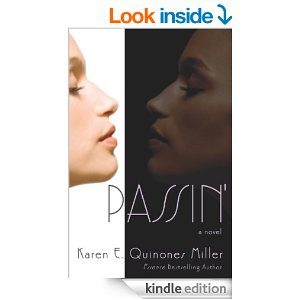
Passin‘ is not a self-published book, but I would like to use it as an example. I actually borrowed it from the library and intend on returning it soon. Not that it wasn’t a good read, but I wouldn’t purchase it. Here’s why: I enjoy a book that makes my mind play it out in my head like a movie. I want to see the characters develop as real breathing people, I want them to have real issues and problems, and I want to see the story in action, and let’s just say this movie’s a little slow. Not that this book didn’t have all of that, it’s just slow getting to the point I perceived to be the main event (the meeting of the man). So it’s an alright read; I wouldn’t give it 5 stars, though. More like 3 stars. I really am enjoying the read, it’s just that I’m a bit disappointed by what the book description told me and how the story is unfolding (yea, still reading it, I’ll probably move up to 4 stars by the time it’s over, who knows lol). The story is an interesting tale of a young woman passing in the new millennium (2007). Racial passing occurs when a person classified as a member of one racial group is also accepted as a member of a different racial group by passing as that different racial group. (Did I confuse anyone?) So a black woman pretending to be white is an example of passing to keep it simple. But what made me check out the book is this excerpt from the description:

“When a successful African-American businessman thinks Shanika is the white woman of his dreams, her world spins out of control. With her future on the line, she’ll have to go beyond skin-deep to discover what’s really worth reaching for–and the person she truly wants to be.”

I know I know, how woman of me, but who doesn’t love, love? Anywho, it’s not a bad story so far, but what’s disappointing is my assumption that the meat of the story would surround this event. But halfway through the book, there’s no mention of this African American man. The story is pretty much just about Shanika’s, I’m sorry Nicole’s, struggles with “racial” (I don’t really believe in a race but for the sake of clarity) identity and her inner conflictions about living a lie (and her hatred of self…my 2 cents). In fact, we don’t meet Mr. Right until close to the end of the book. I’m probably just being picky, but I really did borrow the book to specifically see how this relationship was going to evolve. I’m not finished with the book so I may be doing a part 2 of this same post about how I judged a book by its descriptive cover, but we’ll cross that bridge when we get there.

The point is that this inspired a post about how important book descriptions are to books, especially self-published books. We have talked about book cover designs, a little bit of editing, and even common sense reasons to self-publish. Now let us talk about the content of the book, starting with the description.

When a reader decides to buy a book, one of the first things that strike them is the book cover, the sample, and of course they’ve got to read those reviews. But another important element that plays a role in the buying experience is the book synopsis, summary, or description. If you think this is something I pulled out of my hat, just visit your nearest library or bookstore. You’ll see people scrolling through aisles and turning over the backs of books. Some of them flip through the pages and may even begin to read the first paragraph just to see if it grabs their attention.

The good thing is that if the description of your book has little to nothing to do with what the book is actually about, no one will know until after they buy the book and after they read it. The bad thing is that if they give a bad review, they’ll be your first and only customer. The truth is that book descriptions play a big role in book buying, and as I always say, it’s a good idea to produce your books the way you buy them. If a striking book cover makes you go for the bait then you should also have a book cover design that is also striking. Likewise, if reading the synopsis of a book is what makes you buy, then as an author you want to make sure your book description is also just as fantastic. “If your book description doesn’t grab them and make them feel ‘the need – the need to read’ then you’ve just lost a customer….” (Mark Edwards).

(For the record, Karen’s description was pretty good and achieved the desired effect, it made me pick it up and check it out which means I would have probably picked it up and bought it, so that’s not my complaint since I’m sure her book sells are doing better than mine. My complaint is just about the accuracy of her description of what’s actually in the book, but I digress).

A good summary will give readers just enough information about your book to get them excited about reading the whole thing. For this reason, it should be clear, brief, and simply breathtaking.

Below are 7 ways to improve on book descriptions by Mark Edwards as featured on the blog Catherine Caffeinated

(there are actually 11 but these are the ones I thought worth excerpting far as importance is concerned, 7 is a perfect number after all…isn’t it?):

1. Make it clear. Your potential reader needs to know with a quick skim read what kind of book this is, what it’s about and what the story is. The story is the most important element here – if you’ve written an erotic romance that will give Fifty Shades a run for its money, make sure people know that. Though remember, it’s the relationship at the heart of Fifty Shades that made it such a smash. You need to get that across in a very lucid way.

2. The first line is the most important. If you don’t get the first line right, they won’t read on (this applies to the book itself too). Your first line needs to encapsulate the whole book. It needs to draw people in, hit them where it feels good and make the hairs on the back of their neck stand up. Not easy – but worth spending time on.

3. Don’t be boring. The moment your potential reader feels bored, they’re gone, clicking on to the next book on the also-bought bar. Every line has to be compelling and move the story on. Just like your book, in fact.

4. Make them laugh, cry, cower. It’s all about emotions. How is your book going to make people feel? Is it heartbreaking or hilarious? Chilling or hotter than Angelina Jolie sunbathing in Death Valley? Again, look at the words most used in your genre. They are clichés for a reason. They work.

5. Use testimonials. If you have some quotes from well-known writers or experts, use them. These are generally best in a block rather than scattered through the text. If you’ve got a quote from your Auntie Maureen, you might as well use that too. Just don’t reference her as your auntie.

6. Make your characters live. As well as the story, it’s vital to get a good sense of your characters across – and, most importantly, their big problem. What terrible dilemma do they have to resolve? What personal demon do they need to conquer? You need characters and problems people will identify with – but they have to be big problems. Having a broken dishwasher just isn’t exciting enough.

7. Make the reader desperate to know what happens. You have to end your description with a cliffhanger. You need to lead the reader to the point where they are so curious that, were they a cat, it would kill them. Make sure you don’t give too much away. Be intriguing. Make them feel like Anastasia when Christian tells her he’s about to show her something really new and exciting. Make them go ‘Holy crap!’”

New Month, New Goals

31

My, how this year has passed; a lot has changed, and a lot has come and gone. I’ve ended a blog and began one. All in all the experience has been worth both the good and bad. What are experiences for anyway if we can’t learn from them? Today I just want to speak briefly on blogging goals. I know I know who am I right? Why does this small blog of barely 300 followers write like she’s got 30,000? Who am I to give advice with all these splinters in my eyes? Well I’m glad you asked; I’m no one actually. Just another writer thriving on nothing but a bowl full of passion; I do not desire you to know my name or pity my story, I just wanna right, is that alright? I think so.

Have Fun

Fun-with-Directions-512-icon

So here we are. Since we’ve come to the end of the year, I just want to spew a couple of words of inspiration for all the new bloggers who will be joining us next year as well as old bloggers who are still struggling to drive their blogs in the direction intended for them. I don’t know what your goals are but the word today is Goal. What we really want to do is have both a Primary Goal and Sub Goals. There are two parts to the Primary Goal. The first part is just to have fun. Remember that this is your blog after all and your happiness will determine the level of passion you put into your posts. Do not over think this blogging thing, just blog and have fun doing it. And that my friends, having fun, is what keeps me writing. I do not desire a spot next to the red carpet. Yes, it will be nice to kiss the sky and tread on the clouds below me but there’s a time for that and it is not now. Right now I’m just taking it a step at a time and enjoying the moment, being ecstatic about the little things like those who join this blog, who like this blog, who interacts with this blog, and who view this blog. That’s why I can give advice and share poetry and write stories because I actually enjoy what I’m doing so I have no fear that I have not reached the level of “professionalism” some may deem necessary.

Primary Goal

fdf4c087c5ffa14c2a343ad7c00857e4

The next part of your Primary Goal is to actually have one, the objective for your entire blogging presence, the thing that brought you here. For some of you, maybe it’s just an outlet, for others perhaps it is business oriented but no matter the reason there must be one. The funny thing is though, you really just have to know what you want to do next. You don’t have to over-complicate it, just outline what you want to do next. It doesn’t matter the kind of information you seek to push, whether you are a descriptive writer, or a poet, whether you are here to persuade or to inform, no matter the reason remember that you are interacting with people. Do not let the massive World Wide Web fool you into thinking you’ve become a microchip inside a computer, and that you are not made up of flesh and bone. You are a person, and as such you are interacting with people. For this reason it doesn’t matter that you are just here to spread truth or push agendas or religious doctrine or whatever it is. Even so you must still realize that blogging is an online platform from which you are interacting and networking with others. Remember that no one likes to be preached to. You must use this opportunity to instead inform in ways that will attract people. Do not get so far on the high horse that you cannot relate to those of us still on the ground. It’s ok to laugh and to share some of your life experiences, your joys, your woes, or the new puppy you got yesterday and at the same time tie it into whatever message you have to give to the people. Never compromise your identity, never change who you are, and never let others change who you are, but in the midst of simply having fun make sure you keep the primary goal at the forefront and tie it into your blog identity.

Sub Goals

famous-quotes-about-life-9
I also think it’s important to have Sub Goals. Sub Goals are like Sub Titles; those small messages under the bigger message. They are those short term goals you wish to achieve to ultimately achieve that primary goal. For example: If your Primary Goal is to drive book sells, maybe your Sub Goal is to publish at least two short stories a day. What this will do for your blog is help to begin an organization of it so that you have something to offer to the people. You may want to include those features your Blogging 101 just talked about. I have something called Recipe Sunday for example. It is not a name I actually created a category for, but it is a feature I include on my blog every Sunday under the Audience Participation tab. In this feature, I feature recipes for various foods and snacks that can help those of us who are not chefs to better whip up some delicious meals. I love recipes and using them when I cook so this also gives you a taste of who I am as a person so your not talking to fingers on a keyboard with no hands attached. Does this mean I want to become a chef now? Does it mean I have compromised my identity as a servant? Does it mean I no longer want to write poetry? Of course not. It’s just another avenue to which I can engage and interact with my audience. This helps me to build because I will then get subscriptions from those people who are into food, who do like to cook, and who are actually chefs while simultaneously putting my message into a physical manifestation of being. It’s not just about telling people stuff, it’s about showing them and organizing your posts can help you to be that example and organization starts with Sub Goals. Decide on how many posts you want to publish a day depending on your schedule. Keep it fun so if that’s one post a week so let it be. The plan is not to stress out about it. Stressing out about it means worrying which means no writing for you and that’s not what we want. What we want is for your message or goal or whatever to get out there so no pulling your hair out. Just think carefully about how often you want to post and stick to that schedule as closely as you can. Then decide on what kind of special feature to include. This can be something as elaborate as a picture or as fancy as a list, your blog, your prerogative. Then put everything in its own folder, we call these categories in the blogosphere, so put everything in a category. This is just the basics though because you want to also scan the community a little bit too. The best way to drive traffic to your blog is be what you want others to be. If you want someone to treat you with respect do the same for them. So get on out of the corner and walk around the neighborhood. Participate in blogging challenges, follow some blogs, comment on some blogs, and like some blog posts. Incorporate this into your schedule as well; give the people some variety, something to look forward to. So you may decide: I will publish one post a day, like 5 blog post by someone else, and follow 10. That’s a schedule and sticking to this schedule as closely as possible will help to increase traffic to your blog and increase the chances of you accomplishing your goal. Like I said, if you think your too good to get involved because the content on your blog is so great then keep doing what your doing and bringing your goal to nothingness. If I have a computer I cannot use why do I have it? If I have something that cannot produce fruit, why do I have it? If you created a blog to reach people, why are you still blogging if you don’t want to reach people? The truth is that your content may just be great, in fact, it may be salvation itself, but even when you’re spreading the truth you still have to be able to reach people. You can’t just throw a ball into the air and hope that someone catches it; you have to get out there and be the change you want to see in others.

Complaining Announcements

stop_complaining

The last thing I want to speak briefly about is complaining announcements. I’m not talking about a blog post of you complaining, that’s your thing and if you want to complain be my guest, that’s your business. What I am talking about is this: If for whatever reason you could not publish the one post you dedicated yourself to, don’t announce it. No one cares until you announce it. You have a life, we get it, we understand. If I spit a piece you’ve never heard before and I mess up the poem no one will know unless I make it known that I have erred. So relax people. You don’t have to come back and apologize for not writing yesterday. Instead, take that energy and write twice as much today to catch up. If your goal was one post published a day and you missed a day, publish two posts the next day. The content can actually be about what held you up, was it your sons’ baseball game? Did he win? Was there a fat guy whose head was too big for you to see the fields? How was this experience? Tell us about that instead. Hold yourself accountable for staying true to the schedule so that you can achieve those little goals. It is not big steps that get us to the finish line faster, it’s the energy and dedication we put into those tiny steps we take every day. Remember:  slow is smooth, and smooth is fast.

Spoken Word

What is Spoken Word?

b0135rww

Spoken Word is an oral art form; performance-based poetry that is focused on the aesthetics of word play and story-telling. However, there are aspects of the artistry that indicate it is, indeed, spoken word without the necessity of it being poetry. While Spoken Word Poetry is the foundation of what we think of when we hear the words, Spoken Word can also be any form of speech that tends to focus on the performance of the words themselves, the dynamics of tone, gestures, facial expressions, and more. Poetic components such as rhyme, repetition, slang, improvisation, and many more elements of poetry can be interwoven to create an atmosphere the audience can experience—even in the case it is not organized poetry.

Speeches, Plays, Lectures

e1e494cda4cd955039b9fc58001e88bb.1000x680x1

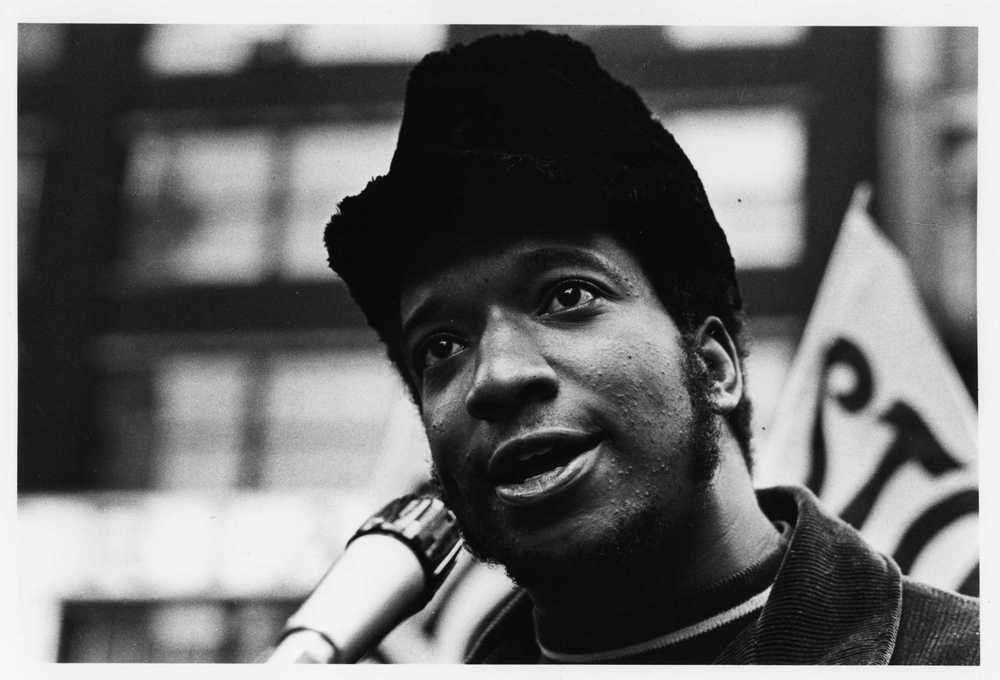
There are many styles of the Spoken Word. One style is based on recorded, public and published works (IE. plays, speeches, e.g.), which many people don’t usually associate with spoken word. But many movements have used this form of speech to intellectually enlighten its listeners, and to prompt a sort of consciousness among those who would otherwise not listen when they’re spoken in the ordinary process of verbal conversation. From brothers like Huey Newton and Fred Hampton and even down to the great Israelite prophet Moses from whom they descend, speeches of such sorts have proven to be very influential in our history. It is because the messiah used parables that many of us are able to understand the wisdom that projected from his lips. Truthfully, how many of you would have understood faith to the extent of understanding, had he not so eloquently compared its strength to that of a mustard seed? Thus Public Speeches in general can constitute a kind of Spoken Word depending on the kind of emotion involved, disassociating it from that of normal speech and landing it right here in the definition of an art form.

Audience Participation

mouth mic

The most popular style of Spoken Word  is what I like to call Audience Participation, as it involves reciting or improvisation of poetry and commentary performed in front of a live audience (to include blogging!). It is more of a prose or stream of consciousness that includes monologues, poems, stories, speeches, and rap. Yes, rap. I know many of you would not like to include hip hop. Many feel it is a less sophisticated avenue to which many “blacks” seek to degrade themselves. Surely, they say, one can find a better career than to pursue…rap. Yet, rap too, (though today’s music sounds like a form of remixed slavery, but that’s a discussion for a different day), is still an art form, an extension of poetry, and part of the Spoken Word community.

The Vision

Glasses-Clear-Vision

There are two very important elements of Spoken Word I believe an artist must have, and one of them is a vision. The artist vision is his mission. It is that thing he wishes to ultimately achieve with his words. It is the reality of the perception to which his words are projected. It is the act or power of sensing with the eyes in the metaphorical sense; the anticipation of what will be or what will come. If an artist does not have a vision, if he does not have a message, then he is not a member of Spoken Word. Speech is not an idle art, but words live. And they contribute to either life or death. Vision is important because words once spoken perform works unimaginable, soaring into the lives of many and causing them to revolutionize. A word can bring life or death so it is important to know where it is going and what its purpose of creation is in the first place. A word can bring greatness to a people or it can bring sorrow. How we speak and what we speak determines whether or not we are able to see the vision necessary to make a difference. Artists should ask themselves:

 
What is my goal?
What do I seek to accomplish?
What is my objective?
What motivates me to approach the stage?
“Is what I’m speaking on one accord with my message?

 
Do you see the vision? And as a result, do you have a voice?


The Voice

spoken_word

Everyone has a voice. It is “The Voice” that makes Spoken Word possible and powerful. It gives life to the written word. It translates it into a familiar language, takes the contextualized heart, adds vocal cords and commands the artist to play; to play and to paint and to build and to change. For this reason each person’s voice is different (which makes it highly difficult to actually judge poetry which depends on a lot of things). Spoken Word includes testimonies of what each individual has been through or is currently going through. It brings to life the world’s problems: the disease of a love-less world, along with all of its baggage, to create for these individuals a voice that is unique to their personal self and helps them to heal under the covering of truth. Not that every occasion for Spoken Word is gloomy, for the art is called art for a reason; it is because it is beautiful, motivational, and as inspiring and as chill as musical therapy. However, many use it as an opportunity to bounce their voices off the walls of crowded rooms and the chit chatter of people talking. They use it as an opportunity to bring to life the hidden, the invisible, and the unseen. The world teaches us that our experiences are not important to share, and that we should keep our “skeletons in the closet” so that no one may see them. But what is hidden in the darkness is always revealed in the daytime the only question is: Would you rather show transparency so that your testimony can help another, or keep your mouth shut and hide under your tongue only to drown in your own pain and choke on your own saliva when the sun rises?

 
While many of us are part of the same walk, the experiences and lessons we learn are different and should not be shielded by the cover of intimidation or embarrassment; for we can be hiding the one word that can bring life to the one person who so desperately needed to hear it.

 
Every artist  must be able to see the vision and must be able to form for oneself a unique voice. After all, it is the voice itself that makes Spoken Word possible.

Control

Control

You are late for work. You are fired from work. You can’t find a babysitter. You have to babysit on your only day off. You are given too much. You are not given enough. You are stuck in the rain. You are stuck in the house. Have a complaint? Pick one and put it here__________________.

I notice that we are often affected by a multitude of barriers that come to exist before us as we walk this path called life. We often run into situations that require our attention and either demand a positive or negative reaction in the process. How will I react to those things around me that have caused me to change in some way without my permission? How will we approach this thing or this person that has selfishly taken away our ability to find peace?

The real question is however, how much control are you willing to give over to these situations? How much of your peace are you willing to sacrifice? How much energy are you going to devote to this thing? How far are you willing to take this? Every time I think about anger issues, frustration, complaints and just situations in general, I cannot help but to also think of control. Will this situation typify us? Will it take us out of our element so that we become different people? Will it cause us to physically transform ourselves? Will it change our minds? We often look at circumstances as an external thing. It is either about an outside force against us, or a person outside of us. The truth is however; that the only power such elements have against you is the power you give it. Sometimes I look at situations that I believe are not as bad as some, but I marvel at how drastically the person has allowed the situation to change them.

It is not the reflections of others staring back at you when you look in the mirror, it is you staring back at you. You will always be your worst enemy or your best friend. The battles that take place in our lives are of our own making. They are a result of choices that we made. Even those things that are thrust upon us without permission can only grow according to our reaction to it.

Stereotypes and Choices

rated-r

FYI: The images used in this post are Rated R per nudity.


When 20 year old Sara Baartman got on a boat that was to take her from Cape Town to London in 1810, she could not have known that she would never see her home again. Nor, as she stood on the deck and saw what had become her home disappear behind her, could she have known that she would become the icon of racial inferiority and black female sexuality for the next 100 years.

b6c5814df46f1eb123939111e6a2fd8a

Sarah “Saartjie” Baartman (before 1790 – 29 December 1815) was the most famous of at least two Khoikhoi women who were exhibited as freak show attractions in 19th century Europe under the name Hottentot Venus—“Hottentot” considered an offensive term, and “Venus” in reference to the Roman goddess of love. While in her teens, Saartje migrated to an area near Cape Town, where she was a farmer’s slave until she was bought in Cape Town by William Dunlop, a doctor on a British ship. At age 20, Saartje headed for London with Dr. Dunlop where, it was agreed, that they would get rich by displaying her body to Europeans; catering to the people’s’ sexual fascination with aboriginal peoples. Prancing in the nude, with her jutting posterior and extraordinary genitals, she provided the foundation for racist and pseudo-scientific theories regarding black inferiority and black female sexuality. The shows involved Saartje being “led by her keeper and exhibited like a wild beast, being obliged to walk, stand or sit as ordered.” Saartje’s predicament drew the attention of a young Jamaican, Robert Wedderburn, who was agitated against slavery and racism. Subsequently, his group pressured the attorney general to stop this circus. Losing the case on a technicality, Saartje spent four years in London and then went to Paris where she was exhibited in a traveling circus, and seen frequently controlled by an animal trainer in the show.

It was here that she crossed paths with George Cuvier, Napoleon’s surgeon-general, who was also considered to be the dean of comparative anatomy. In his capacity of social anthropologist, he arrogantly and erroneously concluded that she was the missing link. She turned to prostitution and when she died poor in 1816, almost immediately Cuvier had her body cast in wax, dissected and the skeleton articulated. Her organs, including her genitals and brains, were preserved in bottles of formaldehyde. Her remains were displayed at the Musée de L’Homme in Paris until as late as 1974.

“Stay on guard this wicked land will try to strip your soul… got our men selling blow our women on the stripper pole. Once your morals hit the floor do anything to pay the bills, 400 years still ain’t on the level playing field.”

tumblr_m09tr3uTyU1qfvy6ho1_1280

While one cannot control what is forced upon them, one can make the decision to choose a different path. While the treatment of Sara and the retaining of her body parts were horrific, we cannot neglect her choice to prostitute herself. We have all been in positions where we felt we did not have a choice, for struggle and oppression has a tendency to do away with all logic. But what I would like to remind us of today is the importance of not making excuses for those choices. There’s a difference between making a mistake and making a commitment to willfully do. Often we set out to blame outside forces for what we have become because we’ve been deceived into thinking we have no choice. This is not to judge the actions of Sara as a slave, but what we need to understand is that today many Black women are slaves and they are slaves without permission or coercion. There is little difference between Sara Baartman  and the current  Video Vixen. They are both slaves. Today, the Black woman’s mentality leaves her shackled to a  mental incapability of thinking outside of the way she was taught to do so within the physical institution of slavery. She cannot think independently on a physical, mental, or spiritual level outside of what her captives have taught her because of her unwillingness to take responsibility for her own ignorance.

nickisarah

As a result, every time someone attempts to show the so called Black women the error of her ways she is apt to point to an instance, circumstance, person or persons outside of herself. She may very well bring up facts, but she is unable to see the role she plays to make manifest those statistics. It is always a situation where men have abused or disrespected her. It is always everyone else fault except hers. Either a man did it or the white man did it.  Many of the women seen on TV, such as the Niki Minaj’s are showing women examples of what it means to be a whore, to prostitute one’s body and to be proud of it. Sadly, many of you idolize these women. You sit back and you allow your little girls to be entertained by such filth. Beyonce is a married woman (allegedly) and yet she prances around the stage half naked and you think it’s cute. You do not teach your little girls about Proverb 31 women and about the Sara Baartman’s; you teach them about the Beyonces. As a result, many young women, crossing all ethnicity’s, grow up with aspirations to put basic morals and values on the back burner while they twerk.

The reality however is that everything is not a stereotype. It is not all a conspiracy. Abuse exists but there is still a choice we must begin to understand about the role we play in deception. It’s not always about deception, but it is also about our willingness to be deceived.

tumblr_mijckwsuLC1rtx8buo1_500