Introduce Yourself: Introducing Guest Author Frank Parker

Welcome to Introduce Yourself, a new and exciting blog segment of The PBS Blog dedicated to introducing to you new and established authors and their books.

Today I’d like to extend a warm welcome to Frank Parker. Welcome to The PBS Blog! Let’s get started.

What is your name and where are you from?

My name is Frank Parker. I was born and grew up in Herefordshire, a small rural county next to the border between England and Wales. I lived for the first decade of my life in a small stone cottage beside a stream with a couple of waterfalls. We were surrounded by traditional hay meadows and grew all our own vegetables in a medium sized garden. My parents were from London originally. They were married shortly after the commencement of World War II. Dad was an airman. Two years after I was born he was killed in action whilst taking part in a bombing raid over Germany. Having only one parent qualified me to attend a boarding school where, from 1952 to ’58, I was educated in the manner of a traditional English Grammar school.

Did you say Herefordshire?? My maiden last name is Hereford!

Are you married Frank?

In September 1963, I married the love of my life. We had met two years before. I still recall the day. It was August bank holiday 1961, the day of the annual village show. I was supposed to meet up with my then girlfriend, enjoy the many activities on offer then go on to the dance in the village hall afterwards. She arrived in the company of two friends. Try as I might I could not separate them. As a gauche 19-year-old, I didn’t know whether to be flattered being accompanied by three young women or disappointed that I could not be alone with the one I wanted to be with. Later she turned up at the dance in the company of another youth and I danced with one of her friends. That was it. Me and the friend were set on a course that sees us still together all these years later.

Beautiful. What’s your favorite food?

I love cooking and eating dishes in the styles of the Indian sub-continent. My preference when dining out has always been Indian. I recall when I lived in South Africa, in 1974, we would spend Sundays around the pool at a nearby hotel which served excellent curries that we washed down with locally produced ale. In 1990 I discovered the ‘Balti’ style of Indian cuisine whilst working in the English Midlands. More recently I watched Rick Stein’s television series in which he toured India discovering the various regional styles. I have his book of the series and regularly produce dishes from it.

Oh OK. So what you saying is we need to be at yo house then huh Frank? 🙂  In your own words, define racism.

Racism, to me, is the mistaken belief that people from the same ethnic origin as yourself are superior to those from all other ethnicities. It is made worse when that belief leads people to behave disrespectfully towards people who do not share their own ethnicity. Being disrespectful towards others is not acceptable in any circumstance, but when it is justified by reference to a perceived difference based on ethnicity, sexuality or physical or mental deformity it is especially deplorable.

Frank, are you a political man?

I have held a strong interest in politics for as long as I can remember. My response to the previous question should make it clear that I follow the Liberal tradition. In the 1980s I put my political beliefs into practice, becoming a local politician in my then home district in the East of England. I also worked in a voluntary capacity on campaigns for the Party. Aside from Party Political activities, I cannot avoid political comment in my writing, especially my blog. I also believe that it behooves us all to involve ourselves in unpaid activities utilizing one’s time, skills and energy wherever there is a need in the local community.
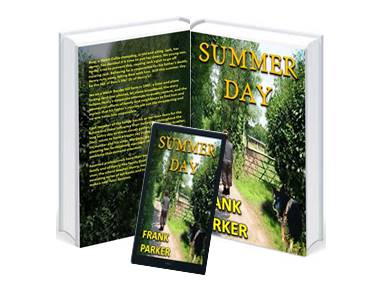
Summer Day by Frank Parker is AVAILABLE now on Amazon.

What genre do you write in, why?

You might gather from the above that the genre in which I am most comfortable is Historical Fiction, often based on the lives of real people. I am especially interested in ordinary people who find themselves in the midst of significant events, how do they respond to the consequences of war, epidemic or famine? It is easy to investigate the causes of such events or to condemn those whose mistaken beliefs lay behind some evil deed. Among the suffering of ordinary people are to be found tales of great heroism at the personal level. That’s what I hope to bring to the fore.

I’m a fan of Historical Fiction myself.  What TV channel exists but really shouldn’t?

I’ll end with a controversial thought about TV channels. I don’t either want to see the demise of any existing channel or the creation of any new channel. What really annoys me is that we have so many channels dedicated specifically to sport and yet sport seems, to me at least, to be taking up an increasing proportion of mainstream television schedules. Let’s leave sport on the sports channels and keep mainstream television free for news, documentaries, drama and the arts.

Who is your favorite writer?

I find it difficult to single out one individual as a favorite writer. There are many authors whose work I have enjoyed in different phases of my life, from Enid Blyton and W.E. Johns in childhood, through Agatha Christie, Robert Heinlein and Ray Bradbury in my youth and early twenties, to great Irish writers like Colm Toibin, Sebastian Barry, John Boyne and Ann Enright today. I like a work of literature to provide a new insight into the human condition, to make me laugh and cry or simply to marvel at the use of language. If only I could manage that in my own work I would be a happy man indeed!

I love literature of the same kind so I definitely feel you. What’s your favorite Historical figure?

I don’t have a favorite historical figure. I find it reprehensible that official histories pay so little attention to the achievements of women, and then only those who exhibit masculine qualities. Warrior women like Boudica or Joan of Ark. Devious, deceitful women like Cleopatra. The truth is that whilst men were attracting fame – or notoriety – by fighting wars or making significant discoveries, it was the women who remained at home and managed the family estate, overseeing everything from planting and harvesting to organizing essential repairs and improvements, thereby ensuring that what the men came back to was frequently in a better condition than when they left. So, my favorite figures from history are those unsung heroines without whom no battle would have been worth winning, no new knowledge worth the knowing.

If you could shadow your favorite artist, who would it be?

When I was in my early teens I came across a book in the school library. It was a big colorful book of the kind that are usually referred to as ‘coffee table books’. It was full of reproductions of famous art works. The particular work that had an enormous impact on me, such that I can still recall it some 60 years later, was titled ‘Burning Giraffe’. It was painted by a Spanish artist named Salvador Dali. In the intervening years, I have seen many documentaries and read many articles about this eccentric gentleman and his fellow surrealists. As someone who has tried, largely unsuccessfully, to paint, I would have loved to have been able to spend a day in the company of Seńor Dali, to discover his techniques, gain insights into the way his mind works and discover how he was able to translate his thoughts into images on canvas, film or sculpture.

bitmoji-20170402033318

Thank you Frank for spending this time with us! We enjoyed you.


Frank P
Frank Parker

Bio.

At 17, Frank’s plan to become a reporter was scuppered by advisors who insisted he “get a trade”. He became an Engineer. In the 1980s he tried a career change becoming involved in local politics. Articles he wrote at that time appeared in obscure political journals and he contributed business profiles to a regional “Business Link” magazine. These did not pay the bills so he returned to Engineering until retirement in 2006. Since then his short stories and poems have been included in several short print-run anthologies. He has self-published four novels, and two collections of poems and short stories. He is presently researching, and writing about, the famine that afflicted Ireland between 1845- 52.

He lives in the Irish Midlands with the woman he married in 1963.

Be Sure to Follow Frank Online!

Web: https://franklparker.com/

Facebook: https://www.facebook.com/HerefordAndIrelandHistory/

Twitter: @fparkerswords 

Goodreads: https://www.goodreads.com/author/show/7834486.Frank_Parker

Are you a new (or not so new) author? Looking for more exposure? Learn more about my Introduce Yourself Feature HERE.

A Writer’s Responsibility

fc09480ab84de2989d73923db149c7e3

Writers must understand what their responsibility is as a voice. As a shofar to the world. Low self-worth, ignorance, and low self-esteem can be smelled from miles away. The stench of give up is not something that is difficult to discern. If you dare to write, then dare also to own it. Your words, your message, and your purpose is something that must not be shared timidly. It’s not about arrogance, for arrogance will surely destroy you. What it is about is writing with authority and making yourself responsible for every word, every syllable, and every piece of heart contextualized. Humility is understanding who guides you every day and who came before you. It is not thinking less of yourself. Every blog post, every email, and every book demand from you a responsibility. You are responsible for being professional, exact, kind, and factual despite how inappropriate others may be. You do not have the permission to curse people or spew opinions that are not rooted in fact. You are a writer and this is your responsibility. When it comes to writing, there is no modesty for the words that you put on the page. If you cannot strip yourself down to the bare minimum and expose your gift for what it is then what are you doing writing? In the words of Maya Angelou, “Life will knock a modest person down faster than a G-string falls off a stripper”. If you cannot take advice on how to better your work, what are you doing writing? If you cannot take it the same as you dish it, then what are you doing writing? What you do will come back. If you can give constructive criticism then be able also to take it. So what people think negatively about you. Their loss. Accepting correction is part of your responsibility as every artist or professional is told what they don’t want to hear at least some of the time. If this is something you can’t handle then again I ask you, what are you doing writing? The same applies to every profession. Dare not put your trust in man for man will always disappoint you. Instead, see every critique, every negative, every mistake, as part of the gift and the growth. You don’t have to agree with me but you will respect me and I will respect you. Not for you alone but because it is my responsibility as a person and as an artist to do so. Authors, you are a fountain of information. If you cannot hurricane Katrina, or tsunami this with the world and be confident and open about it, then what are you doing writing? To be courageous is not just a choice, but it is your responsibility. Every word I stitch into this blog, every piece I spit on stage, and every book I publish comes with trembling fear. But it is a fear that I must use as energy I need to push on. Always forward. Despite those looking for grains of fault in every post I publish, hoping to catch me in a trap as to accuse me of not being the person I’ve always shown myself to be. Despite this, I must write. Even if I do not speak (muteness is addictive. I’ll shut down with the quickness and write you notes as Maya did), I must write. I must do so because it is my responsibility. What’s my point here? Stop complaining. Are you a writer? Then be strong. Own it. You are here and you have something to do.

Wait for Me

IMG_20150823_111244

Would you let me ribbon tie my waiting into your lap?
Take me dripping in mistakes like I got flaws for fragrance
Can you wait for me to get it right?
This belly
filled to the brim with passion
like I got fire clenched in my fists and a furnace in my throat
As if you’d just emerged from the safety of your mother’s womb
would you wait for me
to breathe life into your lungs
to breathe logic into your conscience?
Let kindness touch you gentle,
soft like pillow talk
or whispering prayers in a bowl of incense
Touch me endurance
and I’ll dip my hands into purpose
and feed you hope through a straw
So let the storms begin
let the winds blow
and the nations rage
let the heavens chop off pieces of ice for our tribulation
let hailstones come bungee jumping from the sky to put dents in our joy
and I promise you
if you wait for me
I’ll command my words to stitch you a smile
and in time
we will simmer tragedy
into the polished pillars
of diamonds in the ruff.

Wait for me.

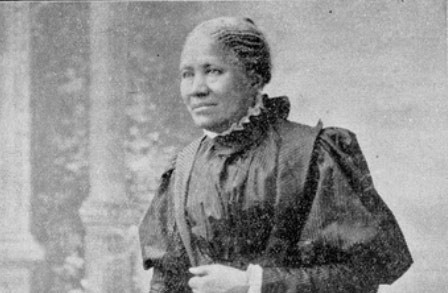
Lost to History – Unfamiliar Faces: Francis E.W. Harper

frances-ellen-watkins-harper-448

Maya Angelou, Toni Morrison, Richard Wright, and Zora Neale Hurston are among many peoples list of powerful writer influences. Throw in Ralph Ellison, James Baldwin, Alice Walker, Octavia Butler, and Langston Hughes and you have a dream team of the world’s most quoted, most copied, and most talked about black writer contributors of all time. A name you won’t hear is Francis Ellen Watkins Harper, poet, author, and abolitionist.

“My home is where eternal snow Round threat’ning craters sleep, Where streamlets murmur soft and low And playful cascades leap. Tis where glad scenes shall meet My weary, longing eye; Where rocks and Alpine forests greet The bright cerulean sky.” – Forest Leaves, Yearnings for Home by Frances E.W. Harper

Frances was a writer and poet born free to free parents in Baltimore and attended a school for blacks that was ran by her Uncle. Frances wrote poems and went on to publish her first collection in 1845, Forest Leaves. Years later, Frances taught domestic duties at Union Seminary in Ohio which was run by John Brown, the devout abolitionist who held strong opposing views of slavery. Brown, a white man, was a conductor of The Underground Railroad and The League of Gileadites, an organization established to help runaway slaves escape to Canada. As a result, naturally Frances got involved in the abolitionist movement and The Underground Railroad becoming a lecturer who went on tours with such men as Frederick Douglas.

In 1854, Frances published Poems of Miscellaneous Subjects, which featured one of her most famous works, “Bury Me in a Free Land”, and in 1859 made literary history with “Two Offers” which made her the first African-American female writer to publish a short story.

Harper died of heart failure on February 22, 1911, in Philadelphia, Pennsylvania.

Building – When The Writing Begins

download

Writing does not begin until I can see the entire story, even the end. It is a must that I can see how the story ends. You see for me writers are builders, architects if you will. A book starts with an idea, but not all ideas should become books. Not all ideas are story fabric. Some ideas are meant to be stored for a later time, while others require immediate attention. When an idea enters my mind, I first examine if it’s worthy enough to mature into something more. Is it powerful enough? Can it change lives? Is it different? In short, an idea has to be special, like a rare diamond or a spring of water in the desert. Can we want for it? Does it make us hunger? Does it make us thirst? Not only is it a nice idea, but is it necessary? For me, it has to be something so powerful that it has the potential to grow; an idea that is without potential to grow is not an idea that is fit to become a book.

When I have an idea that is worthy, the writing doesn’t begin just yet. I mean sure, there’s a paragraph here, a sentence there, a potential character name somewhere over there. Lots of things can change as I am seeking to stretch the idea into something more; to mold it into something tangible. The title may change, the name of the characters may change, the setting, plot. I am picking out pieces and adding some. I am changing colors and creating lives. I am an examiner of bricks and mortar to see what fits. Restoring and conserving ideas, coming up with new ways to use them. It is even possible that I may begin to sketch out a stretch of chapters. However, the writing has not yet begun. It does not yet begin because I cannot see the entire work on the page, just shades of pencil and splashes of ink but there’s no real story there. No, words on a page does not mean I have written just yet. Words on a page are merely the sand on the shores, the bricks in the pile, the outer frame of a building with no substance.

When I can see the story move in my head; when I can see it walk its way around from camera to camera; when the dust kicks up and there are actually footprints in the plot; when I can see people speaking and acting and living, that moment when the wind blows for the first time. This is when the writing starts for me. The writing begins when I can hear the story breathe. When I can see the light at the end of the tunnel, the full construction on the page. Even how the book will end and this is when I can truly set out to navigate my way though this world. I am a spectator to a movie that has already begun, a director who must choreograph each scene. This is when I’ve began to write the first draft of a book. It is the moment when I know that the original idea is strong enough, and has the potential to be story fabric.

Re-post: Author Tips on Writing Historical Fiction

This is a re-post from M.K. Tod who writes historical fiction and blogs about all aspects of the genre at A Writer of History. Her recent post included a list of tips on writing Historical Fiction as acquired from around the web. Instead of re-blogging I decided to re-post some of those tips here, they are just too good to let pass us by so I organized them in the list below so we can see them all. Please visit A Writer of History for author source and to comment on her blog. I would also suggest you follow her (especially if your a historical fiction writer), she is always on point with her guest authors, links, and advice:

  • Let the characters engage with the historical details – a variation on show don’t tell


  • Allow your characters to question and explore their place in society – doing so reveals the context of the times


  • Love the process, because readers will still find errors


  • Sweat the Small Stuff – small details allow readers to engage all senses in the past world you are building


  • Dump the Ballast – too much detail is a killer


  • Read historical fiction – sounds obvious doesn’t it but you have to appreciate excellent historical fiction in order to be successful


  • Know when to stop researching – cautions about falling down the proverbial rabbit hole


  • Research comes before writing – get the facts right to ensure a good foundation for your novel


  • Inhabit the mind and skin of your characters – you have to understand the sensibilities of the time so your readers can feel immersed in it


  • Pick a universal theme if you can – the concerns of your novel need to resonate with modern readers


  • Choose a time and place that really intrigues you – passion will make your story more compelling